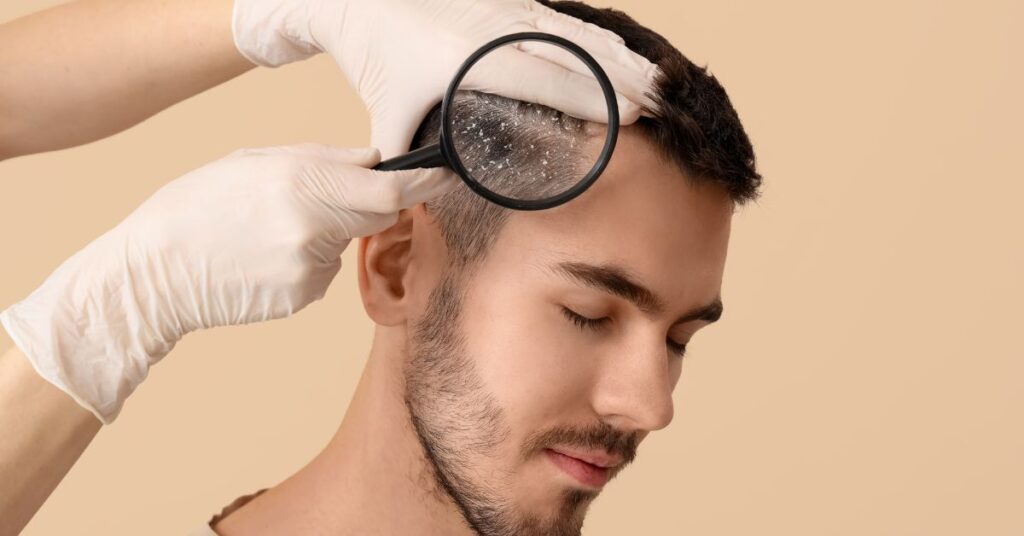
Dry scalp often leaves fine, white flakes on a tight-feeling scalp, while dandruff more often shows clumpy, oily flakes with itch and redness.
Scalp flakes can mess with your confidence. You brush your hair, then you spot specks on a black shirt. It’s tempting to grab any “anti-flake” bottle and hope.
Skip the guessing. A quick visual check can point you toward the right fix, since dry scalp and dandruff behave differently. This article gives you an at-home test, plus a plan that matches what you see.
Why Scalp Flakes Happen
Your scalp sheds skin cells all the time. Most of that shedding is invisible. When the scalp gets dry or irritated, those cells can clump into flakes you can see.
Dry scalp is usually about low moisture at the surface. The skin can feel tight, and flakes tend to be small and powdery. Dandruff is often tied to seborrheic dermatitis, which can create white-to-yellowish scale on oilier areas and can show redness too. MedlinePlus Medical Encyclopedia on seborrheic dermatitis describes this pattern clearly.
You can also have a mixed picture. A scalp can get oily at the roots yet feel dry after harsh shampoo, hot water, or frequent heat tools. That’s why a one-clue “test” falls apart. You’ll get a better answer by stacking several clues.
Dry Scalp Vs. Dandruff Visual Test With Clear Clues
This setup makes the flakes show their true color and texture. You don’t need gadgets. Just decent light and two minutes.
Get Set Before You Check
Start with dry hair. If you just washed, wait until your scalp is fully dry. Stand under bright light, or face a window. Wear a dark shirt so flakes show.
Part And Scan The Skin
Make a straight part from the forehead to the crown. Hold it for five seconds and scan the scalp skin, not the hair. Then part a second line a few centimeters over. You’re hunting for three things: flake size, scalp color, and scalp shine.
Do A Tissue Blot
Press a clean tissue on the scalp along the part for two seconds, then lift. A clear oily mark points toward dandruff. Little to no oil, paired with fine white dust, leans dry scalp.
Do A Gentle Rub Test
With clean fingertips, rub a small patch near the crown in tiny circles for five seconds. Let the flakes fall onto the dark shirt or a white sink. Then check the pieces. Do they break apart like dust, or do they clump into soft, waxy bits?
Dandruff vs. Dry Scalp: The Visual Test
Now you’ll run the “five checks” that sort most cases quickly. Don’t chase a perfect label. You want the stronger trend across several checks.
Check 1: Flake Size
Dry scalp flakes tend to be tiny and light. Dandruff flakes tend to be larger, thicker, and more likely to cling near the roots or stick to hair shafts.
Check 2: Flake Color
Dry scalp flakes are often bright white. Dandruff can be white too, yet it often shifts toward off-white or yellowish when oil is in the mix.
Check 3: Scalp Shine
Run a fingertip along the part and glance at the scalp skin. A matte surface with a tight feel leans dry scalp. A shiny surface, or roots that get oily fast, leans dandruff.
Check 4: Redness And Borders
Dry scalp can look a bit pink right after rubbing, then settle back down. Dandruff leans toward irritation that lingers: patchy redness, tender spots, or greasy patches with scale.
Check 5: Where It Shows Up
Dry scalp often stays mainly on the top of the head. Dandruff can show beyond the scalp, such as eyebrows or around the sides of the nose. Mayo Clinic lists flakes on the scalp, hair, eyebrows, or shoulders as a common pattern. Mayo Clinic’s dandruff symptoms and causes lays out typical signs and flare triggers.
Snap a close photo of your part line and zoom in. Flat, dusty flakes lean dry. Thick, shiny clumps lean dandruff on most days, too.
Use the table as your “scorecard.” Pick the column that matched you more often.
| Clue You Can See Or Feel | Dry Scalp Tends To Show | Dandruff Tends To Show |
|---|---|---|
| Flake size | Fine, dust-like specks | Larger flakes that clump |
| Flake color | Bright white | Off-white to yellowish |
| Texture between fingers | Dry, crumbly | Soft, waxy, or greasy |
| Scalp shine | Matte, tight feel | Shiny, oily feel |
| Redness | Minimal, mainly after rubbing | Patchy redness that lingers |
| How fast flakes return | Slow return after a gentle wash | Fast return as oil builds |
| Where it gathers | Crown and top of head | Hairline, crown, behind ears |
| Effect of heavy oils | May weigh hair down | Can worsen buildup and clumps |
| Itch feel | Itch after drying, hot water, or strong shampoo | Steady itch that flares with oil |
| Skin elsewhere | Dry patches on body too | Flaking in brows or face folds |
What Your Result Points To
Pick your strongest three clues. If most landed in the left column, start with dry scalp care. If most landed in the right column, treat it like dandruff. If you’re split, try the dandruff plan first for two weeks. If flakes and itch drop fast, you found your lane. If the scalp starts feeling tight and dusty, shift to dry scalp steps.
If It Looks Like Dry Scalp
Dry scalp often improves when you stop stripping the skin. That “squeaky clean” feel after shampoo can mean the scalp oils got pulled off too hard.
- Wash with lukewarm water. Hot water can leave the scalp tight.
- Pick a mild shampoo. Look for sensitive-skin formulas and skip strong fragrance if it stings.
- Condition smart. Work conditioner through hair, then smooth a thin layer near the hairline before rinsing.
- Dial back heat. Blow-dry on a cooler setting and keep the nozzle moving.
If styling products are part of your routine, reset buildup once a week with a gentle clarifying wash, then follow with conditioner on the lengths. Buildup can mimic flakes, yet it often comes off in rubbery bits and leaves calm skin underneath.
If It Looks Like Dandruff
Dandruff usually responds to medicated shampoos used with good technique. The American Academy of Dermatology advises choosing a dandruff shampoo with an active ingredient such as zinc pyrithione, salicylic acid, sulfur, selenium sulfide, ketoconazole, or coal tar, and it stresses following label directions, including letting some shampoos sit on the scalp before rinsing. American Academy of Dermatology dandruff treatment guide walks through the process.
The NHS gives a similar ingredient list and suggests using an anti-dandruff shampoo regularly until it settles down. NHS advice on dandruff treatment is a second reference.
Use Medicated Shampoo The Way It’s Meant To Work
Put shampoo on the scalp first, not the hair lengths. Massage into the roots, then let it sit as the bottle directs. Rinse well. Follow with conditioner on the hair lengths only. If the scalp starts feeling tight, alternate medicated shampoo days with a mild shampoo day.
Give one active ingredient a fair trial. Many people switch too fast. If flakes don’t budge after three to four weeks of steady use, try a different active. If you get burning, swelling, or a rash, stop and get medical care.
| Label Ingredient | When It Fits | Use Tip |
|---|---|---|
| Zinc pyrithione | Oily flakes with itch | Work into roots, rinse well |
| Selenium sulfide | Stubborn flakes that return fast | Rinse hands and scalp well |
| Ketoconazole | Itchy scale with redness | Let it sit, then rinse |
| Salicylic acid | Thicker scale that clings | Pair with conditioner on lengths |
| Coal tar | Heavy scale that’s slow to lift | Follow label warnings carefully |
| Sulfur | Greasy buildup and oily roots | Use in rotation with another active |
When To Get Checked Instead Of Self-Treating
The visual test works well for common cases. Still, some scalp issues look like dandruff and need different care. Book a visit with a dermatologist or clinician if you notice any of these:
- Pain, oozing, crusting, or open sores
- Thick plaques that extend past the hairline
- Patchy hair loss or broken hairs in one area
- Ring-shaped scale, swelling, or tender bumps
- Flaking in a baby that spreads, bleeds, or keeps worsening
Those signs can point to psoriasis, fungal infection, or allergic reactions. A clinician can confirm the cause and pick a treatment that fits, which can save time and stop the cycle of irritation.
A Seven-Day Reset Plan
If you’re unsure, this one-week plan keeps things simple while giving you feedback from your scalp.
Days 1–3: Follow The Lean
- Dry scalp lean: Mild shampoo, conditioner, less heat on the scalp, and no heavy styling wax near the roots.
- Dandruff lean: Medicated shampoo on day 1 and day 3, following the label timing.
Days 4–5: Read The Morning Check
Check the same part line each morning. You want less flake drop and less itch. If you used medicated shampoo and the scalp now feels tight and dusty, add a mild wash day and keep conditioner off the roots.
Days 6–7: Set The Maintenance Rhythm
Dry scalp routines often do well with fewer washes, mild shampoo, and less heat. Dandruff routines often do well with a medicated shampoo in rotation, then maintenance once flakes calm down. Mayo Clinic notes that dandruff can flare during cold, dry weather or stress, so a steady routine helps you keep control.
Habits That Keep Flakes From Coming Back
Once the flakes ease, small habits make a difference.
- Rinse longer than you think. Leftover shampoo can irritate skin and mimic flaking.
- Keep nails short. Scratching can tear skin and keep itch going.
- Wash brushes weekly. Use soap and warm water, rinse, then air-dry.
- Go easy on scalp oils. If dandruff is your pattern, heavy oils can pile on scale.
- Patch test new products. Try them on a small area for a couple of washes before going all-in.
Match the routine to how your scalp feels.
References & Sources
- MedlinePlus Medical Encyclopedia. “Seborrheic Dermatitis.” Describes white-to-yellowish scale on oily areas and common presentation.
- Mayo Clinic. “Dandruff: Symptoms and causes.” Lists common symptoms and notes common flare situations.
- American Academy of Dermatology. “How to treat dandruff.” Lists common anti-dandruff actives and how to apply medicated shampoo.
- NHS. “Dandruff.” Self-care guidance and common shampoo ingredients used for dandruff.

Mo Maruf
I created WellFizz to bridge the gap between vague wellness advice and actionable solutions. My mission is simple: to decode the research and give you practical tools you can actually use.
Beyond the data, I am a passionate traveler. I believe that stepping away from the screen to explore new environments is essential for mental clarity and physical vitality.