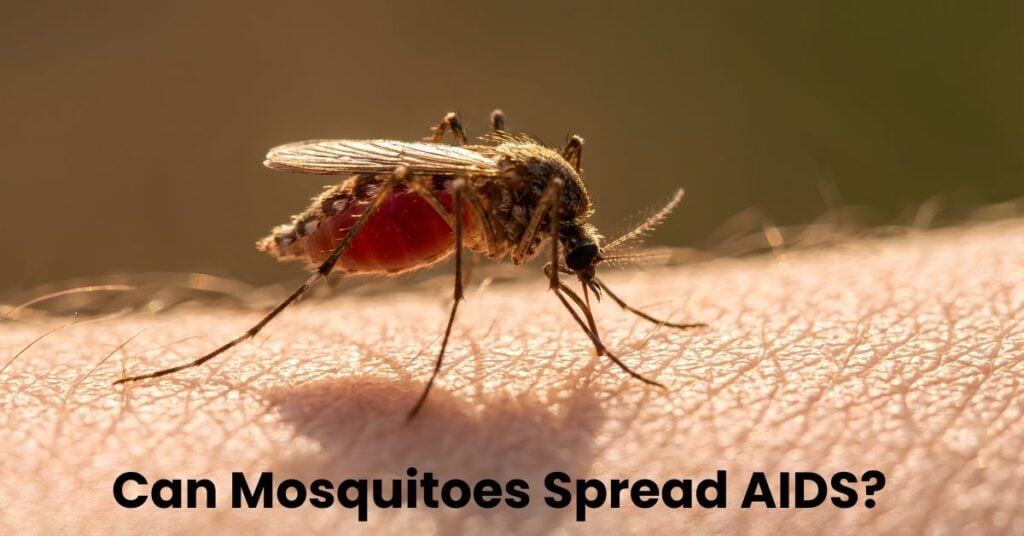
No, mosquito bites can’t transmit HIV because the virus can’t reproduce in the insect and is broken down during digestion.
A mosquito bite can spark a scary thought: “What if it just bit someone with HIV?” You see a speck of blood, you feel the itch, and your mind connects the dots. The relief is real: mosquito bites don’t spread HIV anywhere.
The question often mixes up two ideas: HIV transmission and mosquito-borne disease. Mosquitoes can pass infections like malaria, dengue, and Zika. HIV works differently. To pass HIV, enough live virus has to move from one person to another through specific body fluids, and it has to reach the bloodstream in a way that can start an infection.
This article explains how a mosquito bite works, why HIV can’t use a mosquito as a carrier, and what situations do carry real HIV risk. If you’re reading this after a bite, you’ll also get simple steps to calm the skin and decide when you should get medical care.
Can Mosquitoes Spread AIDS? What Science Shows
No. A mosquito can’t give you HIV, and it can’t give you AIDS. AIDS is a late stage of illness caused by untreated HIV. If HIV can’t be passed, AIDS can’t be passed that way either.
Public health agencies have answered this question for decades, and the answer has stayed the same. HIV isn’t transmitted by mosquitoes or other biting insects. UNAIDS spells this out in its myths section, noting that the virus can’t reproduce inside the insect, so the insect can’t pass HIV to the next person it bites.
Still, it helps to know why. Two details do most of the work:
- Mosquitoes don’t inject someone else’s blood when they bite you.
- HIV doesn’t survive in a mosquito long enough to matter, and it doesn’t multiply there.
Those points don’t rely on guesswork. They come from basic insect biology, lab studies on how pathogens behave inside mosquitoes, and the simple fact that HIV hasn’t shown mosquito-driven spread in the real world.
How A Mosquito Bite Works In Your Skin
A mosquito’s mouthparts are built for two jobs: drawing blood and delivering saliva. The saliva is what keeps your blood from clotting so the insect can feed. Your immune system reacts to that saliva, and that reaction is what makes the bite itch and swell.
What Goes In During A Bite
When the mosquito bites, it injects saliva, not blood from a prior person. That detail matters because HIV doesn’t spread through saliva. The U.S. Office on Women’s Health lists mosquito bites among the day-to-day contacts that do not spread HIV.
Why The Blood Spot Can Be Misleading
The small smear of blood you sometimes see after a bite usually comes from your skin and tiny blood vessels, not from the insect “pushing” old blood into you. The mosquito is drawing blood out. It isn’t using its mouth like a used needle.
It also helps to know mosquitoes feed through narrow channels. Blood doesn’t sit on the tip in a way that would act like a syringe. Even if a mosquito is interrupted and flies to another person, it still injects saliva, then pulls blood.
Why HIV Can’t Travel Through A Mosquito
For a mosquito to transmit a pathogen, that pathogen has to survive inside the insect, then reach the salivary glands so it can be delivered in saliva during the next bite. That’s how malaria and several viruses spread.
HIV can’t do that. The virus is adapted to human immune cells. It needs the right kind of cells to enter and copy itself. A mosquito doesn’t have those cells, and its gut breaks down what it eats.
The Virus Doesn’t Multiply In The Insect
UNAIDS explains the core point in plain language: even if HIV enters a mosquito, it can’t reproduce in the insect. No reproduction means no build-up of virus, and no path to the salivary glands.
Digestion Ends The Story
A mosquito treats a blood meal like food. Inside the gut, blood is digested. That process damages and breaks down viruses that aren’t adapted to the insect. By the time the mosquito bites again, there isn’t a live, growing pool of HIV inside it.
People sometimes ask about “mechanical” spread, like a tiny smear of blood on the mouthparts. This doesn’t work in real life. The amount of blood left on a mosquito’s mouthparts is tiny, and HIV levels in blood aren’t constantly high. It doesn’t add up to an infectious dose.
| Exposure Or Contact | Can HIV Spread This Way? | What To Know |
|---|---|---|
| Mosquito or insect bite | No | Insects don’t pass HIV; the virus doesn’t reproduce in them. |
| Hugging or casual touch | No | Skin contact doesn’t transmit HIV. |
| Sharing food or utensils | No | HIV isn’t spread by sharing meals. |
| Saliva (kissing) | No | HIV doesn’t spread through saliva. |
| Sweat or tears | No | These fluids don’t transmit HIV. |
| Sex without a condom | Yes | HIV can spread through sexual fluids, with risk shaped by many factors. |
| Sharing needles or syringes | Yes | Direct blood-to-blood exposure is a known route. |
| Pregnancy, birth, breastfeeding | Yes | Transmission can occur without prevention and treatment. |
| Touching intact skin with blood | No | Intact skin is a barrier; risks rise with open cuts and fresh blood. |
| Blood splashed into eyes, mouth, or an open wound | Yes | These exposures can carry risk and should be treated as urgent. |
What Trusted Health Sources Say And Why They’re Sure
If you want the straight answer from top health sources, you’ll find the same message across agencies:
- UNAIDS FAQ entry on mosquito bites states that biting insects don’t spread HIV because the virus can’t reproduce inside them.
- NIH HIVinfo transmission fact sheet lists insect bites among contacts that don’t transmit HIV, and it lists the body fluids that do.
- U.S. Office on Women’s Health HIV facts repeats that mosquitoes don’t inject blood into your skin, and no such transmission has been reported.
These statements line up with what we know about mosquito biology. A mosquito is not a hypodermic needle. It isn’t carrying a prior person’s blood in a way that gets injected into you. Pair that with the fact that HIV can’t multiply inside the insect, and the “bite-to-bite” chain breaks.
If your worry comes from a rash of bites on a trip, shift the concern to what mosquitoes do transmit. The CDC mosquito bite prevention tips are a solid starting point for repellent, clothing, and yard steps.
| Condition | Spread By Mosquitoes? | How People Usually Catch It |
|---|---|---|
| HIV (can lead to AIDS) | No | Specific body fluids during sex, needle sharing, or perinatal transmission |
| Malaria | Yes | Parasite passed through bites from infected Anopheles mosquitoes |
| Dengue | Yes | Virus passed through bites, often by Aedes mosquitoes |
| Zika | Yes | Mosquito bites; can also spread through sex and pregnancy |
| West Nile virus | Yes | Mosquito bites from infected mosquitoes |
| Chikungunya | Yes | Mosquito bites, often by Aedes mosquitoes |
| Lyme disease | No | Tick bites, not mosquito bites |
| Hepatitis B | No | Sexual contact, blood exposure, and perinatal transmission |
When HIV Exposure Is A Real Risk
Mosquitoes aren’t on the list, but some exposures do deserve quick attention. The NIH fact sheet is a good refresher: HIV spreads through blood, semen, vaginal fluids, rectal fluids, and breast milk, most often through sex without a condom, shared needles, or perinatal transmission.
In day-to-day life, the situations below are the ones that should make you pause and act:
- Sex without a condom with a partner whose HIV status is unknown or positive and not controlled by treatment
- Sharing needles, syringes, or other injection equipment
- Fresh blood getting into your eyes, mouth, or an open cut
- A needlestick injury in a work or medical setting
If you think you’ve had one of these exposures, don’t sit on it. Contact a health care provider or an urgent care clinic right away and ask about post-exposure medicines (often called PEP). Timing matters, so speed beats overthinking.
After A Mosquito Bite: Simple Steps That Help
Most bites are just irritating, and the goal is to calm the skin and avoid infection from scratching.
- Wash the area with soap and water.
- Use a cool compress for a few minutes to reduce swelling.
- Try an anti-itch cream or an oral antihistamine if you can take it safely.
- Keep nails short, and use a bandage at night if you scratch in your sleep.
Call a clinician if you get fever, spreading redness, warmth, pus, or swelling that keeps growing. Those signs point to infection or an allergic reaction, not HIV.
People mix up HIV with illnesses that mosquitoes do carry. A bite leaves a welt and sometimes a smear of blood, so it feels like a mini injection. Add rumors, old school posters, and half-heard stories, and the question keeps returning. The science, lab work, and real-world patterns line up: no mosquito-driven HIV transmission. That’s why public health agencies keep repeating the same answer.
A Clear Takeaway
You can’t get HIV or AIDS from mosquito bites. If your worry comes from a bite, let that fear go. Put your energy into two smarter moves: prevent bites so you avoid mosquito-borne diseases, and learn the real routes of HIV transmission so you know when to act. When you know what’s possible and what isn’t, the anxiety drops fast.
References & Sources
- UNAIDS.“Frequently asked questions about HIV and AIDS.”Explains why mosquito bites and other insects don’t transmit HIV.
- NIH HIVinfo.“Understanding How HIV Is Transmitted.”Lists fluids and routes that transmit HIV and notes that insect bites do not.
- U.S. Office on Women’s Health.“Facts about HIV and AIDS.”States that HIV is not spread by mosquitoes and explains why.
- Centers for Disease Control and Prevention (CDC).“Preventing Mosquito Bites.”Practical steps for repellent, clothing, and home measures to prevent bites.

Mo Maruf
I created WellFizz to bridge the gap between vague wellness advice and actionable solutions. My mission is simple: to decode the research and give you practical tools you can actually use.
Beyond the data, I am a passionate traveler. I believe that stepping away from the screen to explore new environments is essential for mental clarity and physical vitality.