Our readers keep the lights on and my smoothie glass nicely filled. As an Amazon Associate, I earn from qualifying purchases.
The right weightlifting belt is the difference between a PR that feels solid and a lower back that complains for a week. A belt that buckles under pressure, digs into your hips, or shifts mid-rep turns heavy sets into a fight against your gear rather than the barbell. Finding a belt that actually stays put, supports your brace, and fits your specific training style—powerlifting, Olympic lifting, or general strength—requires understanding a few critical specs beyond just the width.
I’m Mohammad Maruf — the founder and writer behind WellFizz. I’ve spent the better part of a decade analyzing strength training gear, breaking down material density, closure mechanisms, and competition compliance to separate the belts that deliver genuine intra-abdominal pressure from those that are just a strip of fabric.
Whether you are pulling a max deadlift, grinding through a heavy squat cycle, or cleaning and jerking for reps, the best weightlifting belts provide unwavering support without limiting your range of motion or distracting you from the lift.
How To Choose The Best Weightlifting Belts
Picking a belt is less about brand loyalty and more about matching your discipline—powerlifting, Olympic weightlifting, or general gym work—with the belt’s thickness, width, and material. A 13mm powerlifting belt is overkill for a CrossFit WOD, just as a 4-inch nylon belt won’t give you the rigid wall you need for a 500-pound squat. Start by identifying your primary training style.
Material and Thickness
Leather belts (6mm to 13mm) offer the stiffest support and are required for powerlifting competition. Generally, the thicker the leather, the more “wall” you press your abs against. Nylon belts are lighter, more flexible, and easier to take on and off, making them ideal for conditioning circuits or general strength training where you switch between movements quickly.
Width and Taper
A uniform 4-inch belt provides consistent support all around, preferred for squats and deadlifts. A tapered belt (e.g., 4 inches at the back narrowing to 2 inches in the front) allows more room for the torso during cleans and snatches. A 6-inch width (typically found in nylon belts) offers more support across the low back but can restrict hip flexor range if you are shorter-torsoed.
Closure Type
Double-prong buckles are the most secure for heavy lifts but require more time to adjust between sets. Single-prong is quicker. Self-locking or quick-release systems (common on nylon and hybrid belts) offer micro-adjustability and fast removal, which is a major advantage in high-volume training or competitions where speed matters.
Quick Comparison
On smaller screens, swipe sideways to see the full table.
| Model | Category | Best For | Key Spec | Amazon |
|---|---|---|---|---|
| Element 26 Hybrid | Hybrid | Versatile lifting & WODs | Self-locking buckle, 4″ width | Amazon |
| Iron Bull Strength 7mm | Leather | IPF competition & Oly lifting | 4″ to 2″ taper, 7mm thickness | Amazon |
| Dark Iron Fitness Leather | Leather | Heavy squats & deadlifts | Double prong buckle, 5mm thick | Amazon |
| Fitgriff Classic Leather | Leather | Beginner to intermediate lifting | 5mm thick, double prong buckle | Amazon |
| DMoose Auto-Lock Nylon | Nylon | Functional fitness & general gym | Quick-release buckle, 4″ width | Amazon |
| Schiek Sports 2006 Nylon | Nylon | All-day wear & comfort | Contoured shape, 6″ width | Amazon |
| Stoic Powerlifting Belt | Leather | Hardcore powerlifting | 6mm full-grain, no taper | Amazon |
In‑Depth Reviews
1. Element 26 Hybrid Weightlifting Belt
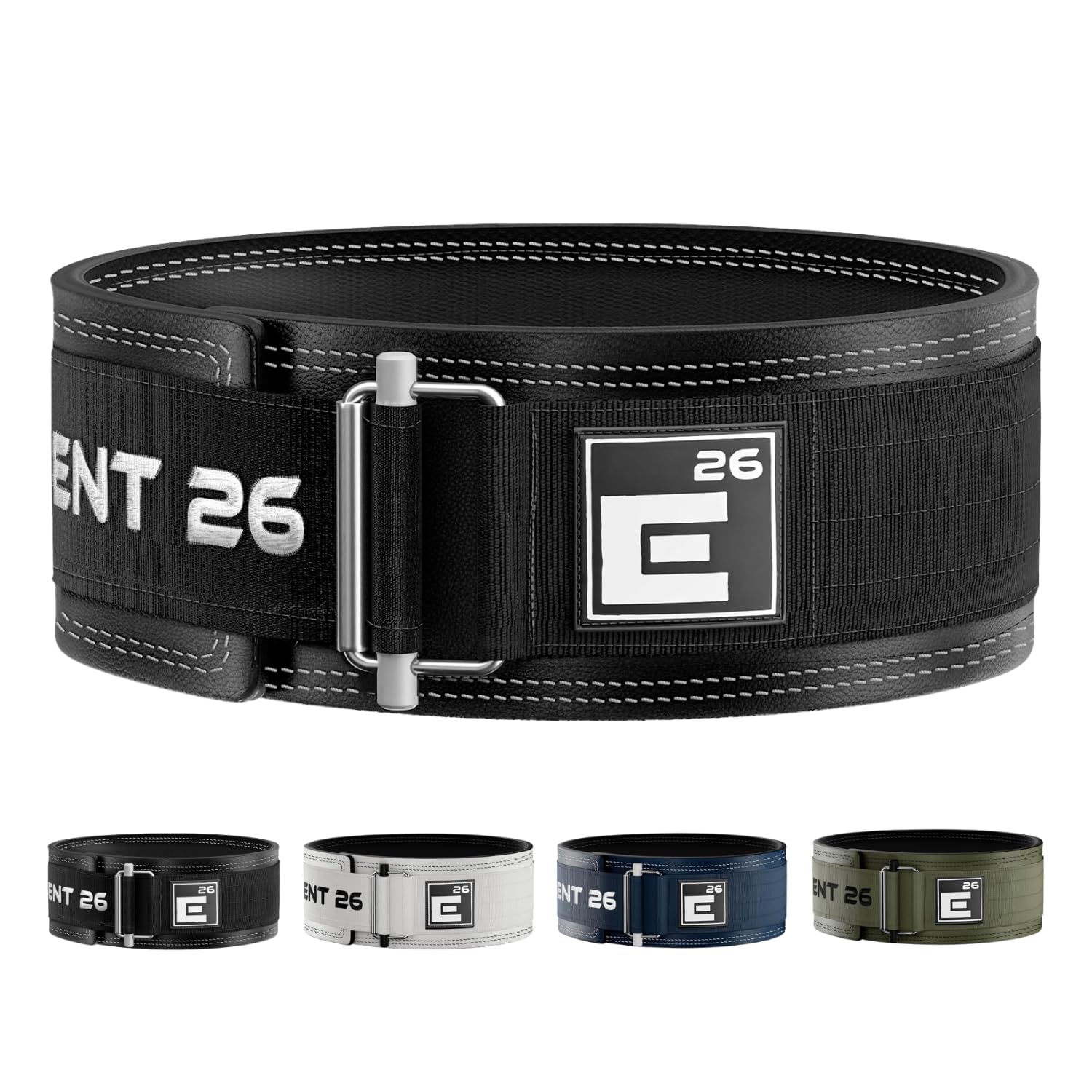
The Element 26 Hybrid stands out by merging the rigid feedback of a leather belt with the micro-adjustability of a nylon belt. Its patented self-locking system uses a velcro failsafe on top of a locking buckle, meaning you never worry about the belt popping open during a max-effort squat or clean. Designed by a Doctor of Physical Therapy, the 4-inch uniform width provides consistent intra-abdominal pressure across all lifts.
Unlike traditional prong belts that lock into preset holes, the Hybrid allows infinite tightness adjustment—you can cinch down a fraction tighter between warm-ups and working sets without unbuckling. The belt is competition-approved for Olympic lifting and functional fitness, a testament to its versatility. The thick leather core does require a short break-in period to contour to your body, but the suede exterior and nylon overlap mean it does not chew into your ribs like a raw leather edge can.
Reviewers note that the sizing runs a bit small, so measure your true waist circumference against the chart rather than going by pant size. The locking mechanism takes a few sessions to get used to, but once you dial in the technique, it delivers the fastest on-off experience of any leather belt on this list.
Why it’s great
- Self-locking buckle stays secure through heavy lifts
- Hybrid design combines leather stability with nylon convenience
- Micro-adjustable tightness without preset holes
Good to know
- Sizing runs small—measure carefully
- Velcro overlap could be longer for a more secure tail attachment
2. Iron Bull Strength 7mm Leather Belt
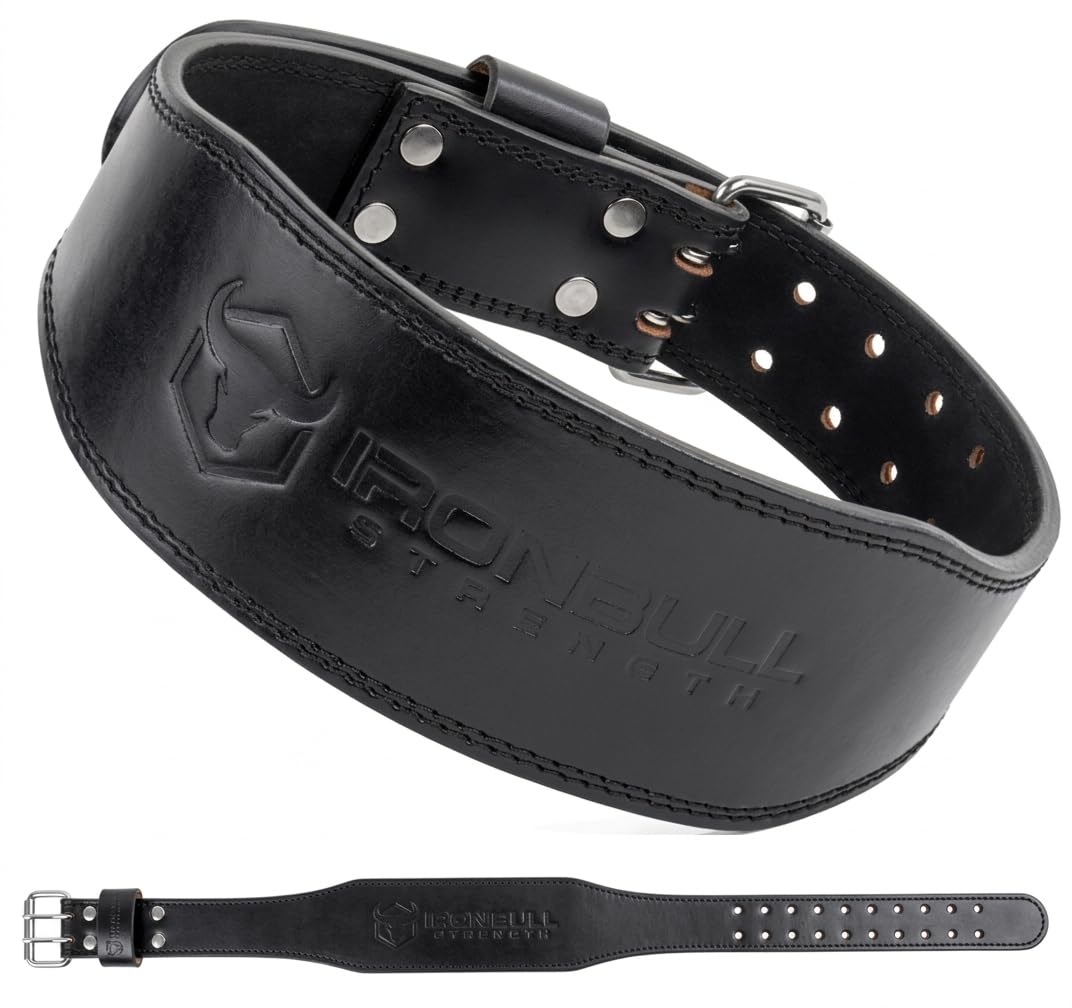
Iron Bull Strength builds this belt with a 4-inch to 2-inch taper, specifically designed for Olympic lifting and IPF-approved powerlifting. The taper reduces material in the front, giving you room to fold into a deep front squat or snatch without the belt digging into your rib cage. The single-piece A-grade leather is cut to a steady 7mm thickness with a suede exterior that grips your shirt and prevents slippage.
The double roller steel buckle prongs are coated black and built with double stitching along every seam, giving the belt a life expectancy that reaches well beyond a decade with basic care. Unlike bulkier 10mm or 13mm belts, the 7mm thickness provides enough rigidity to brace against heavy squats while remaining flexible enough for dynamic Olympic lifts. Reviewers praise the nearly non-existent break-in period compared to thicker counterparts.
It is worth noting that the belt is relatively narrow at 4 inches, which may not provide enough back surface area for taller lifters who prefer 6-inch support. The case included is a nice touch for storage, but the belt does not come with a lifetime warranty—only a 30-day satisfaction guarantee against the standard lifetime manufacturing warranty.
Why it’s great
- IPF/USAPL/USPA approved for competition
- Tapered design allows great range of motion for Olympic lifts
- Quick break-in period and suede grip
Good to know
- 4-inch uniform width may feel narrow for some lifters
- Not ideal for those seeking a max-thickness 10mm+ belt
3. Dark Iron Fitness Genuine Leather Belt
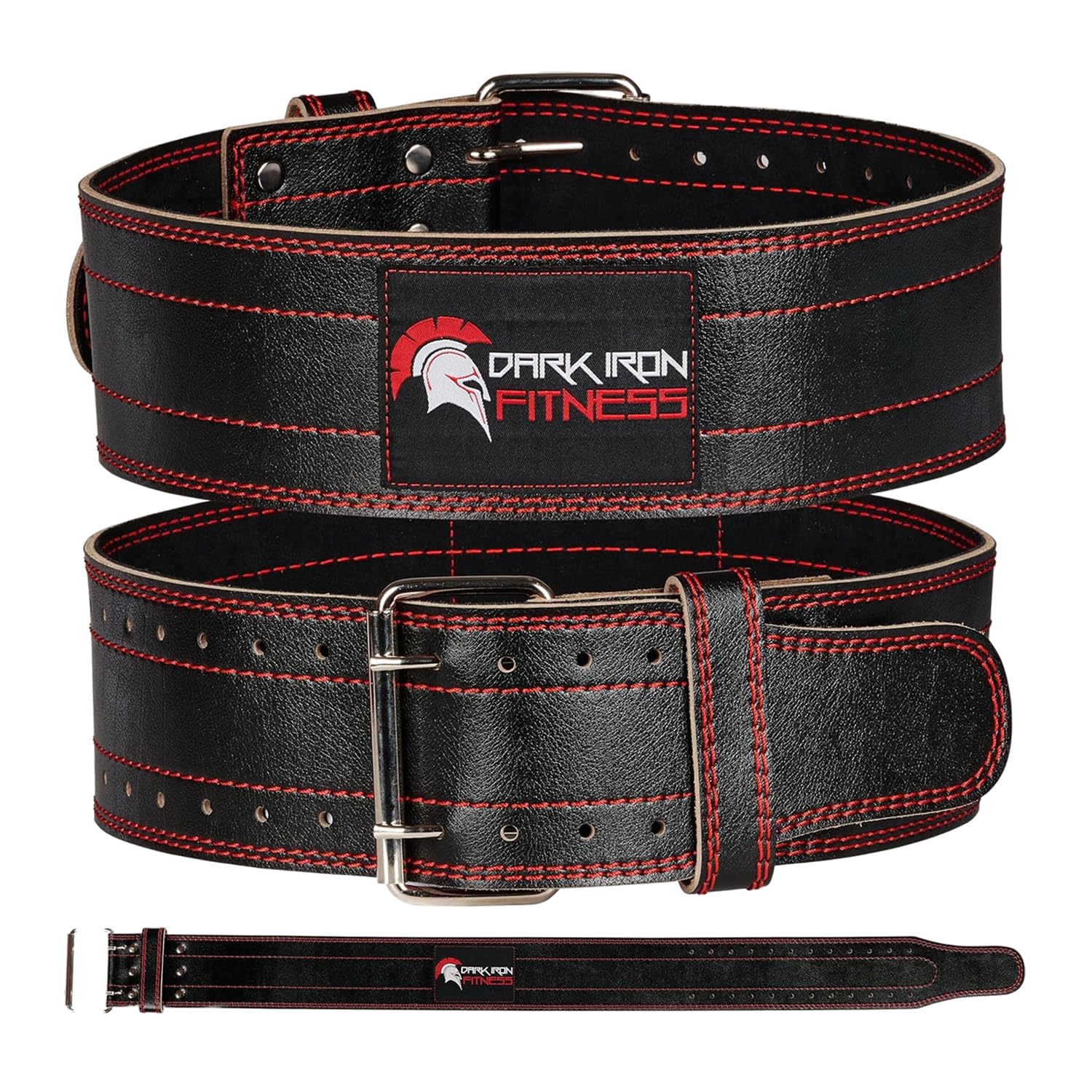
Dark Iron Fitness delivers a 100% genuine leather belt with a double-prong buckle and reinforced double-row stitching—at a price point that undercuts most premium powerlifting brands by a third. The 5mm thickness sits at the sweet spot for general strength training: stiff enough to provide meaningful back support for squats and deadlifts, but flexible enough that you can wear it for sets of bent-over rows without feeling like you are strapped into a brace.
The belt is available in sizes XS through XL, covering waists from 22 to 49 inches, with 12 adjustment holes spaced every inch. This gives you a much finer tuning range than most leather belts, which typically offer only 5 to 7 holes. The keeper loop is a useful inclusion that tucks the excess belt tail out of the way so it does not slap against the rack during deadlifts.
Some users note that the unpadded edges can dig into bare skin when you are not wearing a shirt, a common issue with leather belts at any price. The belt also arrives quite supple out of the box—some lifters wanting a rigid competition-grade feel may find it slightly too pliable for max-effort work above 600 pounds.
Why it’s great
- Excellent value for a genuine leather belt
- Double-prong buckle provides secure hold
- Wide size range with 12 adjustment holes
Good to know
- Unpadded edges can dig into skin without layers
- 5mm thickness is less rigid than competition 10mm belts
4. Fitgriff Classic Weight Lifting Belt

The Fitgriff Classic is an old-school, full-leather belt built from 100% premium cowhide with a three-layer, 5mm construction that balances durability with flexibility. The aesthetic is deliberately retro—plain black, single-stitch edging, and a solid double-prong buckle that does not look out of place in a basement gym or a commercial facility. It performs exactly as you would expect a traditional leather belt to: stiff at first, then gradually conforming to your body after several sessions of heavy compound lifts.
At 5mm, the belt is not intended for elite-level powerlifting but provides more than enough resistance for most recreational and intermediate lifters. Users comment that the leather quality is surprising for the price tier—no flimsy bonded leather or cardboard-like core. The solid rivets and robust buckle inspire confidence during deadlifts, and the 4-inch width is a standard fit that works for both squats and rows without limiting hip flexion.
The main drawback is the lack of adjustability compared to nylon or hybrid belts. With only five holes, the fit is less precise, and if you fluctuate between bulking and cutting cycles, you may find yourself between holes. The stiffness is also pronounced enough that some users suggest rolling the belt for a week before wearing it.
Why it’s great
- Authentic 100% cowhide leather construction
- Solid double-prong buckle stays secure
- Great price for the build quality
Good to know
- Limited adjustment holes—fit is less precise
- Stiff out of the box and requires a break-in period
5. DMoose Fitness Auto Locking Nylon Belt
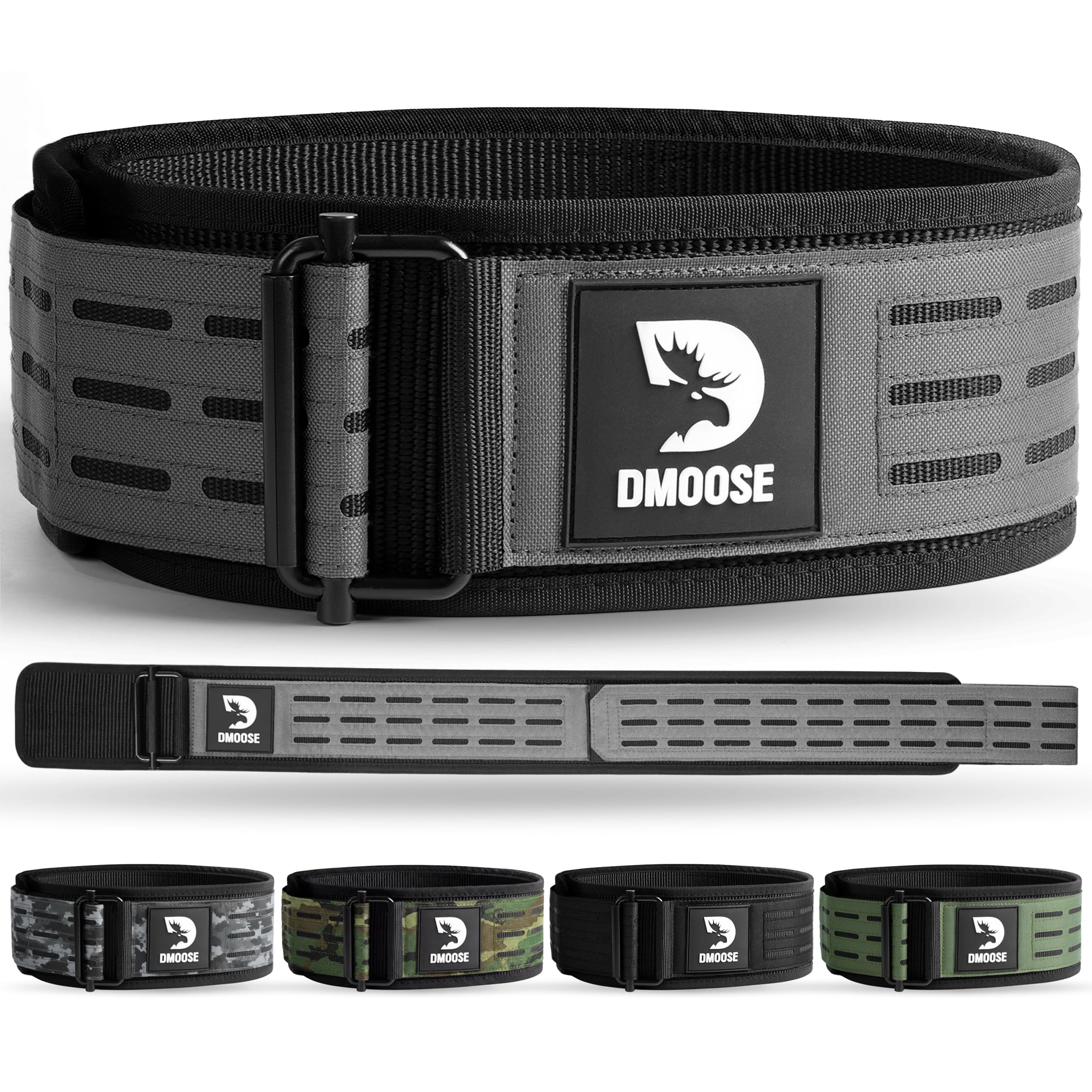
The DMoose Auto Locking belt is a 4-inch nylon option designed for lifters who want to skip the break-in period entirely and move fast between sets. The self-locking buckle cinches down with a single motion and releases with a flick, making it ideal for high-volume strength blocks or circuit training where you are swapping between a squat and a row every minute. The lightweight nylon material breathes better than leather and does not retain sweat.
Uniform pressure distribution is the hallmark of a good nylon belt, and the DMoose delivers—the 4-inch width spreads evenly across the lower back without pinching the hip bones. It is far more comfortable for full training sessions compared to stiff leather options, though the trade-off is that the flexible material provides less absolute rigidity for max-effort singles above 80 percent of your one-rep max. Users report that the auto-lock holds securely through deadlifts and squats, with no loosening between reps.
The size chart is based on navel measurement, and the belt is built to fit a wide range of body types, including both men and women. The main limitation is the finite lifespan of the nylon and locking mechanism—heavy use over several years may degrade the buckle’s hold pressure faster than a steel prong system.
Why it’s great
- Auto-lock buckle for quick on/off between sets
- Lightweight and comfortable for long sessions
- No break-in period required
Good to know
- Less rigid support for max-effort heavy singles
- Nylon and buckle may wear faster than leather over years
6. Schiek Sports 2006 6-Inch Nylon Belt

The Schiek 2006 is a 6-inch, contoured nylon belt that prioritizes comfort without sacrificing support. The contoured shape—wider at the back and narrower at the front—follows the natural geometry of your hips and ribs, eliminating the pressure points that plague straight-cut belts. This design makes it one of the only belts you can wear for an entire gym session without feeling the urge to loosen it between sets.
The nylon material is built with reinforced stitching at all stress points, and users report that the Velcro closure holds its stickiness even after six months of CrossFit and Olympic lifting multiple times per week. The extra width provides generous coverage for lifters with longer torsos who find that 4-inch belts leave their lower back exposed during heavy squats. The buckle system is not a lever but a traditional one-way Velcro with a quick-release tab, which is straightforward and serviceable.
The belt is not a competition piece—it is not IPF-approved—and the 6-inch width can limit hip extension in the bottom of a front squat or Olympic catch for shorter-limbed athletes. Some users also note that the Velcro perimeter can fray slightly over extended use, though the structural integrity of the main closure remains solid.
Why it’s great
- Contoured shape eliminates digging and pinching
- Excellent durability and Velcro hold over time
- Wide 6-inch coverage for long torsos
Good to know
- Not suitable for powerlifting competitions
- 6-inch width may restrict mobility in Olympic lifts
7. Stoic Powerlifting Belt

The Stoic belt is built for raw, uncompromising powerlifting. It uses vegetable-tanned, full-grain sole leather with a uniform 6mm thickness and zero taper—meaning it is 4 inches wide all the way around. The single-prong buckle with a seamless roller is heavy-duty (2mm thick steel) and paired with a suede exterior that grips your shirt. The result is a stiff, supportive wall that prevents your back from rounding on heavy squats and deadlifts.
This belt is not for the casual lifter. The break-in period is aggressive: the belt is extremely stiff straight out of the box, and users report needing to roll it and wear it for a month before it starts to conform. The sizing runs slightly small, so you should measure generously—several users found themselves needing to size up from their navel measurement. The raw, undyed leather edges are not finished, which is a mark of quality (no cheap filler leather) but can be abrasive against bare skin during the break-in phase.
Once broken in, the Stoic belt holds its shape without becoming floppy, even after years of use. It is fully USAPL-compliant, making it a legitimate competition belt at a fraction of the cost of some boutique brands. The main caveat is the sizing accuracy: the chart on the listing is not perfectly reliable, so read user reviews for your specific waist circumference before ordering.
Why it’s great
- Full-grain leather construction is extremely durable
- No-taper design gives uniform support for heavy pulls
- USAPL-compliant for competition use
Good to know
- Very stiff with a long, uncomfortable break-in period
- Sizing chart is unreliable—read user guidance carefully
FAQ
Should I buy a leather or nylon weightlifting belt?
How tight should my lifting belt be?
Does belt width affect performance in Olympic lifts?
Final Thoughts: The Verdict
For most users, the best weightlifting belts winner is the Element 26 Hybrid because its self-locking system and hybrid construction offer the best balance of support, adjustability, and convenience for both heavy sets and dynamic training. If you want a competition-ready leather belt with an IPF stamp, grab the Iron Bull Strength 7mm. And for the lifter who values comfort above all else and trains in high-volume circuits, nothing beats the contoured comfort of the Schiek Sports 2006.

Mo Maruf
I created WellFizz to bridge the gap between vague wellness advice and actionable solutions. My mission is simple: to decode the research and give you practical tools you can actually use.
Beyond the data, I am a passionate traveler. I believe that stepping away from the screen to explore new environments is essential for mental clarity and physical vitality.