Our readers keep the lights on and my smoothie glass nicely filled. As an Amazon Associate, I earn from qualifying purchases.
First-person view flying transforms a standard quadcopter from a distant speck into a cockpit experience, letting you see exactly what the camera sees in real time. That shift from line-of-sight piloting to immersive flight changes how you plan shots, navigate obstacles, and feel the speed of each banked turn.
I’m Mohammad Maruf — the founder and writer behind WellFizz. I’ve spent hundreds of hours analyzing spec sheets, transmission systems, gimbal stabilization, and VR headset compatibility to find the drones that actually deliver a true FPV experience without burying you in jargon.
Whether you are chasing cinematic landscapes or adrenaline-pumping freestyle runs, the right choice comes down to your willingness to wire goggles to a transmitter. This guide breaks down the best vr drone options across every skill level and budget.
How To Choose The Best VR Drone
Choosing a VR drone means matching your flying goals—cinematic footage, freestyle tricks, or simple exploration—with the right combination of camera stability, video transmission, and goggle compatibility. A cheap drone with a phone holder will never deliver the same immersion as a dedicated FPV kit with low-latency goggles.
Transmission System and Latency
The single biggest factor in VR immersion is how quickly the live feed reaches your goggles. Analog video signals offer near-zero latency but lower resolution, while digital systems like Walksnail or DJI O4 deliver HD clarity with acceptable lag. A transmission range of 10km means nothing if the picture glitches at 200m—look for dedicated digital transceivers over standard WiFi for real FPV flight.
Gimbal vs. Fixed Camera
A 3-axis mechanical gimbal keeps the horizon level through aggressive turns and wind gusts, producing cinema-smooth footage that feels natural through goggles. Fixed or single-axis cameras are lighter and cheaper but cause motion sickness in VR because the view tilts with every roll. For comfortable FPV flying, prioritise a 3-axis brushless gimbal or an HD FPV camera with a wide field of view and built-in stabilisation.
Goggles and Controller Integration
There are two camps: pre-built kits where goggles, transmitter, and drone are designed to work together, and modular systems where you mix brands. Kits from BETAFPV or DJI eliminate compatibility headaches and are far easier for beginners. Modular setups give you flexibility to upgrade individual components, but require careful attention to protocol compatibility—confirm that the goggles support the exact VTX system on your drone before buying.
Quick Comparison
On smaller screens, swipe sideways to see the full table.
| Model | Category | Best For | Key Spec | Amazon |
|---|---|---|---|---|
| BETAFPV Cetus Pro FPV Kit | FPV Kit | Absolute beginners learning acro mode | VR02 goggles, LiteRadio 2 SE transmitter | Amazon |
| Holy Stone HS790 | GPS Camera | Cinematic aerial photography on a budget | 3-axis brushless gimbal, 4K/30fps | Amazon |
| Bwine F7MINI 4K (RC3) | All-in-One | Standalone FPV without a phone | 5.5″ 1080P controller screen, 3-axis gimbal | Amazon |
| Ruko U11MINI 4K (RC3) | All-in-One | Portable 4K with no phone tether | 5.5″ 1080P touchscreen, 3-axis gimbal | Amazon |
| DJI Neo 2 Fly More Combo | FPV Beginner | Entry-level immersive FPV with motion controls | DJI Goggles N3, RC Motion 3, 151g | Amazon |
| DJI Avata 2 Fly More Combo | FPV Pro | Immersive freestyle and POV content | DJI Goggles 3, RC Motion 3, 155° FOV | Amazon |
| CADDXFPV Walksnail Goggles X | Goggles Only | High-end VR upgrade for Walksnail VTX drones | 1080p dual displays, 50° FOV, 22ms latency | Amazon |
| Karuisrc GPS Drone with EIS Camera | GPS Camera | Beginner with built-in FPV screen | 4.5″ LCD on controller, GPS auto return | Amazon |
| REDRIE HK33 4K Drone | Beginner GPS | Budget-friendly first drone with FPV | 2-axis gimbal, 300m FPV transmission | Amazon |
In‑Depth Reviews
1. BETAFPV Cetus Pro FPV Kit

The Cetus Pro is the rare FPV kit that actually works out of the box for a complete beginner. It includes the brushless Cetus Pro whoop quad, LiteRadio 2 SE transmitter, and VR02 goggles—everything needed for true first-person flight without any soldering or Betaflight configuration. The three flight modes (Normal, Sport, Manual) let you progress from stabilised hovering to full acro control at your own pace, and the altitude hold function in Normal mode keeps the drone steady when you let go of the sticks.
Durability is where this kit really shines. The lightweight frame survives repeated crashes into walls, trees, and even dog water bowls—reviewers report losing only props after full-speed impacts. The turtle mode is a lifesaver for beginners: if the drone lands upside down, you can flip it over with the transmitter instead of walking across the field. Battery life is short at around 3-5 minutes per 450mAh pack, but two batteries are included and the BT2.0 connector delivers consistent power right up to the low-voltage cutoff.
The VR02 goggles are basic but functional, with a clear enough picture for learning line-of-sight transitions. The kit does not include an orientation light, which can be disorienting in Manual mode at a distance, and the stock configuration utility did not work for some users. Overall, this is the most cohesive entry point into real FPV flying and the best choice for anyone serious about learning acro without buying piecemeal components.
Why it’s great
- Complete kit with goggles, transmitter, and drone
- Three flight modes scale from stabilised to manual acro
- Turtle mode saves walking after upside-down crashes
- Extremely durable frame survives beginner mistakes
Good to know
- Very short flight time; extra batteries recommended
- No orientation light makes distant flying tricky
- Configuration utility may not work on all systems
2. Holy Stone HS790 6K Photo Drone
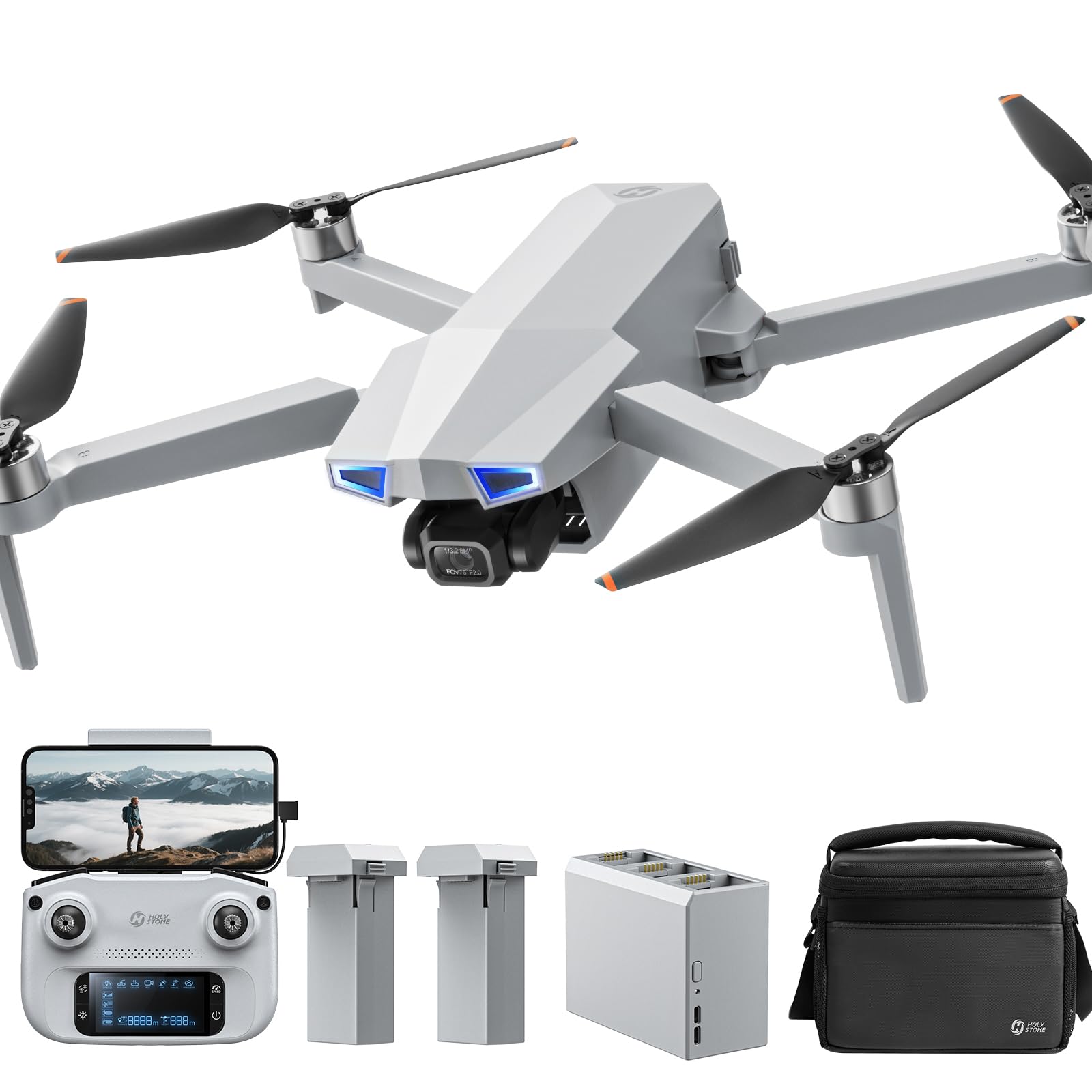
Holy Stone’s HS790 delivers a proper 3-axis brushless gimbal at a price that undercuts many competitors by a significant margin. The mechanical stabilisation keeps 4K/30fps footage perfectly level even in moderate wind, and the 6K photo resolution gives you cropping headroom after the fact. The 30,000ft WiFi repeater transmission range is ambitious—real-world signal stays solid well past 1km in open areas, though latency is higher than a dedicated digital FPV system, making it better for framed shots than aggressive proximity flying.
Beginner-friendliness is a highlight: one-key takeoff and landing, altitude hold, headless mode, and speed adjustment make it easy for new pilots to get airborne without panic. The dual intelligent batteries and fast-charging hub push total flight time to around 60 minutes, which is excellent for a drone in this price tier. The Smart PD Charging Hub also doubles as a portable power bank, useful for topping up a phone on location.
Night mode and built-in Remote ID compliance add genuine utility. The navigation lights are bright enough for twilight orientation, and the RID broadcast keeps you legal in US airspace without an external module. The app can be buggy—some users reported laggy FPV and a gimbal that struggles during fast yaw turns. But for scenic flights, family events, and travel photography, the HS790 offers stabilisation and range that far exceed its price tier.
Why it’s great
- True 3-axis mechanical gimbal for smooth footage
- Dual batteries with fast-charging hub provide 60 min total flight
- Built-in Remote ID compliance for US airspace
- Beginner modes make it flyable straight out of the box
Good to know
- App FPV lags; better for framed shots than dynamic flying
- Gimbal struggles during fast yaw turns
- Weighs more than 249g, requiring FAA registration
3. DJI Avata 2 Fly More Combo

The DJI Avata 2 represents the current pinnacle of consumer FPV. The integrated propeller guards, combined with the DJI Goggles 3 and RC Motion 3 controller, create an immersive experience where you control the drone simply by tilting your wrist. The 155° field-of-view camera and 1/1.3-inch sensor capture 4K/60fps footage with a cinematic perspective that no phone-mounted FPV system can match. The built-in storage and LightCut app integration make it easy to edit and share POV content immediately after landing.
Flight stability is dramatically improved over the original Avata. The drone feels planted in the air even in gusty conditions, and the easy acrobatics—flips, rolls, and 180° drifts—are genuinely accessible after just a few flights. The Fly More Combo includes one battery, a charging hub, and spare props, though aggressive FPV flight will drain that battery in about 15 minutes. The goggles 3 offer a crisp OLED display with diopter adjustment, and the head-tracking feature (when paired with a compatible gimbal) adds another layer of immersion.
This is not a drone for casual photography—the wide FOV and fixed camera angle are designed for dynamic flying, not hovering over a picnic. The cost is substantial, and the ecosystem lock-in means you are committed to DJI’s accessories and software. But for anyone serious about FPV cinematography and freestyle flying, the Avata 2 delivers a polished, drop-in solution that works every time.
Why it’s great
- Integrated propeller guards for safe indoor and tight flying
- 155° FOV camera and 4K/60fps capture with stunning dynamic range
- Intuitive motion controller makes acro tricks accessible immediately
- DJI Goggles 3 with OLED displays and diopter adjustment
Good to know
- Single battery included; buy extras for extended sessions
- Wide FOV is not ideal for standard photography
- Locks you into the DJI ecosystem for future upgrades
4. Bwine F7MINI 4K (RC3)
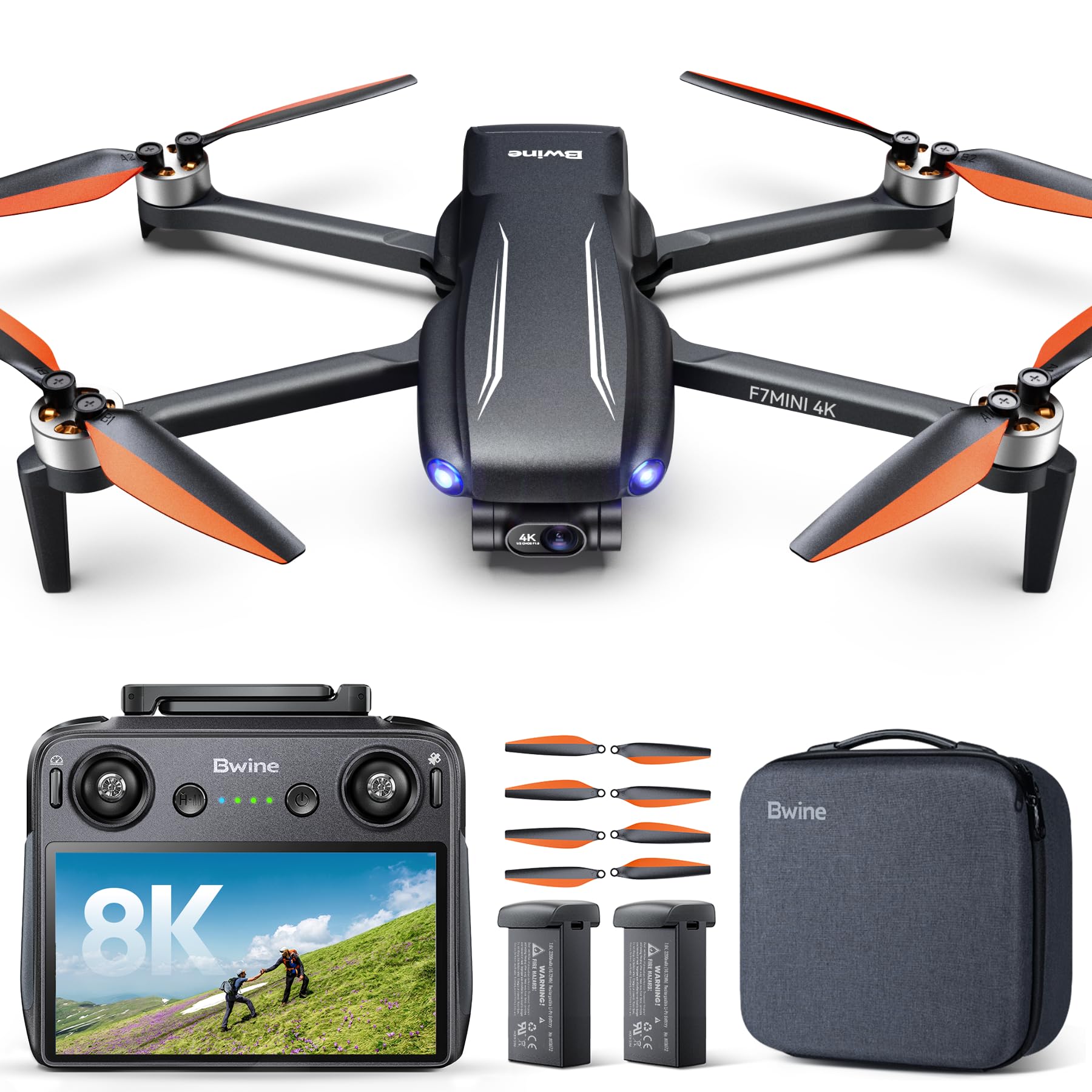
The Bwine F7MINI 4K (RC3) eliminates the biggest annoyance of budget FPV drones: the need to tether your phone to the controller. The remote has a built-in 5.5-inch 1080P touchscreen with 500 nits of brightness, which means you get a clear live view without fumbling with a phone mount or dealing with app crashes. The 3-axis brushless gimbal and EIS keep footage smooth, and the 48MP photos and 4K video are genuinely usable for social media and small projects. The 20,000ft transmission range is a real-world 1-2km in suburban environments with low latency.
Weighing exactly 249g, the F7MINI sneaks under the FAA registration threshold, which is a major convenience for casual flyers. The two 2200mAh batteries deliver a combined 64 minutes of flight time, and the smart return-to-home includes dynamic home point updates that follow the controller. GPS modes like Active Track, Cruise Control, Orbit, and Waypoint Planning are surprisingly reliable at this price point, offering features usually reserved for drones costing twice as much.
The carbon-fiber-reinforced frame feels sturdy, and the included hard carrying case protects everything during transport. The 120dB locator buzzer is a practical touch for finding the drone in tall grass. The main limitation is the WiFi-based transmission—it is not a dedicated digital system, so penetration through obstacles is weaker than DJI’s O4 or Walksnail. But as a standalone FPV platform that does not require a phone, this is an exceptional value.
Why it’s great
- Built-in 5.5″ 1080P touchscreen controller, no phone needed
- Under 249g, FAA registration not required
- 3-axis gimbal with EIS delivers smooth 4K footage
- 64-minute total flight with two batteries
Good to know
- WiFi transmission has weaker obstacle penetration than digital systems
- File transfer from controller to phone is slow
- GPS acquisition can take 60-90 seconds on first launch
5. Ruko U11MINI 4K (RC3)
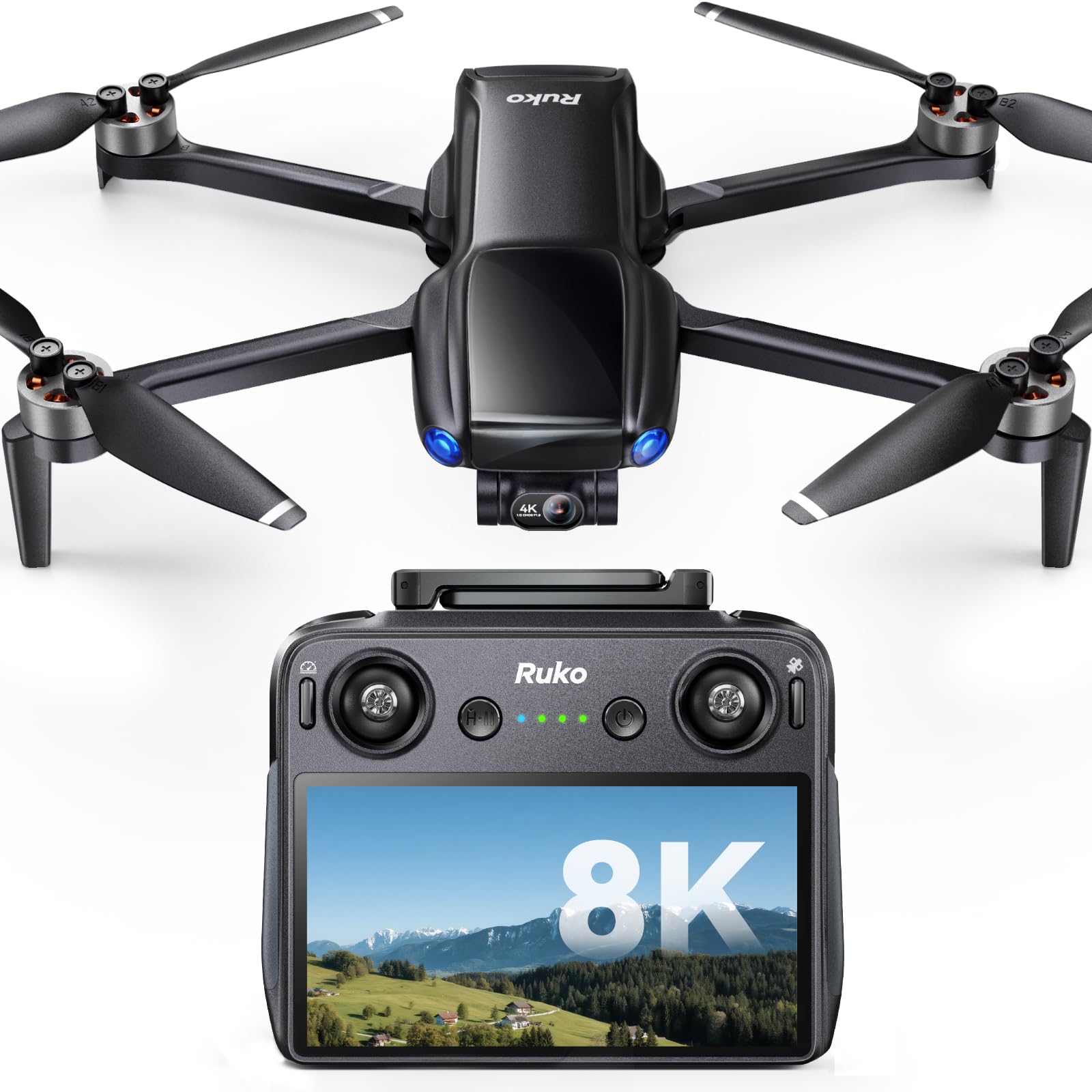
Ruko’s U11MINI 4K (RC3) follows the same “no phone required” philosophy as the Bwine F7MINI, but with a few key differences. The 5.5-inch 1080P touchscreen controller is identical in size but Ruko uses its own R2 digital transmission system instead of standard WiFi, which improves signal penetration and reduces lag in open fields. The 1/2-inch CMOS sensor captures 8K photos and 4K/30fps video, and the 3-axis mechanical gimbal keeps the horizon perfectly level even during aggressive maneuvers. The 20,000ft transmission range is usable in real-world conditions out to about 1.5km.
Weighing under 249g, the U11MINI is FAA-exempt and fits easily into a daypack. The quadruple positioning system—GPS, barometer, TOF, and optical flow—provides solid altitude hold indoors and precise GPS hover outdoors. AI takeoff and landing, combined with one-key return and failsafe features, make it safe for complete beginners. The two intelligent batteries deliver a combined 64 minutes of flight time, and the smart PD 3.0 fast charging reduces downtime between flights.
Customer service is a genuine differentiator here: Ruko offers 24/7 support, 30-day returns, and a 90-day warranty, and multiple reviewers praised their responsiveness when resolving hardware issues. The main downside is the firmware update process—the initial download is large and slow, and some users experienced the controller freezing during updates. Once updated, the system runs reliably, but the first-time setup requires patience and a stable internet connection.
Why it’s great
- R2 digital transmission provides better penetration and lower latency
- Under 249g with FAA exemption and compact footprint
- Quadruple positioning for stable flight indoors and out
- Responsive customer service and solid warranty coverage
Good to know
- Initial firmware update is very large and time-consuming
- File transfer from controller to phone is cumbersome
- Battery performance drops noticeably in cold weather
6. DJI Neo 2 Motion Fly More Combo
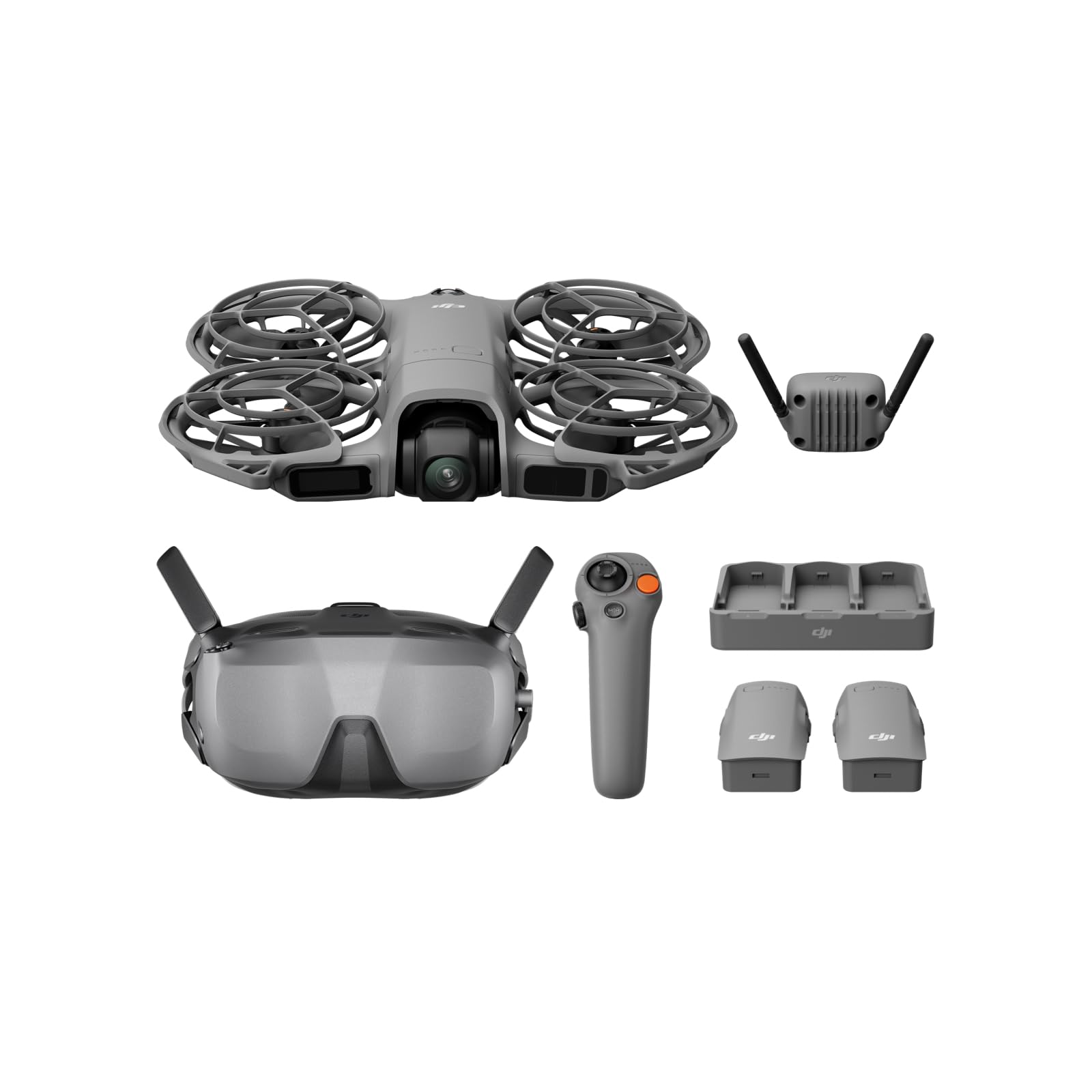
The DJI Neo 2 Motion Fly More Combo is DJI’s most accessible FPV package, combining the lightweight Neo 2 drone (151g) with the RC Motion 3 controller and Goggles N3. The sub-250g weight means no FAA registration, and the full-coverage propeller guards make it safe for flying indoors or near people. The motion controller is intuitive—point the device to steer, tilt to yaw—and the goggles provide a clear, low-latency HD feed that makes you feel like you are sitting inside the quad.
ActiveTrack runs reliably on the Neo 2, keeping a subject in frame during walking, jogging, or biking. The palm takeoff and landing feature is genuinely neat: the drone launches from your hand and returns to it, eliminating the need for a flat takeoff surface. The three-battery Fly More Combo is essential, because each battery gives only about 15 minutes of active flight, and the digital transceiver ensures a stable connection even at the edge of range.
The trade-off is that the Neo 2 is underpowered compared to the Avata 2—it will not handle strong winds as well, and the 4K camera lacks the dynamic range of larger sensors. The short flight time also requires disciplined battery management. But for the price, this is the most cohesive, beginner-friendly FPV package available, and it works perfectly for travel, family events, and learning the basics of immersive flight.
Why it’s great
- Lightest FPV combo at 151g with no FAA registration needed
- Intuitive motion controller makes FPV flying immediate
- Full-coverage propeller guards for safe indoor flying
- Palm takeoff and landing eliminates need for launch pad
Good to know
- Short 10-15 minute flight times; three batteries are minimum
- Less wind resistance than larger FPV drones
- Camera quality is good but not cinematic-grade
7. CADDXFPV Walksnail Avatar HD FPV Goggles X
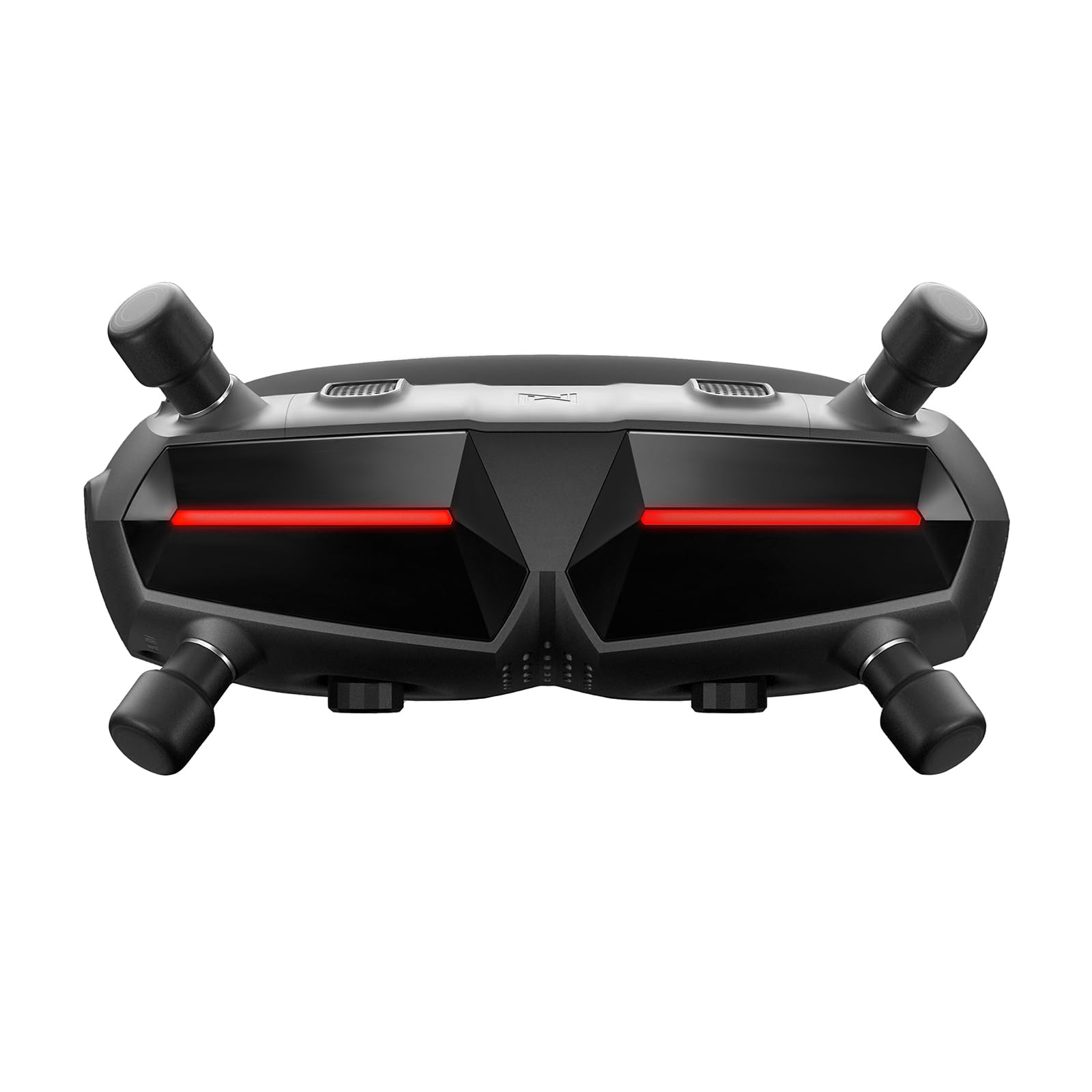
The CADDXFPV Walksnail Goggles X are not a drone—they are a high-end FPV goggle system designed for pilots who already have a Walksnail-compatible drone VTX kit. The dual 1920×1080 HD displays with a 50° field of view deliver the sharpest, most immersive FPV image currently available at this price. The 22ms ultra-low latency is imperceptible in flight, and the 10km transmission range is genuinely usable for long-range cruising. The modular design supports HDMI and AV input, making it compatible with analog systems as well.
The diopter adjustment range (+2.0 to -6.0) covers most prescriptions without needing corrective inserts, and the IPD adjustment (57-72mm) accommodates a wide range of face shapes. The built-in intelligent cooling fan prevents fogging during extended sessions, which is a common issue with sealed goggle designs. The head-tracking gyroscope works seamlessly with compatible gimbal mounts, adding a layer of immersion that fixed-view goggles lack.
The biggest issue is the stock foam gasket. Multiple reviewers reported that the standard foam pad does not seal well on narrow faces, causing light leaks and preventing them from seeing the full screen corners. An optional softer foam pad is available separately, but it should really be included. The goggles also require an external battery (XT60 to DC 5.5mm), which is not included. For Walksnail ecosystem users, these are the best goggles on the market, but they are not a standalone purchase.
Why it’s great
- Crisp 1080p dual displays with expansive 50° FOV
- Ultra-low 22ms latency and 10km transmission range
- Diopter adjustment covers most prescriptions without inserts
- Head-tracking gyroscope and multi-interface input support
Good to know
- Stock foam gasket does not fit all face shapes properly
- Requires an external battery—not included in the box
- Compatible only with Walksnail Avatar VTX systems
8. Karuisrc GPS Drone with EIS Camera
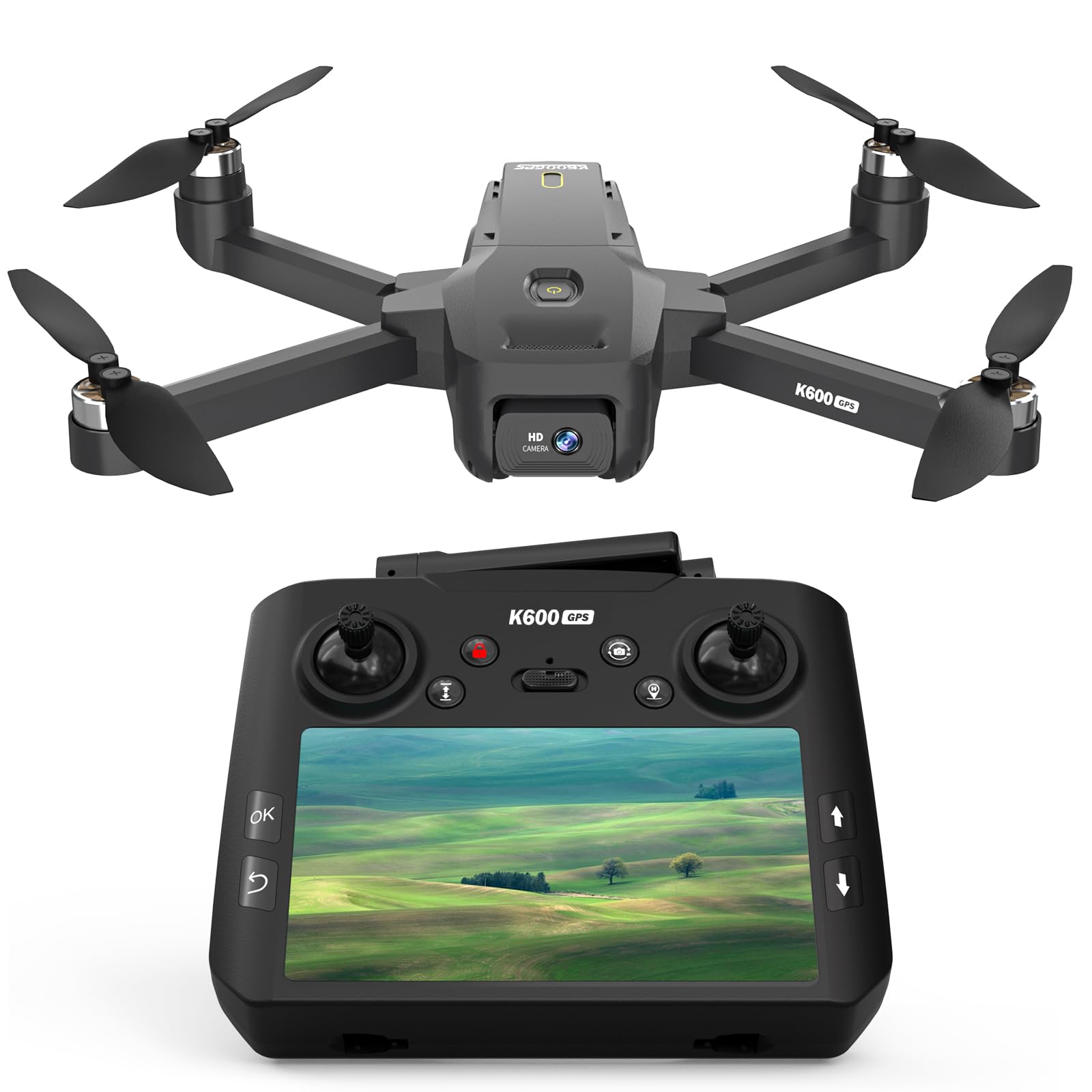
Karuisrc’s GPS drone packs a 4.5-inch built-in LCD screen into the controller, giving you a dedicated FPV feed without needing a phone mount—a feature usually reserved for more expensive models. The EIS camera (electronic image stabilization) smooths out mild shakes, and the 2-axis gimbal helps keep the horizon straight during gentle flight. GPS positioning is stable, and the auto return-to-home function works reliably when signal is lost or battery runs low. The 400m control range is sufficient for park flying and backyard exploration.
The follow-me, orbit, and waypoint navigation modes are surprisingly functional at this price level. The brushless motors provide smooth, quiet power, and the under-249g weight keeps it FAA-exempt. The 2200mAh battery delivers around 20 minutes of flight time, which is above average for this tier. Multiple reviewers highlighted how easy the drone is to set up and how stable it hovers in GPS mode, making it a stress-free first drone for someone who wants a taste of FPV without the complexity of separate goggles and transmitter configurations.
The camera quality is adequate for social media but falls short of the 4K claims—the EIS introduces some jelly effect during fast pans, and low-light performance is poor. The 4.5-inch screen is bright enough outdoors but can be hard to see in direct sunlight directly on the controller. Despite these cuts, the Karuisrc delivers the most important FPV feature—a screen on the controller—at a price point that undercuts the competition significantly.
Why it’s great
- Built-in 4.5″ LCD screen eliminates phone tethering
- GPS auto return and follow-me modes work reliably
- Under 249g with FAA exemption
- Brushless motors for quiet, smooth flight
Good to know
- Camera struggles with fast pans and low light
- 4.5″ screen can be hard to see in bright sunlight
- Short 400m control range limits exploration
9. REDRIE HK33 4K Drone
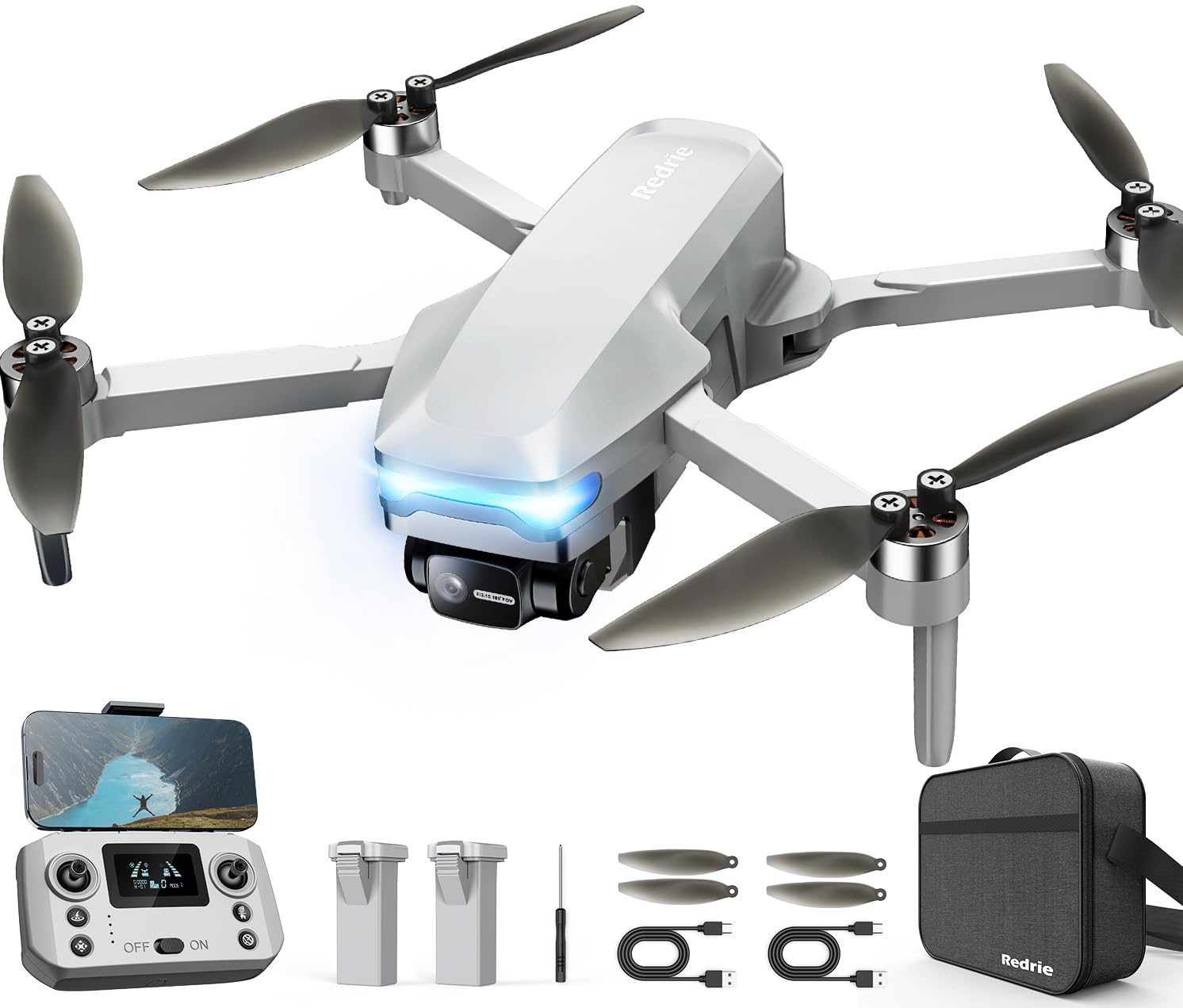
The REDRIE HK33 is the most affordable entry point in this guide, and it manages to include a 2-axis gimbal and GPS follow-me at a price that usually buys fixed-camera toy drones. The 2-axis gimbal eliminates vertical and horizontal shake, producing watchable footage that would be impossible without mechanical stabilisation. The 4K photo resolution is oversampled but fine for social posts, and the 2K video mode smooths out the compression artifacts that plague budget drone footage. The 300m FPV transmission range is adequate for learning the basics of line-of-sight flying with a screen reference.
The brushless motors deliver reliable thrust even in moderate wind, and the GPS module includes smart return-to-home on signal loss or low battery—a critical safety feature at this price. The foldable design and included carrying case make it genuinely portable, and the two 1800mAh batteries provide a combined 40-45 minutes of flight time. The aircraft weighs under 249g, so no FAA registration is needed.
The camera feed through 5G WiFi has noticeable latency—do not expect to fly this through goggles behind trees. The gimbal is 2-axis, so horizon drift in level turns is visible on playback. The 500m maximum signal range is optimistic, with real-world usable range closer to 200-300m in open areas. But for a first drone that includes both FPV capability and mechanical stabilisation, the HK33 offers an honest baseline experience that prepares you for more capable gear.
Why it’s great
- 2-axis gimbal provides real mechanical stabilisation at low cost
- Under 249g with FAA-exempt weight and carrying case
- GPS follow-me and auto return-to-home for safety
- Two batteries deliver 40+ minutes of total flight time
Good to know
- FPV feed has noticeable latency, not suitable for fast flying
- 2-axis gimbal drifts horizon during yaw turns
- Advertised 500m range is closer to 200-300m in practice
FAQ
Can I use any VR headset with a drone?
How much latency makes FPV flying unpleasant?
What is the difference between FPV goggles and a phone mount?
Do I need FAA registration for an FPV drone?
Final Thoughts: The Verdict
For most users, the best vr drone winner is the BETAFPV Cetus Pro FPV Kit because it bundles everything needed for true low-latency first-person flying into a single durable package at a reasonable price. If you want cinematic cinematography with a 3-axis gimbal and a built-in controller screen, grab the Bwine F7MINI 4K (RC3). For premium immersive freestyle flying with the best digital FPV system on the market, nothing beats the DJI Avata 2 Fly More Combo.

Mo Maruf
I created WellFizz to bridge the gap between vague wellness advice and actionable solutions. My mission is simple: to decode the research and give you practical tools you can actually use.
Beyond the data, I am a passionate traveler. I believe that stepping away from the screen to explore new environments is essential for mental clarity and physical vitality.