Our readers keep the lights on and my smoothie glass nicely filled. As an Amazon Associate, I earn from qualifying purchases.
An underwater video camera faces a brutal reality: water absorbs light, scatters particles, and introduces motion that ruins a standard lens’s focus. Most consumer cameras turn into useless bricks past a few feet. The right camera, however, uses a dedicated sensor, a waterproof housing rated to a specific depth, and color-correction algorithms to deliver footage that actually looks like the reef or wreck you swam through — not a murky green blur.
I’m Mohammad Maruf — the founder and writer behind WellFizz. I’ve spent years analyzing specifications across action cameras, point-and-shoots, and dive-specific rigs, focusing on measurable metrics like sensor size, depth ratings, stabilization algorithms, and bitrates that determine real-world underwater performance.
My research zeroes in on the models that combine rugged depth ratings with the color science and stabilization needed to produce watchable footage. This guide covers the best underwater video camera options available across every meaningful use case and budget tier.
How To Choose The Best Underwater Video Camera
Selecting an underwater video camera is not about the highest resolution. It is about matching three physical constraints: the depth you plan to reach, the available light at that depth, and the camera’s ability to stabilize footage against surge and hand shake. Ignoring any of these produces unwatchable clips regardless of pixel count.
Depth Rating and Housing Integrity
The depth rating tells you how far down the camera can go without its internal components being crushed or flooded. A rating of 33 feet (10 meters) suits snorkeling and shallow reef exploration. For recreational scuba diving to 60-100 feet, you need a camera rated for at least 50-65 feet, or one that fits inside a dedicated dive housing. The rating is not a suggestion — exceeding it voids the seal and destroys the camera.
Sensor Size and Low-Light Performance
Water absorbs red and orange light first, which means at depth, your scene is lit only by the blue-green spectrum. A larger sensor (1/1.3-inch or bigger) captures more total light, giving the image processor more data to work with before noise sets in. Cameras with tiny sensors produce grainy, flat footage even with bright sunlight overhead. The sensor size is the single most important spec for underwater color rendition and clarity.
Stabilization in Fluid Environments
Underwater, you are never perfectly still. Surge, current, and your own breathing create constant micro-movements that translate into shaky video. Electronic image stabilization (EIS) helps, but gyro-based systems that lock the horizon — like HorizonSteady or FlowState — are far more effective because they compensate for roll-axis tilt, not just vertical shake. Without solid stabilization, even 8K footage looks amateur.
White Balance and Color Correction Tools
Cameras that offer manual white balance adjustment or dedicated underwater presets produce footage with natural-looking colors at depth. The best models include a color temperature sensor that automatically adjusts the white balance as you descend, removing the blue-green cast without post-processing. If you plan to edit later, a flat color profile like C-Log or D-LogM preserves shadow and highlight detail for grading.
Quick Comparison
On smaller screens, swipe sideways to see the full table.
| Model | Category | Best For | Key Spec | Amazon |
|---|---|---|---|---|
| DJI Osmo Action 6 | Premium | Divers & advanced vloggers | 8K, Variable f/2.0–f/4.0 | Amazon |
| Canon PowerShot V1 | Premium | Vloggers & travel creators | 22.3MP, Canon Log 3 | Amazon |
| SeaLife Micro 3.0 | Dive-Specific | Serious divers & snorkelers | 16MP, 2000 Lumen Light | Amazon |
| DJI Osmo Action 5 Pro | Mid-Range | All-round action shooters | 4K/120fps, 20m Waterproof | Amazon |
| Insta360 X4 | Premium | 360° immersive shots | 8K 360°, 33ft waterproof | Amazon |
| OM System Tough TG-7 | Mid-Range | Macro & snorkeling | 4x Zoom, 50ft Waterproof | Amazon |
| Xtra Edge Pro | Mid-Range | Deep water action | 65ft Waterproof, 240min Battery | Amazon |
| Xtra Edge | Budget | Entry-level underwater use | 52ft Waterproof, 1/1.3″ Sensor | Amazon |
| SJCAM C400 | Budget | Travel vlogging & POV | 7H Battery, 30m Waterproof | Amazon |
In‑Depth Reviews
1. DJI Osmo Action 6 Enhanced Combo
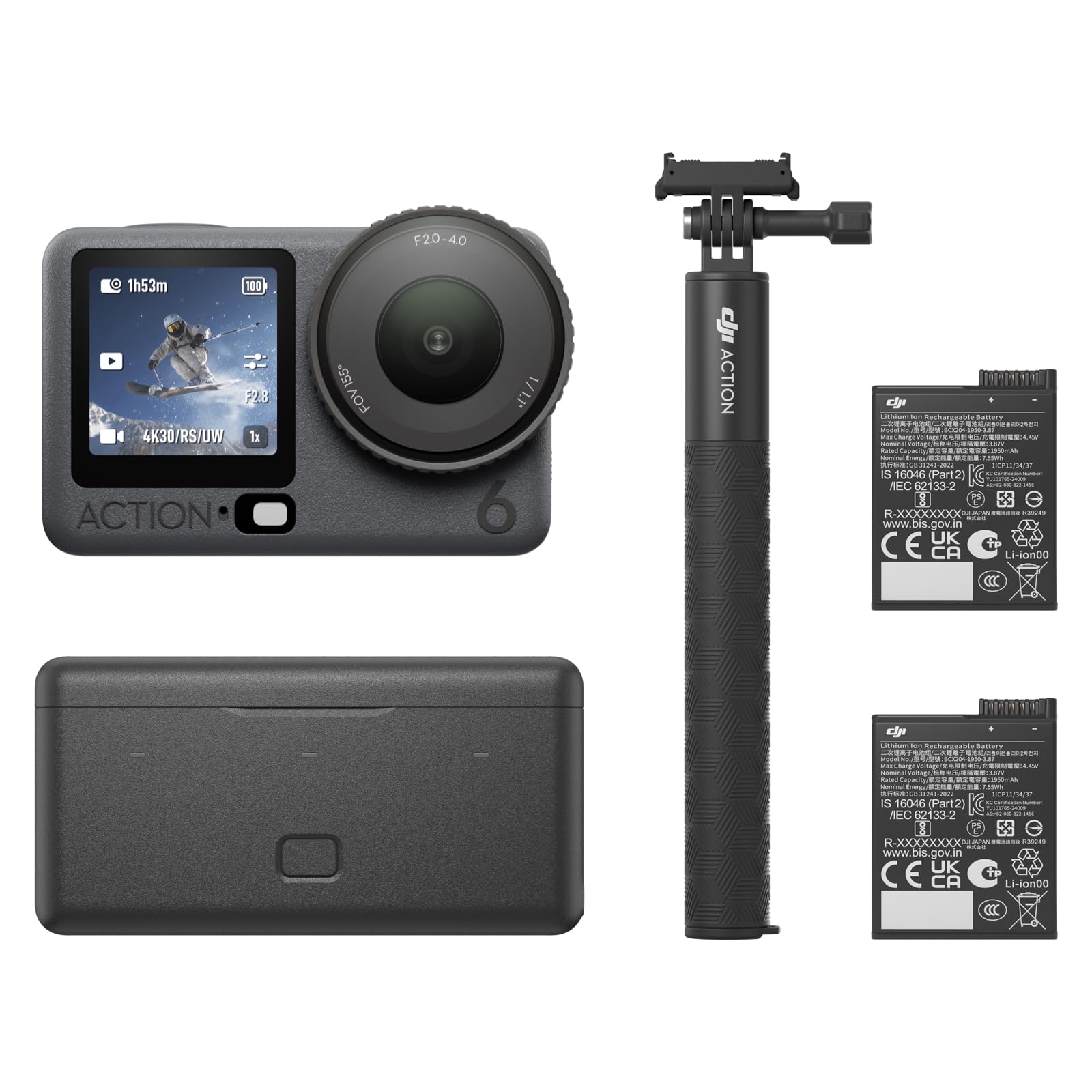
The DJI Osmo Action 6 sets a new benchmark for underwater video with its 1/1.1-inch square sensor and variable aperture ranging from f/2.0 to f/4.0. This combination allows you to adapt to changing light conditions — from bright surface snorkeling to dimmer depths — without sacrificing shutter speed or introducing noise. The 8K resolution at 30fps provides generous headroom for cropping and reframing in post, which is invaluable when you cannot perfectly frame a moving marine subject.
Waterproof to 20 meters without a housing, the Action 6 also features HorizonSteady stabilization that locks the roll axis, keeping horizons level even when you are pushed by current or turning to follow a sea turtle. The Enhanced Combo includes two Extreme Batteries (1950mAh each) and a multifunctional battery case, extending total recording time well beyond a single dive session. The cold-resistant design ensures the batteries keep delivering power even in chilly freshwater springs.
On the audio side, the camera connects directly to two DJI Mic 2 transmitters without requiring a receiver, making it a viable option for narrated dive vlogs. The 50GB of built-in storage provides a solid buffer if you forget your SD card, though serious users will still want a high-speed UHS-II card. The only real compromise is the limited menu selection when using an aftermarket waterproof housing, but the stock design already reaches 20 meters, which covers most recreational diving.
Why it’s great
- Variable aperture adapts to changing light at depth for consistent exposure.
- HorizonSteady keeps footage level regardless of surge or rotation.
- 50GB internal storage offers peace of mind on long dive days.
Good to know
- Aftermarket waterproof housings limit menu accessibility.
- In-camera microphone captures wind noise without a foam windsock.
2. Canon PowerShot V1

The Canon PowerShot V1 is a hybrid camera designed for vlogging and content creation, featuring a built-in 16-50mm F2.8-4.5 wide-angle zoom lens (35mm equivalent) and a 1.4-type 22.3MP sensor. While it is not waterproof out of the box, its compact form factor makes it an ideal candidate for dedicated third-party underwater housings, offering a traditional camera experience with optical zoom — a rarity in the action camera space. The F2.8 aperture at the wide end allows solid light gathering for reef and pool shooting.
Canon Log 3 recording with 10-bit color depth gives videographers a wide dynamic range to grade underwater footage, restoring reds and oranges that get absorbed at depth. The built-in cooling fan enables extended 4K recording sessions without thermal shutdown, which is critical when shooting long dives or live streams. The hybrid autofocus system with 100 points keeps subjects sharp even as they swim in and out of frame.
The V1 supports UHS-II SD cards for high bitrate recording, and its USB-C PD charging means you can top up between dives using a standard power bank. It lacks in-body stabilization, so a gimbal or housing that provides steady support is recommended for underwater use. The absence of a built-in flash is not an issue underwater, where strobes or video lights are mandatory anyway. For creators who want a proper camera sensor in a pocketable body, this is the strongest option.
Why it’s great
- Optical zoom provides framing flexibility that action cameras lack.
- Canon Log 3 with 10-bit color preserves detail for underwater color grading.
- Built-in fan prevents overheating during long 4K recording sessions.
Good to know
- Not waterproof; requires a separate housing for underwater use.
- No in-body optical stabilization; rely on a gimbal or housing support.
3. SeaLife Micro 3.0 Limited Edition Explorer

The SeaLife Micro 3.0 is purpose-built for underwater imaging — it is permanently sealed and leak-proof, removing the single point of failure that plagues action cameras with removable battery doors. This Explorer Gift Set bundles the camera with a Sea Dragon 2300F COB LED light that delivers 2000 lumens in a 120-degree beam with an 80 CRI rating, replicating natural sunlight for accurate color at depth. The light runs for 80 minutes at full power on its rechargeable battery, which is enough for a typical recreational dive.
The camera captures 16MP stills and 4K UHD video, with a manual white balance adjustment that lets you dial in accurate colors as you descend. The RAW photo format gives advanced users flexibility in post-processing to recover lost color channels. The three large “piano key” buttons are easy to operate even with thick dive gloves, and the on-screen Easy Setup guides you through choosing the correct mode based on depth and lighting conditions.
Built-in Wi-Fi and a 64GB internal memory mean you can start shooting immediately without buying a separate memory card or cable. The included Flex-Connect tray and grip provide a stable platform for the camera and light, reducing arm fatigue during long dives. The primary drawback is the light’s 80-minute runtime at full power — for multiple dives in a day, you will need a spare battery or a lower power setting. The permanently sealed design also means the battery is not user-replaceable once it wears out.
Why it’s great
- Permanently sealed design eliminates flood risk from user error.
- 2000 lumen video light restores natural color at depth.
- Large glove-friendly buttons and intuitive setup menus.
Good to know
- Light battery lasts 80 minutes at full power; plan for multiple dives.
- Sealed body means the internal battery cannot be replaced by the user.
4. DJI Osmo Action 5 Pro Bundle
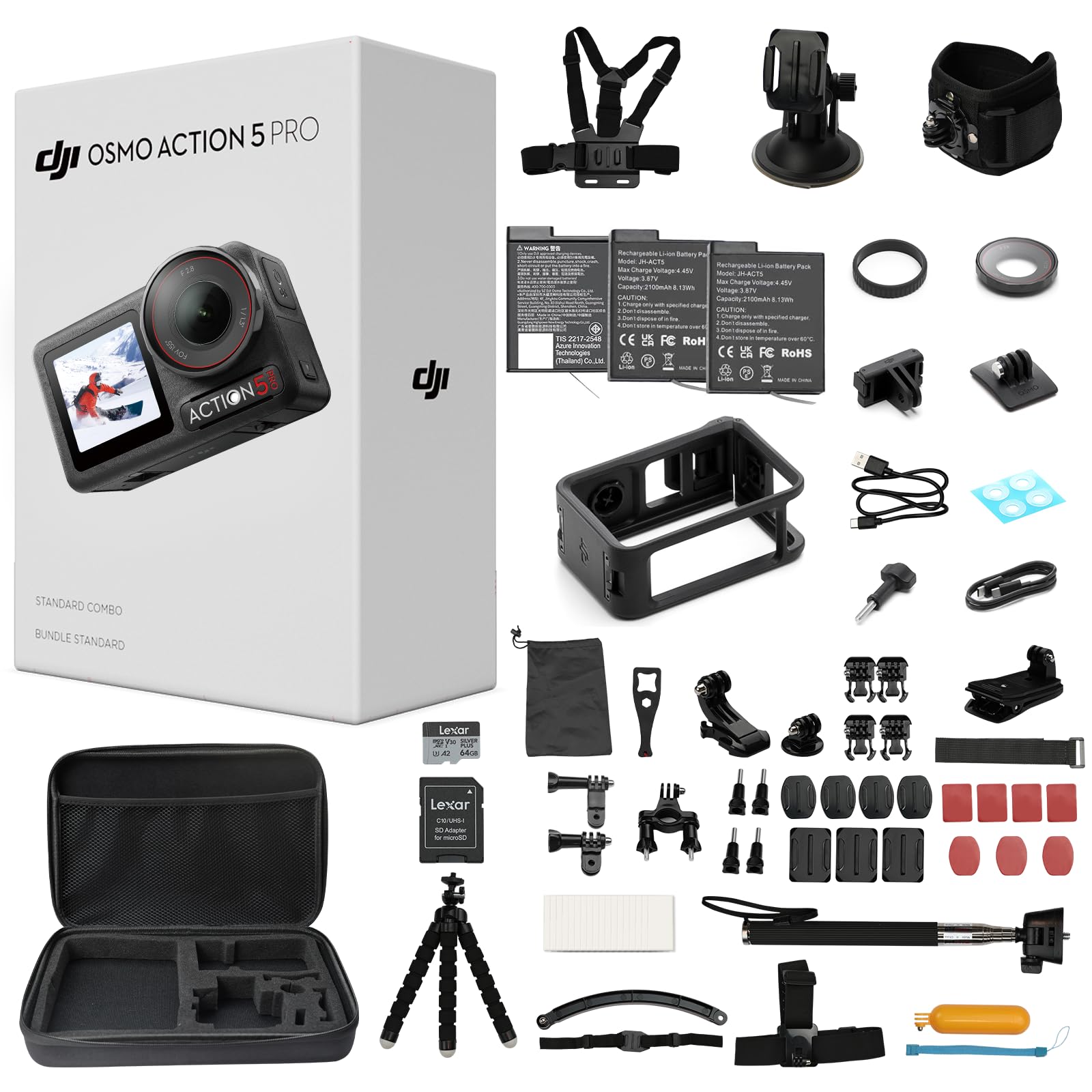
The DJI Osmo Action 5 Pro brings a 1/1.3-inch sensor and 13.5-stop dynamic range to the underwater action camera category, producing clean footage with minimal noise even in the dim light of deeper reefs. The 4K/120fps mode allows smooth slow-motion playback of fast-moving subjects like dolphins or rays. The 360-degree HorizonSteady stabilization is industry-leading, keeping the horizon perfectly level no matter how the camera rotates — a critical feature when you are bobbing in surface swell or turning to track a fish.
This bundle includes three Extreme Batteries (1950mAh each), a 58-piece accessory kit, and a 64GB microSD card. The battery life is rated at up to 4 hours in normal conditions, and the cold-resistant design ensures reliable performance in chilly water. The IP68 rating allows it to go to 20 meters without a housing, and the color temperature sensor automatically adjusts white balance for accurate underwater colors without needing filters.
The dual OLED touchscreens are bright enough to see in direct sunlight, making framing easy even at the surface. Voice control allows hands-free operation when you are wearing gloves or holding a camera rig. The bundled accessories include low-quality third-party items like off-brand batteries and a flimsy tripod, so plan to replace those with genuine DJI parts or premium alternatives. The camera itself, however, delivers professional-grade image quality at a mid-range price.
Why it’s great
- 13.5-stop dynamic range handles high-contrast underwater scenes well.
- HorizonSteady keeps footage level regardless of camera rotation.
- Color temperature sensor automates accurate white balance at depth.
Good to know
- Bundled accessories (batteries, tripod) are low quality third-party items.
- Visible glitch between 4.7GB file splits during long continuous recording.
5. Insta360 X4 Invisible Dive Bundle
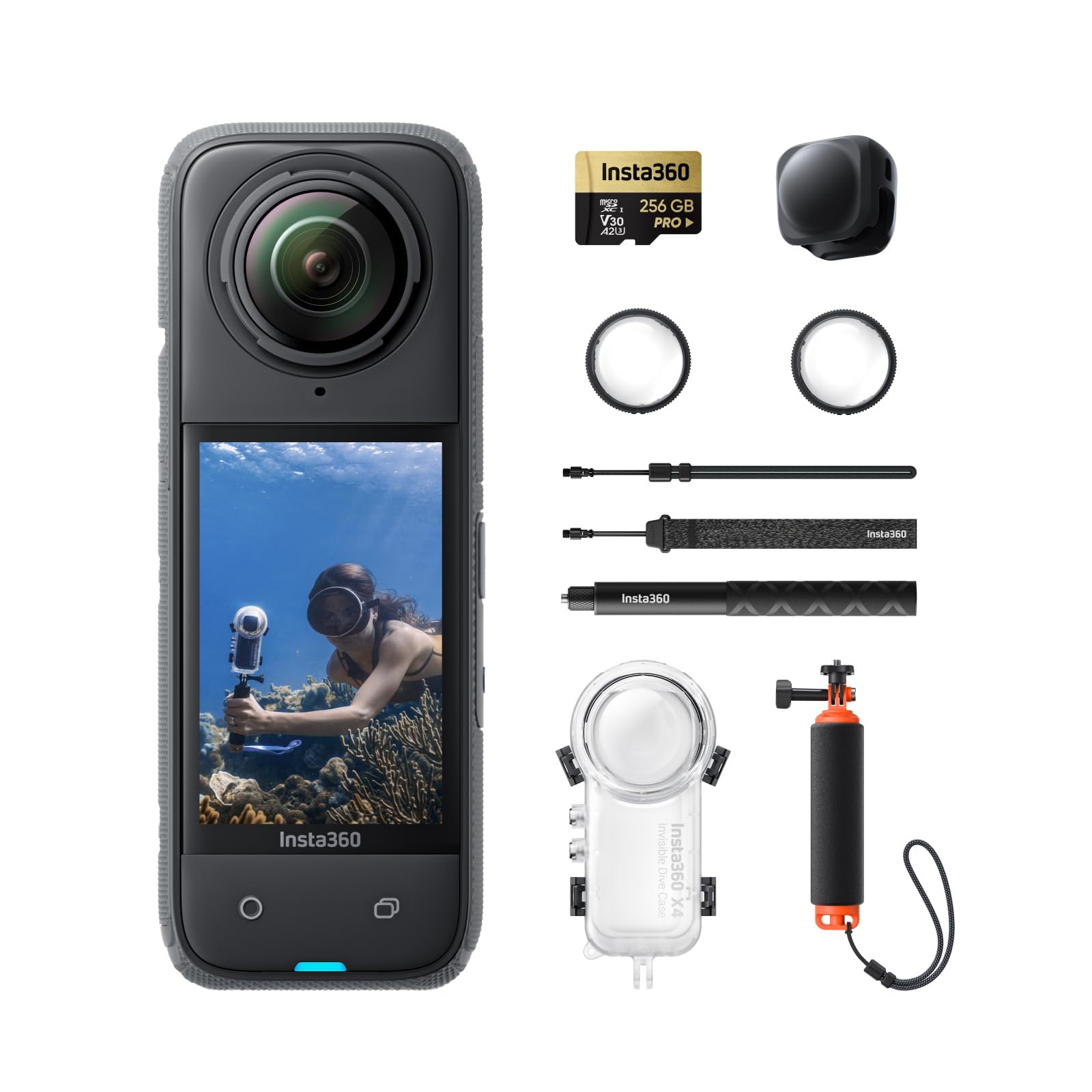
The Insta360 X4 delivers 360-degree video in 8K resolution, allowing you to shoot first and reframe later — a game-changer for underwater scenarios where you cannot predict which direction marine life will appear. The invisible selfie stick disappears from the 360 footage, creating a third-person drone-like perspective that makes dive videos look cinematic. The camera is waterproof to 33 feet (10 meters) without a case and up to 164 feet (50 meters) with the included Invisible Dive Case.
FlowState Stabilization combined with 360-degree Horizon Lock produces smooth footage even when the camera is tumbling through surf or attached to a diver’s fin. The 2290mAh battery delivers up to 135 minutes of recording, with fast charging support to minimize downtime between dives. The 2.5-inch Corning Gorilla Glass touchscreen is bright enough for composition at the surface, and the upgraded lens guards are easier to remove underwater than previous generations.
The AI-powered Insta360 app simplifies editing with automatic reframing tools that track subjects as they move through the 360 sphere. The built-in 256GB microSD card provides ample storage for a full day of 8K footage. The primary consideration is that 360 footage requires post-processing — you cannot simply share raw clips — but the creative flexibility is unmatched. The Dive Bundle’s floating hand grip is a practical addition for safeguarding the camera during surface intervals.
Why it’s great
- Shoot first, reframe later — ideal for unpredictable marine subjects.
- Invisible selfie stick creates immersive third-person dive perspectives.
- Dive case extends depth rating from 10m to 50m.
Good to know
- 360 footage requires editing in the Insta360 app before sharing.
- Sensor size is smaller than dedicated action cameras, affecting low-light performance.
6. OM System Olympus Tough TG-7 Red

The OM System Tough TG-7 is a rugged point-and-shoot with a 4x optical zoom lens (F2.0-F4.9) and a back-illuminated CMOS sensor, designed for users who want optical zoom underwater — something no action camera provides. It is waterproof to 50 feet, shockproof to 7 feet, and freezeproof to 14°F, making it a true all-weather camera. The variable macro system includes four dedicated modes, allowing you to focus as close as 1 centimeter from the lens — ideal for capturing tiny nudibranchs and coral polyps.
Five underwater scene modes, including Underwater Microscope and Underwater HDR, optimize color and exposure automatically for snorkeling and diving conditions. The 4K video recording at 30fps and 120fps high-speed mode provide flexibility for slow-motion clips of fish behavior. The built-in flash and RAW image support give you control over lighting and post-processing, though adding an external strobe or video light is recommended for depths beyond 30 feet where ambient light fades.
The TG-7 is larger and heavier than an action camera, but its optical zoom and macro capability make it the best choice for subjects that require precise framing. The contrast-detection autofocus with 9 points is slower than modern phase-detect systems, so tracking fast-moving fish takes practice. The battery life is adequate but not exceptional — plan to carry a spare for all-day dive trips. For photographers who prioritize lens reach and macro detail over ultra-wide field of view, this is the clear winner.
Why it’s great
- Optical zoom enables tight framing of distant or small subjects underwater.
- Dedicated macro modes allow focusing down to 1cm from the lens.
- Rugged build survives drops, cold, and rough handling.
Good to know
- Autofocus is slower than phase-detect systems; struggles with fast subjects.
- Small controls are hard to operate with dive gloves.
7. Xtra Edge Pro Action Camera
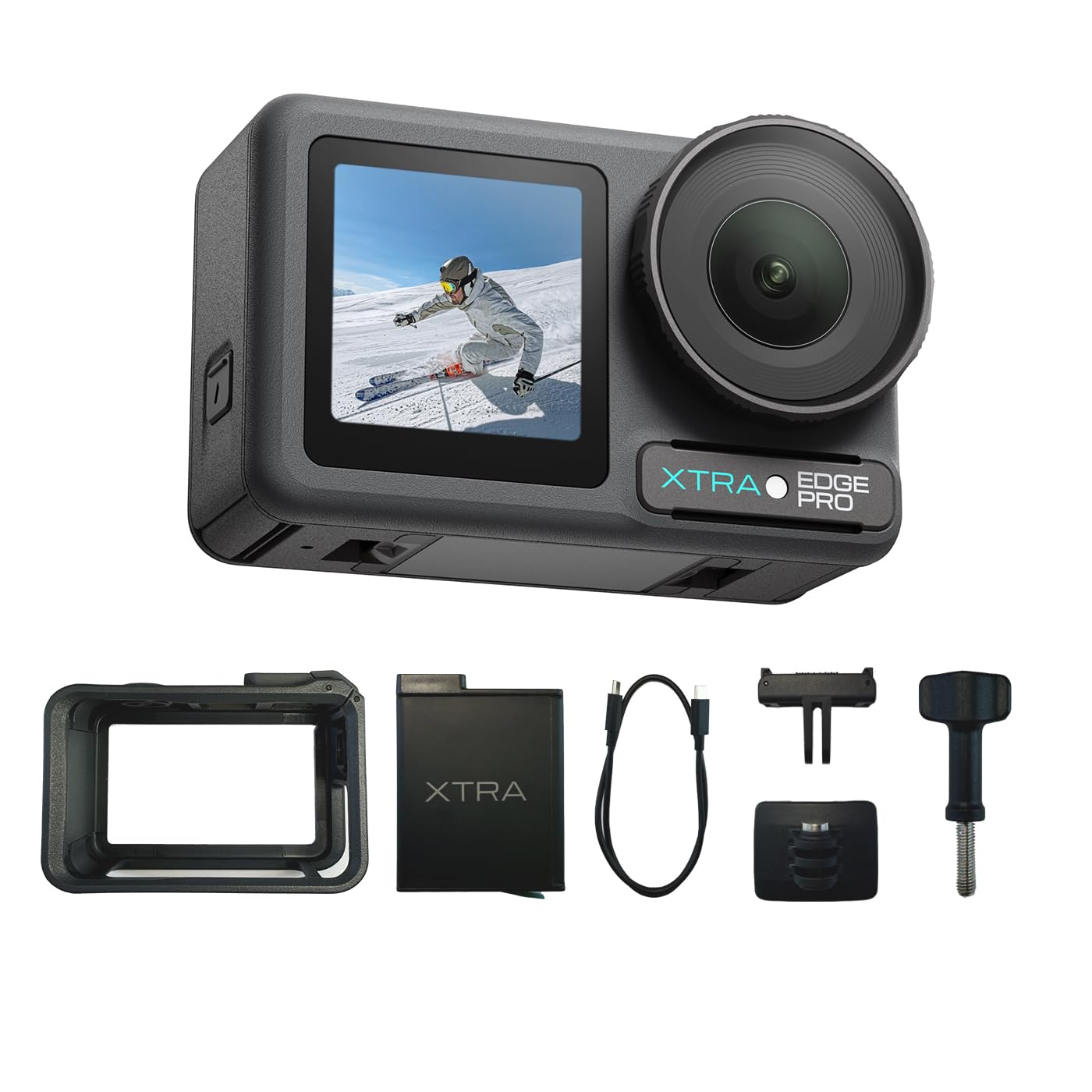
The Xtra Edge Pro pushes the depth capability to 65 feet without a housing, exceeding the rating of many mid-range action cameras. This makes it a strong candidate for recreational scuba divers who want to avoid the bulk and fogging risk of a separate dive housing. The 1/1.3-inch sensor and 4K/60fps recording deliver sharp, fluid footage in well-lit conditions, and the Night View Mode extends usability into low-light environments like twilight dives or murky freshwater lakes.
The stabilization system combines 360 Lock, TiltGuard, and MotionMaster algorithms to counteract shake and roll, producing watchable handheld footage even without a gimbal. The 240-minute battery life surpasses most competitors, easily covering multiple dive sessions on a single charge. The included cold-resistant battery maintains performance in temperatures down to -4°F, which is useful for cold-water diving in springs or northern oceans.
The Wi-Fi and Bluetooth connectivity allows app-based remote control and live streaming, though the setup process is less polished than DJI’s ecosystem. The 20MP photo capability with burst mode captures stills alongside video for quick sharing. The main trade-off is image processing — the color science is not as refined as DJI or GoPro, resulting in slightly less natural underwater color without manual white balance adjustment. For the depth rating and battery capacity at this price point, however, the value is undeniable.
Why it’s great
- 65-foot depth rating covers most recreational scuba diving without a housing.
- 240-minute battery life outlasts nearly every competitor.
- Night View Mode improves low-light performance for twilight dives.
Good to know
- Color science is less refined than premium brands; adjust white balance manually.
- Only one battery included in the base bundle.
8. Xtra Edge Action Camera
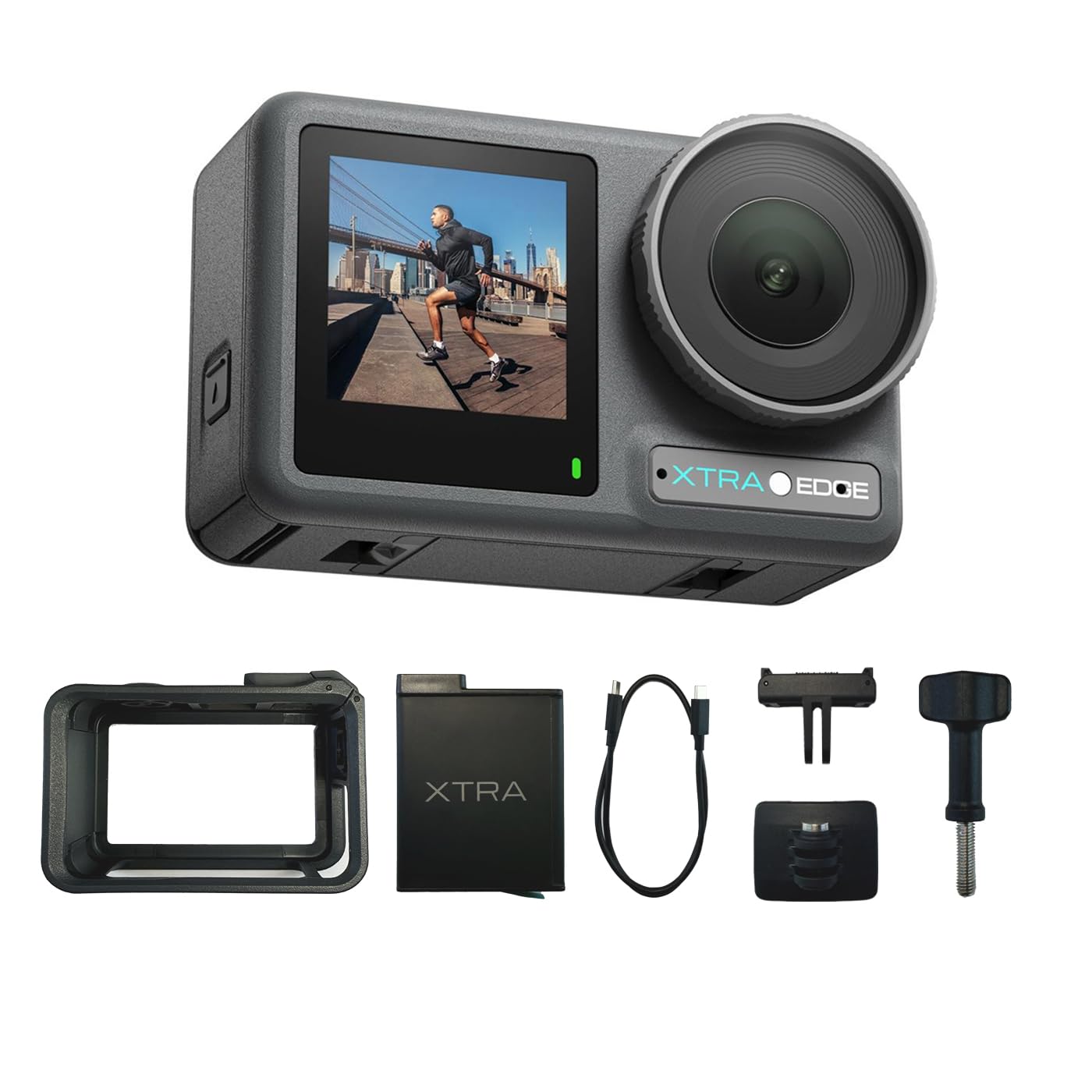
The Xtra Edge Action Camera serves as a capable entry point into underwater videography, featuring a 1/1.3-inch sensor that captures more light than the tiny sensors found in budget action cameras. It is waterproof to 52 feet, making it suitable for snorkeling, shallow reef dives, and rainy hikes. The 4K cinematic video mode delivers detailed footage with good color reproduction for the price tier.
The Hyper Stabilization system keeps footage smooth during walking or gentle swimming, though it struggles with the more aggressive shakes encountered in strong current or heavy surf. The magnetic universal quick mount allows fast transitions between horizontal and vertical shooting, which is convenient for creators who share to both landscape and portrait platforms. The 3-hour battery life is competitive for the entry-level segment, covering a typical snorkeling outing without needing a spare.
The Xtra Edge Standard Bundle includes a dual-facing mount adapter and a cold-resistant battery, providing the basics for immediate use. The build quality feels solid with a matte finish that improves grip when wet. The primary limitations are the lack of a high-bitrate codec for fine detail retention and the absence of manual white balance controls, which means underwater footage may require color correction in post. For someone testing the waters of underwater video without a large investment, this is a practical starting point.
Why it’s great
- 1/1.3-inch sensor provides solid low-light performance for the price.
- Waterproof to 52 feet covers most snorkeling and shallow diving.
- Magnetic quick mount makes switching between portrait and landscape effortless.
Good to know
- Lacks manual white balance adjustment for accurate underwater colors.
- Stabilization struggles with heavy shake in strong currents or surf.
9. SJCAM C400 Travel Vlogging Camera
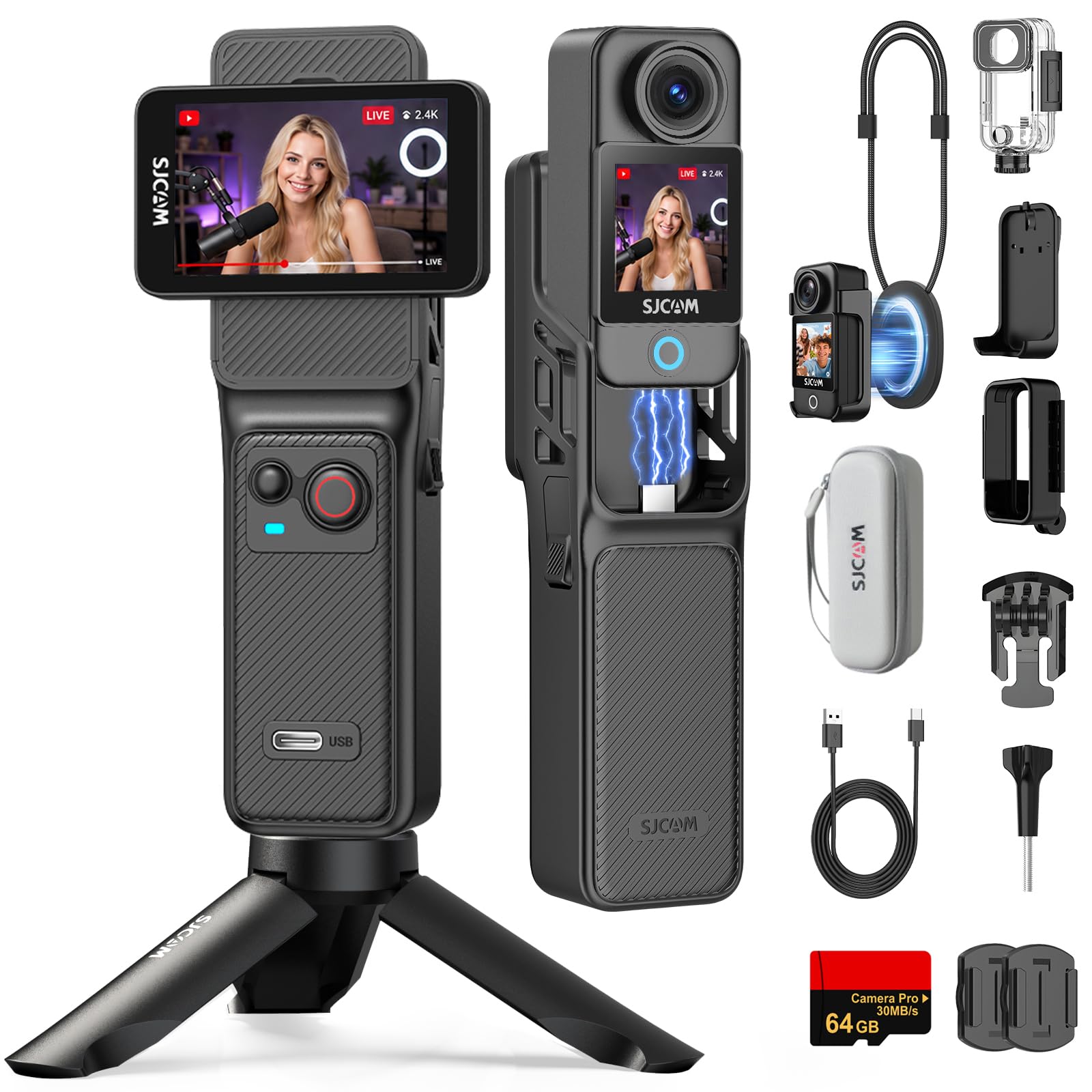
The SJCAM C400 is a compact 3-in-1 device that functions as a handheld vlogging camera, a body camera, and a magnetic wearable for hands-free POV shooting. It carries a 30-meter waterproof rating, which is sufficient for snorkeling and shallow free diving. The 4K resolution at 30fps produces acceptable footage in good light, and the 154-degree distortion-free wide-angle lens provides an immersive field of view for capturing reefs and wrecks at close range.
The standout feature is the 7-hour battery life, which is exceptional for a camera at this size and price point. This allows full-day recording without worrying about power, whether you are shooting a long snorkeling excursion or combining underwater clips with above-water vlogging. The 6-axis EIS with horizon correction helps smooth out gentle handheld movements, though it is not as effective as the gyro-based systems found in premium action cameras when dealing with sudden jolts.
The included 64GB memory card gets you started immediately, and the 5G Wi-Fi module enables fast file transfers to your smartphone for quick social media sharing. The 189-gram body is lightweight enough to mount on a mask strap or chest harness without causing neck fatigue. The main compromise is video quality — the 4K output is noticeably softer than higher-tier competitors, and low-light performance drops off quickly. For casual snorkelers and budget-conscious vloggers who want a long-running camera, the C400 offers compelling endurance at a low entry cost.
Why it’s great
- 7-hour battery life outlasts every other camera in this guide.
- Lightweight 189g body with magnetic mounting for hands-free POV.
- 30-meter waterproof rating is sufficient for most snorkeling.
Good to know
- 4K video quality is softer and less detailed than premium competitors.
- Low-light performance degrades quickly below 10 feet in dim water.
FAQ
Can I use a regular action camera for scuba diving?
Why does my underwater footage look blue or green?
What is the difference between optical zoom and digital zoom underwater?
Do I need a video light for underwater recording?
How do I prevent my housing from fogging up?
Final Thoughts: The Verdict
For most users, the best underwater video camera winner is the DJI Osmo Action 6 because it combines a large variable-aperture sensor, 8K resolution, HorizonSteady stabilization, and native 20-meter waterproofing into a single cohesive system that requires no additional housing for recreational diving. If you prioritize optical zoom and macro capability for detailed reef subjects, grab the OM System Tough TG-7. And for 360-degree immersive shots where you reframe after the dive, nothing beats the Insta360 X4 with its Invisible Dive Bundle.

Mo Maruf
I created WellFizz to bridge the gap between vague wellness advice and actionable solutions. My mission is simple: to decode the research and give you practical tools you can actually use.
Beyond the data, I am a passionate traveler. I believe that stepping away from the screen to explore new environments is essential for mental clarity and physical vitality.