Our readers keep the lights on and my smoothie glass nicely filled. As an Amazon Associate, I earn from qualifying purchases.
A trekking backpack that shifts weight off your shoulders and onto your hips is the single biggest upgrade you can make for multi-day hiking. The wrong fit turns a scenic ridge into a painful ordeal, while a properly tuned suspension system makes a 30-pound load feel like a light daypack. Getting this decision right starts with understanding how frame length, hip belt design, and load lifters interact with your specific body dimensions.
I’m Mohammad Maruf — the founder and writer behind WellFizz. I’ve spent years analyzing suspension designs, fabric denier ratings, and strap geometries across budget and premium trekking packs to separate genuine load-bearing technology from marketing fluff.
This guide compares nine internal-frame packs from entry-level workhorses to alpine-ready systems, each evaluated on torso adjustability, weight distribution, and real-world durability. Whether you are a weekend warrior or a long-distance thru-hiker, the right trekking backpack will define your comfort on the trail more than any other single piece of gear.
How To Choose The Best Trekking Backpack
Finding the right trekking backpack is a matter of matching your trip length, typical load weight, and body shape to a pack’s suspension architecture. The three pillars below will guide you past the common mistakes that lead to sore shoulders and unstable carries.
Torso Length and Suspension Adjustability
Shoulder straps set too high or too low cause the hip belt to ride incorrectly, forcing your back to bear weight meant for your pelvis. Look for a pack with a torso length range that includes your measurement (measured from the C7 vertebra at the base of your neck to the top of your iliac crest). Adjustable systems with a sliding hip belt or ladder-style shoulder straps let you fine-tune the fit as you add or remove layers.
Volume and Capacity Planning
A 40-liter pack works well for a weekend trip when you pack light and use a down sleeping bag, while a 65-liter pack is the standard for 4-to-5-day carries. Going too big encourages overpacking and instability; going too small forces external lashing that can snag on branches. Always factor in a separate compartment for a sleeping bag and external attachment points for a tent or foam pad.
Load Transfer and Hip Belt Design
The hip belt is the primary load-bearing component. A belt with dense, closed-cell foam and a stiff internal frame sheet transfers weight directly to the pelvis, bypassing the shoulders. Budget-friendly packs often use softer foam that compresses under 40 pounds, causing the belt to sag. Premium packs use molded foam and a wire frame that maintains its shape under heavy loads, providing stable, comfortable carries over long distances.
Quick Comparison
On smaller screens, swipe sideways to see the full table.
| Model | Category | Best For | Key Spec | Amazon |
|---|---|---|---|---|
| Osprey Atmos AG 65 | Premium | Heavy-load multi-day hikes | Anti-Gravity suspension, 4.1 lb | Amazon |
| Osprey Rook 65L | Mid-Range | Versatile 1-5 day trekking | AirSpeed adjustable backpanel, 3.7 lb | Amazon |
| Osprey Kestrel 48L | Premium | Technical day hikes and light overnights | AirScape backpanel, 4.62 lb | Amazon |
| Osprey Renn 65L Women’s | Mid-Range | Women-specific load distribution | AirSpeed suspension, 3.6 lb | Amazon |
| Kelty Asher 65L | Mid-Range | Entry-level expert specs | Fit Pro torso adjust, 3.3 lb | Amazon |
| Salewa ALPTREK 65 +10 | Premium | Alpine trekking with rope | Dry Back system, 3.5 lb | Amazon |
| Thule Landmark 40L | Mid-Range | Travel and urban adventure | CashStash pocket, 3.2 lb | Amazon |
| TETON Sports Explorer 75L | Budget | Value-driven weekend treks | Multi-position torso adjust | Amazon |
| Mardingtop 60L Military | Budget | Modular load customization | MOLLE webbing, YKK zippers | Amazon |
In‑Depth Reviews
1. Osprey Atmos AG 65L Men’s Backpacking Backpack
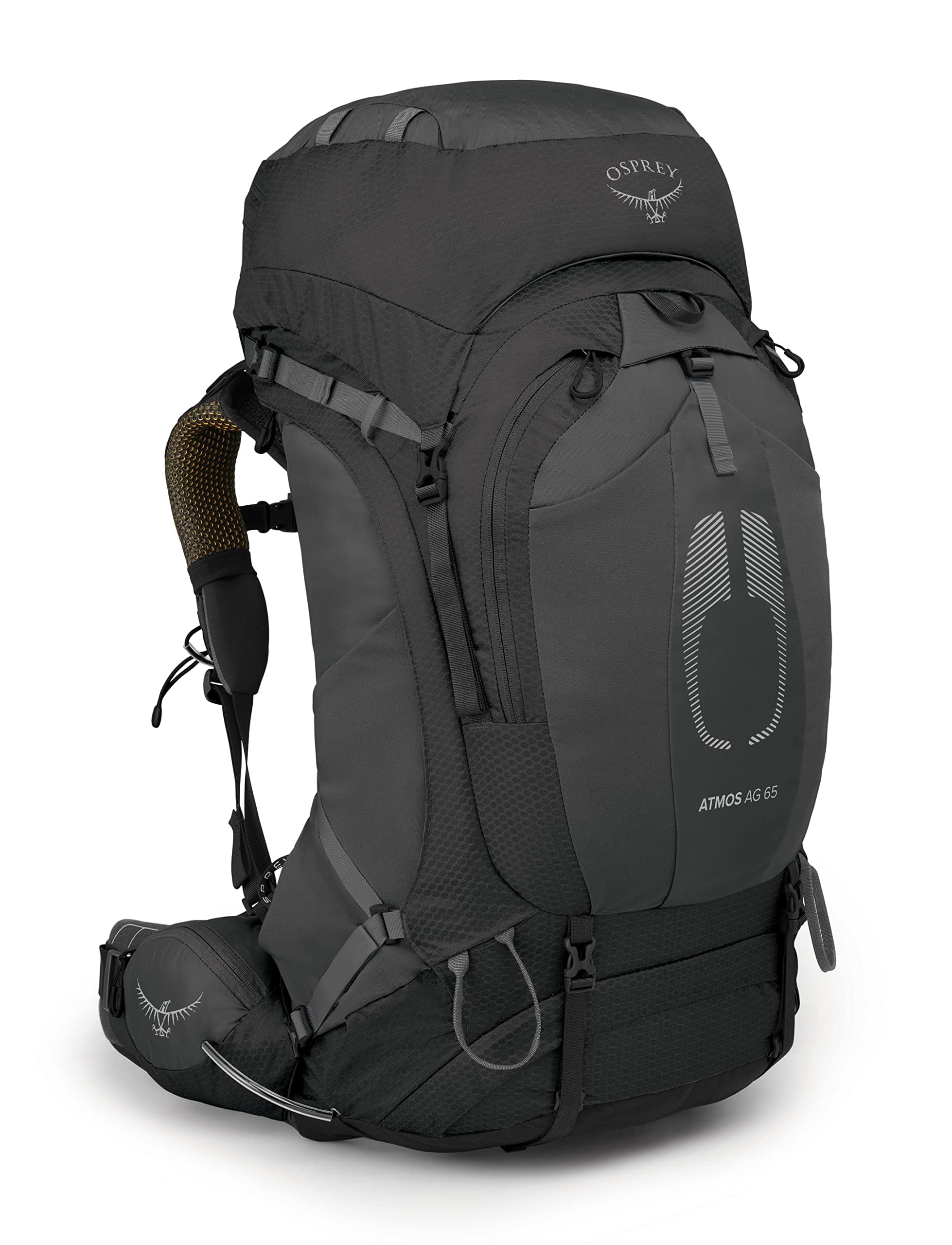
The Osprey Atmos AG 65 is widely considered the gold standard for heavy-load comfort in the mid-capacity range. Its Anti-Gravity suspension system uses a continuous mesh panel that wraps from the lower lumbar up through the shoulder straps, creating a single, tensioned surface that distributes weight evenly across the entire back. Carriers report that a 40-pound load feels significantly lighter compared to traditional frame packs, with no pressure points forming after a full day on the trail.
The pack features a zip-accessed side panel that provides direct entry to the main cavity, eliminating the need to dig through the top opening. The floating top lid includes lash points for extra gear, while the removable sleeping bag divider with internal straps keeps your sleep system secure in the lower compartment. The included rain cover is made with PFAS-free DWR and attaches to its own stow pocket for quick deployment.
Hikers with shorter torsos should note that the S/M size fits users around 5’8″ to 5’10” optimally. The waistband zippers are stiff when operating one-handed, and the pack does not stand upright on its own. The adjustable torso and load lifter straps allow fine-tuning for different body shapes, making this a trusted choice for multi-day backpackers who prioritize load stability over pack weight.
Why it’s great
- Anti-Gravity mesh wraps and distributes weight with no chafing
- Side zip access makes gear retrieval easy without unpacking
- Integrated rain cover stows securely and deploys quickly
Good to know
- Waistband zippers require two hands to close
- Pack does not stand upright when loaded
- Hydration strap is short for some bladder designs
2. Osprey Rook 65L Men’s Backpacking Backpack

The Osprey Rook 65L is a streamlined version of the brand’s larger packs, offering the same adjustable AirSpeed suspension at a lower weight. The tensioned mesh backpanel sits away from the spine, creating an airflow channel that reduces sweat buildup on warm days. The LightWire frame transfers load through a padded hip belt that includes adjustable support wings, helping to stabilize loads up to 35 pounds for multi-day treks.
Users consistently highlight the angled water bottle pockets as a standout feature — they allow one-handed access while walking without requiring a full stop. The sleeping bag compartment includes a floating divider that can be removed entirely to create a single large cavity for extended trips. The integrated rain cover stows in its own pocket at the base of the pack, and the fabric uses tough 210D nylon that resists abrasion from rock contact.
The Rook lacks the back-access zipper found on the Atmos, which means you must access gear through the top or side compression straps. The hip belt pockets are absent, a trade-off for the lighter overall weight. For hikers who value a modular system and need a pack that transitions smoothly from bus travel to trail, the Rook delivers reliable performance at a mid-range price point.
Why it’s great
- AirSpeed mesh backpanel keeps your back cool on long climbs
- Angled side pockets allow easy water bottle access while moving
- LightWire frame handles 35-pound loads without sagging
Good to know
- No large outer mesh pocket for wet gear
- Lacks back-access zipper for quick main compartment entry
- Hip belt pockets are not included
3. Osprey Kestrel 48L Men’s Backpacking Backpack
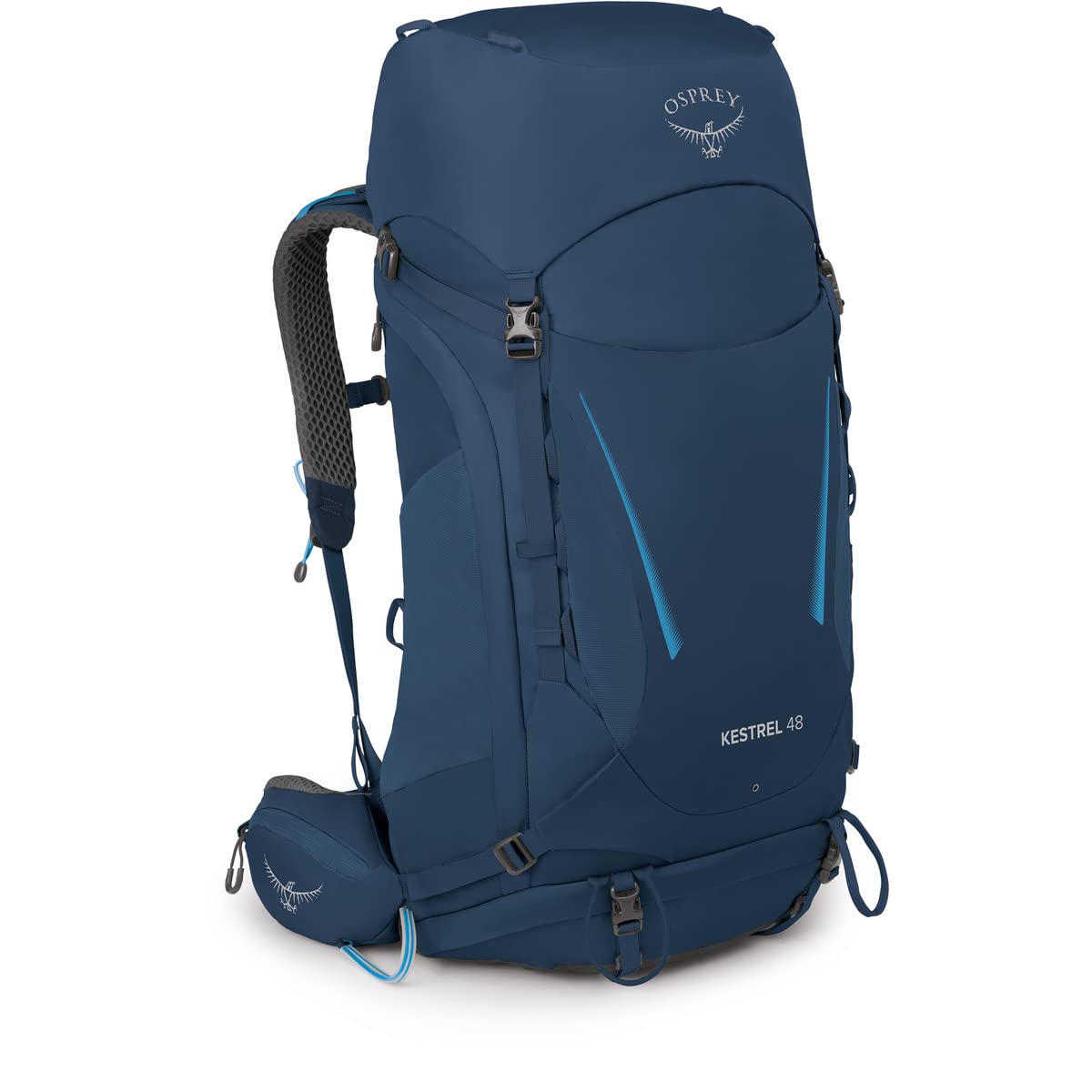
The Osprey Kestrel 48L is built for day hikes and light overnighters where mobility and organization take priority over sheer volume. The injection-molded AirScape backpanel provides a stable, close-to-body carry that keeps the load from shifting during scrambles or off-trail travel. The fixed hip belt is paired with thick, molded foam padding that distributes weight effectively for loads up to 30 pounds, making it a strong option for fast-and-light approaches.
The pack includes a built-in bright green rain cover that is easy to deploy, and the side elastic pockets are deep enough to hold one-liter bottles securely while hiking. The top lid features a large zippered pocket with a key clip, and the under-lid mesh pocket provides quick-access storage for a map or snacks. Daisy chain webbing on the front and compression straps allow you to lash a tent or foam pad externally without adding bulk inside.
The fixed hip belt cannot be swapped out, which may limit fit options for taller hikers who prefer a longer torso setting. The 48-liter capacity is tight for multi-day trips requiring a bear canister. For hikers who want a rugged, carry-on-friendly pack for technical terrain and short expeditions, the Kestrel 48L balances durability with a manageable footprint.
Why it’s great
- AirScape backpanel keeps load stable during technical moves
- Integrated bright green rain cover is easy to find and deploy
- Side elastic pockets allow one-handed bottle access
Good to know
- Fixed hip belt limits fit customization for taller torsos
- 48-liter capacity is tight for longer trips with bear canisters
- Lacks a large outer mesh pocket for wet gear storage
4. Osprey Renn 65L Women’s Backpacking Backpack

The Osprey Renn 65L is designed specifically for women’s anatomy, featuring narrower shoulder straps, a shorter torso range (15–18 inches), and a contoured hip belt that sits lower on the pelvis. The AirSpeed suspension uses a tensioned mesh backpanel that creates a ventilated gap between the pack and your back, reducing sweat on warm-weather hikes. The LightWire frame transfers load to the hip belt effectively, allowing comfortable carries up to 35 pounds for multi-day trips.
The pack includes a floating sleeping bag compartment divider that can be removed to create a single large cavity, and the top lid contains a large zippered pocket for essentials. Side compression straps help stabilize the load when the pack is not full, and the trekking pole attachment loops keep poles secure without flopping. The integrated rain cover can be deployed quickly when thunderstorms roll in.
Petite hikers under 5’1″ may find the shoulder straps do not cinch tight enough for a secure fit, as the torso range starts at 15 inches. The mesh side pockets are slightly shallow for large filtering water bottles. For women who fall within the torso range and need a lightweight, well-ventilated pack for 2-to-4-day trips, the Renn 65L provides excellent load management and Osprey’s reliable All Mighty Guarantee.
Why it’s great
- Women-specific hip belt and shoulder straps improve load distribution
- AirSpeed mesh panel keeps your back dry in warm conditions
- Floating sleeping bag divider adds organizational flexibility
Good to know
- Petite users under 5’1″ may struggle with shoulder strap fit
- Mesh side pockets are shallow for wide water bottles
- Top compartment zipper is slightly stiff to operate
5. Kelty Asher 65L Backpack
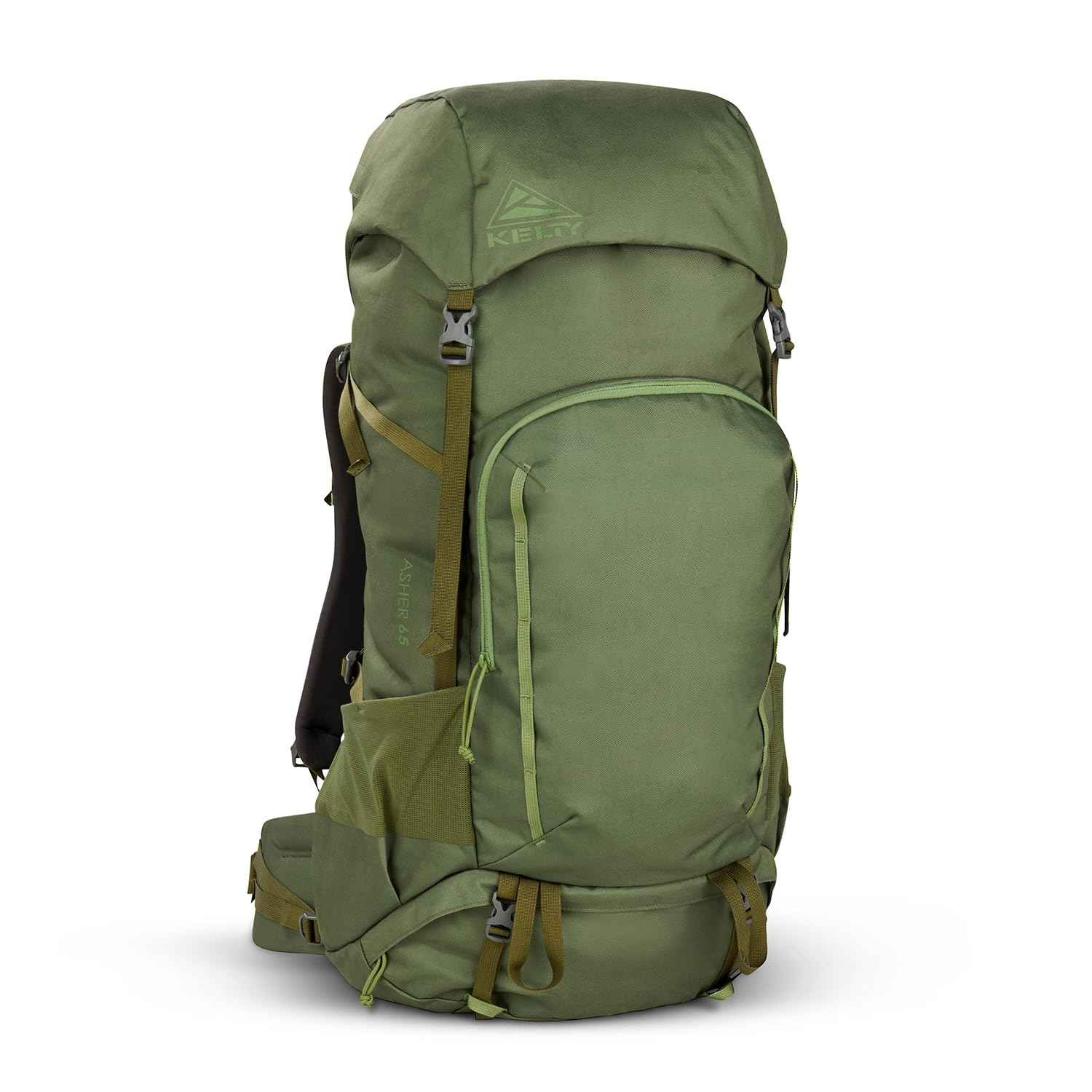
The Kelty Asher 65L packs expert-level features into a lightweight build that undercuts the price of comparable premium packs by a significant margin. The Fit Pro torso adjustment system allows you to dial in your exact torso length using a sliding backplate, eliminating the guesswork that often leads to poor weight distribution. The aluminum frame stay provides the structural backbone needed to handle loads in the 30-to-50-pound range without flexing excessively under heavy gear.
The Amp Flow ventilated backpanel uses a mesh overlay with a channeled foam pad to promote airflow, keeping your back dryer than solid foam panels. The sleeping bag compartment at the bottom is accessed via a separate zipper, and the floating divider lets you separate damp gear from dry layers. Load lifter straps at the top of the shoulder harness help pull the pack weight closer to your center of gravity, reducing shoulder strain on steep ascents.
The side pockets are cut for slim water bottles but may not accommodate wider insulated bottles. The fabric uses a C0 and PFC-free DWR finish that sheds light rain, but a separate rain cover is not included. For hikers entering multi-day backpacking who want a pack that breathes, carries heavy loads, and adjusts to their body, the Kelty Asher 65L offers exceptional value without cutting corners on the suspension system.
Why it’s great
- Fit Pro system offers fast, tool-free torso adjustment
- Amp Flow backpanel keeps you cool on hot climbs
- Aluminum stay handles heavy loads without flex
Good to know
- Side pockets are tight for large insulated water bottles
- Rain cover is not included with the pack
- Velcro shoulder strap adjustment feels less secure than ladder systems
6. Salewa ALPTREK 65 +10 PRO BP
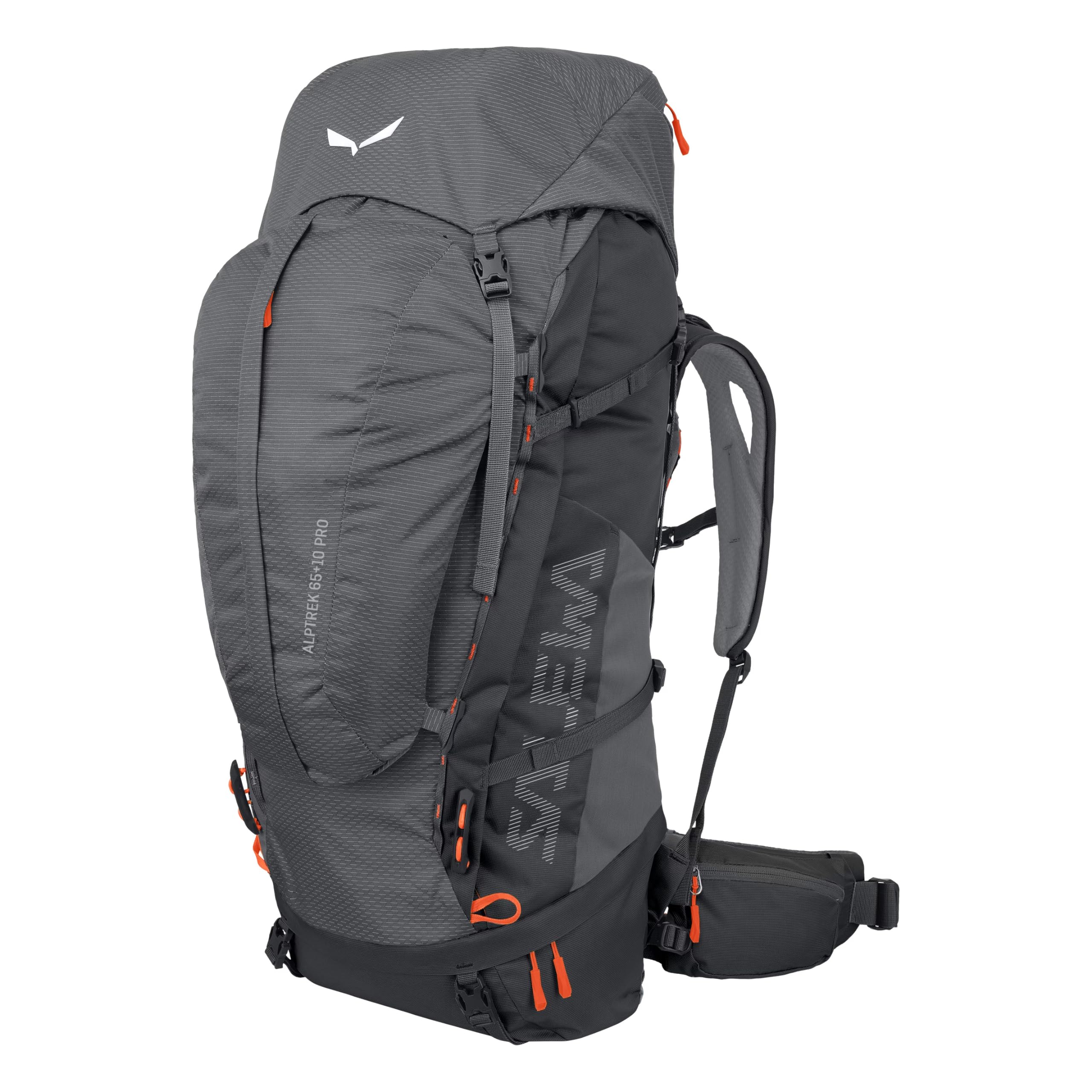
The Salewa ALPTREK 65 +10 PRO BP is engineered for alpine terrain where a full expedition load and technical movement are both required. The Dry Back Custom Carry System features a fully adjustable back length and anatomically shaped, padded shoulder straps that can be tuned to your exact torso dimensions. The removable lid doubles as a single shoulder bag for summit pushes, and the main body expands by 10 liters via a gusseted extension collar, giving you flexibility for rope, crampons, and extra food.
The fabric is a 210D nylon honeycomb weave that resists abrasion from rock and ice, and the stowable rain cover is integrated into the base of the pack. The hydration system outlet routes a drinking tube through the shoulder strap, and the front daisy chain allows quick attachment of climbing gear. Compression straps on both sides cinch the load tight for technical scrambles where a floppy pack would throw off your balance.
The pack is heavier than some competitors due to its robust frame and expandable collar, and the hook-and-loop torso adjustment requires a moment of thought to change. The hip belt pockets are small and may not fit modern smartphones with cases. For serious alpine trekkers who need a pack that transitions from a base camp to a summit push without changing bags, the Salewa ALPTREK 65 +10 delivers rugged, modular performance.
Why it’s great
- Expandable 10-liter collar provides extra capacity for alpine gear
- Removable lid converts to a summit bag for light carries
- 210D nylon honeycomb weave resists abrasion from rock and ice
Good to know
- Heavier than comparable 65-liter packs due to expanded frame
- Hip belt pockets are small and may not fit large phones
- Torso adjustment system uses hook-and-loop, less intuitive than sliding plates
7. Thule Landmark Backpack 40L
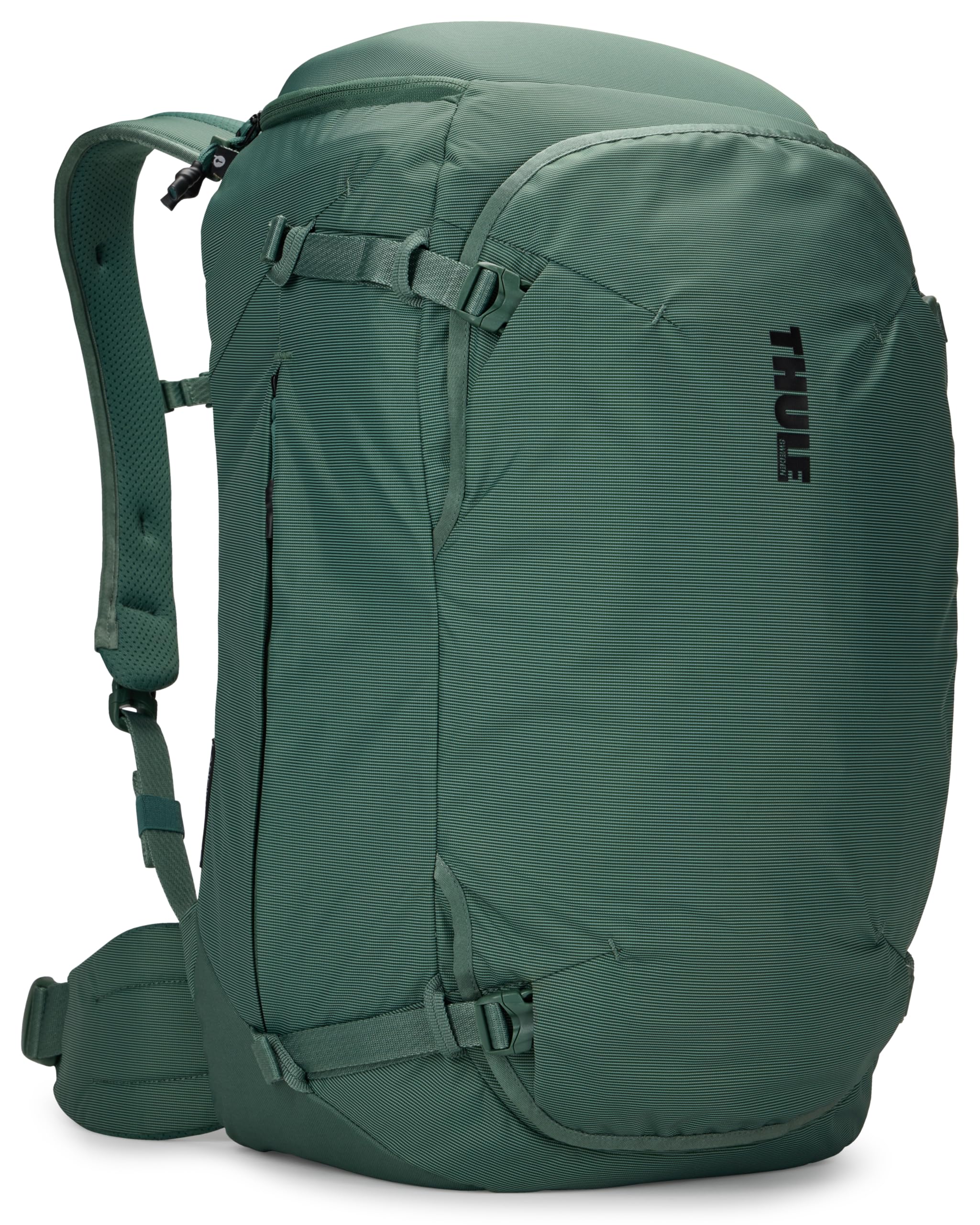
The Thule Landmark 40L is designed for adventure travel that combines flights, trains, and trails in a single carry-on format. The pack features a hidden CashStash pocket located under the SafeZone compartment, providing covert storage for a passport and cash. The unique LoopLock system allows you to secure zipper pulls to the bag itself, deterring opportunistic theft in crowded terminals.
The main compartment fits a 15-inch laptop and a 12.9-inch tablet in padded sleeves, and the clamshell opening makes packing cubes easy to load. The 40-liter capacity is ideal for carry-on restrictions on most airlines, and the stowable hip belt and shoulder straps can be hidden behind a zippered panel when you are navigating airports. The multipurpose compression straps double as attachment points for a jacket or sleeping bag when you hit the trail.
The torso length is fixed, which means shorter or taller users may not achieve an ideal hip belt fit. The water resistance is limited to light rain — a downpour will wet the contents without a separate cover. For travelers who need a single pack that works as a carry-on, a daypack, and a weekend trekking bag, the Thule Landmark 40L offers smart security features without sacrificing organization.
Why it’s great
- CashStash pocket hides passport and cash from pickpockets
- LoopLock system secures zipper pulls to prevent theft
- Carry-on compliant size works for most airline overhead bins
Good to know
- Fixed torso length limits fit for very short or tall users
- Limited water resistance; a rain cover is recommended for heavy weather
- Lacks a large external quick-access pocket for snacks or maps
8. TETON Sports Explorer 75L Internal Frame Backpack

The TETON Sports Explorer 75L is a budget-friendly workhorse that delivers a multi-position torso adjustment and a large sleeping bag compartment at an accessible price point. The internal frame uses a lightweight aluminum stay that provides reasonable load transfer for weekend trips, and the open-cell foam lumbar pad with molded airflow channels helps reduce sweat on the lower back. The pack is available in 65L, 75L, and 85L sizes, making it easy to scale volume based on trip length.
The main compartment includes multiple internal pockets for small gear, and the large sleeping bag compartment at the base is separated by a zippered divider. Multi-directional compression straps allow you to cinch down the load when the pack is not full, preventing the weight from shifting during steep descents. The included rainfly attaches via elastic corners and provides adequate protection in moderate rain.
The hip belt uses softer foam that can compress under heavy loads approaching 50 pounds, leading to chafing on longer carries. The side mesh pockets are too small for standard one-liter water bottles, and the ice axe loops are fixed rather than adjustable. For beginners or hikers on a tight budget who need a spacious pack for 2-to-4-day trips with moderate loads (30 to 40 pounds), the TETON Explorer 75L offers solid value with room to grow.
Why it’s great
- Multi-position torso adjustment fits a wide range of body sizes
- Large sleeping bag compartment with zippered divider
- Multi-directional compression straps stabilize partial loads
Good to know
- Hip belt foam compresses under heavy loads, causing chafing
- Side mesh pockets are too small for one-liter bottles
- Zippers can be stiff to operate, especially when new
9. Mardingtop 60L Military Internal Frame Backpack
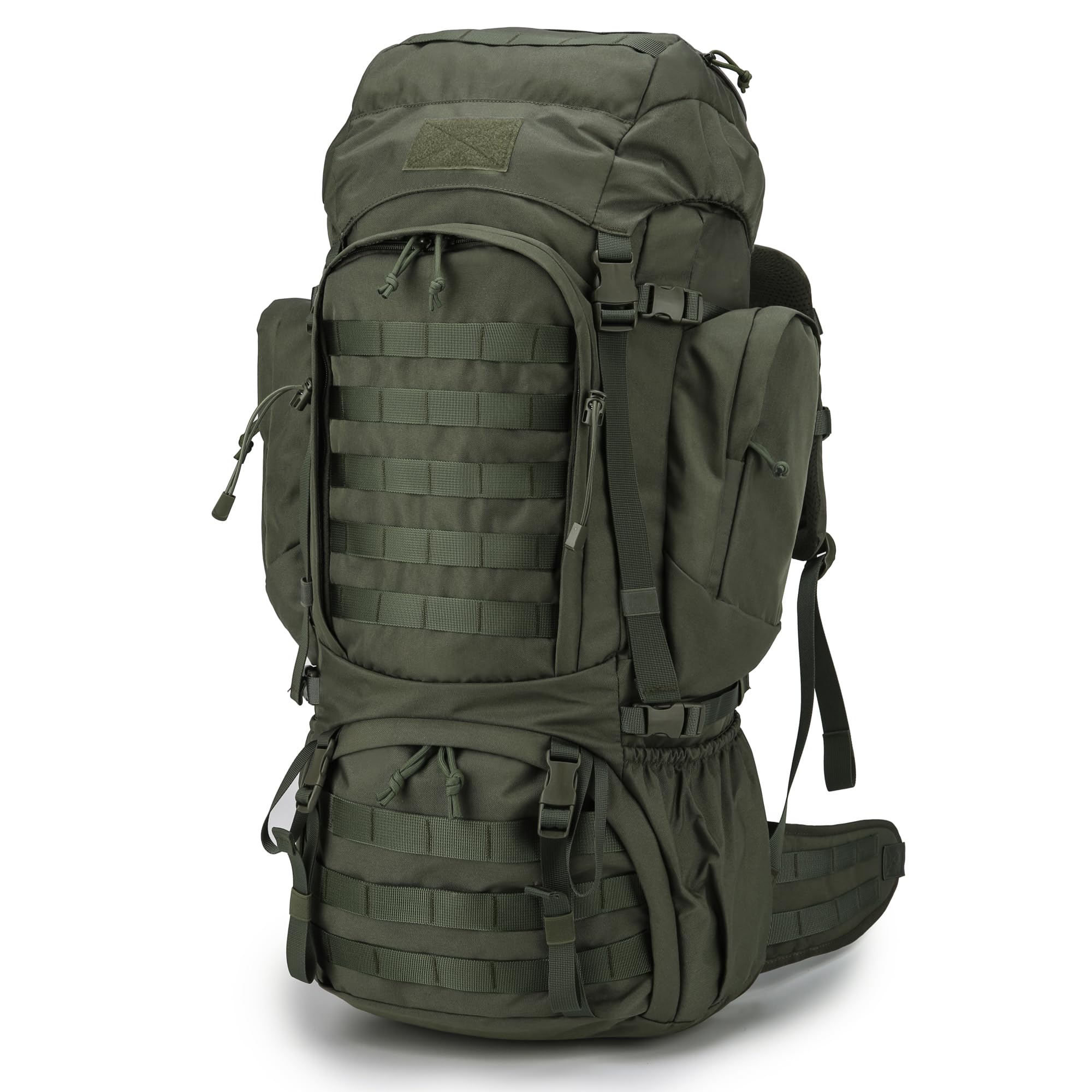
The Mardingtop 60L Military Backpack is an entry-level modular pack that uses MOLLE webbing on the front, allowing users to attach pouches and gear directly to the exterior without adding bulk inside. The 60-liter main compartment expands to approximately 75 liters through a collar extension, giving you extra capacity for bulky items like a sleeping bag or tent. YKK zippers on all main compartments provide reliable closure, and the internal frame with an aluminum stay offers enough structure for moderate loads under 40 pounds.
The pack includes a separate sleeping bag compartment at the bottom with a zippered divider, and compression straps on both sides keep the load tight when the pack is not full. The included rain cover uses a simple elastic band that works for light rain but may shift in heavy wind. The shoulder straps are adequately padded for loads up to 30 pounds, and the adjustable sternum strap helps distribute weight across the chest.
The hip belt uses narrow, less-dense foam that can dig into the hips under heavier loads or on longer hikes exceeding 10 miles. The side cinch straps tend to loosen under repeated tension, requiring occasional re-tightening. For budget-conscious hikers looking for a modular platform to customize with their own pouches, or for occasional rucking under moderate loads, the Mardingtop 60L provides a solid foundation at a low investment point.
Why it’s great
- MOLLE webbing allows external attachment of pouches and gear
- 60-liter main compartment expands to 75 liters via collar
- YKK zippers provide reliable closure over repeated use
Good to know
- Hip belt padding is narrow and may chafe on long carries with heavy loads
- Side compression straps loosen over time and need re-tightening
- Rain cover elastic band is cheap and may shift in strong wind
FAQ
What volume trekking backpack do I need for a 5-day hike?
How do I measure my torso length for a pack fitting?
Is a trekking backpack with a removable rain cover necessary?
What is the difference between a daypack frame and an internal frame for trekking?
Final Thoughts: The Verdict
For most users, the trekking backpack winner is the Osprey Atmos AG 65 because its Anti-Gravity suspension system distributes heavy loads evenly across the back, making 40-pound carries feel manageable over long distances. If you want a modular, travel-friendly design with integrated security features, grab the Thule Landmark 40L. And for a budget-friendly entry that does not skimp on suspension adjustability, nothing beats the Kelty Asher 65L.

Mo Maruf
I created WellFizz to bridge the gap between vague wellness advice and actionable solutions. My mission is simple: to decode the research and give you practical tools you can actually use.
Beyond the data, I am a passionate traveler. I believe that stepping away from the screen to explore new environments is essential for mental clarity and physical vitality.