Our readers keep the lights on and my smoothie glass nicely filled. As an Amazon Associate, I earn from qualifying purchases.
Travel drones have transformed how we capture memories, turning ordinary trips into cinematic experiences from angles you just can’t get on foot. The challenge is finding a model that balances portability, camera quality, flight time, and regulatory ease without breaking your itinerary—or your budget.
I’m Mohammad Maruf — the founder and writer behind WellFizz. I’ve spent countless hours dissecting the technical specifications, customer feedback, and real-world performance data of the latest sub-250g drones to separate genuine travel companions from overhyped gadgets.
Whether you need a hands-free flying camera for action sports or a 4K gimbal-stabilized drone for landscape photography, this guide identifies the best travel drone for your specific adventure style and skill level.
How To Choose The Best Travel Drone
Picking the right travel drone comes down to four interconnected factors: weight, camera stabilization, flight endurance, and transmission reliability. A drone that excels in portability but delivers shaky footage defeats its purpose. Conversely, a heavy drone with a brilliant camera may trigger registration requirements and add bulk to your pack.
Weight and Regulatory Freedom
The 249-gram cutoff is the single most important spec for a travel drone in most countries. Models under this threshold typically bypass FAA registration and Remote ID requirements, letting you fly immediately after unpacking. Every drone reviewed here hits this target, though some include propeller guards or larger batteries that push the total weight right to the limit—always check your local rules.
Gimbal Versus Electronic Stabilization
A mechanical 3-axis gimbal physically counteracts the drone’s movements, producing smooth footage even in moderate wind. Electronic Image Stabilization (EIS) crops and shifts the frame digitally, which can introduce a slight wobble during fast turns or gusts. For travel vlogging and cinematic landscape shots, a 3-axis gimbal is the clear winner. For action sports where the drone follows you at speed, a 2-axis gimbal paired with advanced EIS can still yield impressive results.
Flight Time and Charging Flexibility
Advertised flight times are measured in ideal lab conditions—expect 60-70% of that figure in real-world travel scenarios with wind and GPS active. Drones that ship with two batteries plus a charging hub that doubles as a power bank are a major advantage for all-day shooting. PD 3.0 fast charging support also means your batteries can top up between flights more quickly.
Transmission Range and Reliability
A travel drone’s transmission system determines how far you can fly before losing the live video feed. Look for at least 4 km (13,000 ft) in open air for comfortable exploration. Some brands use proprietary protocols that penetrate obstacles better than standard Wi-Fi, while others offer dual-frequency support to hop between 2.4 GHz and 5.8 GHz bands for cleaner signal in crowded areas.
Quick Comparison
On smaller screens, swipe sideways to see the full table.
| Model | Category | Best For | Key Spec | Amazon |
|---|---|---|---|---|
| DJI Mini 5 Pro | Premium | Prosumer travel & night flying | 1-Inch CMOS, Omni Sensing | Amazon |
| DJI Flip (RC-N3) | Premium | Beginner-friendly 4K travel | Full-coverage prop guards | Amazon |
| HOVERAir X1 PRO | Premium | Action sports & hands-free follow | 42 Km/h follow, OmniTerrain | Amazon |
| Bwine F7MINI 4K(RC3) | Mid-Range | Built-in screen, no phone needed | 5.5″ 1080P RC screen | Amazon |
| Holy Stone HS790 | Mid-Range | Long-range exploration | 30,000ft transmission, 60 min | Amazon |
| Skyrover S1 | Mid-Range | High-res photos on a budget | 48 MP photo, Sony sensor | Amazon |
| HOVERAir X1 | Mid-Range | Ultra-portable self-flying camera | 125g, palm takeoff, 32GB | Amazon |
| Potensic ATOM LT | Budget | Entry-level with huge battery life | 80 min total (2 batteries) | Amazon |
| Specta Mini Drone | Budget | Low-cost 4K with 3-axis gimbal | 32,800ft transmission | Amazon |
In‑Depth Reviews
1. DJI Mini 5 Pro
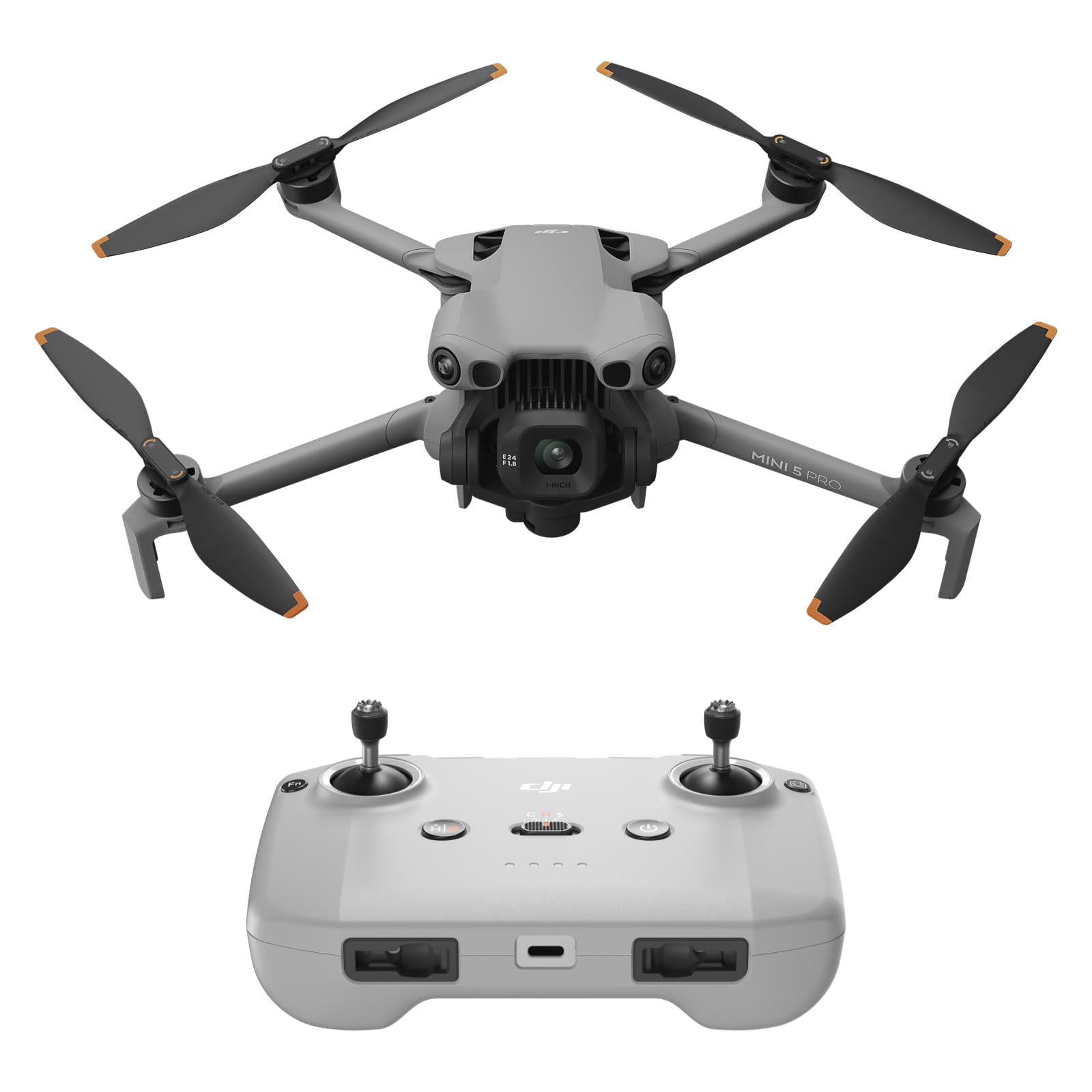
The DJI Mini 5 Pro sets a new benchmark for travel drones with its 1-inch CMOS sensor that captures 4K/60fps HDR video with exceptional dynamic range in low light. The omnidirectional obstacle sensing system—forward LiDAR plus vision sensors—provides a safety net during complex flights and reliable night-time return-to-home, a rare feature in the sub-250g class.
ActiveTrack 360° has been upgraded with customizable tracking modes that keep fast-moving subjects centered, and the 225° gimbal rotation enables true vertical filming without cropping. The 36-minute flight time is generous for a drone this size, and compatibility with Mini 4 Pro batteries adds flexibility for existing DJI users. The foldable design slips into most cargo pockets, making it truly palm-sized for travel.
At 249.9g, it sits right at the regulatory limit, so the included weight varies slightly by batch. The standard package includes one battery and the RC-N3 controller—the Fly More combo with extra batteries is worth considering for all-day shooting. Beginners will appreciate the intuitive DJI Fly app, though it must be downloaded directly from DJI’s website.
Why it’s great
- 1-inch sensor delivers superior low-light performance and color depth
- Omnidirectional obstacle sensing enables confident night flying
- True vertical 225° gimbal rotation for social-media-ready footage
- 42GB internal storage eliminates the need for an SD card
Good to know
- Sits at the 249.9g weight limit—prop guards may push it over
- Standard bundle includes only one battery; extra investment required
- DJI Fly app removed from Google Play; must sideload from DJI website
2. DJI Flip (RC-N3)

The DJI Flip takes a different approach to travel safety: full-coverage carbon fiber propeller guards that protect people and objects without adding enough weight to cross the 249g threshold. This makes it an ideal choice for beginners and travelers who fly in close proximity to others, such as at parties or on hiking trails.
Its 1/1.3-inch CMOS sensor captures 4K/60fps HDR video with excellent vibrancy, and the 3-axis gimbal delivers smooth footage even in 15 mph winds. The palm takeoff and subject tracking features mean you can launch from your hand and let the drone act as your personal cinematographer. The 31-minute max flight time is sufficient for most sessions, and the included RC-N3 remote provides reliable 44,000ft/13km video transmission.
Voice control via the DJI Fly app adds a hands-free layer, though the 4K/60fps mode and manual camera controls are unavailable when using phone-only operation. The full carbon fiber guard design slightly increases the folded footprint compared to open-propeller models, but the trade-off in safety is worthwhile for social travel use.
Why it’s great
- Full carbon fiber propeller guards for worry-free close-quarters flying
- Palm takeoff and subject tracking for hands-free operation
- Excellent 4K/60fps HDR video with 3-axis gimbal stabilization
- Under 249g with guards—no FAA registration required
Good to know
- Phone-only mode limits video to 4K/30fps with no manual controls
- Propeller guard design makes the folded drone slightly bulkier
- Additional batteries, case, and storage are extra costs to budget for
3. HOVERAir X1 PRO

The HOVERAir X1 PRO is purpose-built for action travelers who want a flying camera that keeps up with high-speed movement. With a follow speed of 42 km/h (26 mph) and a burst speed of 60 km/h, it can track cyclists, skiers, and runners without losing the frame. The OmniTerrain capability lets it operate over snow, water, and cliffs—a genuine advantage for adventure destinations.
Its 2-axis gimbal with EIS and horizon leveling delivers smooth 4K/60fps footage, and the fully enclosed carbon-fiber-grade HEM prop guard design makes it safe to catch and launch from your hand. The 15+ automated flight modes, including Zoom Out, Orbit, and Dolly Track, let you focus on the activity rather than piloting. Rear ToF collision detection provides braking at speeds up to 1.5 m/s when obstacles appear behind the drone.
Weighing 192g and folding down to a compact shape, it’s exempt from FAA registration and fits into a jacket pocket. The standard package includes one battery—a second is strongly recommended for full-day adventures. Some users report that the lack of full manual control limits creative shots for experienced pilots, and the app-based control takes a moment to get used to.
Why it’s great
- 42 km/h follow speed tracks high-action sports reliably
- OmniTerrain flight over snow, water, and uneven ground
- Fully enclosed HEM prop guards for safe hand-catch operation
- Rear ToF collision detection for safer backward movement
Good to know
- 2-axis gimbal with EIS, not a full 3-axis mechanical gimbal
- Limited full manual control; optimized for automated modes
- Standard pack includes only one battery
- Some early units had reliability issues per customer feedback
4. Bwine F7MINI 4K(RC3)
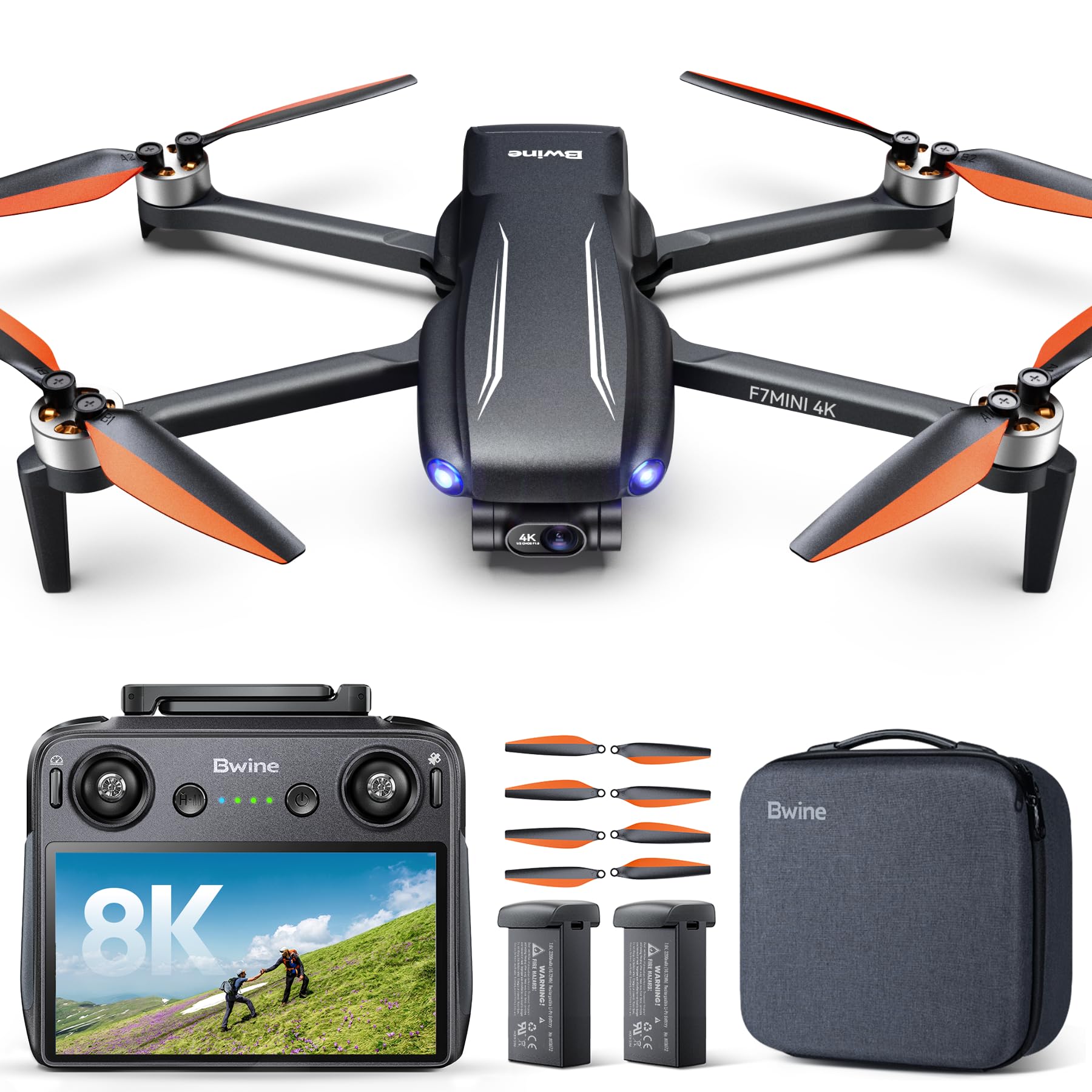
The Bwine F7MINI 4K(RC3) stands out in the mid-range category for its built-in 5.5-inch 1080P screen on the remote controller, which eliminates the need to connect your phone for live view. The 500-nit brightness ensures visibility even in direct sunlight—a practical advantage during daytime travel flights. The remote also includes 32GB of internal storage for instant playback of captured footage.
Its 3-axis brushless gimbal combined with EIS produces stable 4K video at 30fps, while 8K photo capture (48MP) gives you plenty of cropping flexibility for prints. The two included batteries deliver a combined 64 minutes of flight time, and the drone supports PD 3.0 fast charging (charger sold separately). The 20,000ft transmission range—with a stable 4.5 km signal in urban areas—is solid for a drone at this level.
At 249g, it’s FAA-exempt, and the included carrying case, spare propellers, and screw kit make it ready to travel out of the box. The Smart RTH with Dynamic Home Point updates the return location as the controller moves, preventing the drone from returning to a takeoff point that’s no longer accessible. The app-based drone locator buzzer is a thoughtful addition for finding a lost drone in tall grass.
Why it’s great
- Built-in 5.5″ 1080P screen controller—no phone required
- PD 3.0 fast charging support for quick turnaround between flights
- Dynamic Home Point adjusts RTH location as you move
- Comprehensive kit includes case, spare parts, and two batteries
Good to know
- 4K video capped at 30fps, not 60fps
- Transferring files from controller to phone is slow via Wi-Fi
- Wind resistance is adequate but not as strong as premium models
5. Holy Stone HS790
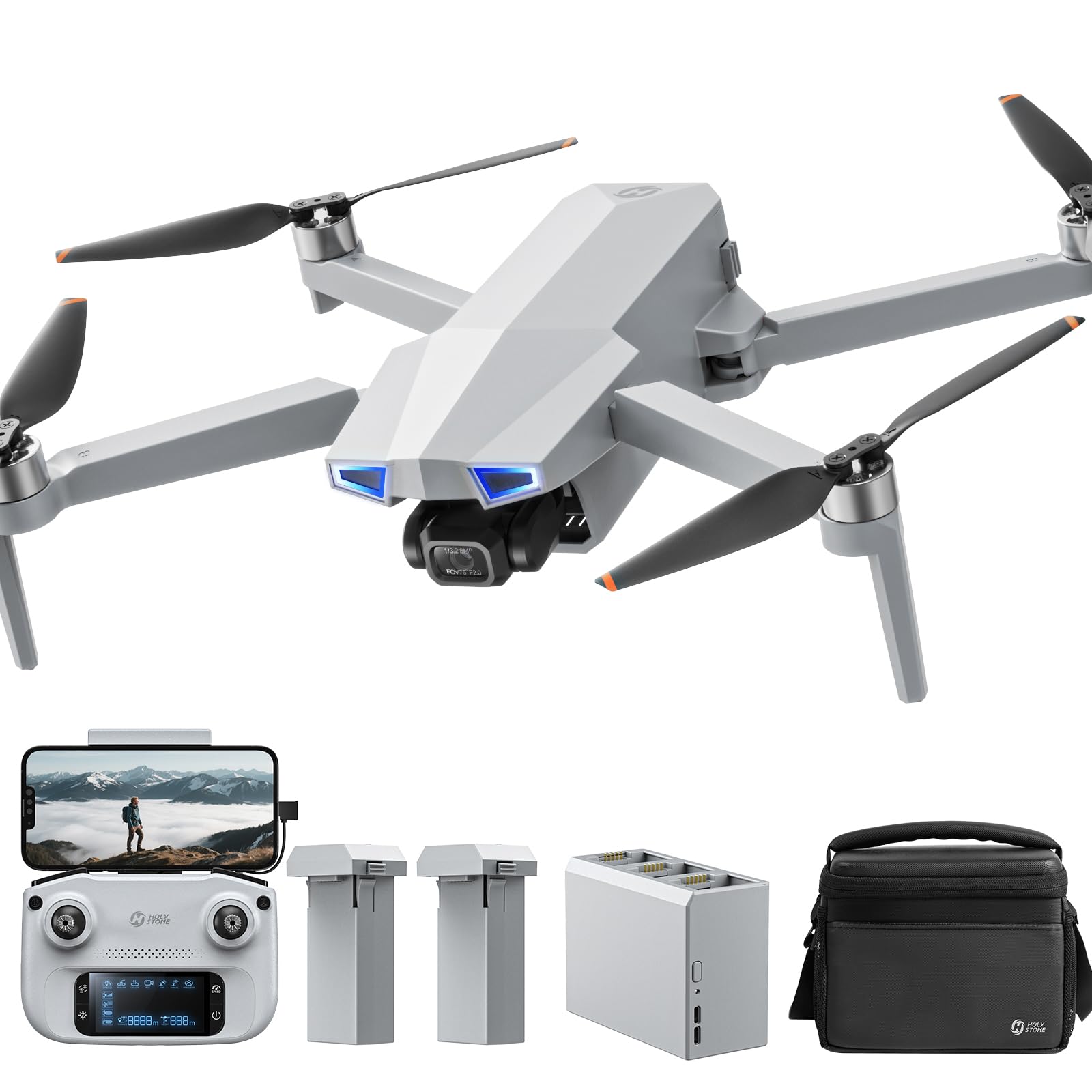
The Holy Stone HS790 is a strong contender for travelers who prioritize long-range exploration. Its Wi-Fi Repeater transmission system delivers a claimed 30,000ft (9 km) range, and while real-world results vary by environment, the ability to fly far with low-latency FPV is a genuine asset for surveying remote landscapes.
The 3-axis brushless gimbal captures 4K/30fps video and 6K photos, and AI QuickShots like Rocket, Dronie, and Circle automate cinematic moves with a single tap. A Night Mode enhances visibility during twilight flying, though the drone lacks the obstacle sensing of premium models, so caution is advised after dark. The two intelligent batteries plus the smart PD charging hub—which doubles as a power bank—provide up to 60 minutes of total flight and on-the-go charging for your phone.
Weighing 375.5g, the HS790 exceeds the 249g threshold, requiring FAA registration and Remote ID compliance (which is built-in). The included carrying case makes transport easy, and the 1506 brushless motors deliver a quiet, efficient flight profile. The app (HT FLY) has been reported as occasionally buggy, but the built-in Remote ID and GPS features like Follow Me and Waypoint Flight add significant value for the price point.
Why it’s great
- 30,000ft transmission range for long-distance FPV flying
- Smart PD charging hub doubles as a power bank for travel
- Built-in Remote ID compliance for FAA regulations
- AI QuickShots and Night Mode for creative flexibility
Good to know
- Weighs 375.5g; requires FAA registration and Remote ID
- HT FLY app can be buggy and the FPV feed may lag
- No obstacle avoidance or downward sensors for indoor flight
6. Skyrover S1
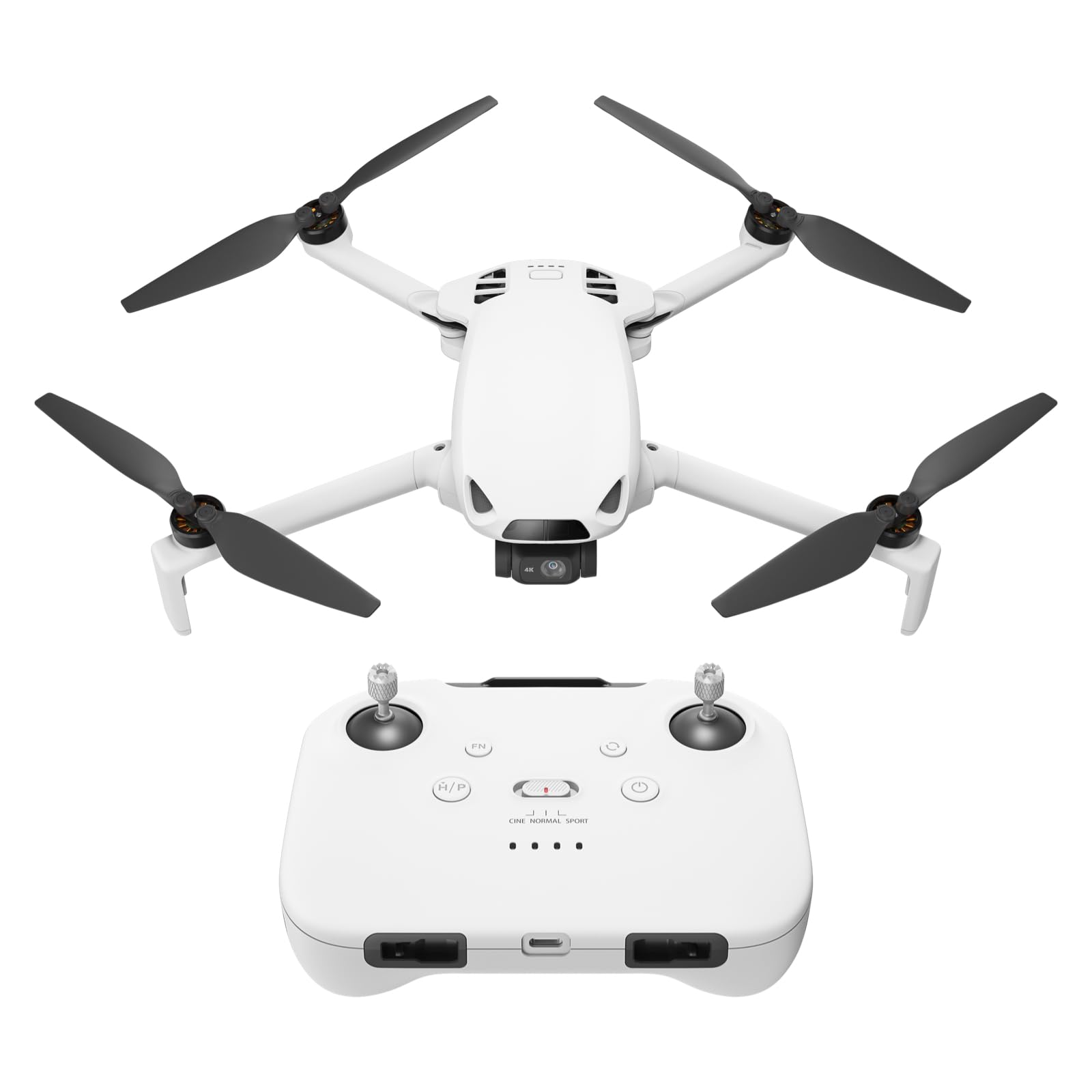
The Skyrover S1 targets travel photographers who want high-resolution stills without spending premium-level money. Its 1/2-inch Sony CMOS sensor captures 48MP photos and 4K/60fps video, and the 3-axis gimbal ensures those images stay sharp even in gusty conditions. The Auto Track feature is particularly useful for keeping a hiking companion centered in the frame automatically.
The 40-minute per-battery flight time is excellent for a 249g drone, and the 39,000ft (11.9 km) video transmission range rivals drones costing twice as much. The SmartGo one-tap creation system allows beginners to pull off professional-looking camera moves like Orbit and Dolly without manual piloting. The foldable design collapses to a compact 6.3 x 3.8 x 2.5 inches—easily stored in a daypack.
A notable limitation is that the Skyrover app is not available on the Google Play Store or Apple App Store; you must sideload it from the manufacturer’s website. This creates an extra step during setup and raises security concerns for some users. A few early units shipped with gimbal calibration issues, though customer support appears responsive in most cases. The manual is also sparse, so expect to rely on online tutorials.
Why it’s great
- 48MP photos with a Sony sensor for detailed still imagery
- 4K/60fps video with 3-axis gimbal stabilization
- 40-minute flight time per battery extends shooting sessions
- Under 249g and FAA registration-free for easy travel
Good to know
- App must be sideloaded from website—not on official app stores
- Manual lacks depth; relies on online tutorials for full setup
- Some units have reported gimbal calibration issues out of box
7. HOVERAir X1

The HOVERAir X1 is the lightest travel drone in this lineup at just 125g—roughly the weight of a modern smartphone. Its completely enclosed design with integrated propeller guards eliminates the fear of spinning blades near people, making it the safest option for group travel and family gatherings. The palm takeoff operation means you never need to find a flat launch surface; just press the button and it lifts from your hand.
It records 2.7K/30fps and 1080P HDR video, and the triple stabilization system (a combination of mechanical and electronic) produces smooth footage for social media content. The 11-minute per-battery flight time is short, but the included battery charging hub and the ability to pack multiple batteries in a pocket mitigate this. The 32GB internal storage eliminates the need for a microSD card and keeps content private during transit.
The HOVERAir X1 is not a traditional drone—it’s a self-flying camera designed for casual vlogging, hiking, and cycling at speeds up to 15 mph. It lacks a remote controller and relies entirely on the Hover X1 App, which limits range and manual control. It is also sensitive to wind levels above 4 and struggles at altitudes above 2,000 meters, so it’s best suited for calm-weather adventures at moderate elevation.
Why it’s great
- Ultra-light 125g—lighter than most smartphones
- Fully enclosed propellers for safe use around people
- Palm takeoff with pre-programmed flight paths for zero-pilot footage
- 32GB internal storage keeps footage secure without an SD card
Good to know
- Short 11-minute battery life; multiple batteries essential
- No remote controller; flight relies entirely on app control
- Limited wind resistance—best for calm days below 2,000m altitude
- Cannot fly over water safely; lacks obstacle avoidance
8. Potensic ATOM LT

The Potensic ATOM LT delivers exceptional flight endurance for its price point, with two 3000mAh intelligent batteries providing a combined 80 minutes of flight time. Each battery runs up to 40 minutes in real-world conditions—longer than many premium models. The SurgeFly 2.0 control system and brushless motors ensure stable flight in Level 5 winds, making it a reliable option for coastal or mountain travel.
The 2.5K EIS camera with a Sony sensor captures 2560×1440 video, which is clear for social media but falls short of the 4K standard many travelers expect. The ShakeVanish 2.0 stabilization system reduces jello effects during moderate movement, though fast yaw turns can introduce some wobble. The PixSync 2.0 transmission provides up to 4 km of HD video feed with minimal latency, which is impressive at this price point.
The foldable design collapses to 3.5 inches wide, fitting easily into a jacket pocket. It supports four GNSS satellite positioning systems (GPS, GLONASS, Galileo, BeiDou) for rapid satellite acquisition, though some users report longer-than-expected connection times. The ATOM LT only flies in GPS mode, so indoor or enclosed-area operation is not possible. The lack of an optical flow sensor means it can drift in environments without clear GPS lock.
Why it’s great
- 80 minutes total flight with two high-capacity 3000mAh batteries
- Excellent Wind resistance (Level 5) for its weight class
- PixSync 2.0 transmission maintains HD feed up to 4 km
- Compact foldable design fits in a jacket pocket
Good to know
- 2.5K EIS camera, not true 4K—noticeable difference in fine detail
- GPS-only flight mode prevents indoor or low-sky operation
- Satellite acquisition can be slow in dense urban areas
- No optical flow sensor for precise low-altitude hovering
9. Specta Mini Drone
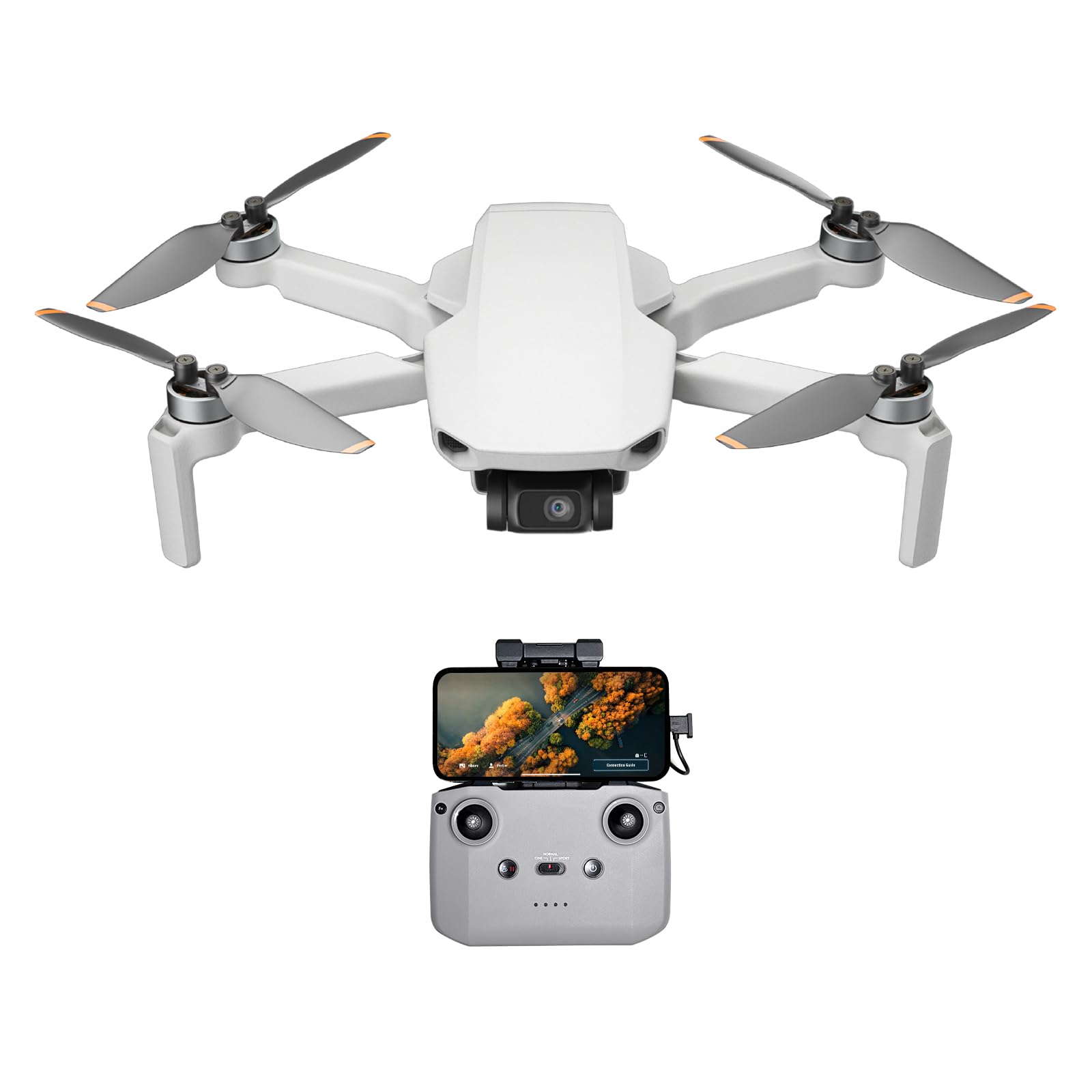
The Specta Mini Drone offers the rare combination of a 3-axis mechanical gimbal and 4K/30fps video at a price point that rivals basic toy drones. The gimbal makes a meaningful difference in footage stability—it counteracts drone movements mechanically rather than cropping the frame, preserving the full field of view. The 32,800ft (10 km) video transmission range is also notably long for the category.
Its 31-minute max flight time and Level 5 wind resistance make it suitable for outdoor travel use, and the sub-249g weight ensures FAA registration isn’t required. The GPS Return-to-Home, one-button takeoff and landing, and beginner-friendly flight modes lower the learning curve significantly. However, the camera’s 4K performance is good in bright daylight but deteriorates quickly in overcast or shadowed conditions compared to Sony-sensor-equipped competitors.
A significant dependency risk exists here: the Specta brand is smaller than DJI or Potensic, so replacement batteries are proprietary and currently priced high relative to the drone itself. Aftermarket parts and future support are uncertain. The controller emits a loud beeping sound when the battery drops to 20%, which several users found annoying. The package does not include a carrying case, so you’ll need to budget for one separately.
Why it’s great
- 3-axis mechanical gimbal at a budget price for smooth footage
- 4K/30fps video with 32,800ft transmission range
- Under 249g and Level 5 wind resistant for outdoor travel
- Beginner-friendly GPS features: Return-to-Home, auto takeoff/landing
Good to know
- Proprietary batteries are expensive and may become scarce
- No carrying case included—must purchase separately
- Controller beeps loudly when battery hits 20% battery
- Camera struggles in low-light conditions compared to Sony-sensor drones
FAQ
Do I need FAA registration for a sub-250g travel drone?
Is a 3-axis gimbal essential for smooth travel video?
What flight time should I expect from a travel drone in real conditions?
Can I fly a travel drone in national parks or wilderness areas?
Final Thoughts: The Verdict
For most users, the best travel drone winner is the DJI Mini 5 Pro because its 1-inch sensor, omnidirectional obstacle sensing, and 36-minute flight time deliver the best overall balance of image quality, safety, and portability. If you want a hands-free flying camera that tracks you through action adventures, grab the HOVERAir X1 PRO. And for a budget-friendly option that still offers a 3-axis gimbal and long transmission range, the Specta Mini Drone is a solid entry point that won’t hold you back from learning aerial cinematography.

Mo Maruf
I created WellFizz to bridge the gap between vague wellness advice and actionable solutions. My mission is simple: to decode the research and give you practical tools you can actually use.
Beyond the data, I am a passionate traveler. I believe that stepping away from the screen to explore new environments is essential for mental clarity and physical vitality.