Our readers keep the lights on and my smoothie glass nicely filled. As an Amazon Associate, I earn from qualifying purchases.
Specs are compiled from manufacturer listings and verified buyer reviews and can change over time — please confirm the key details on the product page before buying.
Choosing the right synthetic engine oil is about matching the fluid to your engine’s exact needs—whether that’s towing a trailer in summer heat or protecting a high-mileage daily commuter. The right full synthetic resists breakdown under extreme temperatures, prevents sludge, and extends drain intervals beyond conventional oil.
I’m Mohammad Maruf — the founder and writer behind WellFizz. This guide is built by comparing the manufacturers’ published specifications and the patterns across verified customer reviews, so you get each pick’s real strengths and trade-offs instead of marketing spin.
After reading this, you’ll know exactly which formulation, viscosity grade, and additive package fits your car, truck, or SUV best — this is the complete breakdown of the best synthetic engine oil on the market today.
Our Picks at a Glance


How To Choose The Best Synthetic Engine Oil
Start with the viscosity grade your owner’s manual demands. That number, like 0W-20 or 5W-30, tells the oil how thin it flows when cold and how thick it stays when hot. Using the wrong grade can reduce fuel economy or leave parts unprotected under load.
Decode the Viscosity Numbers
The “W” stands for winter. The number before it, like the 0 in 0W-20, is the cold-flow rating—lower means the oil pumps easier on a freezing morning. The number after the dash, like the 20, is the high-temperature thickness. A 0W-20 flows thin at start-up but still coats parts well at operating temperature.
Check for API and ILSAC Certifications
Look for the API “donut” symbol and letters like SP or SN on the bottle. These certify the oil meets current industry standards for piston cleanliness, sludge control, and wear protection. A new “SQ” rating from the latest ILSAC GF-7 standard means the oil is built for today’s turbocharged engines.
Match the Additive Package to Your Engine
Not all synthetics carry the same additives. High-mileage oils include seal conditioners to fight leaks, while hybrid-specific oils suspend water molecules to prevent corrosion. If you tow or haul, look for a formula with extra antioxidants and deposit-fighting detergents.
Quick Comparison
| Model | Best For | Viscosity | Volume | OEM Approvals | Amazon |
|---|---|---|---|---|---|
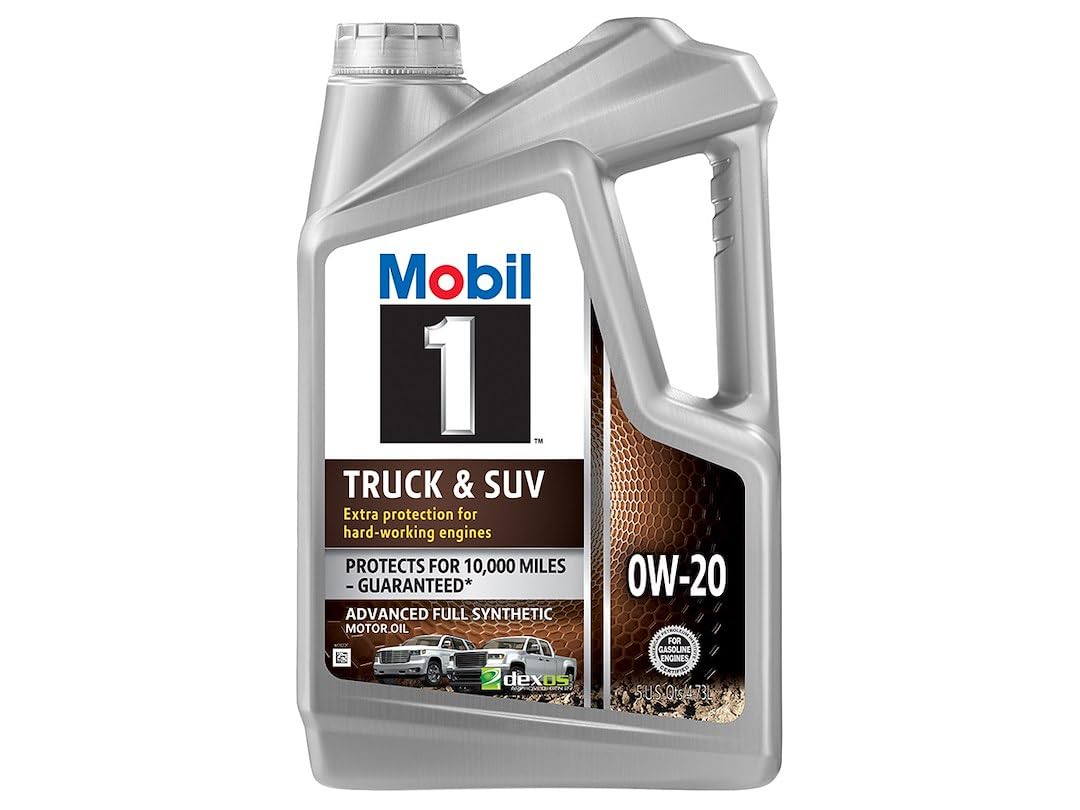
| Mobil 1 Truck & SUV 0W-20★ Best Overall | Towing & extreme heat | 0W-20 | 160 fl oz (5 qt) | Triple Action Formula | Amazon |
| Mobil 1 Truck & SUV 5W-30Top Performer | High-mileage trucks | 5W-30 | 160 fl oz (5 qt) | Triple Action Formula | Amazon |
| Castrol EDGE Extended 0W-20Long-Interval Pick | Long drain intervals | 0W-20 | 160 fl oz (5 qt) | API SQ, dexos1 Gen 3 | Amazon |
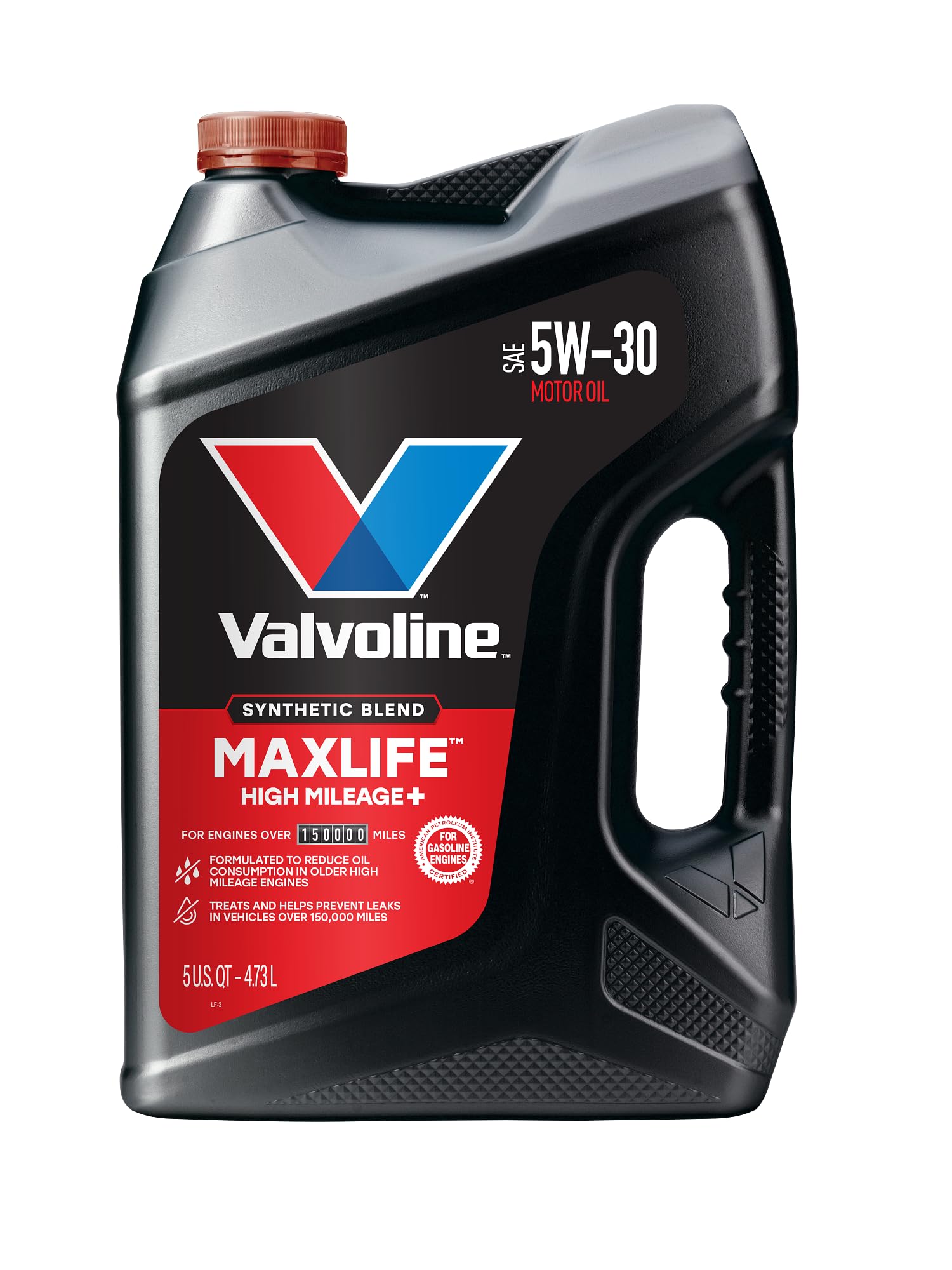
| Valvoline High Mileage 5W-30 | 150K+ mile engines | 5W-30 | 5 qt | API SQ, SP, SN PLUS | Amazon |
| K&N Premium 5W-30 | Daily drivers | 5W-30 | 4.73 L (5 qt) | SynthAMax Tech | Amazon |
| K&N Premium 0W-20 | Modern fuel-efficient cars | 0W-20 | 4.73 L (5 qt) | SynthAMax Tech | Amazon |
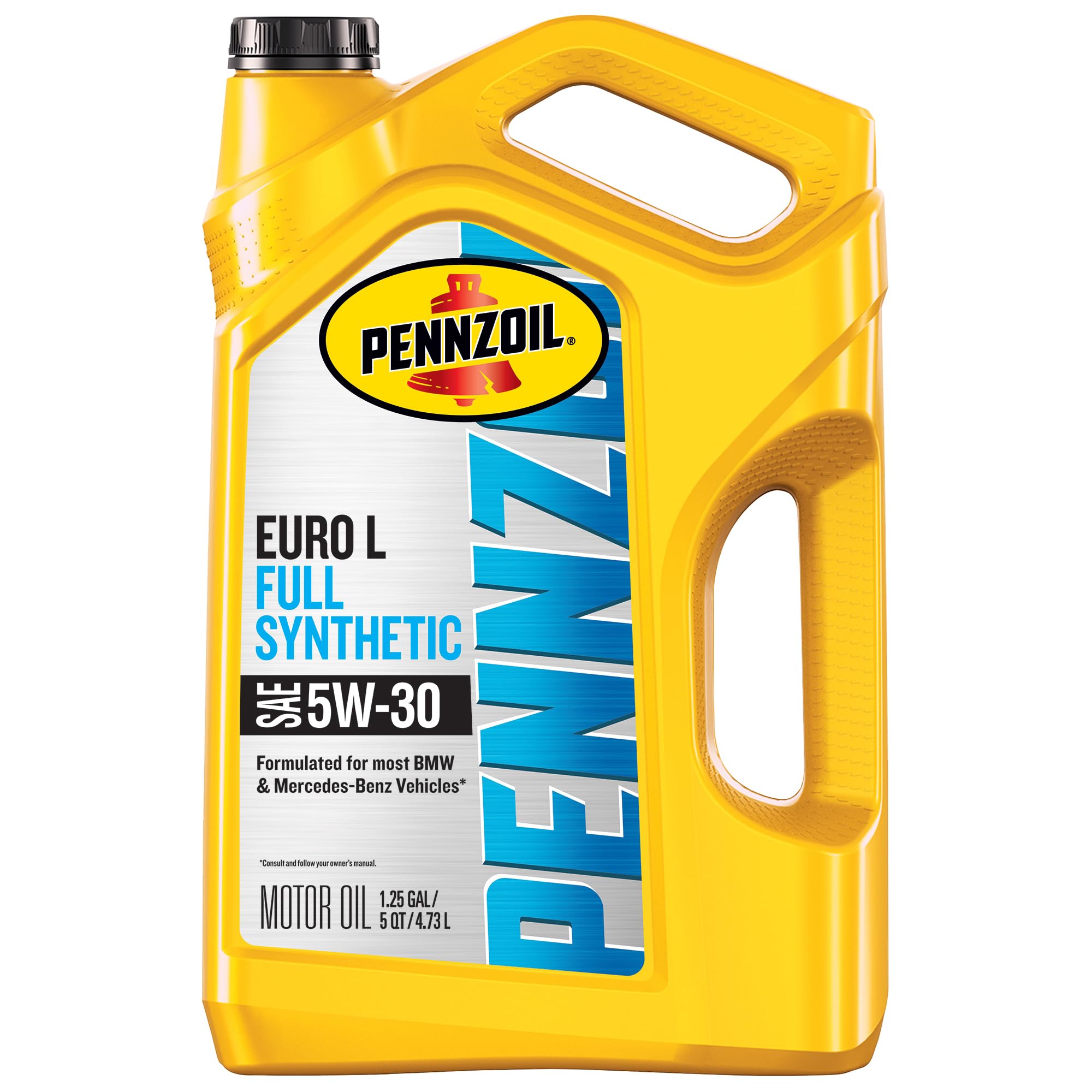
| Pennzoil Platinum Euro L 5W-30 | BMW, Mercedes, VW | 5W-30 | 5 qt | MB 229.5, BMW LL-01 | Amazon |
| Liqui Moly Top Tec 6600 0W-20 | Modern BMW & LSPI risk | 0W-20 | 5 liters | BMW Longlife-17 FE+ | Amazon |
| Valvoline Hybrid 0W-20 | Hybrid & EV-adjacent | 0W-20 | 15 qt (3-pack) | Trap & Lock Tech | Amazon |
In‑Depth Reviews
1. Mobil 1 Truck & SUV 0W-20
Our pick — over 4.5★ from 900+ verified ratings; the strongest balance of quality and price.
The heavy-lifting workhorse that shrugs off towing heat and Arctic cold alike.
If your truck or SUV regularly pulls a trailer or hauls a heavy load, this is the formula built for that abuse. Mobil 1 engineers it with the Triple Action Formula, a combination that attacks engine protection, cleanliness, and performance in one pour. It protects critical parts for up to 10,000 miles by controlling oxidation that turns oil into sludge.
It withstands 500°F internal heat and flows at -40°F, covering both towing heat and winter starts. At 0W-20, it’s a thinner oil that reaches every bearing quickly on a cold morning, which is why it wins over so many owners. What wins people over most is the value—over 40 owners in the review data single out the price-to-quality ratio ahead of the performance claims.
Buyers report the engine “runs good” and smooth with no issues, and there’s a consistent theme of it outlasting conventional oil between services. The 5-quart jug (160 fl oz) is the standard fill for most trucks and SUVs. The crowd favorite here holds a 4.8-star score from more than 900 owners, making it the safest bet of the group.
What wins owners over
- 10,000-mile protection interval between changes
- Survives 500 degrees F internal heat
- Flows at -40 degrees F for cold starts
- Additives prevent deposit formation
Who should look elsewhere
- 0W-20 may not match engines spec’d for 5W-30
- Towing-focused formula is overkill for light commutes
Reach for this if: you drive a hardworking truck or SUV and want a single oil that covers towing, heat, and winter starts.
Look elsewhere if: your car calls for a thicker 5W-30 grade—check the manual before buying.
2. Mobil 1 Truck & SUV 5W-30
The 165,000-mile champion that keeps old valvetrains looking brand new.
This is the thicker sibling of our top pick, trading the 0W-20 cold-flow rating for a 5W-30 that many pickup owners swear by. It carries the same 10,000-mile protection interval and the same 500 degrees F heat ceiling, but the heavier base oil suits engines that run hotter under load. The difference between this and the 0W-20 is the cold-start flow—the 5W-30 is slightly thicker when the engine is cold, which some high-mileage engines actually prefer.
You get a proven track record here: 50 owners in the data call out the build quality directly, the highest single aspect of any product in this guide. Reviewers report a 2004 GMC 5.3-liter and a 2000 Ford Escort both running on this oil for 165,000 miles with no check-engine light and a valvetrain “like new.” A 30-year motorcycle mechanic in the data notes that cheap synthetics can be diluted, while this one holds up in GM and Ford engines tested over two decades.
Owners mention quieter, smoother operation and clean internals at 3,000-mile checks, with good oil pressure and no leaks or burn. The wide, easy-pour spout gets regular praise from DIYers who change their own oil. If the 0W-20 sits at the top because of its cold-start edge, this 5W-30 matches it for durability while suiting a broader range of trucks and SUVs.
The durable choice
- 20 years of documented high-mileage use
- Maintains viscosity under turbo heat
- Low calcium helps prevent low-speed detonation
- Easy-pour wide spout design
Know before you buy
- Oil consumption feedback is mixed in the data
- Thicker grade means slightly slower cold starts
Pick it for: a high-mileage truck that needs proven long-term protection and easy DIY changes.
skip it if: your owner’s manual specifically lists a 0W-20 grade for fuel economy.
3. Castrol EDGE Extended Performance 0W-20
The 25,000-mile oil that dares you to think longer between changes.
If the idea of changing oil every 3,000 miles feels like a relic, this Castrol formula is built for your mindset. It offers a 25,000-mile or one-year drain interval, the longest in this lineup. Company tests show it’s 3 times stronger in viscosity breakdown and 50 times better in high-temperature performance.
This is also the most future-proofed oil here on certification. It exceeds the newest API SQ/SP/SN PLUS standards, meets ILSAC GF-7, carries the GM dexos1 Gen 3 license, and has MB-Approval 229.71 plus Ford WSS-M2C947-B1 and WSS-M2C962-A. In plain terms, it’s approved for the latest turbocharged gasoline engines, light-duty diesels, and hybrids all at once. The 5-quart jug covers a standard fill.
Customers note using Castrol for “the last 35+ years” in their vehicles and call it “very well engineered.” It performs particularly well in VW Golf GTI and Jaguar F-Type builds, and buyers consistently call it a great value for the approved-spec list you get. If you want the longest safe interval and the newest approvals, this is the one.
Why it leads on intervals
- 25,000-mile drain capability
- 3X stronger than leading synthetic in tests
- 50X better high-temp performance
- GM dexos1 Gen 3 licensed
The trade-off
- Overkill if you change oil every 5,000 miles anyway
- Premium position in the range
Choose it for: drivers who want maximum time between changes and the newest OEM spec coverage.
Reconsider if: your vehicle’s warranty dictates a shorter fixed interval—follow the manual.
4. Valvoline High Mileage 150K 5W-30
The leak-taming formula for engines that have crossed the 150,000-mile line.
Built specifically for vehicles past the 150,000-mile mark, this Valvoline formula attacks the two things that plague old engines: leaks and oil consumption. Premium seal conditioners work to rehydrate dried-out gaskets and prevent oil from seeping past, while a Moly anti-wear additive coats metal parts to cut friction. The review data backs this up—reviewers point out the oil “stopped leak” on aging trucks and recommend it outright for anything with 150K miles or more that burns oil.
The measurable claims are real: It delivers 10% better wear protection and 15% stronger sludge defense than industry standards. That means less friction inside a tired engine and less harmful buildup over time. It also exceeds the latest API SQ, SP, and SN PLUS gasoline categories plus Ford WSS-M2C971-A1 and Chrysler MS-13340, so it’s current even for newer engines that happen to be high-mileage.
Buyers with a 2002 Dodge Ram 1500 and a 2006 Chevrolet Silverado 1500 both report strong results, and multiple owners note their engines run “more quietly” after the switch. The flash point sits at 394°F, which is a solid safety margin against oil burning off in an older, higher-temperature engine. If your odometer reads six figures and climbing, this is the most targeted fix in the lineup.
Built for old engines
- Seal conditioners help stop leaks
- Moly additive reduces friction wear
- 15% stronger sludge defense than standards
- Quieter operation reported consistently
Who it’s not for
- Unnecessary for low-mileage modern engines
- Noise-level feedback is mixed in the data
Grab it if: your vehicle is over 150K miles and you’re dealing with oil consumption or small leaks.
Leave it if: your engine is under 100K—a standard full synthetic is plenty.
5. K&N Premium 5W-30

The air-filter brand’s slick entry into full-synthetic engine protection.
K&N, best known for its reusable air filters, brings that same performance focus to motor oil with its SynthAMax Technology formula. The pitch is straightforward: a premium full synthetic that minimizes harmful contaminants and sludge buildup while keeping the engine running “like new.” It’s positioned as an all-weather oil, formulated to stay smooth both in cold starts and hot summer traffic.
In the 5W-30 grade, this suits the vast middle of the market—sedans, SUVs, and light trucks that need a reliable daily driver oil. The 4.73-liter (5-quart) jug weighs in at 9.2 pounds, a touch heavier than some rivals, which tells you it’s a full fill. Buyers describe it as “one of the best out there” and confirm it absolutely holds the full 5 quarts stated on the bottle, a common point of distrust that this product clears up.
The quality rating in the review data is strong, with 16 owners calling out the build quality directly, and value-for-money is the second-most-discussed aspect. It’s a premium product at a price that undercuts some of the bigger names, which explains the value praise. If you want a brand you already trust for filtration to also handle your lubrication, this is the cleanest crossover pick.
What you get
- SynthAMax additives protect critical components
- Minimizes contaminants and sludge buildup
- All-weather cold and hot performance
- Full 5 quarts confirmed by buyers
Consider this
- No OEM-specific approvals listed
- 3-month manufacturer warranty period
Best for: the everyday driver who wants a trustworthy full synthetic without hunting for OEM spec sheets.
Think twice if: your European car demands a specific approval like MB 229.5—that’s the Pennzoil below.
6. K&N Premium 0W-20

The thin-flowing twin that keeps modern engines clean past 135,000 miles.
This is the 0W-20 sibling to the K&N 5W-30 above, and it’s the one to reach for if your car was built in the last decade and spec’d for a thinner oil. The 0W-20 grade flows faster at cold start, which reduces wear on the initial crank and helps fuel economy in modern engines. It carries the same SynthAMax Technology and the same sludge-fighting detergent package as the 5W-30.
Reviewers share a standout story: a 2014 BMW X1 Xdrive28i running exclusively on this oil at 135,000 miles with “no timing chain done yet” and an engine that “looks really clean and almost ‘New’ still.” That’s a meaningful data point for anyone worried about whether a less-famous oil brand can protect a precision German engine. The review pages sum it up: “Best oil. The only oil I use.”
At 9.2 pounds for the 5-quart jug, the weight confirms a full fill, and the SynthAMax additives are formulated to reduce wear and tear on critical components. If the 5W-30 suits the middle of the market, this 0W-20 targets the newer, more fuel-conscious segment—and it does so with the same accessible price point. The main note in the data is a buyer who received the wrong weight for a motorcycle, which is a fit mismatch, not a quality issue.
Modern engine fit
- 0W-20 grade for fast cold-flow
- Proven on a 135,000-mile BMW
- Sludge and contaminant defense
- Same price as the 5W-30 version
Watch for
- 0W-20 not suited to older engines spec’d for 5W-30
- No OEM-specific approvals published
Reach for it if: your modern car calls for 0W-20 and you want proven high-mileage results from a trusted aftermarket brand.
Verify first: your owner’s manual must list 0W-20—using it in a thicker-grade engine can reduce protection.
7. Pennzoil Platinum Euro L 5W-30
The natural-gas-based oil engineered for BMW, Mercedes, and VW engines.
European engines are picky about oil, and this Pennzoil formula is built specifically for them. It’s made from natural gas rather than crude, which yields a cleaner base oil, and it’s formulated for high-performance diesel and gasoline engines in BMW, Mercedes-Benz, and VW vehicles. The OEM approval list is the headline: it meets Mercedes-Benz MB 226.5/229.3/229.5, BMW LL-01, and VW 502 00/505 00.
That MB 229.5 approval is significant because it includes a Fuel Economy Improvement requirement. In plain terms, this oil is certified to help your European car return better fuel economy while still protecting it in extreme heat. It also delivers faster low-temperature oil flow—important for those cold German-engine starts—and keeps the engine “closer to factory clean” based on Sequence VH and M-111 sludge tests.
Versatility stands out in the reviews. Owners run it in a 2014 Ford Fusion, a 2004 Volvo S60, and a 2019 F150 3.0 diesel, with reports of smoother engines, minimal oil consumption, and clean internals at 500-mile drain checks. One owner notes it’s “some of the best oil on the market and a replacement for Dexos D.” The recurring gripe in the data is packaging—some units arrive with leakage, which is a shipping issue rather than a product flaw.
Euro engine credentials
- Made from natural gas for a cleaner base
- MB 229.5 includes fuel economy improvement
- Approved for BMW LL-01 and VW 502 00
- Works across diesel and gasoline engines
Keep in mind
- Occasional delivery leakage reported
- Vehicle-specific fit, not universal
Choose it for: European car owners who need exact OEM approvals and want fuel economy benefits.
Pass if: you drive a standard Asian or domestic car—the Euro-specific additives add cost you won’t use.
8. Liqui Moly Top Tec 6600 0W-20

The German-engineered guard against the quiet knock that can destroy a motor.
This is the most technically specialized oil in the lineup, engineered to fight a specific modern-engine problem called LSPI—low-speed pre-ignition. That’s when the fuel-air mixture ignites spontaneously in the combustion chamber at low speeds before the spark plug fires, causing a knock that can lead to serious engine damage. The BMW Longlife-17 FE+ approval on this bottle is designed specifically to reduce that risk.
It’s a 0W-20 fully synthetic in a 5-liter canister, which is the standard fill size for many European cars. The quality consensus is loud—50 owners in the data call out the quality, the highest count in any aspect across this entire guide, matched only by the Mobil 1 5W-30. Shoppers say engines that idle “soooo smooth,” quieter cold starts, and no performance loss even after thousands of miles, with no oil consumption or top-ups needed.
The review data shows it working across a 2016 Subaru Forester Premium, a 2022 Mini Cooper S convertible, a Jaguar, and a Land Rover—so it’s not exclusive to BMW despite the approval. Buyers report it glides “flawlessly on the road” and delivers a slight fuel efficiency gain. If you drive a modern turbocharged car and want the most advanced protection against a known failure mode, this is the most forward-thinking choice on the list.
The technical edge
- BMW LL-17 FE+ approval targets LSPI risk
- 50 owners rate the quality highest in class
- No oil consumption reported by owners
- 5-liter canister is a full Euro fill
Who it’s for
- Modern turbocharged engines benefit most
- Premium price reflects the specialty formula
Pick it if: you drive a modern turbo engine and want dedicated protection against low-speed pre-ignition damage.
pass on it if: your car is an older, non-turbo model—you’re paying for LSPI protection you don’t need.
9. Valvoline Hybrid Vehicle 0W-20 (3-Pack)

The water-trapping formula designed for engines that stop and start constantly.
Hybrid engines run differently—they cycle on and off, run at partial load more often, and accumulate water and fuel in the oil that a conventional engine would burn off. This Valvoline formula uses a proprietary Trap and Lock Technology that suspends water molecules in the oil, preventing damage from fuel and water while keeping all metal surfaces properly lubricated. There’s also an Anti-Corrosion Shield that defends against rust and oil breakdown.
This is a case-of-3 purchase, giving you 15 quarts total (5 quarts each) so you’re stocked for three oil changes. The flash point matches the high-mileage Valvoline at 394°F, and the 0W-20 grade suits the modern hybrid powertrains that spec thinner oil for efficiency. Owners running it in a Honda CR-V Hybrid report the oil “still looked good after 5000 miles” and the engine ran noticeably quieter than with the factory-fill oil.
Here’s the honest note: the data shows a non-hybrid owner using it simply because it was cheaper than other full synthetics. That’s fine—it’s a quality 0W-20 that happens to be engineered for hybrids. But the real value is for hybrid owners who want the water-capturing protection that a standard synthetic doesn’t offer. It’s an American-made formula from a brand with more than 150 years of history.
Built for hybrid duty
- Trap and Lock Tech suspends water molecules
- Anti-Corrosion Shield fights rust
- 15 quarts covers three oil changes
- Still looks clean at 5,000 miles
Note the fit
- Hybrid-specific tech is wasted on conventional cars
- 3-pack commitment is a bigger upfront outlay
Perfect for: hybrid owners who want dedicated protection against water and fuel contamination in the oil.
Overkill if: you drive a conventional gasoline car—a standard full synthetic covers you fine.
Understanding the Specs
Viscosity Grade (0W-20 vs 5W-30)
The “W” stands for winter, and the number before it is the cold-flow rating. A 0W oil flows faster at freezing temperatures than a 5W, which means quicker lubrication on a cold morning start. The number after the dash is the high-temperature thickness—the 20 in 0W-20 is thinner at operating temperature than the 30 in 5W-30. Thinner oil improves fuel economy; thicker oil provides a heavier cushion under load. Your owner’s manual dictates which one your engine needs.
API and ILSAC Certifications
The API “donut” symbol and letters like SP or SQ certify the oil meets current industry standards. The newest ILSAC GF-7 and API SQ ratings reflect the demands of modern turbocharged, direct-injection engines. An oil with these current certifications provides verified protection against sludge, piston deposits, and wear. Older ratings like SN are still fine but don’t reflect the latest engine technology.
FAQ
How long does full synthetic oil actually last between changes?
What’s the real difference between 0W-20 and 5W-30 oil?
Is high-mileage oil worth it for a car over 150,000 miles?
Can I use hybrid-specific oil in a regular gasoline car?
Why do European cars need special oil like Pennzoil Platinum Euro L?
What is LSPI and why does Liqui Moly claim to prevent it?
Does a 5-quart jug always hold a full 5 quarts?
Are the newer API SQ and ILSAC GF-7 ratings worth seeking out?
Can I switch from conventional to synthetic oil in an older engine?
Final Thoughts: The Verdict
The best synthetic engine oil for most truck and SUV owners is the Mobil 1 Truck & SUV 0W-20 because its 500-degree heat ceiling and -40-degree cold flow cover the full range of towing abuse and winter starts. If you drive a European car that demands exact OEM approvals, the Pennzoil Platinum Euro L is the certified choice for BMW, Mercedes, and VW. And for those who want the longest possible interval between changes, the Castrol EDGE Extended Performance stretches up to 25,000 miles with the newest API SQ approval.
How We Picked
We do not accept paid placement. Every pick is matched to a real buyer and a real use-case; we do not hands-on test units.
Sources & Methodology
Specifications: manufacturer listings and product documentation. Review insights: verified customer reviews, as of August 2026. Pricing: not shown on this page (it changes often); check the current price via the retailer link.
As an Amazon Associate, WellFizz earns from qualifying purchases. This does not affect which products we feature.
Related Guides

Mo Maruf
I created WellFizz to bridge the gap between vague wellness advice and actionable solutions. My mission is simple: to decode the research and give you practical tools you can actually use.
Beyond the data, I am a passionate traveler. I believe that stepping away from the screen to explore new environments is essential for mental clarity and physical vitality.