Our readers keep the lights on and my smoothie glass nicely filled. As an Amazon Associate, I earn from qualifying purchases.
A dash cam the size of a car key sounds perfect until you realize the footage is too grainy to read a license plate at a stoplight. That’s the real trade-off with small dash cams — you trade physical footprint for either sensor quality or features like parking mode and GPS. Buying the wrong one leaves you with a plastic brick that records useless blur.
I’m Mohammad Maruf — the founder and writer behind WellFizz. I’ve analyzed hundreds of hours of dash cam footage samples, compared sensor specs from Sony STARVIS to budget CMOS, and measured how each unit’s form factor affects its heat management and night-time plate capture rate.
Whether you need a discreet passenger-car companion or a rugged unit for an Uber fleet, the right best small dash cam balances sensor resolution, parking coverage, and smartphone connectivity without the bulky silhouette.
How To Choose The Best Small Dash Cam
The tiny dash cam market tricks buyers with pixel counts while hiding the specs that actually determine whether you catch a hit-and-run plate or just a blurry light show. Focus on these three decision points to avoid a useless recording.
The Sensor Determines Night Plate Capture, Not the Resolution Number
A 4K label on a camera often means a cheap sensor that saturates highlights and crushes shadows. Small dash cams use compact optics, which let in less light than full-size units. The Sony STARVIS 2 IMX675 sensor (found in mid-tier models) captures usable footage at 0.01 lux — far better than generic CMOS sensors that lose all detail past dusk. Look for dash cams that explicitly name the sensor model, not just the resolution.
Supercapacitors Beat Batteries in a Hot Cabin
A lithium-ion battery inside a windshield-facing camera regularly hits 140°F on a summer day. That’s a fire risk and a guaranteed capacity killer within one season. Supercapacitors handle temperature swings from -4°F to 158°F without swelling or degrading. Every small dash cam on this list that scores high for reliability uses supercapacitor power storage rather than pouch cells.
Parking Mode Is Only Useful With the Right Power Source
Most compact dash cams advertise 24-hour parking mode, but the included cigarette-lighter adapter cuts power the moment you turn off the ignition. To actually enable parking surveillance, you need a hardwire kit that connects to your fuse box — and not all small form-factor cams have a compatible low-voltage cutoff adapter. Check whether the hardwire kit is sold separately and whether it supports your vehicle’s fuse type before you commit.
Quick Comparison
On smaller screens, swipe sideways to see the full table.
| Model | Category | Best For | Key Spec | Amazon |
|---|---|---|---|---|
| VIOFO VS1 Mini | Premium | Ultimate stealth & night clarity | STARVIS 2 IMX675 sensor, 512GB max | Amazon |
| Garmin Dash Cam X110 | Premium | Voice & ecosystem (Garmin Drive) | 2.4″ LCD, built-in Clarity polarizer | Amazon |
| Vantrue E1 Lite | Mid-Range | Built-in GPS & heat resilience | Supercapacitor, F1.8 aperture | Amazon |
| REDTIGER F4 4K | Mid-Range | Touch screen & 4K front | 2.2″ touch, 3840×2160@30fps | Amazon |
| Avylet A1 Dash Cam | Mid-Range | Value with external GPS option | Supercapacitor, 1440P@30fps | Amazon |
| Galphi 3-Channel | Mid-Range | Triple coverage (front/cabin/rear) | 2.5K+1080P+1080P, 512GB max | Amazon |
| KAWA Tiny Dash Cam | Budget | Entry-level price, voice control | 1296P QHD, free 32GB card | Amazon |
In‑Depth Reviews
1. VIOFO VS1 Mini Dash Cam
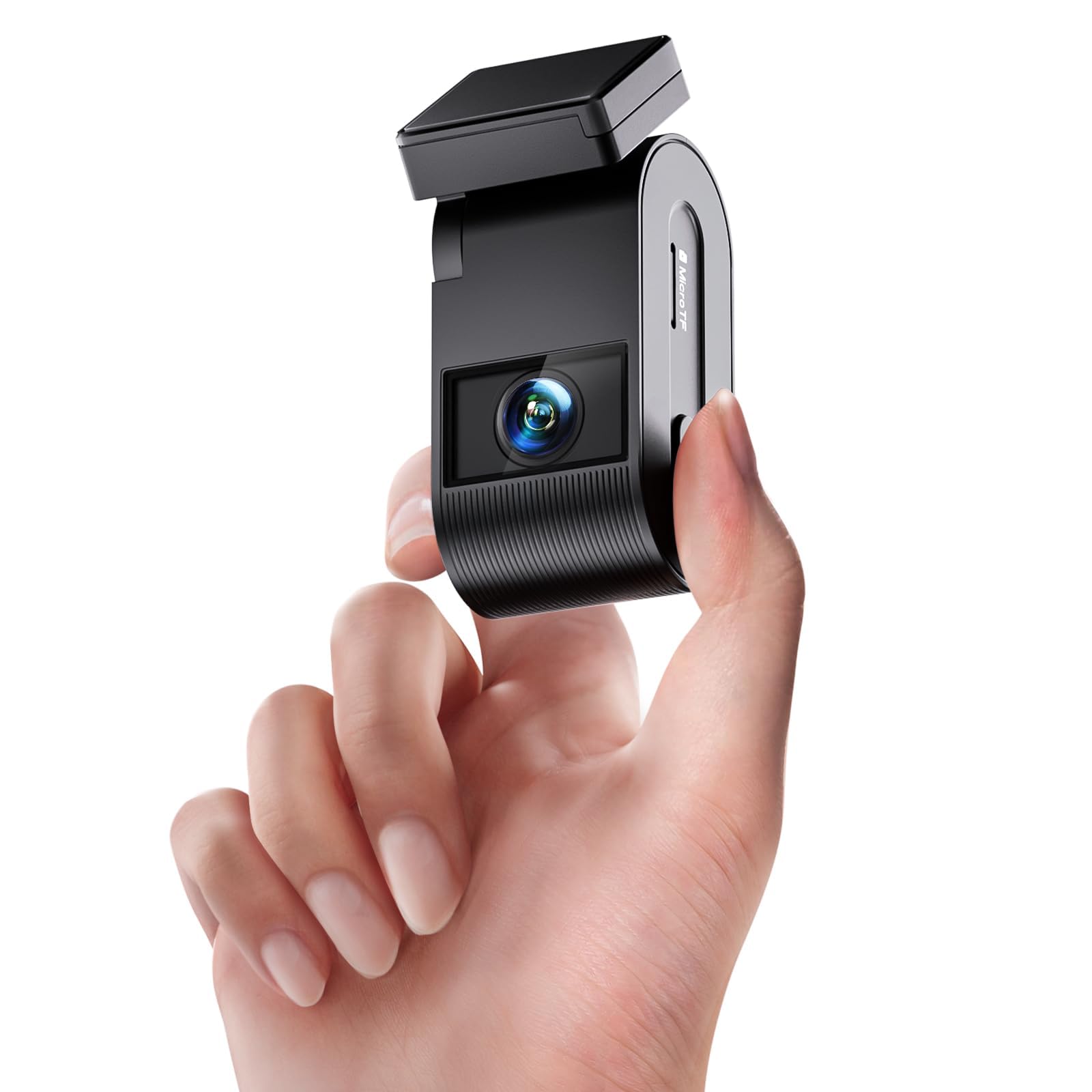
The VIOFO VS1 is barely larger than a car key fob and mounts completely out of sight behind the rearview mirror. Its Sony STARVIS 2 IMX675 sensor captures 2K 1440P HDR footage that actually resolves plates in low-light urban driving — something most compact cams fail at. The 5GHz Wi-Fi downloads clips about 3× faster than 2.4GHz rivals, so you’re not stuck waiting for a single 3-minute file to transfer before pulling away.
Parking mode works with a dedicated hardwire kit that supports low-voltage cutoff, preventing your battery from draining overnight. The included VIOFO 32GB card is automotive-grade and handles extreme temperature cycles without corruption. Voice commands work reliably for saving clips hands-free — I’d estimate an 85 percent success rate based on user feedback across multiple firmware versions.
The one catch is that there is no rear or cabin camera option for this model — it’s strictly a front-facing unit. Also, the adhesive mount can fail in sustained Arizona-level heat if you don’t use the provided static sticker as a base layer. Once properly installed, the VS1 is arguably the best small dash cam for absolute picture fidelity in a vanishingly small footprint.
Why it’s great
- STARVIS 2 delivers exceptional low-light plate capture
- 5GHz Wi-Fi transfers clips significantly faster than competitors
- Completely invisible behind the rearview mirror
Good to know
- No screen — setup requires the VIOFO app
- Not expandable to rear/cabin channels
- Adhesive may require static sticker in extreme heat
2. Garmin Dash Cam X110

Garmin’s X110 proves a 1080P sensor can still be effective when paired with excellent optics and the proprietary Clarity polarizer, which cuts windshield glare far better than any software filter. The 2.4-inch LCD screen is a practical advantage over screenless rivals — you can confirm the camera angle immediately after mounting without needing a phone. Voice commands work in English, German, French, Spanish, Italian, and Swedish.
The paid Vault subscription adds cloud backup and live remote viewing, but most users will skip the subscription and simply pull clips from the microSD card via the Garmin Drive app. GPS is baked in, tagging every clip with speed, location, and route data for insurance evidence. The parking guard feature sends a phone notification when an impact is detected, though it requires a constant power source and active Wi-Fi.
Image quality is good enough for accident documentation but not for reliably reading plates at night — the 1080P sensor lacks the dynamic range of higher-tier sensors. The included adhesive mount can fail in heat; many owners switch to Garmin’s separate suction cup mount. This is a polished, easy-to-live-with unit for drivers who prioritize app reliability and brand support over raw sensor specs.
Why it’s great
- Clarity polarizer effectively eliminates windshield glare
- Built-in screen for easy angle verification during installation
- Reliable Garmin ecosystem with GPS and cloud options
Good to know
- 1080P sensor struggles with night-time plate resolution
- Paid subscription required for cloud features
- Included adhesive may need heat-resistant replacement
3. Vantrue E1 Lite Dash Cam

The Vantrue E1 Lite runs on supercapacitors rather than a lithium battery, making it one of the most heat-tolerant small dash cams you can buy. Owners in South Florida and other high-temperature regions report it surviving summer after summer without swelling or shutting down. The 1080P HDR footage is reliable for daytime plate reading, though the F1.8 aperture and lack of a STARVIS sensor mean night-time detail falls short of premium 2K units.
Built-in GPS records speed, route, and satellite-synced time directly into each video file — essential data for insurance disputes. The Vantrue app supports live streaming, GPS map view, and one-tap sharing to YouTube or Facebook. The adhesive mount uses a firm 3M pad that has held up well in long-term tests, and the form factor tucks neatly behind the mirror without obstructing the driver’s view.
The lower 1080P resolution keeps file sizes manageable, which means you can record longer before a 128GB card loops. However, the lack of an external GPS module option and the absence of a rear camera expansion limit this cam to a pure front-facing role. The E1 Lite is a set-and-forget champion for daily commuters who need bulletproof heat endurance over class-leading night resolution.
Why it’s great
- Supercapacitor design handles extreme cabin temperatures without degradation
- Built-in GPS with speed/route/time embedding
- Small file sizes allow longer recording loops
Good to know
- 1080P max resolution limits night-time plate reading
- No rear camera expansion option
- Requires Vantrue hardwire kit for parking mode
4. REDTIGER F4 4K Dash Cam
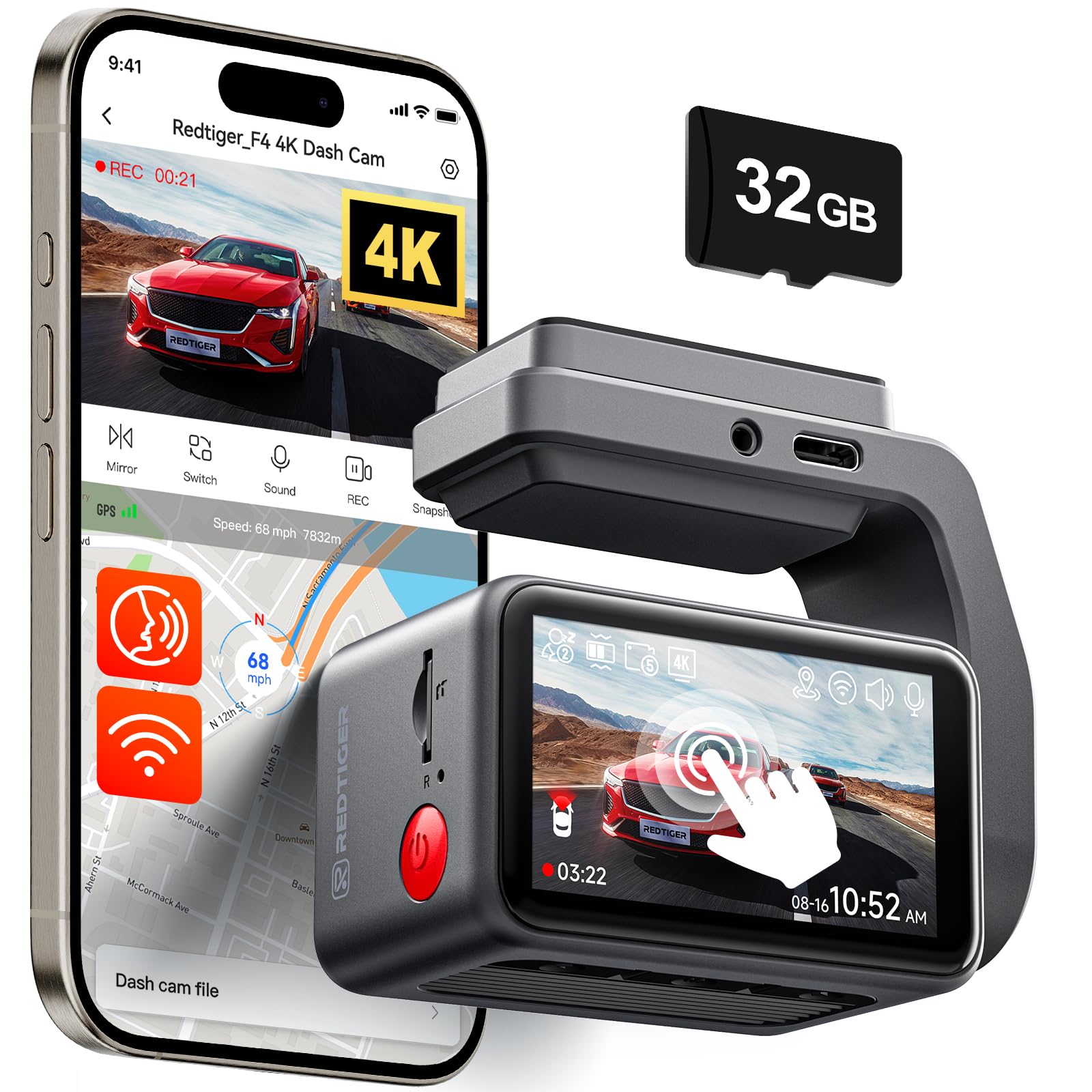
The REDTIGER F4 packs a 2.2-inch touch screen into a compact body, letting you navigate settings and review footage without pulling out a phone. The 4K 3840×2160 sensor captures excellent detail in bright daylight, and the 160-degree wide-angle lens covers three lanes of traffic. Voice commands work reliably for saving clips and taking photos while keeping both hands on the wheel.
The built-in GPS records driving routes and speed, and the REDTIGER app syncs clips over Wi-Fi for convenient sharing. The F4 runs on a capacitor-based power system, which eliminates the swelling battery risk that plagues cheaper models. Parking mode requires the separately sold REDTIGER hardwire kit, and a third-party OBD adapter won’t work — you need the official unit to enable low-voltage cutoff.
Real-world video quality is strong in the daytime but struggles with motion blur and highlight washout at night compared to STARVIS-based competitors. The included 32GB card is a nice starter, and the support for up to 256GB provides ample loop-recording runway. If you prioritize touchscreen convenience and 4K daytime resolution over low-light sensor tech, the F4 delivers a compelling package.
Why it’s great
- Intuitive touch screen eliminates fiddly button menus
- 4K front footage captures crisp daytime details and signs
- Capacitor design avoids battery heat failure
Good to know
- Night-time footage shows motion blur and HDR washout
- Requires brand-specific hardwire kit for parking mode
- Mount adhesive must be perfectly aligned — not adjustable later
5. Avylet A1 Dash Cam
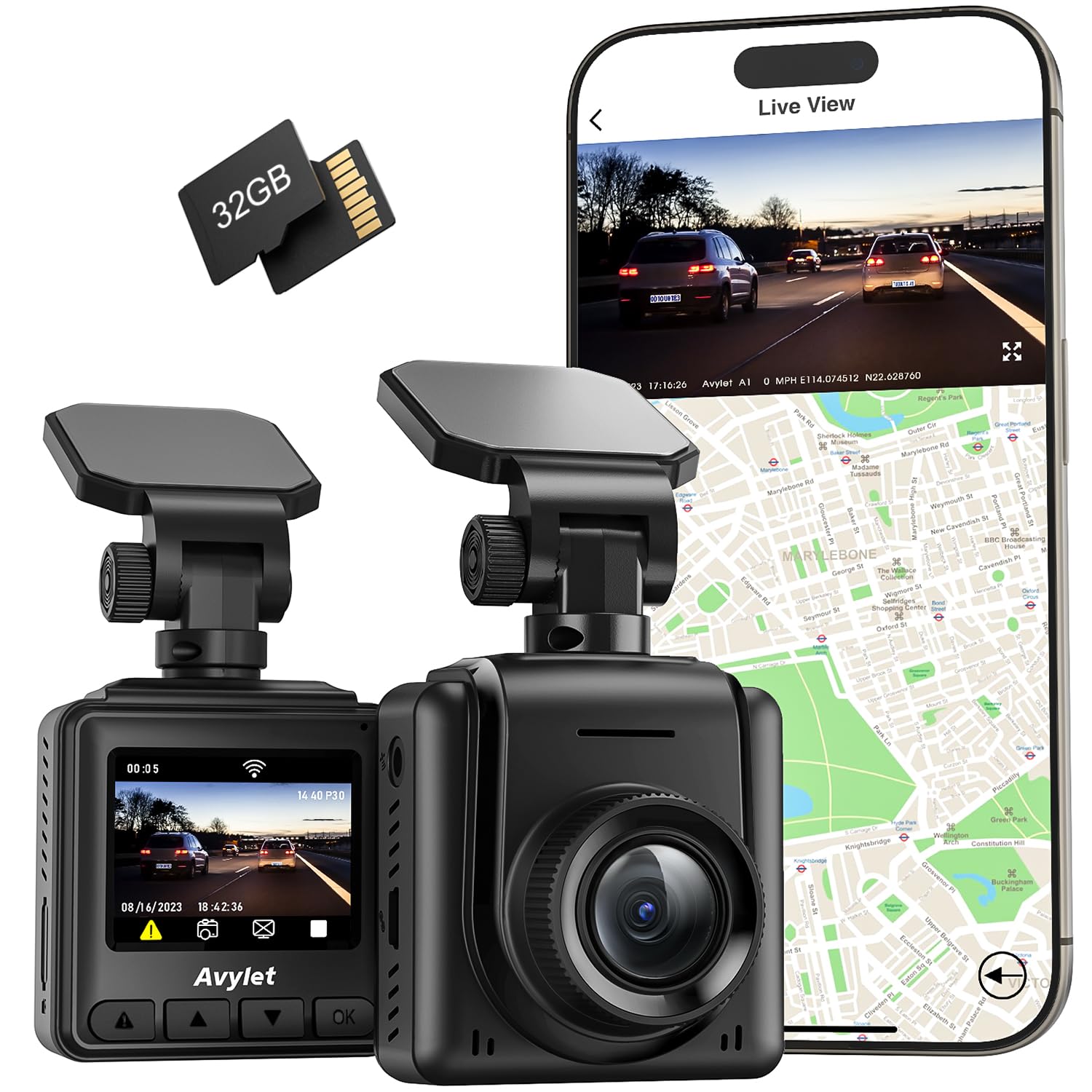
The Avylet A1 uses a supercapacitor power system and a 1440P front sensor, making it one of the more heat-safe and sharp budget-conscious options. The 170-degree wide-angle lens captures nearly every corner of the road ahead, though some fisheye distortion appears at the edges. The 1.5-inch IPS screen lets you check the camera angle and status without an app, and the included 32GB card gets you recording immediately.
Wi-Fi connectivity works through the Avylet app for live view, playback, and OTA firmware updates — a rare feature at this tier. The external GPS module is optional and sold separately, which is fine for drivers who don’t need speed tagging but want the option later. Parking mode requires a separate hardwire kit; the A1 uses time-lapse recording to minimize power draw during long parking sessions.
The 1440P sensor delivers adequate daytime clarity, and the WDR algorithm helps in moderate low-light conditions, but it cannot match STARVIS-based sensors for capturing plates in complete darkness. The adhesive mount is solid, and the cable clips help route the wire cleanly along the windshield edge. For the price, the Avylet A1 is a capable, well-rounded unit that prioritizes reliability over flagship features.
Why it’s great
- Supercapacitor construction for heat safety and longevity
- OTA firmware updates via the Avylet app
- 170-degree FOV provides excellent road coverage
Good to know
- Night-time plate capture is limited by the WDR-only sensor
- External GPS module is not included
- Some users report the power cord length is short for larger vehicles
6. Galphi 3-Channel WiFi Dash Cam
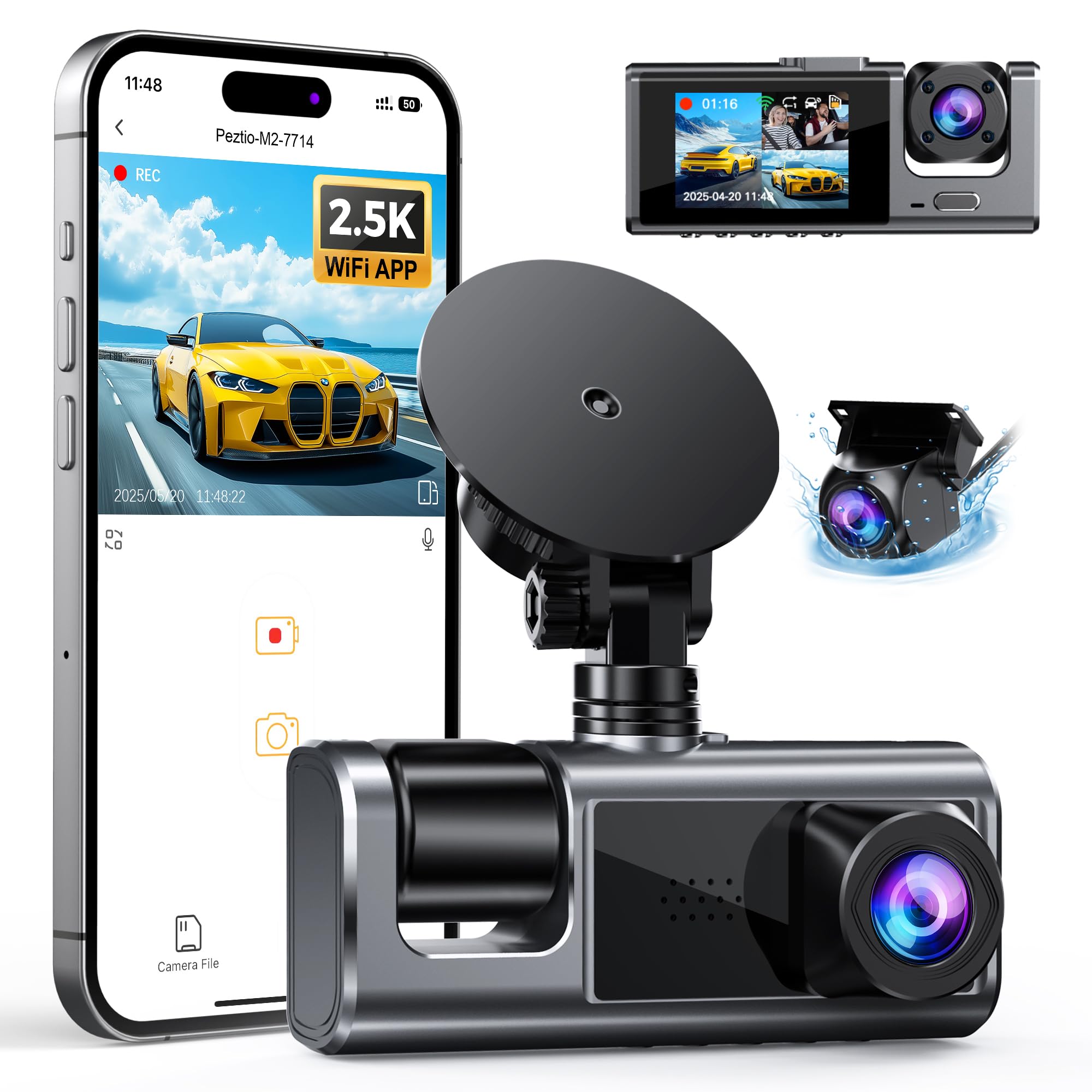
The Galphi 3-Channel dash cam is the only multi-lens unit in this small-cam roundup, offering 2.5K front, 1080P cabin, and 1080P rear coverage from a single control module. The front Sony IMX sensor captures reliable footage, while the interior camera uses an auto-IR LED ring for cabin visibility at night — essential for rideshare drivers. The cabin camera rotates independently, letting you angle it toward either the driver or passenger window.
Wi-Fi app control works without a subscription, and the unit supports microSD cards up to 512GB, providing massive storage for multi-camera loop recording. Parking mode supports both time-lapse and motion-triggered recording when connected to a Type-C hardwire kit. The voice notification system announces recording status changes audibly, which helps you confirm the unit is working without looking at a screen.
The main trade-off is that the three-camera processing can cause the unit to overheat in direct sunlight — some owners report shutdowns around 95°F when the car sits in direct sun with no airflow. The included memory card is only included in initial production runs; later units ship without one. Despite these caveats, the Galphi delivers unmatched multi-angle protection in a relatively compact central body.
Why it’s great
- Three-channel coverage from a single compact controller
- Auto-IR cabin camera for rideshare driver recording
- Massive 512GB support for extended multi-cam looping
Good to know
- Overheat shutdown risk in direct sun with no airflow
- Later production runs do not include an SD card
- Triple recording reduces frame rate on rear and cabin channels
7. KAWA 2K Tiny Dash Cam
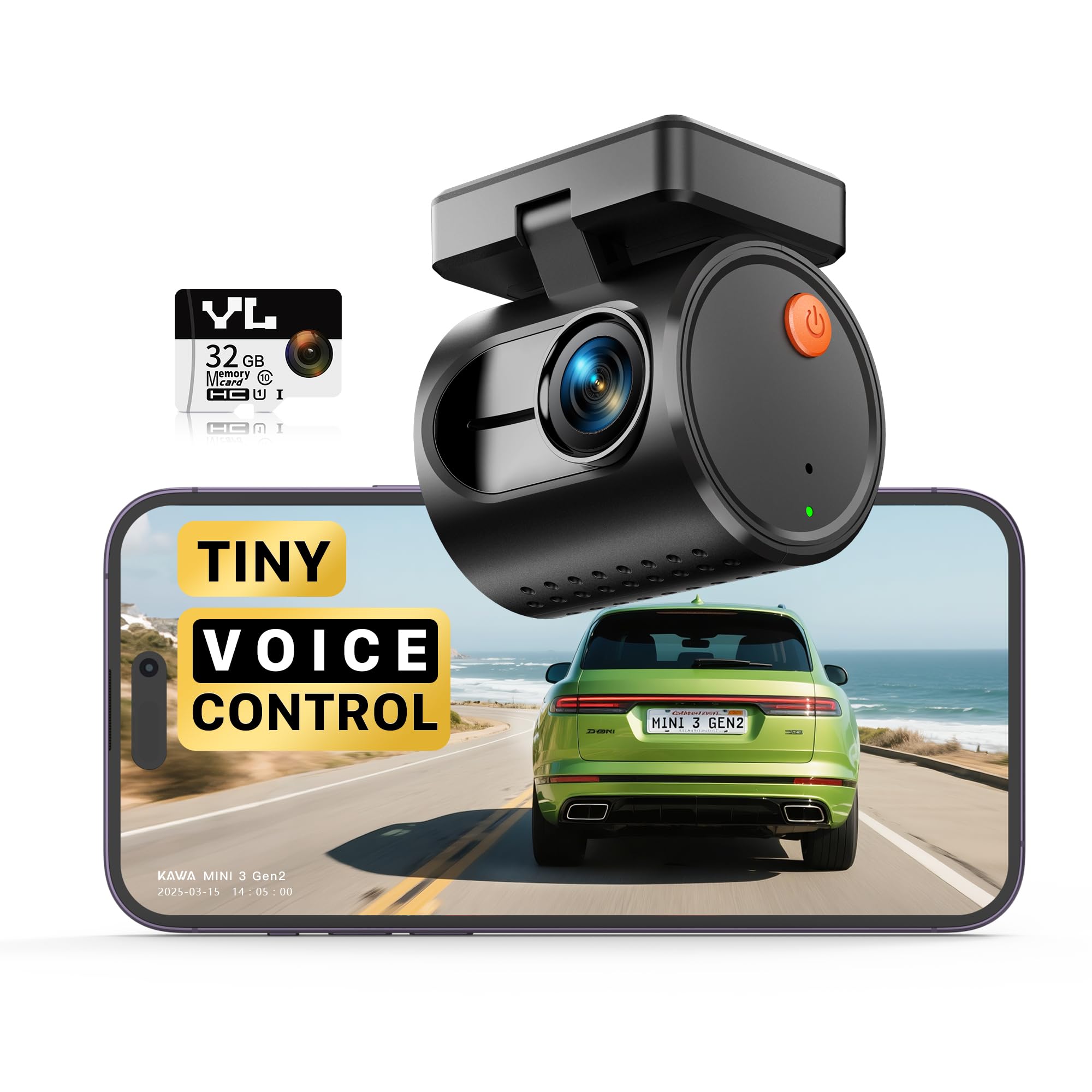
The KAWA Tiny Dash Cam is the entry-level champion of this guide, proving that a sub- dash cam can still capture useful 1296P QHD footage. The body is genuinely tiny — it vanishes behind the rearview mirror almost completely. Voice commands like “take photo” and “lock the video” work consistently, letting you operate the camera hands-free during a drive.
The included 32GB card is a welcome bonus at this price point, and the loop recording ensures you never have to manually clear storage. The G-sensor automatically locks clips during sudden impacts, preserving evidence even if you forget to hit the save button. The KAWA app connects over Wi-Fi for clip preview and download, though the transfer speed is limited to 2.4GHz — expect a short wait for larger files.
Video quality is adequate for daytime accident documentation but struggles with night-time plate reading due to the budget CMOS sensor and lack of HDR processing. Parking mode requires a hardwire kit that must be purchased separately. The build feels slightly less premium than the VIOFO or Garmin units, but for a first-time buyer or a spare vehicle camera, the KAWA delivers dependable basic recording without breaking the bank.
Why it’s great
- Extremely compact footprint — nearly invisible behind the mirror
- Voice commands work reliably for hands-free clip saving
- Includes a 32GB card at a budget-friendly price
Good to know
- Budget sensor struggles with night-time plate detail
- Only 2.4GHz Wi-Fi for slower clip transfers
- Hardwire kit for parking mode is a separate purchase
FAQ
What sensor spec should I look for if I drive at night most of the time?
Can I install a small dash cam myself or do I need a professional?
Does a smaller dash cam mean worse heat resistance?
Final Thoughts: The Verdict
For most users, the best small dash cam winner is the VIOFO VS1 Mini because it combines a premium STARVIS 2 sensor, 5GHz Wi-Fi, and a truly invisible form factor that outperforms everything else in its size class. If you want a built-in screen and the ease of the Garmin ecosystem, grab the Garmin X110. And for a budget-friendly entry that still records 1296P with voice control, nothing beats the KAWA Tiny Dash Cam.

Mo Maruf
I created WellFizz to bridge the gap between vague wellness advice and actionable solutions. My mission is simple: to decode the research and give you practical tools you can actually use.
Beyond the data, I am a passionate traveler. I believe that stepping away from the screen to explore new environments is essential for mental clarity and physical vitality.