Our readers keep the lights on and my smoothie glass nicely filled. As an Amazon Associate, I earn from qualifying purchases.
A road cycling helmet is the single most critical piece of safety gear you will ever buy, and the difference between a good ride and a great one often comes down to whether you forget it is even there. The search for the perfect helmet balances three competing demands: impact protection, cooling airflow during sustained effort, and a fit so secure it moves with you, not against you.
I’m Mohammad Maruf — the founder and writer behind WellFizz. My approach to evaluating road helmets focuses on the real-world interaction between ventilation channel geometry, rotational impact mitigation systems, and the precision of retention mechanisms, all of which determine how a helmet performs during long hours in the saddle.
This guide breaks down the key specs and real-rider feedback to help you find the best road cycling helmets for your specific head shape, riding style, and budget.
How To Choose The Best Road Cycling Helmet
Choosing a road helmet involves more than matching a color to your bike frame. The three factors that define a helmet’s real-world performance are its rotational impact protection system, its ability to manage heat and sweat, and the precision of its retention and strap adjusters. Ignore any of these, and you compromise either safety or comfort on every ride.
Rotational Impact Technology: MIPS, Koroyd, and KinetiCore
Standard foam helmets protect against linear impacts but do little against rotational forces that twist the brain during angled crashes. MIPS uses a low-friction slip plane between the foam and liner to allow the helmet to rotate relative to the head on impact. Smith’s Koroyd uses a honeycomb of thin-walled tubes that crumple to absorb both linear and rotational energy. Lazer’s KinetiCore builds crumple zones directly into the EPS foam, eliminating the need for a separate slip layer. All three technologies reduce rotational forces, but they differ in weight, ventilation impact, and price.
Ventilation and Channel Design
On a hot climb, a helmet with poor internal channeling traps heat and causes sweat to drip into your eyes. Look for helmets with deep, sculpted internal channels that run from the front vents to the rear exhaust ports. The number of vents matters less than the airflow path — a helmet with 18 deep channels can cool better than one with 25 shallow holes. Helmets with bridge-less designs or large central vents tend to offer superior airflow at the cost of slightly lower aerodynamic drag.
Retention System and Strap Adjusters
A retention system that wobbles or pinches turns a comfortable helmet into a nuisance. Look for a micro-dial adjuster with a firm detent that stays put under vibration. The occipital cradle should wrap low on the back of your skull, not ride up. Quick-adjust strap dividers let you dial in the Y-branch position below your ear, preventing strap flapping at speed. Some premium helmets also integrate the MIPS slip plane into the retention system, reducing weight and improving fit.
Quick Comparison
On smaller screens, swipe sideways to see the full table.
| Model | Category | Best For | Key Spec | Amazon |
|---|---|---|---|---|
| KASK Mojito3 | Premium | Aero fit and low weight | WG11 rotational impact certified | Amazon |
| Smith Engage MIPS | Premium | Trail and road crossover | Zonal Koroyd coverage | Amazon |
| POC Omne Air MIPS | Premium | Commuting and road racing | MIPS slip-plane system | Amazon |
| Smith Persist MIPS | Mid-Range | All-day road rides | 21 fixed vents + AirEvac | Amazon |
| BELL Avenue MIPS | Mid-Range | Value and crash durability | Mips Evolve integrated fit | Amazon |
| LAZER Tonic KinetiCore | Mid-Range | Round head shapes | Built-in crumple zones | Amazon |
| Giro Register II MIPS | Value | Entry-level road and commute | Hardshell + In-Mold construction | Amazon |
In‑Depth Reviews
1. KASK Mojito3 Helmet

The KASK Mojito3 sets a high bar for road helmet design with its Rotational Impact WG11 approval, a certification that goes beyond the standard CPSC and EN 1078 tests by specifically measuring performance against rotational forces. The outer shell has signature front lines and a classic rounded lower profile that avoids the mushroom-head look many riders dislike. The Octo Fit dial uses rubberized micro-adjustment with gel-padded contact points, and the supports oscillate through 180 degrees to conform to a wide range of occipital bone shapes.
Ventilation is handled by an enhanced channel system that captures airflow at the front crest and passes it through interior channels before exhausting out the rear — riders report staying cool even on sustained climbs in warm weather. The synthetic leather chin strap is soft and eliminates the irritation common with nylon webbing straps, though some users find the asymmetric buckle tricky to operate one-handed.
At roughly 230 grams in a size medium, the Mojito3 is among the lightest helmets in its class, and riders with round head shapes (around 56 cm) report the medium fits perfectly with no pressure points. The high-visibility sticker set on the rear provides added safety in low light without adding bulk. This is a helmet that sacrifices nothing in the pursuit of low weight and high airflow.
Why it’s great
- WG11 rotational impact certification exceeds standard safety tests
- Ultra-lightweight at 230g in medium size
- Soft leather chin strap eliminates skin irritation
- Octo Fit dial with 180-degree oscillating supports for a custom fit
Good to know
- Asymmetric buckle can be difficult to unbuckle quickly
- Synthetic leather strap is harder to adjust than standard webbing
2. Smith Engage MIPS Cycling Helmet

The Smith Engage is marketed as a mountain bike helmet, but its deep rear coverage, adjustable visor, and zonal Koroyd protection make it an excellent choice for road riders who want extra coverage and a more aggressive look. The 20 fixed vents are paired with Ionic+ lining that uses sweat-activated odor control, a feature appreciated by riders who log long hours in warm conditions. The single-layer webbing is low-bulk and reduces pressure points around the ears.
Koroyd is a honeycomb-like material that crumples on impact to absorb energy, and Smith places it in zonal coverage areas where impact risk is highest. The MIPS slip plane is integrated into the retention system, which keeps the overall weight down and avoids the bulk of older MIPS designs. The two-position visor pushes up out of the way for climbs or glasses storage, and the whole helmet sits low on the back of the head without interfering with neck movement.
The retention system uses a ratcheting dial that feels precise and holds position under vibration. Some riders note that the buckle can be finicky to fasten with gloves on, and the forehead coverage is generous enough that a few users without glasses report a slight forward slip on very rough terrain. Overall, this is a well-ventilated, sturdy option for anyone who values coverage and doesn’t want a traditional road aero shape.
Why it’s great
- Zonal Koroyd coverage provides targeted impact absorption
- 20 vents with Ionic+ odor-control lining for long rides
- Adjustable two-position visor for glare management
- Low-bulk single-layer webbing reduces ear pressure
Good to know
- May slide forward slightly on rough terrain without glasses
- Buckle can be difficult to fasten with cycling gloves
3. POC Omne Air MIPS Bike Helmet

The POC Omne Air MIPS is a road and commuter helmet that prioritizes visibility and a comfortable, rounded shape. The MIPS slip-plane system is built into the helmet without adding noticeable bulk, and the overall design is clean and understated. POC offers this model in several high-visibility colors, including a bright purple that riders report stands out strongly in traffic and on shaded tree-lined roads.
The adjustment system uses a micro-dial at the rear that provides a wide range of fine-tuning, and the occipital cradle wraps low to secure the helmet without pressure behind the ears. Riders with rounder head shapes find the Omne Air a good alternative to more oval-focused brands like Giro and Bell. The internal padding is soft and wicks moisture effectively, though some users note that the paint finish on certain colors can fade over time with exposure to UV.
Ventilation is adequate for moderate temperatures but not as aggressive as some competitors with larger channel openings — riders in very hot climates may prefer a helmet with deeper internal channels. The strap dividers are fixed but well-positioned, and the helmet has a slim profile that doesn’t exaggerate head size. The Omne Air is a solid choice for anyone who values reflective elements, color options, and a comfortable round fit.
Why it’s great
- High-visibility color options improve safety in traffic
- MIPS slip-plane system is integrated without added bulk
- Comfortable fit for round head shapes
- Micro-dial provides wide range of fine adjustments
Good to know
- Ventilation is moderate — less aggressive than deeply channeled helmets
- Paint on some colors may fade with UV exposure over time
- Runs slightly small — consider sizing up
4. Smith Persist MIPS Cycling Helmet
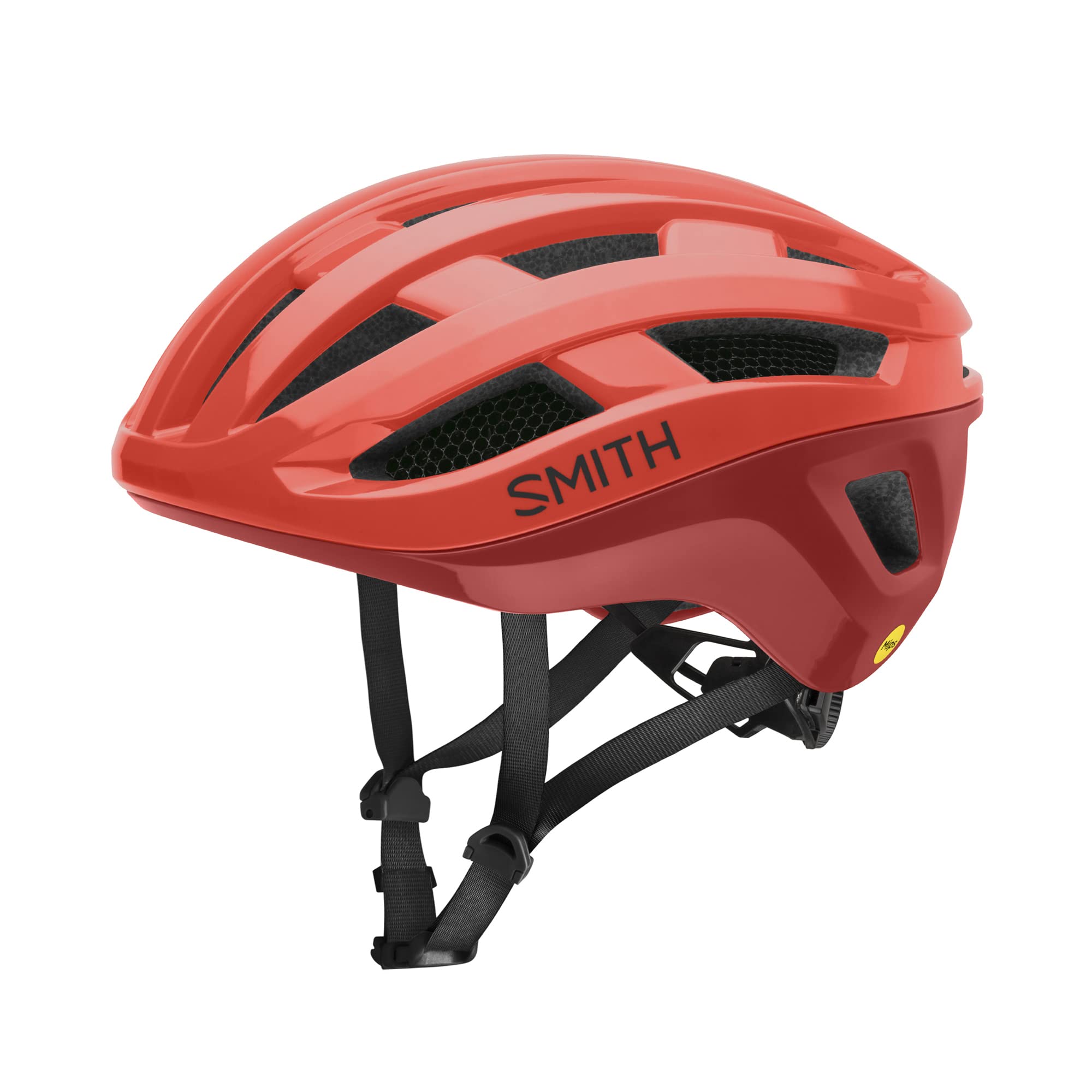
The Smith Persist is a road-specific helmet that combines MIPS protection with zonal Koroyd coverage in a package that prioritizes ventilation. With 21 fixed vents and internal channeling that directs airflow from front to back, the Persist is one of the best-ventilated options in its class. The AirEvac system integrates with Smith eyewear to pull warm air away from the lenses, preventing fogging during hard efforts in cool weather.
The zonal Koroyd coverage is placed in the most likely impact zones, allowing the helmet to remain lightweight while still offering the crumple-zone energy absorption that Koroyd provides. The retention dial is easy to adjust mid-ride, and the straps use quick-adjust fasteners that make fit-tuning straightforward. Riders report that the helmet is comfortable enough for century rides and that the padding is soft against the forehead without causing sweat runoff into the eyes.
The fit is slightly more oval than the Smith Engage, making it a better match for riders with narrower head shapes. Some users note that the helmet has a slightly rounded silhouette that can appear a bit mushroom-like from certain angles, but the trade-off for the ventilation is worth it for hot-climate riders. Overall, the Persist is a well-rounded road helmet that balances protection, weight, and airflow.
Why it’s great
- 21 fixed vents with deep internal channels for superior airflow
- AirEvac system prevents eyewear fogging
- Zonal Koroyd coverage in high-impact areas
- Quick-adjust strap fasteners for precise fit
Good to know
- Rounded silhouette may appear large on some riders
- Koroyd coverage is zonal, not full-shell
5. BELL Avenue MIPS Adult Road Bike Helmet
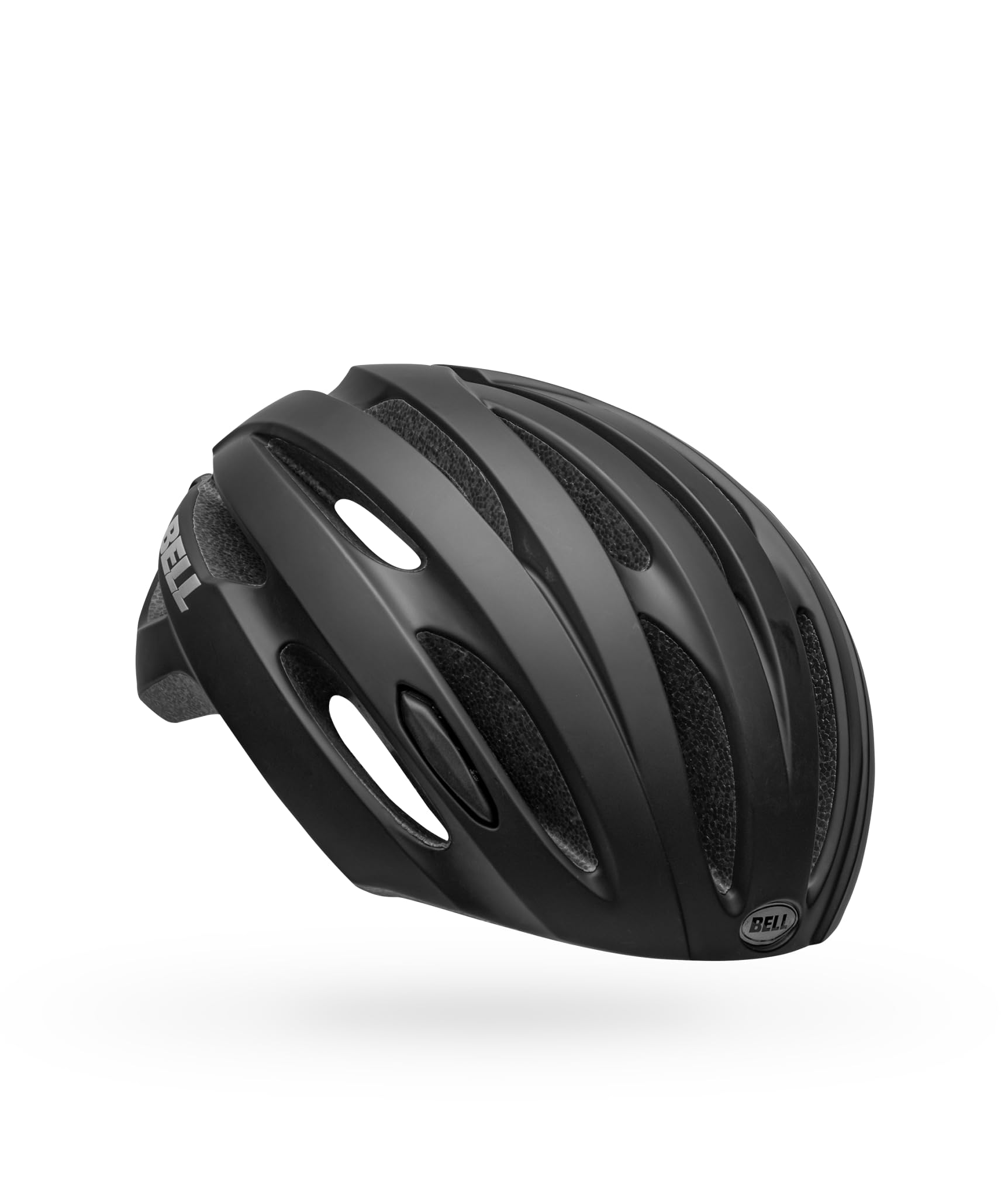
The BELL Avenue MIPS uses the Mips Evolve system, which integrates the slip plane directly into the retention system to reduce complexity and weight. This design allows the helmet to sit closer to the head and improves ventilation compared to older MIPS implementations. The Sweat Guide pad design pulls moisture away from the brow pad and diverts it away from eyewear, which is a practical solution for riders who struggle with sweat-dripping lenses.
The rubber overmolded dial on the retention system provides tactile feedback even with gloved hands, and the quick-adjust fasteners on the straps keep them flat and properly positioned without twisting. Multiple verified reviews describe the Avenue surviving serious crashes, including impacts with motorcycles, with the helmet cracking in multiple places but the rider walking away without head injury. That kind of real-world feedback gives the Avenue a reputation for robust protection.
The fit is slightly oval and matches well with Bell’s typical head shape profile — riders with round heads may find pressure points on the temples. The tiny snap connection on the strap adjuster can be difficult to manipulate with thick winter gloves, and some users find the adjustment knob too small for easy use with cold fingers. Despite these minor ergonomic issues, the Avenue offers MIPS protection at a price point that undercuts most competitors while still delivering crash durability.
Why it’s great
- Mips Evolve system is lighter and better ventilated than older MIPS designs
- Sweat Guide pads keep moisture away from eyewear
- Proven crash durability in real-world impacts
- Rubber overmolded dial is easy to grip with gloves
Good to know
- Tiny snap adjuster is hard to operate with thick gloves
- Fit favors oval head shapes over round
6. LAZER Tonic KinetiCore Bike Helmet

The LAZER Tonic KinetiCore uses a unique approach to rotational impact protection: instead of adding a separate slip layer or honeycomb material, KinetiCore builds crumple zones directly into the EPS foam structure. These zones are designed to deform upon impact, absorbing rotational energy without the weight or ventilation penalty of separate systems. The result is a helmet that weighs just 240 grams in a medium size while still offering 5-star rated protection.
The fit is particularly notable for riders with round head shapes — multiple reviews confirm that the Tonic fits round heads without the temple pressure common in more oval-shaped helmets. The rear adjustment dial is easy to operate, and the strap dividers slide smoothly into position. Ventilation is good, with well-placed front vents that channel air effectively, though the front openings are large enough that stashing sunglasses in them can be a bit fiddly.
The polycarbonate outer shell is bonded to the EPS liner using in-mold construction, which keeps the helmet light and prevents the shell from separating from the foam in a crash. The white color option is popular for its heat-reflective properties and high visibility. Considering its KinetiCore technology and comfortable fit, the Tonic represents a strong value proposition for anyone who prioritizes lightweight protection and needs a helmet that accommodates a round head.
Why it’s great
- KinetiCore crumple zones reduce rotational forces without added weight
- Excellent fit for round head shapes
- Lightweight at 240 grams in medium
- Rear dial provides easy, precise fit adjustments
Good to know
- Large front vents make stashing sunglasses difficult
- No silicone or grippy material in vents for glasses retention
7. Giro Register II MIPS
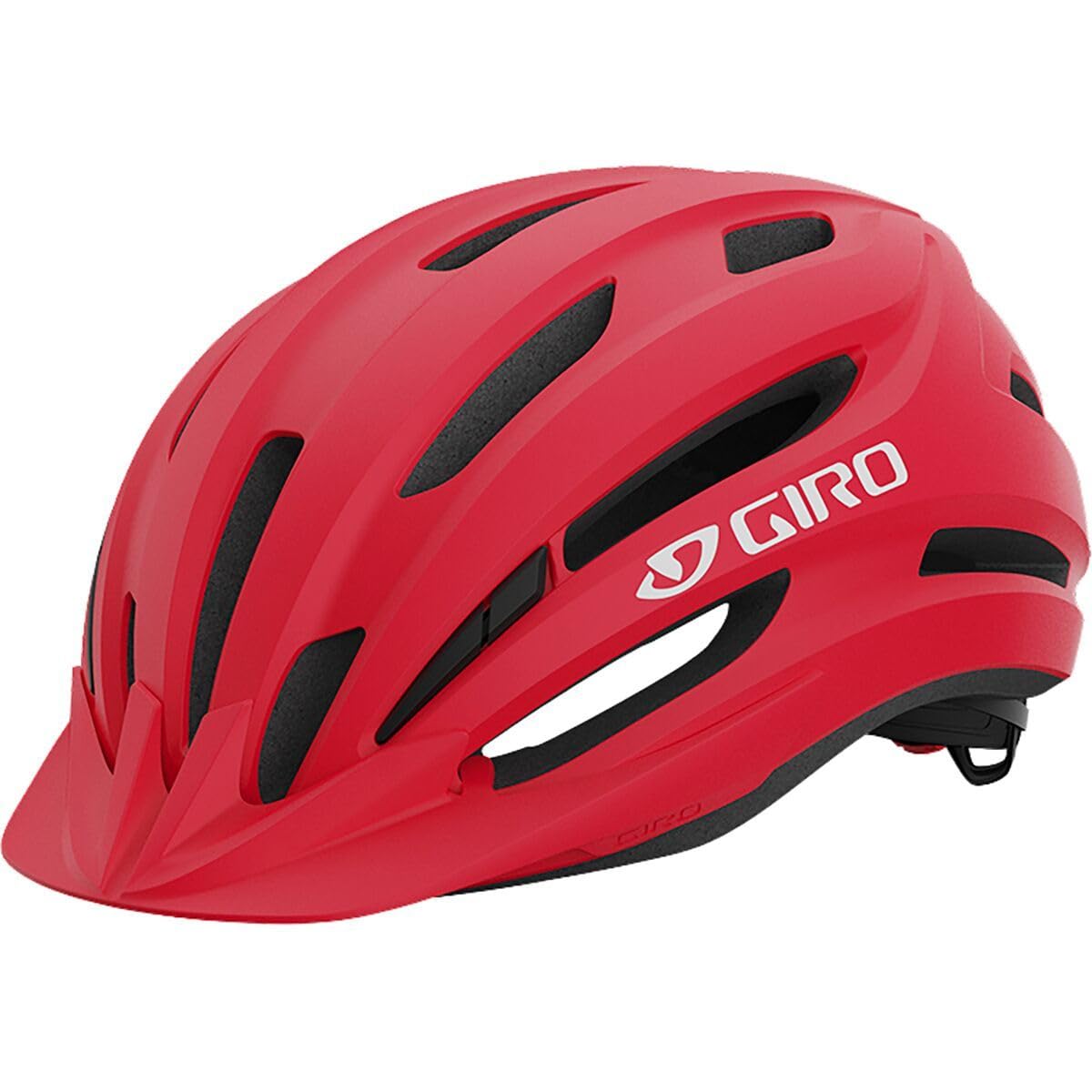
The Giro Register II MIPS uses a two-piece construction that combines a tough outer hard shell with a polycarbonate lower wrap fused to the EPS liner via in-mold bonding. This Hardshell with In-Mold Hardbody Lower Wrap design provides the durability of a traditional hard shell in high-wear areas while keeping overall weight reasonable at around 16 ounces (454 grams). The integrated MIPS system works with Giro’s Roc Loc fit system to reduce rotational forces in certain impact scenarios.
The Universal Fit sizing system uses proprietary shell shapes based on specific customer groups, and riders report that the medium fits well for most average head shapes straight out of the box without the need for excessive adjustment. The white/matte bright red color combination provides better visibility in traffic, and the padding is soft enough for all-day comfort. At 280 grams for the MIPS version, it is lightweight enough for road use without feeling flimsy.
The Roc Loc dial is functional but some users note it feels delicate with frequent use, and the visor attachment point is weaker than on more expensive helmets. The Register II is best suited for entry-level road cyclists, commuters, or riders who want MIPS protection without a premium price tag. It works well in both hot and cold conditions with the liner, and its versatility makes it a solid choice for anyone new to road cycling or riding casually on mixed terrain.
Why it’s great
- Affordable MIPS helmet with proven orientation-specific impact protection
- Hardshell lower wrap increases durability in wear-prone areas
- Universal Fit sizing works for most average head shapes
- Lightweight at 280g with MIPS
Good to know
- Roc Loc dial feels fragile with frequent adjustment
- Visor attachment is weaker than premium models
FAQ
Does MIPS make a real difference in road cycling crashes?
How do I know if a road helmet fits my head shape correctly?
How often should I replace a road cycling helmet?
Final Thoughts: The Verdict
For most riders, the best road cycling helmets winner is the KASK Mojito3 because it combines WG11 rotational impact certification, ultra-light weight, and a premium Octo Fit retention system into a package that disappears on your head during long rides. If you want maximum ventilation for hot-climate road riding and plan to use Smith eyewear, grab the Smith Persist MIPS. And for a comfortable round-head fit with KinetiCore protection at a mid-range price, nothing beats the LAZER Tonic KinetiCore.

Mo Maruf
I created WellFizz to bridge the gap between vague wellness advice and actionable solutions. My mission is simple: to decode the research and give you practical tools you can actually use.
Beyond the data, I am a passionate traveler. I believe that stepping away from the screen to explore new environments is essential for mental clarity and physical vitality.