Our readers keep the lights on and my smoothie glass nicely filled. As an Amazon Associate, I earn from qualifying purchases.
The link between your legs and your bike’s drivetrain isn’t the chain — it’s the sole of your shoe. A flexible shoe robs watts, a poor fit causes numbness, and a bad closure system leaves you fiddling mid-ride. Choosing the right pair means balancing sole stiffness, closure precision, and foot shape compatibility for the specific way you ride.
I’m Mohammad Maruf — the founder and writer behind WellFizz. I’ve spent dozens of hours dissecting sole indexes (stiffness ratings from 6 to 15 on Shimano’s scale), comparing BOA vs. Velcro vs. lace tension systems, and cross-referencing fit data from real riders with narrow, wide, and high-instep feet to give you a spec-level look at how these shoes actually perform.
This guide breaks down the closure systems, sole materials, and fit nuances that separate a good shoe from a great one, so you can confidently pick the right road bike cycling shoes for your riding style and foot shape.
How To Choose The Best Road Bike Cycling Shoes
Before you scan the table, understand the three pillars that define how a road cycling shoe performs on the bike: sole stiffness, closure system, and last shape. The right shoe balances these factors for your specific foot anatomy and ride intensity.
Sole Stiffness and Power Transfer
The sole is the platform that transfers every watt to the pedal. Nylon composite soles offer a stiffness index of 5 to 7 on Shimano’s scale — fine for casual rides and spin classes. Carbon-reinforced nylon (Fizik’s R5) climbs to an 8-9 range, delivering snappier response without the harshness of full carbon. Full carbon soles, like those on the SH-RC703, hit stiffness levels of 10-12 and are aimed at racers who want zero flex under maximum load. Your choice depends on how much flex you can tolerate versus how much feedback you want through the pedal stroke.
Closure Systems: Velcro, BOA, and Laces
Three closure types dominate road cycling shoes. Hook-and-loop straps are the simplest and lightest — great for indoor use but prone to loosening over a long ride if the strap material stretches. BOA dials use a lace-and-dial mechanism that allows 1mm micro-adjustments and can be loosened or tightened without pulling over. Single-BOA designs are common on mid-range shoes; dual-BOA setups let you tension the forefoot and instep independently. Laces offer the most customizable pressure map but lack on-the-fly adjustability. For anyone doing 50+ mile rides, a BOA or dual-BOA shoe is a strong step up in convenience and fit control.
Fit: Last Shape and Foot Volume
Road cycling shoes have notoriously variable lasts. Giro’s builds lean toward a medium-to-narrow D width, while Fizik’s Omna and Tommaso’s Strada offer more room in the toe box for splayed toes and bunions. Shimano’s RC line runs slightly wide in the forefoot with a snug heel pocket. Sizing guidance from users is brutal — many cyclists go up half a full size from their street shoe, and European sizing is the only reliable reference. If you have a high instep or wide forefoot (E width or wider), prioritize models listed with wide-specific options or that have user feedback confirming a roomy fit. If you have low-volume feet, boots like the Cadet with Synchwire uppers are easier to tension evenly without pressure points.
Quick Comparison
On smaller screens, swipe sideways to see the full table.
| Model | Category | Best For | Key Spec | Amazon |
|---|---|---|---|---|
| SHIMANO SH-RC703 | Premium | Racing & long centuries | Full carbon sole, dual BOA | Amazon |
| Giro Regime | Premium | Dual-BOA precision fit | Carbon composite, dual BOA L6 | Amazon |
| Fizik Vento Omna Wide | Premium | Wide forefeet & bunions | Carbon-reinforced nylon, single BOA | Amazon |
| SHIMANO SH-RC302 | Mid-Range | Training & Ironman prep | Nylon sole, air channel cooling | Amazon |
| Giro Cadet | Mid-Range | BOA precision + ventilation | Carbon composite, single BOA L6 | Amazon |
| Fizik Tempo Overcurve R5 | Mid-Range | Century rides on Look pedals | Carbon-reinforced nylon, Velcro + strap | Amazon |
| Tommaso Pista | Value | Indoor spin & walkable | Nylon sole, recessed SPD, Lace-up | Amazon |
| Giro Stylus | Entry | Budget spin class | Nylon sole, Velcro straps | Amazon |
| Tommaso Strada | Entry | SPD-ready, wide feet | Pre-installed SPD, Velcro closure | Amazon |
In‑Depth Reviews
1. SHIMANO SH-RC703
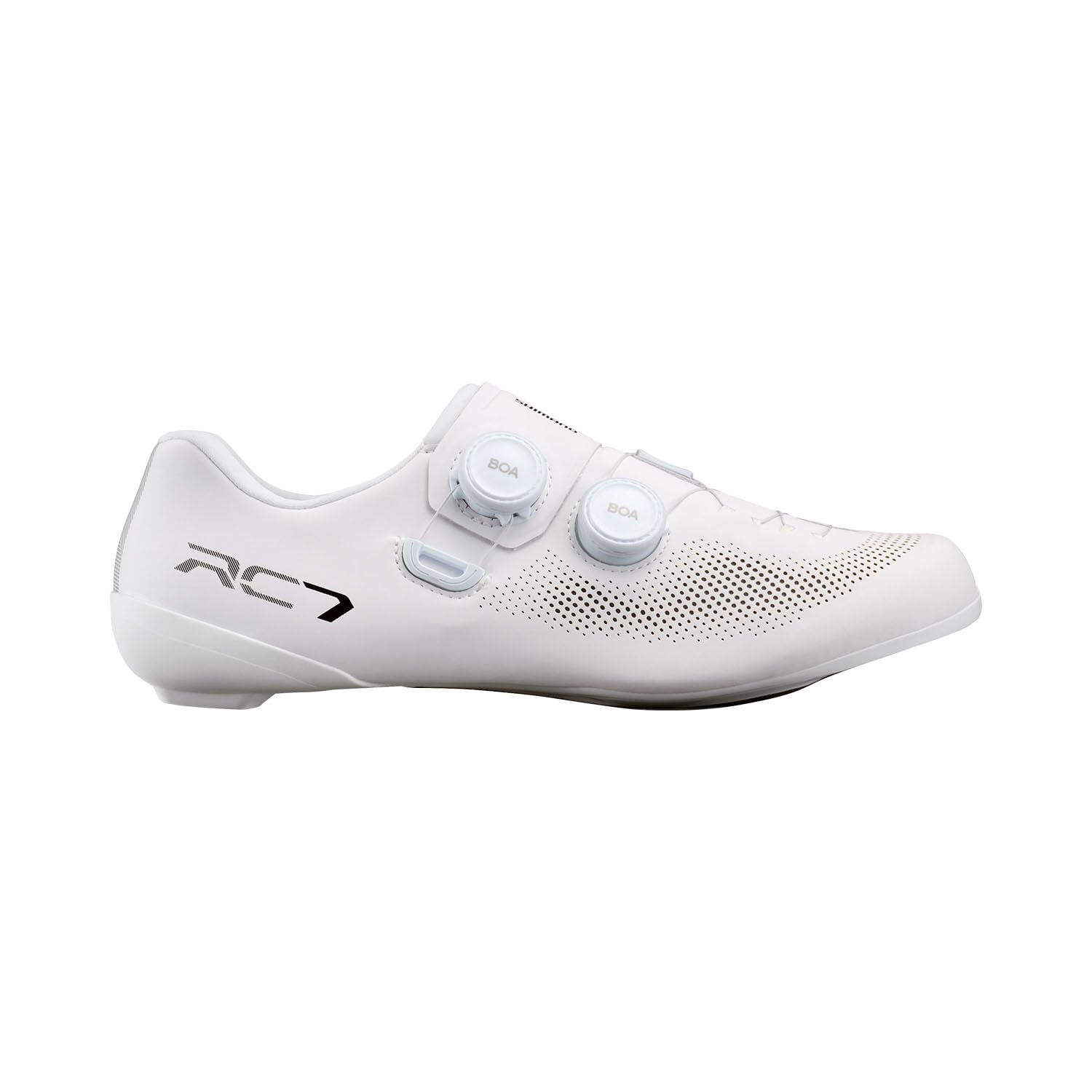
Shimano’s SH-RC703 sits at the logical ceiling of what most serious cyclists need — a full carbon sole with a stiffness index hovering around 10-11, wrapped in a lightweight mesh upper that breathes well on long summer rides. The dual BOA L6 dials let you independently tighten the forefoot and instep, which is a real advantage when your feet swell after 100km and you need to relieve pressure without losing heel hold. Users with narrow Asian feet report a snug, race-ready fit, while wider-foot riders note the generous toe box compared to Italian brands.
The outsole features a vented carbon plate that channels air through a mesh sock liner, keeping your feet cooler than the solid carbon slabs on older race shoes. Cleat positioning offers significant fore-aft adjustment for fitting various pedal stack heights. Power transfer is immediate — there’s zero torsional flex even when sprinting out of the saddle, and the heel cup locks down securely without pinching. A few riders mention the sizing runs a full EU size larger than expected, so matching your Mondo point measurement to the size chart is critical before ordering.
Durability appears strong after hundreds of miles, with the BOA laces and dials holding tension without slipping. The shoe isn’t designed for walking — the exposed carbon sole wears quickly on pavement — but for pure road performance, this is a genuine contender for the best all-around race shoe at its tier. It balances stiffness, breathability, and adjustability better than most shoes costing significantly more.
Why it’s great
- Full carbon sole delivers stiff, direct power transfer
- Dual BOA L6 dials allow independent toe and instep tensioning
- Vented outsole and mesh upper keep feet cool on hot rides
Good to know
- Sizing runs large — check EU size carefully against your foot length
- Carbon sole is slippery on hard surfaces and wears if walked on
- Price puts it in competition with boutique Italian race shoes
2. Giro Men’s Regime Road Cycling Shoes
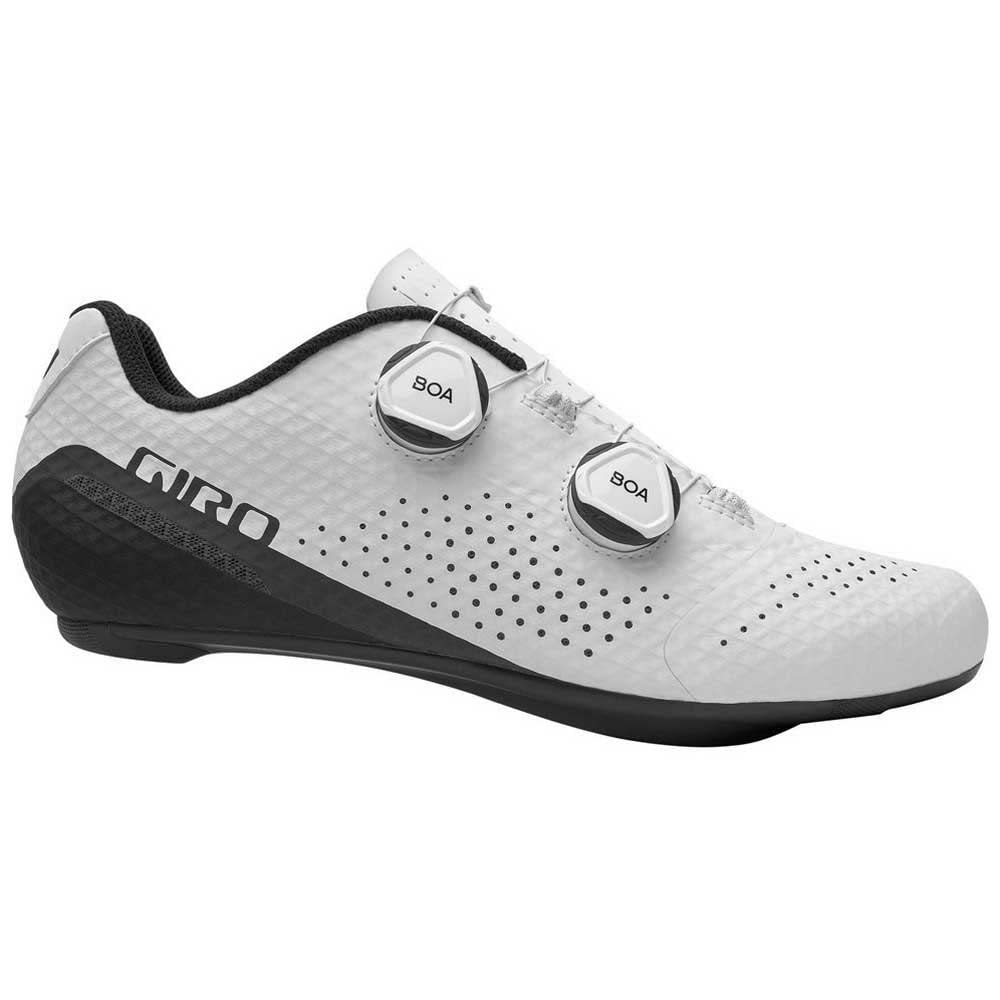
Giro’s Regime is positioned as a performance road shoe that doesn’t sacrifice all-day comfort for stiffness. The carbon composite sole hits a stiffness rating reported by users as solid but not punishing — plenty stiff for group rides and local races, but with enough compliance to avoid hot spots on six-hour days. The dual BOA L6 dials provide the same granular fit control as the Shimano RC703, allowing you to dial in the forefoot width separately from the instep closure. Riders with medium-width feet (D width) consistently describe the fit as “perfect” out of the box, while those with wide feet note the toe box tapers a bit.
The Synchwire upper uses a thermo-bonded film that reinforces the mesh, creating a lightweight, well-ventilated shell. The heel cup is lined with a non-slip microfiber that grips without abrasion — a common pain point on cheaper shoes. One SmartGEM feature riders appreciate is the reflective heel detailing for low-light visibility. The Regime also accommodates both three-bolt Look and two-bolt SPD pedals, making it one of the more versatile high-end shoes for riders who swap between road and indoor trainers.
User reviews over hundreds of miles report no degradation of the BOA mechanism or sole bonding. The outsole rubber inserts at the heel and toe offer decent traction when you need to walk a short distance to a coffee stop. The main trade-off is fit exclusivity — it genuinely favors medium-to-narrow feet. Wide-footed riders consistently report pressure on the pinky toe after two hours, which pushes them toward the Fizik Omna Wide instead. If your foot is on the narrower side, the Regime is a top-tier shoe that punches above its price bracket.
Why it’s great
- Dual BOA L6 dials provide precise, independent adjustment
- Carbon composite sole balances stiffness with long-ride comfort
- Synchwire upper is lightweight and well-ventilated
Good to know
- Narrow toe box unsuitable for wide forefeet
- Heel cup runs a bit tight for high-volume insteps
- Outsole rubber is minimal — not built for extended walking
3. Fizik Men’s Vento Omna Wide
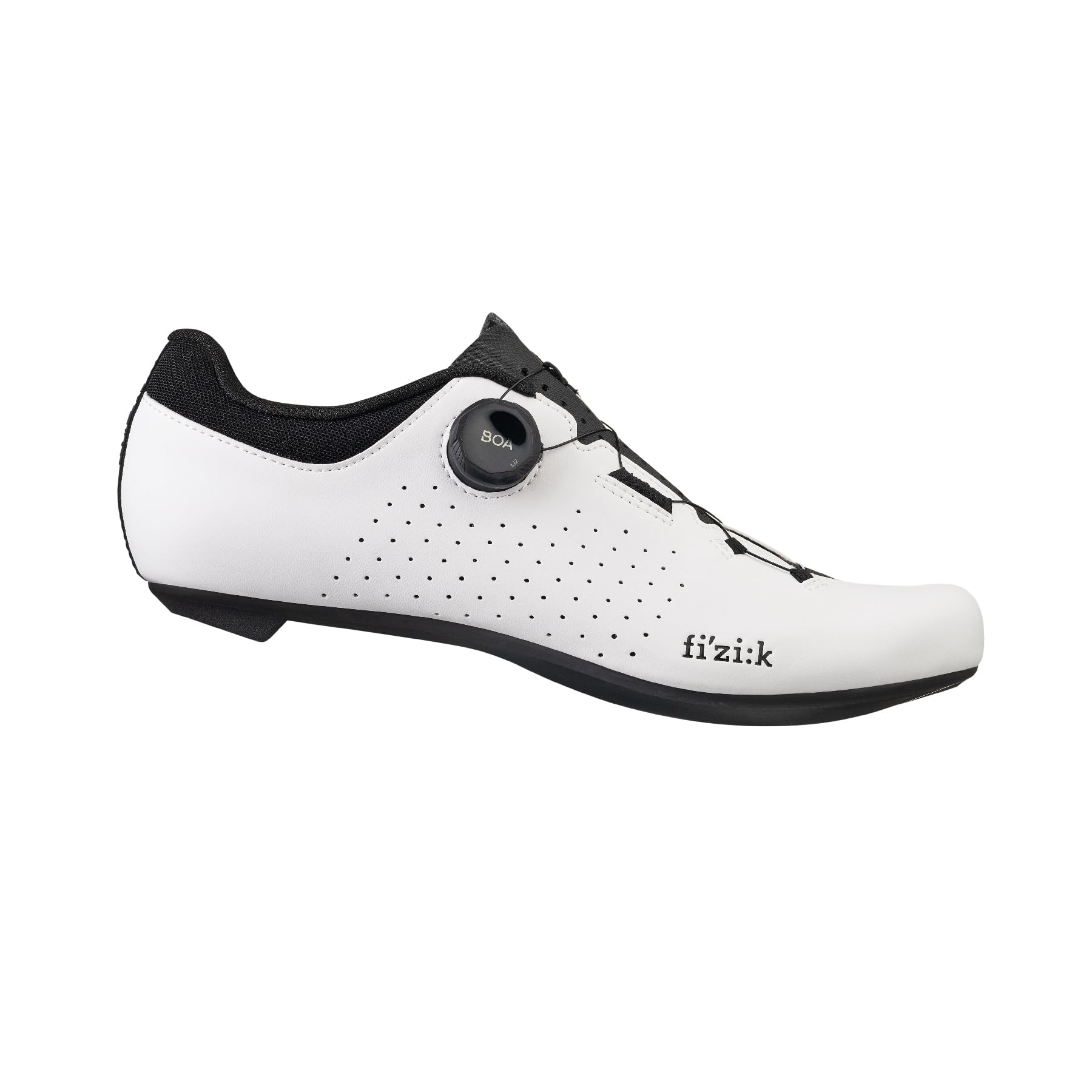
The Vento Omna Wide is Fizik’s explicit answer to the cyclist with splayed toes, bunions, or a simply E-width forefoot that Italian and French brands usually ignore. The last is noticeably roomier through the midfoot and toe box while still delivering a secure heel grip. Riders with men’s 11.5 feet and wide forefoot geometry report zero hot spots even after 75 miles. The single BOA L6 dial tensions the entire upper evenly, but a few users note that the top of the shoe feels snug while the toes can still slide a bit — the single-dial trade-off is less independent control than a dual-dial system.
The R5 carbon-reinforced nylon sole is rated around 8 on the stiffness scale, offering a noticeable improvement over pure nylon soles without the harsh feedback of full carbon. It’s stiff enough for moderate sprints and long climbs but compliant enough to prevent numbness behind the ball of the foot. The outsole has a small rubber walking pad at the heel, which helps on cafe stops. Cleats mount via the standard three-bolt pattern, and the shoe is compatible with Look, SPD-SL, and other road pedals.
One persistent critique is the single BOA design. For wide-footed riders, the ability to tighten the forefoot independently from the instep matters — and the Omna Wide’s single dial can’t replicate the fine-grained fit of dual-dial shoes like the Giro Regime or Shimano RC703. The trade-off is lower weight and a simpler, less fiddly system that still works well for most riders. If your primary complaint with road shoes is toe-box pinching, the Omna Wide is a genuine problem solver.
Why it’s great
- Roomier toe box and midfoot for wide/E-width feet
- R5 sole offers good stiffness without harshness
- Secure heel hold with no slippage on climbs
Good to know
- Single BOA lacks independent forefoot/instep tightening
- Price is mid-range for a wide-specific road shoe
- Upper lacks the breathability of fully ventilated mesh shoes
4. SHIMANO SH-RC302
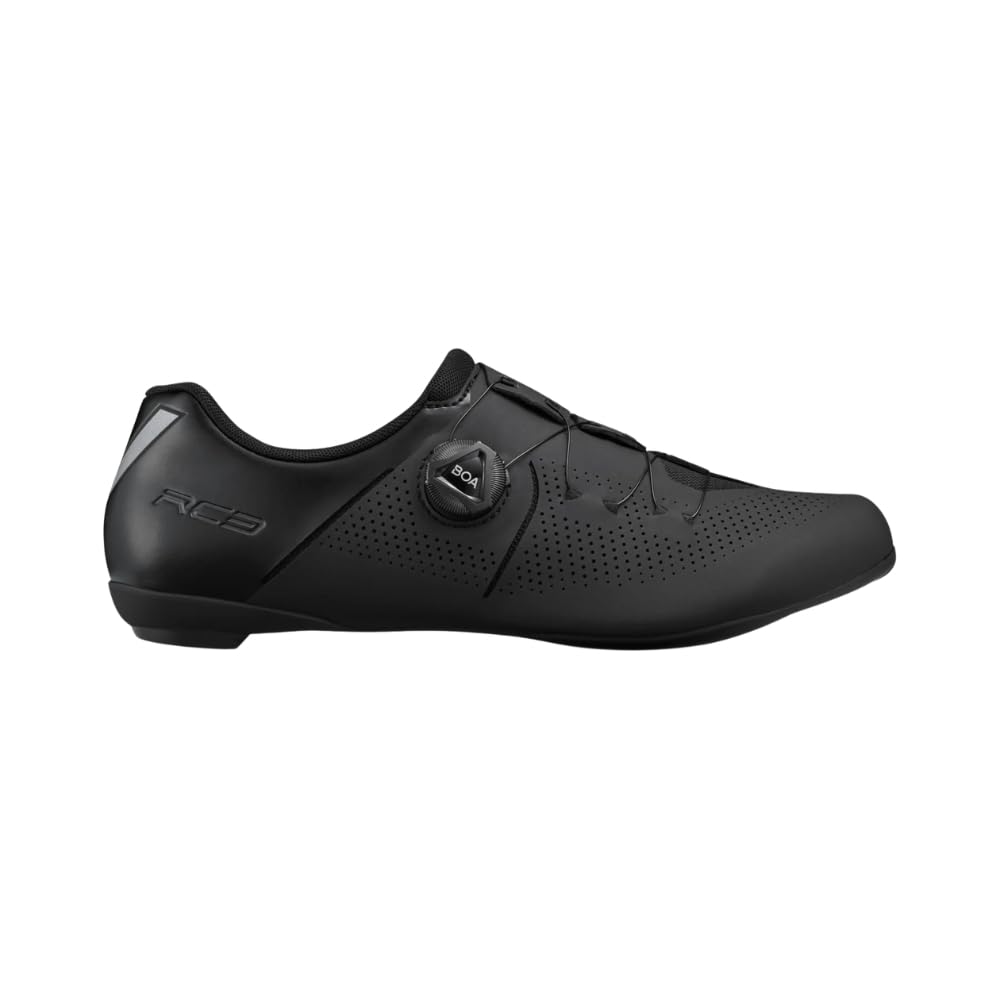
Shimano’s SH-RC302 is the performance-minded mid-range road shoe that prioritizes breathability and comfort without dipping into race-grade stiffness. The nylon sole has a stiffness index around 7 — adequate for training rides, club runs, and indoor use, but you’ll feel flex if you’re pushing 400+ watts out of the saddle. The standout feature is the air channel integrated into the outsole: a vented groove that pulls air through the shoe and across your foot. Riders who train in hot climates or for Ironman events report a dramatically cooler experience compared to solid-soled shoes at this price point.
The single BOA L6 dial provides enough tensioning range for most riders, and the upper is a three-layer mesh that is highly breathable but still structured enough to hold the foot. The heel cup features an internal counter that prevents slippage during hard acceleration. Cleat compatibility is the standard three-bolt road pattern, and the fore-aft cleat adjustment range is generous for dialing in your pedal stroke’s sweet spot. Several users note that the shoe fits well for medium-wide feet out of the box, especially if you size up half a size.
Long-term users report that the BOA mechanism stays reliable, but the nylon sole picks up noticeable flex after 5,000 km, especially in the midfoot. The outsole has wear indicators, making it easier to judge replacement timing. For riders who want a shoe that breathes, doesn’t break the bank, and works for long training days, the RC302 is a strong value pick.
Why it’s great
- Air channel provides excellent ventilation for hot rides
- Single BOA L6 dial is easy to use and reliable
- Good forefoot room for medium-wide feet
Good to know
- Nylon sole flexes under high sprint loads
- Outsole wears faster than carbon or carbon-reinforced options
- Sole stiffness insufficient for racing performance
5. Giro Cadet

The Giro Cadet is the shoe that brings BOA adjustability down to a price where it feels accessible without cutting performance corners you’ll regret on a 60-mile ride. The carbon composite sole offers a stiffness rating similar to Shimano’s RC302 but with a lighter, snappier feel thanks to the advanced composite layup. The single BOA L6 dial provides smooth micro-adjustments in 1mm increments, and the Synchwire upper ensures excellent ventilation through the mono-filament mesh panels. Riders with medium-width feet consistently call the fit “perfect” after sizing up half a size.
One of the most praised features is the closure system’s ability to distribute tension evenly across the foot. The Synchwire thermobonded film transfers the force from the BOA dial across the entire upper, which eliminates pressure points that conventional lacing or Velcro straps can create. The heel cup is internally reinforced with a non-slip microfiber that holds the foot securely without the “heel lift” that plagues poorly designed shoes. Reflective detailing is discreet but effective for pre-dawn rides.
User feedback over hundreds of miles confirms the BOA mechanism remains reliable and the outsole retains its stiffness. A few riders note that the Cadet runs slightly narrow in the toe box, so it’s less ideal for wide forefeet. The shoe also isn’t designed for heavy walking — the exposed carbon composite can become slippery on smooth surfaces. For the rider who wants real BOA performance without jumping to the premium tier, the Cadet delivers it solidly.
Why it’s great
- BOA L6 dial provides quick and precise micro-adjustments
- Synchwire upper offers great breathability and even tension
- Carbon composite sole is stiff and responsive
Good to know
- Runs narrow in the toe box for wide-footed riders
- Single BOA can’t match dual-dial fit precision
- Not designed for walking — sole is slippery on smooth floors
6. Fizik Tempo Overcurve R5

Fizik’s Tempo Overcurve R5 uses a traditional lace-and-Velcro closure system combined with a carbon-reinforced nylon sole, targeting riders who want a classic road shoe feel with modern sole performance. The asymmetrical upper construction mirrors the natural shape of the foot, and the Microtex fabric is flexible yet durable enough to resist tearing over years of use. The R5 sole sits at stiffness level 8 — stiffer than pure nylon but with enough compliance to keep your feet comfortable on century rides. Riders who prefer the tactile precision of laces over dials find the system refreshingly simple.
The heel cup is well-padded and the tongue is gusseted, preventing debris ingress. Cleat compatibility covers three-bolt road pedals, and the fore-aft adjustment slot is average for the price bracket. Several users note that the shoes fit true to size when matched to EU length, and that the Velcro strap over the laces adds a final tension lock that prevents lace pressure points. The Microtex upper is also easy to clean — a minor but practical detail for riders who train in wet or dusty conditions.
Where the design shows its age is in the closure speed. Lacing takes more time than a BOA dial, and re-tensioning mid-ride requires pulling over. The sole lacks the ventilated channel found on modern nylon shoes, which means less airflow on hot days. For the rider who values simplicity, durability, and classic aesthetics over high-tech adjustability, the Tempo Overcurve R5 is a reliable, long-haul option that many have used for thousands of miles.
Why it’s great
- Asymmetrical upper conforms to foot anatomy for a secure fit
- R5 sole offers a good balance of stiffness and long-ride comfort
- Classic lace-and-Velcro design is simple and durable
Good to know
- Slower to tighten and release compared to BOA systems
- Upper doesn’t ventilate as well as mesh competitors
- Strap can loosen slightly on very long rides if not double-backed
7. Tommaso Pista Indoor Cycling Shoe
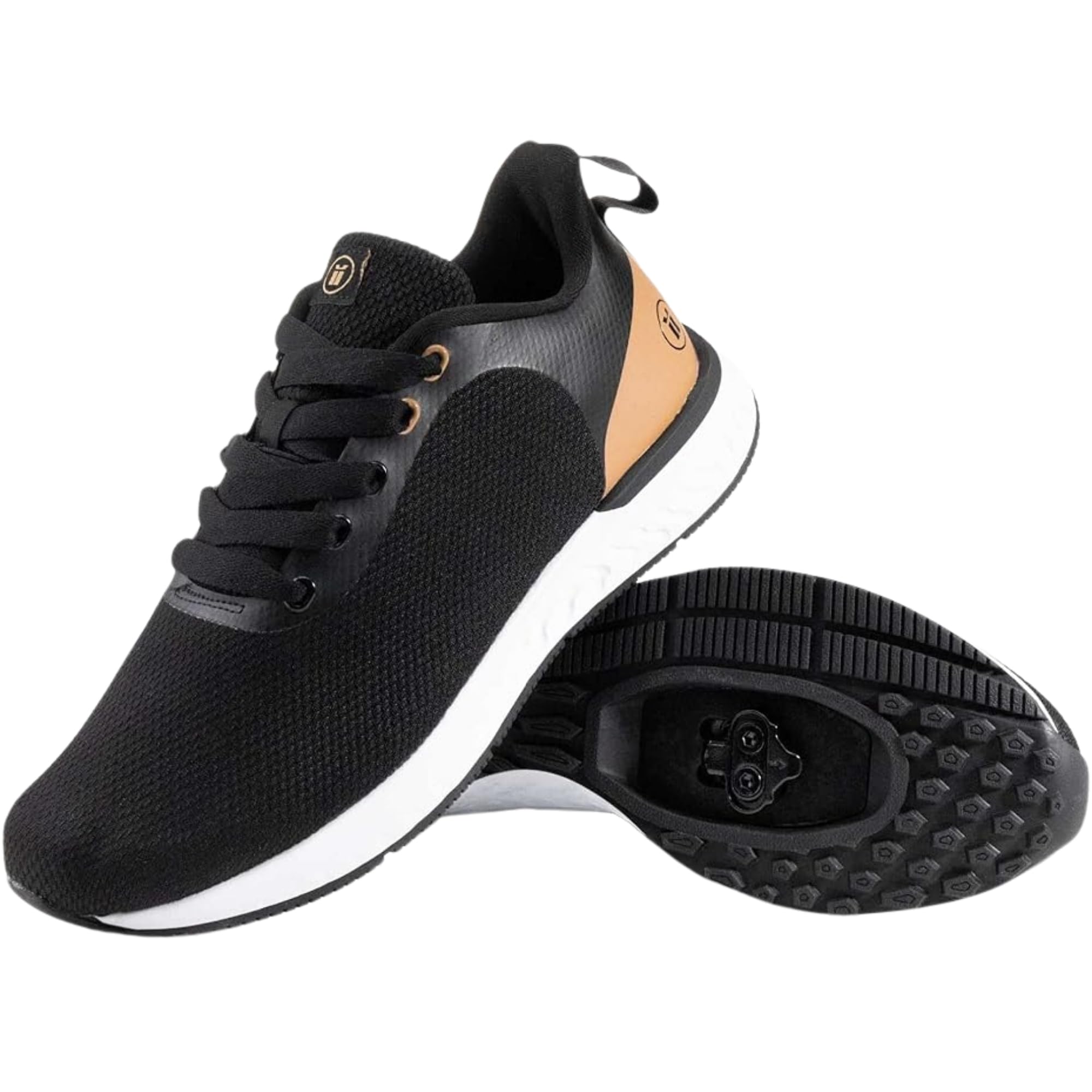
The Tommaso Pista is built for the rider who wants a single shoe that transitions between indoor spin class and outdoor casual road rides without feeling out of place. The standout feature is the recessed SPD cleat well — the cleat sits behind the rubber tread, which means the shoe behaves more like a sneaker when you’re walking on gym floors or commuting to a coffee shop. Users who rode 408 miles across RAGBRAI reported no hot spots and found the shoe flexible enough for walking while still stiff enough for efficient pedaling on moderate efforts.
The nylon sole has a stiffness rating around 6 — sufficient for spin workouts and flat terrain, but riders pushing high power on steep climbs will feel flex. The lace closure is traditional but well-executed, with crossing lace keepers that prevent the laces from hitting the chainring. The shoe offers two sets of mounting holes for the SPD cleat, allowing you to position the cleat further back for a more mid-foot stroke. One significant sizing quirk: many users report needing to order 1-2 full sizes larger than their street shoe, so ignore US sizing and use the EU size chart carefully.
Durability is a mixed bag. The lace system is bombproof, but the nylon sole can show wear after heavy use on concrete. The upper material holds up well to sweat and cleaning. It’s not a performance road shoe, but it is a thoughtful solution for gym-goers and casual riders who want the efficiency of clip-in pedals with the convenience of walkable soles. If your riding is primarily indoor or short, easy outdoor loops, the Pista saves you from needing two separate pairs of shoes.
Why it’s great
- Recessed SPD cleat for walkable comfort
- Lace closure is reliable and easy to replace
- Two cleat mounting positions for pedaling preference
Good to know
- Sizing is unreliable — must use EU, not US size
- Heavy for a road shoe (lace + rubber outsole)
- Not stiff enough for high-output outdoor road riding
8. Giro Stylus
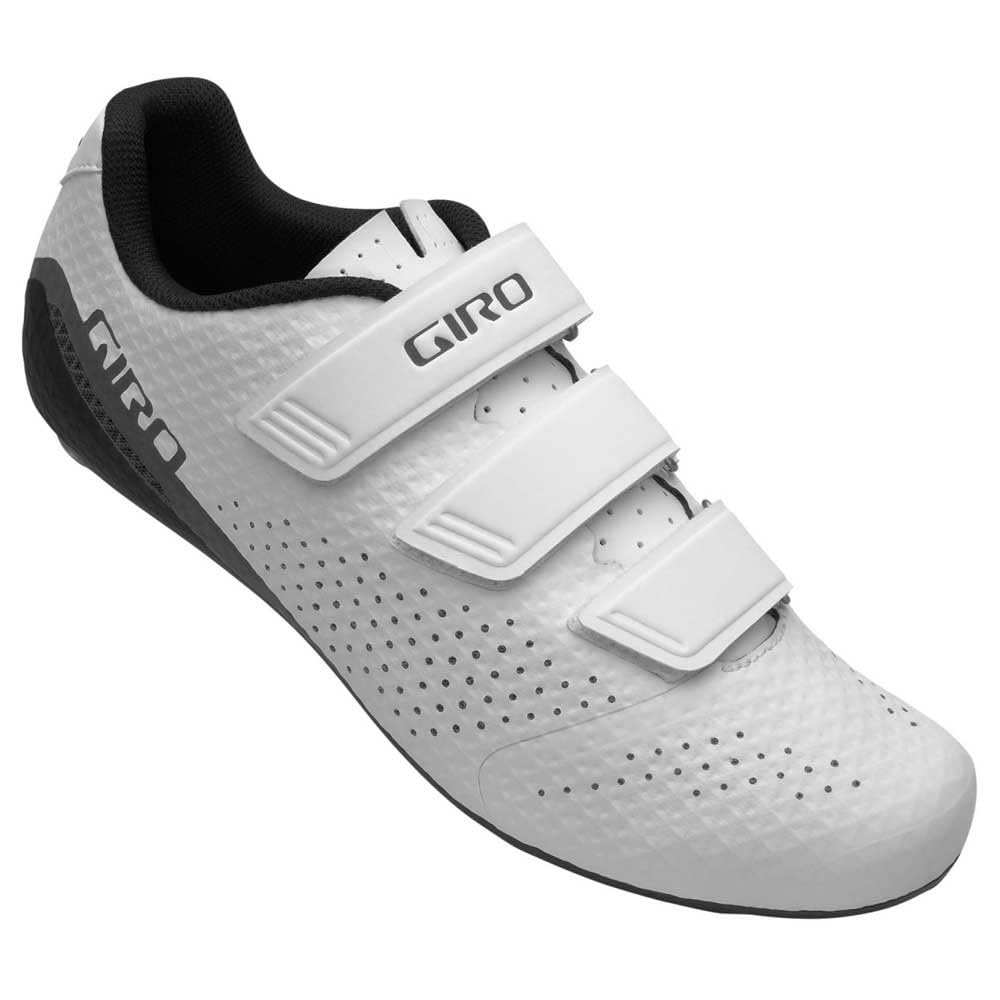
Giro’s Stylus is the entry-level road cycling shoe that strips down to the essentials: a stiff nylon sole, simple hook-and-loop closures, and a durable synthetic upper at a price that makes clipless pedaling accessible. It’s not a shoe you’ll use for centuries or group hammerfests, but for spin class, indoor trainers, and short recreational rides, it does the job without complaint. The nylon sole is stiff enough for moderate efforts and the closure system is reliable if basic — two Velcro straps that tighten the forefoot and instep independently, though they lack the micro-adjustability of BOA dials.
The fit is one of the standout points for the price. Users with medium-to-narrow feet describe the Stylus as comfortable out of the box, with a good heel hold and no excessive sliding. The toe box is open enough to avoid pressure on the ball of the foot during extended indoor sessions. The upper is not particularly breathable compared to mesh shoes, but it’s adequate for indoor use where air conditioning is present. Several riders note that the shoe runs true to US sizing when matched to EU conversion, making it easier to buy sight-unseen than some competitors.
Durability is the main compromise. The Velcro straps can loosen after a season of heavy use, and the synthetic upper shows wear faster than stitched leather or the bonded film on pricier shoes. The outsole doesn’t have rubber walking pads, so the nylon wears quickly on pavement. For , the Stylus offers a valid way to try road cycling shoes without a big commitment, but experienced riders will likely outgrow its limits within a few months of regular outdoor use.
Why it’s great
- Affordable entry point for clipless road pedals
- Good fit for medium-to-narrow feet
- Simple Velcro design is easy to use and maintain
Good to know
- Velcro straps may loosen over time with heavy use
- Synthetic upper is less breathable than mesh
- Nylon sole wears quickly on outdoor pavement
9. Tommaso Strada Mens SPD Cycling Shoes
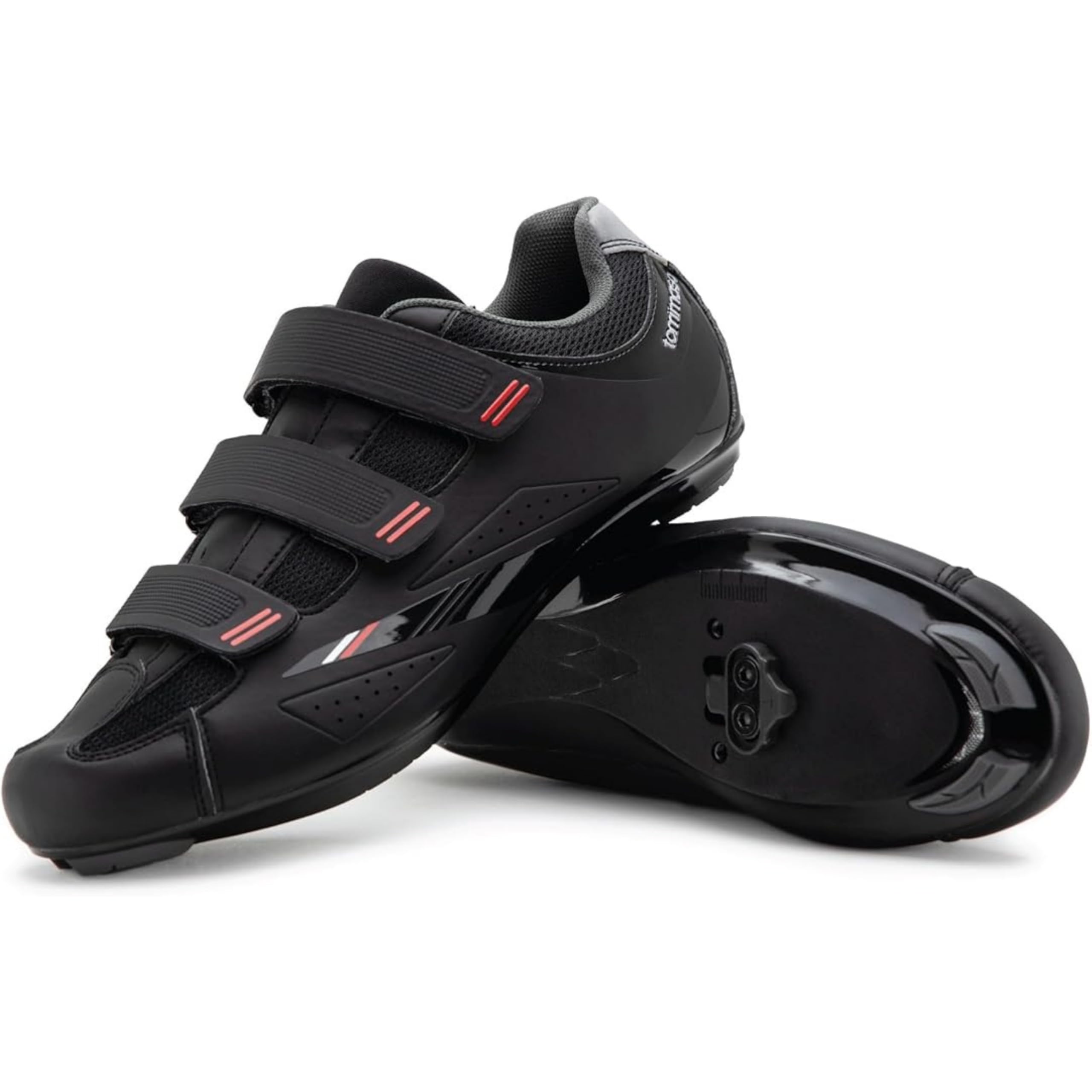
The Tommaso Strada is built for the indoor rider who doesn’t want to deal with cleat installation. It comes pre-loaded with Shimano SPD cleats, making it essentially turnkey for Peloton, spin classes, and any bike that uses two-bolt pedals. The sole is stiff for a nylon shoe, with a stiffness level around 6-7, and the Velcro closure system uses two independent straps to secure the forefoot and ankle. Riders with wider feet consistently rate the toe box as spacious — a common point of relief for those who found Peloton’s stock shoes too tight.
The shoe features a low stack height that keeps your foot closer to the pedal axle, which improves stability during high-cadence spinning. The walking pads at the heel and toe are recessed, allowing you to walk naturally without the cleat scratching floors. The upper is a synthetic mesh that breathes reasonably well for 45-minute indoor sessions, though riders doing longer outdoor rides note that the shoe lacks the ventilation needed to keep feet dry in hot weather.
Quality control from reviews shows some inconsistency. Several users report that the cleats are not torqued to spec from the factory and require tightening before first use. The sizing runs large compared to US street sizes, so matching EU measurements is critical — many customers needed 1-2 sizes down from their normal shoe size. For the price and the pre-installed cleat convenience, the Strada is a solid choice for indoor-only riders who value simplicity and a roomy toe box.
Why it’s great
- Pre-installed SPD cleats — no setup required
- Spacious toe box comfortable for wider feet
- Recessed cleat design allows floor-safe walking
Good to know
- SPD cleats may need re-torquing after shipping
- Sizing is inconsistent — use EU size, not US
- Not ventilated enough for hot-weather outdoor rides
FAQ
What sole stiffness do I need for my first road cycling shoes?
Is a BOA dial system better than Velcro straps?
How should road cycling shoes fit compared to regular shoes?
Final Thoughts: The Verdict
For most riders, the road bike cycling shoes winner is the SHIMANO SH-RC703 because it combines a stiff full-carbon sole, dual-BOA adjustability, and excellent ventilation at a price that undercuts boutique Italian race shoes while delivering comparable performance. If you have wide feet, grab the Fizik Vento Omna Wide to avoid toe-box pinching on long days. And for indoor spin or casual outdoor riding, the Tommaso Pista offers cleat-ready walkability without the need for a second pair of shoes.

Mo Maruf
I created WellFizz to bridge the gap between vague wellness advice and actionable solutions. My mission is simple: to decode the research and give you practical tools you can actually use.
Beyond the data, I am a passionate traveler. I believe that stepping away from the screen to explore new environments is essential for mental clarity and physical vitality.