Our readers keep the lights on and my smoothie glass nicely filled. As an Amazon Associate, I earn from qualifying purchases.
Specs are compiled from manufacturer listings and verified buyer reviews and can change over time — please confirm the key details on the product page before buying.
You want tender, fall-apart meals in a fraction of the oven time—but the right pressure cooker depends on how you cook. The real difference between models depends on capacity, power, and how much hands-on control you want..
I’m Mohammad Maruf — the founder and writer behind WellFizz. This guide is built by comparing the manufacturers’ published specifications and the patterns across verified customer reviews, so you get each pick’s real strengths and trade-offs instead of marketing spin.
If a single appliance could cut your dinner prep to minutes while locking in deep flavor, you want a pressure cooker that matches your kitchen size and your cooking style.
Our Picks at a Glance
How To Choose The Best Pressure Cooker
A pressure cooker is a sealed vessel that uses steam pressure to raise the boiling point of water, cooking food much more quickly than conventional methods.. The main fork in the road is stovetop vs. electric: stovetop models are simpler, reach higher pressures, and are generally more durable, while electric models are set-and-forget programmable machines that also slow-cook, steam, and sauté.
Capacity: Matching the Pot to Your Household
The most important spec for any pressure cooker is its quart capacity.. For electric models, an 8-quart pot feeds a family of 6–8 comfortably, while a 3-quart mini cooker is ideal for singles or side dishes. Stovetop pots like the 13.7-quart Universal can handle huge batches for meal prep or large gatherings, but they take up significant cabinet space.
Power and Pressure: The Real Speed Drivers
Electric pressure cookers are rated in watts; higher wattage, like 1200W, means faster heat-up and pressure buildup. Stovetop models do not have a wattage spec—their pressure is measured in PSI or kPa, and most home stovetop cookers run around 15 PSI for efficient cooking. Dual-pressure settings (high/low) give you control: high for tough meats and beans, low for delicate vegetables.
Safety and Build Materials
Stainless steel inner pots do not react with acidic foods like tomato sauce, so you get no metallic taste. Aluminum is lighter but can react with acidic ingredients. Safety features include lid locks (they prevent opening while the pot is under pressure), overpressure release valves (they vent steam if pressure gets too high), and automatic temperature cutoffs. Electric models from reputable brands generally have 10 or more built-in safety features, so new users rarely make a mistake.
Quick Comparison
| Model | Best For | Capacity | Wattage / Type | Weight | Amazon |
|---|---|---|---|---|---|
| Instant Pot Duo Mini 3 Qt★ Best Overall | Small households or sides | 3 Qt | 700W Electric | 8.2 lbs | Amazon |
| Ninja HyperHeat 9-in-1Top Performer | Fast, versatile family cooking | 6.5 Qt | 1200W Electric | 15.87 lbs | Amazon |
| CARORI 12-in-1 8 Qt | Budget-friendly large capacity | 8 Qt | 1200W Electric | 13 lbs | Amazon |
| Midea 12-in-1 8 Qt | Mid-range all-in-one value | 8 Qt | — Electric | — | Amazon |
| Universal 13.7 Qt Stovetop | Batch cooking, large groups | 13.7 Qt | Stovetop | — | Amazon |
| Fissler Vitaquick Premium 4.8 Qt | Premium stovetop quality | 4.8 Qt | Stovetop | 3.9 kg (8.6 lbs) | Amazon |
In‑Depth Reviews
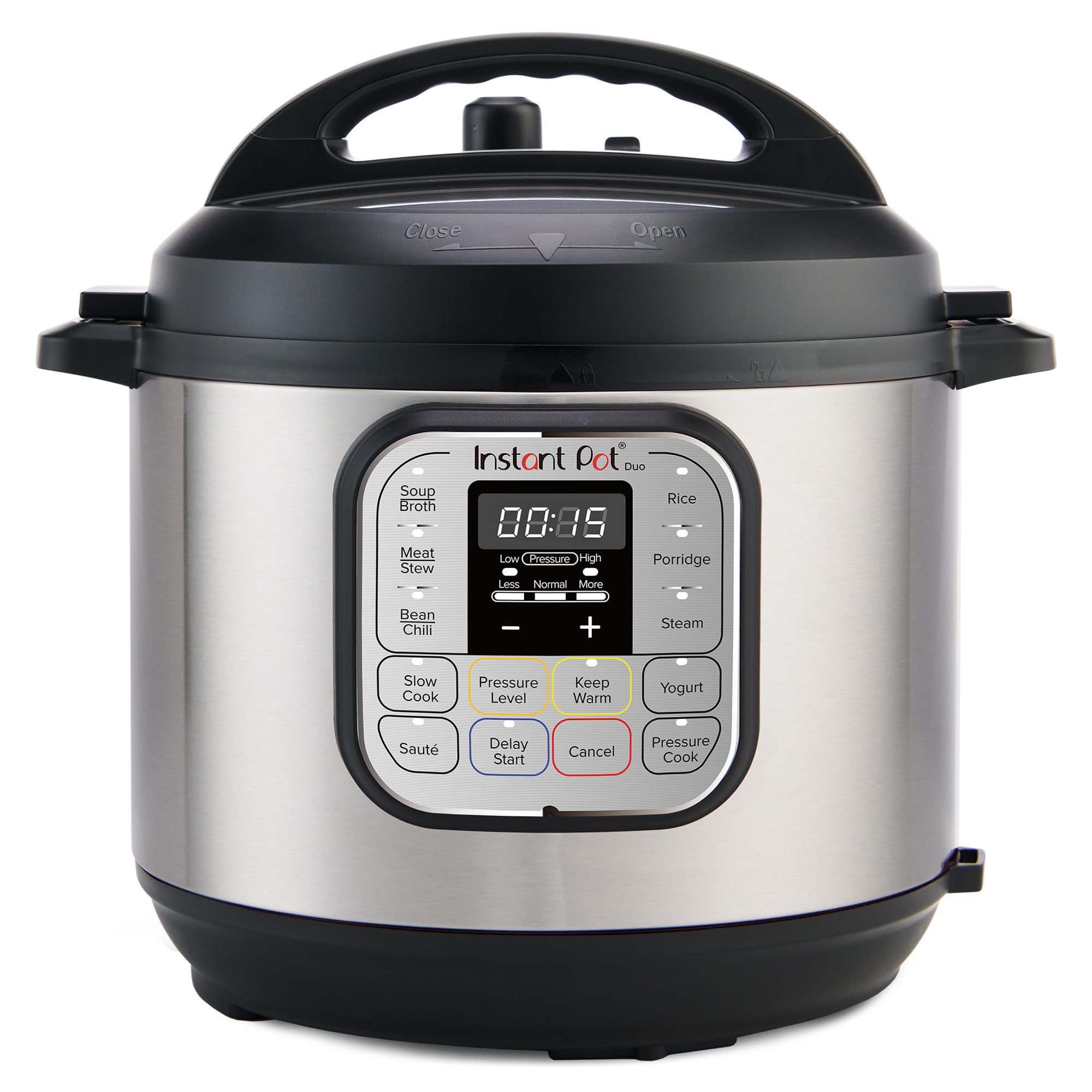
1. Instant Pot Duo 7-in-1 Mini Electric Pressure Cooker | 3 Quart
Our pick — over 4.5★ from 185,000+ verified ratings; the strongest balance of quality and price.
The tiny Instant Pot packs seven functions into a 3-quart body for one- or two-person meals..
For solo cooks or small households, the 3-quart Instant Pot Duo Mini is a space-saver that still does pressure cooking, slow cooking, rice, steaming, sautéing, yogurt making, and warming. Its 700-watt heating system is less powerful than the 1200W Ninja or CARORI, but for small batches it gets the job done. One experienced buyer noted that the Duo runs at approximately 11.x PSI on high, so recipes written for standard 15 PSI stovetop cookers need extra time—especially at high altitude. The 8.2-pound weight makes it easy to handle and store, unlike the heavier electric models.
The 18/8 stainless steel inner pot has a tri-ply bottom for even heat during searing, and the entire lid and pot are dishwasher safe. Buyers consistently praise the build quality, with one calling it “my favorite appliance ever” and another noting the stainless steel pot is usable on a gas stove. Compared to the Universal 13.7-quart stovetop cooker, the Instant Pot Mini is a smaller appliance by far—its 3-quart capacity is a 4.6x gap, so you are trading batch-cooking potential for countertop convenience.
Why it stands out
- 700W is sufficient for 3-quart batches, plus a stainless steel pot that doubles as a stovetop pan
- 8.2 lbs is light enough to move and store easily
- Over 185,000 ratings with a 4.7-star average—proven reliability
What to know
- Runs at around 11.x PSI—remember to add cooking time for standard 15 PSI recipes
- 3 quarts is too small for family-sized meals or large roasts
The single-cook’s companion: This Instant Pot Mini is perfect for students, couples, or anyone cooking 1–2 portions who wants a lightweight, proven electric cooker.
skip it if: You regularly cook for more than 2 people—the 3-quart capacity will feel cramped.
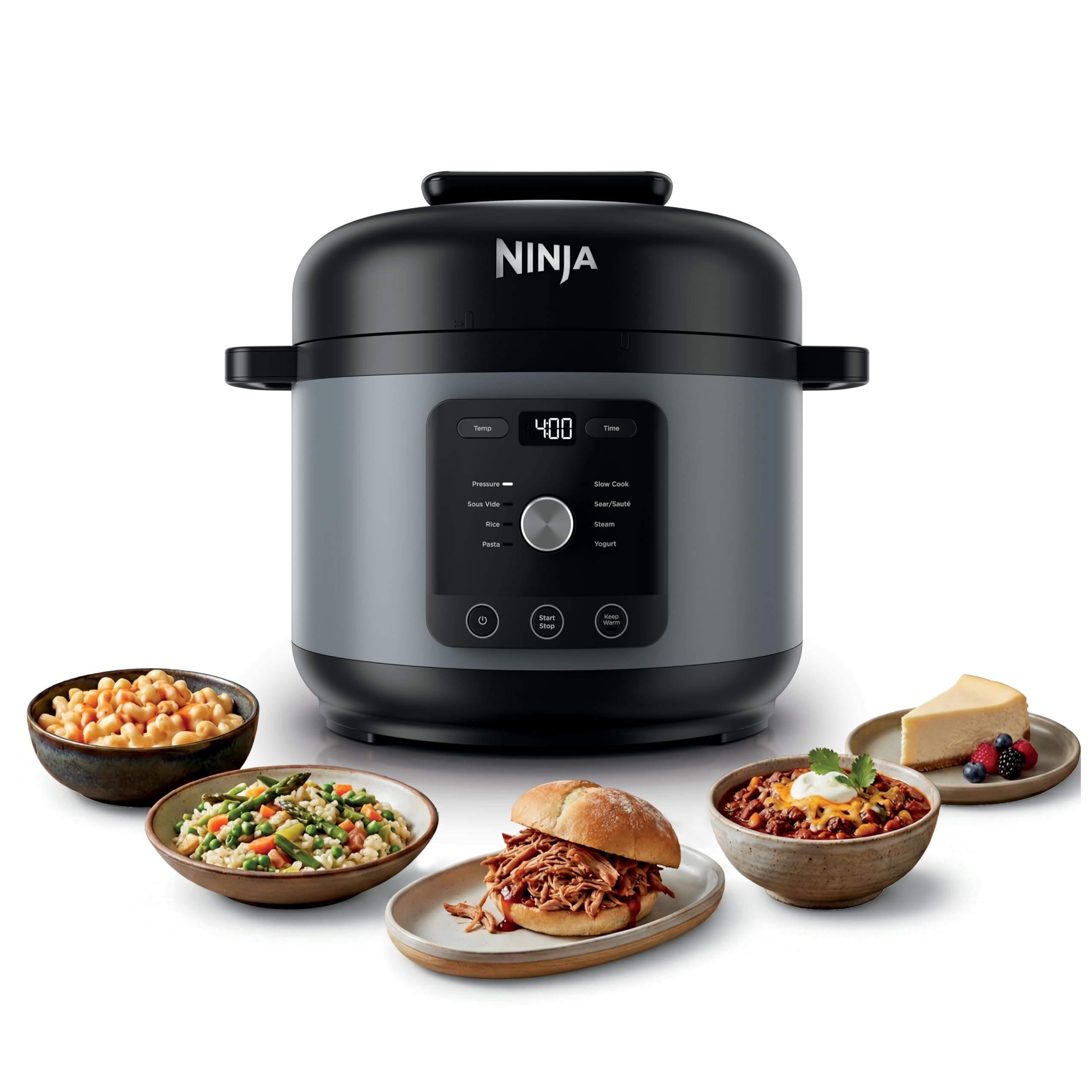
2. Ninja HyperHeat 9-in-1 Electric Pressure Cooker | 6.5 Qt
The speed demon outpaces the Instant Pot with 1200 watts of HyperHeat power..
Ninja claims its 1200-watt HyperHeat technology cooks meals up to 2x faster than traditional methods, and buyers agree that the speed feels real—meat tender in 30 minutes, white rice in 8 minutes (excluding pressure build-up time). The 6.5-quart capacity fits a 4-lb chicken or a 5-lb roast, feeding up to 8–10 people, making it a solid pick for family dinners. Unlike some other electric pressure cookers, the removable 6.5-qt SimpliServe pot is a ceramic nonstick surface that is 100% PFAS-free, so it wipes clean easily even after searing.
Reviewers highlight how the wide 9.5-inch diameter cooking surface gives you more room to sear meat directly in the pot, cutting down on dishes. One reviewer noted that the seal retains no smell—a common problem with older pressure cookers. The 15.87-pound weight makes it noticeably heavier than the Instant Pot Duo Mini (8.2 pounds), a 59% weight gap, so it stays planted on the counter but is not something you will stash in a cabinet between uses. It also lacks a dedicated steamer basket in the box, though Ninja does include a reversible stainless steel rack.
Verdict on power: The Ninja HyperHeat is the pick for cooks who want the fastest electric option, searing capability, and a nonstick pot that is free of PFAS chemicals.
The trade-off: At 15.87 pounds, it is heavy and not easy to move around—plan to keep it on your counter full time.
Reach for this if: You want the quickest possible cooking in an electric model with a wide searing surface and easy-clean PFAS-free pot.
Look elsewhere if: You need a portable cooker you can store away, since the 15.87 lbs makes it heavy to move.
3. Midea 12-in-1 Electric Pressure Cooker | 8 Quarts

The 8-quart workhorse turns frozen roasts into fork-tender meat in 2.5 hours, according to buyers..
With 12 one-touch smart programs and a stainless steel inner pot, the Midea 12-in-1 delivers a lot of versatility for a mid-range price. Reviewers report that it cooks frozen roasts and chicken in 2.5 hours on manual high, with meat that “falls apart moist.” The 8-quart capacity easily serves a family of 8, and the durable stainless steel pot is non-reactive, so acidic tomato sauces will not pick up a metallic taste. Its 11.1″D x 11.6″W x 11.6″H footprint is compact for an 8-quart model—noticeably more space-efficient than the Universal stovetop model (18.2″D x 10.6″W x 12.4″H), which has a 64% larger footprint.
The REALSAFE SYSTEM includes nine layers of protection—pressure limit, over-temperature, and overpressure automatic release—so you can walk away with confidence. One buyer mentioned that the lid is dishwasher safe, and the pot is easy to clean. However, unlike the Ninja HyperHeat, the Midea does not list its wattage spec, so you cannot directly compare heating speed; buyers just note it “cooks fast.”
Solid value pick: The Midea earns its spot for large families who want a programmable electric pressure cooker with a huge 8-quart stainless steel pot and a strong safety system.
The missing spec: Wattage is not published, so you are trusting buyer anecdotes about speed rather than a hard number.
Great for: Families cooking for 6–8 people who want preset programs and a compact 8-quart footprint.
Not ideal if: You want the fastest possible heat-up, because the wattage is not disclosed.
4. Universal 13.7 Quart Pressure Cooker | Aluminum Stovetop

The 13.7-quart behemoth that whistles like a Colombian classic, cooking 14 servings at once.
If you need to feed a crowd or batch-cook for a week, the Universal aluminum stovetop cooker is the biggest pot here. Its 13.7-quart capacity—4.6x larger than the Instant Pot Mini—handles 14 servings, making it ideal for meal prep, catering, or large family gatherings. The heavy-gauge aluminum delivers fast, even heating, and the iconic whistling design (inspired by Colombia’s “La Pitadora”) produces an audible alert when optimal pressure is reached. It has a 5-layer safety system with multiple valves and a lid lock, plus a 25-year warranty.
However, buyers report a serious flaw: some units fail to build pressure because the “button slips out of place” during pressurization, causing the whole process to fail. That is a real risk, and many users in the reviews mention that the lid assembly requires careful alignment each time. The 18.2″D x 10.6″W x 12.4″H footprint is also large, so cabinet space is a consideration. Unlike the Fissler Vitaquick, this is an aluminum pot, so it is lighter but not induction-compatible and can react with acidic foods over time.
Best for batch cooks: The Universal’s huge 13.7-quart capacity and classic whistling design make it a standout for anyone cooking really large volumes on a stovetop.
The catch: The lid mechanism seems inconsistent—some owners mention it never builds pressure, which is a dealbreaker for a pressure cooker.
Reach for this if: You are cooking for 12–14 people or doing big-batch meal prep and want a traditional stovetop whistling cooker with a 25-year warranty.
Look elsewhere if: You need a reliable seal every time, because multiple reviews cite pressure-building failures due to the lid design.
5. CARORI 1200W 12-in-1 Electric Pressure Cooker | 8Qt
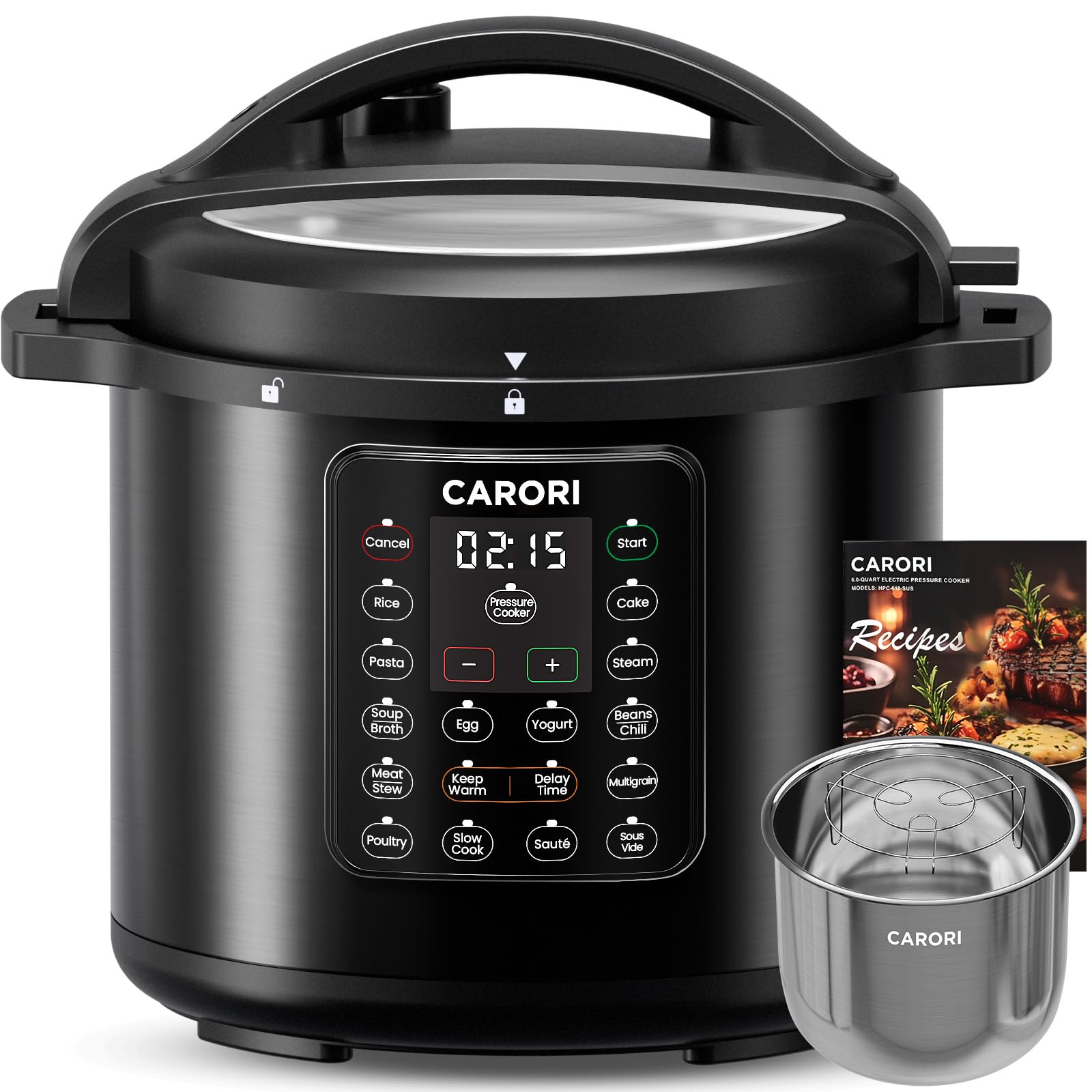
An 8-quart electric cooker with 1200 watts and 70 kPa pressure, punching above its budget price.
Its 8-quart capacity serves up to 8 people, and it has 14 customizable smart programs for ribs, soups, beans, rice, and more. The inner pot is stainless steel and dishwasher safe, and it comes with a steaming rack, measuring cup, rice spoon, and recipe book.
At 13 pounds, the CARORI is lighter than the Ninja’s 15.87 pounds (a 59% weight gap vs. the Instant Pot Mini’s 8.2 pounds). However, buyer reviews are mixed: one owner reported “it broke the 1st I used it,” but gave five stars because of good customer service. Another reviewer flagged a concern about the “shiny sparkly interior finish” potentially causing metal leaking, and noted that steam condensation drips on the side when the lid rests on top. Compared to the Midea 12-in-1, the CARORI is newer to market (2024) and has far fewer ratings (413 vs. 925), so long-term reliability is less proven.
What works
- 1200W power and 70 kPa pressure for fast cooking
- 8-quart capacity at a budget-friendly price point
- Includes many accessories: steaming rack, rice spoon, recipe book
What to watch
- Some buyers received units that broke on first use
- Condensation drips on the counter when lid rests on the cooker’s top ridge
Good for tight budgets: The CARORI gives you an 8-quart electric pressure cooker with 1200W for less than most competitors, if you are willing to roll the dice on reliability.
Not if you need a proven track record: With multiple reports of early failure, you might be better spending a bit more on a Midea or Instant Pot for confidence.
6. Fissler Vitaquick Premium 4.8 Quart Stovetop Pressure Cooker
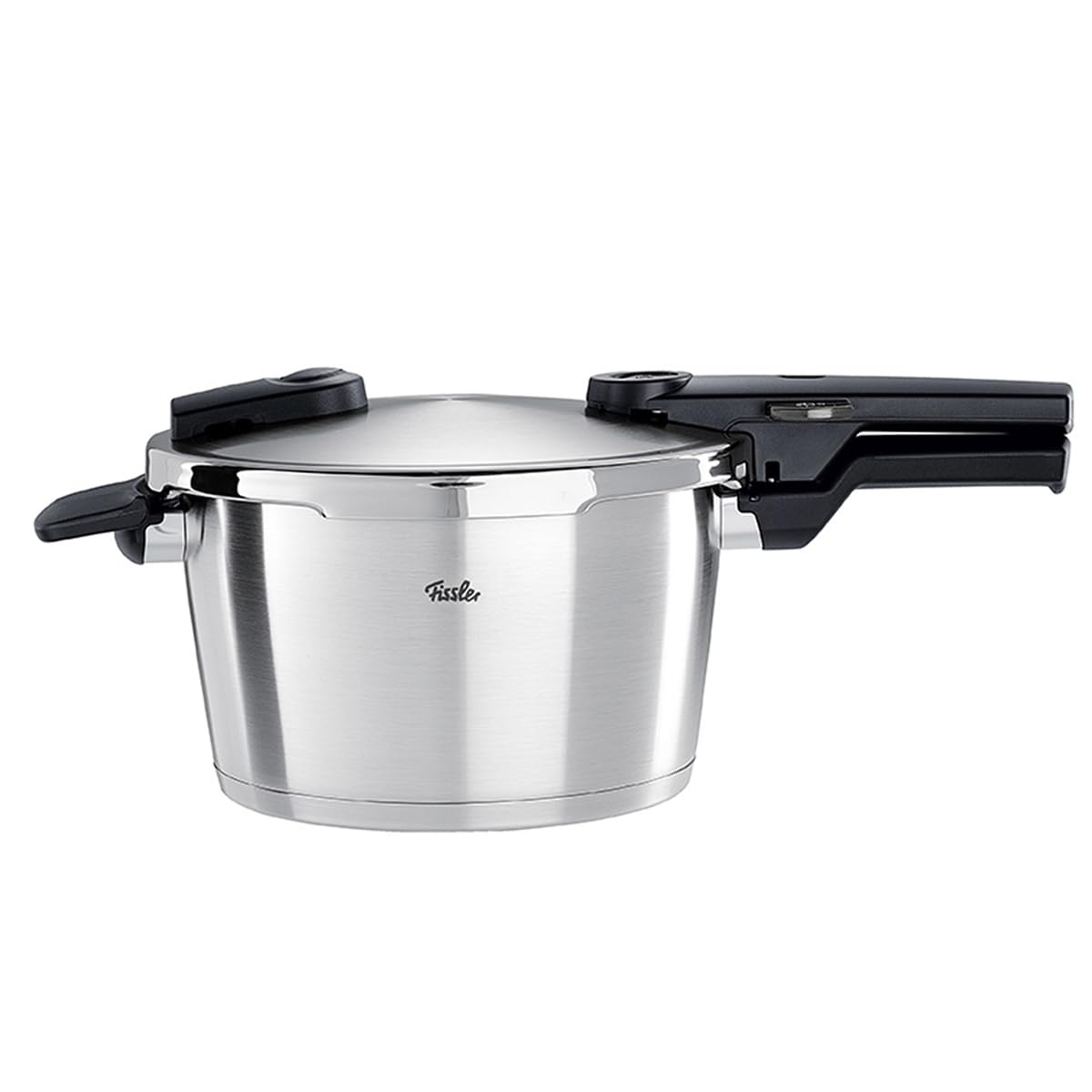
The German-engineered stovetop cooker that The German-engineered stovetop cooker preserves up to 90% of vitamins while cooking 70% faster..
Fissler’s Vitaquick Premium is a stovetop pressure cooker built for those who value material quality and precise pressure control. Made in Germany from up to 90% recycled 18/10 stainless steel, it has two pressure settings—one for delicate vegetables, another for hearty stews—and a Superthermic base that distributes heat evenly across all cooktops, including induction. The 4.8-quart capacity is a comfortable size for 4–6 servings, and the rivet-free interior makes cleaning easy and hygienic. Fissler backs it with a 10-year warranty.
Buyers consistently use words like “high quality” and “built to last”—one owner called it “one of the best pressure cookers from Germany” and expects to keep it a lifetime. The precision pressure system means cooking is fast and consistent; one reviewer made Hungarian goulash and chicken chili on the first day. Compared to the Universal 13.7-quart aluminum pot, the Fissler is smaller (4.8 quarts vs. 13.7 quarts) and built from premium stainless steel that does not react with food. However, it demands a hands-on stovetop approach—no presets, no timers, no keep-warm function.
Invest in quality: The Fissler Vitaquick is the pick for stovetop purists who want German engineering, dual pressure settings, and a stainless steel pot that will outlast most appliances.
The trade-off: You are paying a premium for the build and the brand, and the 4.8-quart capacity means it is not for large-batch cooking.
Choose this if: You want a stovetop pressure cooker that is beautifully made, induction-compatible, and will last for decades of daily use.
pass on it if: You need a larger capacity or prefer the set-and-forget convenience of an electric model.
Understanding the Specs
Capacity (Quarts)
This is the most important number because it tells you how much food the cooker can hold in one batch. A 3-quart cooker is for 1–2 people, an 8-quart model serves a family of 8, and a 13.7-quart stovetop pot can feed a crowd. Be realistic about your household size.
Wattage & Pressure (Electric vs. Stovetop)
For electric models, higher wattage (like 1200W) means faster heating and quicker pressure buildup. For stovetop models, pressure is measured in PSI or kPa; standard home stovetop cookers reach about 15 PSI. Dual-pressure settings let you switch between high (tough meats) and low (vegetables).
Build Material
Stainless steel (especially 18/10 or 18/8) is non-reactive, durable, and often dishwasher safe. Aluminum is lighter and cheaper but can react with acidic foods and is not induction-compatible. Ceramic nonstick pots are easy to clean but require careful handling to avoid scratches.
Safety Systems
A good pressure cooker should have a lid lock (prevents opening under pressure), an overpressure release valve (releases steam if pressure gets too high), and overheat protection. Electric models typically have 10+ built-in safety mechanisms; stovetop models rely on mechanical valves and seals.
FAQ
What is the difference between a stovetop and an electric pressure cooker?
How do I know what size pressure cooker to buy?
Can I use an electric pressure cooker on an induction stovetop?
What does PSI mean and why does it matter?
Is it safe to leave an electric pressure cooker unattended?
Why does my pressure cooker lose steam or not build pressure?
Can I can food in a pressure cooker?
How long does a pressure cooker last?
Can I open the lid during cooking?
Are aluminum pressure cookers safe to use?
Final Thoughts: The Verdict
For most buyers, the pressure cooker winner is the Ninja HyperHeat 9-in-1 because it combines the fastest electric heating (1200W), a PFAS-free ceramic pot, and a wide searing surface—all in a 6.5-quart size that feeds a family. If you want the most programmable features for a lower price, grab the Midea 12-in-1. And for stovetop cooks who prioritize build quality and plan to cook 4–6 servings, the Fissler Vitaquick Premium is the one to beat.
How We Picked
We do not accept paid placement. Every pick is matched to a real buyer and a real use-case; we do not hands-on test units.
Sources & Methodology
Specifications: manufacturer listings and product documentation. Review insights: verified customer reviews, as of July 2026. Pricing: not shown on this page (it changes often); check the current price via the retailer link.
As an Amazon Associate, WellFizz earns from qualifying purchases. This does not affect which products we feature.
Related Guides

Mo Maruf
I created WellFizz to bridge the gap between vague wellness advice and actionable solutions. My mission is simple: to decode the research and give you practical tools you can actually use.
Beyond the data, I am a passionate traveler. I believe that stepping away from the screen to explore new environments is essential for mental clarity and physical vitality.