Our readers keep the lights on and my smoothie glass nicely filled. As an Amazon Associate, I earn from qualifying purchases.
The difference between a good horror board game and a great one isn’t the gore on the box—it’s whether your group will remember the session for months. Many games lean on shock value but deliver flat mechanics that kill the tension faster than a flickering bulb. The best horror board games weaponize atmosphere, cooperative pressure, and smart rules to make every turn feel like a scene from a film you control.
I’m Mohammad Maruf — the founder and writer behind WellFizz. I’ve spent years analyzing market research, parsing technical specs, and reading through thousands of user reports to find which games actually deliver on their dark promises rather than just collecting dust on a shelf.
We’ll explore seven distinct titles built for different playstyles, group sizes, and fear tolerances so you can confidently choose the best horror board games that will dominate your next game night with genuine dread and replayability.
How To Choose The Best Horror Board Games
Not every scary box delivers the same experience. Understanding a few key parameters will save you from buying a game that looks terrifying but plays like a checklist. Focus on these factors to match the game to your group’s real needs.
Cooperative vs. Competitive — Who Are You Fighting?
Horror games split into two camps: everyone against the game itself, or everyone against each other (with horror as the backdrop). Co-op games like The Night Cage and Horrified build shared dread because you all lose or win together. Competitive horror games like Zombies!!! add player sabotage, which can either heighten tension or kill the mood depending on your group’s tolerance for betrayal. Decide whether your table prefers unity or backstabbing before you commit.
Play Time and Player Count — Pace Matters
Horror relies on rising tension, not marathon sessions. Games with a 30 to 60 minute playtime like Escape The Dark Castle keep the pressure high without exhausting the group. Longer games — anything north of 90 minutes — risk losing the emotional peak, especially if player elimination happens early. Also check the player range: a 1-to-5 player count covers solo and small groups, while 6-player games like Zombies!!! suit larger parties but can drag.
Replayability and Variable Setup
The best horror board games stay fresh because the board, enemies, or story shift each session. Tile-laying systems (The Night Cage), different monster combinations (Horrified), or feature film expansions (Final Girl) transform the experience every time. A game with a single fixed path loses its magic after three plays. Look for diverse monster behaviors, random tile draws, or modular boards that force new strategies each game.
Quick Comparison
On smaller screens, swipe sideways to see the full table.
| Model | Category | Best For | Key Spec | Amazon |
|---|---|---|---|---|
| Ravensburger Horrified | Co-op Cryptid | Family game nights | 6 monsters, 60 min | Amazon |
| WizKids Hako Onna | Hidden Movement | Player-vs-player suspense | 2-5 players, 40 min | Amazon |
| Twilight Creations Zombies!!! | Competitive Survival | Large group chaos | 6 players, tile board | Amazon |
| Van Ryder Final Girl | Solo Slasher | Dedicated solo play | 20-60 min, 1 player | Amazon |
| Smirk & Dagger The Night Cage | Tile-Laying Maze | Atmospheric co-op | 1-5 players, candle tokens | Amazon |
| Themeborne Escape The Dark Castle | Storybook Adventure | Quick storytelling sessions | 45 chapter cards, 30 min | Amazon |
| CMON Cthulhu Death May Die | Expansion Combat | Miniature painting fans | 46 miniatures, 90 min | Amazon |
In‑Depth Reviews
1. Ravensburger Horrified — American Monsters
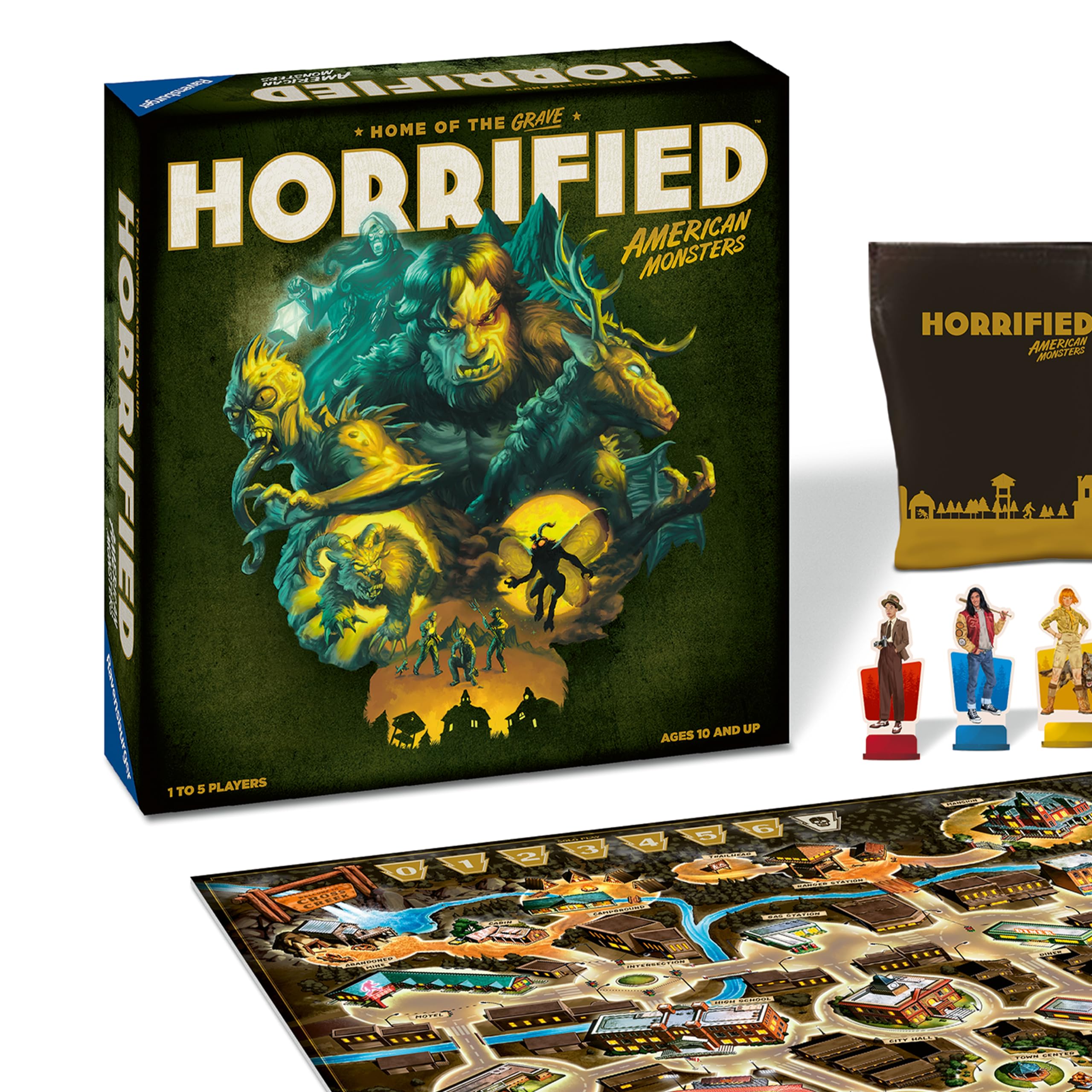
Ravensburger nailed the sweet spot between family accessibility and genuine strategic horror. You defend Cross Creek against six distinct cryptids — Bigfoot, Chupacabra, Mothman, Banshee, Jersey Devil, and Ozark Howler — each requiring a unique defeat strategy. That asymmetry is the game’s backbone: one monster needs footprint tokens aligned with photos, another demands path tokens that can be consumed by random events, and the Jersey Devil turns the player-vs-monster dynamic on its head by secretly converting citizens into threats. The action-point-and-pick-up-and-deliver core keeps the complexity manageable for ages 10 and up, while the adjustable difficulty from different monster combinations offers strong replay value. Counting every monster variant and hero selection, you’ll see a fresh puzzle each session.
The cooperative nature means the entire table wins or loses together, which reinforces the horror theme because no single player can carry the group. Communication becomes essential — you have to coordinate who collects what item and which monster to prioritize. The 60-minute playtime is ideal for family nights where attention spans vary, and the rulebook’s clarity around action points is solid, though specific monster mechanics (especially Bigfoot’s photo system) could use tighter wording. Some players report needing a house-rule session to iron out loopholes, particularly for the Ozark Howler’s path token replacement rules. Once you internalize the quirks, the experience delivers genuine tension as the monsters advance their phases each round.
Production quality is high across the board — sturdy monster mats, detailed sculpted miniatures, and vibrant artwork that leans into the cryptid lore without being graphic. The educational objective listed is “boost critical thinking and teamwork,” and the game genuinely delivers on that promise. Compared to the original Universal Monsters version, the American cryptid theme feels fresher and introduces mechanics that feel less tropey. If you need one game that bridges casual players and horror enthusiasts, this is the table’s best anchor. The solo mode using two investigators also works surprisingly well, making it a versatile pick for solo gamers who want a cooperative puzzle with horror dressing.
Why it’s great
- Asymmetric monster mechanics create genuine strategic depth every game
- Excellent production quality with detailed miniatures and themed components
- Solo mode works well with two investigators for flexible play
Good to know
- Rulebook has unclear sections for specific monster behaviors
- Item collecting can feel repetitive after several plays
2. WizKids Hako Onna — Japanese Horror Hide-and-Seek

Hako Onna captures the feel of a Japanese ghost story better than most horror games because its central gimmick — the noise disc tower — creates genuine auditory suspense. Players search a random house tile layout for either a safe combination or a cursed doll while the ghost player (or the automated ghost) stalks them. The twist: you can peek at the ghost’s box to learn her location, but doing so risks turning you into her minion, which permanently shifts the balance of power. The game’s core loop of peeking versus staying blind drives excellent player-to-player tension, especially in groups that embrace the horror movie decision-making.
The rulebook is a weak link in an otherwise tight design. Several groups report needing external video tutorials to understand edge cases around noise disc placement and ghost movement triggers. The physical components — especially the noise cards — suffer from low durability under frequent shuffling. Players recommend laminating or using card sleeves after a few sessions. The ghost player has a distinct advantage in most setups, and the difficulty skews heavily toward the supernatural side, which can frustrate human players who feel the game is unwinnable. Still, for groups that enjoy asymmetric hidden movement games like Scotland Yard but want a horror skin, this delivers a unique experience that no other game on this list replicates.
The summary boards for each player are a smart touch, keeping individual objectives visible without cluttering the main table. Setup is straightforward after the first play, and the room tile arrangement ensures the mansion layout differs each time. The horror comes from unpredictability — the ghost can interrupt at any moment when the noise disc tower tips, and that random trigger creates jump-scare moments that feel earned rather than cheap. Best played with 3-5 players who enjoy roleplaying the tension rather than min-maxing strategy. The ghost player role is especially rewarding for horror fans who enjoy being the monster.
Why it’s great
- Noise disc tower mechanic creates genuine jump-scare tension
- Asymmetric ghost vs. human gameplay is rewarding for both sides
- High replay value from randomized room tile layouts
Good to know
- Card durability is weak, requires sleeving for longevity
- Strong ghost advantage can frustrate human players in some sessions
3. Twilight Creations Zombies!!! Third Edition

Zombies!!! Third Edition is the only fully competitive game in this lineup, and that distinction matters. Every other player is both an ally and a threat as you race to collect a set number of zombie kills before anyone else. The tile-based board expands as players explore, which means the map evolves differently each session and no two games share the same layout. This edition introduces cooperative play options alongside the classic competitive mode, giving you flexibility. The “Take That” mechanics — event cards that sabotage other players — fit the zombie survival theme because the undead aren’t the only danger at the table.
The game shines brightest with 3-4 players where the pace stays tight, typically finishing around 35 minutes. Bump to 5 or 6 players and the session can stretch past 90 minutes, with luck-based dice rolls deciding the outcome rather than smart positioning. The tile system means players can get stuck in dead-end corridors while others luck into the helipad, which feels unfair in longer games. With 2 players, the competitive element loses its edge because there’s less chaos to exploit. The age rating of 14+ is conservative — the zombie theme is mild enough that younger players comfortable with monster movies will enjoy it, and the rulebook takes about 10 minutes to teach to an 8-year-old.
Component quality is solid for the price point: thick card tiles, clear print on event cards, and four new zombie figures exclusive to this edition. The biggest selling point is compatibility with the extensive Zombies!!! expansion library, which adds helicopters, mall maps, and new monster types. If your group enjoys Mario Party-style sabotage with a horror skin, this is the game. Just be ready for sessions where the luck of the tile draw determines the winner more than strategy, and lean into the chaos rather than trying to plan five moves ahead.
Why it’s great
- Competitive “Take That” mechanics create dynamic player interactions
- Tile-based board offers infinite replayability with expansions
- Easy to learn, suitable for younger players despite age rating
Good to know
- Higher player counts cause long, luck-dependent sessions
- Tile layout randomness can lead to unfair stalemates
4. Van Ryder Games Final Girl Starter Set

Final Girl is a solo-only game that captures the slasher movie formula with ruthless efficiency. You control one of two female protagonists, each with unique abilities, against Hans the Butcher in the Happy Trails Horror scenario. The core loop — strategic movement across a location map, searching for items, managing hand resources, and rolling combat dice — creates tough decisions every turn because the killer’s terror cards escalate the danger regardless of your progress. The game’s brilliance is in how it mirrors the structure of a slasher film: you start tense but in control, then the killer’s phases accelerate until you’re fighting for survival with limited options.
The Starter Set includes the Core Box and the Happy Trails Horror feature film, but the system is designed for expansion. Additional feature film boxes add new killers — poltergeists, deranged doctors, and more — each with unique terror decks that change the rules of engagement. The 20-to-60-minute playtime is accurate but deceptive because the tension doesn’t let up. Sessions can run long if you’re searching methodically or end abruptly if the killer corners you early. The rulebook requires patience; most first-time players need one or two YouTube walkthroughs to internalize the phase structure and item interaction rules. Once the mechanics click, the game flows smoothly and the thematic immersion is outstanding.
Production quality is functional rather than lavish — the cards and tokens are adequate, and the miniature for Hans is decent but not on the level of CMON figures. The real value is in the modular expansion system that transforms the game into an almost infinite puzzle box. Players report buying multiple feature films within a week of their first session, indicating how addictive the formula becomes. This is not a casual game for non-gamers. It demands system mastery and accepts no mistakes. For solo horror enthusiasts who want a game that rewards repeated plays and deep strategy, Final Girl is the definitive choice in the genre.
Why it’s great
- Exceptional solo experience with deep strategic decision-making
- Modular feature film expansions offer massive replayability
- Thematic immersion mirrors slasher movie structure perfectly
Good to know
- Rulebook is complex, requires external tutorials for new players
- Component quality is functional but not premium
5. Smirk & Dagger The Night Cage

The Night Cage builds its entire identity around a single mechanic: limited vision. Each player holds a candle tile that reveals only adjacent paths in an ever-shifting labyrinth. The tiles you’ve already walked disappear behind you, effectively erasing the map as you move. This creates a claustrophobic, panicked atmosphere that no other horror board game achieves because the spatial feedback is constant — you can’t rely on a mental map because the game literally removes the information. The Wax Eaters, which stalk the shadows, only become visible when your candle reveals them, forcing you to decide between advancing quickly or holding position to spot threats.
The cooperative objective is to collect three keys, locate the gate, and escape together before the maze collapses. The tile system uses a unique mechanism where each player controls one tile’s orientation when placed, which means group coordination is essential — one bad tile placement can trap the entire team. Sessions with 4 players hit the sweet spot because communication becomes a survival tool rather than just a nicety. The 40-minute playtime for a full group is tight, and the adjustable difficulty settings through different Wax Eater configurations keep the challenge fresh. Advanced mode adds new monster types and obstacle tiles that raise the tension significantly.
Component quality is strong with thick tile stock and a well-designed candle token that physically tracks your light radius. The artwork leans into black-and-white minimalism that suits the theme without being gory, making it appropriate for a wider age range than the teen rating suggests. The rulebook has some clarity gaps — the exact movement rules for Wax Eaters and tile removal timing could be clearer. Players who enjoy the game often enhance the atmosphere with actual candles flickering nearby or horror ambient soundtracks, which speaks to how the design invites external immersion. This is the best pick for groups that value shared dread over complex rules.
Why it’s great
- Limited vision mechanic creates unmatched spatial tension
- Excellent cooperative coordination requirements
- Adjustable difficulty and advanced modes extend replay value
Good to know
- Rulebook could be clearer about Wax Eater behavior
- Best experience requires 3-4 players for optimal communication
6. Themeborne Escape The Dark Castle

Escape The Dark Castle distills horror gaming into its purest form: draw a chapter card, face the challenge, roll dice, and survive or die. There is no board, no complex setup, and no variable turn order. The entire game runs on 45 chapter cards, 35 item cards, and a set of custom dice that determine success or failure for every action. This minimalism is the game’s greatest strength because it gets the horror to the table in under two minutes of setup. The artwork on the chapter cards is deliberately retro — reminiscent of old-school fantasy paperback covers and Dungeons & Dragons modules — which gives the game a distinct visual identity that separates it from the photorealistic horror titles.
The cooperative gameplay has players assume the roles of prisoners escaping a castle filled with traps, monsters, and a final boss that almost always ends the run. The difficulty is punishingly high. Most groups report never making it past the halfway point with two characters, and even with three characters the final boss often wipes the party on the first encounter turn. Strategic healing becomes essential — you cannot hoard resources because the chapter cards escalate quickly. The dice system introduces luck as a major factor, but the shared storytelling between card reveals makes even a loss feel satisfying because you collectively narrate your own demise.
The flimsy point is the physical format. The large chapter cards are difficult to shuffle without bending, and the included card sleeves from the manufacturer’s website are almost mandatory for longevity. The expansions add new chapters and items that significantly extend the game’s life, but the base game’s difficulty curve means you’ll likely lose dozens of times before your first win. This is not a game for groups that need regular victories to stay engaged. It is a game for horror fans who enjoy the underdog struggle and the ritual of dying creatively. The 30-minute playtime makes it perfect for a single session between other activities or as a quick filler for a longer game night.
Why it’s great
- Ultra-fast setup (under 2 minutes) gets horror to the table immediately
- Vintage fantasy artwork creates a unique, memorable atmosphere
- Shared storytelling makes even losses feel narratively rewarding
Good to know
- Extremely difficult, requires many losses before a first win
- Large chapter cards are awkward to shuffle, card sleeves recommended
7. CMON Cthulhu Death May Die — Fear of The Unknown

Fear of the Unknown is a standalone expansion for the Cthulhu: Death May Die system, though it functions as a content boost rather than a complete entry point. The base game is required for full play, but this expansion packs 46 plastic figures, 10 player dashboards, 6 Episode boxes with exclusive components, and 2 Elder One boxes — each with their own punchboards and card sets. The figure quality is outstanding, with crisp detail on every miniature that will satisfy serious painters. The cooperative combat system stays the same: investigators gain madness as the fight progresses, gaining permanent bonuses at the cost of eventual insanity, which creates a perfect thematic loop where power and doom are the same currency.
The new investigators in this expansion bring unique abilities that force different team compositions and strategies compared to the base game. The 90-minute estimated playtime feels accurate for a full 4-player session, though the dice-driven combat means certain encounters can swing wildly based on rolls. The game rewards aggressive play because hesitation just lets the Elder One advance its destruction track. Setup and teardown are remarkably fast for a game with this many miniatures — the faction boxes keep everything organized, and the rulebook for new episodes is straightforward once you’ve internalized the base mechanics.
The biggest barrier is cost and commitment. This is a premium-tier product by any measure. The retail version is excellent, but the Kickstarter edition included even more content for comparable cost, so some players feel the retail version is slightly lean. Family game night this is not — the rule complexity and punishing co-op difficulty make it best suited for dedicated board game groups who already enjoy heavy thematic games. The replay value is exceptional due to the variable Elder Ones, different investigator combinations, and six distinct episodes, but you need a regular group willing to invest in system mastery. If that describes your table, this expansion transforms an already great game into a near-perfect Lovecraftian experience.
Why it’s great
- Exceptional miniature quality with deep sculpt detail for painting
- Massive replay value from variable Elder Ones, episodes, and investigators
- Fast setup despite large component count
Good to know
- Requires the base game, not a standalone experience
- Premium investment; best for dedicated board game groups
FAQ
Can I play horror board games solo or do I need a group?
Are horror board games suitable for children under 14?
How do I know if a horror game will feel repetitive after a few plays?
What is the best player count for competitive horror games compared to cooperative ones?
Final Thoughts: The Verdict
For most groups, the best horror board games winner is the Ravensburger Horrified — American Monsters because it balances family-friendly accessibility with genuine strategic depth through asymmetric monster mechanics and strong cooperative play. If you want a pure solo slasher experience that rewards system mastery, grab the Van Ryder Games Final Girl Starter Set. And for immersive, candlelit atmosphere with a group that values shared dread over complex rules, nothing beats the Smirk & Dagger The Night Cage.

Mo Maruf
I created WellFizz to bridge the gap between vague wellness advice and actionable solutions. My mission is simple: to decode the research and give you practical tools you can actually use.
Beyond the data, I am a passionate traveler. I believe that stepping away from the screen to explore new environments is essential for mental clarity and physical vitality.