Our readers keep the lights on and my smoothie glass nicely filled. As an Amazon Associate, I earn from qualifying purchases.
That first night on the trail, after a long day of elevation gain, the last thing you want is a mushy, salt-bomb pouch that tastes like cardboard. Freeze-dried backpacking food has evolved far beyond the bland military rations of the past, but knowing which pouch delivers actual flavor, proper rehydration, and the calories you need without weighing down your pack is the difference between a summit celebration and a campfire disappointment.
I’m Mohammad Maruf — the founder and writer behind WellFizz. This guide comes from hundreds of hours spent analyzing rehydration ratios, sodium levels, caloric density by weight, and real-world reviews across dozens of trail-ready pouches.
Whether you are planning a thru-hike or a weekend in the backcountry, finding the right fuel is critical. This guide breaks down the top options to help you choose the best freeze dried backpacking food for your next adventure.
How To Choose The Best Freeze Dried Backpacking Food
Buying trail food is more than picking a flavor you recognize. The best pouch for a Sierra crossing might be the worst choice for a rainy weekend in the Smokies. Here are the three factors that separate a satisfying meal from a soggy, under-fueled disaster.
Calories Per Ounce: The Real Weight Metric
Pack weight is misleading when the pouch only delivers 250 calories. Serious hikers target 100 to 150 calories per ounce of food weight. A premium pouch that hits this range means you carry less mass for the same energy output. Always divide the total pouch calories by its dry weight in ounces before you buy.
Rehydration Time and Water Temperature
Freeze-dried meals require hot water and time. Some pouches reconstitute in five minutes, while thicker stews or chunky vegetables need twelve to fifteen minutes. Cold-soak options exist for no-cook trips, but most freeze-dried meals demand near-boiling water. Check the pouch’s rehydration window to avoid a crunchy dinner at altitude where water boils at a lower temperature.
Sodium Content and Ingredient Transparency
Sodium is a double-edged sword: it replaces electrolytes lost through sweat, but excessive amounts in budget pouches can leave you feeling bloated and thirsty. Premium brands often use natural sea salt and whole-food ingredients without artificial flavors or preservatives. If you have dietary restrictions, look for certified gluten-free, grain-free, or paleo certifications printed directly on the pouch.
Quick Comparison
On smaller screens, swipe sideways to see the full table.
| Model | Category | Best For | Key Spec | Amazon |
|---|---|---|---|---|
| Mountain House Chicken & Mashed Potato | Freeze-Dried Entrée | Classic comfort meal on trail | 30-year shelf life guarantee | Amazon |
| Wild Zora Cliffside Coconut Berry | Freeze-Dried Breakfast | Clean ingredient, paleo breakfast | No added sugar, grain-free | Amazon |
| Backpacker’s Pantry Granola with Blueberries Almonds & Milk | Freeze-Dried Breakfast | High-protein cold or hot breakfast | 16g protein per serving | Amazon |
| ReadyWise 18 Servings Favorites Box | Emergency Food Kit | Long-term storage and basecamp | 25-year shelf life | Amazon |
| Harmony House Dehydrated Vegetable Sampler | Dehydrated Vegetables | DIY meal builders and add-ins | 15-pouch variety yields 10 quarts | Amazon |
In‑Depth Reviews
1. Mountain House Chicken & Mashed Potato Dinner
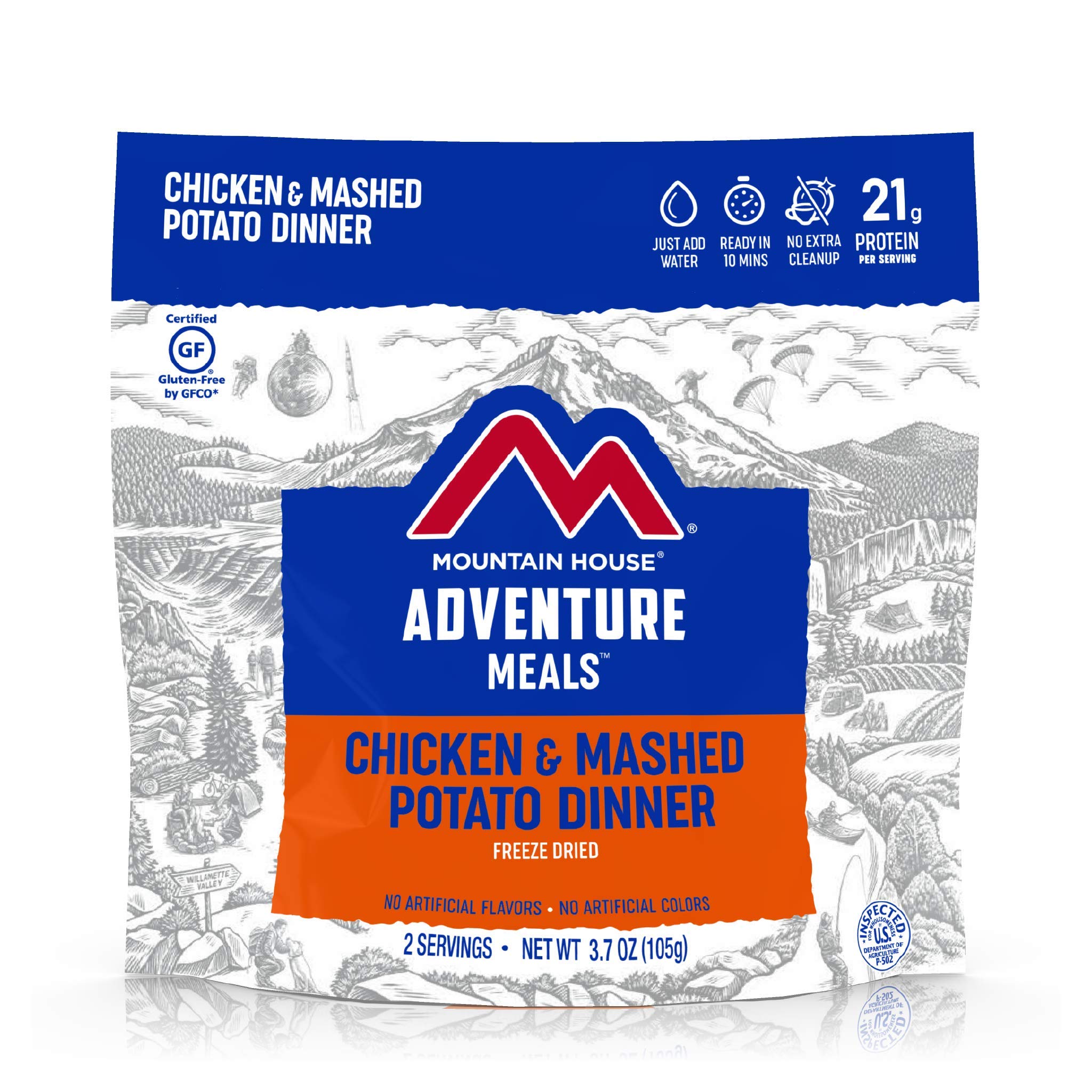
Mountain House remains the benchmark for freeze-dried entrées, and this chicken and mashed potato combo shows why. The chicken pieces rehydrate into tender, recognizable chunks rather than the chalky texture that plagues lesser brands. Mashed potatoes come out creamy and smooth, with herbs and chives adding a gentle savory lift that doesn’t require extra seasoning from your pack.
The pouch contains two servings, making it an ideal single dinner for a hungry hiker or a shared meal for two with moderate appetites. Prep is straightforward — add hot water directly to the pouch, wait less than ten minutes, and eat straight from the bag with zero cleanup. The GFCO-certified gluten-free status means those with celiac concerns can rely on this pouch without second-guessing the label.
Mountain House backs this pouch with a 30-year taste guarantee, and the shelf life is the longest proven in the industry. Some reviews note that the potato flakes can puff out during pouring, so open carefully over your pot. A pinch of garlic powder or black pepper elevates the flavor for those who prefer a bolder profile.
Why it’s great
- Industry-leading 30-year shelf life for long-term storage
- Gluten-free certified by GFCO
- Quick 10-minute rehydration with no cleanup
Good to know
- Potato flakes can be messy if pouch is opened aggressively
- Mild flavor profile; may need added seasoning for some palates
2. Wild Zora Cliffside Coconut Berry Breakfast
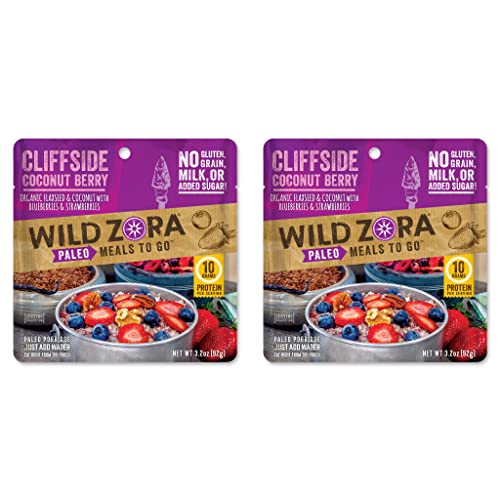
Wild Zora breaks the mold of standard freeze-dried breakfasts by focusing on whole-food ingredients with no added sugar and no grains. This Cliffside Coconut Berry breakfast blends freeze-dried berries, crunchy pecan and walnut halves, and a touch of mango for natural sweetness. The result is a bowl that tastes like a real breakfast, not a reconstituted sugar packet.
The pouches rehydrate well with either hot or cold water, making them versatile for both stove cooking and no-cook mornings when you want to pack up fast. Each serving is packed with recognizable ingredients that you can pronounce — a rarity in the freeze-dried aisle. The brand is woman-owned and hand-crafts each batch in Loveland, Colorado, which adds a layer of quality control that mass-produced pouches often lack.
A few reviewers note that the nut pieces are large halves rather than chopped bits, which can be slightly awkward to eat straight from the pouch. The shelf life of six to nine months is shorter than conventional freeze-dried entrées, so these are best used for active hiking seasons rather than long-term emergency storage.
Why it’s great
- No added sugar or artificial ingredients
- Rehydrates with cold water for no-cook trips
- Grain-free and paleo-friendly
Good to know
- Shorter shelf life compared to Mountain House pouches
- Large nut pieces can be awkward to eat from the pouch
3. Backpacker’s Pantry Granola with Blueberries Almonds & Milk
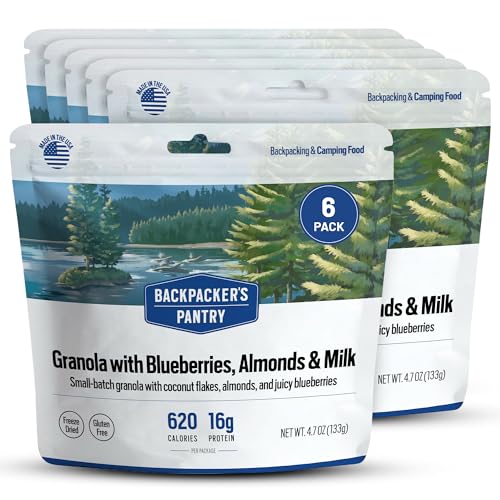
Starting a hiking day with 16 grams of protein sets a strong foundation, and Backpacker’s Pantry delivers exactly that with their Granola with Blueberries, Almonds, and Milk. The freeze-dried milk powder rehydrates into a creamy base that coats the granola clusters, blueberries, and sliced almonds without becoming soupy. It works equally well with hot water for a warm morning bowl or cold water for a quick grab-and-go breakfast.
Each serving is shelf-stable and lightweight, fitting easily into the top of a bear canister or the side pocket of a backpack. The rehydration time is about 15 minutes with hot water, making it one of the longer-prep breakfast options, but the payoff is a hearty bowl that feels closer to a kitchen-cooked meal than a trail compromise. Reviewers consistently praise the flavor as the best in its category, noting that it tastes good even when eaten cold after a long day.
The pouch contains two servings, which works well for a shared breakfast or a single hungry hiker wanting a substantial start. The main trade-off is the mid-range price point — it sits above budget granola options but justifies the cost with higher protein content and premium ingredient sourcing.
Why it’s great
- 16 grams of protein per serving for sustained energy
- Tastes great hot or cold
- Premium freeze-dried milk base, not powdered substitute
Good to know
- 15-minute rehydration is longer than most entrées
- Mid-range price per serving
4. ReadyWise 18 Servings Favorites Box

ReadyWise positions this Favorites Box as an emergency food supply first and a camping meal second, and it excels at that dual role. The box contains three pouches of gourmet entrées like Creamy Pasta & Vegetables, Cheesy Lasagna, and Tomato Basil Soup with Pasta, each rehydrating with hot water in about 15 minutes. The entire kit stacks neatly in a pantry or bug-out bag thanks to its boxed design.
The 25-year shelf life is the standout feature here — this is food you can buy once and forget about until a power outage or an impromptu camping trip. The servings are designed to be filling, though some reviewers note that the listed serving sizes are smaller than expected, especially for hungry teenagers or active adults. The ingredient list includes some processed components, and the sodium content is higher than premium single-pouch brands.
For the budget-conscious prepper who wants a single purchase to cover both emergency storage and occasional trail use, this box offers strong value. The trade-off is that individual pouches lack the refined flavor and texture of specialty backpacking brands like Mountain House or Wild Zora.
Why it’s great
- 25-year shelf life for worry-free storage
- Stackable box design fits in pantry or go-bag
- Multiple entrée options in one purchase
Good to know
- Higher sodium content than premium brands
- Serving sizes may feel small for active hikers
5. Harmony House Dehydrated Vegetable Sampler
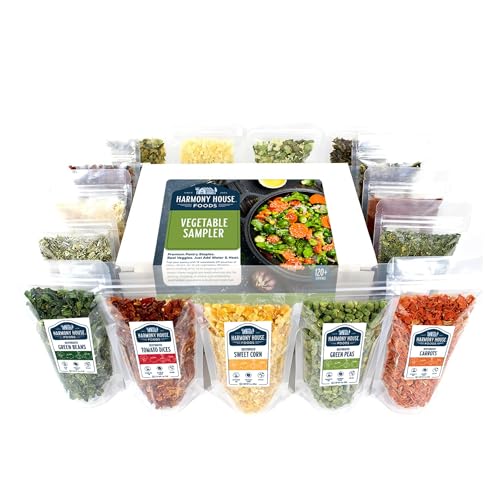
This isn’t a pre-made meal — it’s a tool kit for building your own. Harmony House’s 15-pouch sampler includes broccoli, cabbage, carrots, celery, corn, green beans, jalapeños, leeks, onions, peas, bell peppers, potatoes, spinach, and tomatoes. When rehydrated, the total yield is about 40 cups or 10 quarts of vegetables, giving you the flexibility to customize trail meals or bulk up existing freeze-dried pouches.
The vegetables are dehydrated rather than freeze-dried, which means they require a longer soak or simmer — typically 10 to 15 minutes — to fully reconstitute. Carrots and potatoes take the longest, while spinach and tomatoes soften quickly. The jalapeños arrive with seeds included and pack serious heat, so use them sparingly unless you want a spicy surprise. Many thru-hikers use these pouches to add nutrition and variety to standard ramen or pasta sides, effectively fighting flavor fatigue on long trips.
This sampler is non-GMO, gluten-free, and kosher certified, making it a versatile addition for those with dietary restrictions. The main downside is the lack of organic certification, which some reviewers noted as a missed opportunity. For the DIY-oriented backpacker who wants to control their own seasoning and portion sizes, this is a smart investment.
Why it’s great
- 15 different vegetables for full nutritional variety
- Yields 40 cups rehydrated — excellent value per serving
- Non-GMO and gluten-free
Good to know
- Not organic
- Requires longer soak or simmer than freeze-dried options
FAQ
How much water do I need for a standard freeze-dried pouch?
Can I cold-soak freeze-dried backpacking food?
How do I calculate calories per ounce for trail food?
Final Thoughts: The Verdict
For most users, the best freeze dried backpacking food winner is the Mountain House Chicken & Mashed Potato Dinner because it delivers reliable flavor, a 30-year shelf life, and gluten-free certification that covers the widest range of dietary needs. If you want a clean-ingredient breakfast with no added sugar, grab the Wild Zora Cliffside Coconut Berry. And for building your own trail meals with maximum variety, nothing beats the Harmony House Dehydrated Vegetable Sampler.

Mo Maruf
I created WellFizz to bridge the gap between vague wellness advice and actionable solutions. My mission is simple: to decode the research and give you practical tools you can actually use.
Beyond the data, I am a passionate traveler. I believe that stepping away from the screen to explore new environments is essential for mental clarity and physical vitality.