Our readers keep the lights on and my smoothie glass nicely filled. As an Amazon Associate, I earn from qualifying purchases.
Specs are compiled from manufacturer listings and verified buyer reviews and can change over time — please confirm the key details on the product page before buying.
A Bird of Paradise that refuses to bloom or pushes out pale, curling leaves is almost always hungry. These heavy feeders need a steady diet, and picking the wrong bottle or bag means more frustration and another season of waiting. This guide lines up the best fertilizers for Bird of Paradise — from fast-absorbing liquids to slow-release granules — and shows you exactly which one matches your plant, your schedule, and your soil.
I’m Mohammad Maruf — the founder and writer behind WellFizz. This guide is built by comparing the manufacturers’ published specifications and the patterns across verified customer reviews, so you get each pick’s real strengths and trade-offs instead of marketing spin.
You want those iconic orange and blue Bird of Paradise blooms to show up this season, not stay hidden for another year. The fertilizer for bird of paradise you choose makes that happen — whether you are nursing a single potted Strelitzia indoors or feeding a row of giants in the landscape.
Our Picks at a Glance
How To Choose The Best Fertilizer For Bird Of Paradise
A Bird of Paradise is not a low-maintenance plant. Choosing its food depends on three things: the form of the fertilizer, the numbers on the bag (the N-P-K ratio), and your personal watering rhythm. Here is how to match them.
Liquid vs Granular vs Slow-Release
Liquid fertilizers are the fastest option — they hit the roots immediately, which is great if your plant is looking pale right now. The trade-off is that you need to apply them every week or two. Granular options sit in the soil and break down with water, so they need fewer applications but act slower. Slow-release coated pellets sit in the middle: you apply once and they feed for months, but you cannot easily stop if the plant shows signs of over-fertilizing.
The NPK Ratio
Those three numbers on the label — nitrogen (N), phosphorus (P), and potassium (K) — tell you what the food prioritizes. A higher first number pushes big green leaves, which sounds right for a Bird of Paradise, but going too high on nitrogen can actually suppress blooms. A ratio like 10-4-12 or 4-1-5 is a safer bet that supports leaf mass without starving the flower buds. Balanced formulas like 5-5-2 are gentler for indoor plants fed year-round.
Iron and Micronutrients
Bird of Paradise leaves yellowing between the veins is often an iron deficiency. Some fertilizers add extra iron (like 2% in the BloomBiscus) or a full suite of trace minerals (the Dr. Earth blend). If your plant has been in the same pot for years or you water with tap water, these extras can save a lot of troubleshooting later.
Quick Comparison
| Model | Best For | Type | Size | NPK Ratio | Amazon |
|---|---|---|---|---|---|
| Tropical Plant Fertilizer 32 oz★ Best Overall | Best Overall Value | Liquid | 32 fl oz | 1:32 | Amazon |
| Bird of Paradise Fertilizer 8 ozTargeted Formula | Dedicated Formula | Liquid | 8 fl oz | 1:128 | Amazon |
| Cute Farms Spray | Easiest Application | Liquid Spray | 16 oz (2×8 oz) | Gentle Weekly | Amazon |
| BloomBiscus 4LB Granules | Blooms & Iron Boost | Granules | 4 lb | 10-4-12 | Amazon |
| Espoma Palm-Tone 4 lb | Organic Gardening | Granules | 4 lb | 4-1-5 | Amazon |
| Dr. Earth Exotic Blend 1 lb | Premium Organic | Powder | 16 oz | 5-5-2 | Amazon |
| Exotica Tropicals Slow-Release 4 LB | Set-and-Forget | Slow-Release Granules | 5 lb | Nursery Grade | Amazon |
In‑Depth Reviews
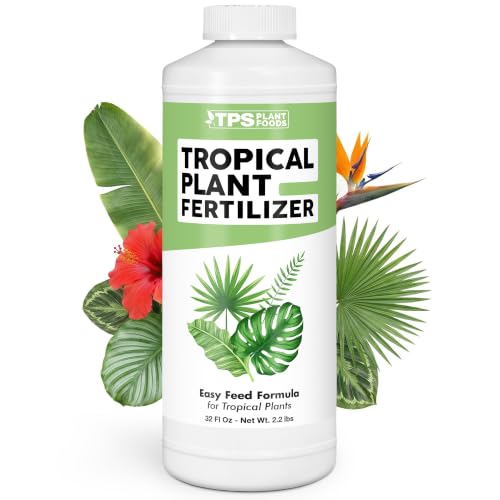
1. Tropical Plant Fertilizer – Liquid Plant Food for Bigger Leaves, Lush Growth & Stronger Roots, 32 oz
Our pick — over 4.5★ from 250+ verified ratings; the strongest balance of quality and price.
The concentrated liquid that stretches a single bottle into months of feeding.
This crowd-favorite delivers a massive 32 fluid ounces of concentrated tropical plant food — four times the volume of most dedicated Bird of Paradise bottles. The mixing ratio is a sharp 1:32 (or about 1:1000 in metric), meaning one tablespoon per gallon of water goes a long way. Buyers report that it “really helped all my tropical plants” and that their plants show visible growth every week for two months.
The thing everyone raves about here is new leaf production — plant growth is the most-discussed aspect by a wide margin. It is made in the USA and formulated specifically for large-leaf tropicals like Bird of Paradise, Sagos, and palms. At 2 pounds for the full bottle, it is light enough to handle easily but dense enough to last.
The only honest hesitancy: because it is a concentrate, you do have to measure and mix each time. It is not grab-and-go. But the payoff is that a single purchase keeps feeding for many weeks, and the results speak for themselves — “my plants are thriving” appears repeatedly in the feedback.
Why It Wins
- 32 fl oz of concentrated liquid — huge value compared to 8 oz rivals
- Simple 1 tbsp per gallon mixing
- Plants show weekly visible growth for two months
- Made in the USA
The Trade-Off
- Requires measuring and mixing each use
- No instant spray option for quick application
Reach for this if: you want the best combination of price-per-feeding and proven results — this is the volume champion that does not compromise on effectiveness.
Look elsewhere if: you prefer a single-step spraying routine and do not want to mix.
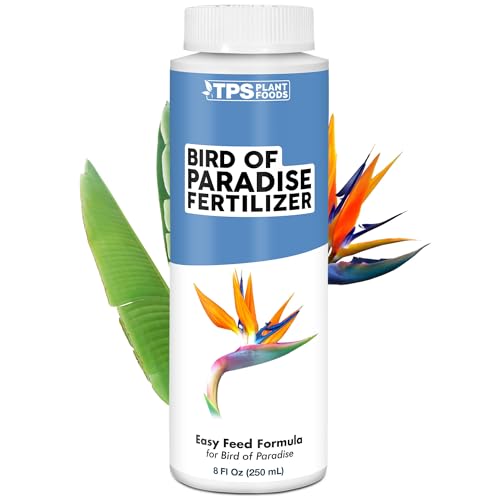
2. Bird of Paradise Fertilizer – Liquid Plant Food for Bigger Tropical Leaves, Stronger Roots & Healthy Upright Growth, 8 oz
The species-specific feed that owners credit for taller stems and larger leaves in three months.
This is the one formula designed by name for Bird of Paradise — not “tropical plants” in general, but Strelitzia specifically. The mixing ratio is a very dilute 1:128, compared to 1:32 for the TPS concentrate, making it gentler for frequent weekly feeding. A Zone 9 owner who used it weekly for three months reported “leaves larger, stems taller, plant healthier” — a precise testimonial that matches the product’s claim.
Effectiveness is the standout here, with twenty owners mentioning it as the top reason they like it, closely followed by overall plant health. One year-long user says it “has kept my plants healthy” through every season. At 8 fluid ounces, it covers 1-3 plants or a few square feet of garden space, and the bottle includes clear indoor and outdoor measurement guidelines so you do not guess.
The best value comparison is clear: the TPS 32 oz bottle holds 32 fluid ounces, while this one holds 8 fluid ounces, but this one is formulated specifically for Bird of Paradise and has a gentler ratio. If you have just one or two plants and want a food made exactly for them, this is the pick.
Made for this plant: the NPK ratio and dilution are calibrated for Bird of Paradise specifically, not a generic tropical blend. Owners confirm taller stems and larger leaves within 12 weeks.
One real limitation: the 8 fl oz bottle is small — heavy feeders with multiple large plants will go through it faster than the 32 oz alternative.
Best if: you want a targeted, species-specific liquid that owners consistently credit with visible structural growth.
skip it if: you need a high-volume jug for a garden full of tropicals — the concentrate above gives you more for the money.
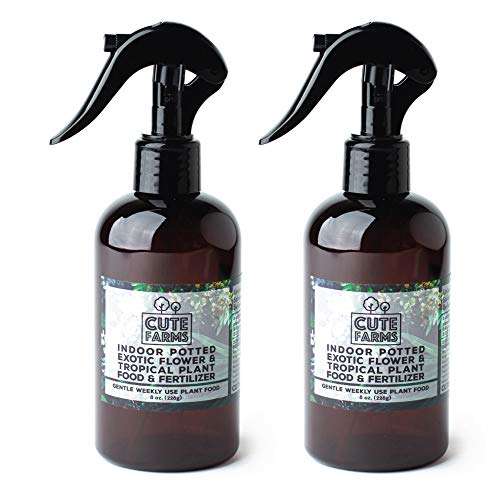
3. Cute Farms Indoor Potted Exotic Flower & Tropical Plant Fertilizer | Gentle Weekly Use Formula Plant Food (Two – 8 oz. Spray Bottles)
The pre-mixed spray that erases measuring, mixing, and mess.
This one is built for the person who wants to fertilize without thinking. It arrives as two 8 oz bottles — one sealed with the concentrated formula, one empty sprayer — and you simply pour and mist. The ultra-fine mist sprayer covers leaves, roots, and soil without drenching, and each bottle is said to last over a year with weekly use. The formula is gentle enough that owners use it on calatheas, airplants, and terrariums without burning.
The biggest praise here is the mist itself: the fine spray and the lock feature on the trigger make it easy to apply evenly without waste. One owner noted it is perfect for “terrariums/houseplants” where a heavy pour would displace soil. The gentle weekly formula means you are less likely to over-fertilize, but the trade-off is that growth results appear more slowly — “only been using for 2 weeks so we will see” is a typical early comment.
If you have a single potted Bird of Paradise indoors and you want a low-commitment routine that removes all guesswork, this is your option. The included tropical plant care guide is a bonus.
Easiest in the lineup: no measuring, no mixing, no cleanup — just mist and go. The gentle formula suits houseplants that are sensitive to salt buildup.
The catch: results are slower than with concentrated liquids, and the total volume is only 16 oz for both bottles combined.
Grab this if: convenience is your top priority and your Bird of Paradise is a single indoor specimen.
pass on it if: you need heavy feeding for a large or mature plant that demands concentrated nutrition.
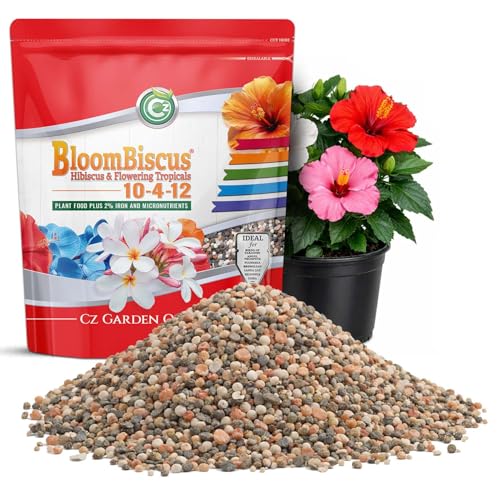
4. BloomBiscus® Hibiscus 4LB Plant Food – Made in USA – 2% Iron Fertilizer for Bird of Paradise, Angel Trumpets, Plumeria, Bromeliads, Canna Lily, Heliconia, Ixora, & Flowering Tropicals!
The granular powerhouse that pushes buds “literally the next day” according to stunned owners.
This 10-4-12 NPK formula with 2% iron is the most bloom-focused entry on this list. The nitrogen is balanced lower than many general fertilizers, while the potassium is higher — a ratio that favors flower production over endless foliage. Owners mention that their hibiscus went from 1-2 blooms a day to 4-8 within a week, and Bird of Paradise that “had not bloomed before” started pushing flowers after one application.
At 4 pounds in a resealable pouch, it is a granular product, not water-soluble — a crucial detail that some buyers initially miss. You sprinkle it around the drip line and water it in. The iron content is a real asset for Bird of Paradise, which often shows yellow leaves from iron deficiency in alkaline or old potting soil. The pouch is easy to pour and reseal, though no scoop is included, so you will need your own measuring tool.
The comparison with the top pick is straightforward: this is granular, not liquid, and it is designed for bloom production rather than general leaf growth. If your Bird of Paradise is all leaves and no flowers, this is the first thing to try.
Bloom-Boosting Edge
- 10-4-12 ratio with 2% iron targets flowers
- 4 lb bag feeds many plants for months
- Customers note buds appearing within 24 hours
- Made in the USA
Know Before You Buy
- Granular, not water-soluble — must be sprinkled and watered in
- No measuring scoop included
Choose this for: a Bird of Paradise that refuses to bloom — the iron and high-K ratio are exactly what triggers flowers.
Not for: anyone who prefers the convenience of a liquid concentrate or a spray.
5. Espoma Organic Palm-Tone 4-1-5 Natural & Organic Plant Food; 4 lb. Bag; Organic Fertilizer for Palm, Hibiscus, & Tropical Plants
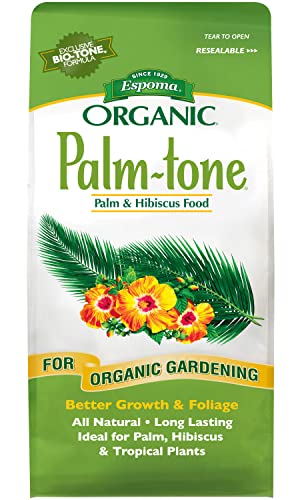
The family-run organic formula that has greened up palms and tropicals for decades.
Espoma has been making organic fertilizers since 1929, and Palm-Tone is their dedicated blend for tropical plants. The 4-1-5 analysis is low and slow — it will not burn roots, but it takes consistent application to see results. The formula includes 5% calcium and is enhanced with their proprietary Bio-tone microbes, which help break down organic matter in the soil.
This is an OMRI-approved organic input, meaning it meets the standards for certified organic production. Owners use it on palms, hibiscus, and tropicals with consistent praise: “it greens up my palms and they are thriving” and “I get tons of blooms on my hibiscus all season long.” The application schedule is simple — every three months for palms, monthly for tropicals during the growing season — and you apply it dry around the drip line and water it in.
The honest note: one owner warns “KEEP AWAY FROM DOGS” because the organic ingredients apparently smell appealing to pets. If you have a curious digger, store the bag securely.
Proven organics: Espoma’s century of reputation and the Bio-tone additive give this an edge for gardeners who prioritize natural inputs over speed.
One real concern: the 4-1-5 ratio is relatively low in nitrogen, so leaf growth may be slower than with a higher-N liquid concentrate.
Ideal for: organic growers who want a slow, steady feed without synthetic chemicals and value a brand with decades of trust.
Think twice if: your Bird of Paradise is struggling and needs an immediate nutrient boost — a liquid concentrate will act faster.
6. Dr. Earth Organic & Natural MINI Exotic Blend Palm, Tropical & Hibiscus Fertilizer ( 1 lbs )
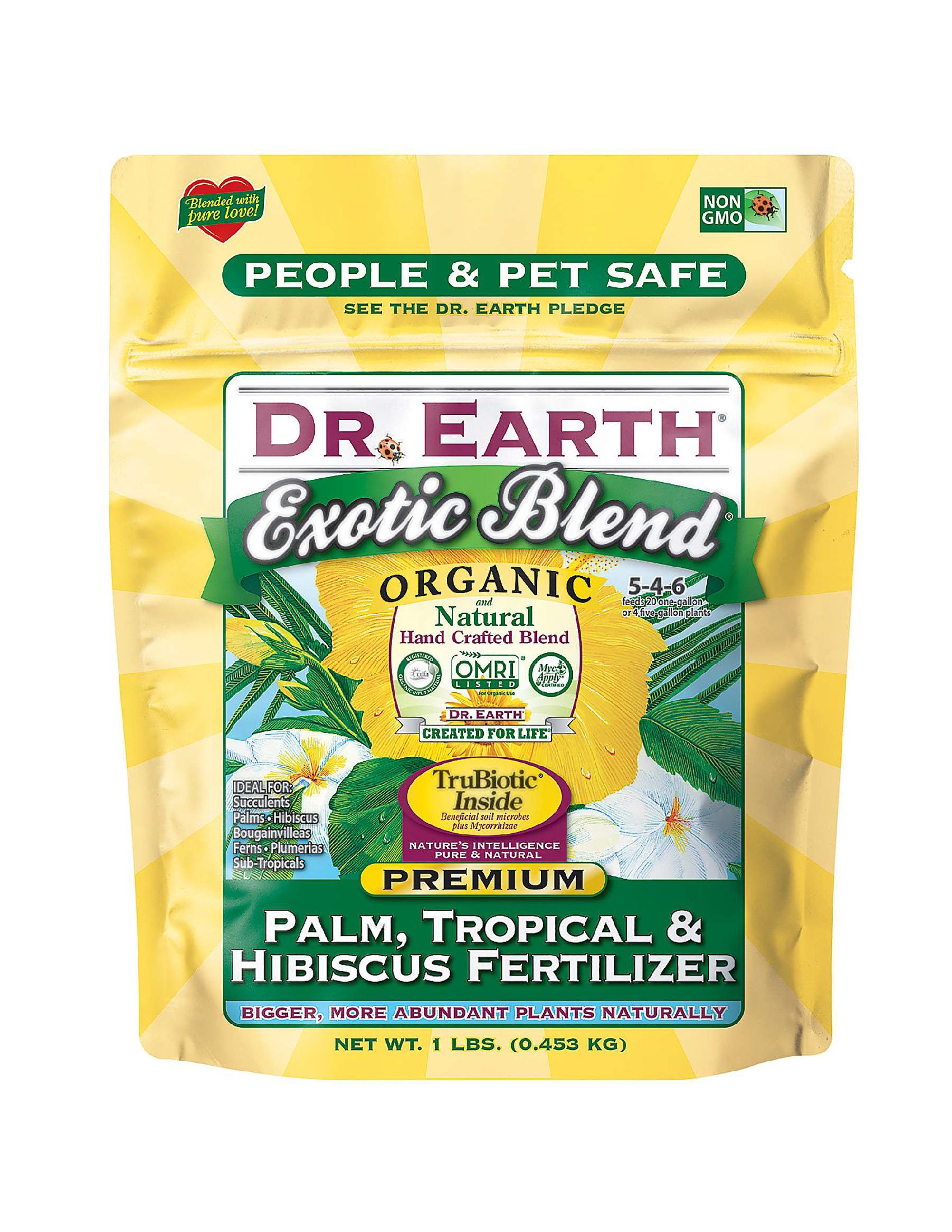
The only Non-GMO Project Verified fertilizer in the US, handcrafted from human-grade ingredients.
Dr. Earth’s Exotic Blend is in a purity class of its own. It carries OMRI, OIM, CCOF, and Non-GMO Project Verified certifications, meaning every ingredient is traceable to a high standard. The 5-5-2 NPK is a balanced, gentle ratio suited for year-round indoor feeding, and the powder form is enriched with multi-minerals, proteins, carbohydrates, humic acids, and trace elements.
Reviewers point out that it “saved dying plants” and that bougainvillea started blooming one week after application. At 1 pound, the bag is compact — it covers less ground than the 4-pound options above, but the quality per ounce is higher. One experienced grower describes it as more of a “root stimulator and soil enhancer” than a straight fertilizer, using it alongside a 20-20-20 blend for a complete program.
The powder form can blow away in wind if applied carelessly, and the dark, sawdust-like texture surprises some buyers who expect granules. But for someone who wants the cleanest, most transparently sourced option available, this is the one.
Highest purity: Non-GMO Project Verified and OMRI-listed — no synthetic chemicals, no GMO-infested chicken manure, no toxic ingredients.
The trade-off: the 1-pound size is small for multiple large plants, and the powdery texture needs careful application.
Best for: purists who want organic certification with full ingredient transparency and are happy to supplement with other feeds.
Not ideal for: budget-minded buyers who need bulk volume — the 4 lb granules above offer more for less.
7. Professional Nursery Grade Heliconia Fertilizer 5 LB 6 Month Slow Release Bird of Paradise Plant Food
The professional-grade slow-release pellet that feeds your Bird of Paradise for half a year.
This is the set-and-forget option. It uses coated slow-release pellets that provide consistent nutrition for 5-6 months from a single application, plus a small percentage of instant-release fertilizer for a quick green-up right when you apply. It includes all essential micronutrients — magnesium, manganese, iron — and is the same grade used by large-scale production nurseries in Florida.
At 5 pounds, it is the heaviest bag on this list, and it targets Heliconia and Bird of Paradise specifically. One owner reports “excellent results” and recommends it for Bird of Paradise and other tropicals. The coating technology means you do not have to remember a weekly or monthly schedule — just apply once in spring and once in fall, and the pellets release nutrients with each watering.
The honest feedback is that a few owners wish for clearer dosage instructions on the bag, and because it is slow-release, you cannot adjust quickly if the plant shows signs of deficiency. But for sheer convenience and nursery-grade reliability, this is the hands-off champion.
Feeds itself: coated pellets release over 5-6 months, meaning two applications per year cover the full growing season.
The reality: slow-release means you trade control for convenience — if your plant needs a quick fix, this will not provide it.
Pick this if: you have multiple outdoor Bird of Paradise plants and want to fertilize twice a year and forget the rest.
Avoid if: you prefer to monitor and adjust feeding week by week — slow-release takes that flexibility away.
Understanding the Specs
NPK Ratio
The three numbers on any fertilizer bag stand for nitrogen (N), phosphorus (P), and potassium (K). For a Bird of Paradise, a balanced ratio like 5-5-2 supports both leaf growth and root health without forcing too many leaves at the expense of flowers. A higher potassium number (the third digit) tends to encourage blooming. Ratios like 10-4-12 or 4-1-5 are common for tropical flowering plants because they keep the foliage in check while pushing energy toward flower stalks.
Liquid vs Granular vs Slow-Release
Liquid fertilizers are absorbed by the roots within hours, making them ideal for a quick pick-me-up or for plants growing in small pots where nutrients wash out fast. Granular products break down slowly each time you water, so you apply less often. Slow-release coated pellets sit in the soil and meter out food over months — the easiest option for outdoor gardens or large containers where weekly feeding is impractical.
FAQ
How often should I fertilize my Bird of Paradise during the growing season?
What happens if I over-fertilize my Bird of Paradise?
Can I use a general houseplant fertilizer on Bird of Paradise?
Should I use liquid or granular fertilizer for a potted Bird of Paradise?
Does my Bird of Paradise need a fertilizer with extra iron?
Can I use the same fertilizer on my Bird of Paradise and my hibiscus?
How long does it take to see results from a new fertilizer?
What is the best way to apply granular fertilizer to a Bird of Paradise?
Final Thoughts: The Verdict
For most people, the fertilizer for bird of paradise winner is the Tropical Plant Fertilizer because it delivers 32 fluid ounces of concentrated liquid at a value that beats every other option, and owners confirm weekly visible growth. If you want a formula designed exactly for the species, grab the Bird of Paradise Fertilizer — it has the gentler ratio and a track record of taller stems and larger leaves in three months. And for the gardener who wants to apply once and forget about feeding for half a year, the Exotica Tropicals Slow-Release is the one to reach for.
How We Picked
We do not accept paid placement. Every pick is matched to a real buyer and a real use-case; we do not hands-on test units.
Sources & Methodology
Specifications: manufacturer listings and product documentation. Review insights: verified customer reviews, as of July 2026. Pricing: not shown on this page (it changes often); check the current price via the retailer link.
As an Amazon Associate, WellFizz earns from qualifying purchases. This does not affect which products we feature.
Related Guides

Mo Maruf
I created WellFizz to bridge the gap between vague wellness advice and actionable solutions. My mission is simple: to decode the research and give you practical tools you can actually use.
Beyond the data, I am a passionate traveler. I believe that stepping away from the screen to explore new environments is essential for mental clarity and physical vitality.