Our readers keep the lights on and my smoothie glass nicely filled. As an Amazon Associate, I earn from qualifying purchases.
Specs are compiled from manufacturer listings and verified buyer reviews and can change over time — please confirm the key details on the product page before buying.
Begonias are notoriously fussy about food — give them the wrong nitrogen-heavy mix and you end up with giant leaves and zero blooms. The trick is a formula that leans hard on the middle number (phosphorus) to push flower production without scorching tender roots. This guide looks at nine contenders built for exactly that balancing act, from spray-on mists to concentrated gallon-makers.
I’m Mohammad Maruf — the founder and writer behind WellFizz. This guide is built by comparing the manufacturers’ published specifications and the patterns across verified customer reviews, so you get each pick’s real strengths and trade-offs instead of marketing spin.
Whether you are growing Rex, Wax, or Tuberous varieties indoors or out, finding the right fertilizer for begonias depends on matching the NPK ratio and application style to your plant’s growth stage and your own feeding habits.
Our Picks at a Glance
How To Choose The Best Fertilizer For Begonias
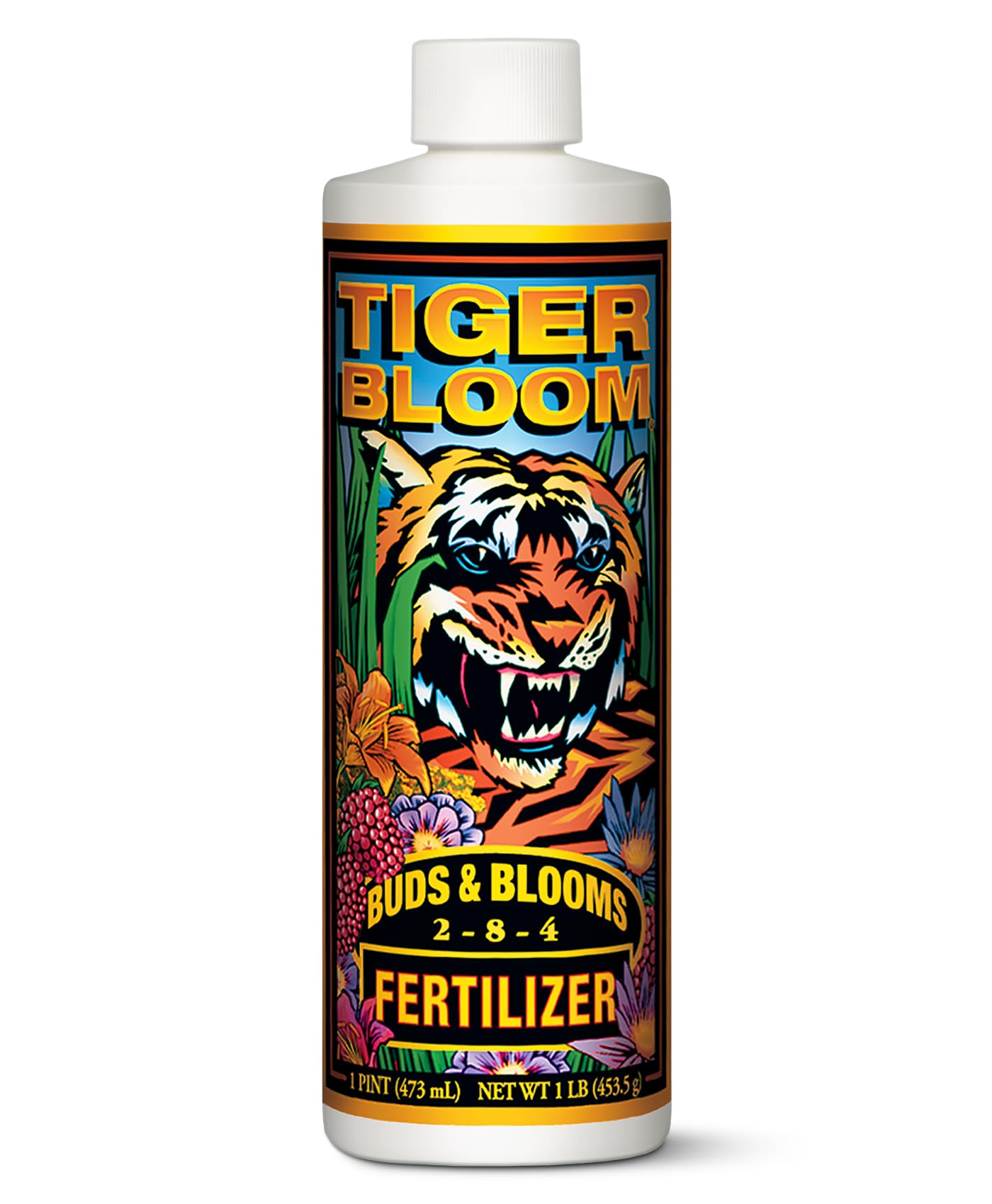
Begonias are light feeders compared to tomatoes or roses, which means a balanced all-purpose 20-20-20 will often burn them or push all energy into leaves at the expense of flowers. Look for a formula where the phosphorus number (the middle one) equals or exceeds the nitrogen number (the first one). A 2-8-4 ratio like FoxFarm Tiger Bloom is a classic pick because it delivers exactly that bloom-stage push without overwhelming the root system. A few other points to keep on your radar:
NPK Ratio — The Flowering Recipe
The three numbers on the bottle represent nitrogen (N), phosphorus (P), and potassium (K). Nitrogen drives green leaf growth, phosphorus fuels root development and flower formation, and potassium supports overall plant health. For begonias, you want a medium or high middle number — something in the 8 to 15 range — while keeping the first number lower to avoid leggy growth with few blossoms. A 2-8-4, a 1-0.03-13, or a 2-15-15 all fit the brief depending on whether your plant is currently in a growth or flowering phase.
Liquid vs. Granular vs. Spray
Liquid concentrates (like the FoxFarm and TPS Nutrients options) give you precise control over dilution and are quickly absorbed by the roots. Ready-to-spray mists, like the Gardenera Superfood Spray Mist, are the easiest entry point — just shake and mist the leaves and soil. Granular slow-release feeds are less common for indoor begonias because the release rate can spike and burn the shallow root system in a pot. Stick with liquids or sprays for predictable feeding.
Organic vs. Synthetic Sources
Organic ingredients like kelp meal, worm castings, bat guano, and mycorrhizae (the Gardenera Organic Superfood and the Gardenera Premium Seaweed & Kelp) improve soil microbiology and moisture retention over time. Synthetic formulas deliver nutrients in a form the plant can use instantly, which is great for a quick correction when leaves look pale. Both work on begonias — choose organic if you want to build long-term soil health, or synthetic if you need fast, predictable results during a bloom push.
Quick Comparison
| Model | Best For | NPK Ratio | Size | Application Style | Amazon |
|---|---|---|---|---|---|
| FoxFarm Tiger Bloom★ Best Overall | Bloom-stage push | 2-8-4 | 1 Pint | Mix into water | Amazon |
| Gardenera Superfood Spray MistBest for Quick Recovery | Quick foliar relief | 1-0.03-13 | 8 oz | Ready-to-spray | Amazon |
| Genius+ Easy Squirt PumpBest Indoor Convenience | Indoor convenience | 10-4-5 | 8 oz (makes 96 gal) | Pump dispenser | Amazon |
| TPS Begonia Fertilizer | Begonia-specific formula | 1:0:0 | 32 oz | Mix into water | Amazon |
| TPS 10-10-10 Vegetable | Balanced all-purpose | 10-10-10 | 32 oz | Mix into water | Amazon |
| TPS Peony Fertilizer | Sturdy stems and big flowers | — | 32 oz | Mix into water | Amazon |
| Gardenera Premium Seaweed & Kelp | Organic long-term health | — | 32 oz (makes 180 gal) | Mix into water or spray | Amazon |
| Yardi Fruit & Bloom | Bloom and fruit set | 2-15-15 | 32 oz | Mix into water | Amazon |
| MARPHYL Marine Phytoplankton | Broad organic feeding | — | 2 liters (pack of 2) | Mix into water (1:20) | Amazon |
In‑Depth Reviews
1. FoxFarm Tiger Bloom (2-8-4) — 1 Pint
Our pick — over 4.5★ from 7,000+ verified ratings; the strongest balance of quality and price.
The bloom-stage specialist that sends a begonia into flower mode without the leaf explosion.
FoxFarm Tiger Bloom is the crowd-favorite for a reason — it holds a 4.8-star average across thousands of ratings, and the most-praised quality is simply “Quality” (268 mentions), followed closely by “Effectiveness” (217). The 2-8-4 ratio is the key: low nitrogen means your Rex or Wax begonia won’t waste energy on giant leaves, while the phosphorus push (8) and potassium kick (4) drive flower buds and strengthen stems. You mix 2-3 teaspoons per gallon of water every other watering — a simple enough rhythm that owners consistently describe as easy to apply.
Buyers report that the balanced nitrogen prevents blossom end rot in tomatoes while providing phosphorus for flowering and potassium for overall plant health. The formula works in both soil and hydroponic setups, so you can switch systems without changing fertilizer. It is a concentrated liquid, so you need a measuring spoon and watering can — not a spray-and-go product.
Its edge over competitors is proven reliability. The TPS Begonia Fertilizer below is also excellent, but Tiger Bloom has roughly 7,000 more ratings at a higher score — real-world validation you cannot fake. If results matter most, this is the bottle to reach for.
What owners love
- Proven 2-8-4 ratio pushes flowering hard
- Works in soil and hydroponics equally well
- High-quality formula — owners call it the best they have used
Who should think twice
- Requires mixing with a measuring spoon — not a ready-to-use spray
- Low pH formula means it is designed for the bloom phase, not gentle enough for a very young cutting
Best for the dedicated grower: if you track your feeding schedule and want maximum blooms from your begonias.
skip it if: you want a grab-and-mist option for a single pot on a desk.
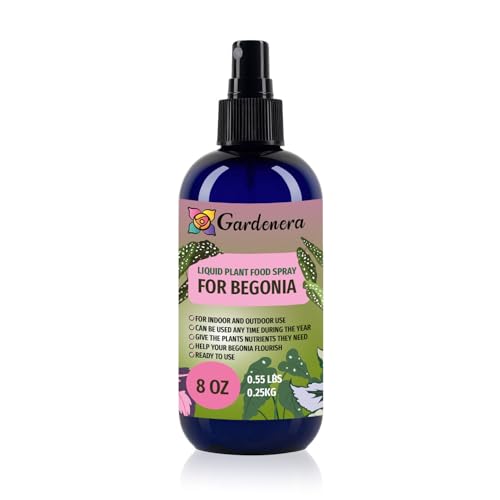
2. Gardenera Professional Begonia Superfood Spray Mist — 8 oz
A foliar spray that pulls a stressed begonia back from the brink with a single misting routine.
This is the product for the moment you look at your begonia and think “it is not dead yet, but it is not happy either.” Gardenera’s Superfood Spray Mist comes pre-mixed in a spray bottle — you shake it, hold it about 12 inches from the leaves and stems, and mist. The NPK ratio of 1-0.03-13 is extremely low in nitrogen and very high in potassium, which is an unusual profile specifically designed to enhance leaf color and stimulate flower blooms without forcing new leaf growth.
Plant growth is the #1 praised aspect here (22 mentions), and the real-world evidence is hard to argue with: as buyers put it, the spray revived a dying Venus Fly Trap that had only four leaves left, producing a stem and a flower in two weeks. Another owner reports their Hoyas started blooming for the first time in four years after using this mist.
Unlike the FoxFarm Tiger Bloom — which requires mixing — this spray is as close to zero-effort as fertilizer gets. The catch is the bottle size: at 8 fluid ounces it is small, and the formula is not a concentrated gallon-maker. A heavy-feeding collection of pots will go through it faster than the liquid concentrates. But for a single desk begonia or a small shelf of Rex varieties, this is the most forgiving entry point in the list.
Rescue tool for a single plant: if your begonia is struggling or you just want the easiest possible feeding routine, this spray mist is the safest bet. pass on it if you have a large collection — you will want a concentrate that makes gallons instead.
Perfect for the reactive gardener: grab this when a plant looks sad and you need instant, gentle intervention.
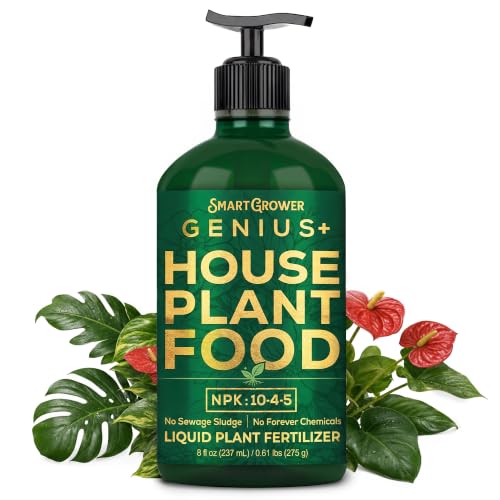
3. Genius+ Easy Squirt Pump — 8 oz (Makes 96 Gallons)
A precise pump that eliminates the measuring spoon entirely — one squirt per gallon, and you are done.
Genius+ is built specifically for indoor environments, and the team behind it made a point of excluding “biosolids, sludge, or PFAS” — the unwanted additives common in cheaper fertilizers. The 10-4-5 NPK ratio is higher in nitrogen than the bloom-focused picks above, which makes it better suited for begonias in a heavy-leaf growth phase or for varieties like Angel Wing begonias where you want both foliage and flowers. Plant growth is the top-mentioned aspect here (12 mentions), and owners note it revives struggling ficus and monsteras quickly.
The standout feature is the built-in dosing pump: one squirt delivers the perfect amount to mix with a gallon of water. With 8 ounces, the bottle makes up to 96 gallons of liquid fertilizer — extraordinary value for the money. A half-teaspoon per gallon mixing ratio means you use very little each time, and the formula has no color or smell, so it blends invisibly into your watering routine.
The 10-4-5 ratio is not ideal for a mature begonia in full bloom mode. The FoxFarm Tiger Bloom (2-8-4) will push more flowers. But if you have a mixed collection of indoor plants — monsteras, pothos, snake plants, plus your begonias — this one feed works for all of them, which is a genuine convenience advantage.
Smart features
- Pump dispenser eliminates measuring spoons
- 96-gallon yield from one small bottle
- Clean formula with no sludge or PFAS
Know before you buy
- 10-4-5 is foliage-heavy — not the best for pushing max flowers on mature begonias
- Some bottles arrived with a leaky pump seal
Best for the mixed houseplant collection: this is your one-bottle-fits-all solution for indoor plants. Reach for the FoxFarm or Yardi instead if your begonias are entering a bloom push and need a phosphorus-heavy jolt.
4. TPS Begonia Fertilizer — 32 oz
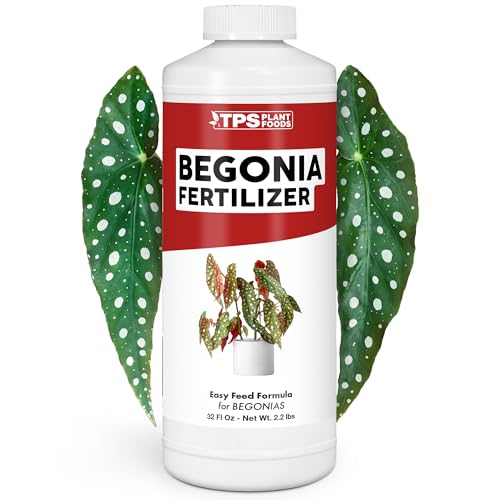
A liquid blend made with begonias specifically in mind — not a repurposed vegetable or rose feed.
Most “houseplant fertilizers” are generic mixes. TPS labeled this one for begonias directly, and the reviews back up the specialization. One owner reports visible growth within the first month on a Begonia Maculata. Another describes a Rex begonia that was down to its last leaves showing a deeper metallic sheen after only three applications. The 32-ounce bottle is a quart-sized concentrate, and multiple owners note that it is concentrated enough to last an entire season without repurchasing.
The formula is described as high-quality liquid tailored for begonias, though the listed mixing ratio is given as “1:0:0” — which is likely a data entry quirk rather than an actual nutrient profile. What matters is the outcome: owners consistently say it promotes vibrant blooms and strong foliage growth in both indoor pots and outdoor garden beds.
Versus the FoxFarm Tiger Bloom, the TPS Begonia Fertilizer is a newer product with only 53 ratings against Tiger Bloom’s 7,200+, so the real-world testing base is thinner. But for an owner who wants a fertilizer that says “Begonia” on the label, this is the most direct match in the list.
Best for the label-loyal owner: if you prefer a fertilizer made specifically for your plant type, this is it. The concentrated formula lasts a long time and delivers fast visual results. The smaller review base means you are buying on promise rather than multi-year proof, but the early evidence is strong.
5. TPS 10-10-10 Fertilizer for Vegetables — 32 oz
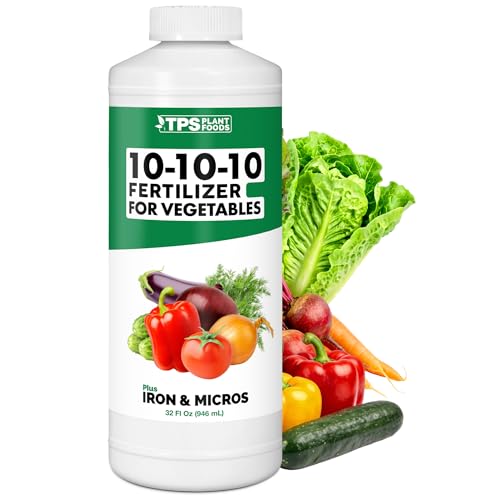
A classic balanced feed with added iron — ideal when a begonia shows pale leaves needing a broad correction.
The TPS 10-10-10 is not a begonia-specific fertilizer, but its equal ratio of nitrogen, phosphorus, and potassium makes it a safe starting point for a gardener who has multiple plant types. The inclusion of iron and micronutrients means it will help with the yellowing leaves (chlorosis) that Rex begonias sometimes develop when they are lacking trace elements. Effectiveness is the top-mentioned aspect here (11 mentions), and owners mention it revived nitrogen-starving plants and accelerated growth in struggling basil.
For begonias, the 10-10-10 ratio is more nitrogen than the ideal bloom-boosting formula, but it works well during the early growth season when you want the plant to build strong leaves before the flower cycle begins. The 32-ounce bottle treats a large area — the mixing ratio is 1 to 128 or 2 to 128 ounces per gallon of water, giving you significant value for the price.
Compared to the TPS Begonia Fertilizer above, this product has a broader review base (165 ratings) and is proven on cactus, succulents, and vegetables, which tells you it is gentle enough for a wide range of plants. The trade-off is that for a begonia in full bloom mode, the 2-8-4 FoxFarm or the 2-15-15 Yardi will outperform it on flower count.
Best for the generalist grower: if your garden includes vegetables, herbs, and begonias, this single bottle covers everything. Dedicated begonia growers should stick with a phosphorus-heavy formula like FoxFarm or Yardi for the blooming season.
6. TPS Peony Fertilizer — 32 oz
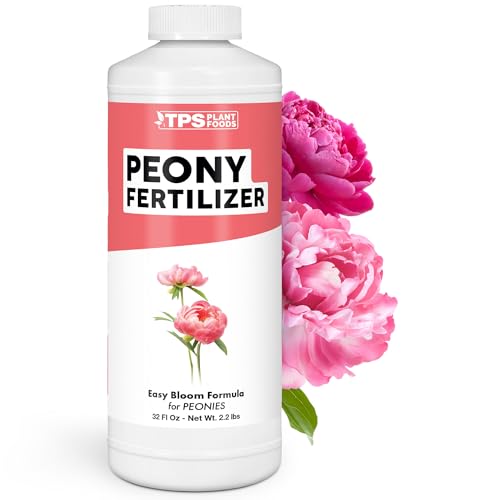
A flowering-plant formula that delivers the same structural support begonias need for upright growth.
Peonies and begonias share a need for sturdy stems that can hold up heavy flowers without drooping. TPS designed this fertilizer specifically for peonies, but the balanced nutrition for “strong stems, healthy foliage, and improved flower development” applies equally to larger begonia varieties like Dragon Wing or Tuberous types. Customers note that peony bushes doubled in size and produced many buds after just two applications spaced two weeks apart before budding.
The formula is designed not to stress root systems — a major advantage for begonias with their fine, shallow roots. The 32-ounce bottle weighs 2 pounds and is made in the USA. At a 4.8-star average from 72 ratings, the owner satisfaction is extremely high, with the most frequent praise going to how easy it is to use and how well it works for flowering plants.
The obvious caveat is that this fertilizer is not labeled for begonias. The TPS Begonia Fertilizer (product 4) is the safer bet for a buyer who wants a guaranteed match. But if you already grow peonies, you can confidently use this on your begonias with the same results.
Best for the multi-flower gardener: if you grow peonies, roses, or other flowering plants alongside your begonias, this formula does double duty. The 4.8-star rating and owner reports of dramatic size increases make it a very strong pick for any begonia that needs structural support for heavy blooms.
7. Gardenera Premium Seaweed & Kelp Superfood — 32 oz (Makes 180 Gallons)
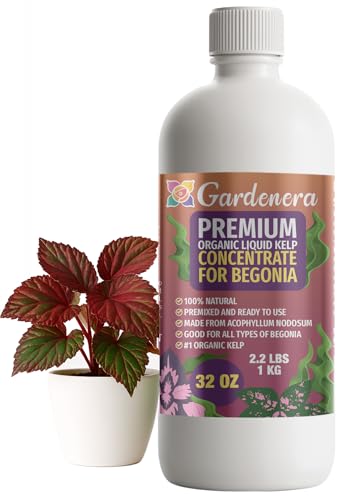
An organic kelp concentrate that makes 180 gallons from a single bottle — the biggest output in this roundup.
Gardenera’s kelp superfood is made from Ascophyllum Nodosum seaweed, delivering natural growth hormones, amino acids, and trace minerals that begonias love for leaf color and root development. Plant growth is the top-mentioned aspect here (16 mentions), and owners support it with real-world results: one reported that their aloe “became enormous” after switching to this exclusively, and another noted that young banana plants survived a brutal winter after regular feeding. The formula is safe, non-toxic, and gentle enough for regular use on begonias without burning roots.
At a 1:562.5 mixing ratio, this is among the most concentrated organic fertilizers available — the 32-ounce bottle produces 180 gallons of ready-to-use nutrient solution. That makes it the best value for money on a per-gallon basis for anyone with a large plant collection. It works as both a soil drench and a foliar spray, which gives you flexibility depending on your begonia’s needs.
Compared to the Gardenera Superfood Spray Mist (product 2), this is a raw concentrate that requires mixing — you lose the grab-and-go convenience but gain massive yield. The product is organic but has a natural seaweed smell that some owners notice, though it fades quickly after application.
Why it stands out
- 180 gallons from one bottle — exceptional value
- Organic kelp improves soil microbiology over time
- Safe for regular use — gentle enough for sensitive plants
The practical limits
- Concentrate requires mixing — not a ready-to-spray product
- Natural seaweed smell may be noticeable during mixing
Best for the organic-minded collector: if you want to feed your begonias without synthetic additives and have many plants to care for, this is the most economical organic choice. It does not provide the quick bloom-stage phosphorus push of the FoxFarm or Yardi formulas, so pair it with a bloom booster during the flowering season.
8. Yardi Fruit & Bloom Fertilizer — 32 oz (2-15-15)
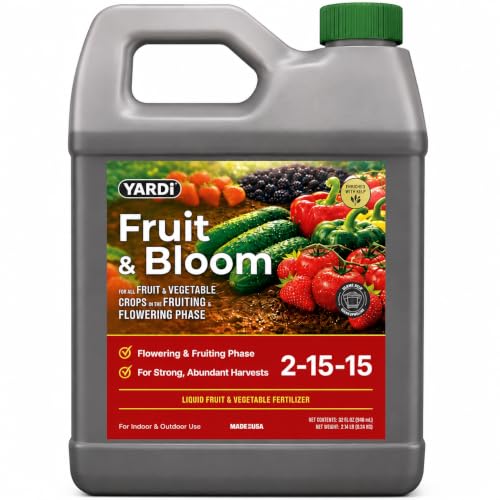
A 2-15-15 low-nitrogen liquid that tells your begonia “it is time to bloom, not grow leaves.”
Yardi’s Fruit & Bloom has the highest phosphorus and potassium punch in this lineup — 2-15-15 — which makes it a dedicated bloom booster for when your begonia has already built its leaf structure and you want a flower explosion. The low nitrogen (2) means zero risk of leafy lankiness. It is designed for the critical flowering and fruit set stage, and the owner experience backs that up: one review notes it works especially well on collards, peppers, and tomatoes, and multiple owners emphasize that it is “very concentrated” and requires deep watering to avoid burning.
The formula is intentionally low in nitrogen and high in phosphorus and potassium — exactly what plants need once they shift to blooming and fruiting. Owners call it a “blossom booster fertilizer that does what it says.” Apply 1 teaspoon per gallon biweekly for a heavy flowering response. The 32-ounce bottle lasts a long season.
The catch is the concentration — it is potent, and if you do not water it in deep enough, it will burn your plants. The brand itself warns about this in product details. Compared to the FoxFarm Tiger Bloom (2-8-4), Yardi delivers a phosphorus level of 15 compared to the FoxFarm’s 8, which can push dramatically heavier flowers but also demands more careful handling. For a new grower, the FoxFarm is more forgiving.
Best for the experienced bloom-chaser: if you are comfortable measuring and watering deeply, this 2-15-15 formula will produce the most impressive flower display on your Tuberous or Wax begonias. Beginners should start with the FoxFarm Tiger Bloom and graduate to Yardi once they have their watering routine dialed in.
9. MARPHYL Marine Phytoplankton — 2 Liters (Pack of 2)
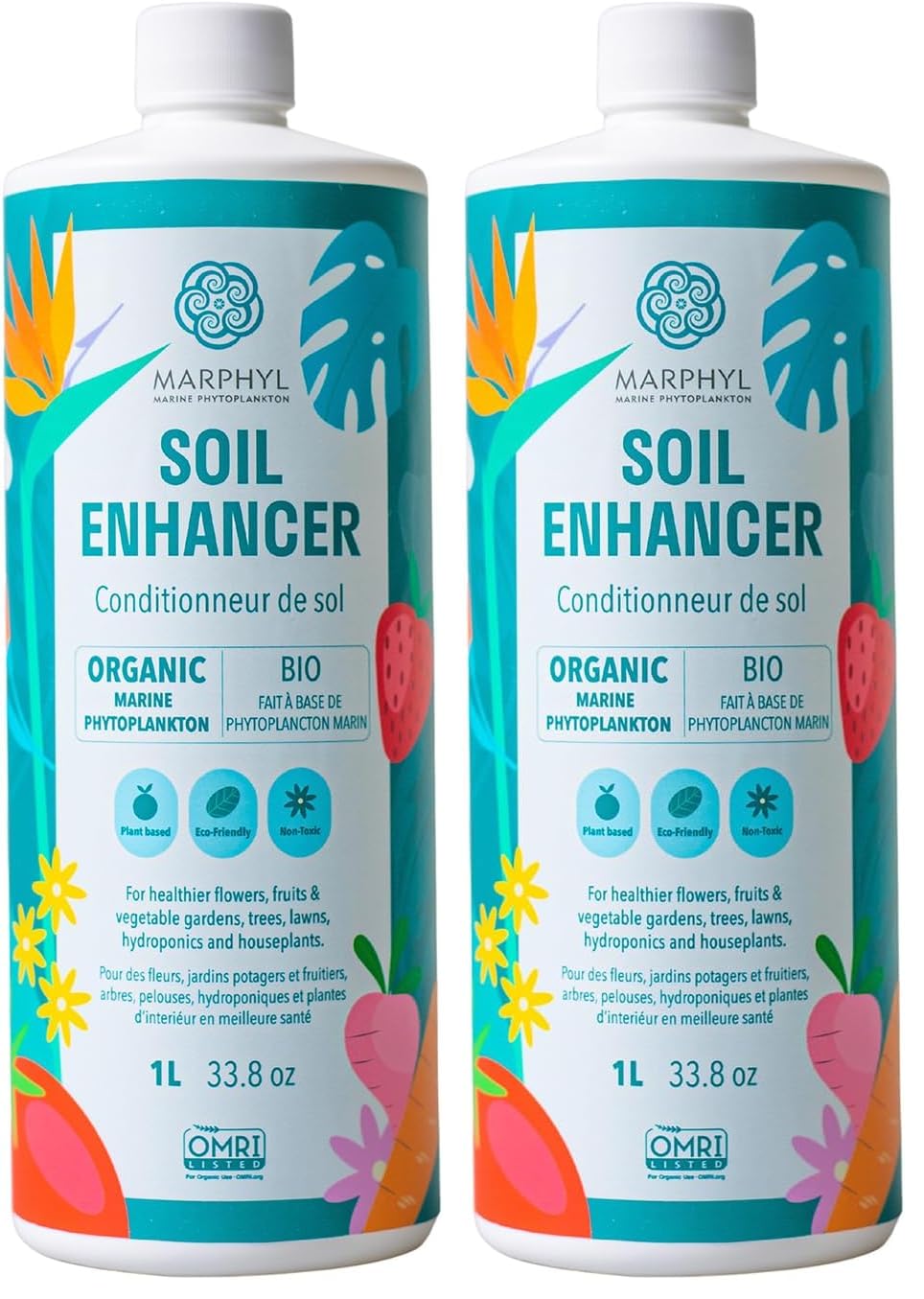
An ocean-sourced phytoplankton fertilizer that delivers a full spectrum of micronutrients, including 20 amino acids.
MARPHYL is not a typical NPK fertilizer — it is a marine phytoplankton liquid that provides vitamins, minerals, essential fatty acids (DHA and EPA), amino acids, chlorophyll, and hundreds of phytochemicals. The 1:20 mixing ratio (one part fertilizer to 20 parts water) makes it easy to prepare, and owners recommend using it every two weeks. The pack of two contains 2 liters total (67.6 fluid ounces), making it the largest volume in this roundup.
Plant growth is the strongest positive aspect, with owners reporting rapid revival of heat-beaten plants and new growth within days. One owner describes that a birds of paradise and a cactus bloomed after switching to this formula. The downsides are real and worth noting: the product has a strong fishy odor (best used outdoors), some sensitive plants like calatheas may react badly, and the opinion on value is mixed. Around 13,000 ratings give it a 4.4-star average, which is solid but lower than the top picks in this list.
For begonias, this is a supplement rather than a bloom-driving formula. It will improve soil health and leaf vibrancy over time, but it does not have the phosphorus kick (2-15-15 or 2-8-4) that tells a begonia to focus on flowers. It is a great background feed to use between applications of a dedicated bloom booster like the FoxFarm or Yardi.
Unique strengths
- Full-spectrum micronutrient profile from a natural source
- High volume — 2 liters covers many plants
- Organic and sustainable — vegan, non-GMO, no preservatives
Honest trade-offs
- Strong fishy smell — best used outdoors
- Not a bloom booster — lacks the high-phosphorus ratio for flowering
- Mixed reviews on value — some plants thrive, others struggle
Best for the organic supplement user: if you already have a bloom-stage fertilizer (like FoxFarm or Yardi) and want to add a broad-spectrum natural feed to your rotation, MARPHYL is a unique option. it’s not for you if you want a single product that drives both growth and flowering — the FoxFarm Tiger Bloom or the TPS Begonia Fertilizer are better all-in-one solutions.
Understanding the Specs
NPK Ratio — The Three Numbers That Matter
Every fertilizer label shows three numbers separated by dashes, such as 2-8-4 or 10-10-10. The first number is nitrogen (N), which drives leaf and stem growth. The second is phosphorus (P), which fuels root development and flower production. The third is potassium (K), which supports overall plant health and disease resistance. For begonias, you usually want the middle number (phosphorus) to be equal to or higher than the first number (nitrogen) — otherwise your plant will grow lots of leaves and very few flowers. A 2-8-4 like the FoxFarm Tiger Bloom or a 2-15-15 like the Yardi Fruit & Bloom are ideal for the blooming season.
Liquid Concentrate vs. Ready-to-Spray
Liquid concentrates like the FoxFarm, TPS, and Yardi options require you to mix a small amount of fertilizer into water before feeding. This gives you precise control over the strength of the dose and is more economical — one bottle often makes 30 to 180 gallons. Ready-to-spray mists, like the Gardenera Superfood Spray Mist, come pre-diluted in a spray bottle and are applied directly to the leaves and soil. They are the easiest option for a single plant but cost more per gallon. Choose a concentrate if you have multiple plants or want long-term value; choose a spray if you only have one begonia and want the simplest possible routine.
Organic vs. Synthetic
Organic fertilizers are made from natural sources like kelp, alfalfa meal, worm castings, or bat guano. They release nutrients more slowly and improve soil health by feeding beneficial microbes. Synthetic fertilizers use mineral salts that are water-soluble and available to the plant immediately. Begonias respond well to both, but synthetic formulas require more careful mixing to avoid root burn. Organic options like the Gardenera Seaweed & Kelp or the MARPHYL Marine Phytoplankton are gentler and build long-term soil structure — their trade-off is that they do not provide the precise bloom-stage phosphorus push that synthetic formulas deliver.
Application Frequency — Every Other Watering vs. Weekly
Most liquid fertilizers recommend feeding either every other watering or weekly. The FoxFarm Tiger Bloom, for example, says to mix 2-3 teaspoons per gallon every other watering. The Yardi Fruit & Bloom recommends 1 teaspoon per gallon biweekly. The Gardenera Superfood Spray suggests weekly misting. The key is to never exceed the recommended frequency — overfeeding a begonia leads to salt buildup in the soil, which turns leaf edges brown and can cause root damage. If your plant already has dark green leaves and is growing well, you can safely skip a feeding. During the winter dormancy period (when growth slows), most begonias need no fertilizer at all until spring.
FAQ
Can I use a general-purpose 10-10-10 fertilizer on my begonias?
How often should I feed my indoor begonia?
Is a spray mist as effective as a soil drench for begonias?
What happens if I use too much nitrogen on my begonia?
Can I use a fertilizer labeled for vegetables or tomatoes on my begonias?
How long does a 32-ounce bottle typically last?
My begonia leaves are turning yellow — should I fertilize more?
Is organic kelp fertilizer better than synthetic for begonias?
Can I mix different fertilizers together?
What is the best fertilizer for begonias in hydroponic systems?
Final Thoughts: The Verdict
Across the board, the fertilizer for begonias that delivers the most reliable results across the widest range of varieties is the FoxFarm Tiger Bloom (2-8-4) — its proven 4.8-star rating across thousands of owners and the precise bloom-stage ratio make it the safest and most effective buy. If you want a targeted formula that says “Begonia” on the bottle, the TPS Begonia Fertilizer is a concentrated 32-ounce pick made in the USA. For the most intense flower push, the Yardi Fruit & Bloom (2-15-15) delivers the highest phosphorus punch but requires careful watering. And for the organic grower building long-term soil health, the Gardenera Premium Seaweed & Kelp makes 180 gallons from a single bottle and feeds the soil as much as the plant.
How We Picked
We do not accept paid placement. Every pick is matched to a real buyer and a real use-case; we do not hands-on test units.
Sources & Methodology
Specifications: manufacturer listings and product documentation. Review insights: verified customer reviews, as of July 2026. Pricing: not shown on this page (it changes often); check the current price via the retailer link.
As an Amazon Associate, WellFizz earns from qualifying purchases. This does not affect which products we feature.
Related Guides

Mo Maruf
I created WellFizz to bridge the gap between vague wellness advice and actionable solutions. My mission is simple: to decode the research and give you practical tools you can actually use.
Beyond the data, I am a passionate traveler. I believe that stepping away from the screen to explore new environments is essential for mental clarity and physical vitality.