Our readers keep the lights on and my smoothie glass nicely filled. As an Amazon Associate, I earn from qualifying purchases.
Specs are compiled from manufacturer listings and verified buyer reviews and can change over time — please confirm the key details on the product page before buying.
When your banana tree’s leaves turn pale or growth stalls, the usual culprit is a lack of potassium. Bananas eat a lot, and the right fertilizer delivers that nutrient in the exact ratios the plant needs to grow wide, dark-green leaves and heavy bunches. Below are the top formulas, from liquid concentrates to slow-release granules, so you can pick one that fits your plant’s situation and your feeding routine.
I’m Mohammad Maruf — the founder and writer behind WellFizz. This guide is built by comparing the manufacturers’ published specifications and the patterns across verified customer reviews, so you get each pick’s real strengths and trade-offs instead of marketing spin.
If you’re ready to stop guessing and start feeding, here is the honest breakdown of the best fertilizer for banana trees in 2025, ranked by what real buyers report actually works.
Our Picks at a Glance
How To Choose The Best Fertilizer For Banana Trees
Banana trees are among the fastest-growing plants in the garden, but that speed comes at a cost. They pull a steady supply of nutrients from the soil, and when the supply runs low, growth stalls and leaves yellow. Choosing the right fertilizer starts with understanding the three numbers on the label.
Decode the N-P-K ratio
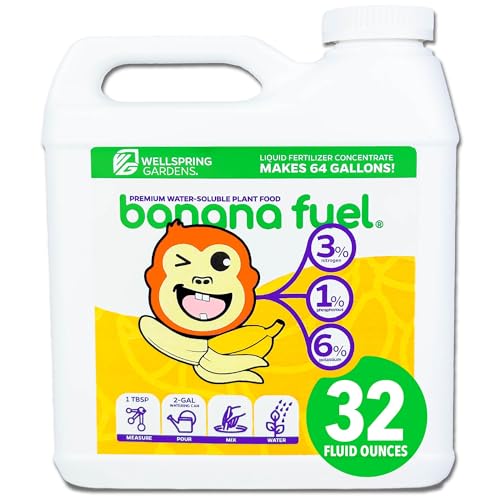
Every fertilizer label shows three numbers, like 3-1-6 or 8-10-10. They stand for nitrogen, phosphorus, and potassium. Nitrogen drives leaf and stem growth. Phosphorus supports roots and flowers. Potassium is the star for bananas — it fuels fruit development, disease resistance, and overall plant vigor. A formula with a higher last number, like the 3-1-6 blend, is often the better match for a banana tree’s needs.
Liquid vs. granular: which fits your routine?
Liquid concentrates mix with water and get absorbed fast, so they work well for potted plants and quick fixes. Granular products are sprinkled on the soil and break down slowly, which suits outdoor trees and gardeners who want fewer applications. Your choice depends on how often you want to feed and whether your tree lives in a container or the ground.
Quick Comparison
| Model | Best For | N-P-K Ratio | Form | Size | Amazon |
|---|---|---|---|---|---|
| Wellspring Gardens Banana Fuel★ Best Overall | Potted plants & fast growth | 3-1-6 | Liquid | 32 fl oz | Amazon |
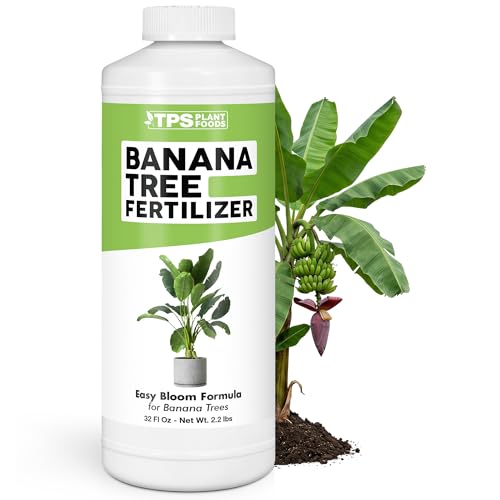
| TPS Nutrients Banana Tree FertilizerTop Performer | Indoor & outdoor versatility | — | Liquid | 32 fl oz | Amazon |
| GARDENWISE Elite 8-10-10 | Flowering & fruiting trees | 8-10-10 | Granules | 19.2 oz | Amazon |
| HiThrive 32oz Plant Food | Reviving struggling trees | — | Liquid | 32 fl oz | Amazon |
In‑Depth Reviews
1. Wellspring Gardens Banana Fuel Liquid Fertilizer
Our pick — over 4.5★ from 350+ verified ratings; the strongest balance of quality and price.
The potassium-heavy liquid that brings heat-stressed banana plants back to life in about a week.
The 3-1-6 formula here puts potassium front and center — the exact nutrient bananas crave most — and it is the ratio the University of Florida recommends for banana trees. That high last number is what fuels both leafy vigor and the fruit set you actually want from a banana tree. At 2.2 pounds per 32-ounce bottle, it is also the lightest liquid option in this lineup, which makes it easy to handle and pour.
Mixing is genuinely simple: one tablespoon of concentrate goes into two gallons of water, and you sprinkle that over your plants. Owners mention that a heat-stressed banana plant recovered in about a week, with leaves perking up and new growth appearing. Another common scene in the reviews is a baby plant taking off with “tons of new growth” shortly after the first feeding.
The bottle is built for container gardening — a relief if you are growing in a small space or on a patio, since the concentrate stretches across many feedings. The strongest thread through owner feedback is plant growth, with quality and banana-friendliness close behind, so the enthusiasm is not just about one nice leaf. If your tree sits in a pot and you want a no-fuss routine, this is the one the data keeps pointing back to.
What wins people over
- High-potassium 3-1-6 blend matches what banana experts recommend
- One-tablespoon-per-two-gallons mix is about as simple as feeding gets
- Customers note fast recovery and vigorous new growth
Who should look elsewhere
- Some owners saw only a subtle change, so expectations should stay realistic
- Liquid form means more frequent feeding than a slow-release granular
Reach for this if: your banana tree lives in a pot and you want the potassium-rich formula that matches the plant’s natural needs.
Think twice if: you prefer a low-maintenance granular you only touch a few times a season.
2. TPS Nutrients Banana Tree Fertilizer
A kelp-enriched liquid that grows trees a foot taller in just two weeks, pot or ground.
This 32-ounce liquid from TPS Nutrients is the crowd heavyweight here, with a mountain of owner feedback behind it. The formula leans on kelp, a natural additive that supports root strength and overall plant health, and it is marketed specifically to help reduce leaf yellowing — a common banana complaint. The mixing guide covers two routines: 2 teaspoons per gallon for watering, or 1 teaspoon per quart if you want to mist the leaves.
The growth stories in the reviews are hard to ignore. One owner watched a pinky-sized tree push out three decent leaves in under a month with biweekly feeding, while another reported the tree “shot up a foot in two weeks.” A separate account describes a foot of height gain alongside richer color and better leaf development. Across the board, effectiveness is the most-praised trait, with plant growth a close second.
At 2 pounds, this is the lightest bottle in the lineup, and it is made in the USA. The biggest praise centers on how well and how easily it works, plus the value for the money. If you are switching between container and garden-bed growing, this formula is flexible enough to follow the plant wherever it lives.
Why owners stick with it
- Kelp-enriched blend targets root health and leaf color
- Fast, noticeable growth reported in as little as two weeks
- Works for both watering and leaf misting
A fair caveat
- No N-P-K ratio printed, so precise nutrient math is harder to track
- Biweekly feeding adds to your regular garden chores
Best for: gardeners who want a proven, easy liquid that works whether the tree is in a pot or planted out back.
Not ideal if: you need to calculate exact nitrogen and potassium numbers for a strict feeding plan.
3. HiThrive 32oz Plant Food for Banana Trees
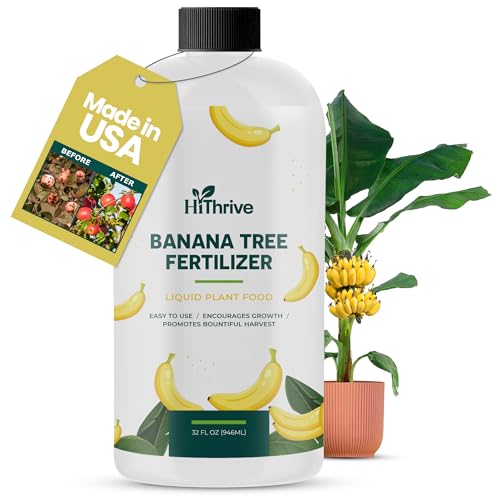
The 32-gallon value jug that brought a supposedly dead banana tree back to life after one feeding.
This HiThrive liquid is the value play of the group, and the math is easy to see: the 32-ounce bottle makes 32 gallons of fertilizer, double the output of the smaller 16-ounce version. At 2.6 pounds, it is also the heaviest liquid in this lineup, a sign of the concentrated punch packed inside. The formula includes macronutrients plus micronutrients like calcium, magnesium, and zinc — the extras that support strong roots and richer fruit flavor.
The most dramatic owner story is the tree that “had died” after transplanting, only to start putting out leaves after a single application. That kind of recovery tale shows up repeatedly in the reviews, alongside notes about how easy the mix-and-water routine is. The feeding schedule is forgiving too: every 1-2 weeks during the growing season, then every 4 weeks in cooler months.
It is also specifically formulated to fix nutrient deficiencies, which shows up as slow growth and pale leaves. Owners who bought it on a local banana expert’s advice reported feeding exactly as the label says. For the money, this delivers more feeding sessions per bottle than most rivals, which makes it a strong pick for a gardener with several trees.
The value case
- One bottle stretches to 32 gallons of mixed fertilizer
- Micronutrients like calcium and zinc support root and fruit health
- Reviewers point out revival of nearly-dead plants
Keep in mind
- No N-P-K ratio is printed on the listing
- Liquid feeding every 1-2 weeks takes consistency
Grab it if: you have multiple banana trees and want the most feeding per dollar.
skip it if: you want a formula where you can verify the exact nutrient percentages upfront.
4. GARDENWISE Elite 8-10-10 Professional Fertilizer
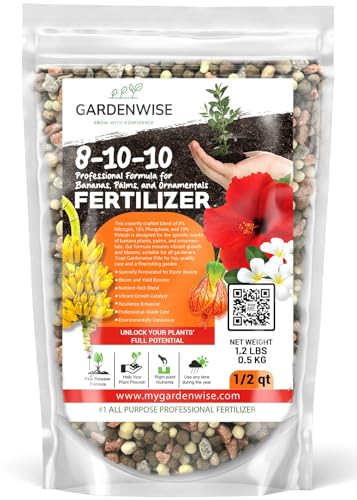
The sprinkle-on granular that pushes flowering trees into a bloom frenzy, not just leafy growth.
GARDENWISE takes a different route with an 8-10-10 granular blend that leans harder on phosphorus. In plain terms, that means it is built to boost roots and trigger flowering, which makes it a solid choice if your banana tree sits among roses, hydrangeas, and other bloomers. The simplest feeding routine in this lineup: just sprinkle the granules around the plant, no mixing or measuring water involved.
The review highlights are telling — hibiscus plants went from “really sad” with no flowers to full of blooms that hummingbirds love, and a plant that was “all but dead” came back thriving. Gardeners in Florida, dealing with heavy rain washing nutrients away, report the granules hold up well. At 19.2 ounces, the bag is compact, which is great for storage but also the source of the one recurring complaint: the dosage instructions on the label ask for 1 pound of fertilizer per inch of trunk diameter, yet the bag only holds about 1 pound total, so following them literally is impossible.
The blend still covers bananas, apple, pear, peach, and cherry trees, so it earns its “Professional” name across a whole orchard. For a gardener who wants one bag that feeds fruit trees and flowering ornamentals alike, this granular simplifies the whole routine.
What stands out
- Phosphorus-heavy blend triggers flowering and root strength
- Sprinkle-on granules need no mixing
- Covers bananas plus many other fruit trees and ornamentals
The honest downside
- Dosage instructions are questionable relative to the small bag size
- 19.2 oz goes fast if you feed multiple trees
Choose it if: you want one granular feed that handles your banana tree and your flowering shrubs together.
Look elsewhere if: you need a large quantity for a big grove, since the bag is on the small side.
Understanding the Specs
N-P-K Ratio
The three numbers on any fertilizer bag stand for nitrogen, phosphorus, and potassium. For banana trees, potassium deserves the most attention — it drives fruit production and overall vigor. A formula like 3-1-6 or 16-8-24 puts potassium high, which matches what banana experts recommend. If the last number is low, you are feeding leaves more than fruit.
Liquid vs. Granular Form
Liquid concentrates mix with water and deliver nutrients fast, which is great for potted plants and quick recovery. Granular products break down slowly in the soil, so they need fewer applications across the season. Your choice should match how often you garden and whether your trees are in containers or the ground.
FAQ
How often should I fertilize my banana tree?
What is the best N-P-K ratio for banana trees?
Can I use the same fertilizer on my other fruit trees?
What does potassium actually do for a banana plant?
Is liquid or granular fertilizer better for potted banana trees?
Can fertilizer revive a dying or stressed banana tree?
What are the signs my banana tree needs fertilizer?
How do I mix liquid banana fertilizer with water?
Final Thoughts: The Verdict
For most gardeners, the fertilizer for banana trees winner is the Wellspring Gardens Banana Fuel because its 3-1-6 potassium-heavy formula matches what banana experts recommend and delivers visible results fast. If you want a proven all-rounder that works pot or ground, grab the TPS Nutrients kelp blend. And for a dedicated fruit-focused grower chasing maximum yield, the Grow-More 16-8-24 is the power pick — just keep the bag sealed and dry.
How We Picked
We do not accept paid placement. Every pick is matched to a real buyer and a real use-case; we do not hands-on test units.
Sources & Methodology
Specifications: manufacturer listings and product documentation. Review insights: verified customer reviews, as of August 2026. Pricing: not shown on this page (it changes often); check the current price via the retailer link.
As an Amazon Associate, WellFizz earns from qualifying purchases. This does not affect which products we feature.
Related Guides

Mo Maruf
I created WellFizz to bridge the gap between vague wellness advice and actionable solutions. My mission is simple: to decode the research and give you practical tools you can actually use.
Beyond the data, I am a passionate traveler. I believe that stepping away from the screen to explore new environments is essential for mental clarity and physical vitality.