Our readers keep the lights on and my smoothie glass nicely filled. As an Amazon Associate, I earn from qualifying purchases.
Specs are compiled from manufacturer listings and verified buyer reviews and can change over time — please confirm the key details on the product page before buying.
Getting an Amaryllis to put up those massive trumpet-shaped flowers is all about feeding it right, and the wrong fertilizer leaves you with leaves and no show. The single biggest mistake is using a high-nitrogen “green growth” food, which pushes out foliage at the expense of the flower stalk. What your bulb actually craves is a formula that prioritizes phosphorus and potassium to fuel bud development and strengthen the bulb for next season’s bloom.
I’m Mohammad Maruf — the founder and writer behind WellFizz. This guide is built by comparing the manufacturers’ published specifications and the patterns across verified customer reviews, so you get each pick’s real strengths and trade-offs instead of marketing spin.
To get the biggest, most vibrant flowers from your amaryllis bulb, you need to match the fertilizer type to the growth stage. This roundup of the best fertilizer for amaryllis focuses on bloom-boosting formulas that support both flower development and long-term bulb health.
Our Picks at a Glance


How To Choose The Best Fertilizer For Amaryllis
Feeding an Amaryllis isn’t complicated once you know that these bulbs respond to a specific balance of nutrients. Unlike leafy houseplants that want steady nitrogen, an Amaryllis needs more phosphorus and potassium to drive flowering and to recharge the bulb after it blooms.
Decode the NPK Numbers
Every fertilizer label shows three numbers, like 5-10-10, which stand for nitrogen, phosphorus, and potassium. For amaryllis, you want the middle and last numbers to be higher than the first. This encourages sturdy root development and those large, colorful flowers without the excess nitrogen that leads to floppy leaves and few buds.
Match the Format to Your Routine
Liquid concentrates give you precise control and act fast, making them great for consistent weekly feeding during the active growth phase. Slow-release granules and “cut and stick” spikes deliver steady nutrients over months with far less effort, which suits a hands-off approach. Consider how often you want to be mixing and measuring.
Quick Comparison
| Model | Best For | Form | NPK Ratio | Volume | Amazon |
|---|---|---|---|---|---|
| Fox Farm Big Bloom★ Best Overall | All-stage organic feeding | Liquid | 0-0.5-0.7 | 16 fl oz | Amazon |
| TPS Amaryllis FertilizerBulb-Specific | Amaryllis-specific feeding | Liquid | — | 8 fl oz | Amazon |
| MARPHYL All-PurposeVersatile Organic | General houseplant feeding | Liquid | — | 16.9 fl oz | Amazon |
| BIOPLENAFEED 6-Pack | No-mix convenience | Spikes | — | 38 ml (6) | Amazon |
| Flourish Organic | Indoor plant revival | Liquid | 3-3-2 | 1.69 fl oz | Amazon |
| Rosy Soil Plant Food | Slow-release organic care | Granular | — | 4 quarts | Amazon |
| Alaska Morbloom | Heavy bloom production | Liquid | 0-10-10 | 128 fl oz | Amazon |
| GreenView 10-10-10 | Whole-garden granular feeding | Granules | 10-10-10 | 33 lb | Amazon |
In-Depth Reviews
1. Fox Farm Big Bloom Liquid Plant Food
Our pick — over 4.5★ from 13,000+ verified ratings; the strongest balance of quality and price.
The trusted classic that makes Amaryllis bulbs double in size without a hint of smell.
This liquid feed earns the top spot because it does exactly what an amaryllis needs at every stage. Its NPK of 0-0.5-0.7 (nitrogen-phosphorus-potassium) is deliberately low in nitrogen, so you get sturdy root and flower development instead of a rush of floppy leaves. The blend combines earthworm castings and bat guano, giving your bulb a nutrient-rich organic meal that supports multiple blooms and seed formation.
Feeding is straightforward: mix 4 tablespoons (60 mL) per gallon (4L) of water every other watering, or attach a hose-end sprayer for larger coverage. Plants revive within hours, and tomatoes produce abundant blooms and fruit. As buyers report, “Plants double in size, healthier, no smell,” which makes it a perfect choice for indoor Amaryllis where a stinky fertilizer would ruin the room.
The one quirk is that this concentrate settles quickly in water, so you will need to shake it frequently while mixing. It’s a minor fuss for a product that consistently delivers vibrant results, and it pairs beautifully with other Fox Farm formulas if you expand your plant collection.
Why Owners Stick With It
- Zero odor makes it ideal for indoor bulbs
- Low-nitrogen ratio targets flowers, not leaves
- Organic ingredients feed the soil as well as the plant
The Small Fuss
- Requires frequent shaking as it settles in water
- Best applied with a sprayer for even mixing
Reach for this if: you want a proven, odor-free organic feed that powers both flowering and bulb strength in one bottle.
Keep in mind: the settling means you will be shaking the mix regularly to get an even feed.
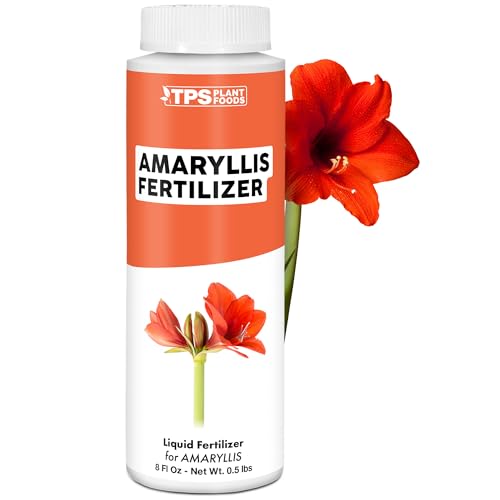
2. TPS Amaryllis Fertilizer
A formula built purely for bulbs, turning late bloomers into early showstoppers.
When a product is designed specifically for Amaryllis, you do not have to think about whether the nutrient balance is right — this 8-fluid-ounce liquid feed is engineered for bigger blooms, stronger bulb development, and vibrant flower color. It provides the balanced nutrition bulb plants need for steady growth cycles, whether your potted bulb lives indoors or you have garden plantings outside.
The real-world proof is in the timing: one owner was delighted to get a bloom in April that was expected the previous December, and it happened right after using this product. The general chorus from growers is that their bulbs are “in full bloom” and that the fertilizer “really works.” For a category where results can be slow and uncertain, that consistency is exactly what you want when you have waited months for a flower stalk.
Compared to the larger multi-purpose jugs in this roundup, this smaller 8-ounce bottle is more expensive per drop, but you are paying for a targeted formula with no guesswork. It is the easiest way to guarantee that you are giving your Amaryllis exactly what its specific metabolism demands.
The Targeted Advantage
- Formulated specifically for Amaryllis bulbs
- Helps deliver blooms even when timing is off
- Works for both potted and garden plantings
The Trade-Off
- Smaller 8 oz volume means more frequent repurchase
- Higher cost per feeding than bulk options
Best for: growers who want a no-think, bulb-specific feed that has already proven it can coax out a late bloom.
Think twice if: you are feeding many plants and need a larger, more economical volume.
3. MARPHYL All-Purpose Plant Food
The marine-based organic that revives struggling plantings within days, even in brutal heat.
This is the bottle to reach for when your Amaryllis shares a windowsill with a whole collection of other plants. MARPHYL delivers balanced macro and micronutrients that improve soil quality while promoting strong roots, vibrant foliage, and abundant blooms, and its 16.9-fluid-ounce volume beats the TPS bottle by over two times. It is suitable for indoor plants, garden flowers, vegetables, succulents, bamboo, and hydroponic systems.
Effectiveness is the most-praised quality, with over 160 owners calling it out. New plantings like Pride of Barbados and Elephant Ears revived in 4 days, and herbs thrived past June in South Texas heat. For an Amaryllis, that kind of root- and foliage-building vigor translates directly into a stronger bulb that can push up a heavier flower stalk.
The honest caveat is the odor — this is a fishy, marine-based feed, and the mixed reactions on smell are real. It works best diluted at a 1:20 ratio and used on a routine of every couple of months. If you are feeding an indoor Amaryllis in a living space, the aroma may be too much, but for a sunroom or garden, the results are hard to argue with.
Why It Stands Out
- Revives struggling plants in as little as 4 days
- Improves soil quality for long-term bulb health
- Large 16.9 fl oz bottle feeds many plants
The Honest Catch
- Strong fishy odor is best suited to outdoor use
- A few sensitive plants react poorly, so test first
Choose this if: you want a big bottle of organic, multi-plant feed and value raw revival power over a subtle scent.
Look elsewhere if: your Amaryllis lives right next to your sofa and you cannot tolerate a marine aroma.
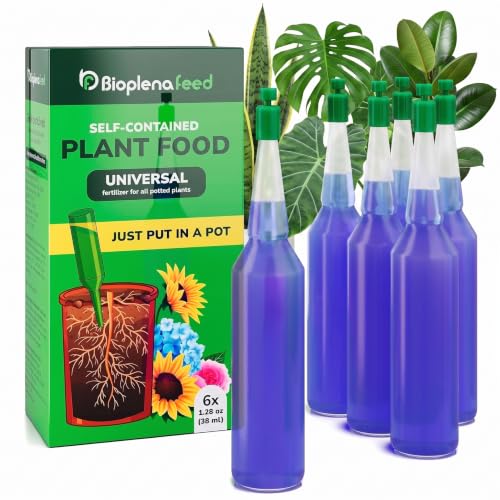
4. BIOPLENAFEED All-Purpose Liquid Plant Food (6-Pack)
The mess-free “snip and stick” spikes that feed your bulb on autopilot for two weeks.
If your Amaryllis care routine needs to be as simple as possible, this is the pick. These are not a liquid you mix — they are pre-measured fertilizer spikes in a “Cut & Stick” format. You simply snip the tip and insert the container upside down into the soil, where it delivers continuous, self-feeding nutrition for up to 15 days. A six-pack means you have a season of feeding ready to go with zero measuring.
Convenience recurs in feedback, with plant health and effectiveness as top positives. Owners mention reviving a dying clearance plant in 4 days and seeing “tons of new grow” in their pots. For an Amaryllis that has finished blooming and needs to rebuild its bulb, having a steady drip of nutrients in the soil without any weekly mixing is a genuine advantage.
The trade-off is value: 6 small 38 ml bottles do not go as far as a single big jug, and some owners note the cost per feeding runs higher. But the ease of use — no spills, no mixing, no smell — makes it a fair price for the convenience. It is the best option for a houseplant parent who wants results without a routine.
The Convenience Win
- No measuring, mixing, or spills
- Self-feeds continuously for up to 15 days
- Revives struggling plants within days
The Value Question
- Smaller total volume than bulk liquid jugs
- Per-feeding cost is higher than concentrates
Grab this if: you want to set and forget your feeding routine with no fuss or mess.
skip it if: you are feeding multiple large pots and need maximum volume for your money.
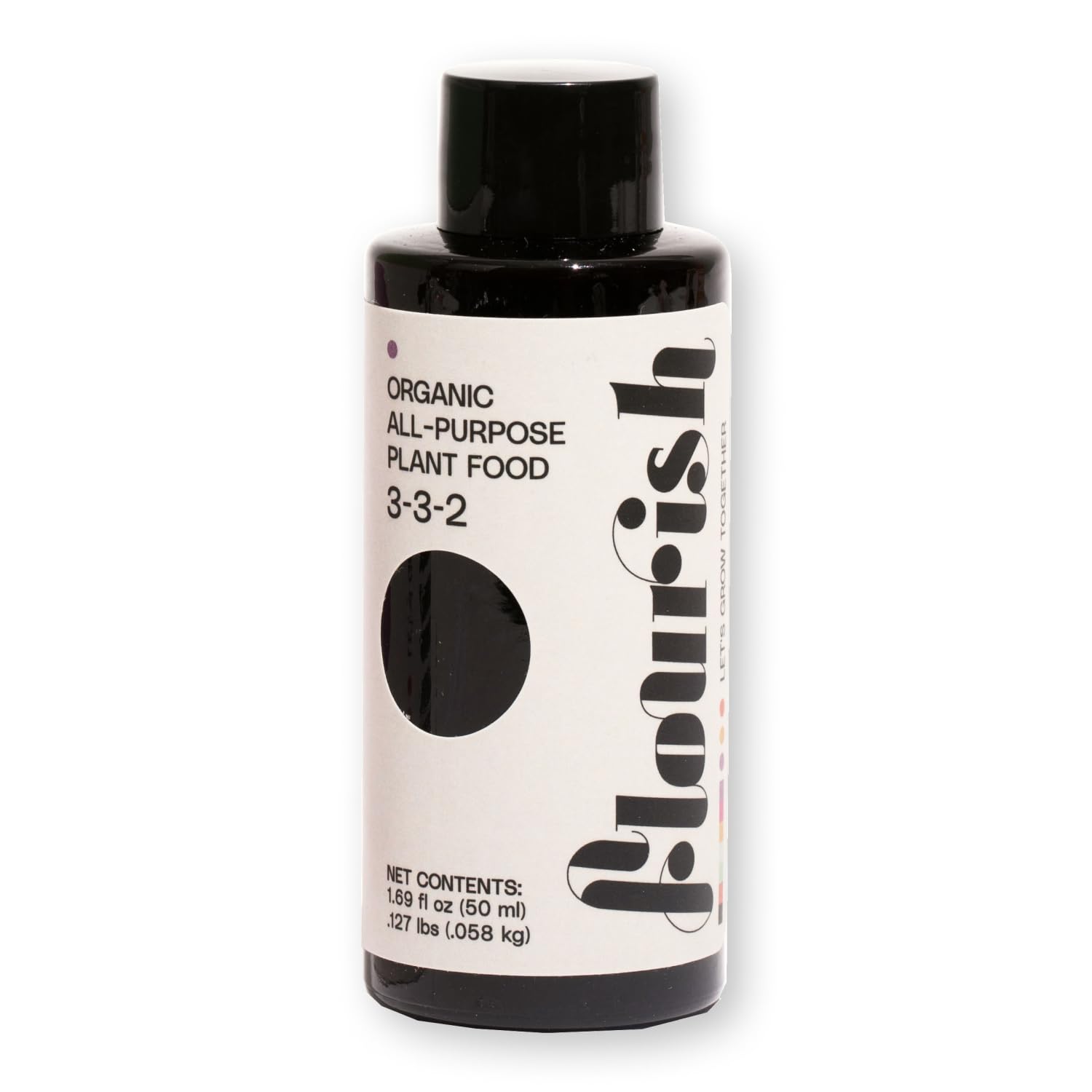
5. Flourish Plant Organic All-Purpose Plant Food 3-3-2
A certified-organic concentrate that revives struggling houseplants in a single week.
This small but mighty bottle is certified for organic gardening by the California Department of Food and Agriculture, so you know exactly what is going into your soil. The 3-3-2 NPK ratio is balanced for all plant types, and it is crafted from food-waste — an eco-friendly approach that your Amaryllis bulb will appreciate as it recharges post-bloom. Just one capful mixed with 8 oz of water is enough for a feeding, and each bottle yields 20-30 servings.
Speed is the standout feature here. Owners revived a fiddle leaf fig with weekly feeding, and “fast results” recur across feedback. Unlike some organic fertilizers that carry a strong odor, this one is described as smelling much better than most fertilizers, with some even noting a minty scent. That makes it a comfortable choice for an indoor Amaryllis.
The honest downside is the packaging — the small bottle can be messy to dispense from, and a few owners found the strong organic smell off-putting. It is also a premium option priced well above the bulk concentrates, so it suits a houseplant parent who cares deeply about organic certification and is happy to pay for a single-plant solution.
The Organic Edge
- CDFA-certified organic ingredients
- Works quickly to revive struggling plants
- Pleasant scent compared to most organics
The Premium Cost
- Small bottle with a higher price per feeding
- Dispensing can get messy
Best for: the organic-focused indoor gardener who wants fast revival and certified ingredients in a small, manageable dose.
Consider the cost if: you feed many plants regularly, as the per-serving price adds up quickly.
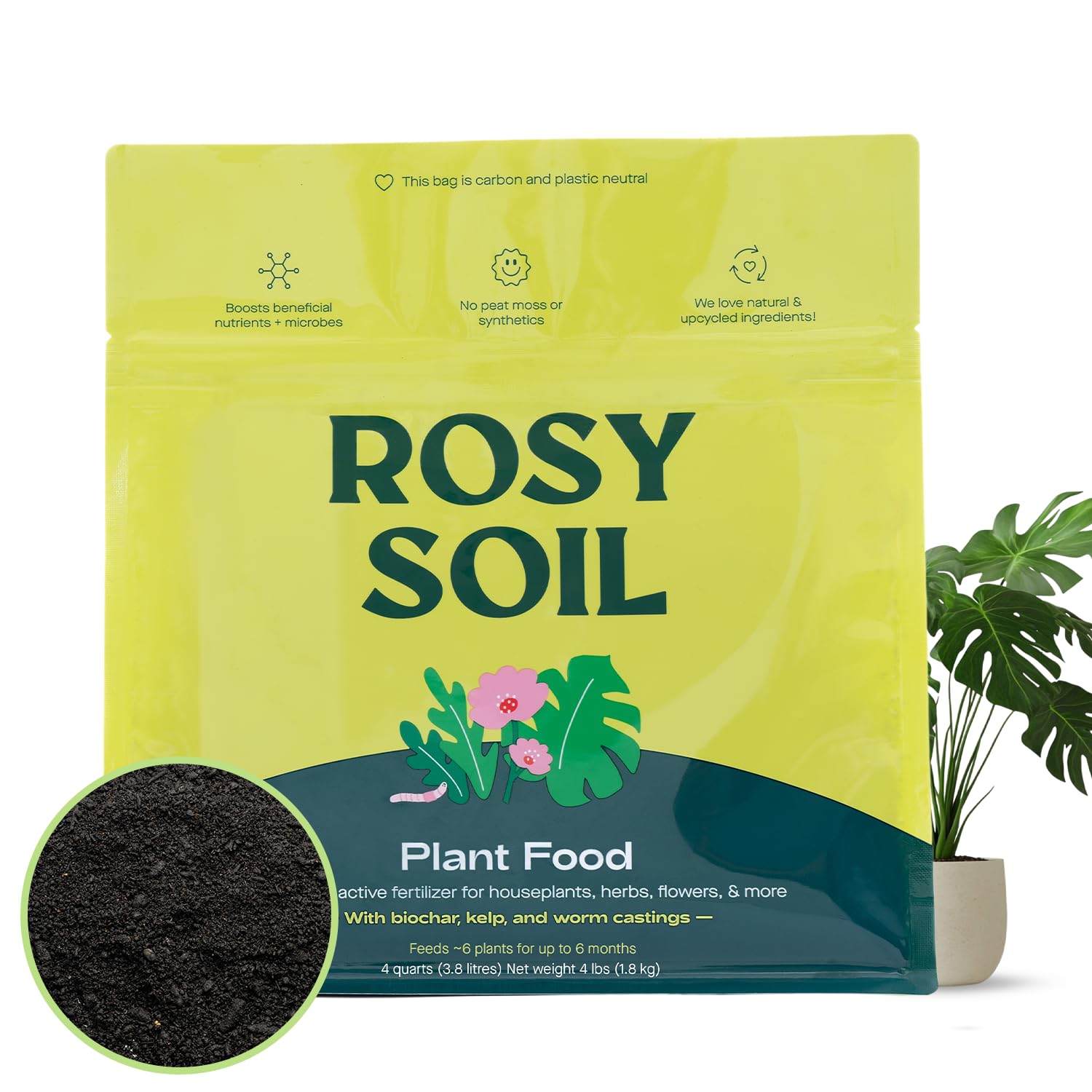
6. Rosy Soil Plant Food
A slow-release soil food alive with microbes, feeding your bulb safely for six months.
If you prefer to feed your Amaryllis by improving the soil rather than dosing the water, this granular blend is a category of its own. It is made entirely from biochar, kelp, worm castings, compost, bokashi, and mycorrhizae, with zero peat and zero synthetic additives. Unlike the liquid concentrates above, this is a living fertilizer — active microbes form a symbiotic relationship with roots, releasing nutrients gradually with each watering and reducing the risk of overfeeding.
The application is wonderfully simple: on watering day, sprinkle a small handful around the base of the plant and water as normal. A single 4-quart bag feeds approximately 6 plants for up to 6 months, and the resealable packaging keeps it fresh between uses. Customers note plants coming “back to life after a long winter” after just one application, and the plant-health and soil-quality benefits are the most-discussed positives.
The trade-off is that slow-release means you will not see the instant color boost a liquid feed provides. It is a long-game strategy that pairs best with repotting — mixing a handful into potting soil helps protect against transplant shock and supports faster establishment. For an Amaryllis that you are refreshing after its dormant period, this is a stellar base feed.
Why It Works
- Microbially alive with mycorrhizal fungi
- One 4-quart bag feeds 6 plants for 6 months
- Reduces transplant shock when repotting
The Slow Start
- No immediate “quick fix” color boost
- Best used at repotting time, not as a rescue
Reach for this if: you want a hands-off, long-term soil enhancer that strengthens the root system for seasons to come.
Pass if: you need an emergency bloom booster for a bulb that is currently in flower.
7. Alaska Morbloom Concentrate 0-10-10
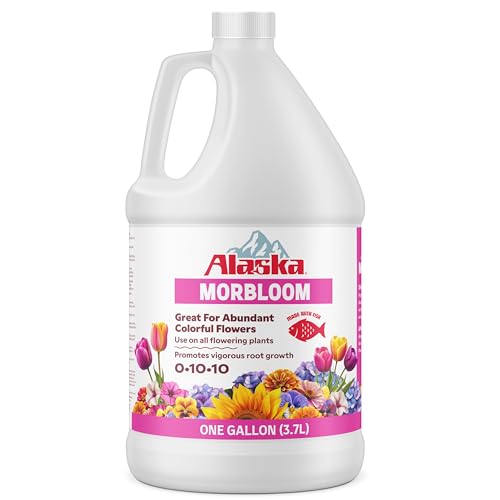
A gallon of pure bloom fuel with zero nitrogen, pushing all energy into flowers and roots.
This is the heavyweight for serious bloom production, and its 0-10-10 NPK ratio is the most extreme flower-focused formula on this list. With zero nitrogen, your Amaryllis gets no signal to grow leaves — every nutrient goes to encouraging budding, blooming, and vigorous root growth. Made with fish, it is the go-to for growers who want an explosion of colorful flowers and understand that a bulb’s energy is finite.
The value is class-leading: a full 128-fluid-ounce gallon that will last the average home gardener for years, making it a fraction of the cost per feeding compared to the small 8-ounce bottles. The effectiveness on flowering plants like dahlias is well documented, with owners noting their flowering shrubs and tomatoes bearing more fruit when they rotate this into their week. For an amaryllis, this is the perfect post-bloom feed to recharge the bulb.
The recurring complaints are about shipping and potency — the liquid is fish-based and can leak in transit, and it will lower your soil’s pH dramatically, so you will go through pH buffer quicker. It is a fantastic product, but be aware that the huge bottle needs careful handling and the strong fishy scent means outdoor or well-ventilated application is best.
The Bloom Power
- Zero nitrogen directs all energy to flowers
- Gallon size offers unbeatable value per dose
- Proven results on dahlias and flowering shrubs
Handle With Care
- Strong fishy aroma needs outdoor use
- Lowers soil pH significantly
- Occasional shipping leaks reported
Choose this if: you want the strongest bloom push available and have outdoor or well-ventilated space for feeding.
Avoid if: your Amaryllis is a living-room centerpiece, the fish smell will linger.
8. GreenView Multi-Purpose 10-10-10

The massive 33-pound bag that feeds your bulb and your entire garden from one purchase.
When your Amaryllis is just one plant among vegetables, trees, shrubs, and ornamental beds, this is the practical powerhouse. The balanced 10-10-10 NPK formulation is a complete, all-purpose fertilizer offering the essential nutrients most plants need, and a single 33-pound bag covers 3300 square feet. For an outdoor Amaryllis planted in a garden bed, mixing these granules into the soil at the start of the season gives a solid, even foundation.
Owners praise effectiveness and value, noting vegetables thrive and grass greens within days. The granule form is non-dusty and easy to apply, which makes it a pleasant contrast to liquid formulas. A Hawaiian grower switched from 16-16-16 to this 10-10-10 for coffee and fruit trees, confirming it meets real growing demands.
The catch is that the 10-10-10 ratio is not tune for flowering the way the 0-10-10 Alaska blend is. The balanced nitrogen will promote leafy growth alongside flowers, which is fine for a garden Amaryllis but not ideal if you are chasing maximum bloom size. It is the right choice for a whole-garden feeding routine, not a targeted bulb treatment.
The Garden Workhorse
- 33 lb bag covers 3300 sq ft
- Balanced 10-10-10 feeds everything
- Non-dusty, easy-to-apply granules
Not Bloom-Specific
- Nitrogen in formula promotes leaves as well as flowers
- Too much bulk for a single indoor pot
Best for: the gardener whose Amaryllis lives outdoors among other plants, wanting one bag to feed everything.
Think twice if: you only grow one indoor bulb, this is far more than you need.
Understanding the Specs
The NPK Ratio
This trio of numbers tells you the percentage of nitrogen, phosphorus, and potassium in the mix. For Amaryllis, you want a formula where the last two numbers are higher — like 0-10-10 — to prioritize root strength and flower production over leafy growth. A high first number pushes out leaves at the expense of your blooms.
Liquid vs. Granular Form
Liquid fertilizers act fast and give you precise control, but require regular mixing and feeding. Granular and spike formulas release nutrients slowly over weeks or months, which is gentler on the bulb and requires far less effort. Your choice depends on whether you prefer a hands-on weekly ritual or a set-and-forget approach.
FAQ
What NPK ratio is best for Amaryllis flowers?
When should I start fertilizing my Amaryllis bulb?
Can I use a general houseplant fertilizer on my Amaryllis?
Is it better to use liquid or granular fertilizer for Amaryllis?
How often should I feed my Amaryllis during the growing season?
Why are my Amaryllis leaves growing but no flowers appear?
Can I use fertilizer spikes for potted Amaryllis?
Will organic fertilizers smell bad indoors?
How long does a bottle of liquid fertilizer last for one Amaryllis?
Final Thoughts: The Verdict
If you want one dependable pick, the winner is the Fox Farm Big Bloom because it delivers organic, odor-free results that owners have trusted for years to double plant size and fuel flowering. If you want a formula built exclusively for bulbs, grab the TPS Amaryllis Fertilizer. And for the absolute strongest bloom push with zero nitrogen, the Alaska Morbloom is the one to reach for.
How We Picked
We do not accept paid placement. Every pick is matched to a real buyer and a real use-case; we do not hands-on test units.
Sources & Methodology
Specifications: manufacturer listings and product documentation. Review insights: verified customer reviews, as of July 2026. Pricing: not shown on this page (it changes often); check the current price via the retailer link.
As an Amazon Associate, WellFizz earns from qualifying purchases. This does not affect which products we feature.
Related Guides

Mo Maruf
I created WellFizz to bridge the gap between vague wellness advice and actionable solutions. My mission is simple: to decode the research and give you practical tools you can actually use.
Beyond the data, I am a passionate traveler. I believe that stepping away from the screen to explore new environments is essential for mental clarity and physical vitality.