Our readers keep the lights on and my smoothie glass nicely filled. As an Amazon Associate, I earn from qualifying purchases.
Specs are compiled from manufacturer listings and verified buyer reviews and can change over time — please confirm the key details on the product page before buying.
Aloe vera is a survivor by nature, but even the toughest succulent sulks when its soil runs out of food. The right fertilizer for aloe vera is a gentle, low-nitrogen formula that encourages plump leaves and strong roots without forcing soft, stretched growth. This guide breaks down the best liquid, granular, and organic options so you can match a feed to your plant’s actual condition.
I’m Mohammad Maruf — the founder and writer behind WellFizz. This guide is built by comparing the manufacturers’ published specifications and the patterns across verified customer reviews, so you get each pick’s real strengths and trade-offs instead of marketing spin.
You’ll learn which nutrients your aloe actually needs, how often to feed, and how to spot the best fertilizer for aloe vera that fits your routine and your plant’s needs.
Our Picks at a Glance

How To Choose The Best Fertilizer For Aloe Vera
Your goal is steady, compact growth with firm, plump leaves — not a rush of soft new foliage. Aloe stores water in its leaves, so a fertilizer that pushes too much nitrogen will make it grow fast but weak and pale. Look for a formula labeled for succulents or cacti, and check the NPK numbers on the bottle before you buy.
Understand the NPK ratio
NPK stands for nitrogen (N), phosphorus (P), and potassium (K) — the three main nutrients plants need. Nitrogen drives leaf growth, phosphorus supports roots and blooms, and potassium builds resilience. Aloe prefers a low and balanced ratio, often around 1-1-1 or similar, so it grows slowly and stays compact instead of stretching.
Choose your format: liquid vs. granular vs. powder
Liquid fertilizers are diluted with water and soak into the soil quickly, which makes them great for a regular, controlled feeding routine. Granular and powder options release nutrients slowly over months, so you apply them far less often. If you travel or tend to forget feedings, a slow-release formula is the more forgiving choice.
Match the feed to your plant’s condition
A struggling, faded aloe with shriveled leaves needs a nutrient boost with micronutrients like calcium and magnesium to rebuild its structure. A healthy, mature aloe just needs a light maintenance feed once or twice during the growing season. Overfeeding a dormant plant in winter can do more harm than good, so always pause feeding when growth slows.
Quick Comparison
| Model | Best For | Format | Volume / Count | Feeding Schedule | Amazon |
|---|---|---|---|---|---|
| Miracle-Gro Succulent Plant Food★ Best Overall | Fast, easy every-2-weeks feeding | Liquid | 8 fl. oz. (2 Pack) | Every 2 weeks | Amazon |
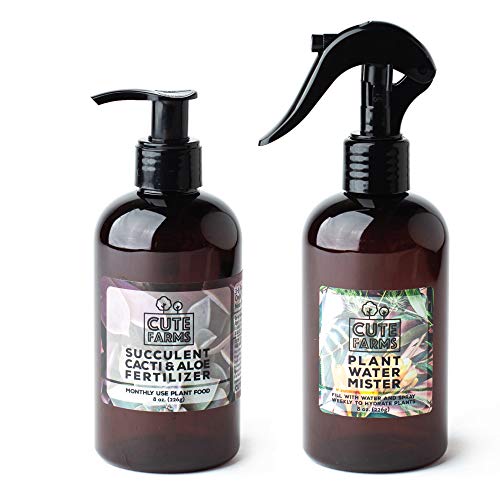
| Cute Farms Succulent FertilizerGentle Monthly Pick | Gentle monthly care with a spray bottle | Liquid | 8 fl. oz. + Mist Bottle | Once a month | Amazon |
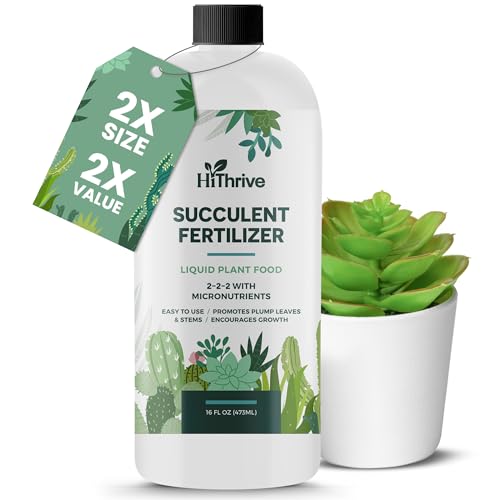
| HiThrive Succulent FertilizerBest Value | Biggest value per bottle | Liquid | 16 fl. oz. | Every other watering | Amazon |
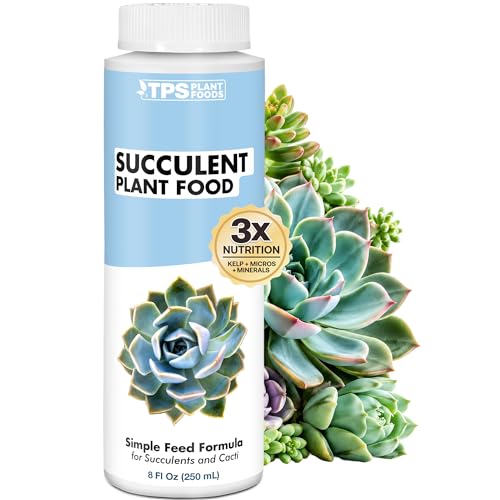
| TPS Nutrients Succulent Fertilizer | Compact growth, preventing leggy leaves | Liquid | 8 fl. oz. | Every other watering | Amazon |
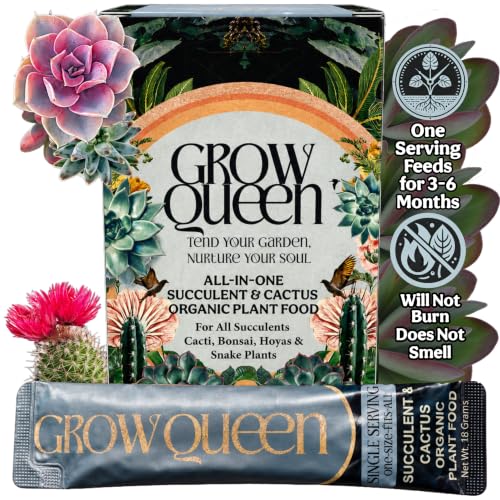
| Grow Queen Organic Cactus Fertilizer | Set-and-forget organic feeding | Powder | 11 Servings | Every 2-8 months | Amazon |
| Espoma Organic Cactus Plant Food | Organic liquid with fast results | Liquid | 8 fl. oz. (2 Pack) | Every 2-4 weeks | Amazon |
| TPS Nutrients Cactus Fertilizer | Large collection, long-lasting bottle | Liquid | 32 fl. oz. | Every other watering | Amazon |
| Nelson NutriStar Cactus Food | Low-maintenance granular feeding | Granules | 2 lb jar | Every other month | Amazon |
In‑Depth Reviews
1. Miracle-Gro Succulent Plant Food
Our pick — over 4.5★ from 21,500+ verified ratings; the strongest balance of quality and price.
The crowd favorite that pushes aloe into bloom, not just leafy growth.
What wins people over is the plant health — the single most-praised aspect across hundreds of owner experiences. People describe their succulents going from “soso to healthy and thriving,” and the most memorable success stories involve blooming. As owners put it: “I’ve never had an aloe Vera plant actually make a bloom until I used this.”
Ease of use is a big part of the appeal. You pump 1 squirt into a small pot or 2 into a large one, or mix 8 pumps per quart of water to feed and hydrate in one step. The bundle comes with two 8 fl. oz. bottles, which stretches the value further than a single bottle would.
The honest trade-off is the bottle size complaint — at 8 fluid ounces per bottle, heavy users work through it faster than they’d like. But the feed-every-2-weeks schedule is simple to remember, and the liquid formula is exactly what aloe responds to when you want quick, visible results.
The Quick Wins
- Feeds instantly on contact with soil
- Pump application is mess-free and measured
- Two 8 fl. oz. bottles in one bundle
Watch Out For
- Small 8 fl. oz. bottles go fast with many plants
- Value is a mixed call among owners depending on how often they feed
Best for: Anyone who wants a proven, easy liquid feed with a simple every-2-weeks routine.
Consider skipping if: You want a buy-once, feed-for-months option rather than a bottle you’ll replace.
2. Cute Farms Succulent, Cacti, & Aloe Fertilizer
A gentler, slower monthly feed that rewards patient plant parents.
This one is about pace. Where Miracle-Gro feeds every 2 weeks, Cute Farms asks for just 3-5 pumps once a month, which suits aloe’s natural slow-growth habit. The plant-growth feedback is the standout — the top-mentioned aspect — and the results are exactly what an aloe keeper wants: “greener, more plump,” with owners noting growth accelerating.
The kit adds real utility. Beyond the 8 fl. oz. bottle, you get an empty fine-mist spray bottle for watering and a succulent care guide. The dosing pump has a locking system to cut down on spills, and the pre-mixed liquid is ready straight out of the package with zero measuring.
The catch is scale — 8 fluid ounces is a modest amount, so this suits a small indoor collection of a few pots, not a shelf full of plants. It’s also priced as a premium pick despite the smaller volume, and the quality verdict is mixed among owners. For a few beloved aloe plants, the gentle formula and extra spray bottle make it a lovely fit.
Patient approach: The once-a-month schedule is forgiving for anyone who doesn’t want a weekly chore.
The limitation: The 8 fl. oz. bottle won’t stretch far across a large plant collection.
3. HiThrive Succulent Fertilizer
The 16-ounce bottle that stretches into 32 gallons of feed.
HiThrive wins the value argument on volume alone. At 16 fluid ounces, compared to the 8-ounce Miracle-Gro and Cute Farms bottles above, and the label says that volume mixes into 32 gallons of water. You measure just ¼ teaspoon per quart, so a single bottle covers a small collection for a very long time.
The formula leans on a full nutrient profile — nitrogen for leaves, phosphorus for roots, potassium for resilience, plus calcium, magnesium, and zinc as micronutrients. That’s a complete feed for fixing shriveled, dull leaves while strengthening the root system. The effectiveness and ease of use are the top two things owners praise most, and repeat purchases are common.
There’s a real trade-off: this is a concentrate you mix yourself every time, which adds a step compared to the pump-and-go bottles. Owners note that cacti in the yard greened up and looked healthier after regular use. If you don’t mind mixing, the per-feeding cost here is tough to beat.
Why It’s A Value King
- 16 fl. oz. makes up to 32 gallons of liquid feed
- Full macronutrient and micronutrient profile
- Repeat-buyer proof of consistent results
The Effort Required
- Requires mixing ¼ teaspoon per quart before every use
- No built-in pump or measuring dispenser
Reach for this if: You have multiple plants and want the lowest cost per feeding.
Look elsewhere if: You’d rather skip measuring and use a pump bottle for speed.
4. TPS Nutrients Succulent Fertilizer
Fights the leggy, stretched look aloe gets when it’s overfed.
This formula is built around a specific problem: succulents that grow tall, weak, and sparse instead of staying compact. The gentle NPK blend supports steady growth without forcing excess moisture or weak stretching, which is exactly the balance aloe needs to keep its rosette shape tight. Plant performance leads the feedback by a wide margin — the most-mentioned positive aspect of the entire review set.
The results show up in color as much as structure. Buyers report their succulents “greened up beautifully” after a few feedings, and deeper-than-green tones are a repeated theme. It’s also clean — the mix ratio is 1 teaspoon per gallon of water, so there’s no root stress or buildup in containers when used as directed.
The downside is the same as any small 8 fl. oz. bottle: it’s best for a modest collection. One owner even found their snake plant and pothos loved it too. It’s a made-in-USA formula for someone who wants structure and color control more than sheer growth volume.
Structure first: The gentle NPK keeps leaves thick and the rosette tight.
Scale check: An 8 oz bottle suits a few pots, not a whole greenhouse.
5. Grow Queen Organic Cactus & Succulent Fertilizer
One scoop feeds for up to 8 months and forgives forgetful waterers.
This is the set-and-forget option, and it’s a fundamentally different approach from the liquids above. Each single-serving packet feeds up to 2 gallons of soil and keeps releasing nutrients for 2 to 8 months. The 11-serving box covers up to 44 plants, and the slow-release granules feed steadily without burning roots — over-application won’t damage your aloe.
It’s OMRI-listed organic, vegan, and non-toxic, making it a safe pick around kids and pets. The formula adds calcium and specialized microbes that improve the plant’s tolerance to both over- and under-watering, which is a genuine help for aloe owners who sometimes forget. The quality is the top-praised aspect, followed closely by plant growth results.
The unique thing about this organic blend: the soil may briefly show what looks like mold on top. That’s actually the beneficial microbes working, and you can scratch it in or cover it with more dirt. It’s odorless for indoor use, unlike some organic liquids, and a fast-application 20-second scoop beats mixing a quart every time.
The Effort-Free Wins
- One serving feeds for 2-8 months straight
- OMRI-listed organic and safe around kids and pets
- Non-burning formula tolerates over-application
What To Expect
- Surface mold is normal as soil microbes activate
- Slower visible results than liquid feed
Pick this if: You want organic, long-lasting feeding with zero mixing and a high tolerance for missed waterings.
skip it if: You prefer quick liquid results and enjoy a weekly feeding ritual.
6. Espoma Organic Cactus Plant Food

An organic liquid that revives weak aloe within hours, according to owners.
Espoma’s claim to fame is speed without synthetics. The organic liquid formula gets absorbed fast — owners describe succulents showing a visible boost within hours and aloe vera leaves “glowing” after use. The effectiveness and plant health are the two most-praised aspects, tied at the top of the review counts.
You mix ½ cap per quart of water and water thoroughly, using it every 2-4 weeks, and it’s safe around kids and pets. The 2-pack of 8 fl. oz. bottles gives you double the supply, and the formula is known to encourage blooms — annual Christmas cactus flowers get credited to this feed. It’s formulated for aloe vera, jade plants, and barrel cactus alike.
The honest trade-off is the smell — the most-mentioned negative by a clear margin. The concentrate has a manure-like odor, which is typical for organic fertilizers. Diluted at the recommended rate, the smell is nearly gone, and the plants themselves stay odorless.
Fast-acting organic: Visible results in hours with a gentle organic formula.
The smell caveat: The concentrate is pungent; handle it carefully during mixing.
7. TPS Nutrients Cactus Fertilizer
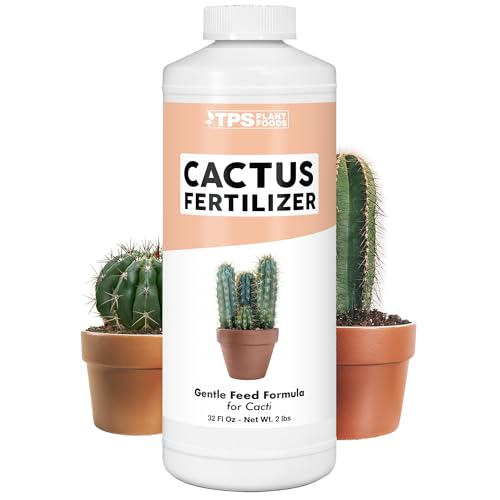
A full quart of gentle feed that lasted one owner over two years.
This is the answer for anyone tired of replacing small bottles. At 32 fluid ounces, it’s the biggest liquid volume in this lineup — at 32 fluid ounces versus the 8 oz bottles above. One owner reported the bottle lasting 2+ years across several plants, which makes the per-feeding cost essentially negligible.
The gentle formula is designed specifically for desert plants, feeding without overstimulating sensitive roots. It includes kelp and micronutrients to support strong roots and steady structure, and it’s ideal for indoor potted collections. The effectiveness is the top-praised aspect, and the mix ratio of 1:2 keeps the application simple.
The trade-off is patience. Since the feed is gentle, results come gradually, and one owner noted that slow-growing cacti take time to show a response. The Target Species list covers aloe, jade, and all desert plants, so it’s versatile across a mixed collection.
Buy once, feed long: The 32 oz bottle is the longest-lasting liquid in the group.
Slow and steady: Gentle nutrition means results build over weeks, not days.
8. Nelson NutriStar Cactus and Succulent Plant Food
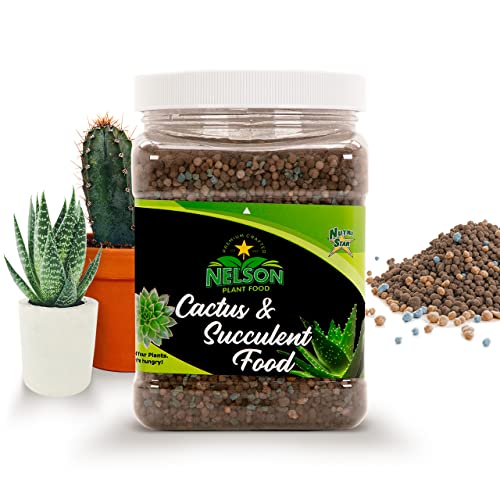
Granular slow-release pellets that need feeding only every other month.
If you want to ditch the measuring cup entirely, this granular formula is the lowest-maintenance option here. The slow-release granules feed for longer periods, requiring application only every other month, and the 8:6:8 ratio delivers a balanced NPK mix. It works for indoor and outdoor plants, and the granules are simple to sprinkle over the soil surface.
The formula includes 5 sources of nitrogen for extended feeding, plus added magnesium to boost chlorophyll for longer-lasting green, and calcium to build strong cell walls. The plant growth is the most-praised aspect, with owners crediting it for reviving plants after a cold snap and producing heavy blooms the same season.
The trade-off is timing. Granular feeds take longer to show visible results than liquids, and the slow release means you can’t quickly correct a struggling plant. The 2 lb jar comes in two size options — 2 lb and 4 lb — so you can match the quantity to your collection size.
The Low-Touch Appeal
- Feed only every other month
- 8:6:8 NPK with 5 nitrogen sources
- Slow-release prevents root burn
The Waiting Game
- Slower results than liquid feed
- Not ideal for rescuing a plant in distress quickly
Choose this if: You want a true set-and-forget granular routine with minimal effort.
Think twice if: You need fast results or prefer the control of liquid feeding.
Understanding the Specs
NPK Ratio
NPK stands for nitrogen, phosphorus, and potassium — the three numbers you see on every fertilizer label. Nitrogen drives leaf growth, phosphorus builds roots and blooms, and potassium strengthens the plant’s overall resilience. Aloe prefers a low, balanced ratio so it grows slow and compact instead of stretching tall and weak.
Liquid vs. Granular vs. Powder
Liquid fertilizers are diluted with water and absorbed fast, which suits a regular feeding routine and quick results. Granular and powder formulas release nutrients slowly over months, so you apply them less often. Granular is the lowest-effort option, while liquid gives you the most control over dosing.
FAQ
How often should I fertilize my aloe vera plant?
Can I use regular houseplant fertilizer on my aloe vera?
What NPK ratio is best for aloe vera?
Should I fertilize aloe vera in winter?
How do I apply liquid fertilizer to aloe vera?
Is organic fertilizer better for aloe vera than synthetic?
Can over-fertilizing harm my aloe vera?
How do I know if my aloe vera needs fertilizer?
Final Thoughts: The Verdict
For most buyers, the fertilizer for aloe vera winner is the Miracle-Gro Succulent Plant Food because its pump-and-go ease and every-2-weeks schedule deliver fast, visible results with minimal effort. If you want the lowest cost per feeding, grab the HiThrive Succulent Fertilizer for its 16-ounce bottle that stretches into 32 gallons. And for a buy-once, forget-about-it routine, the Grow Queen Organic Cactus Fertilizer keeps feeding for up to 8 months per serving.
How We Picked
We do not accept paid placement. Every pick is matched to a real buyer and a real use-case; we do not hands-on test units.
Sources & Methodology
Specifications: manufacturer listings and product documentation. Review insights: verified customer reviews, as of August 2026. Pricing: not shown on this page (it changes often); check the current price via the retailer link.
As an Amazon Associate, WellFizz earns from qualifying purchases. This does not affect which products we feature.
Related Guides

Mo Maruf
I created WellFizz to bridge the gap between vague wellness advice and actionable solutions. My mission is simple: to decode the research and give you practical tools you can actually use.
Beyond the data, I am a passionate traveler. I believe that stepping away from the screen to explore new environments is essential for mental clarity and physical vitality.