Our readers keep the lights on and my smoothie glass nicely filled. As an Amazon Associate, I earn from qualifying purchases.
Specs are compiled from manufacturer listings and verified buyer reviews and can change over time — please confirm the key details on the product page before buying.
The entire premise of using a fertility tracker to avoid pregnancy rests on one thing: knowing your fertile window with total certainty. These devices aren’t guessing apps — they measure your basal body temperature or hormones daily to flag red (fertile) and green (non-fertile) days, so you can plan intimacy safely without hormones or barriers.
I’m Mohammad Maruf — the founder and writer behind WellFizz. This guide is built by comparing the manufacturers’ published specifications and the patterns across verified customer reviews, so you get each pick’s real strengths and trade-offs instead of marketing spin.
We break down the top six fertility trackers by accuracy, ease of daily use, and cost of ownership to help you find the best fertility tracker to avoid pregnancy that fits your routine and your budget.
Our Picks at a Glance


How To Choose The Best Fertility Tracker To Avoid Pregnancy
When your goal is contraception, the stakes are higher than with a period app. You need a device that reliably pinpoints your fertile window — the roughly six days each cycle when conception is possible — so you know when to abstain or use backup protection.
Understand the two core sensing methods
Most fertility trackers fall into two camps. The first measures basal body temperature (your lowest resting temperature each morning); a sustained rise of about 0.5°F signals ovulation has occurred. The second reads hormone levels in urine to predict the surge that precedes ovulation. Temperature-based devices tend to be hormone-free, while hormone monitors offer a more detailed picture of your cycle.
Factor in the learning curve
Algorithms need data to learn your personal pattern. Several trackers require consistent daily use for one to three full cycles before their predictions become reliable. If you need protection immediately, a device with a faster learning curve or hormone detection may be worth the higher cost.
Check ongoing costs and subscriptions
Devices that measure temperature usually have zero ongoing costs. Hormone monitors require test strips that you must repurchase monthly, and some rely on a paired app that charges a subscription. Read the fine print so a one-time purchase doesn’t become a recurring bill.
Quick Comparison
| Model | Best For | Accuracy | Method | Ongoing Cost | Amazon |
|---|---|---|---|---|---|
| Daysy★ Best Overall | Hormone-free contraception planning | 99.4% | BBT with app | None | Amazon |
| femometer Ring Gen1Best Value | Wearable temp tracking on a budget | — | Wearable BBT | None | Amazon |
| Inito | Conceiving on the first try | — | Urine hormones | Test strips | Amazon |
| femometer Ring Gen2 | Cycle + health insights in one ring | — | Wearable BBT | None | Amazon |
| Clearblue | Clinical hormone detection with an OB-GYN favorite brand | 97% vs ultrasound | Urine hormones | Test sticks | Amazon |
| Lady-Comp | 100% offline, no-app monitoring | 99.4% | BBT only | None | Amazon |
In‑Depth Reviews
1. Daysy Fertility Tracker
Our pick — 4.5★ from 300+ verified ratings; the strongest balance of quality and price.
The German-engineered temperature tracker whose red-and-green light takes the guesswork out of your non-fertile days.
Daysy gives you a clear red (fertile) or green (not fertile) light every morning, so contraception planning becomes a simple visual check rather than a charting marathon. It pairs with a free app that analyzes your basal body temperature readings to predict ovulation, and the device carries an FDA-registered status and a claimed 99.4% accuracy at identifying fertile and non-fertile days.
Buyers report that it becomes highly accurate after about two months of consistent use and that its readings match manual fertility awareness method charting. The crowd favorite — 4.5 stars across 300+ owners — is anchored by praise for its reliability, which is the most-discussed positive in the review pages. There is no subscription fee, and the device uses only temperature, making it a fully hormone-free option.
The honest trade-offs: usability feedback is mixed, and several owners stress that the manual must be read and the device used consistently every morning, or accuracy suffers. One owner described the learning curve as ridiculous, while others found the app very easy to use. The device runs on a chargeable lithium-ion battery and syncs via Bluetooth and USB.
Owners Rave About
- 99.4% accuracy once the algorithm learns your cycle
- No subscriptions — the app is free for life
- Fully hormone-free, designed in Switzerland and built in Germany
Expect This
- Requires reading the manual and consistent daily use
- Learning curve is steep for some; a few found setup sync finicky
Reach for this if: you want a hormone-free, app-connected BBT tracker with proven accuracy and zero recurring fees.
Look elsewhere if: you’re not prepared to take your temperature at the same time every single morning without fail.
2. femometer Ring Gen1
A featherweight wearable that reads your temperature while you sleep and auto-syncs a full fertility chart by morning.
The femometer Ring Gen1 trades the morning ritual of a dedicated thermometer for a ring you wear overnight. At just 2.7mm thick, it sits comfortably on your finger and uses upgraded temperature sensors to monitor your basal body temperature in real time, then auto-syncs to the femometer app to chart your cycle and predict ovulation.
The thing everyone raves about is how well it handles health tracking — it’s the most-mentioned positive across the review data, with functionality as a close second. Owners highlight accurate BBT trends that match other devices, comfortable overnight wear, and an app that’s genuinely easy to navigate. Several note the battery holds up well and syncing is straightforward, making it a strong value at a mid-range price point.
The trade-offs sit in sizing and connectivity. The manufacturer explicitly recommends buying a sizing kit before the ring itself, and some owners found the fit didn’t match standard ring sizes. A minority also reported occasional Bluetooth disconnects and described the ring as bulky and warm. Worth knowing: the Gen1 also delivers professional sleep insights, though its 21 milliamp-hour battery is on the small side.
What Wins People Over
- Comfortable to wear all night and stays aligned
- Auto-syncs accurate temperature trends to a free app
- Best price-to-feature balance in the wearable group
What to Watch
- Order the sizing kit first — fit is the most common complaint
- Occasional Bluetooth disconnects reported by a few owners
Your best bet if: you want a budget-friendly wearable that removes the hassle of manual morning temperature taking.
Think twice if: you have very small or very large fingers — sizing is the single biggest variable with this ring.
3. Inito Fertility Monitor

The lab-in-a-strip monitor that reads four hormones at once to show exactly when ovulation really lands.
Inito doesn’t just track one hormone — it measures all four key fertility hormones on a single test strip: Estrogen, Luteinizing Hormone (LH), PdG (the urine metabolite of progesterone), and FSH. That full picture lets it identify 6 fertile days in your cycle and, crucially, confirm ovulation actually happened by measuring PdG afterward.
The review pages for this device are dominated by one outcome: “Got pregnant on the first cycle using it” and “I got pregnant the first month I used it and I’m 42.” Buyers consistently say it was easy to use after watching a short tutorial video, and they value that the free app shows actual hormone values and charts rather than just a red-or-green verdict. The catch for contraception use — and it’s a big one — is that this is a conceiving tool first; you need the hormone readings to time avoidance, and the device is compatible with iPhone 13 only, so check your phone before ordering.
It runs on 2 included CR2 batteries and comes with 15 test strips, which you’ll need to repurchase once they run out. The hormone approach gives you earlier and more detailed fertile-window signals than temperature alone, but the strips add an ongoing cost that temperature-based trackers don’t have.
Why It Stands Out
- Measures 4 hormones to both predict and confirm ovulation
- Identifies up to 6 fertile days per cycle
- App displays actual hormone values, not just a color
Keep In Mind
- Only works with iPhone 13 — no other models
- Test strips are a recurring purchase
Choose this for: the most biologically detailed fertile-window picture money can buy in a home device.
skip it if: you’re on Android, don’t own an iPhone 13, or want a zero-recurring-cost contraception method.
4. femometer Ring Gen2
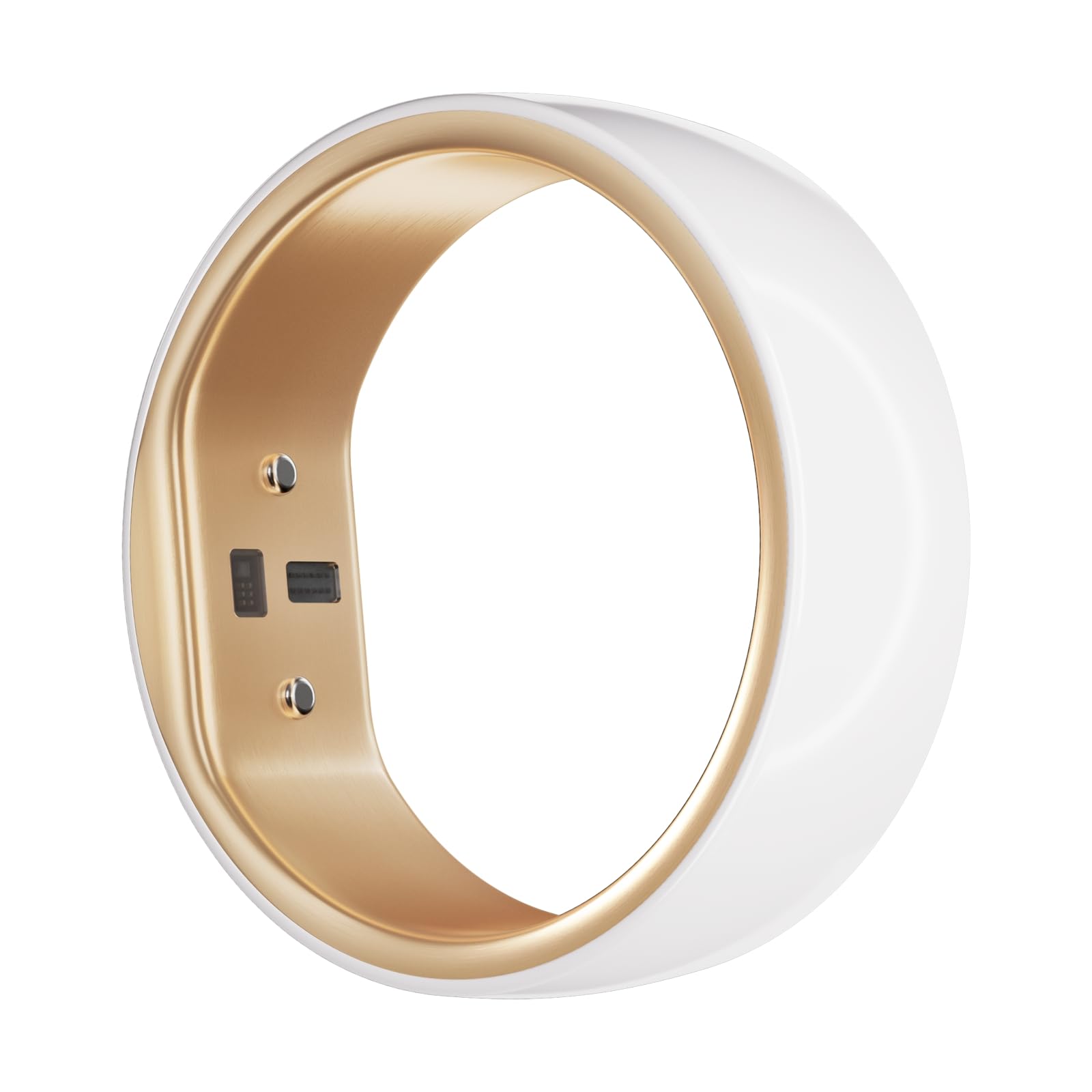
A 24/7 health companion that captures 1,400+ nightly temperature readings while it tracks your sleep and heart.
The Gen2 ring takes the wearable concept further than the Gen1 by adding continuous heart rate and HRV (heart rate variability, a measure of stress and recovery) tracking alongside its cycle monitoring. It uses what femometer calls revolutionary BBT technology — those 1,400+ nightly temperature measurements — to deliver accurate cycle predictions and ovulation detection, all syncing to a lifetime free app.
The defining trait across reviews is build quality, and it’s a mixed picture. Several owners describe the design as sleek, lightweight, and comfortable with a durable ceramic finish, and one long-term user reports the cycle tracking helped them achieve pregnancy with no glitches and strong battery life. But the ceramic outer layer has cracked and detached for more than one owner within months, which led some to upgrade to femometer’s Ring Air for a sturdier build. The advertised 7-day average battery life also drew mixed feedback — some see it long, others report it draining in under five days, and the manual advises against pool, shower, and bath use despite a 100m rating that needs careful reading.
For contraception specifically, the comfort of wearing it 24/7 means your temperature data is collected automatically every night without a morning routine. Just be aware that one owner found manual daily syncing necessary for BBT, so the app needs to be opened regularly to keep charts accurate.
The Appeal
- Combines cycle tracking with heart rate, HRV, and sleep insights
- Automatic nightly temperature collection — no morning ritual
- Ceramic finish feels premium and discreet
The Gripes
- Ceramic outer layer has cracked and detached for some owners
- Battery life reports vary; heavy users may see under 5 days
Ideal for: women who want a single wearable for both natural family planning and general wellness data.
Not for: anyone who expects a rugged ring — treat the ceramic finish gently to avoid the breakage some owners hit.
5. Clearblue Fertility Monitor
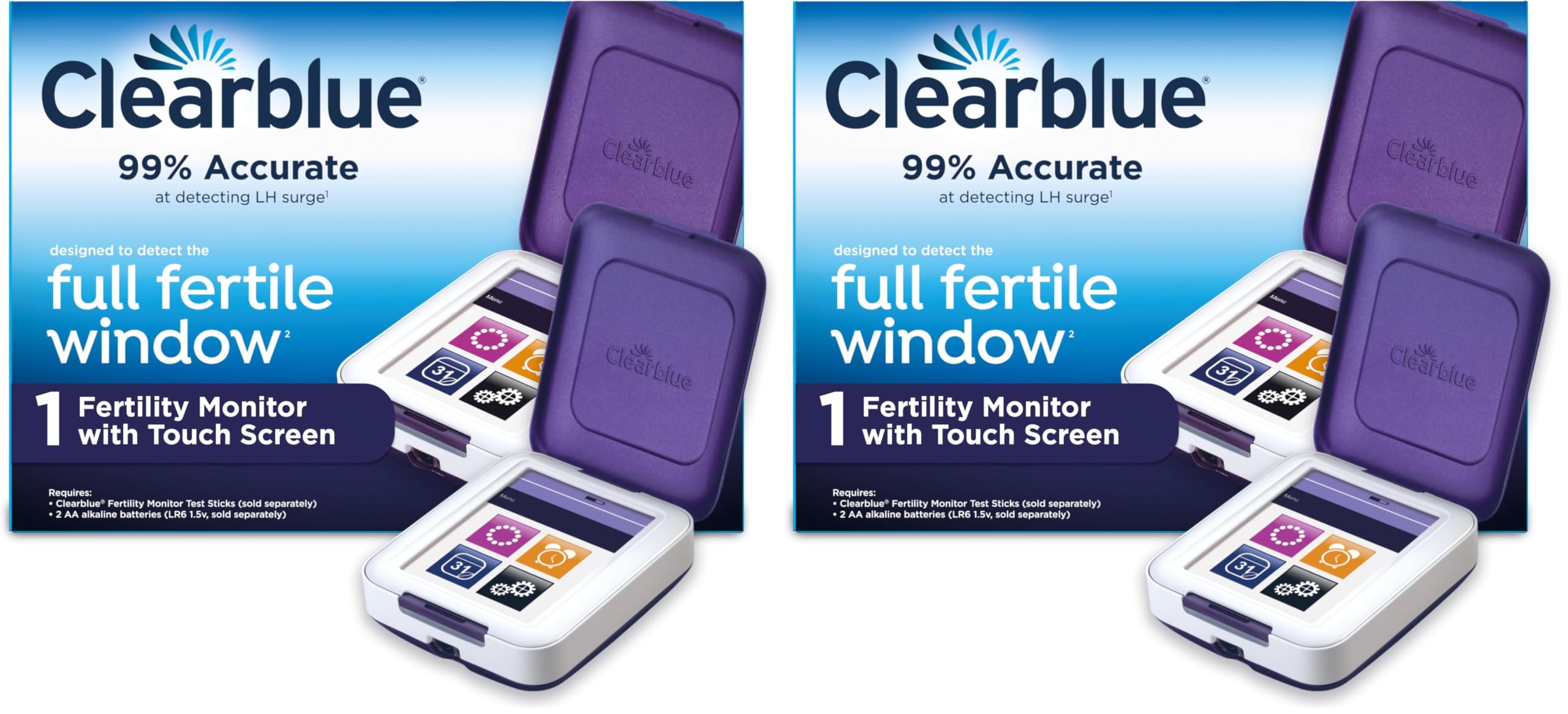
The OB-GYN-endorsed touchscreen monitor that detects all your fertile days with 97% agreement to ultrasound.
Clearblue is the #1 OB-GYN recommended ovulation brand, a claim backed by its clinical validation., and this touchscreen monitor lives up to that billing with clinically backed hormone tracking. It detects both estrogen and luteinizing hormone (LH) to identify up to 6 fertile days per cycle — that’s 4 more than LH-only tests — and claims 99% accuracy at detecting the LH surge, with 97% agreement to ultrasound-observed ovulation in clinical testing.
Owners consistently describe it as the best fertility tool on the market for predicting ovulation, with easy-to-use test sticks and clear, reliable results. It stores up to 6 cycles of personal data you can review and share with your doctor, and the touchscreen keeps setup simple. One check against the data: this is a conceiving-focused device, and reviewers themselves note it’s not ideal for contraception — its strength is catching the fertile window, not confirming non-fertile days.
The catches are practical. Test sticks are sold separately and run pricey at retail. Setup must happen on cycle days 1-4, and the test window is a fixed 6-hour block you can’t change until your next period. First month off birth control may also produce inaccurate reads until your cycle adjusts. It’s a mid-premium splash, carried by brand trust and clinical validation.
Clinical Strengths
- 99% accurate at detecting the LH surge
- 97% agreement with ultrasound-observed ovulation
- Stores 6 cycles of data to review with a doctor
Practical Limits
- Test sticks sold separately and pricey
- Setup locked to days 1-4; 6-hour test window is fixed
Best suited to: couples who want clinically validated hormone tracking and don’t mind repurchasing test sticks each cycle.
Step back if: you need to track non-fertile days for contraception — this monitor is built to catch ovulation, not confirm safe days.
6. Lady-Comp Fertility Monitor

The German-engineered standalone device that works for 60 seconds a day with no app, no internet, and no subscription.
Lady-Comp is the more private sibling of Daysy — the same Valley Electronics lineage, but fully self-contained. You take your basal body temperature each morning for about 60 seconds, and a backlit display with an optional alarm shows a red (fertile), green (not fertile), or yellow (learning phase) light. No app, no Bluetooth, no data leaving the device, and it runs on a single included CR2032 battery.
It’s a certified medical device (CE marked, FDA 510(k) cleared) with a proprietary algorithm claiming 99.4% accuracy and over 35 years of fertility tracking research behind it.. Owners find it fits easily into a daily routine and measures temperature precisely, and several specifically prefer its standalone nature — one compared it directly to Daysy and liked that Lady-Comp lets you retroactively mark your cycle start, which Daysy couldn’t do. The most-discussed positives are ease of use and accuracy, though value for money draws the most negative feedback of any aspect.
The honest trade-off is the premium price tag and the learning investment. It provides a personalized 6-month fertility forecast and tracks milestones like conception date and expected due date, but it demands the same daily consistency as any BBT method. A rare dissatisfied owner found it confusing after a year, so if you want a zero-app, zero-subscription tracker and value total privacy, this is the one — just budget for the upfront cost.
Why It’s Unique
- 100% offline and private — no app, no internet required
- 99.4% accuracy from over 35 years of research.
- 6-month menstrual forecast and optional alarm built in
Consider This
- The most expensive pick with no subscription savings to offset it
- Accuracy depends on consistent daily temperature-taking
Pick this if: total data privacy and a device that works without your phone matter more than anything else.
Reconsider if: you want app-connected charts and insights — Lady-Comp deliberately skips them for a no-frills display.
Understanding the Specs
Basal Body Temperature vs. Hormone Detection
Temperature trackers like Daysy and Lady-Comp measure your resting morning temperature to spot the sustained rise that confirms ovulation. Hormone monitors like Inito and Clearblue instead read estrogen and LH in urine to predict the surge before ovulation. For avoiding pregnancy, temperature-based devices are the classic choice because they clearly mark safe green days; hormone monitors give earlier warning but often cost more per cycle in test strips.
The Learning Phase Matters
Most algorithms need one to three full cycles of consistent daily data before their predictions are trustworthy. During this yellow “learning phase,” the device is still mapping your personal pattern, and accuracy claims like 99.4% apply after training. If you need protection immediately, a device with faster pattern recognition or hormone detection beats one with a longer training window.
FAQ
Can a fertility tracker reliably prevent pregnancy?
How long until a tracker knows my cycle?
What is the difference between BBT and hormone tracking?
Are there ongoing subscription costs?
Which tracker works without a smartphone?
Can I use a conceiving tracker for contraception?
Will an irregular cycle affect accuracy?
Is a wearable ring as accurate as a dedicated thermometer?
What phone compatibility should I check before buying?
How should I start tracking to get accurate results fast?
Final Thoughts: The Verdict
For most people, the winner is the Daysy because it pairs proven 99.4% accuracy with a free app, an FDA-registered status, and zero ongoing costs, all reading as hormone-free green days you can trust. If you want a wearable that collects data while you sleep, the femometer Ring Gen1 is the budget-friendly path. And for total privacy with no app at all, the Lady-Comp is the offline option that never touches the internet — just budget for a premium upfront price.
How We Picked
We do not accept paid placement. Every pick is matched to a real buyer and a real use-case; we do not hands-on test units.
Sources & Methodology
Specifications: manufacturer listings and product documentation. Review insights: verified customer reviews, as of August 2026. Pricing: not shown on this page (it changes often); check the current price via the retailer link.
As an Amazon Associate, WellFizz earns from qualifying purchases. This does not affect which products we feature.
Related Guides

Mo Maruf
I created WellFizz to bridge the gap between vague wellness advice and actionable solutions. My mission is simple: to decode the research and give you practical tools you can actually use.
Beyond the data, I am a passionate traveler. I believe that stepping away from the screen to explore new environments is essential for mental clarity and physical vitality.