Our readers keep the lights on and my smoothie glass nicely filled. As an Amazon Associate, I earn from qualifying purchases.
Specs are compiled from manufacturer listings and verified buyer reviews and can change over time — please confirm the key details on the product page before buying.
A fence that fails to contain sheep is just an expensive suggestion. The right fence—for rotational grazing, road safety, or predator control—turns daily management from a headache into confidence. A successful sheep fence hinges on three factors: material, height, and whether it carries a current.
I’m Mohammad Maruf — the founder and writer behind WellFizz. This guide is built by comparing the manufacturers’ published specifications and the patterns across verified customer reviews, so you get each pick’s real strengths and trade-offs instead of marketing spin.
Below are eight of the most reliable options currently available, broken down by what each one does best — from heavy galvanized wire to electrified netting — so you can confidently choose the best fencing for sheep that matches your land, your budget, and the size of your flock.
Our Picks at a Glance
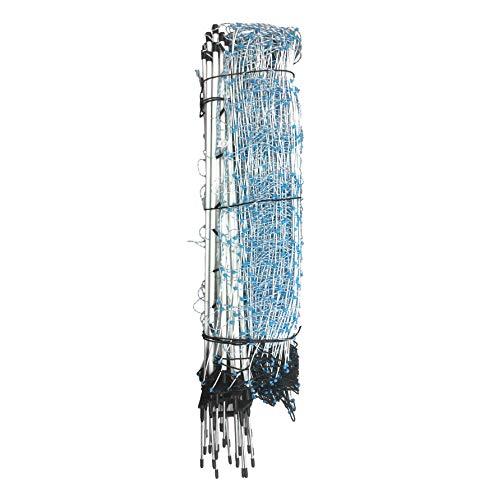

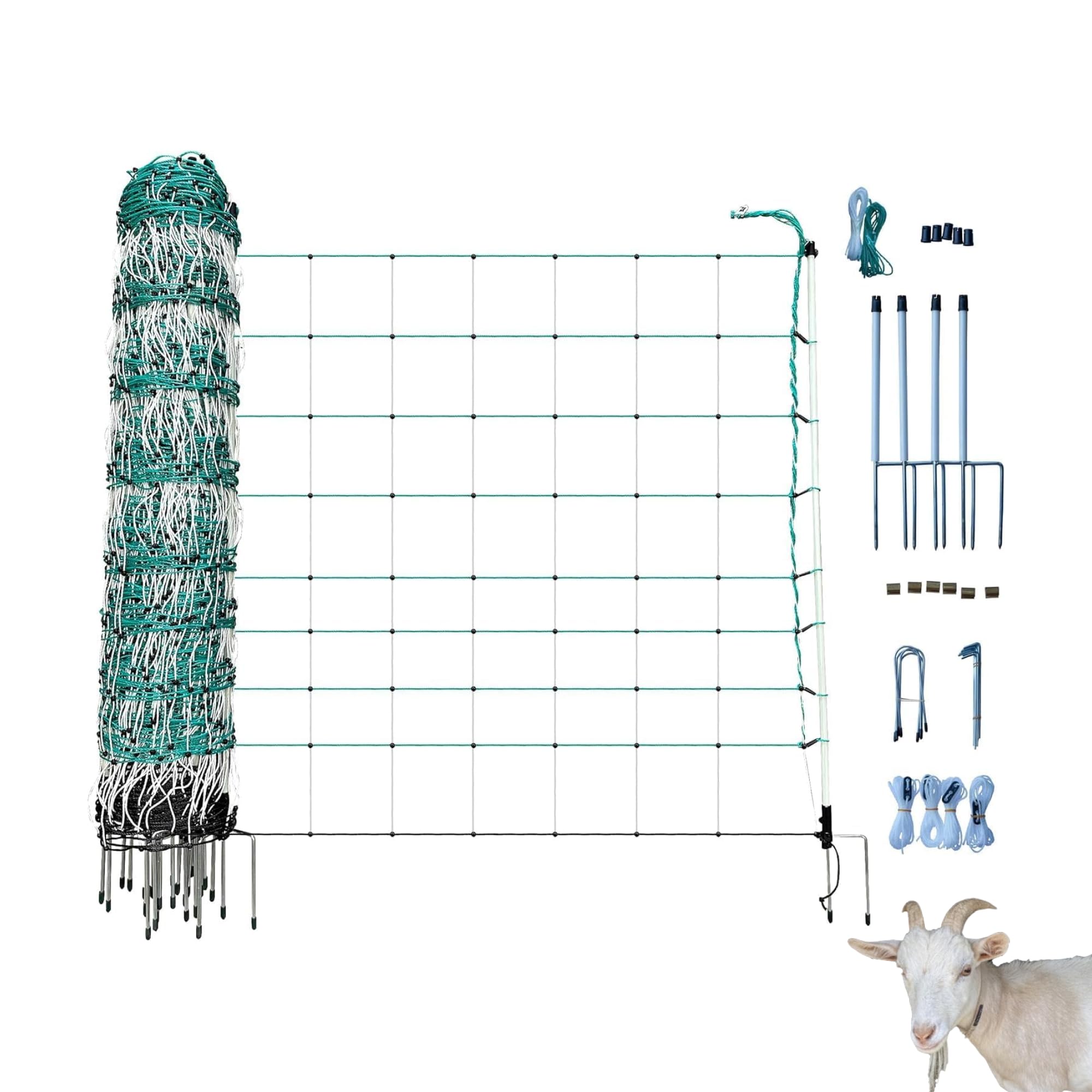
How To Choose The Best Fencing For Sheep
You have two main roads here: permanent field fencing made of galvanized woven wire, or portable electric netting that you can pick up and move. Each solves a different problem. The woven wire fence is a fixed boundary — set it once and it stays for years, great for property lines or perimeter security. Electric netting is a mobile enclosure built for rotational grazing, where you shift the flock to fresh grass every few days. Your choice hinges on if you need a permanent wall or a movable pen.
Height and Mesh Size
Sheep are not natural jumpers like deer, but they will test a low fence. A height of 35 to 42 inches is the standard range for sheep containment. Below 35 inches and a determined ewe might scramble over, especially if feed is better on the other side. The mesh gap matters just as much — you want openings small enough near the ground so lambs cannot squeeze through, but large enough higher up that the fence does not catch debris or wind like a sail.
Electric vs. Non-Electric
A non-electric woven fence is a physical barrier only — it stops sheep by being too tough to push through, but it does not train them to stay away from the wire. Electric netting delivers a short, memorable pulse that teaches the flock to respect the boundary. For rotational grazing, electric netting is nearly essential because you move it regularly and the sheep learn to stay off it. For a permanent boundary around the farm, a good galvanized fence combined with a single hot wire along the top gives you the best of both worlds.
Gauge and Durability
The thickness of the wire is measured in gauge — a lower number means a thicker, stronger wire. Standard woven sheep fence is often 14-gauge, which is sturdy enough for routine contact but will bend under heavy pressure from cattle or horses. Electric netting uses thinner conductive strands, typically made from stainless steel or a blend of metal and plastic, so it is lightweight and moveable but requires careful handling to avoid breaking the conductors. You trade a bit of brute strength for portability.
Energizer Compatibility
Every electric netting fence must be connected to an energizer (also called a charger) to work. The energizer sends the pulse down the fence. A low-impedance pulse energizer is ideal because it keeps voltage up even when vegetation touches the netting. For a single roll (roughly 164 feet), a 0.3 to 0.5 joule unit is sufficient. For multiple rolls linked together, you need more energy, typically 1 joule or higher. Never use a continuous current energizer with electric netting — it can melt the plastic struts and create a fire risk.
Quick Comparison
| Model | Best For | Type | Height | Length | Amazon |
|---|---|---|---|---|---|
| Starkline Premium Electric Netting★ Best Overall | Rotational Grazing | Electric Netting | 35″ | 164′ | Amazon |
| Premier 1 ElectroStop Double SpikeBest Value | Flighty Breeds & Rams | Electric Netting | 42″ | 164′ | Amazon |
| RentACoop Electric Goat FencePremium Pick | Premium Portable Setup | Electric Netting | 42″ | 168′ | Amazon |
| HSLNSD Electric Fence Netting | Large Enclosures | Electric Netting | 42.5″ | 164′ | Amazon |
| YESON Farm Fence | Budget Perimeter | Galvanized Wire | 48″ | 164′ | Amazon |
| Gardenova Livestock Fence | Garden Enclosure | Galvanized Wire | 48″ | 164′ | Amazon |
| LMRSTOO Electric Poultry Netting | Mixed Flocks | Electric Netting | 49.6″ | 164′ | Amazon |
| Premier 1 ElectroNet | Rotational Sheep & Goats | Electric Netting | 35″ | 164′ | Amazon |
In‑Depth Reviews
1. Starkline Premium Electric Netting (35″ x 164′)
Our pick — 4.5★ from 250+ verified ratings; the strongest balance of quality and price.
The netting that sheep owners keep coming back to — setup takes about 30 minutes, and it moves with ease.
This is the roll that flips the hassle of rotational grazing into a system you can handle by yourself. The 35-inch height is right for most sheep breeds, and the fiberglass posts with solid foot spikes hold firm even when the ground is dry or uneven. Ease of setup is the feature that wins the most praise — buyers report that a single person can unroll, stake, and energize the whole 164-foot length without needing a second pair of hands. The netting covers up to 1600 square feet of enclosed space, which is enough for a small flock to rotate through fresh grass every few days.
Durability draws mixed feedback, and the honest read is this: treat the netting as a portable system, not a fortress. It holds up well through repeated moves and holds sheep securely, but if a ram decides to lean hard on a post, the fiberglass can flex more than you would like. Pair it with a quality energizer (owners recommend the Gallagher S30 solar unit) and the flock learns the boundary in a couple of days. One improvement over the standard all-purpose version: the premium build has less sag, so you spend less time adjusting gaps. At 15 pounds, it is light enough to drag across the field during relocation.
The only real catch is that the netting must be paired with an energizer, which is sold separately — budget for that upfront. A few owners mention that untangling a new roll takes patience the first time, but once it is stretched, the setup time drops sharply on subsequent moves.
Why Owners Stick With It
- easy one-person setup and relocation for rotational grazing.
- Fiberglass posts with large solid foot spikes hold well in varied terrain.
- Premium version sags less than the standard All-Purpose netting.
The Trade-Off
- Posts are not indestructible — a heavy ram or aggressive goat can flex them over time.
- Energizer not included; you have to buy a compatible charger separately.
Reach for this if: you want a portable electric system you can set up solo in under an hour and move every few days to rotate pasture.
Think twice if: your flock includes large, aggressive rams that test every post — you may need the heavier ElectroStop below.
2. Premier 1 ElectroStop Double Spike Electric Netting (42″ x 164′)
The fence designed for flighty sheep and determined rams — 10 horizontal strands and double-spike posts for serious stability.
Premier 1 built this netting specifically for the tough containment jobs: meat and dairy goats, flighty sheep breeds, and rams that do not respect flimsy boundaries. The 42-inch height is a step up from the 35-inch standard, and with 9 conductive strands out of 10, the electrical coverage is dense enough that an animal touching anywhere along the netting gets the full pulse. The PVC posts are built into the mesh every 12.5 feet, and each post has double metal spikes that anchor much better than a single spike in loose or sandy soil. Setup time is about 10 minutes per roll, according to the manufacturer, and owners confirm that two people can have the first roll up and hot in under half an hour.
What wins people over is the conductivity. Premier 1 claims this netting is 10 times more conductive than standard electronet, and while you cannot verify that without a voltmeter, owners mention that the shock is strong enough to hold goats and sheep even with vegetation brushing the fence. That matters when you are running a solar energizer with limited output. The main grumble is that the top of the fence can sag between posts — a few owners reinforce it with fiberglass poles, especially on long runs. On flat ground with a tight stretch, the sag is minimal.
Compared to the Starkline, this is a heavier, more substantial fence (18 pounds) designed for more challenging animals. The upfront cost is higher, but if you need to contain ram lambs or run a managed grazing system on uneven pasture, the extra spend shows up as fewer breakouts.
Built for heavy duty: Double-spike PVC posts, 9 conductive strands at 42 inches tall — this is the go-to for flocks that push boundaries.
A touch of sag: The top line can droop between posts on longer runs; adding a fiberglass support pole every 25 feet fixes it cleanly.
Best for: owners with flighty sheep, rams, or goats on uneven ground who want the highest conductivity in a portable electric netting.
Skip if: your flock is docile and your land is flat — the Starkline provides plenty of containment at a lower cost.
3. RentACoop Electric Goat Fence Netting (42″ x 168′)
Portable netting with copper and triple-braided stainless steel conductors — built to deliver consistent current even in damp conditions.
RentACoop took a different approach with the conductor material here: they use copper wire in addition to triple-braided stainless steel. That combination helps the fence maintain a clean electrical pulse when connected to a low-impedance intermittent energizer, which is the exact type you should be running. At 42 inches tall and 168 feet long, it gives you a bit more coverage than the standard 164-foot rolls — over 1,700 square feet when fully enclosed. The fiber-reinforced plastic (FRP) posts are pre-fastened every 12 feet, and the double-spiked design plus corner guylines keep the fence upright on windier days. A repair kit, warning sign, and metal stakes are included, which saves a trip to the hardware store when you inevitably snag a strand on a branch.
What owners rave about is how well it works for mobile pens. It contains everything from week-old lambs to full-grown donkeys, and it has kept guardian dogs in and roaming dogs out. The dual-spike posts get a lot of credit — owners say they grip the ground noticeably better than single-spike designs. The honest catch is that the middle of the fence can sag and droop onto the ground if the tension is not adjusted, and a sagging net touching vegetation drains your energizer battery fast. Starting with a tight install and walking the line after a day or two solves it. A few owners also mention that the ends can be tricky to connect to heavier high-tensile wire.
This fence sits at the premium end of the price scale. You are paying for the superior conductor materials and the more complete accessory kit. If you run a decent energizer and keep the fence stretched, it is as reliable as portable electric netting gets.
Conductor quality: Copper and triple-braided stainless steel strands deliver consistent current — a clear step up from basic steel-only netting.
The sag watch: Center droop between posts is the main maintenance point; firm tension at install and occasional tightening keeps it off the ground.
Reach for this if: you want the best conductor material for reliable shocking power on a rotational grazing setup with sheep or goats.
Look elsewhere if: you are on a tight budget and need a simple containment net — the Starkline or Premier 1 ElectroNet will serve you well for less.
4. Premier 1 ElectroNet Electric Fence (35″ x 164′)

The classic electro-net from Premier 1 — designed specifically for sheep and goats, with 9 horizontal strands and PVC posts at every interval.
Premier 1 has been making this netting for years, and it shows in the details. The 35-inch height with 8 electrified strands (the bottom strand is not electrified to prevent the fence from grounding out) gives sheep a clear, memorable shock while keeping the system safe from accidental shorts. The PVC posts with 6-inch single metal spikes are built into the mesh every 12.5 feet, and the white plastic vertical struts keep the netting from sagging as much as cheaper alternatives. Multiple rolls can be connected together, and customers note putting up 900 to 1,000 feet in a single day by themselves, even with a bad back. That is the kind of real-world speed that matters when you are rotating pasture on a schedule.
Functionality and quality are the two things owners mention most often. The netting works as intended for rotational sheep and goat grazing — provided the animals are trained to electric fence first and you run a quality high-voltage energizer. The caveats are real, though: the single-spike posts are not as stable as the double-spike versions, especially in loose soil or on a windy ridge. Several owners reinforce corners with rebar and PVC conduit. Durability gets the most negative mentions of any aspect, and the pattern is that the plastic posts can bend permanently if a heavy animal leans into them. For sheep, that is usually not a problem; for cattle or large goats, upgrade to the ElectroStop above.
Compared to the Starkline, the Premier ElectroNet has a slightly higher star rating and a longer track record, but it also comes with a higher price tag and the same single-spike limitation. It is a proven tool, not a revolution — and that is exactly what many shepherds want.
Proven design: 9 strands, PVC posts every 12.5 feet, specifically dimensioned for sheep and goats — this is a fence built from decades of feedback.
Post strength limit: Single-spike PVC posts can bend and lose stability over time; corner reinforcement is strongly recommended.
Best for: shepherds who value a well-documented, time-tested electric netting for rotational grazing on fairly level ground.
Consider the ElectroStop instead if: your pasture has rocky or uneven soil where single spikes will not hold securely.
5. HSLNSD Electric Fence Netting (42.5″ x 164′)

A budget-friendly electric netting with PE and stainless steel construction.
This is the electric netting that gives you 42.5 inches of height and a full 164-foot run for a very attractive price point. The materials are high-strength PE (polyethylene) and stainless steel wire, which keeps the fence lightweight and flexible enough to bend around corners without breaking the conductors. It comes with 14 posts and double spikes, so you get the ground-holding advantage of dual spikes even at this lower cost.
The biggest praise comes from buyers using it for cattle and larger livestock, but sheep reviewers point out it works well too. As one owner summed it up, “It took 2 hours to untangle the mess but only minutes to install.” That verbatim quote captures the core trade-off: the factory rolling is inconsistent, and unrolling a new fence can be a frustrating 2-hour wrestling match. Once it is stretched and staked, installation is genuinely quick. The other major complaint is the complete lack of instructions for electrical hookups and grounding. Buyers who are new to electric fencing end up watching YouTube for hours. Plan to buy a separate grounding rod and wire, and read up on basic electric fence installation before this arrives.
Compared to the Starkline, this netting is taller and cheaper, but the build quality and customer support are not at the same level. It is a solid value pick for the budget-conscious grazer who does not mind a little DIY effort on the first setup.
Coverage champion: 7,005 square feet per roll — the highest coverage per dollar in this list, ideal for large, temporary enclosures.
Setup friction: Poor factory rolling and zero instructions for power hookups are the consistent frustrations; prepare for a learning curve on the first roll.
Best for: budget-minded homesteaders who need large coverage for rotational grazing and do not mind a longer first-time setup.
Not ideal for: first-time electric fence users who want a plug-and-play experience — the Starkline or Premier 1 are easier to start with.
6. LMRSTOO Electric Poultry Netting (49.6″ x 164′)
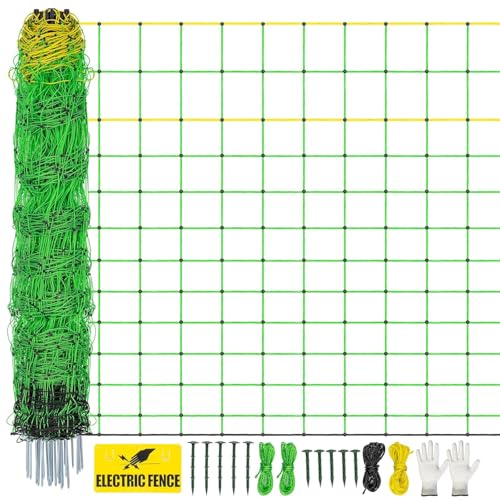
Built for mixed flocks — 49.6 inches tall with a tight grid pattern that keeps sheep in and smaller predators out.
This netting is the tallest in the lineup at 49.6 inches, which gives you extra headroom for sheep breeds that like to test the top of a standard fence. The grid density is why owners with mixed flocks (sheep plus poultry) pick this one — each cell measures 3.5 inches wide by 6.2 inches tall, small enough that lambs cannot squeeze through and large enough that the fence does not turn into a sail in a breeze. At 22 pounds, it is the heaviest electric netting here, but that weight comes from the sturdy fiberglass posts and double-spike system. The green color is a nice touch: it blends into grass for the animals while remaining visible enough for people to see and avoid.
Functionality gets the most positive mentions — the fence does what it is supposed to do for sheep, goats, and pigs when paired with a 0.3 to 0.5 joule energizer. Mobility is the second-most-praised feature; owners say it is easy to unroll, move, and re-stake across a pasture. The durability picture is more mixed. The netting itself can be flimsy against large, aggressive animals, and a few shoppers say that a charging goat or buck can tear a hole. The included repair kit covers minor damage, but if your flock includes large rams, this is not the primary fence for them. Setup is straightforward but the instructions are thin — you will need basic electric fencing knowledge to get the power connection right.
Compared to the HSLNSD netting, this one is taller, denser, and slightly more expensive, but it does not suffer from the same factory-rolling complaints. The trade-off is weight: at 22 pounds, it is the heaviest roll here to carry across the field.
Tall and tight: 49.6-inch height with a 3.5 x 6.2-inch grid — the best option for mixed flocks where lambs and poultry share a pasture.
Durability caution: The netting is on the lighter side; aggressive bucks or large rams can damage it. Best for docile sheep and medium-duty rotation.
Reach for this if: you need extra height for larger sheep or run a mixed flock with smaller animals that need a tight mesh near the ground.
skip it if: your flock consists of large, strong rams or you need a permanent, heavy-duty fence — stick with the woven wire options below.
7. YESON Farm Fence (4ft x 164ft) – Heavy Zinc Coating Galvanized Field Fencing

A permanent galvanized wire fence for the budget-conscious — 4 feet tall with graduated mesh that shrinks near the ground.
This is a non-electric woven wire fence made from 14-gauge alloy steel with a hot-dip galvanized surface for corrosion resistance. The 48-inch height is the standard for sheep — tall enough to discourage jumpers but short enough that a single roll is manageable by one person during installation. The graduated mesh design is the clever part: the horizontal gaps are larger near the top and progressively smaller toward the bottom, which stops lambs and rabbits from squeezing through while reducing the overall material cost. It covers 656 square feet per roll, but the trade-off is that this is a permanent fence that does not need a battery or charger to work.
As the review pages sum it up: “Great fencing it’s not super strong but works great for our sheep I have bought many times.” The honesty in that quote cuts straight to the point. The 14-gauge wire is not 11 or 12 gauge — it is lighter. It will hold sheep, who generally test fences by pressing rather than charging, but it will bend under a heavy animal that leans hard. Owners note that it is best used as a perimeter or cross-fence on a farm where sheep are the primary livestock. Installation requires T-posts or wooden stakes every 8 to 10 feet, and you need to be careful when stretching and stapling — the wire can snap if kinked while tightening. A few owners found the actual mesh openings larger than the stated dimensions, so small lambs might need a lower row of chicken wire.
Compared to the Gardenova fence below, the YESON has a slightly higher rating and fewer complaints about flimsiness. It is a solid budget option if you accept that it is lighter duty than traditional farm fence.
Cost-effective permanent fence: Hot-dip galvanized 14-gauge steel with a smart graduated mesh — sets up as a fixed boundary that needs no power.
Not built for brute force: Lighter gauge means it bends under heavy pressure; best suited for sheep-only pastures and not for aggressive cattle or horses.
Best for: permanent sheep paddocks on a budget where the primary goal is to mark a boundary, not to train animals with an electric shock.
Not for: rotational grazing — this is a fixed fence. If you move your flock every few days, pick an electric netting from above instead.
8. Gardenova Livestock Fence (4ft x 164ft) – Galvanized Wire Fencing

A budget galvanized option with a graduated mesh — thinner than heavy duty fence but lighter to handle during installation.
This woven wire fence from Gardenova shares many specs with the YESON above: 48 inches tall, 164 feet long, 14-gauge high carbon steel wire with a hot-dip galvanized coating. The graduated mesh (smaller gaps at the bottom, larger at the top) is the same anti-escape design for lambs and small animals. The key difference is that owners find this fence notably on the lighter and flimsier side. It weighs a similar amount but the wire stiffness is lower, meaning it bends more easily when an animal pushes against it. It is also notoriously hard to unroll — the wire catches on itself frequently, which adds frustration to an already physical install job.
Value for money is the top positive aspect. If you just need a cheap barrier to keep sheep away from a garden or mark a temporary boundary, this fence works for the price. The sturdiness and quality get the most mixed reviews, and the honest verdict is that it is not a fence you set and forget. It requires good support posts spaced closely (every 6 to 8 feet) and careful tensioning to stay upright. A few owners pointed out that small dogs can push the wire apart or escape through the openings, so for containing determined animals, this is not the one. For sheep that are not aggressive fence testers, it does the job.
Compared to the YESON fence, the Gardenova has a slightly lower rating and more reports of flimsiness. If the price gap is small, go with the YESON. If the Gardenova is on a deep discount and you need a light-duty sheep barrier, it will hold — as long as you set realistic expectations for how much abuse it can take.
Absolute budget champion: The most affordable permanent wire fence here, best for marking a gentle boundary for calm sheep.
Flimsy by nature: The wire bends easily under pressure and the roll fights back during unrolling — expect a higher-effort install than the price suggests.
Best for: a low-cost permanent fence around a small, quiet sheep paddock where the animals are docile and the fence is not the primary predator barrier.
Skip this if: you need a fence that can withstand an animal leaning its full weight — go with a heavier gauge or an electric netting above.
Understanding the Specs
Gauge (Wire Thickness)
This is the single most important number for a woven wire fence. A lower gauge means a thicker wire that resists bending. The standard sheep fence uses 14-gauge wire (about 0.08 inches thick), which holds sheep reliably but can bend under heavier cattle. A 12-gauge wire is noticeably sturdier but heavier and harder to handle. For electric netting, the conductive strands are much thinner — they are not meant to physically stop an animal, just to deliver the shock that trains the animal to stay away.
Joules (Energizer Output)
The joule rating of an energizer tells you how much electrical energy each pulse carries. A 0.3 joule unit is sufficient for one 164-foot roll of electric netting in dry conditions. A 0.5 joule unit gives you a safety margin for vegetation touching the fence. If you are running two or more rolls linked together, you need at least 1.0 joule. Never use a continuous current (AC) energizer with electric netting — it can overheat and melt the plastic struts.
FAQ
What height of fence is best for sheep?
Can I use cattle fencing for sheep?
Does electric netting work without an energizer?
Will a 14-gauge wire fence hold sheep?
How long does galvanized fence last outdoors?
Can I connect multiple rolls of electric netting together?
What is the difference between single-spike and double-spike posts?
Will electric netting keep coyotes out?
Final Thoughts: The Verdict
Across the board, the fencing for sheep winner is the Starkline Premium Electric Netting because it combines fast solo setup, a proven design at 35 inches tall, and the most consistently positive owner feedback across hundreds of ratings. If you manage flighty sheep or rams and want maximum conductivity in a portable net, grab the Premier 1 ElectroStop Double Spike. And for a permanent budget boundary where the sheep stay put and the fence stays up, the YESON Farm Fence gives you solid 14-gauge galvanized protection without the need for an energizer. Choose a fence that matches your flock’s movement pattern, and the rest follows.
How We Picked
We do not accept paid placement. Every pick is matched to a real buyer and a real use-case; we do not hands-on test units.
Sources & Methodology
Specifications: manufacturer listings and product documentation. Review insights: verified customer reviews, as of July 2026. Pricing: not shown on this page (it changes often); check the current price via the retailer link.
As an Amazon Associate, WellFizz earns from qualifying purchases. This does not affect which products we feature.
Related Guides

Mo Maruf
I created WellFizz to bridge the gap between vague wellness advice and actionable solutions. My mission is simple: to decode the research and give you practical tools you can actually use.
Beyond the data, I am a passionate traveler. I believe that stepping away from the screen to explore new environments is essential for mental clarity and physical vitality.