Our readers keep the lights on and my smoothie glass nicely filled. As an Amazon Associate, I earn from qualifying purchases.
Specs are compiled from manufacturer listings and verified buyer reviews and can change over time — please confirm the key details on the product page before buying.
Finding trail shoes that actually fit a woman’s foot — narrower heel, roomier toe — is the real battle, not the mud. The wrong pair leaves you with blisters, slipping on slick rock, or feet that ache by mile three. This guide cuts through the marketing to nine women’s-specific trail runners, chosen via owner feedback and published specs, so you can match a shoe to your terrain.
I’m Mohammad Maruf — the founder and writer behind WellFizz. This guide is built by comparing the manufacturers’ published specifications and the patterns across verified customer reviews, so you get each pick’s real strengths and trade-offs instead of marketing spin.
Whether you’re chasing mountain summits or just want a grippy shoe for muddy park trails, this breakdown of the best female trail running shoes helps you find a comfortable, durable pair that fits your feet and your terrain.
Our Picks at a Glance

How To Choose The Best Female Trail Running Shoes
Trail shoes differ from road shoes because the ground fights back. The right pair shields your feet from rocks and roots while keeping you stable on loose dirt and wet stone. Before you buy, you need to match the shoe’s grip, cushioning, and fit to the kind of trails you actually run.
Match the grip to your terrain
The outsole’s lugs (the rubber teeth on the bottom) are your only contact with the ground. Deep, aggressive lugs around 5 mm or more dig into mud and loose gravel, while shallower, denser lugs grip better on hard-packed dirt and rock. If you run on slick, wet rock, you want a softer rubber compound that molds to the stone surface.
Decide how much cushion you want
More cushioning feels plush on long miles but can dull your feel for the trail. Less cushioning improves ground feel and stability on technical terrain but taxes your legs on rocky descents. Think about what your runs look like — a soft, high-stack shoe suits long endurance efforts, while a firmer, lower shoe suits nimble, technical trails.
Check the drop and the toe box
The drop is the height difference between the heel and the toe of the shoe. A higher drop (around 8-10 mm) shifts pressure forward and suits runners who heel-strike, while a zero-drop shoe (0 mm) encourages a natural mid-foot strike and lets your foot sit flat. The toe box matters just as much — a wide, anatomical toe box lets your toes spread naturally on descents, which prevents blisters and black toenails on long days out.
Quick Comparison
| Model | Best For | Drop | Weight | Cushioning | Amazon |
|---|---|---|---|---|---|
| Salomon Speedcross★ Best Overall | Mud & soft trails | 10 mm | 262 g | Moderate | Amazon |
| Brooks Cascadia 18Trail Navigator | All-terrain mountain runs | 8 mm | 10.1 oz | Soft & protective | Amazon |
| ALTRA Lone Peak 9Terrain Tamer | Zero-drop, roomy fit | 0 mm | 11.15 oz | Altra EGO | Amazon |
| ASICS Gel-Venture 11 | Daily walking & light trails | — | — | AMPLIFOAM PLUS | Amazon |
| Saucony Peregrine 13 | Technical, rocky terrain | 4 mm | — | PWRRUN | Amazon |
| New Balance Tektrel V1 | Loose gravel & dog walks | — | — | Dynasoft | Amazon |
| Topo Ultraventure 4 | Long runs, wide toe box | 5 mm | 8.6 oz (W7) | ZipFoam | Amazon |
| New Balance Hierro V8 | All-weather comfort | — | — | Fresh Foam X | Amazon |
| Under Armour Maven | Wide feet on a budget | — | 9.2 oz | Charged Cushioning | Amazon |
In‑Depth Reviews
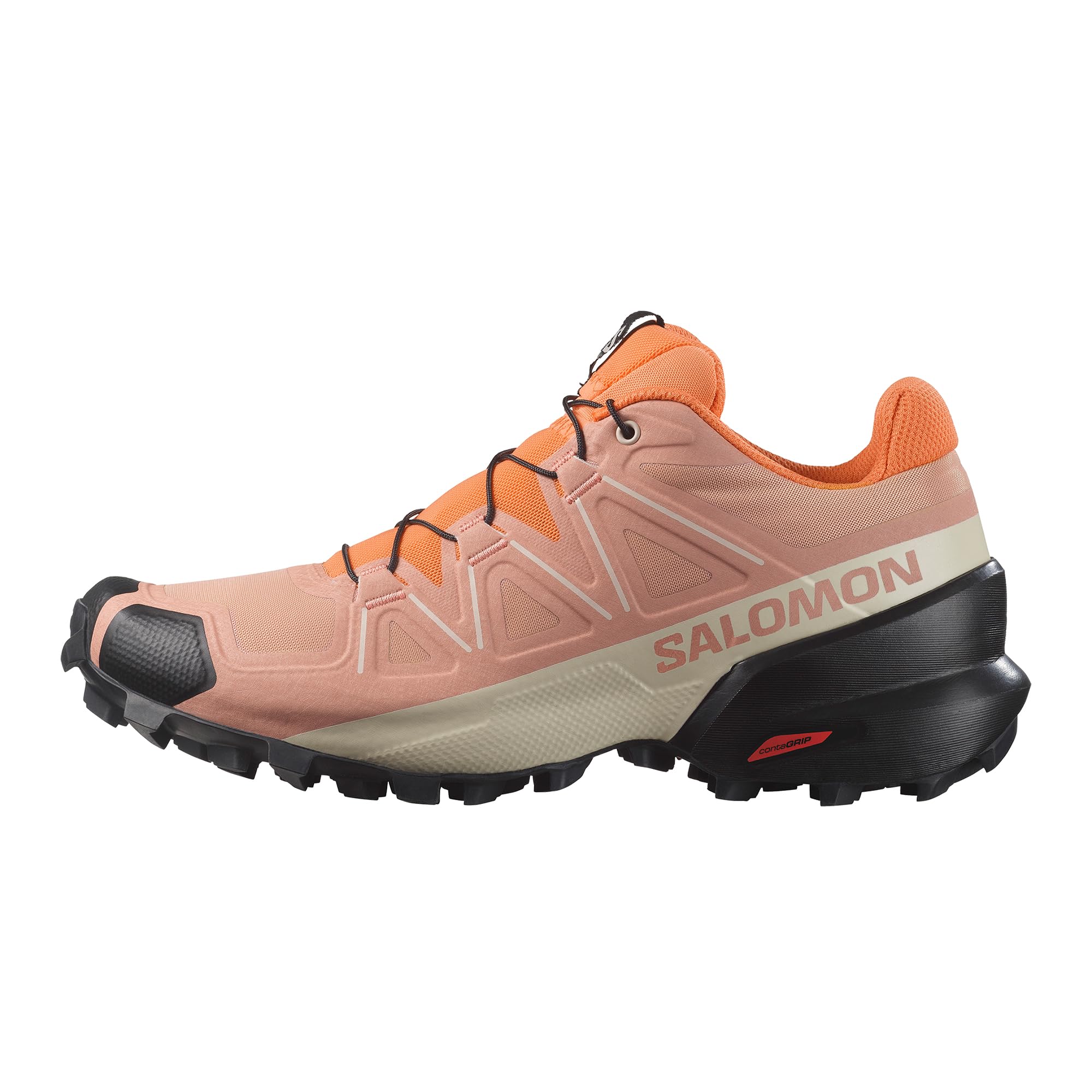
1. Salomon Women’s Speedcross Trail Running Shoes
Our pick — over 4.5★ from 500+ verified ratings; the strongest balance of quality and price.
The mud-slayer that grips slick rock climbs with a 5 mm lug that refuses to let go.
Salomon built the Speedcross for soft, messy terrain, and a 5 mm lug depth is exactly what you want when the trail turns to slurry. The confidence this shoe inspires is the thing owners rave about most — comfort leads the feedback, and the grip is so trustworthy that buyers report, “I do not slip on the challenging slick rock climbs I do.” That kind of sure-footedness turns a sketchy descent into a fun one.
The fit leans narrow, which suits runners with slender feet, and the no-tie laces mean you never stop mid-trail to re-tie. At 262 g, it is light enough for a 20-mile day — one owner wore them on a 20-mile hike with no blisters and minimal fatigue. The Quicklace system (a single pull cord that locks the laces) is a genuine trail convenience, letting you cinch the fit in seconds.
The trade-off is that this is not a waterproof shoe — a few owners note water gets in on wet days, so it is better for dry-to-damp trails than stream crossings. For women with medium-to-high arches, the arch support is a consistent highlight. The construction is built to last, with multiple owners reporting years of hard use before the shoe gives up.
The grip that wins
- 5 mm lugs dig into mud and loose gravel
- No-tie Quicklace system for fast on-trail adjustments
- Durable build that survives years of hard miles
- Solid arch support for medium-to-high arches
Know before you buy
- Not waterproof — wet feet on rainy days
- Narrow fit won’t suit wide feet
- Order ½ size up for the best fit
The verdict: If you run on muddy, soft, or slick-rock trails and want a shoe that feels glued to the ground, this is your pick.
Think twice if: You have wide feet or run mostly on wet, rainy days — you will want a wider, waterproof option.
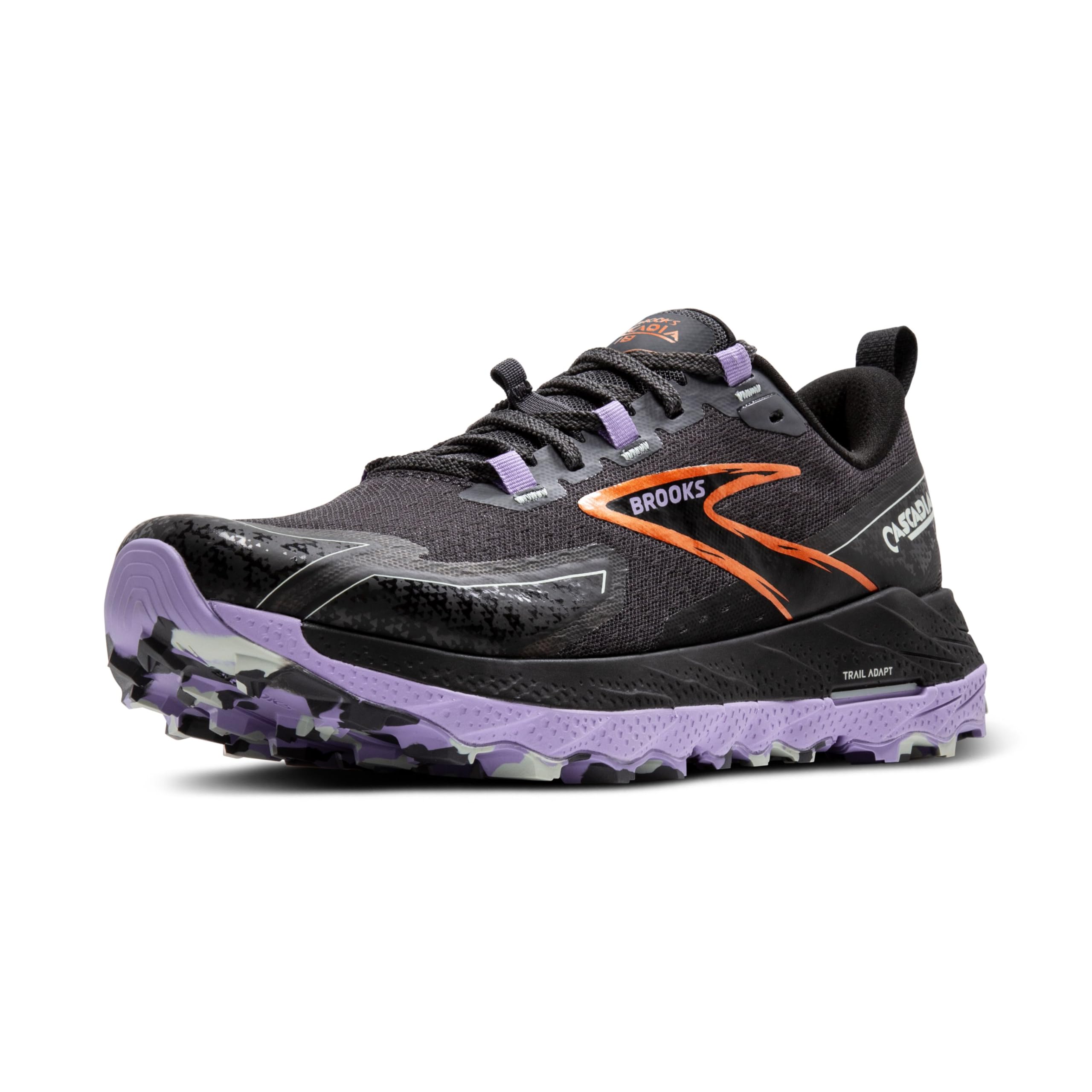
2. Brooks Women’s Cascadia 18 Mountain Trail Running Shoe
The all-terrain workhorse that keeps feet feeling fresh after 20 miles of rock steps.
Brooks calls the Cascadia 18 “soft and protective,” and that description holds up on everything from gravel paths to rugged mountain bluffs. One owner took them to Devils Lake in Wisconsin and reported they “performed perfectly” on all the rock steps, with good cushion and a stable heel. The comfort is the standout — it is the most-praised feature by a wide margin, with owners noting their feet felt amazing after long days out.
At 10.1 oz with an 8 mm drop, this shoe splits the difference between plush road comfort and genuine trail protection. The midsole’s 8 mm drop (the height difference from heel to toe) is a familiar, easy transition for runners coming from road shoes. It is also a solid hiking crossover — owners use it for both running and long walks on bluff trails.
The honest caveat is the fit, which runs small and has a snug toe box. Several owners had to size up half a size, and a couple noted the toe cap can press on longer descents. Durability is solid but not flawless, with some early wear reported at the toe crease after heavy use. It is a versatile shoe for anyone who wants one pair to handle mixed terrain.
The take: Comfort leads every conversation about this shoe, and the stable heel makes it a confident pick for rocky, technical trails.
The catch: Size up at least half a size and be ready for a snug toe box on descents.
3. ALTRA Women’s Lone Peak 9 Trail Running Shoe
The zero-drop legend with a roomy toe box that lets your toes spread and grab the trail.
ALTRA’s Lone Peak is the shoe for runners who want their foot flat on the ground. A 0 mm drop (zero height difference between heel and toe) encourages a natural mid-foot strike and, paired with ALTRA’s roomiest toe box, lets your toes splay out for better balance on uneven ground. The fit is the thing owners praise most — the wide, anatomical toe box relieves cramped toes and accommodates bunions without blisters.
The MaxTrac outsole (a grippy rubber compound designed for varied terrain) delivers sticky traction on rocky and dirt surfaces, and the 11.15 oz build includes a Stoneguard insert (a flexible plate underfoot) that protects you from sharp rocks and roots. Owners describe the grip as “super grippy on all surfaces,” making it a favorite for both hiking and trail running.
Zero drop is not for everyone — if you are used to a 10 mm heel, the transition takes time. A few owners noted the heel can rub and cause a blister in the first hour, so break them in gradually. Durability gets mixed marks, with most owners reporting great longevity but an occasional unit showing early wear. If you want natural foot movement and toe freedom, this is the shoe.
Why it’s a legend
- Roomy toe box is the most-praised feature — no more cramped toes
- 0 mm drop encourages natural foot strike
- MaxTrac outsole grips well on rocky and dirt trails
- Stoneguard insert protects feet from rocks and debris
Adjustment period
- Zero drop requires a gradual transition from higher-drop shoes
- Some owners mention heel blistering in the first hour
- Size up — the toe box runs short for some
Reach for this if: You want your foot flat on the trail with maximum toe freedom — it is the best pick for natural-foot runners.
Look elsewhere if: You prefer a cushioned heel and are not ready to transition away from a traditional drop.
4. Saucony Women’s Peregrine 13
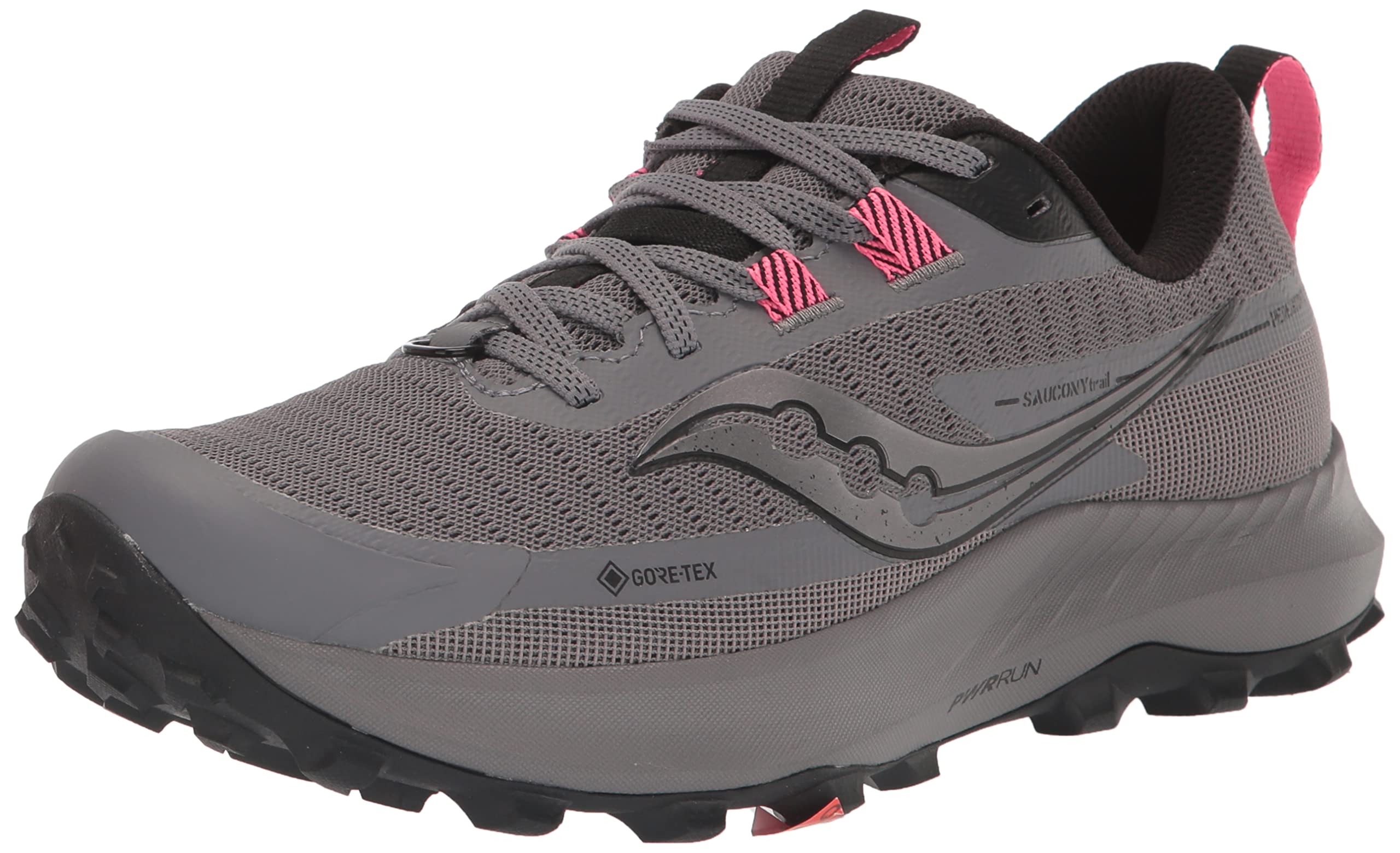
The race-ready gripper with a 4 mm drop built for runners who live on the edge of the trail.
Saucony built the Peregrine 13 for “those that live on the edge” — runners who want a shoe that holds nothing back off-road. The PWRRUN foam (a lightweight, responsive cushioning compound) delivers a firm, connected ride, while the tough grip underfoot handles wet rocks and moss. Owners describe the traction as “superb,” with the shoe staying agile and sure-footed on rocky, uneven terrain, and it is a proven ultra-distance performer — one owner wore it through four 50k races.
This is a shoe that needs no break-in. Multiple customers note wearing it straight from the start for 27-mile days without discomfort or pain, and the roomy toe box works well for bunions. The 4 mm drop (a low heel-to-toe height difference) is a moderate, stable platform that prevents ankle twists on technical ground, making it a strong choice for both trail running and hiking.
The trade-off is that the low 4 mm drop can feel too flat for runners who use arch-support insoles, and the toe box is narrower than previous versions — a couple of owners found it pinches the baby toe. On wet surfaces like pebbles and wet wood, a few found the grip less sure-footed. This is a nimble, fast shoe for confident trail runners, not a plush recovery cruiser.
The read: A fast, agile trail shoe with race-proven durability — no break-in needed, just lace up and go.
Fit note: The tapered toe box and low drop mean it suits medium-width feet without heavy orthotics.
5. New Balance Women’s Fresh Foam X Hierro V8
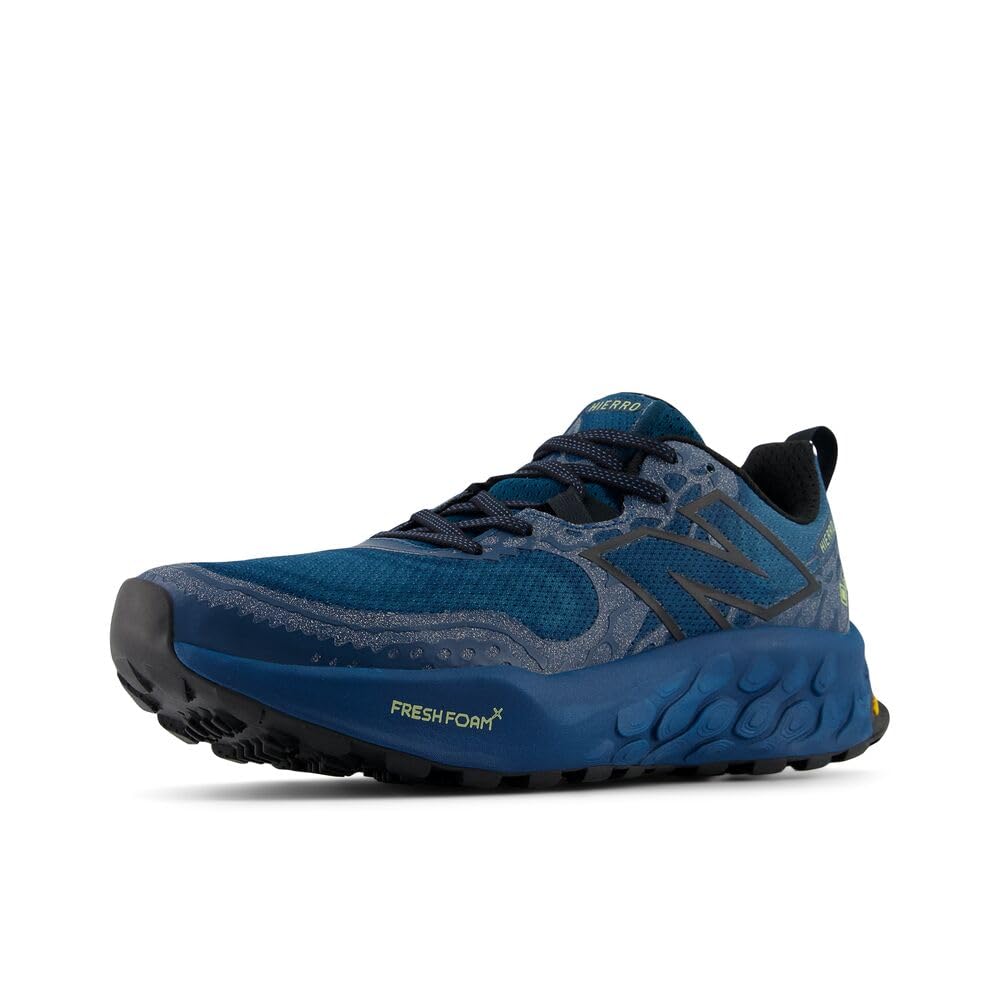
The plush all-rounder with a Vibram shell that turns rainy-day fears into rainy-day fun.
New Balance’s Hierro V8 is the shoe that disappears under you — the Fresh Foam X cushioning (a soft, responsive foam) is the most-praised feature by a huge margin, and owners describe it as comfortable enough for a fibromyalgia sufferer and stable enough for a knee-replacement recovery. The Vibram Eco-Step Natural Outsole (a durable rubber lug outsole from the grip specialists at Vibram) wraps the shoe in a protective shell of traction that handles everything from gym floors to Icelandic rain.
This is a true all-weather shoe. The waterproof build is a recurring praise point — one owner bought them specifically for a trip to Iceland and another uses them for Florida’s rainy summers, calling them the “best buy this year.” The breathable, lightweight upper keeps things cool when the sun is out, and the feminine pink sole colorway earns compliments.
The catch is the fit, which runs small for some — several owners sized up half a size or more, and the toe narrows at the tip. The mesh upper is not fully water-resistant despite the waterproof claims, so a few owners found wet feet in heavy rain. If you want one shoe that does trails, travel, and everyday wear with serious cushioning, this is a strong contender.
The comfort factor
- Fresh Foam X cushioning is the standout — plush and stable
- Vibram outsole grips across varied surfaces
- Waterproof build handles rain and travel
- Excellent arch support and quality construction
Sizing reality
- Runs small — plan to size up half to a full size
- Toe box narrows at the tip
- Mesh upper may not be fully waterproof in heavy rain
The bottom line: If cushioning comfort is your top priority and you want a shoe that works on trails and in the rain, this is the one.
Heads up: Order a size up and expect a tapered toe — it is a plush ride, not a wide fit.
6. Topo Athletic Women’s Ultraventure 4 Trail Running Shoes
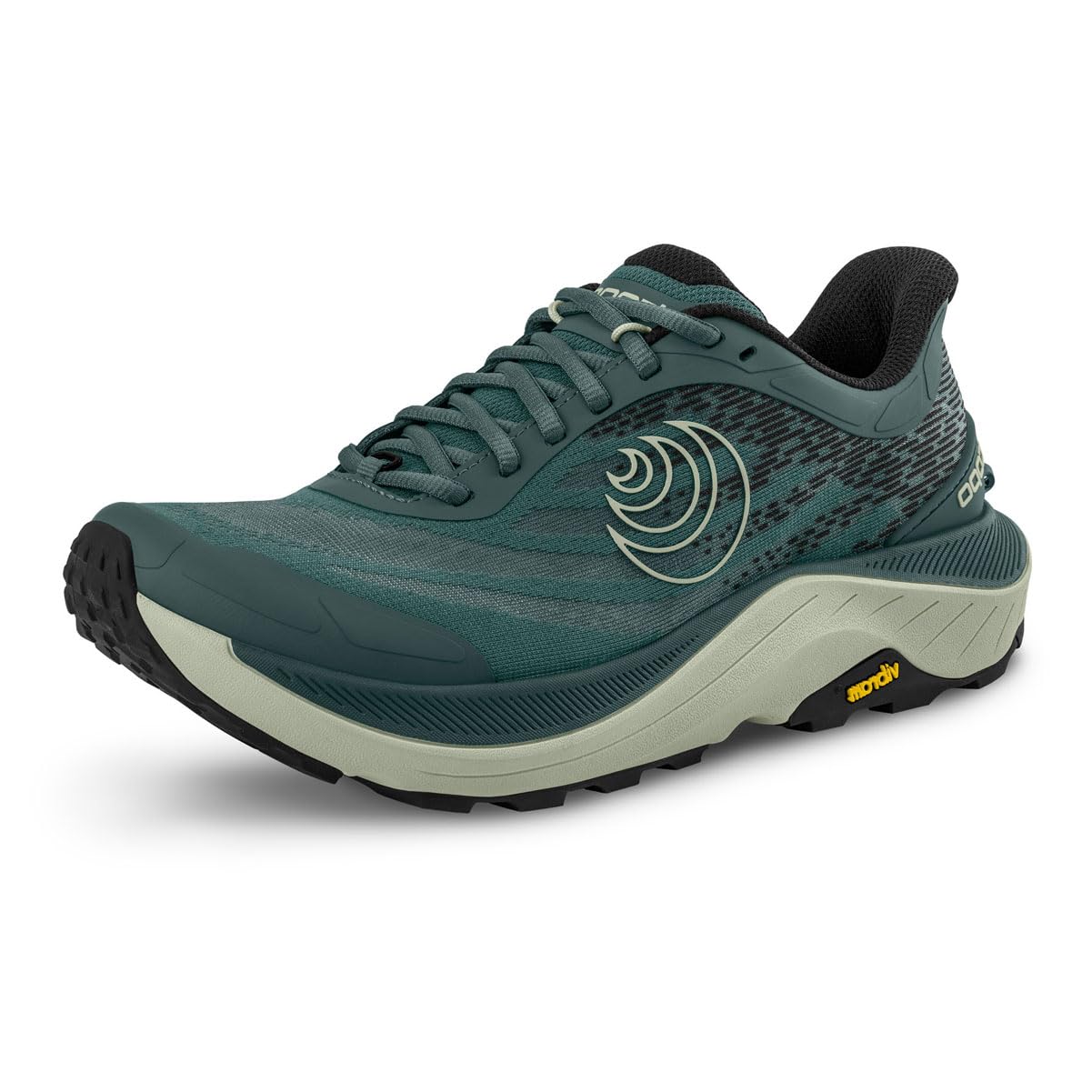
The high-cushion long-runner with a roomy toe box and a 5 mm drop that disappears on the trail.
Topo built the Ultraventure 4 for long runs on mild to moderate terrain, and the geometry says it all — a 35 x 30 mm platform (thick cushioning underfoot) with a 5 mm drop for a balanced, natural ride. The roomy toe box is the second most-praised feature, credited with easing neuroma and plantar fasciitis pain. The ZipFoam midsole (a springy, lightweight foam) offers more rebound than standard EVA foam (a common, firmer cushioning material), keeping the ride lively over long miles.
At just 8.6 oz for a women’s size 7, this is a genuinely light shoe for the cushioning it packs. The Vibram XS Trek EVO outsole (a multi-surface rubber from grip experts Vibram) transitions smoothly from trail to road, and owners praise the grip on rocky trails. It is a versatile pick — one delivery driver wearing it for miles of steps and van work called it “The One” after years of searching.
The recurring concern is durability. While the Vibram sole is built to last, a small number of owners reported the sole delaminating after a few months of hard use, and the interior heel pad can wear out quickly. The heel also runs narrow for some, which is the trade-off for the wide toe box. For runners with wide forefeet who want high cushion without the bulk, this is a gem.
The take: A light, well-cushioned shoe with a toe box that feels tailor-made for wide forefeet and neuroma sufferers.
The catch: Heel runs narrow and durability gets mixed reports — treat the sole gently on rocky trails.
7. ASICS Women’s Gel-Venture 11 Trail Running Shoes
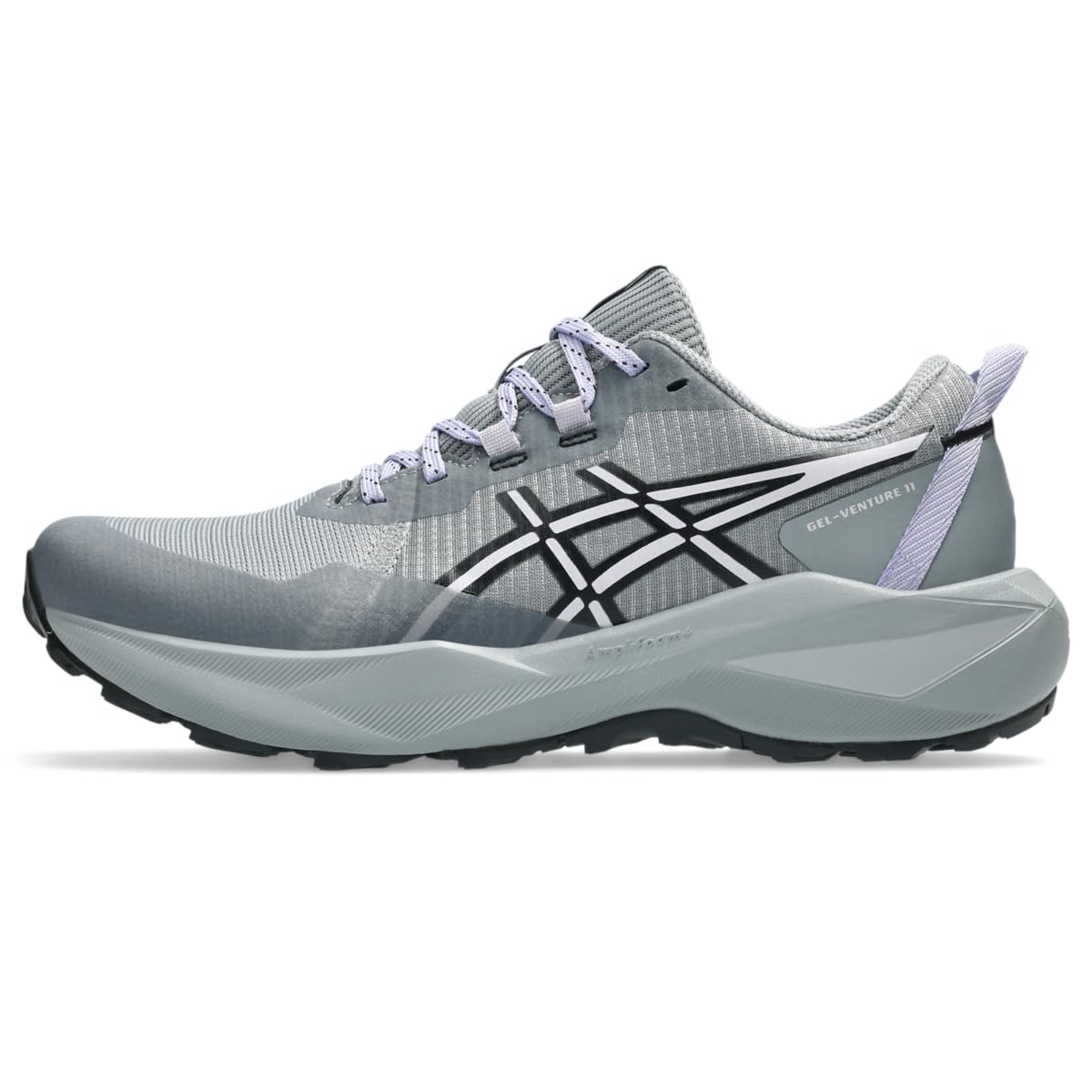
The budget-friendly daily walker with arch support that stops heel pain in its tracks.
ASICS Gel-Venture 11 is the shoe for women who want dependable comfort for walking all day, and the arch support is the feature owners praise most. Reviewers point out heel pain relief straight from the start, with one calling it podiatrist-recommended. The AMPLIFOAM PLUS cushioning in the midsole is reinforced by a 2 mm higher stack height (more material between your foot and the ground), which delivers better impact absorption throughout the day.
This is a versatile, low-key shoe that works for running, cross-training, and walking strong dogs, and one owner has owned seven pairs. The classic ASICS design with a round toe and lace-up closure keeps it simple, and the synthetic rubber outsole handled forest and beach walks for one owner covering about 1000 miles a year. For the price, the value is a recurring praise point.
The honest caveat is that quality gets mixed feedback — this is a step down in build quality from older ASICS versions, with some owners noting the plastic eyelet tabs feel cheap and a couple finding the soles slippery on smooth surfaces. Cushioning opinions are split: some love it, others find it firm. If you want a dependable, affordable shoe for light trails and daily walking, this delivers.
The daily driver
- Arch support is the stand-out — heel pain relief without break-in
- AMPLIFOAM PLUS cushioning absorbs impact all day
- Strong value for the price
- True to size with an ample toe box
Keep in mind
- Build quality is a step down from older ASICS versions
- Plastic eyelet tabs feel cheap to some
- Mixed reports on cushioning firmness
Grab this if: You want reliable arch support and comfort for daily walks and light trails without spending big.
skip it if: You need a premium build or plan to tackle aggressive, technical terrain.
8. New Balance Women’s Dynasoft Tektrel V1 Trail Running Shoes
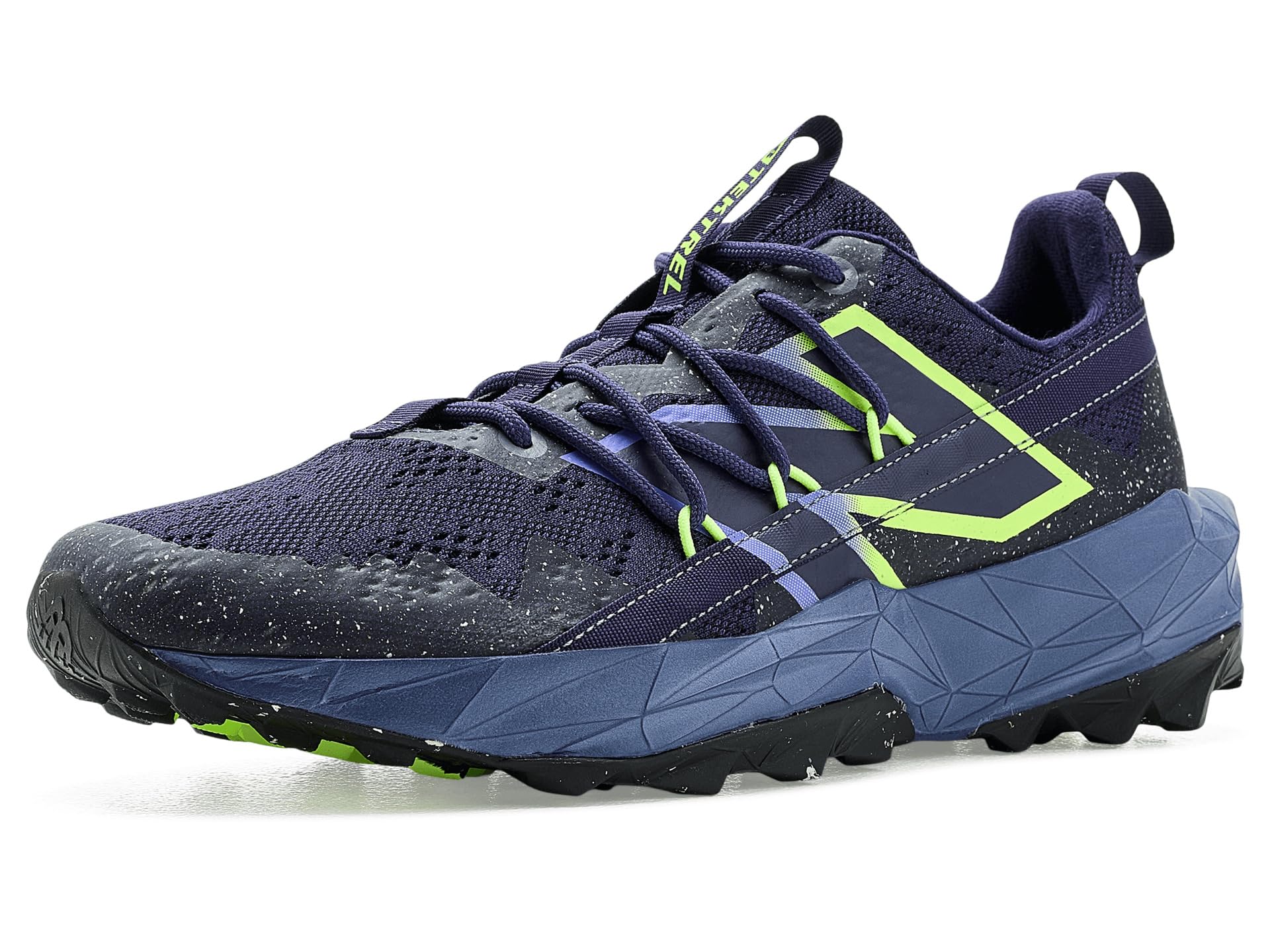
The comfortable, good-looking trail shoe that keeps you upright on loose gravel dog walks.
The Tektrel V1 wins on comfort, and the Dynasoft midsole (a soft, responsive foam) delivers the cushioning that owners praise most. One owner reported the shoe “helps keep me from slipping on loose gravel on my dog walks,” which is exactly the job a trail shoe should do. The style also earns consistent compliments — it is the second most-praised feature, with owners calling the colorway “snazzy” and reporting the shoe looks great on foot.
This is a comfortable, supportive walking and trekking shoe that works straight from the start with no break-in. The thick sole provides good shock absorption, and the wide fit option works well for flat feet — one owner with flat feet found the arch support prevented inward rolling. At a budget-friendly price, it delivers solid quality and durability for everyday trail use.
The fit runs small, so plan to size up — one owner went from a size 10 to an 11 for a perfect fit. Arch support gets mixed feedback, with some finding it insufficient compared to other New Balance models, and the tongue is a bit short and narrow. For a stylish, comfortable trail shoe for light-to-moderate terrain, this is a solid budget pick.
The read: Style and comfort lead here — a genuinely good-looking shoe that keeps you steady on loose trails.
Fit note: Size up, and expect modest arch support — best for flat to medium arches.
9. Under Armour Women’s Charged Maven Trail Running Shoes

The budget-friendly gripper with a wide fit that suits small, wide feet right from the start.
Under Armour’s Charged Maven is the budget pick that punches above its price, and comfort is the feature owners praise most. One owner with “tiny, wider feet” who tried many brands found these fit perfectly, reporting, “I took them hiking in the Smoky Mountains over Spring Break and my feet did not hurt the entire time!” The Charged Cushioning midsole (a compression-molded foam for responsiveness) delivers that step-in comfort, and the Deluxe Comfort System sockliner molds to your foot.
At 9.2 oz, this is a light, nimble shoe with a durable rubber outsole featuring omni-directional trail lugs (multi-directional rubber teeth for traction in any direction). The outsole wraps up to form a toe bumper (a rubber guard protecting your toes from stubs), and the engineered mesh upper keeps things breathable. Owners praise the grip even on icy sidewalks and the retro sporty look.
The fit runs small, so size up — one owner went through two size exchanges before finding the right fit. Traction gets mixed reviews: most find the treads “amazingly grippy,” but a few report the soles can be slippery in certain conditions. If you want an affordable, comfortable trail shoe for wide feet, this is a strong entry-level pick.
The value play
- Comfort and step-in feel are the standout features
- Wide fit suits small, wide feet that other brands pinch
- Omni-directional trail lugs grip well, even on ice
- Lightweight at 9.2 oz
Before you order
- Runs small — definitely size up half to a full size
- Some shoppers say slippery soles in certain conditions
- Color can differ slightly from the photos
Best for: Budget-conscious buyers with wide feet who want a comfortable, grippy trail shoe without the premium price tag.
Remember: Order a size up and be ready for a possible second exchange to nail the fit.
Understanding the Specs
Drop: the angle that shapes your stride
The drop is the height difference in millimeters between the heel and the toe of the shoe. A higher drop, like 10 mm, tilts your foot forward and suits runners who land on their heel first. A lower drop, like 4 mm or 0 mm, keeps your foot flatter and encourages a mid-foot strike. If you are switching from road shoes, a moderate drop around 8 mm is the easiest transition — jumping straight to zero drop can strain your calves.
Lugs and outsole: your grip on the ground
Lugs are the rubber teeth on the bottom of the shoe that dig into the trail. Deep lugs around 5 mm or more are built for mud and loose soil, while shallower, denser lugs grip better on hard-packed dirt and rock. The outsole rubber compound matters too — softer compounds like Vibram’s XS Trek EVO mold to wet rock for better traction, while harder compounds last longer on abrasive surfaces but can slide on slick stone.
FAQ
Should I size up in women’s trail running shoes?
What does zero drop mean and is it right for me?
How do I know if a trail shoe has good grip for wet rock?
Are trail running shoes good for hiking?
What is the difference between a 4 mm and 10 mm drop?
How long do trail running shoes last?
Is a wide toe box worth it for trail running?
Do I need waterproof trail shoes?
Can I use trail running shoes for road running?
Final Thoughts: The Verdict
For most runners, the female trail running shoes winner is the Salomon Speedcross because it delivers the grip and comfort that owners praise most — it is the shoe that makes slick rock climbs feel safe. If you want all-day cushioning comfort for mixed terrain, grab the New Balance Hierro V8. And for natural-foot runners who want a zero-drop ride with toe freedom, the ALTRA Lone Peak 9 is the one to reach for.
How We Picked
We do not accept paid placement. Every pick is matched to a real buyer and a real use-case; we do not hands-on test units.
Sources & Methodology
Specifications: manufacturer listings and product documentation. Review insights: verified customer reviews, as of August 2026. Pricing: not shown on this page (it changes often); check the current price via the retailer link.
As an Amazon Associate, WellFizz earns from qualifying purchases. This does not affect which products we feature.
Related Guides

Mo Maruf
I created WellFizz to bridge the gap between vague wellness advice and actionable solutions. My mission is simple: to decode the research and give you practical tools you can actually use.
Beyond the data, I am a passionate traveler. I believe that stepping away from the screen to explore new environments is essential for mental clarity and physical vitality.