Our readers keep the lights on and my smoothie glass nicely filled. As an Amazon Associate, I earn from qualifying purchases.
Specs are compiled from manufacturer listings and verified buyer reviews and can change over time — please confirm the key details on the product page before buying.
The right female fitness tracker tracks more than steps—it monitors menstrual cycle phases, resting heart rate, and sleep quality. This guide highlights trackers that deliver accurate health insights without requiring a subscription or a bulky smartwatch. You’ll get honest picks based on published specs and what thousands of owners actually experience day to day.
I’m Mohammad Maruf — the founder and writer behind WellFizz. This guide is built by comparing the manufacturers’ published specifications and the patterns across verified customer reviews, so you get each pick’s real strengths and trade-offs instead of marketing spin.
Find the wearable that fits your lifestyle, budget, and health goals with this breakdown of the best female fitness tracker options on the market today.
Our Picks at a Glance

How To Choose The Best Female Fitness Tracker
Choosing a female fitness tracker means focusing on features that serve your daily life, not marketing claims. Prioritize trackers that monitor sleep quality, heart rate trends, and menstrual cycle over those with many sports modes.
Start with cycle and health tracking
For many women, a tracker’s value hinges on accurate period prediction and symptom logging. Look for built-in menstrual cycle tracking that lets you log periods and symptoms right on the device, not just in a generic app. Some trackers go further, offering pregnancy tracking and insights that connect cycle phases to your energy levels.
Weigh battery life against features
You get a bright AMOLED screen (a vivid, high-contrast display) and built-in GPS (satellite tracking for runs) on some trackers, but they drain the battery faster. So decide first: do you want a device that lasts up to 11 days on a charge, or one with more smartwatch features that needs charging every few days? If you hate remembering to charge things, prioritize battery life over display quality.
Check the ecosystem, not just the hardware
The companion app is where your data becomes actionable. A tracker’s value depends on its app’s ability to present clear trends, offer coaching, and sync reliably. Some apps require a paid subscription for advanced features, so check what’s free and what’s locked behind a paywall before you commit.
Quick Comparison
| Model | Best For | Battery Life | Display | GPS | Amazon |
|---|---|---|---|---|---|
| Fitbit Inspire HR★ Best Overall | Proven reliability | Up to 5 days | OLED | Connected | Amazon |
| MorePro Fitness TrackerTop Performer | Budget health monitoring | Up to 7 days | 1.57-inch HD Touch | — | Amazon |
| RLQA D26E Tracker | Style & value | 7 days | 1.47-inch Full-Color Touch | Connected | Amazon |
| Fitbit Inspire 3 | All-around wellness | Up to 10 days | AMOLED | — | Amazon |
| PJIVE Smart Ring | Discreet tracking | Up to 7 days | None | — | Amazon |
| Fitbit Charge 6 | Google integration | Up to 7 days | AMOLED | Built-in | Amazon |
| Garmin vívoactive 5 | Advanced health metrics | Up to 11 days | AMOLED | Built-in | Amazon |
In‑Depth Reviews
1. Fitbit Inspire HR
Our pick — over 4★ from 52,500+ verified ratings; the strongest balance of quality and price.
The proven workhorse that keeps ticking years after newer models have faded.
This is the tracker that owners describe as a “trusty little device” that simply keeps working, with one user reporting it still functions well after roughly 2 years of daily wear. It earns its Best Overall spot not by being the flashiest, but by nailing the fundamentals: 24/7 heart rate tracking that feeds into calorie burn estimates, resting heart rate, and workout zones. The sleep tracking goes deeper than most, using that heart rate data to break your night into light, deep, and REM stages.
Battery life lands at up to 5 days with typical use, which beats the nightly-charging habit some smartwatch owners accept. It auto-detects workouts like walks, swims, and bike rides, and syncs to 200-plus Android, iOS, and Windows 10 devices over Bluetooth 4.0 so your data follows you. The band is comfortable enough that people forget they’re wearing it, which matters more than any spec sheet.
The honest trade-off is accuracy at the edges. Owners note the step counter can overcount by roughly 10% compared to a hip-mounted counter, and the optical heart rate sensor struggles with rapid bursts of activity. The durability conversation is split—many report years of faithful service while others hit battery degradation after about 10 months. It’s a tracker that rewards consistent, everyday use over hardcore athletic precision.
What Wins People Over
- Build quality earns the most praise, with owners calling it durable and dependable
- Step tracking is a standout, giving consistent daily counts that match real activity
- Sleep stage insights from heart rate add genuine value many budget bands lack
The Real Trade-offs
- Some buyers report units that stop holding a charge after a few months
- Heart rate accuracy draws mixed feedback, especially during intense intervals
- Step counts can drift during sitting or driving
Your best match: if you want a comfortable, battle-tested tracker that pairs deep sleep analysis with reliable daily step counts.
Think twice if: you need pinpoint heart rate accuracy for high-intensity interval training—this sensor has limits.
2. MorePro Health Fitness Tracker
A 7-day battery and 112 sport modes make this the quiet overachiever of the list.
This tracker punches far above its price tier with an unapologetically long feature list. It offers 24/7 monitoring of heart rate, blood pressure, and blood oxygen—handy for keeping an eye on trends, though the maker notes it’s not a medical device. For women specifically, the menstrual cycle tracker and sedentary reminders turn it into more of a daily wellness companion than a simple step counter.
Battery life is a genuine highlight, delivering up to 7 days per charge, which is a 40% edge over the 5-day Fitbit Inspire HR. Owners love the independence: the watch records steps, heart rate, and calories on its own, then syncs everything wirelessly when you’re back near your phone. The 1.57-inch HD touchscreen and 148-plus watch faces give it a customizable feel, and the IP68 rating means it shrugs off splashes and sweat.
Moms especially appreciate the call and message notifications—as one owner put it, they can keep an eye on calls and texts even when the kids have commandeered the phone. Between the soft silicone and breathable nylon bands, you can match the strap to your workout or your outfit. The main caveat: it’s not compatible with iPads, tablets, or PCs, so it’s strictly a smartphone companion.
Standout strength: the 7-day battery life over the 5-day Inspire HR means one less thing to remember each week.
Balanced view: spec for spec, this delivers more health sensors and sport modes than trackers double its price.
Reach for this if: you want a budget-friendly tracker that tracks your cycle, takes calls on your wrist, and rarely needs charging.
Look elsewhere if: you need deep integration with Fitbit or Garmin’s premium app ecosystems—this one lives in the FitCloudPro app.
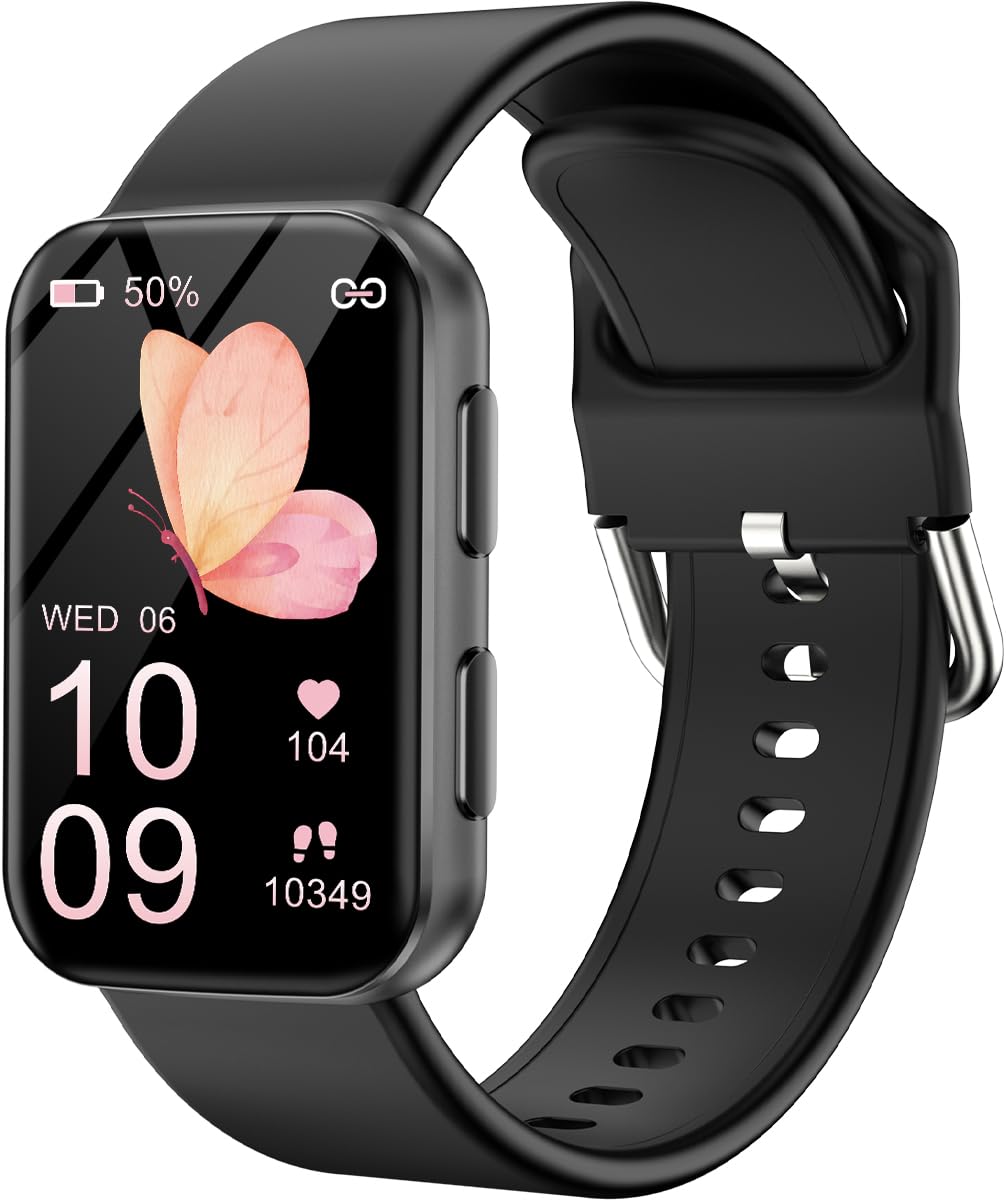
3. RLQA D26E Fitness Tracker

The pretty pink band that backs up its looks with serious health monitoring.
This one wins on charm from the moment you unbox it, with a sleek pink silicone band that owners call “cute” and “stylish.” But the 1.47-inch full-color TFT touchscreen (a bright, responsive display) hides real substance: continuous 24/7 heart rate and blood oxygen monitoring, plus a sleep analysis that breaks down REM, light, and deep stages. The built-in menstrual cycle tracker makes it a genuine option for women who want period and health data in one place.
What gets owners talking is the battery—rated at 7 days on a 200 mAh cell, with reviews backing that up by saying it “lasts a long time” between charges. The GloryFit app gives you over 200 free watch faces or lets you upload your own photos, so the watch can look different every day. It’s also remarkably easy to set up with both Android and iPhone, something not every budget tracker manages smoothly.
Beyond the basics, it adds remote camera control, music playback control, and a phone locator—practical touches that make it feel more like a smartwatch than a simple band. The detachable 16mm strap means you can swap the style whenever you want. The one thing it lacks versus pricier rivals is real built-in GPS, so it leans on your phone’s GPS to map outdoor workout routes.
Value read: with a long battery and cycle tracking, it’s a lot of daily utility for a very accessible price.
Best for: women who want a stylish, lightweight band that tracks their cycle and health data while staying affordable.
Not ideal if: you need offline GPS for runs without your phone along for the ride.
4. Fitbit Inspire 3
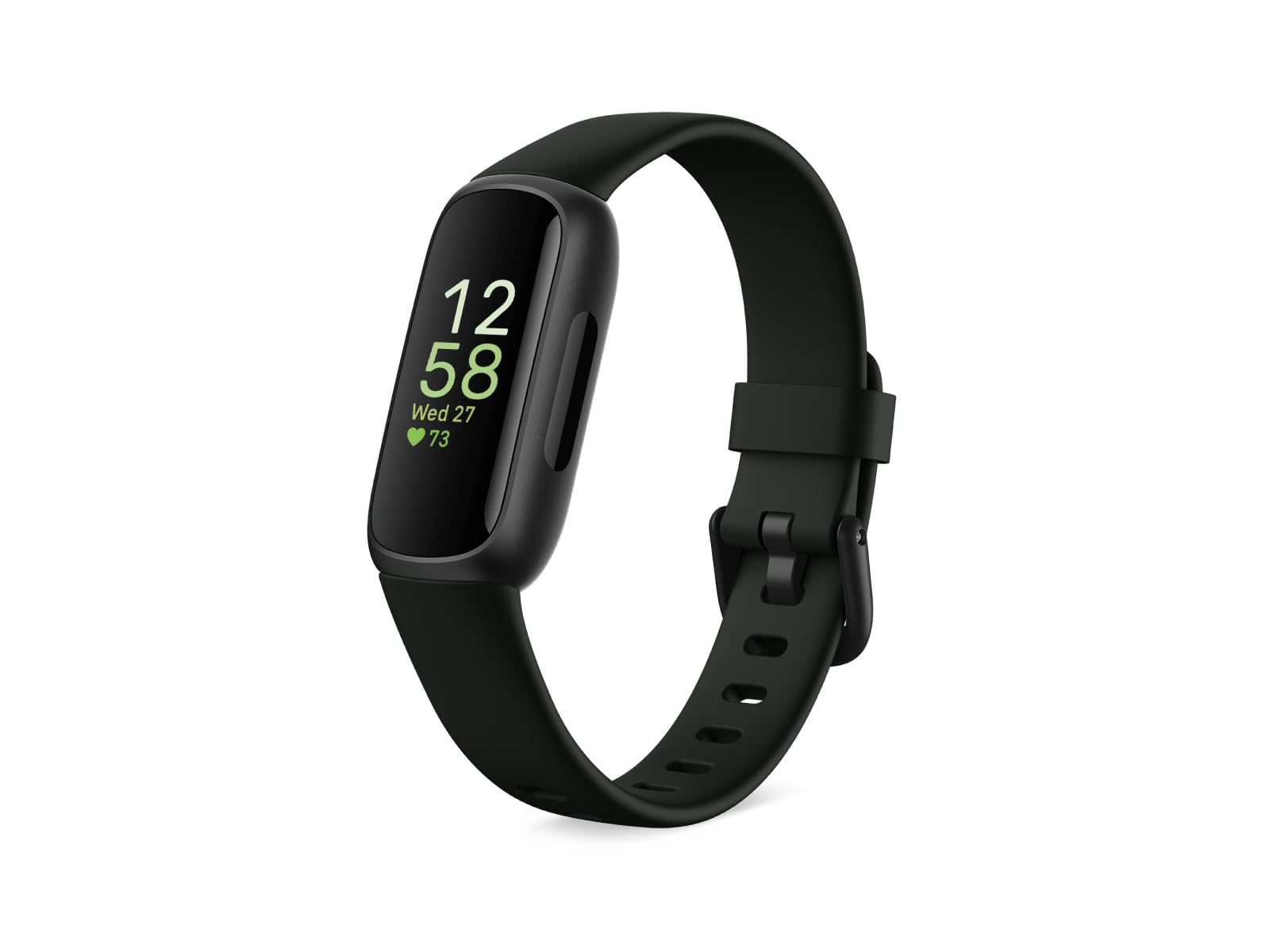
The wellness companion that tracks your stress as closely as your steps.
The Inspire 3 is Fitbit’s answer to women who want more than activity tracking—it’s built around understanding your daily energy. It delivers a Daily Readiness Score, Active Zone Minutes, and 24/7 heart rate, plus a Stress Management Score with guided mindfulness and breathing sessions. For women, the menstrual health tracking and resting heart rate insights help you see how your cycle affects your body’s recovery.
Battery life is a standout here at up to 10 days per charge, with one owner noting they charged it only once since buying it. The sleep tracking goes deep, giving you a detailed Sleep Score and a Smart Wake vibrating alarm that rouses you gently at the right moment. It’s lightweight and durable with a bright screen, and the small band size is a relief for those with petite wrists.
The trade-off is the ecosystem. Many advanced insights, like the Daily Readiness Score (a daily number that tells you if your body is rested), are tied to a Fitbit Premium subscription, and there’s no built-in GPS to map runs without your phone. Some owners also report occasional sync hiccups, though these don’t seem to be the majority experience. For a clean, accurate, comfortable tracker that covers everything from stress to sleep, it’s tough to top.
The Highlights
- Exceptional 10-day battery that owners confirm lasts weeks with light use
- Stress Management Score and mindfulness sessions add real wellness value
- Menstrual health tracking right on the wrist
The Catch
- No built-in GPS—you’ll need your phone for route mapping
- Some of the best metrics sit behind a Premium paywall
- A few owners mention sync issues or difficulty holding a charge
Choose this if: you want a premium-feeling wellness tracker that prioritizes stress, sleep, and cycle insights over raw sports data.
skip it if: you want offline GPS for running or you’re not willing to consider a subscription for advanced features.
5. PJIVE Smart Ring for Women

Jewelry that secretly tracks your sleep, steps, and heart rate all day.
If you’ve ever found a wristband annoying, this is the tracker that disappears entirely. The PJIVE Smart Ring looks like a piece of fashion jewelry but packs in real-time monitoring of heart rate, blood oxygen, and blood pressure, plus sleep tracking that covers deep sleep, light sleep, and eye movement. It’s IP68 waterproof, so you can wash your hands, swim, or shower without taking it off.
Owners are genuinely impressed with how discreet it is, repeatedly calling it “beautiful” and noting it “doesn’t look techy.” The pedometer earns specific praise for its accuracy, and the long battery life means you’re not constantly hunting for a charger—it recharges fully in just 0.5 hours. It tracks common sports modes like running, cycling, walking, and swimming, so it’s not all style and no substance.
The clever a neat extra is air gesture control: double-tap your fingers in the air to take photos, flip through e-books, or pause music. Sizing is the one thing you must get right, as owners warn it runs slightly big and an exact fit matters for sensor accuracy. It also lacks women’s cycle tracking, which is a notable omission for a female-focused wearable. Still, for a no-subscription alternative to premium rings, it’s a refreshing find.
What wins people over: the accurate step tracking combined with a design that passes for regular jewelry.
Honest note: without cycle tracking, it’s a health monitor first and a women’s-specific device second.
Perfect for: women who want health tracking without the wristband look and don’t mind a bit of sizing trial and error.
Reconsider if: menstrual cycle tracking is a must-have feature for you—this ring doesn’t have it.
6. Fitbit Charge 6

The Google-powered tracker that finally adds built-in GPS to the Charge line.
This is the tracker for women who live in the Google ecosystem and want their health data to play nice with it. The Charge 6 brings built-in GPS for accurate outdoor runs and rides, real-time heart rate that can link to compatible gym equipment like treadmills, and 40+ exercise modes. You get turn-by-turn directions from Google Maps on your wrist and can tap to pay with Google Wallet when you stop for a coffee.
Owners who switched from an Apple Watch praise the battery—up to 7 days per charge—and the accurate pulse, step, and distance tracking. The sleep tracking with a personalized Sleep Score is a highlight, as is the Smart Wake alarm that vibrates you awake at the right point in your cycle. It’s lightweight and water-resistant, making it a solid daily companion whether you’re training for a race or just walking the dog.
The honest downsides are on the software side. Some customers note flaky Google Maps and YouTube Music connectivity, and the GPS can be unreliable. A handful of users hit serious issues with calorie accuracy and battery drain, though others report 6-7 days of solid battery life. It’s a capable tracker, but the experience depends heavily on how well the app and device cooperate on your particular phone.
Where It Shines
- Built-in GPS means phone-free outdoor workouts
- Owners call it accurate for pulse, steps, and distance
- Google Maps and Wallet integration is genuinely useful day to day
Where It Stumbles
- App sync issues can break the experience for some iPhone users
- GPS and music connectivity draw mixed reviews
- No text replies on iOS
Grab this if: you want GPS, Google integration, and a battery that outlasts any Apple Watch.
Pause if: you’re on iOS and rely heavily on smooth Apple app syncing—this has known hiccups.
7. Garmin vívoactive 5

The ivory smartwatch that measures your body’s battery almost as well as its own.
This is the most sophisticated health tracker on this list, and it earns the premium price. The vívoactive 5 pairs a bright AMOLED display with battery life of up to 11 days in smartwatch mode—or 5 with the display always on. For women, it includes menstrual cycle and pregnancy tracking, plus a morning report that gives you your fitness age, stress level, and recovery status all at once.
The signature feature is Body Battery energy monitoring, which owners genuinely rave about. It shows how your sleep, naps, stress, and workouts affect your daily energy, with one owner noting it visibly confirms when they’re exhausted and need rest. The sleep coaching goes deeper than most, breaking down HRV status and giving tips. With more than 30 built-in sports apps including walking, running, HIIT, swimming, and even golf, it covers virtually any activity.
The screen scratches more easily than you’d expect, and the Bluetooth disconnect range is short, so your phone needs to stay close. The band can run large for very small wrists, though most find it easy to adjust. For women who want the deepest health insights—stress, recovery, sleep, cycle—and don’t want to charge every other day, this is the one that feels like a genuine lifestyle coach rather than just a step counter.
Defining strength: the Body Battery energy monitoring and recovery insights that owners say change how they pace their days.
Balanced view: it measures more sleep metrics than an Apple Watch, making it a favorite for data-driven wellness.
Best for: women who want the most complete picture of their health, from cycle to recovery, with class-leading battery life.
Think twice if: you’re rough on your devices—the screen needs a protector, or you’ll be ordering one quickly.
Understanding the Specs
Battery Life vs. Features
Battery life is the spec that most shapes your daily charging habit. A tracker with up to 5 days of battery means you’re charging it twice a week, while one with 10-11 days can go nearly two weeks. The trade-off is usually the display: bright AMOLED screens and built-in GPS drain batteries faster. Think about your own routine—if you’re the type who forgets to charge things, a longer battery life will keep you from abandoning the habit.
Heart Rate & Cycle Tracking
Optical heart rate sensors on the wrist are great for tracking trends in resting heart rate and daily stress, but they have limits during high-intensity bursts. For women, the more valuable feature is built-in menstrual cycle tracking, which helps you see how your cycle affects your sleep, energy, and readiness. Some trackers go further with pregnancy tracking, turning the device into a window into your body’s monthly rhythm rather than just a step counter.
Display Quality
The screen is what you look at dozens of times a day, so it matters more than you’d think. Basic trackers use simple OLED or LCD screens that show the essentials clearly but wash out in bright sunlight. Premium options use AMOLED displays that are vivid, colorful, and easy to read outdoors. The size matters too—a 1.47-inch or 1.57-inch touchscreen offers more room for notifications and data than a smaller band display, but it also makes the device bulkier.
GPS & Connectivity
If you run or cycle outdoors, GPS is the feature that liberates you from carrying your phone. Built-in GPS maps your route and tracks your pace independently. “Connected GPS” is the budget alternative—the tracker borrows your phone’s GPS, which works fine but means your phone comes along. Also check what app the tracker syncs to and whether advanced features need a subscription, since that’s a recurring cost that can change the value equation.
FAQ
Is menstrual cycle tracking worth paying extra for?
How accurate are wrist-based heart rate monitors?
Will a fitness tracker work with my iPhone or Android phone?
How long do fitness tracker batteries really last?
Is a smart ring as accurate as a wrist tracker?
Do I need a subscription for advanced features?
Is a fitness tracker waterproof for swimming and showering?
Can I view notifications like calls and texts on the tracker?
What’s the difference between connected GPS and built-in GPS?
How do I choose the right band size for a smart ring?
Which tracker has the absolute longest battery life?
Is a budget tracker like the MorePro as good as a premium Fitbit?
Final Thoughts: The Verdict
Across the board, the best female fitness tracker is the Fitbit Inspire HR because it delivers proven reliability and deep sleep tracking without the bulk of a smartwatch. If you want the longest battery life and most advanced health insights from a screen, the Garmin vívoactive 5 is the one to reach for. And for budget-friendly value with cycle tracking and a 7-day battery, the MorePro is a crowd favorite with a nearly perfect owner rating that’s hard to ignore.
How We Picked
We do not accept paid placement. Every pick is matched to a real buyer and a real use-case; we do not hands-on test units.
Sources & Methodology
Specifications: manufacturer listings and product documentation. Review insights: verified customer reviews, as of August 2026. Pricing: not shown on this page (it changes often); check the current price via the retailer link.
As an Amazon Associate, WellFizz earns from qualifying purchases. This does not affect which products we feature.
Related Guides

Mo Maruf
I created WellFizz to bridge the gap between vague wellness advice and actionable solutions. My mission is simple: to decode the research and give you practical tools you can actually use.
Beyond the data, I am a passionate traveler. I believe that stepping away from the screen to explore new environments is essential for mental clarity and physical vitality.