Our readers keep the lights on and my smoothie glass nicely filled. As an Amazon Associate, I earn from qualifying purchases.
Specs are compiled from manufacturer listings and verified buyer reviews and can change over time — please confirm the key details on the product page before buying.
Its primary job is keeping you upright on slick, algae-covered river rock. When rubber soles skate sideways under a heavy current, felt grabs and holds, which is why it remains the traction of choice for serious wading anglers. The trade-off is durability: felt wears, and cheap felt can peel off, so the real battle is finding a boot that grips without falling apart.
I’m Mohammad Maruf — the founder and writer behind WellFizz. This guide is built by comparing the manufacturers’ published specifications and the patterns across verified customer reviews, so you get each pick’s real strengths and trade-offs instead of marketing spin.
From budget-friendly entry models to premium interchangeable-sole systems, these are the felt wading boots that earned their place by balancing grip, comfort, and real-world durability.
Our Picks at a Glance


How To Choose The Best Felt Wading Boots
A felt wading boot is a safety device first, footwear second. On slick river bottoms, the felt is what keeps you standing, so the way it is attached — and the way the boot is built around it — matters as much as the material itself.
Felt construction and attachment
A one-piece felt outsole extends up and over the toe, which gives it far more surface to bond to the upper. That design resists peeling far better than a flat felt patch glued only to the bottom. If you walk long distances on gravel between fishing spots, look for a boot that pairs felt with a durable toe and heel box so the felt is not doing all the work.
How it fastens and how it drains
Laces, BOA dials, and quick-cinch systems each change how fast you get in and out of the boots and how locked-in your heel feels. Water weight is another silent killer—internal drainage channels that push water out through midsole ports keep the boot light so your legs don’t fatigue by the third hour.
Sizing for wader booties
These boots are meant to fit over the neoprene bootie of a stocking-foot wader, not a bare foot. That means most anglers size up half to a full shoe size, and some wide-footed owners find they need to go up even further. Sizing varies wildly between brands, so check owner reports for true-to-size or oversized fit before ordering.
Quick Comparison
| Model | Best For | Sole System | Weight | Closure | Amazon |
|---|---|---|---|---|---|
| Korkers Darkhorse★ Best Overall | Hardcore winter steelheading | Interchangeable Felt & Kling-On | 4 lbs | BOA Dial | Amazon |
| essential Deep EddyPremium Pick | Cleat-compatible traction | Felt & Rubber Cleated | — | Lace-Up | Amazon |
| Korkers GreenbackLightest Pick | Lightweight all-day wear | Interchangeable Felt & Kling-On | 16 oz | Quick Cinch | Amazon |
| essential Stonefly | Value with studded grip | Felt with Cleats | — | Lace-Up | Amazon |
| Frogg Toggs Rana Elite | True-to-size fit on a budget | Lugged Rubber Outsole | — | Lace-Up | Amazon |
| Pro Fishing Felt Boots | Affordable rust-free eyelets | Felt Sole | — | Lace-Up | Amazon |
| Duck and Fish Wading Shoe | Lightweight casual use | One-Piece Felt | 2.8 lbs | Lace-Up | Amazon |
| Allen Granite River | Entry-level budget pick | Felt Sole | — | Speed Lace | Amazon |
In‑Depth Reviews
1. Korkers Men’s Darkhorse Fishing / Wading Boot
Our pick — over 4.5★ from 350+ verified ratings; the strongest balance of quality and price.
The monster boot built for hardcore winter steelhead fishing that survives being frozen to your feet.
The Darkhorse is a 4-pound statement of intent, the pair buyers reach for when fishing gets genuinely punishing. Owners repeatedly describe frigid northeastern winters, miles of backcountry walking, and boots that simply refuse to quit — the crowd favorite at 4.8 stars, and the review pages back up the hype with talk of boots surviving “hard core winter steelhead fishing in NY.” The OmniTrax Interchangeable Sole System means you can swap between the included felt and Kling-On soles as conditions change, which is a lifesaver in felt-restricted waters.
The BOA dial system is the other headline feature—turn the wheel and cables crank down evenly, no laces to fight with cold, numb fingers. That ease of use is backed by real evidence: more than fifty owners single out comfort, and the lacing system and fit each get their own dedicated praise. What wins people over is the combination of ankle support and rugged construction that still manages to avoid feeling heavy on the foot, even at 4 pounds.
There is one honest caveat, and it is a specific one: the stock felt soles draw some of the harshest criticism in the entire data set, with one owner calling them “trash” and wishing the boots came studded from the factory. The BOA system itself is celebrated, but swapping the sole plates is reportedly difficult — the replacements are hard to install even when the originals come off easily. If you want carbide or studded traction from the start, expect to buy aftermarket soles.
What wins owners over
- Comfort is the #1 talking point, with 50+ owners praising it, including room for heavy winter socks.
- BOA dial closure makes on/off fast and the fit secure, even mid-frozen-river.
- Interchangeable soles adapt to felt-restricted waters and changing riverbeds.
The trade-offs to know
- Stock felt soles are widely described as the weak link — several owners swap them immediately.
- Reinstalling replacement sole plates is reportedly a struggle, even when removal is easy.
- At 4 pounds, this is a serious boot, not a light hiker.
Your boot if: you wade hard in cold, demanding water and want dial-in convenience plus the flexibility of swappable traction.
Think twice if: you are a casual angler who wants a light, lace-up boot with no interest in maintaining an interchangeable sole system.
2. essential Outdoors Deep Eddy Wading Boots
The cleat-ready felt boot that owners compare directly to names costing multiples more.
The Deep Eddy is the value play that keeps showing up in comparisons against Orvis and Simms, and the reason is construction. It is fully Goodyear welted — the sole is stitched to the upper rather than just glued — and the stitching at the stress points and sole is the thing reviewers call out first. At a price well below the big names, it delivers felt plus a rubber-cleave outsole with stud lugs designed to resist tear-out.
Fit runs true to size, which is a genuine relief in a category where sizing chaos is the norm. Buyers report that a size 11 fits perfectly with wading socks and waders, and the lace lock is a small detail that keeps the heel locked in on uneven riverbeds. The felt grips well on slick rock, though the consensus is that you will want the studs engaged on mossy bottoms — the felt alone is grippy, but studs add the final margin.
The honest limitation is that the included studs have wide threads, and several owners recommend swapping in smaller-diameter alternatives for better bite. It is also a boot whose long-term felt durability is still being proven — owners note the felt sole is glued and that they have not yet tested it over many seasons. For the price, though, the value argument is hard to argue with, especially when reviewers are comparing it favorably to boots at four times the cost.
Build quality first: the Goodyear welted construction and heavy stitching are the standout reasons owners recommend this over pricier rivals.
One honest note: swap the included wide-thread studs for smaller ones if you wade mossy bottoms, and treat the glued felt carefully until it proves itself.
3. Korkers Greenback Wading Boots
The featherweight that climbs without wheezing, yet still packs a swappable sole system.
The Greenback feels like a hiking shoe, and at just 16 ounces it’s dramatically lighter than the 4-pound Darkhorse—a gap you feel on the third mile of a backcountry approach. The OmniTrax interchangeable sole system is here too, so you get the same felt-and-rubber flexibility, but in a package built with hydrophobic materials that dry fast and reduce the chance of spreading invasive species between waters.
Owners describe it as the most comfortable wading boot they have worn, with quality and comfort neck-and-neck as the top talking points — each drawing 50-plus mentions. The Quick Cinch laces deliver a secure fit without the bulk of a full BOA dial, and the internal drainage channels push water out through midsole ports so the boot sheds weight as you walk. On rocky Alaskan bottoms, the grip earns outright raves.
The catch is a two-part one. First, sizing is genuinely tricky — several owners mention needing to size up twice from their normal shoe size to fit stocking-foot waders, while thin wading socks might need only one size up. Second, the synthetic mesh construction that makes it light is also its durability weak point, with some owners reporting failure within a year. This is a boot for the angler who values feather-light comfort and accepts that synthetic lightness has a lifespan.
Comfort king: the plush feel and light weight are what owners rave about most, with 50+ praising comfort and over 40 praising fit.
Fit warning: double-check sizing — many owners needed two sizes up, and the synthetic build means it is not the most durable boot in this lineup.
4. essential Outdoors Stonefly Cleated and Felt Sole Wading Shoe

The studded felt shoe that performs like a name brand at a fraction of the price.
The Stonefly is the budget-friendly boot that refuses to act like one. It ships with felt soles and tungsten-cleat studs, so you get serious traction on slippery rocks right from the start — the kind of grip that makes owners describe walking across wet boat decks and gravelly streams without slipping. The felt with studs combination is the standout, tested over three days of mountain terrain by one owner who reported it held up great.
Durability is the quiet star here. A 7-month update describes the boots as flawless and looking new, with drain and dry performance that impressed an owner comparing them to an old pair of a major brand. The fit runs true to size for most — one owner wears a size 10.5 shoe and fits a size 12 with neoprene booties, which tells you the toebox is generous. The studs install easily with an electric driver.
The recurring caveat is that the toebox is wide, almost too wide. An owner who wears a 10.5E Hoka — already a wide shoe — found the boot too roomy, with ankle support suffering as a result. That same wide fit is why some owners recommend ordering a size smaller than your normal shoe. If you have narrow feet, this one may not lock your heel in the way you want.
Grip per dollar: felt plus tungsten cleats from the start makes this the value pick for anglers who want studded traction without a premium price.
Wide-foot warning: the roomy toebox is a blessing for wide feet but a heel-lock problem for narrow ones — order down if in doubt.
5. FROGG TOGGS Men’s Rana Elite Wading Boots

The budget boot that fits true to size — a rarity that owners cannot stop mentioning.
The Rana Elite wins on fit before anything else, and fit is the single most-discussed aspect here with 36 owner mentions. That is remarkable in a category where sizing chaos is the norm. Owners repeatedly describe a true-to-size boot with room for wader booties and heavy socks, and several report that more expensive name-brand options fit worse than this budget pick. Comfort follows close behind at 23 mentions, with one owner praising the ankle support and another noting mobility that reduces fatigue.
The grip on slippery rocks earns consistent positive feedback, and the lightweight build is a genuine advantage — owners switching from older, heavier boots describe the difference as a total surprise. The quality and value-for-money both draw 20-plus mentions, making this a genuinely balanced pick for the angler who wants a dependable boot without the premium price tag.
The weak spot is saltwater. One owner who used these for nearshore fishing in Northern California found the metal eyelets corroded despite rinsing, and the laces frayed as a result. If you fish salt, that is a real consideration. Also note is that some wide-footed owners found the boot narrow — one 11.5-wide owner had to order a size 14 to get the fit they needed, so verify your width before committing.
Fit first: true-to-size comfort is the defining strength, backed by 36 owner mentions — a rare feat in wading boots.
Saltwater caveat: the metal eyelets corrode in salt, so rinse diligently or pick a rust-free alternative.
6. Pro Fishing Wading Boots with Felt Bottom
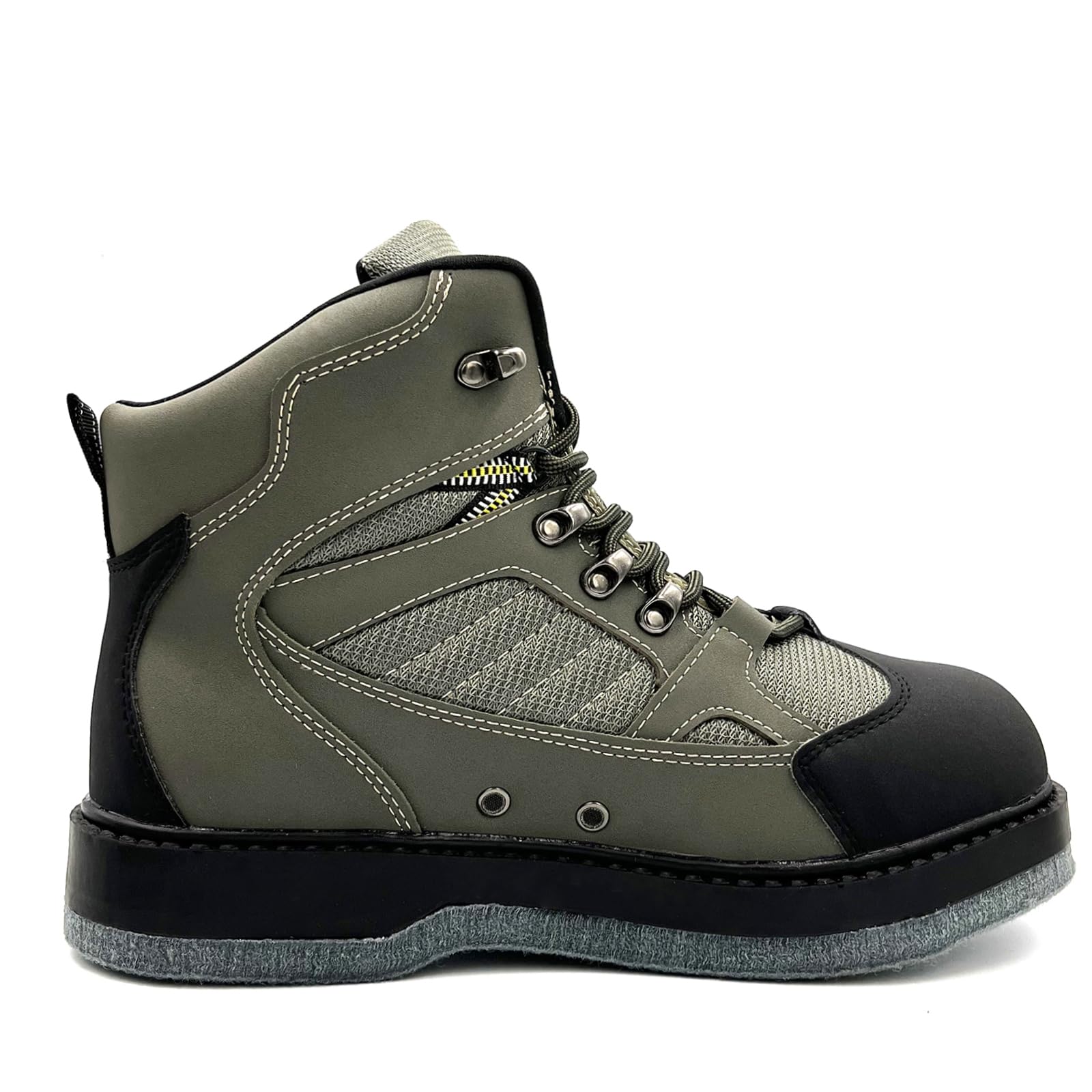
The rust-free felt boot that turned river slips into a thing of the past for owners.
The Pro Fishing boot addresses the two things that kill budget wading boots: rusting hardware and felt that peels. The eyelets use a rust-free material plating, which directly answers the corrosion complaints that plague other boots in this price range. The tongue area has been stripped of excess sponge so the boot dries faster and absorbs less water, and a metal mesh covers the drainage hole to keep debris out while letting water escape.
The grip is the headline experience. Owners describe switching from rubber boots where they “always slipped and even fell many times” to these, where the high-density felt holds firm on slippery river rocks. The comfort story is strong too — one owner wore them from 5 a.m. to 8 p.m. in a single day, and another praises the neoprene lining for easier break-in and a better fit around the foot. Several report these outlasted name-brand boots from the previous season.
Sizing is the divisive factor. The company says these are comfortable with a secure fit, but reviewers point out wildly different experiences: some say order two sizes smaller if wearing with just socks and no waders, while others found they ran small and needed to size up 1-2 sizes for waders. The durability is also a roll of the dice — while many report boots looking new after a summer, one owner had the felt separating after seven trips and seven months, with no warranty path available.
Grip that converts: the felt traction is so good that owners who slipped constantly in rubber boots found their footing immediately.
Size gamble: sizing reports are all over the map — measure carefully and expect to exchange once to get it right.
7. Duck and Fish Men’s Felt Sole Wading Shoe
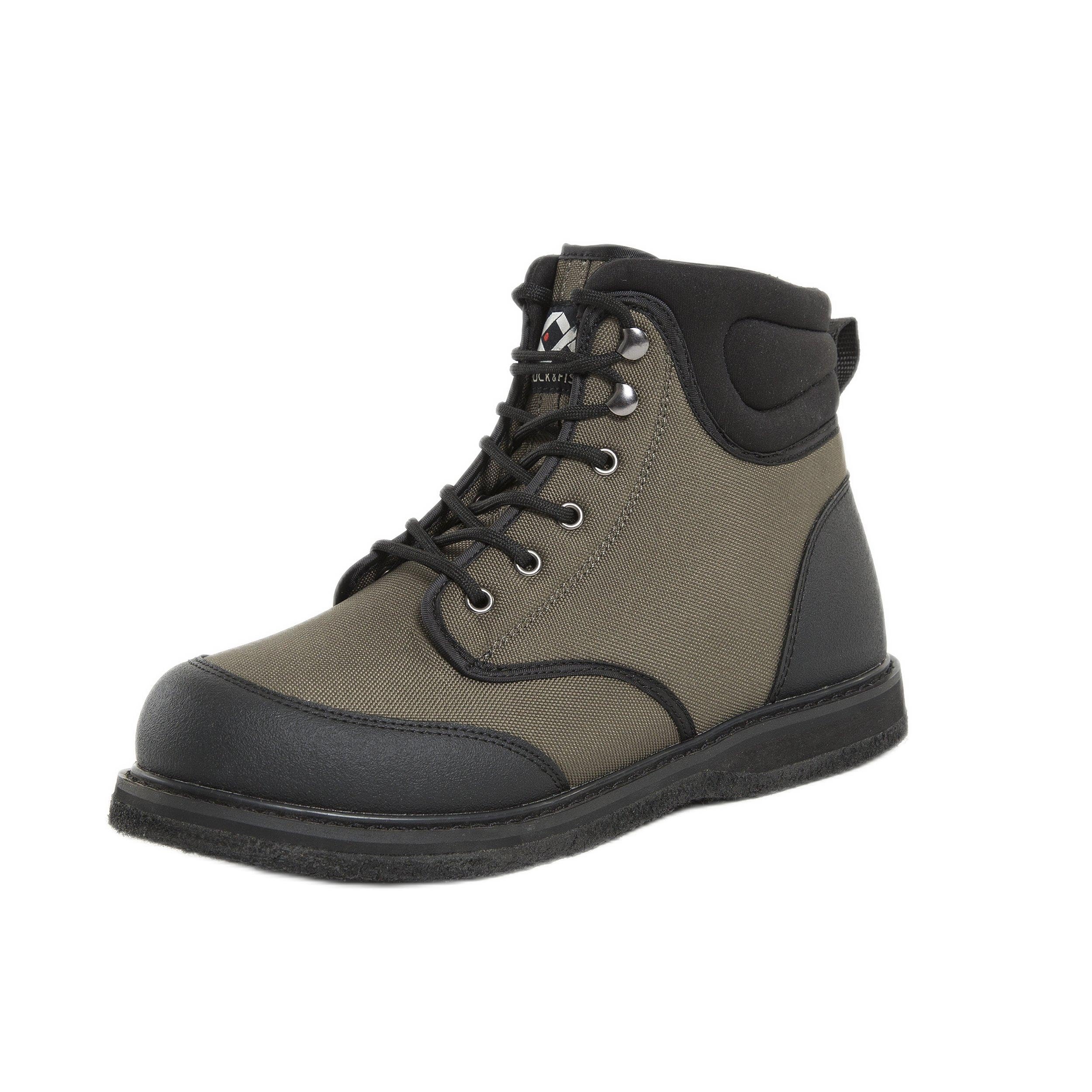
The featherweight one-piece felt shoe that grips mossy rock but skips the extras.
The Duck and Fish shoe is the budget option that gets the fundamentals right. At just 2.8 pounds, it is noticeably lighter than the 4-pound Darkhorse above, and the one-piece felt outsole extends up over the toe for better bonding. The brand is explicit that the felt is a single piece rather than a glued patch, which is exactly the design that resists peeling. The extra-wide last and midsole provide a stable base, and the reinforced PVC toe cap protects against boulder impacts.
Owners who use it for casual river walking love the grip — the felt holds on mossy, slick rocks in Idaho mountain streams and slippery riverbottoms alike. The triple-padded neoprene collar adds ankle support, and the EVA midsole keeps it comfortable for hours of wading. Several shoppers say it running very large, so much so that a size 11 bought for a 10.5 shoe was too roomy even with thick socks, and the recommendation is to order your normal shoe size or even consider sizing down.
The honest limitations are durability and weight when wet. The most recurring negative is the felt itself: one owner reported the felt came off after the 6th use, and another had the soles completely fall off by the 6th trip despite trying to glue them back. On the flip side, one owner is into their 3rd season with no falls. The other notable complaint is that the materials absorb water and become noticeably heavy when wet, making this a boot for shorter sessions rather than all-day, year-round use.
The fundamentals it nails
- One-piece felt outsole grips slick and mossy rocks reliably.
- At 2.8 lbs it is light enough for casual walking and bouldering.
- Reinforced PVC toe cap protects against rock impacts.
Where it cuts corners
- Felt durability is inconsistent — some owners saw it peel by the 6th use.
- Sizing runs large; most owners recommend ordering your normal shoe size or sizing down.
- Absorbs water and gets heavy when wet; not for all-day use.
Best for: the casual or novice angler who wants a light, grippy felt shoe for a few river trips a year without spending premium money.
skip it if: you wade every weekend and need felt that survives a full season of hard use.
8. Allen Company Granite River Wading Boots, Felt Sole

The cheapest felt boot here, and the one with the most honest quality-for-price story.
The Granite River is the entry-level felt boot, and it is built on a wide last specifically to accommodate stocking-foot wader booties. The felt sole grips rocks better than rubber, according to owners, and the speed-laced upper makes on/off genuinely quick. The lightweight EVA midsole keeps it comfortable, and the premium toe and heel box adds durability where boots wear first. One owner reported no blisters after four days of six-plus-hour use.
The quality narrative is genuinely split, and the data shows it clearly. Quality is the most-praised aspect at 16 owner mentions, but durability is marked mixed at 15 mentions. The positive side: a 5-star review describes wearing them across Montana, Idaho, and Washington with no sole issues. The negative side is stark: the harshest review describes the “entire bottom of one the boots” coming off after barely a year, and a 3-star reviewer reports the materials absorbing water until the boots become “brick-heavy when wet.”
The value equation is the real story. At its budget price, this is a boot for the angler who wants felt traction without commitment — the gift-buyer’s choice, the backup pair, the try-felt-for-the-first-time experiment. Fit is a point of disagreement, with some owners going up half a size and others finding true-to-size works. The durability reports suggest this is a single-season boot for hard use, so treat it as a starter, not a long-term investment.
Low-cost entry: the most affordable way to experience felt traction, with quality praised by 16 owners at this price point.
Fair warning: durability is the most mixed aspect at 15 mentions — this is a budget boot, and a demanding season may be its limit.
Understanding the Specs
Felt sole vs. interchangeable systems
Fixed felt soles are simple, light, and cheaper, but when the felt wears out, the whole boot is done. Interchangeable systems like Korkers’ OmniTrax let you swap between felt, rubber, and studded soles, which extends the boot’s life and lets you adapt to different river rules — some waters ban felt to prevent invasive species spread. The trade-off is that the sole plates can be tricky to reinstall.
Closure systems: BOA, laces, and quick cinch
BOA dials use a cable that tightens evenly with a twist — great for cold hands and fast adjustments. Traditional laces are simpler and more repairable but slower to manage on the water. Quick-cinch systems sit in between, offering a secure fit without a full dial mechanism. Your choice depends on whether you value speed of on/off over simplicity.
FAQ
How should felt wading boots fit over wader booties?
How long does a felt sole typically last?
Why do some waters ban felt soles?
Are BOA dial boots better than lace-up wading boots?
Can I wear felt wading boots without waders?
Why do my wading boots feel heavy after a few hours?
What is the difference between felt and rubber or cleated soles?
Do I need ankle support in a wading boot?
Final Thoughts: The Verdict
For most anglers, the felt wading boots winner is the Korkers Darkhorse because it pairs a 4.8-star rating with the rugged build and BOA convenience that hardcore wading demands. If you want cleat-ready felt traction at a value price, grab the essential Deep Eddy. And for the angler who weighs every ounce on a long backcountry approach, the featherlight Korkers Greenback is the one to reach for.
How We Picked
We do not accept paid placement. Every pick is matched to a real buyer and a real use-case; we do not hands-on test units.
Sources & Methodology
Specifications: manufacturer listings and product documentation. Review insights: verified customer reviews, as of July 2026. Pricing: not shown on this page (it changes often); check the current price via the retailer link.
As an Amazon Associate, WellFizz earns from qualifying purchases. This does not affect which products we feature.
Related Guides

Mo Maruf
I created WellFizz to bridge the gap between vague wellness advice and actionable solutions. My mission is simple: to decode the research and give you practical tools you can actually use.
Beyond the data, I am a passionate traveler. I believe that stepping away from the screen to explore new environments is essential for mental clarity and physical vitality.