Our readers keep the lights on and my smoothie glass nicely filled. As an Amazon Associate, I earn from qualifying purchases.
Specs are compiled from manufacturer listings and verified buyer reviews and can change over time — please confirm the key details on the product page before buying.
Finding a bottle a newborn actually accepts without fuss, gas, or leaking can feel like a weekly trial-and-error project. The problem is every baby has their own latch style, flow preference, and tummy sensitivity — so the “best” choice depends on which trade-off you and your baby can live with. This guide cuts through the marketing by focusing on the real-world patterns from thousands of parents who have tested these exact bottles on their own newborns.
I’m Mohammad Maruf — the founder and writer behind WellFizz. This guide is built by comparing the manufacturers’ published specifications and the patterns across verified customer reviews, so you get each pick’s real strengths and trade-offs instead of marketing spin.
After analyzing popular options, the feeding bottle for newborn that earns the highest satisfaction across the board is the one that pairs a proven anti-colic system with a nipple flow slow enough for a baby still figuring out how to suckle.
Our Picks at a Glance
How To Choose The Best Feeding Bottle For Newborn
The three things that matter most for a newborn are the nipple flow speed, the anti-colic system, and the material of the bottle. Get these right and you avoid the most common struggles — gas, leaking, and baby refusing the bottle.
Nipple Flow: The Pace Your Baby Controls
A newborn has a weak, uncoordinated suckle. A nipple that flows too fast will make them gulp, choke, and swallow air. Look for “Slow Flow” (marked Level 1 or S) or “Extra Slow Flow” (marked Preemie, SS, or 0m+). You can always move up to a faster flow as the baby gets stronger, but starting too fast causes gas and frustration.
Anti-Colic Venting: Air Should Go Into the Bottle, Not the Belly
Most newborn bottles today include a vent that lets air into the bottle as milk leaves, so the baby isn’t swallowing air bubbles. Some vents are built into the nipple itself (Philips Avent, Avima), others use a separate tube system (Dr. Brown’s). The tube systems tend to be more effective but add extra parts to clean.
Bottle Material: Glass, Plastic, or PPSU
Glass heats evenly and stays clean without scratches, but it is heavier and can break if dropped. Plastic (PPSU is a medical-grade high-heat-resistant plastic) is lightweight and shatterproof, perfect for a baby who will eventually hold the bottle themselves. PPSU is a step up from standard plastic because it withstands repeated sterilization without warping or leaching.
Quick Comparison
| Model | Best For | Material | Nipple Flow (Newborn) | Anti-Colic Type | Amazon |
|---|---|---|---|---|---|
| Dr. Brown’s Options+ Narrow 4 Pack★ Best Overall | Premature / Sensitive Stomach | Plastic | Preemie (Extra-Slow) | Internal Vent Tube | Amazon |
| Evenflo Classic Glass 6 PackBest Value | Eco-Friendly / Budget | Tempered Glass | Standard Slow | Nipple Valve | Amazon |
| NUK Perfect Match 2 PackBreastfed Baby | Breastfed Baby Transition | Plastic | Slow Flow (0M+) | Integrated Vent | Amazon |
| Philips Avent Natural 2 Pack | Leak-Free / No-Drip | Plastic | Slow Flow (Flow 2) | Nipple Valve | Amazon |
| Gulicola Small Glass 2 Pack | Preemie / Tiny Feeds | Borosilicate Glass | Extra Slow Flow (SS) | Nipple Vents | Amazon |
| Avima Anti-Colic 8 Pack | Value Set / Gas Relief | Plastic | Slow Flow (Stage 1) | Duo-Flo Nipple Valves | Amazon |
| Dr. Brown’s Glass Options+ 3 Pack | Durability / Even Heating | Borosilicate Glass | Slow Flow (Level 1) | Internal Vent Tube | Amazon |
| Gulicola Natural Gift Set | Growth Set (3oz + 5oz) | Borosilicate Glass | Extra Slow + Slow | Nipple Vents | Amazon |
| Pigeon PPSU Wide Neck 2 Pack | Durable Lightweight / Travel | PPSU Plastic | Extra Slow (SS) | Nipple Vents | Amazon |
In‑Depth Reviews
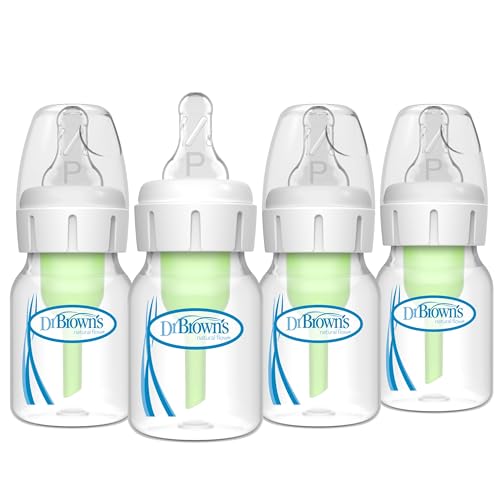
1. Dr. Brown’s Natural Flow Anti-Colic Options+ Narrow Baby Bottle, 2 oz/60 mL, with Preemie Flow Nipple, 0m+, 4 Pack
Our pick — over 4.5★ from 52,500+ verified ratings; the strongest balance of quality and price.
The preemie flow nipple that saves the gassiest tummies and sets the anti-colic standard.
The trade-off is that the vent system adds extra parts — a tube and a green stem — which means more pieces to wash by hand or in a dishwasher basket. A few owners find the tops can leak if overfilled, but the general consensus is that the gas relief is so effective that a little extra cleaning is a fair price to pay for a calm, comfortable baby.
Why Parents Rely On It
- Preemie flow nipple is the slowest available — perfect for newborns with weak suckles or feeding difficulties.
- Vacuum-free design lets baby feed at their own pace, closest to breastfeeding.
- Aids digestion by preserving bottle milk nutrients.
What to Be Ready For
- More parts to clean (vent tube and stem) compared to simpler bottle designs.
- Some owners mention leakage if the bottle is filled past the recommended level or assembled without care.
The Heavy Lifter: Reach for this if your newborn has colic, gas, or trouble latching — the preemie nipple and vent system are class-leading for sensitive tummies.
Skip If: You want the absolute simplest bottle to clean or you are looking for a glass option.
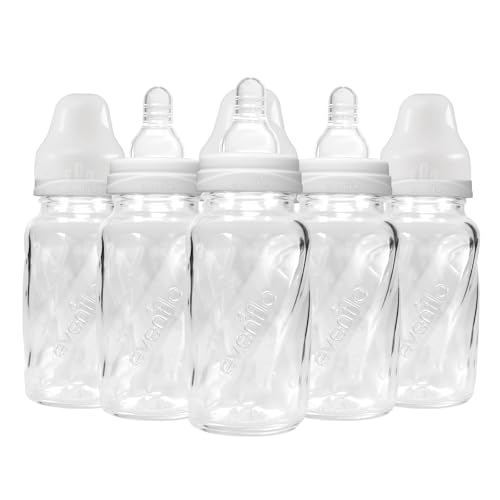
2. Evenflo Feeding Classic Glass, Twist Bottles, 4 Oz, 6 Bottles.
Six glass bottles for the price of two — the throwback shape that refuses to break.
For parents who want to avoid plastic entirely, this set delivers six tempered glass bottles in a classic ergonomic twist shape that is comfortable to hold during long feeds. The glass is surprisingly tough — as owners mention, they “held up through drops from table height onto LVP” flooring, which is more than you can say for many glass bottles. With only three parts to wash (bottle, nipple, ring), cleaning is faster than any vented system.
The main catch is the flow speed: several owners find the standard nipple too fast for a newborn, so you may need to buy a separate slow-flow or preemie nipple. The measurement markings are also notoriously hard to read in dim light. But you get six solid, eco-friendly bottles at a price that is tough to top, making this a smart buy for parents on a budget or anyone doing combo feeding where multiple bottles are needed at once.
Durable Simplicity: Tempered glass that survives real drops, a 3-piece design that cuts cleaning time, and a BPA-free build — but plan on buying a slower nipple for a newborn.
Grab These If: You want a large set of glass bottles without spending a lot and you don’t mind buying separate slow-flow nipples.
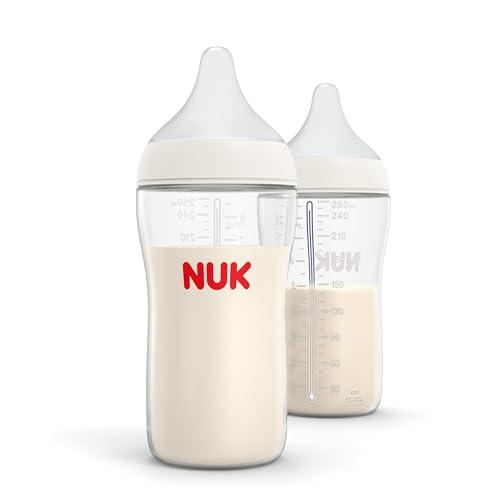
3. NUK Perfect Match Natural + Anti-Colic Bottle, 5 oz, 2 Pack
The nipple so skin-like that exclusively breastfed babies actually switch over.
NUK claims a 98% baby acceptance rate, backed by parent reports like, “These are the only bottles my EBF baby would take.” The secret is a super-soft medical-grade silicone nipple that NUK says is 2x softer than leading brands., combined with a wider latch area that mimics the breast. The bottle also includes a SafeTemp indicator that changes color if the milk is too hot, a clever safety net for groggy night feeds. With a 5 oz capacity, this 2-pack is 2.5x larger per bottle than the Dr. Brown’s 2 oz pack, making it a good choice once your baby’s appetite grows beyond tiny feedings.
The flow rate gets mixed feedback — some find the slow flow (0M+) just right, while others feel it runs a bit fast for a newborn. The 3-part design does keep cleaning simple, though, and the integrated anti-colic vent helps keep air out of the belly. If your baby is currently nursing and you need a bottle that doesn’t cause a strike, this is the one parents report as the smoothest hand-off.
Latch Master: Ultra-soft nipple that feels like skin, a temperature-safety alert built into the bottle, and a 98% reported acceptance rate — but the flow may be too fast for some brand-new newborns.
Pick This For: A breastfed baby who refuses every other bottle — the soft wide nipple is the closest thing to nursing.
4. Philips Avent Natural Baby Bottles, Slow Flow, 4 oz, BPA-Free, 2-Pack

The no-drip nipple that only releases milk when the baby actively drinks — and not a drop more.
Philips Avent won the Best of The Bump Award 2024 for a reason. — the Natural Response nipple design lets the baby control the pace just like breastfeeding. When they pause to swallow or breathe, the flow stops entirely, which dramatically reduces gulping and air intake. The anti-colic valve sits inside the nipple itself, so there are no extra tubes or stems to clean. Owners consistently praise the leak-proof seal and the wide mouth that makes filling and scrubbing easy.
The trade-off is that some newborns find the Flow 2 nipple too slow or struggle to generate enough suction to start the flow. A few owners also note that milk can pool in the nipple if the bottle is held at the wrong angle. But for parents who want the simplest anti-colic system with the fewest parts and zero leaks, this is the polished, reliable choice that keeps milk where it belongs.
Polished Simplicity
- Baby-controlled flow — milk flows only when baby actively drinks; stops when they pause.
- Anti-colic valve built into the nipple means fewer parts to clean versus tube-style vents.
- No-drip nipple design keeps the bottle and bag mess-free.
- Wide breast-shaped nipple eases transition from breast to bottle.
Possible Hiccups
- Some newborns may not have the suction strength for the Flow 2 nipple.
- Nipple can pool milk if bottle angle is not tilted enough.
Reach For This If: You want a leak-free, no-drip experience with the fewest parts to clean and a baby who will be switching between breast and bottle.
5. Gulicola Small Glass Baby Bottle for Newborn Breastfeeding Babies, Preemie & Extra Slow Flow Nipples (SS), Anti-Colic, Breast-Like, 0 Months+, 3 oz, 2 Pack – White

The tiny 3 oz glass bottle with an extra-slow nipple built for the tiniest mouths.
When your baby only takes an ounce or two per feed, a standard 4 oz bottle feels wasteful. Gulicola gets this right with a 3 oz borosilicate glass bottle and an SS (extra slow flow) nipple designed for newborns 0m+. The nipple includes guide points that encourage a proper latch, and the ultra-soft silicone mimics the feel of breastfeeding. Customers note the glass survives drops onto tile, which is rare for any glass bottle — the borosilicate material is genuinely durable.
The 4-piece wide-neck design is easy to clean, and the bottle is compatible with sterilizers, boiling water, and microwaves. The Ounce markings can be hard to read in low light (a common glass-bottle complaint), but for preemie and newborn feeding where every milliliter matters, this compact set hits a niche that bigger bottles miss.
Micro-Feed Specialist: A 3 oz borosilicate glass bottle with an extra-slow SS nipple that survives drops and encourages a deep latch — perfect for preemies or newborns who take tiny volumes.
Go For This If: You need a small-volume glass bottle for a preemie or a newborn just starting bottle feeding and you want a slow, controlled flow.
6. Avima 4 oz Anti Colic Baby Bottles w Slow Flow Nipples. 0-3M (Set of 8) | Narrow Neck Bottle with Stage 1 Silicone Nipples

Eight bottles in one box that solved gas problems the complicated systems couldn’t touch.
Designed by a physician’s assistant and frustrated first-time mom., the Avima bottle uses a patented Duo-Flo nipple with two valves that flex to match the baby’s feeding pace — preventing nipple collapse and the gas that follows. Several reviewers point out that this bottle solved gas and reflux issues that even Dr. Brown’s couldn’t manage, with fewer parts to clean (only 4 pieces per bottle). The set of eight 4 oz bottles is generous enough that you can batch-prepare and rotate without washing after every feed.
The standard narrow neck is compatible with many breast pumps, so you can pump directly into the bottles. The Stage 1 slow flow nipple is meant for 0-3 months, but you can buy separate medium and fast flow nipples as the baby grows. Some parents note the bottle is a bit basic in terms of aesthetics, but the performance-focused design is hard to argue with at this price point for an 8-pack.
Gas-Busting Bulk: A generous 8-bottle set with a smart dual-valve nipple that stops gas at the source — fewer parts to clean and a design born from real-world mom frustration.
Buy This If: You want a big set of anti-colic bottles for a gassy newborn and you prefer a simpler cleaning routine over a tube-style vent system.
7. Dr. Brown’s Anti-Colic Options+ Narrow Glass Baby Bottles 4 oz/120 mL, with Level 1 Slow Flow Nipple, 3 Pack 0m+ with Mint 100% Silicone Sleeves, BPA-Free
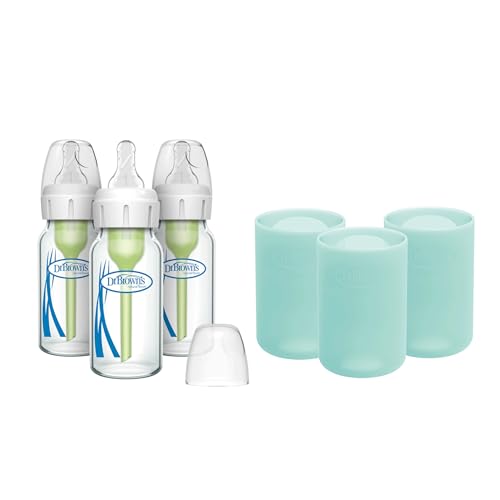
The glass version of the classic Dr. Brown’s — same vent, warmer milk, zero plastic taste.
If you love the Dr. Brown’s anti-colic system but want to ditch plastic, this borosilicate glass bottle with a mint silicone sleeve is the answer. The glass heats up faster than plastic and holds the temperature longer, which means less time waiting for warmed milk and more consistent temperatures throughout the feed. The included silicone sleeve provides grip and some drop protection, and shoppers say the glass has held up well with repeated use and sterilization.
The Level 1 slow flow nipple is suitable for newborns, and the internal vent system preserves nutrients and reduces air intake just like the plastic version. The downside is that the silicone sleeve can be tough to remove for cleaning, and you still have 5 pieces (bottle, nipple, collar, vent tube, vent stem) to wash. But for parents who prioritize material safety and an evenly heated bottle, this glass set is the premium upgrade that fixes the few complaints about the standard plastic version.
Glass Advantage
- Borosilicate glass resists thermal shock and stays clean with no scratches.
- Heats faster and holds temperature longer than plastic Dr. Brown’s bottles.
- Mint silicone sleeve helps with grip and drop protection.
Cleaning Reality
- 5 separate pieces per bottle to wash and reassemble.
- Silicone sleeve is difficult to remove for thorough cleaning.
- Heavier than plastic, so baby will need help holding it longer.
Choose This If: You want the anti-colic performance of Dr. Brown’s in a glass bottle that heats evenly and doesn’t hold odors or stains.
8. Gulicola Natural Glass Baby Bottle Newborn Set, 3 oz and 5 oz with Extra Slow Flow & Slow Flow Nipple, Anti Colic, 0-3 Months, 2 Pack – Pink

A two-bottle kit that grows with the baby — a 3 oz for week one and a 5 oz for month three.
Most newborn sets give you one size. This Gulicola set gives you a 3 oz bottle with an extra-slow flow nipple (0m+) and a 5 oz bottle with a slow flow nipple (1m+), plus a storage cap for each. That means you don’t need to buy a second set in a few weeks when the baby’s appetite doubles. The borosilicate glass is the same durable quality as the standalone Gulicola bottles, and owners praise the leak-proof seal and easy 4-piece assembly.
The ultra-soft nipple with guide points helps train a correct latch, and the anti-colic vents keep air bubbles out of the milk. The glass has proven itself against drops (even on tile), and the wide neck makes cleaning straightforward. But for a combo-feeding or nursing parent who wants one small and one larger bottle ready, this is a cleverly practical bundle.
Smart Size Progression: A 3 oz and 5 oz borosilicate glass duo with matching nipple flows — start with the extra-slow for tiny feeds and step up without buying another set.
Ideal For: Parents who want a minimalist two-bottle set that transitions from newborn to 3-month feeding volumes without extra purchases.
9. Pigeon PPSU Wide Neck Anti-Colic Nursing Baby Bottle, 5 oz, 2-Pack
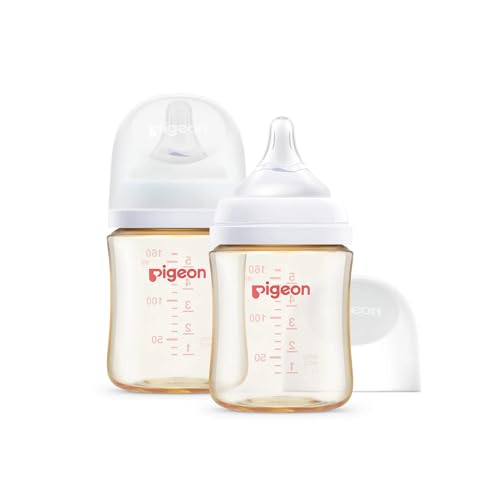
The featherweight, medical-grade plastic that survives constant sterilizing without a scratch.
PPSU is a step above standard plastic — it is heat-resistant enough to withstand boiling water and repeated sterilizations without warping, and it stays clearer than glass after months of use. The Pigeon bottle is widely used in Asian hospitals and is built on research into the three natural sucking movements a baby makes during feeding. The SS nipple (0m+) is extra slow and includes a latch-on line that guides the baby’s lips into the correct position, which owners say prevents nipple confusion and makes switching between breast and bottle smooth.
The wide neck and streamlined body are easy to grip and clean, and the bottle is noticeably lighter than glass — a real advantage when the baby eventually wants to hold it themselves. The main downside is the price; PPSU is more expensive than standard plastic or even some glass options. But owners who value the durability, the research-backed nipple design, and the confidence of a medical-grade material consider it a worthwhile long-term investment.
Lightweight & Sterile
- PPSU is lightweight, shatterproof, and withstands repeated sterilization without degrading.
- SS (extra-slow) nipple with latch-on line prevents nipple confusion and encourages a deep latch.
- Streamlined wide neck is easy to hold and simple to clean.
- Anti-colic vents reduce air intake.
The Investment
- Higher price point than standard plastic or glass bottles.
- 8 oz version (same model) may not have enough room for 4 scoops of formula, requiring two-step mixing.
Best For: Parents who want a lightweight, nearly unbreakable bottle for on-the-go feeding and are willing to pay for medical-grade PPSU quality.
Understanding the Specs
Nipple Flow Speed (SS vs S vs Level 1)
The letter or number on the nipple tells you how fast milk comes out. SS (extra slow) is the very slowest — it is ideal for a preemie or a newborn under a month old who has a weak suckle. S or Level 1 is a standard slow flow that works for most babies 0-3 months old. If your baby coughs, gulps, or leaks milk from the corner of the mouth, the flow is too fast and you need to drop down a size. You can always size up later as the baby gets stronger.
Anti-Colic Vent Design
These systems work by letting air enter the bottle as the baby drinks, preventing a vacuum that forces air into the stomach. There are two main types: an internal tube system (like Dr. Brown’s) which is very effective but adds extra pieces to wash, and a nipple-vent system (like Philips Avent or NUK) which is simpler but sometimes less aggressive with gas. Both work — choose based on how much cleaning you can tolerate versus how gassy your baby gets.
Bottle Material: Plastic, Glass, or PPSU
Standard plastic is light and cheap but can scratch and pick up odors over time. Glass is inert, heats evenly, and stays clean, but it is heavy and can break. PPSU is a high-end plastic that is amber-colored, heat-resistant up to 180°C (356°F), and withstands repeated sterilization without breaking down. It is the most durable option but also the most expensive. For a newborn who will be bottle-fed for many months, the material affects how often you replace bottles and how warm the milk stays.
FAQ
How many bottles do I actually need for a newborn?
What is the difference between slow flow and extra slow flow nipples?
Can I switch between a Dr. Brown’s bottle and a Philips Avent bottle?
Do glass bottles break easily if dropped?
Will a bottle with an anti-colic vent leak in a diaper bag?
How often do I need to replace baby bottle nipples?
Can I use a baby bottle warmer with all glass bottles?
What does BPA-free mean and is it important for baby bottles?
How do I clean the internal vent tube in Dr. Brown’s bottles?
Final Thoughts: The Verdict
For most buyers, the feeding bottle for newborn winner is the Dr. Brown’s Natural Flow Options+ 2 oz 4-Pack because the preemie flow nipple and clinically-proven vent system give you the best shot at a gas-free, comfortable newborn without guesswork. If you want the simplest cleaning routine and a no-drip design that still reduces air, grab the Philips Avent Natural 2-Pack. And for a breastfed baby who refuses every bottle you try, the NUK Perfect Match Natural 2-Pack with its skin-like nipple and SafeTemp indicator is the one parents reach for as the last resort that actually works.
How We Picked
We do not accept paid placement. Every pick is matched to a real buyer and a real use-case; we do not hands-on test units.
Sources & Methodology
Specifications: manufacturer listings and product documentation. Review insights: verified customer reviews, as of July 2026. Pricing: not shown on this page (it changes often); check the current price via the retailer link.
As an Amazon Associate, WellFizz earns from qualifying purchases. This does not affect which products we feature.
Related Guides

Mo Maruf
I created WellFizz to bridge the gap between vague wellness advice and actionable solutions. My mission is simple: to decode the research and give you practical tools you can actually use.
Beyond the data, I am a passionate traveler. I believe that stepping away from the screen to explore new environments is essential for mental clarity and physical vitality.