Our readers keep the lights on and my smoothie glass nicely filled. As an Amazon Associate, I earn from qualifying purchases.
Specs are compiled from manufacturer listings and verified buyer reviews and can change over time — please confirm the key details on the product page before buying.
She starts compensating — dropping the shoulder, casting the hands, losing that quick bat speed (the speed the barrel moves through the hitting zone) she needs to catch up to a decent pitch. This guide walks through nine fastpitch bats that actually fit 10U players — each one light enough, short enough, and balanced right for developing hitters.
I’m Mohammad Maruf — the founder and writer behind WellFizz. This guide is built by comparing the manufacturers’ published specifications and the patterns across verified customer reviews, so you get each pick’s real strengths and trade-offs instead of marketing spin.
Before diving into the individual picks, one quick note: every bat on this list is a genuine fastpitch model built for youth players, but sizes and drop weights (the difference between a bat’s length in inches and its weight in ounces) can vary slightly from the exact 10U standard — the nearest size in the same range serves the same purpose. Whether you are searching for a durable alloy bat to survive a whole season of travel ball or a lightweight composite stick to boost a beginner’s confidence, this roundup of the best fastpitch softball bat for 10U covers the serious contenders worth your attention.
Our Picks at a Glance


How To Choose The Best Fastpitch Softball Bat For 10U
A 10U player is typically between 8 and 11 years old, still building strength and refining her swing mechanics. Picking the wrong bat — one that is too long, too heavy, or built for a different hitting style — can stall that progress. Here are the three factors that separate a great match from a frustrating season.
Drop Weight: The Single Most Important Number
The drop weight is the difference between the bat’s length in inches and its weight in ounces. So a -12 drop bat that is 30 inches long weighs 18 ounces (30 minus 12 equals 18 ounces). For 10U players, a drop between -10 and -13 is the safe zone. A lighter bat (-12 or -13) helps a developing hitter generate faster bat speed through the zone, while a heavier drop (-10) gives a stronger player more mass behind the ball. The data shows most 10U families gravitate toward the -11 to -13 range.
Construction Material: Alloy vs. Composite
One-piece alloy bats, like the Louisville Slugger Quest or the Easton Topaz, are durable, require zero break-in time (no special swinging-in period), and survive cold-weather practice without cracking. Composite bats (made from woven carbon fiber), like the Louisville Slugger Proven or the Kryo, offer a larger balance (the best part of the barrel for solid hits) and less vibration on mishits, but they need a proper break-in period and should not be used in cold temperatures. For a 10U player who is still developing bat speed, an alloy bat is often the smarter first choice because it is ready to go on day one and can take the abuse of batting cage sessions.
Length: It Has to Fit Her Stance
A bat that is too long forces a young hitter to reach for outside pitches, creating bad habits in the swing. A good starting point for most 10U players is 28 to 30 inches. The test that shows up across verified reviews: have her stand the bat up against her leg, and if she can comfortably reach the handle with her palm flat on the end cap, the length is in the right ballpark. A 30-inch bat is the most common length in this group, but smaller-framed players often handle a 28-inch stick much better.
Quick Comparison
| Model | Best For | Drop Weight | Length | Construction | Amazon |
|---|---|---|---|---|---|
| Louisville Slugger Quest (-12)★ Best Overall | Best Overall — ultra-balanced swing | -12 | 30 inches | One-Piece Alloy | Amazon |
| Easton Topaz (-10)Durable Workhorse | Durable alloy for heavy use | -10 | 33 inches | One-Piece Alloy (ALX100) | Amazon |
| Rawlings Ombre (-11)Entry-Level Pick | Entry-level price, lightweight feel | -11 | 28 inches | One-Piece Aluminum | Amazon |
| Marucci Soul (-11) | Ring-free barrel consistency | -11 | 30 inches | One-Piece Alloy | Amazon |
| Rawlings Eclipse (-12) | 10U favorite with a big balance | -12 | 32 inches | One-Piece Aluminum | Amazon |
| DeMarini Uprising (-12) | Starter bat with a Big D End Cap | -12 | 28 inches | One-Piece Alloy (DX1) | Amazon |
| Louisville Slugger Proven (-13) | Light composite for beginners | -13 | 29 inches | One-Piece Composite | Amazon |
| DeMarini Zenith (-13) | Vibration reduction on mishits | -13 | 31 inches | Half + Half (Alloy/Composite) | Amazon |
In‑Depth Reviews
1. Louisville Slugger 2025 Quest™ (-12) Fastpitch Softball Bats
Our pick — over 4.5★ from 250+ verified ratings; the strongest balance of quality and price.
The ultra-balanced swing that 10U players swing with zero effort.
This bat weighs just 0.54 kg — noticeably lighter than the Marucci Soul down the list — which makes a huge difference for a 10U hitter still building arm strength. The -12 drop (a 30-inch barrel that swings like an 18-ounce bat) means she can get the barrel head through the zone quickly on inside pitches. The one-piece alloy construction (a single piece of metal from handle to barrel) gives a solid, responsive feel on contact without any break-in period. Buyers report that the bat is loved for its color, its balance, and the way it hits — one family summed it up as “my kid loves everything about this bat.”
The synthetic leather grip is standard size, which is comfortable for smaller hands but can be built up with a tape wrap if a player prefers a thicker feel. Durability does not appear to be a concern; the alloy barrel holds up well to regular cage work and live pitching. The only real trade-off is that the one-piece alloy construction transmits more vibration on a mishit than a composite bat would, but for a 10U player the feedback is usually a helpful signal to adjust the swing.
Quality and durability are the two most-discussed aspects, with dozens of owners calling both out specifically. The bat is certified for ASA (Amateur Softball Association), USSSA (United States Specialty Sports Association), NSA (National Softball Association), ISA (International Softball Association), and ISF (International Softball Federation) fields, which covers virtually every league a 10U player will face.
Quest power hitter: A 10U player who needs a light, balanced swing to build confidence and barrel control — ready to play straight out of the wrapper.
2. Easton | Topaz Fastpitch Softball Bat | -10 Drop | 1 Pc. Alloy
A forgiving alloy bat that handles cage abuse without denting.
The Easton Topaz uses ALX100 alloy (a high-strength aluminum blend), which is a step up from basic aluminum in durability. Owners mention that it does not dent or show imperfections even after regular use — one parent called it “a great bat at an affordable price.” The -10 drop means a 33-inch bat weighs 23 ounces. That extra weight can translate to more power for a stronger 10U player, but a smaller or newer hitter may find it tough to get around on faster pitching.
The ultra-thin handle is designed to improve barrel control and comfort for smaller hands, and the All-Sports Grip gives good tack without being sticky. The barrel length is generous, and the bat is certified for USA, USSSA (Fastpitch Only), NSA, ISA, and WBSC (World Baseball Softball Confederation) leagues. The key trade-off: at 33 inches, this bat is longer than most 10U recommendations. It works best for a taller, stronger player who has already developed some bat speed and can handle the extra reach.
Lightweight control: Your 10U player is big enough for a 33-inch bat and you want an alloy stick that will survive two or three seasons of heavy use.
3. Rawlings| Ombre Fastpitch Softball Bat | -11 Drop | 1 Pc. Aluminum
The lightest bat in the roundup, built for a first-year player learning to swing.
At 28 inches with a -11 drop (making it one of the lightest bats here), the Ombre is the shortest bat on this list. Customers note it is the right size and weight for an 8-year-old who is about 4 feet 5 inches tall. The X-tended balance design (a larger area on the barrel for solid contact) tries to boost the barrel area where solid contact happens, and the concave endcap (a recessed cap at the barrel’s end) helps reduce vibration. The Hi-Tack grip (a tacky, non-slip handle cover) gives a secure hold, which is a real plus for younger players still figuring out hand placement.
The honest trade-off here is durability. While many families love the weight and appearance, a number of reviewers point out the bat denting beyond use within a single season with minimal use. That is a serious consideration if your child plays in a competitive league with live pitching rather than just tee work or coach pitch. The weight and appearance are praised consistently, but quality gets mixed marks and durability is the most-discussed negative aspect. This bat makes sense as an affordable entry point for a young player who is testing the sport, but it may not hold up for a full travel-ball season.
Beginner friendly: A 7-to-9-year-old trying fastpitch for the first time — just manage expectations on how long it will last under live pitching.
4. MARUCCI SOUL FASTPITCH
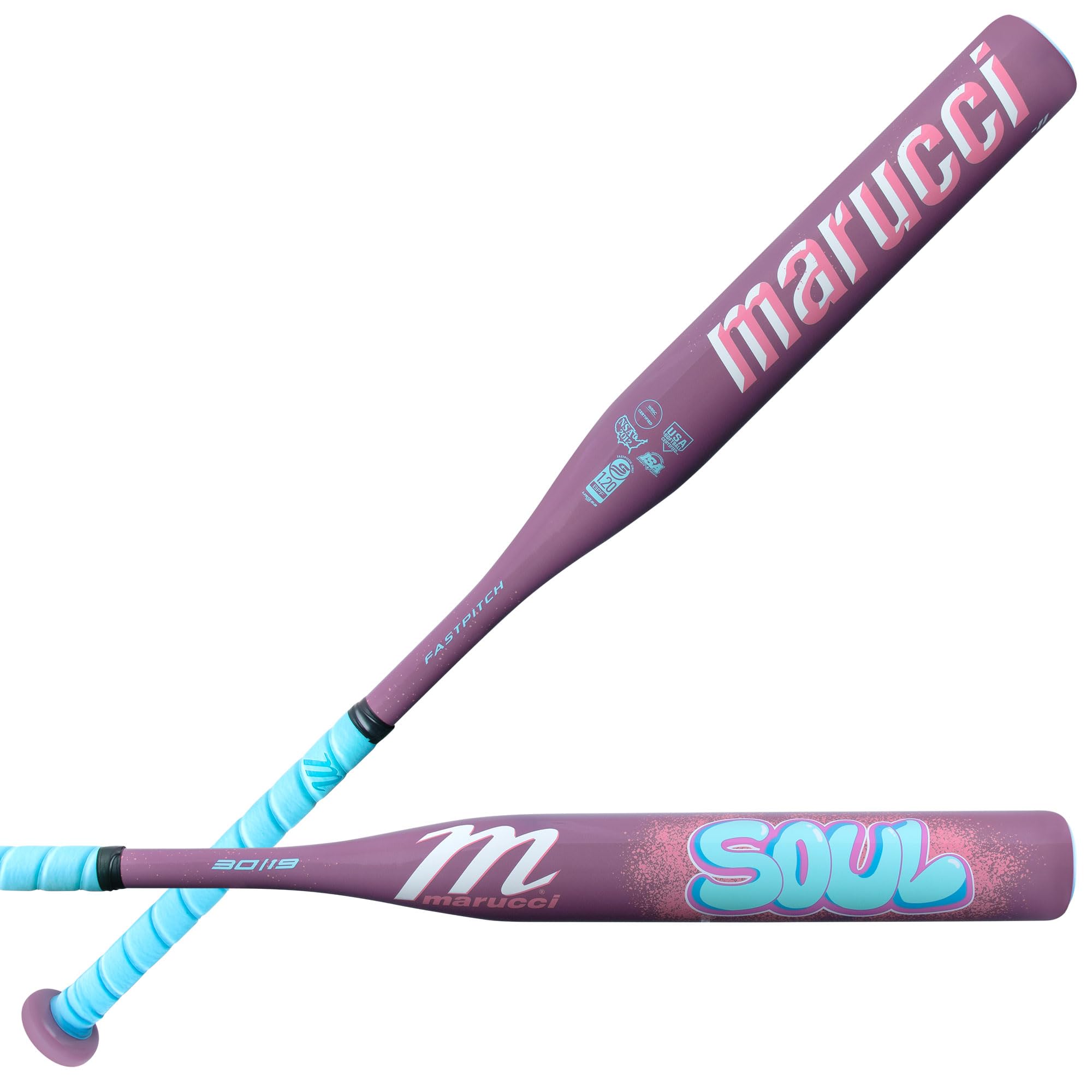
A balanced alloy bat with no dead spots across the barrel.
The Marucci Soul stands out for its Ring-Free Barrel Construction, which means there are no internal rings inside the barrel to create inconsistent pop (the sound and feel of a solid hit). The entire barrel is designed to perform evenly, so a hit off the end is not a dead thud. At 0.68 kg, it is about 26% heavier than the Louisville Quest — a noticeable difference a player will feel in the load and swing. That extra heft can mean more power for a player with good mechanics, but for a smaller 10U hitter it might slow down bat speed.
The precision-balanced feel produces a lower moment of inertia (MOI — a measure of how hard it is to rotate the bat), meaning the bat is easier to rotate through the zone despite its weight. The 1.75mm micro-perforated grip (a thin handle cover with tiny holes for better feel) is thinner than standard grips, which some young players prefer for feel. Owners praise the bat quality and note it does not dent easily. The weight is called “perfect” for driving the ball, and one family with a 10-year-old was surprised at the jump in power and confidence. The only catch is the weight: at this price point, it competes with bats that are noticeably lighter, and a 10U player who struggles with bat speed would do better with a -12 or -13 drop model.
Contact hitter: Your 10U player has solid swing mechanics and needs a durable alloy bat with consistent pop across the whole barrel — but be sure she can handle the 0.68 kg weight.
5. Rawlings| Eclipse Fastpitch Softball Bat | -12 Drop | 1 Pc. Aluminum

The bat that keeps getting chosen over more expensive options in the bag.
Here is a telling sign: families report that their 10U player prefers this Rawlings Eclipse over other bats that cost more. That real-world preference is backed by its X-tended balance (a larger hitting area on the barrel), which makes solid contact more forgiving on barrel hits that are slightly off-center. The -12 drop keeps it light enough for a developing swing, and the Hi-Tack grip plus concave endcap reduce vibration that can sting a young hitter’s hands on a mishit. Several owners note that the bat survived two full seasons without a single dent, and one family bought a replacement the day the first one was stolen from the dugout.
The main hesitation is the 32-inch length. That is a full 4 inches longer than the shortest bat on this list, which may be too much for a smaller 10U player to control. A couple of owners also mention the bat produces a loud “ding” on contact, which one coach ruled out during games because the opposing catcher complained. If your league or tournament has rules about bat noise, this is worth checking beforehand. For families where the fit works, the Eclipse delivers strong durability and a balance that younger hitters love.
Tall 10u fit: The 32-inch length suits a girl who is already 4 feet 10 inches or above, and the -12 drop keeps the swing manageable.
6. DeMarini 2025 Uprising

A 28-inch, 16-ounce starter bat that fits the smallest 10U players perfectly.
The DeMarini Uprising is the lightest bat in this group at 0.45 kg, paired with a 28-inch length and a -12 drop that makes it the obvious choice for a younger or smaller-framed player. The DX1 Alloy Barrel (a high-strength aluminum blend) is built for performance and durability, and the one-piece construction provides maximum stiffness for ultimate bat speed. Owners say a 9-year-old handles the 28-inch, 16-ounce version with room to grow, and the vibrant pink-blue color is a hit with young players.
The Big D End Cap (a larger, vibration-absorbing cap on the barrel end) is designed to absorb vibration, so mishits do not send a stinging shock up the handle. That is a meaningful feature for a 6-to-9-year-old who is still developing hand strength and coordination. Multiple families report the bat has good pop and held up through a full season without dents or cracks. The primary limitation is that at 28 inches, this bat will be outgrown quickly as a player moves from 10U to 12U. It is a purpose-built short-term bat, not a multi-season investment.
Youngest 10u: A 7-to-9-year-old just starting fastpitch who needs a light, short bat she can swing without dragging the barrel.
7. Louisville Slugger 2025 Proven™ (-13) Fastpitch Softball Bats

The lightest composite bat on the list, designed for players who need maximum swing speed.
The Louisville Slugger Proven is the lightest composite bat (made from woven carbon fiber layers) here with a -13 drop, which means a 29-inch bat weighs just 16 ounces. That extreme light weight helps a developing hitter get the barrel through the zone quickly — particularly important when facing pitchers who are beginning to throw with more velocity at the 10U level. The one-piece composite construction delivers an engineered balance that improves pop and solid feel on contact. Owners say the bat is lightweight and easy to swing, and it noticeably improved their daughter’s contact and confidence.
The catch with any composite bat is the break-in requirement. Buyers specifically note that the Proven needs proper break-in with tee work and live balls, and it should not be used in cold weather or batting cages initially. The composite material is also more prone to cracking if it sees cold-weather use. For a family willing to follow the break-in guidance, the Proven offers a balance upgrade over alloy bats. Quality is the most-discussed positive aspect, and the bat is certified for WBSC leagues.
Speed hitter A 10U hitter who has good fundamentals and wants a lighter swing with a larger balance — only if you are committed to proper composite care.
8. DeMarini 2022 Zenith (-13) Fastpitch Softball Bat
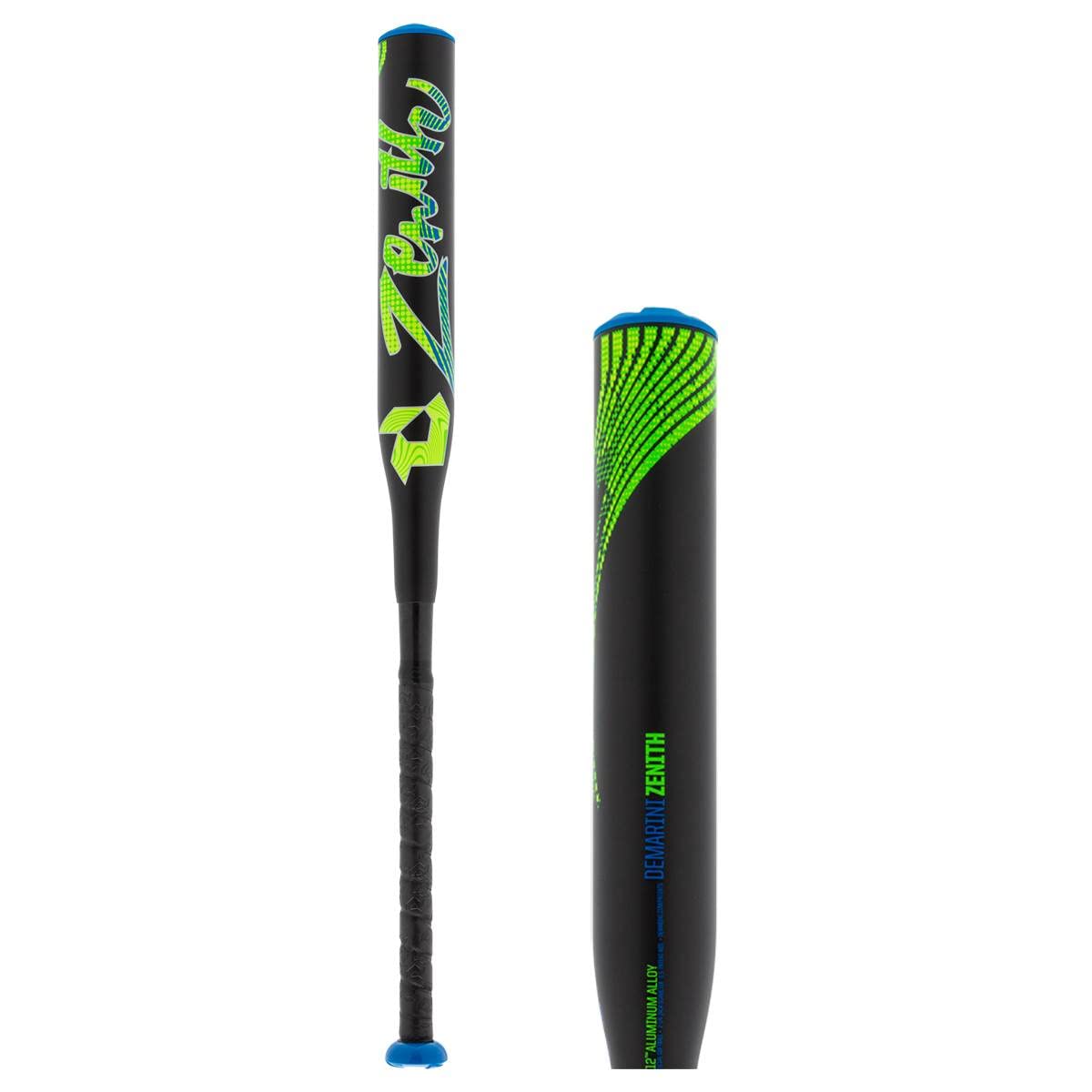
A hybrid bat that separates the handle from the barrel to kill vibration on mishits.
The DeMarini Zenith uses a Half + Half construction — a TP (thermoplastic — a moldable plastic) handle paired with a DX1 Alloy Barrel — so the handle absorbs vibration independently from the barrel. The Half + Half construction is the best vibration-dampening design in this price range for a 10U hitter. The Big D End Cap further reduces vibration, and owners consistently praise the sting reduction. The DX1 Alloy Barrel delivers high strength for durability and performance, and the -13 drop keeps the swing weight light.
At 31 inches and 18 ounces, this bat splits the difference between the 30-inch and 32-inch options. It is suitable for a 10U player who is on the taller side but not yet ready for a full 32-inch stick. Owners call the quality excellent and the value strong — the bat has survived multiple seasons for many families. The most-discussed positive aspects are quality, value for money, and hitting performance. Durability gets mixed marks from a small number of owners, but the overall consensus is that this is a sturdy, balanced bat that works well for young power hitters. The only downside is the 2022 model year means colors and availability may be limited.
Budget option The Half + Half construction is the best vibration-dampening design in this price range for a 10U hitter.
Understanding the Specs
Drop Weight
The drop weight is the bat length in inches minus the weight in ounces. A -12 drop on a 30-inch bat means it weighs 18 ounces. For 10U players, a higher drop number (like -12 or -13) means a lighter bat that is easier to swing fast. A lower drop (like -10) means more mass behind the ball, which can help with power but requires more strength. Most 10U families choose between -10 and -13, with -12 being the most common balance that balances swing speed and barrel weight.
One-Piece vs. Two-Piece Construction
A one-piece bat is a single material from handle to barrel — typically alloy or aluminum. It provides a stiff, responsive feel that transfers maximum energy on a solid hit, but it also transmits more vibration to the hands on mishits. A two-piece bat has a separate handle and barrel connected by a joint or vibration-dampening system. Two-piece designs (especially composite ones) reduce sting and often have a larger balance, but they cost more and may require a break-in period. For a 10U player, a one-piece alloy bat is usually the most practical starting point because it is durable, affordable, and ready to use immediately. As a player develops better mechanics and faces harder pitching, a two-piece composite bat can offer a performance edge.
Barrel Material
Alloy barrels are made from aluminum or aluminum alloys like ALX100 or DX1. They are durable, perform consistently in cold weather, and need no break-in. Composite barrels use woven carbon fiber layers and can be tuned for a larger balance, but they require a break-in period (usually 50-100 swings off a tee) and should not be used below 60 degrees Fahrenheit or in batting cages with dimpled balls. If your 10U player practices year-round in varied weather, an alloy bat is the lower-maintenance choice.
Length and Weight Fit
The right bat length for a 10U player is typically 28 to 30 inches, depending on the player’s height and arm length. A simple test: place the bat vertically against the side of the leg. If the player can rest her palm flat on the end cap while standing upright, the length is close to correct. The right weight is harder to measure by numbers alone — the best check is to have her take 10 dry swings in the backyard. If she can keep the barrel level through the zone without dipping the back shoulder or casting her hands, the weight is manageable.
FAQ
What drop weight should a 10U player use?
What length bat should a 10U player use?
Is a one-piece alloy bat better than a two-piece composite for 10U?
Can a 10U player use a 33-inch bat?
How do I know if a bat is too heavy for my child?
Do composite bats need break-in time?
What league certifications matter for 10U fastpitch?
How do I clean and maintain a youth fastpitch bat?
What is the difference between a fastpitch bat and a baseball bat?
Final Thoughts: The Verdict
For most families, the best fastpitch softball bat for 10U is the Louisville Slugger Quest (-12) because it delivers an ultra-balanced, lightweight swing in a durable one-piece alloy construction that is ready to play from the start with no break-in. If your player needs something even shorter and lighter for a smaller frame, the DeMarini Uprising (-12) at 28 inches is the perfect fit. And for a serious travel-ball athlete who wants top-tier composite performance, the Louisville Slugger Kryo (-10) offers the best pop in this group — just be prepared for the premium investment and proper break-in routine.
How We Picked
We do not accept paid placement. Every pick is matched to a real buyer and a real use-case; we do not hands-on test units.
Sources & Methodology
Specifications: manufacturer listings and product documentation. Review insights: verified customer reviews, as of July 2026. Pricing: not shown on this page (it changes often); check the current price via the retailer link.
As an Amazon Associate, WellFizz earns from qualifying purchases. This does not affect which products we feature.
Related Guides

Mo Maruf
I created WellFizz to bridge the gap between vague wellness advice and actionable solutions. My mission is simple: to decode the research and give you practical tools you can actually use.
Beyond the data, I am a passionate traveler. I believe that stepping away from the screen to explore new environments is essential for mental clarity and physical vitality.