Our readers keep the lights on and my smoothie glass nicely filled. As an Amazon Associate, I earn from qualifying purchases.
Specs are compiled from manufacturer listings and verified buyer reviews and can change over time — please confirm the key details on the product page before buying.
If you have acne-prone skin, the idea of putting oil on your face probably sounds like a mistake. The right facial oil can balance your skin’s own oil, calm redness, and leave you hydrated instead of shiny. The wrong one — a heavy, pore-clogging oil built for very dry skin — will hand you a fresh breakout by the weekend. That single difference is what separates the picks below.
I’m Mohammad Maruf — the founder and writer behind WellFizz. This guide is built by comparing the manufacturers’ published specifications and the patterns across verified customer reviews, so you get each pick’s real strengths and trade-offs instead of marketing spin.
You are about to see six breakout-safe formulas, each tested by real buyers with oily, sensitive, and blemish-prone skin. Every one here is non-comedogenic, which simply means it is made not to plug your pores. This is your shortcut to the face oil for acne that actually fits your skin.
Our Picks at a Glance


How To Choose The Best Face Oil For Acne
Choosing an oil for blemish-prone skin is not about finding the most expensive bottle. It is about finding a formula light enough that your pores can still breathe, and hardy enough to calm the redness that comes with breakouts. Here are the three things that separate a hero product from a shelf-warmer.
Look for the linoleic acid signal
Acne-prone skin often runs low on linoleic acid, a fatty acid that keeps sebum (your skin’s natural oil) thin and free-flowing instead of thick and sticky. Oils rich in it — like rosehip, jojoba, and sunflower seed — tend to feel lighter and sink in faster. That is why heavy oils such as coconut can feel suffocating on breakout-prone skin, while these lighter picks glide on and disappear.
Check the non-comedogenic claim
Non-comedogenic literally means “won’t clog pores” — the single most important promise a face oil can make to someone dealing with acne. Every product on this list carries that claim, so you can be confident none of them are designed to sit heavy on your skin. If a bottle does not say it, treat it as a general dry-skin oil and walk on by.
Match the oil to your routine slot
Think about when you will actually use it. A fast-absorbing oil like the tea tree pick works well as a nighttime moisturizer before bed. A richer, glow-focused formula suits a slow gua sha or facial massage session. And if you use acne medication — like a benzoyl peroxide or salicylic acid treatment — look for an oil that pairs with it without pilling or canceling it out. The right oil slots in behind your treatment, sealing in hydration without blocking the active ingredients from working.
Quick Comparison
| Model | Best For | Size | Best Ingredient Highlight | Key Benefit | Amazon |
|---|---|---|---|---|---|
| Gua Sha Oil for Face Care★ Best Overall | Glow and massage | 30mL (1.06 oz) | Jojoba and Turmeric | Non-greasy glow | Amazon |
| Clarifying Tea Tree OilBest for Spot Treating | Spot treating breakouts | 1oz/30ml | Tea Tree and Vitamin E | Clarifies and purifies | Amazon |
| USDA Organic Face Oil | Oily and sensitive skin | 3.9 ounces | Jojoba and Rosehip | Balances excess oil | Amazon |
| KraveBeauty Oil La La | Reactive, sensitive skin | 45 mL | Rosehip and Cicatide Complex | Barrier support | Amazon |
| DIME Beauty Blue Facial Oil | Redness and irritation | 1 oz | Blue Tansy and Black Cumin Seed | Soothes blemishes | Amazon |
| HERBIVORE Lapis Blue Tansy Oil | Hormonal breakouts | 3 ounces | Azulene and Squalane | Reduces redness | Amazon |
In‑Depth Reviews
1. Gua Sha Oil for Face Care — Skin Brightening Serum for Dark Spots, Fine Lines & Wrinkles
Our pick — over 4.5★ from 800+ verified ratings; the strongest balance of quality and price.
The massage-day oil that leaves breakout-prone skin dewy, not drenched.
Beauty editors reach for it on gua sha nights, and buyers agree: 4.6 stars across 800+ ratings. What wins people over is how well the formula performs on real skin, not just in a photograph. The blend leans on jojoba, calendula, sunflower, rosemary, and turmeric, with a honeysuckle scent that reviewers describe as subtle rather than perfumed. If you massage your face daily, the glide here is what keeps the routine going.
At 1.06 ounces, this is the smaller of the two 30mL-class bottles in this lineup — roughly a third of the weight you get with the USDA Organic pick above. That makes it the right choice for a starter bottle or a travel kit rather than a long-haul staple. The dropper-style stopper dispenses one drop at a time, which stops the mess that comes with a standard pour spout. A small amount covers the whole face and neck, so the bottle quietly outlasts its size.
The honest trade-off is consistency. Buyers describe this oil as closer to a massage medium than a serum, meaning it takes a few minutes to settle and rewards a proper press-and-pat technique over a quick swipe. The fragrance is a real love-it or leave-it split among buyers, and a few have flagged a crooked label or a European-style dropper that is harder to dispense than expected. None of that dulls the daily experience for the majority, who repurchase it on repeat.
What keeps buyers coming back
- Non-greasy finish that leaves a visible, long-lasting glow
- Jojoba and turmeric blend suits acne-prone, mature, and sensitive skin
- Single-drop stopper keeps spills off your counter
- Doubles as a facial-massage and gua sha base
The honest catch
- 1.06-ounce bottle runs out faster than a standard 30mL competitor
- Needs a slower massage-style application than a standard serum
- A few buyers received a bottle with a crooked label
Built for: daily gua sha and facial-massage routines, especially if you want visible glow without a greasy finish.
Look elsewhere if: you want a large bottle for a full-body skin routine, or you dislike scented oils.
2. Clarifying Tea Tree Oil for Face and Acne, Targets Acne and Uneven Skin Tone
The tea tree spot treatment for calming a fresh pimple overnight.
If you have ever woken up with a fresh bump on your chin, this is the one that earns its spot in the cabinet. It is a lightweight facial oil built around tea tree, vitamin E, rosemary, and sunflower oil — a combination designed to clarify and calm in one step. The full bottle measures 5.25 inches tall, which is the tallest of the three full-size options here, so it tucks neatly into a bathroom organizer without spilling forward. Buyers report that the tea tree dries active pimples quickly without a heavy, pore-clogging feel.
You can use it as your nighttime moisturizer, not just a spot corrector. Buyers with adult acne say it soothes a fresh breakout and hydrates enough to replace a heavier cream. Compared to the richer USDA Organic Face Oil, this one feels lighter on contact, and a small pump covers your whole face.
The formula does have a firm side. Texture is noticeably thicker than a standard serum, and some users find it needs either more product or a warmer application to spread evenly. That slight grip is worth accepting if you want a tea tree oil that actually calms active breakouts without the heavy after-feel a plain carrier oil leaves.
The formula reality: this is a functional, no-fuss pick. You get one job — clarifying blemish-prone skin — performed two ways: over a whole face or dabbed directly on a spot. Buyers describe the tea tree as potent enough that it does not need many drops, and a single bottle stretches for months, which is why it keeps winning repeat customers even with its slightly stubborn consistency.
Reach for it: when a pimple shows up in the morning and you need something to calm it before the day gets going.
Think twice if: you prefer a serum that melts and glides rather than one that needs warming between your fingers first.
3. USDA Organic Face Oil — USA Made with Natural & Organic Ingredients
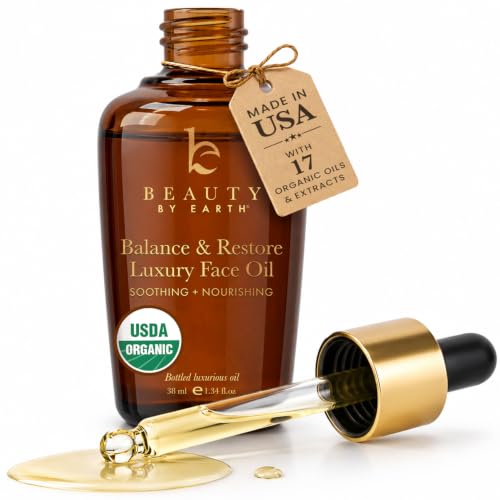
The matte-finish pick that surprises anyone told oil makes oily skin worse.
Here is the pitch that makes skeptics become believers: owners mention that this facial oil keeps ultra-oily, acne-prone skin matte all day. It is a 3.9-ounce bottle formulated in small batches with 17 organic oils — a blend that leans on jojoba to balance excess oil and rosehip to soften the look of marks. It is USDA Certified Organic, vegan, and cruelty-free, and the whole bottle comes in at 3.9 ounces. Set next to the Clarifying Tea Tree Oil, this one is denser on the shelf and pours noticeably more product per bottle, so a single purchase stretches a long way.
The application story is where this oil separates itself from heavier alternatives. Buyers describe layering 4-5 drops mixed with a gel moisturizer after cleansing and acne medication, and staying matte through a full workday. One long-time user of the pick above will find this one richer and slower to settle, which means it is built for a nighttime slot rather than a bright morning commute. It wears well under makeup, which is the detail that has made it a repeat purchase for a range of skin types — from sensitive and combination through to mature.
The honest note: a few buyers have received a bottle that arrived partly empty or with scuffed packaging, so it is worth a quick check when yours lands. There is also a woodsy botanical scent from the frankincense, myrrh, and lavender oils that not everyone loves. Both are easy to live with once you know to expect them — the payoff is a bottle that keeps oil in check instead of feeding it.
Standouts from the label
- USDA Certified Organic formula with 17 organic oils
- Non-comedogenic and safe under makeup
- 3.9-ounce bottle lasts months at 4-5 drops per use
- Jojoba and rosehip target oil balance and mark fading
Worth knowing before you buy
- A minority of units arrive with packaging scuffs or low fill
- Woodsy scent from frankincense and myrrh is a love-it or leave-it
- Richer texture means it suits a nighttime routine better than mornings
The smart buy: for oily and acne-prone skin that wants an all-day matte finish in a single certified-organic bottle.
Skip the guesswork if: you want an unscented formula — this one carries a distinct botanical aroma from frankincense and myrrh.
4. KraveBeauty Oil La La Lightweight Facial Oil for Sensitive Skin, 45 mL

The fragrance-free oil built for reactive skin that has given up on most products.
If your skin flares at the first hint of essential oil, this is the bottle to try. KraveBeauty builds Oil La La around rosehip oil, a Cicatide Complex, and purple gromwell root extract — a lipid-focused formula designed to support moisture balance and calm the look of redness. It is fragrance-free and essential-oil free, which puts it in a different lane entirely from the scented picks earlier in this list. The 45 mL bottle is the largest single-container size in the lineup, so it is the one to pick if you go through oil fast.
Buyers who stick with it report softness, hydration, and a gentle feel on reactive skin. One reviewer who gifted it saw breakouts reduce and skin look clearer within weeks, with no oiliness or irritation. Another calls it the oil for oily and combination skin that finally felt right on clogged pores — it softens sebum (your skin’s own oil) and shifts it from a sticky, clogging texture to a soft, slippery one. That is the linoleic-acid benefit working as intended.
The catch is consistency. This formula has been reformulated, and buyers who loved the older, clearer version have noticed the change. A small number of users have also reported units arriving with a rancid smell or off color, a problem skincare brands sometimes run into with natural oils that sit too long in transit. Neither issue affects the majority of the bottles shipped, but it is worth opening yours and giving it a smell right away. The 4.1-star rating reflects that split, and the fans are vocal that it is the perfect fit for reactive types.
Why it wins in the sensitive-skin lane: no fragrance, no essential oils, and a rosehip-and-Cicatide blend designed for barrier support — a combination you rarely find at this tier. For skin that reacts to almost everything, the restraint is the point.
Best fit for: reactive, sensitive skin that has not been able to tolerate scented oils.
Try something else if: you loved the original Oil La La formula — this version has changed and the difference is noticeable to long-time users.
5. DIME Beauty Blue Facial Oil — Nourishing Face Oil, 1 oz

The blue-tinted soother for cheeks that flush red every time a new breakout lands.
Blue tansy is the headline here, and it earns the spotlight. This DIME oil combines blue tansy with black cumin seed, rosehip, and a long list of plant oils — apricot kernel, sunflower seed, meadowfoam, squalane, sweet almond, grape seed, jojoba, argan, milk thistle, pomegranate, and vitamin E. That is a lot of ingredients, and customers note they can feel the difference. The formula is designed for normal, combination, and oily skin types, with a suggested 3-4 drops patted on after cleansing and moisturizer in the evening.
Redness is the thing buyers keep coming back for. One reviewer notes that it helps with redness while the blue tansy gives off a genuinely pleasant herbal scent. Another cleared an 11-year-old’s severe cheek acne in roughly two weeks with a single nightly drop per cheek after a shower. Anyone who has bought the larger Herbivore pick above knows that blue tansy is the star there too, but here you get the same calming ingredient in a quick-dropper bottle that is much easier to dispense.
The trade-off is the fragrance. Blue tansy smells herbal and strong — some buyers describe it as closer to olive oil than a perfume, and reviewers are split between loving it and finding it a little odd at first. If you go in expecting a strong botanical scent, you will not be caught off guard. Buyers also note real results take consistency, not a single application.
Real wins from real nights
- Blue tansy and black cumin seed calm redness and irritation
- Doubles as a spot treatment and all-over facial hydrator
- Non-comedogenic finish that works over evening skincare
- 3-4 drops per application means the 1-ounce bottle lasts months
Where the complaints land
- Strong herbal scent is polarizing — buyers either love it or find it too much
- Results build over weeks, not days
- Some reviewers point out the smell does not match their expectations
Pick it for: redness-proned, blemish-prone skin that responds to blue tansy and wants an evening oil built for spot treatment and full-face hydration.
Wait on it if: you prefer unscented skin care — the blue tansy scent is strong and takes getting used to.
6. HERBIVORE Lapis Blue Tansy Facial Oil — Skin-Balancing, For Acne Prone Skin

The azulene-rich heavyweight for anyone whose breakouts arrive on a monthly schedule.
Hormonal acne is a different fight, and this is the formula that takes it on directly. Azulene — the compound that gives blue tansy its deep blue color — is the star here, alongside vegan squalane and kukui nut oil. The pairing is designed to lock in hydration without blocking pores, so skin stops overcompensating with more oil and settles into balance. The result is a rich, plant-based blend with no fillers, no silicone, and a non-comedogenic finish. Note that the color naturally varies from deep blue to green — that is the azulene, not a defect.
Buyers who stick with it for a month report fewer medium pimples and faster-clearing breakouts. Others report the texture melts in like butter, absorbs quickly, and leaves a visible glow without a heavy or greasy feel. That absorption speed matters at this tier, and it is what sets the bottle apart from the DIME pick above, which carries a stronger, more obvious scent and a smaller container. Suggested use is 4-6 drops morning and evening, massaged in and given 1-3 minutes to settle before sunscreen or makeup.
Buyers consistently flag two things. First, results take time — reviewers who try it for a week and give up miss the point, and the ones who stick with it for months are the ones who see change. Second, the roller-ball applicator on some versions is harder to control than a dropper, and buyers who want more control usually buy the larger bottle with the dropper instead. That, plus the premium price, are the honest costs of what is otherwise among the most thoughtfully formulated blue tansy oils available.
The formula read: azulene, vegan squalane, and kukui nut oil in a silicone-free base — a combination that targets hormonal breakouts over time, not overnight. Buyers who commit to a full month tend to be the ones who report the clearest change, and their words carry the weight for that reason.
Choose this if: your breakouts follow a monthly hormonal pattern and you want a formula designed to target them with azulene.
Think it over if: you want a fast-acting overnight fix — this one is built for month-long consistency, not quick wins.
Understanding the Specs
Non-Comedogenic Formulas
Non-comedogenic means the formula is designed not to clog pores — the single most important label on any oil for acne-prone skin. Every pick here carries this claim, which is why they all stay lightweight rather than sitting heavy on your face. A general dry-skin oil without this promise is the wrong shelf altogether.
Linoleic Acid and Sebum Balance
Acne-prone skin often produces sebum (your skin’s natural oil) that runs thick and sticky instead of thin and free-flowing. Linoleic-acid-rich oils — rosehip, jojoba, sunflower — help shift that balance back toward the light side, which is why formulas built around them tend to feel less clogging and more breathable on blemish-prone skin.
FAQ
Can face oil really help acne, or will it just make it worse?
Is tea tree oil safe for sensitive, acne-prone skin?
Do I apply face oil before or after my acne treatment?
How many drops should I use on acne-prone skin?
Will a face oil clog my pores if I already have oily skin?
How long does a face oil bottle actually last?
Which is better for acne, blue tansy oil or tea tree oil?
Can I use a face oil while using prescription acne medication?
Is a face oil for acne safe for sensitive or reactive skin?
Does face oil leave a greasy residue on acne-prone skin?
Final Thoughts: The Verdict
For the pick that does the most work for the most blemish-prone skin types, reach for the Gua Sha Oil for Face Care first. It has the strongest combination of rating and reach in the lineup, its non-greasy formula layers cleanly with the rest of your routine, and its jojoba-and-turmeric blend suits acne-prone, mature, and sensitive skin alike. If spot-treating active blemishes is your main need, grab the Clarifying Tea Tree Oil — it dries a pimple fast. For oily skin that wants a matte finish all day, trust the USDA Organic Face Oil. And if you have sensitive, reactive skin, the KraveBeauty Oil La La will feel like the first face oil designed for you. The crowd favorite here holds a 4.6-star rating across more than 800 owners.
How We Picked
We do not accept paid placement. Every pick is matched to a real buyer and a real use-case; we do not hands-on test units.
Sources & Methodology
Specifications: manufacturer listings and product documentation. Review insights: verified customer reviews, as of September 2026. Pricing: not shown on this page (it changes often); check the current price via the retailer link.
As an Amazon Associate, WellFizz earns from qualifying purchases. This does not affect which products we feature.
Related Guides

Mo Maruf
I created WellFizz to bridge the gap between vague wellness advice and actionable solutions. My mission is simple: to decode the research and give you practical tools you can actually use.
Beyond the data, I am a passionate traveler. I believe that stepping away from the screen to explore new environments is essential for mental clarity and physical vitality.