Our readers keep the lights on and my smoothie glass nicely filled. As an Amazon Associate, I earn from qualifying purchases.
Specs are compiled from manufacturer listings and verified buyer reviews and can change over time — please confirm the key details on the product page before buying.
Choosing the right cloth for a garment is a gamble: what feels perfect in your hands can turn out too stiff to sit in, or too thin to wear without a layer. Match the fabric’s weight and weave to the garment’s purpose—a breezy dress needs a light drape, while a tote needs structure. This guide breaks down the best fabric to wear options by comparing their weight, stretch, and real-world behavior, so you can pick the one that actually works for your project.
I’m Mohammad Maruf — the founder and writer behind WellFizz. This guide is built by comparing the manufacturers’ published specifications and the patterns across verified customer reviews, so you get each pick’s real strengths and trade-offs instead of marketing spin.
We’ve studied the weave, weight, and wash behavior of nine top-rated cottons, linens, and knits to reveal which natural materials hold up best against sweat, wrinkles, and repeated washing.
Our Picks at a Glance


How To Choose The Best Fabric To Wear
Consider how the fabric will drape and move on the body before choosing a color or print. Fiber content, weight, and weave determine whether the fabric flows, holds shape, or stretches.
Match the weight to the garment
A light cloth around 100–110 GSM (grams per square meter, the standard measure of fabric weight) is perfect for shirts and summer dresses that need to move. A heavier cloth like a 275 GSM linen blend keeps its structure, making it better for upholstery, tote bags, and tailored pieces that should not droop.
Decide how much stretch you need
For leggings, fitted tops, or anything you move a lot in, a small percentage of spandex — usually 5% — makes the difference. The cotton keeps you cool and soft, while the spandex lets the fabric recover its shape after you stretch it, so knees and elbows do not bag out by the end of the day.
Read the care instructions before you buy
Natural fibers react differently to washing—linen softens, cotton shrinks. Linen softens with every wash, cotton can shrink, and a crease-resistant finish means less ironing. Verify machine washability and ironing temperature to keep the finished garment looking its best.
Quick Comparison
| Model | Best For | Fiber Content | Width | Weight | Amazon |
|---|---|---|---|---|---|
| Roc-lon Woven Ticking★ Best Overall | Structured home décor & upholstery | 100% Cotton | 44/45 in | 1.3 lb | Amazon |
| Japan Nature LinenSmart Value | Breathable summer garments | 100% Linen | 56 in | 200 g/m | Amazon |
| Master FAB Cotton PoplinCrisp Drape | Light summer outfits & quilting | 100% Cotton | 39 in | 110 g/m² | Amazon |
| M Mute Touch Heavy Linen | Upholstery & structured projects | Linen-blend | 40 in | 275 GSM | Amazon |
| LaSilk Double Gauze | Soft baby clothes & quilts | 100% Cotton | 53 in | 7.04 oz | Amazon |
| Barcelonetta Cotton Spandex | Activewear & fitted garments | 95% Cotton, 5% Spandex | 60 in | 10 oz | Amazon |
| Barcelonetta Linen Rayon | Soft, flowing apparel | 70% Linen, 30% Rayon | 55 in | 0.25 kg | Amazon |
| EOVEA Cotton Spandex Jersey | T-shirts & summer knitwear | 95% Cotton, 5% Spandex | 60 in | 10 oz | Amazon |
| Ice Fabrics Broadcloth | Crisp shirts & dresses | 80% Polyester, 20% Cotton | 60 in | 100 GSM | Amazon |
In‑Depth Reviews
1. ROC-lon® 100% Cotton Woven Ticking Fabric
Our pick — over 4.5★ from 650+ verified ratings; the strongest balance of quality and price.
A heavy, structured cotton that holds its shape for upholstery and vintage-style apparel without feeling like canvas.
You get a fabric that holds its shape and shrugs off wrinkles, thanks to a crease-resistant finish (CRF, a treatment that lets wrinkles fall out more easily) on 100% cotton. It measures 44/45 inches wide and weighs 1.3 pounds for the 5-yard precut, so it feels substantial in your hands. Buyers report it is “thick enough to bridge holes in metal picnic tables,” making that stiffness a real plus for chair covers and tote bags that need to stand up on their own.
Owners praise the fabric quality and note the muted stripe pattern matches the photos exactly. A customer who started with reusable Christmas gift wrappings noted it pairs beautifully with vintage décor, while another found the ivory base with red striping “super sturdy” and perfect for sewing crafts. The recurring trade-off is the stiffness — as owners put it, “extremely stiff, durable ticking” that needs several washes before it softens into something you would wear against your skin.
If your project is apparel, plan for those washes; if your project is a chair or a throw pillow, you can cut and sew it today. It is sold as a continuous 5-yard precut, so you have plenty of material for a full upholstery job or a coordinated set of home accents.
Why it wins
- Crease-resistant finish keeps your finished pieces looking neat
- 155+ owners specifically praise the fabric quality above all else
- Versatile for upholstery, quilting, and period apparel alike
Who should pass
- Very stiff right out of the package — demands several washes before it feels soft
- Not a drapey fabric, so flowing garments are the wrong use
Reach for this if: you want a durable, structured cotton for home décor, upholstery, or vintage-style clothing that will hold its shape.
Look elsewhere if: you need something soft and flowing against the skin straight out of the package.
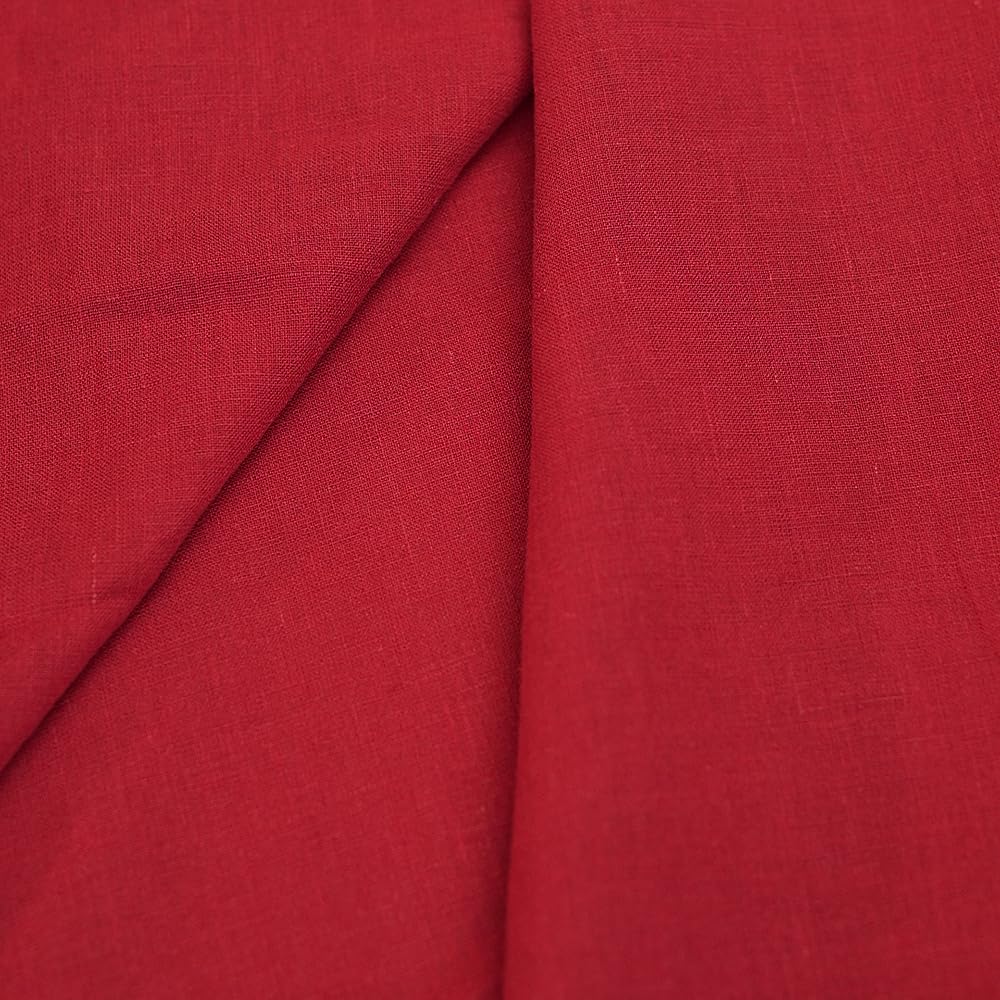
2. Japan Nature 100% Linen Fabric
The widest true linen here at 56 inches, priced so you can actually afford to make that summer dress.
You get fewer seams and less yardage to buy because this genuine 100% linen has a working width of 56 inches — a full 17 inches wider than the Master FAB cotton below. At 200g/m it is a medium-weight linen, sturdy enough for office shirts and leisure dresses but airy enough for warm weather. Owners mention the fabric softens with each wash, develops an “authentic texture,” and shows no color bleed — a common linen failure that this one dodges.
The wash instructions matter here: machine wash below 30 degrees Celsius with neutral detergent, and use low-temperature ironing. That care keeps the natural fibers aligning properly, which is what gives linen its signature relaxed drape over time. One owner made coffee pants and a blue skirt from it, calling the quality cost-effective compared with store-bought pieces; another found it perfect for costuming.
The honest caveat is color — the dark red reads differently to different eyes, and a few customers note the shade is off from what they ordered, with one describing it as looking like “some cheap denim.” Texture is also split: smooth to some, scratchy to others, which is simply the nature of unwashed linen. This is the pick for sewists who understand that linen needs a wash and a little patience before it reaches its full potential.
Standout spec: at 56 inches wide versus a typical 39-inch cotton bolt, so you need less fabric to cut a full garment.
Grab it for: breezy summer clothing, costuming, and any project where authentic linen texture is the goal.
skip it if: you need a perfectly predictable solid color straight out of the package.
3. Master FAB 100% Cotton Poplin
A tightly woven poplin that feels far more expensive than its pedigree, with a clean print that sews like a dream.
This 100% combed cotton poplin weighs about 110g/m² (3.24 oz/yd²), putting it in the light-and-breezy camp that is ideal for summer outfits and light quilts. Combed cotton means the fibers have been combed to remove short strands, leaving a smoother, stronger yarn that feels soft against the skin. Buyers describe it as “tightly woven,” “soft and touchable,” and note there is “very little fray” — a huge relief when you are cutting curved seams. The print, as owners put it: “dark blue with small light blue flower vines,” reads crisp and pretty rather than washed out.
What wins people over is the quality-per-dollar: one owner compares it directly to name-brand quilting cotton and notes it holds its own, with a “crisp drape and a slight sheen” that makes a simple skirt look improve. The fabric tolerates very hot water or ironing, so you can sterilize it at home, and it dries fast thanks to the breathable cotton weave.
The trade-off is thickness — “super thin” is the recurring note, and a few reviewers point out durability issues with edges unraveling over time. This is a garment cotton for warm weather, not a hard-wearing upholstery cloth. Also note the cut: each piece is 39 x 55 inches, and buying multiple lots does not give you continuous yardage, so plan your pattern layout accordingly.
Our read: a soft, print-forward cotton that behaves beautifully on the machine and drapes with a crispness that flatters simple silhouettes.
Fair warning: it is genuinely thin, so think lining or a second layer if you want more opacity in a skirt or dress.
4. M Mute Touch Heavy Linen Fabric
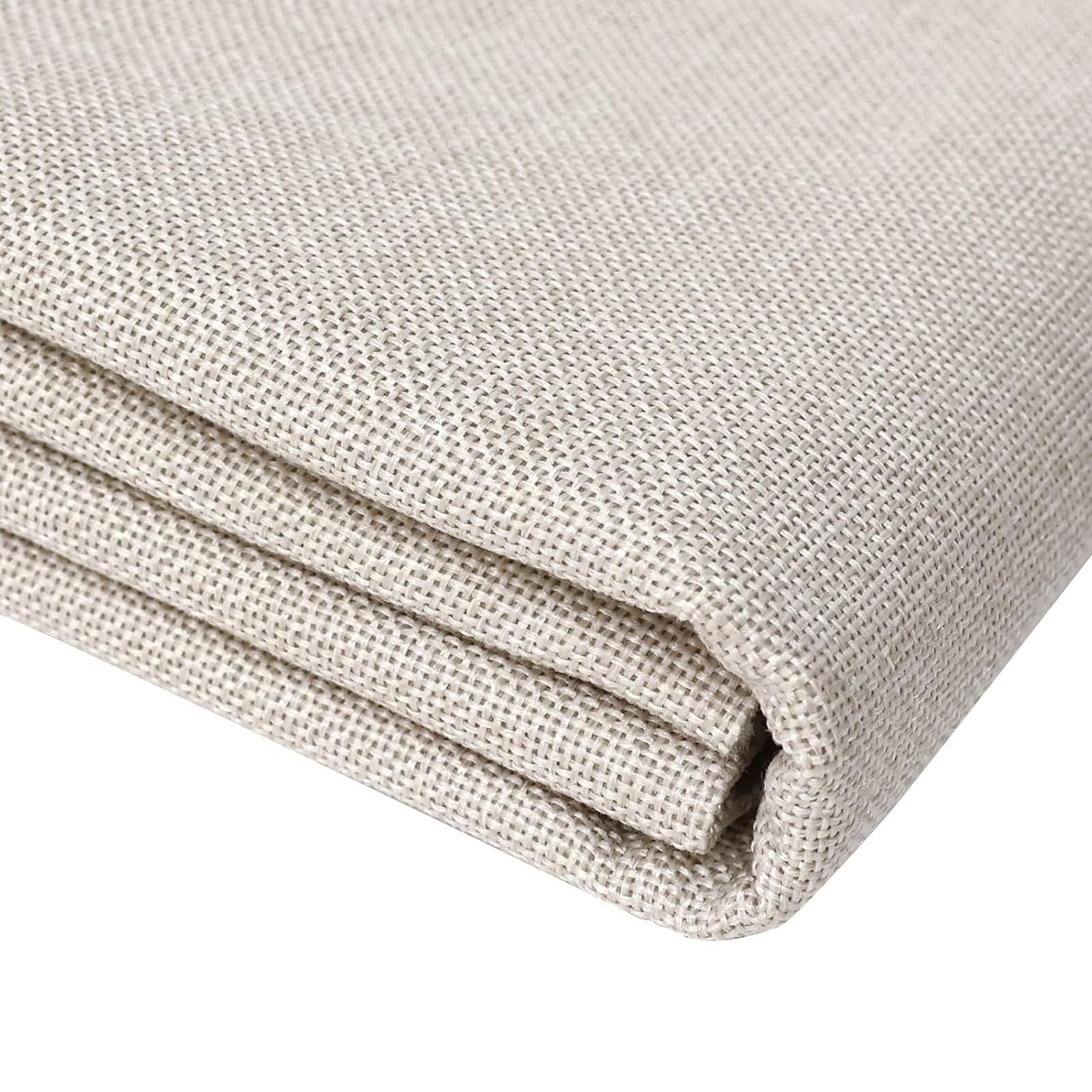
A 275 GSM heavyweight with a non-slip backing that makes cutting and sewing frustratingly easy.
This is the rare linen that behaves like a professional upholstery material rather than a delicate apparel cloth. At 275 GSM (grams per square meter, the standard weight measure) and a substantial 1.2mm thickness, it has a structured feel that “far surpasses typical decorative linen,” in the maker’s words. The clever engineering is the white brushed backing laminated to the reverse — it is not there for softness but to create a naturally non-slip surface that prevents stretching as you cut and sew. That grip makes precision work dramatically easier, which is why makers praise it for reducing frustration on the machine.
The material earns the most owner praise of anything about this bolt, with buyers calling it great quality regardless of the price. One owner reupholstered kitchen chairs and found there was enough fabric “to redo 3 kitchen chairs with enough to do six.” Another used four pieces in a van conversion, comparing it to a brand costing four times as much and finding this one “as good if not better.” The beige color draws positive mentions too, described as pretty and as expected.
The catch is that this is not a soft, cozy garment fabric — it is breathable and smooth, but its whole identity is structure. Use it for curtains, tablecloths, slipcovers, sturdy tote bags, and any project where a defined, non-droopy shape matters. It is also colorfast and abrasion-resistant, so it shrugs off everyday wear, though it is not waterproof.
Best suited to: upholstery, slipcovers, and structured bags where you need the fabric to hold a crisp line without a fusible interface.
Not for: anyone wanting a flowy, next-to-skin linen for a summer dress.
5. LaSilk Double Gauze Cotton Fabric
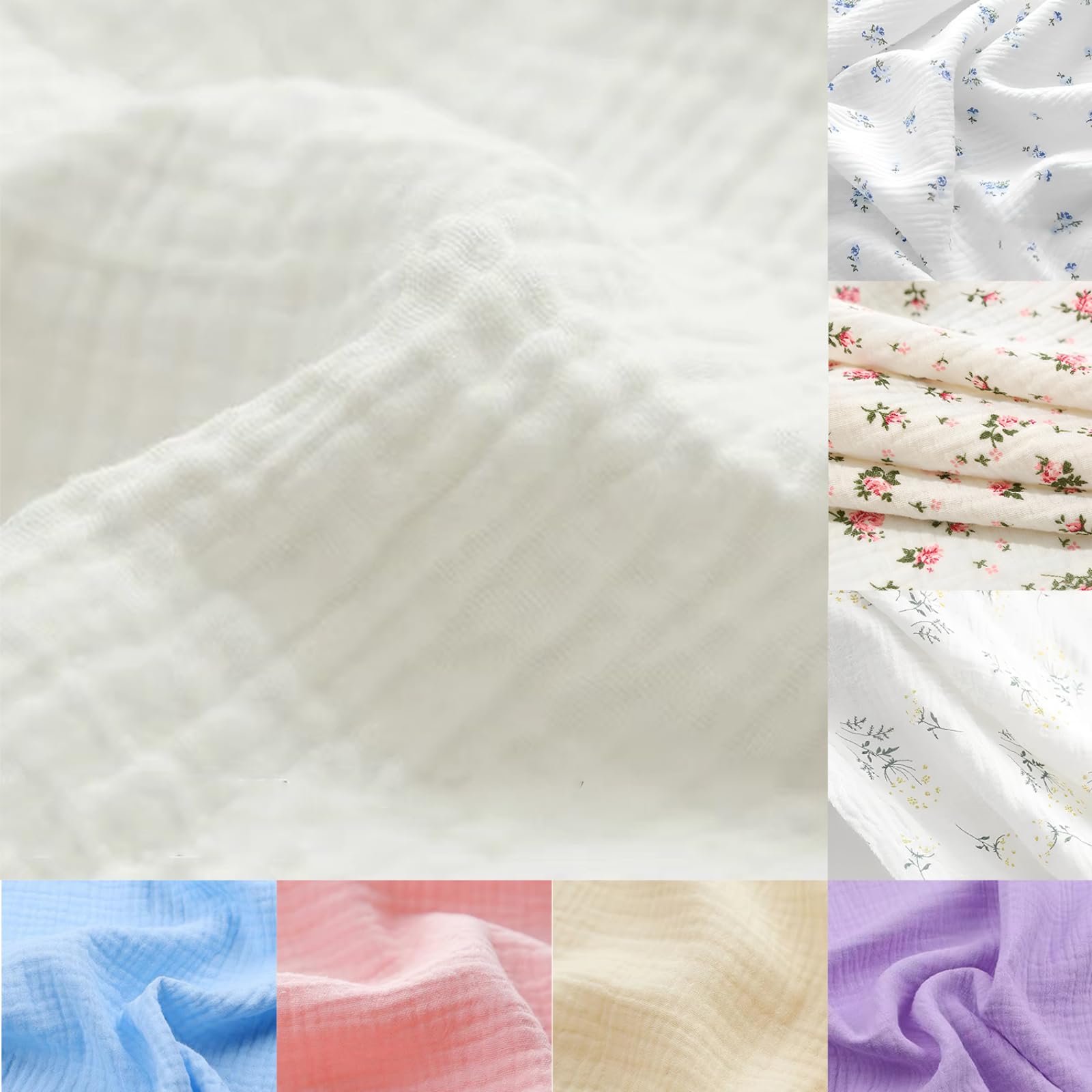
A two-layer cotton gauze that feels like a plush blanket but stays light enough for summer sleep.
You get the look of muslin with more substance, thanks to a 100% cotton double-layer construction at a standard 53-inch width. Two fine layers of cotton woven together create air pockets that make the fabric feel thick and plush while remaining breathable. Owners talk about it in sensory terms — “soft yet sturdy,” “thick enough to feel like a blanket but light enough so I don’t sweat to death at night.” That combination makes it a favorite for baby clothes, sensitive-skin apparel, and bedding.
It is pre-washed to minimize shrinkage, and the high-density weave is rated to withstand 50+ machine washes without pilling (pilling being those little fuzzy balls that form on worn fabric). That durability is why it keeps showing up in sustainable projects like reusable napkins, gift wraps, and boho table runners. The fabric quality and softness are the two things owners praise most, with one calling it “perfect” for backing quilts and another noting it sews and stuffs well into a pillowcase.
The honest note is weight: at 7.04 ounces for the yard piece, it is not a heavy fabric, so it suits garments and quilts but not upholstery. It also arrives as a single yard, so larger projects mean ordering multiple pieces and seaming them together. If you want that cloud-soft, gently rumpled look — think baby blankets and relaxed summer tops — this is your cloth.
Why it stands out: the double-layer weave gives a plush, cushioned hand-feel that no single-layer cotton can match, and it survives 50+ washes without pilling.
Keep in mind: it is a light, soft fabric — lovely on skin, wrong for anything needing structure.
6. Barcelonetta Cotton Spandex Fabric

The 10-ounce midweight stretch cotton that moves with you, made for leggings and activewear.
When you want the breathable softness of cotton but need it to stretch and snap back, this 95% cotton, 5% spandex blend is the answer. At 10 ounces it is a lightweight knit with enough body to be “dress-worthy,” in the words of one owner, yet airy enough for all-day wear. The 5% spandex is the crucial spec: it gives the fabric four-way movement so it bends at the knee and elbow without losing its shape, which is exactly what activewear, leggings, and fitted tops demand.
The stretch and softness are what win owners over, with one noting the fabric retains its elasticity after months of use — a sign the spandex is quality, not cheap filler. Another made a dress from it and found it “substantial enough” to hold its own as a garment, while a third praised it as “real easy, real smooth, real soft” to work with. It comes on a 60-inch wide roll, which gives you more usable width than most bolts and means fewer pattern pieces to fit.
The recurring caveat is color accuracy: what looks like a saturated blue in the listing can arrive as a muted purple-blue, so order carefully if you are color-matching. It is also a midweight, not a heavy ponte, so it is great for tops and dresses but not for trousers that need to hold a sharp crease. Machine wash and dry are fine, though low heat keeps the spandex springy longer.
Choose this for: leggings, activewear, fitted tops, and dresses where you need stretch plus breathability.
Think twice if: you need an exact color match or a fabric that holds a rigid structure.
7. Barcelonetta Linen Rayon Fabric

Linen’s breathability married to rayon’s silky flow, creating a fabric that drapes like a dream.
This is the fabric for anyone who loves linen’s texture but finds pure linen too stiff or scratchy for clothing. The 70% linen, 30% rayon blend softens the experience while keeping the natural breathability intact — rayon brings that silky, fluid drape that makes a simple blouse or dress hang beautifully. It comes on a 55-inch wide roll, a touch narrower than the synthetics but standard for the natural fiber, and carries a higher GSM (grams per square meter) for added strength and durability.
Owners call the fabric “lovely quality” and “so soft and pretty” even before washing. The brand recommends washing before use so the fibers align naturally, and one owner found that soaking it overnight in water with baking soda then tumble drying on low “breaks down the stiff fibers and helps tighten the weave” — a useful trick for getting the softest hand-feel. It also holds up well to hot glue, which is why it keeps appearing in embroidery and needlework projects.
The honest trade-offs are thinness and color. Some owners find it “very thin” and wish for a denser weave, so it is better for flowy garments than structured pieces. And color can surprise — one owner ordered Natural and received what they called a “really ORANGE” shade. Order this for soft, drapey summer wear and crafts, not for upholstery or color-critical projects.
Our take: the rayon infusion makes this the most wearable linen on the list — soft, fluid, and breathable straight out of the package.
Fair caveat: thin-ish weave and occasional color surprises mean it is not for color-matching or structure-heavy work.
8. EOVEA Cotton Spandex Jersey Knit

A soft, bouncy jersey knit with genuine four-way stretch — the T-shirt fabric you will reach for every season.
Jersey knit is the backbone of casual wear, and this 95% cotton, 5% spandex version nails the brief. The four-way stretch (meaning it stretches both lengthwise and crosswise) gives it that bouncy recovery that makes T-shirts, tops, and skirts comfortable through a full day of movement. The cotton content keeps it breathable and soft, while the spandex gives it shape memory so it does not sag at the elbows. One owner who made game-day jerseys for a grandson called it “perfect weight for summer” with “good stretch, easy to sew.”
The softness is what owners mention most, describing the fabric as “soft and thick and bouncy” — that thickness makes it feel higher-quality than a cheap t-shirt knit. Another owner made underwear, a crop top, and two bras from a single piece and found it “goes a long way and is extremely comfortable.” It comes on a 60-inch wide roll at 10 ounces, making it one of the widest knits here for cutting multiple pattern pieces efficiently.
The color deserves a fit-note rather than praise: white arrives reliably, but other shades have drawn mixed feedback about matching the listing photos, and the maker itself warns that screen colors can vary. Thickness also reads differently to different owners, with some calling it thick and others finding it light. Store this for T-shirts, leggings, skirts, and any garment that needs to move with you.
Pick this if: you sew a lot of T-shirts, leggings, or loungewear and want a soft, stretchy knit that behaves on the machine.
Pass if: you need an exact color match or a knit heavy enough for structured outerwear.
9. Ice Fabrics Cotton Polyester Broadcloth

A wrinkle-resistant broadcloth that presses out crisp shirts and dresses without the ironing marathon.
For sewists who want the crisp, smooth hand of a dress shirt without fighting wrinkles, this 80% polyester, 20% cotton broadcloth is the budget-friendly answer. The polyester content is what makes it wrinkle-resistant — a real advantage over pure cotton when you are making a shirt you actually want to wear to work without steaming it every morning. At 0.19mm thick and 100 GSM (grams per square meter), it is lightweight with a “crisp drape” that flows nicely for apparel and bedding alike.
The 60-inch width is a genuine selling point — one owner notes it beats the typical 45-inch bolt, which means more pattern layout room and fewer seams. Owners praise the fabric as “pleasant to sew with” and note it “washes beautifully and spot cleans nicely.” One buyer made slacks and a top from 3 yards and was thrilled the color matched exactly what they pictured. Another found it excellent for men’s dress shirts: “soft yet stable,” and it stays looking new after multiple washes if hung to dry immediately.
The trade-offs are predictable for a poly-cotton blend: it is not a breathable natural fiber, so it is less ideal for hot, humid days than the pure cottons above. And while most owners love the colors, some note shades can run warmer or more yellow than the photos suggest. This is the pick for crisp, easy-care shirts, aprons, and costumes where wrinkle-resistance matters more than natural-fiber purism.
Bottom line: a crisp, easy-care broadcloth that presses beautifully and resists wrinkles — ideal for shirts and dresses you want to wear straight from the dryer.
Watch out for: a lighter, less breathable hand than pure cotton, and occasional color differences from the screen.
Understanding the Specs
GSM and fabric weight
GSM stands for grams per square meter, the standard way to measure how heavy a fabric is. A lower number like 100–110 GSM means a light, airy cloth perfect for summer shirts; a higher number like 275 GSM means a heavy, structured cloth that holds its shape for upholstery. Heavier is not always better — it just tells you what the fabric is built to do.
Stretch content
When a fabric lists a percentage of spandex — usually 5% — that small amount is what gives it the ability to stretch and snap back. A 95% cotton, 5% spandex knit moves with your body for leggings and fitted tops, while a 100% cotton woven stays rigid and structured. Decide if you want movement or structure before you choose a blend.
FAQ
What does GSM mean for fabric and why does it matter?
Should I wash linen fabric before sewing clothing with it?
What is the difference between cotton poplin and cotton broadcloth?
How much spandex do I need in a fabric for activewear?
Will 100% cotton fabric shrink after I wash it?
What is double gauze fabric best used for?
Is linen fabric scratchy or does it soften over time?
Why is a 60-inch wide fabric better than a 45-inch one?
What does a crease-resistant finish do to cotton fabric?
Final Thoughts: The Verdict
For the majority of shoppers, the fabric to wear winner is the ROC-lon Woven Ticking because its crease-resistant, 100% cotton construction delivers the versatility to move from chair covers to period apparel without a second thought, backed by the strongest owner consensus on quality. If you want breathable, authentic linen for summer garments at a friendly price, grab the Japan Nature Linen. And for soft, flexible everyday wear that moves with you, the Barcelonetta Cotton Spandex is the one to reach for.
How We Picked
We do not accept paid placement. Every pick is matched to a real buyer and a real use-case; we do not hands-on test units.
Sources & Methodology
Specifications: manufacturer listings and product documentation. Review insights: verified customer reviews, as of August 2026. Pricing: not shown on this page (it changes often); check the current price via the retailer link.
As an Amazon Associate, WellFizz earns from qualifying purchases. This does not affect which products we feature.
Related Guides

Mo Maruf
I created WellFizz to bridge the gap between vague wellness advice and actionable solutions. My mission is simple: to decode the research and give you practical tools you can actually use.
Beyond the data, I am a passionate traveler. I believe that stepping away from the screen to explore new environments is essential for mental clarity and physical vitality.