Our readers keep the lights on and my smoothie glass nicely filled. As an Amazon Associate, I earn from qualifying purchases.
Specs are compiled from manufacturer listings and verified buyer reviews and can change over time — please confirm the key details on the product page before buying.
Choosing the right stretch fabric makes the difference between a swimsuit that holds its shape all summer and one that sags after a single dip. The best options here all share a nylon-spandex blend that moves with you, dries fast, and shrugs off chlorine and sunscreen. This guide breaks down the four strongest contenders for your next sewing project.
I’m Mohammad Maruf — the founder and writer behind WellFizz. This guide is built by comparing the manufacturers’ published specifications and the patterns across verified customer reviews, so you get each pick’s real strengths and trade-offs instead of marketing spin.
The right fabric for swimwear balances four-way stretch, recovery, and durability so your suit survives pool chemicals and long beach days.
Our Picks at a Glance

How To Choose The Best Fabric For Swimwear
Swimwear fabric has one job that regular cloth doesn’t: it has to stretch around your body and then snap back, over and over, even after being soaked in chlorinated water and baked in the sun. The blend and the knit structure decide how well it manages that.
The nylon-spandex blend is the starting point
Nylon gives a swimsuit strength, softness, and that smooth hand-feel, while spandex delivers the stretch and the recovery that pulls the suit back into shape after you move. Most swimwear fabrics sit around 80% nylon and 20% spandex, a balance that keeps the suit fitted without bagging out.
Fabric weight changes how the suit behaves
A heavier fabric offers more coverage and a sturdier structure, which is why it suits bikinis and lined suits. A lighter fabric drapes more softly and works well for linings or costume pieces. The weight you want depends on whether you are building a structured suit or a soft, flexible one.
Quick Comparison
| Model | Best For | Blend | Width | Weight | Amazon |
|---|---|---|---|---|---|
| FabricLA Nylon Spandex★ Best Overall | Premium swimwear & activewear | 80% Nylon / 20% Spandex | 60″ | 0.67 kg | Amazon |
| Shiny Milliskin Nylon Spandex | Costumes & dancewear | 80% Nylon / 20% Spandex | 58/60″ | 16 oz | Amazon |
| Barcelonetta Nylon Spandex | Lining & repairs | 80% Nylon / 20% Spandex | 36″ | 0.26 kg | Amazon |
| Ice Fabrics Nylon Spandex | Breathable activewear | 82% Nylon / 18% Spandex | 58/60″ | 210 GSM | Amazon |
In‑Depth Reviews
1. FabricLA Nylon Spandex Fabric
Our pick — over 4.5★ from 600+ verified ratings; the strongest balance of quality and price.
The crowd favorite that sews like a dream and holds up like a pro-grade suit.
The FabricLA nylon spandex is the block’s heavyweight in the best way — at 0.67 kg for a 72″L x 60″W piece, it carries a substantial, thick hand-feel that owners consistently call professional quality. That weight translates to real coverage, which is exactly what you want when you are lining a bikini or building a fitted suit that needs to stay opaque.
The 80% nylon and 20% spandex blend delivers the stretch that matters most in swimwear: it moves in multiple directions so it follows your body rather than fighting it. Buyers report it is “much higher quality than I expected for the price,” noting it is thicker, softer, and easier to work with than typical stretch knits. You get a 60″ width, which gives you plenty of fabric to cut a full suit or multiple pieces.
What wins people over here is the fabric quality — the most-praised aspect in owner feedback — followed closely by the stretchiness. The recurring trade-off is thickness: a couple of owners found it not as thick as they hoped, so if you want a heavier, more structured suit, this might run slightly lighter than you imagined.
Why it wins
- Substantial weight gives real coverage and structure
- Four-way stretch moves with your body in every direction
- Softer and easier to sew than most stretch knits
Fair warning
- Some owners found the thickness lighter than expected
- Ordered by individual pieces — a quantity of 2 means two separate cuts
Reach for it if: you want a premium-feeling, versatile stretch fabric that handles swimwear, activewear, and costumes with equal confidence.
Look elsewhere if: you specifically need an ultra-heavy, structured suit fabric and prefer maximum thickness.
2. Shiny Milliskin Nylon Spandex Fabric
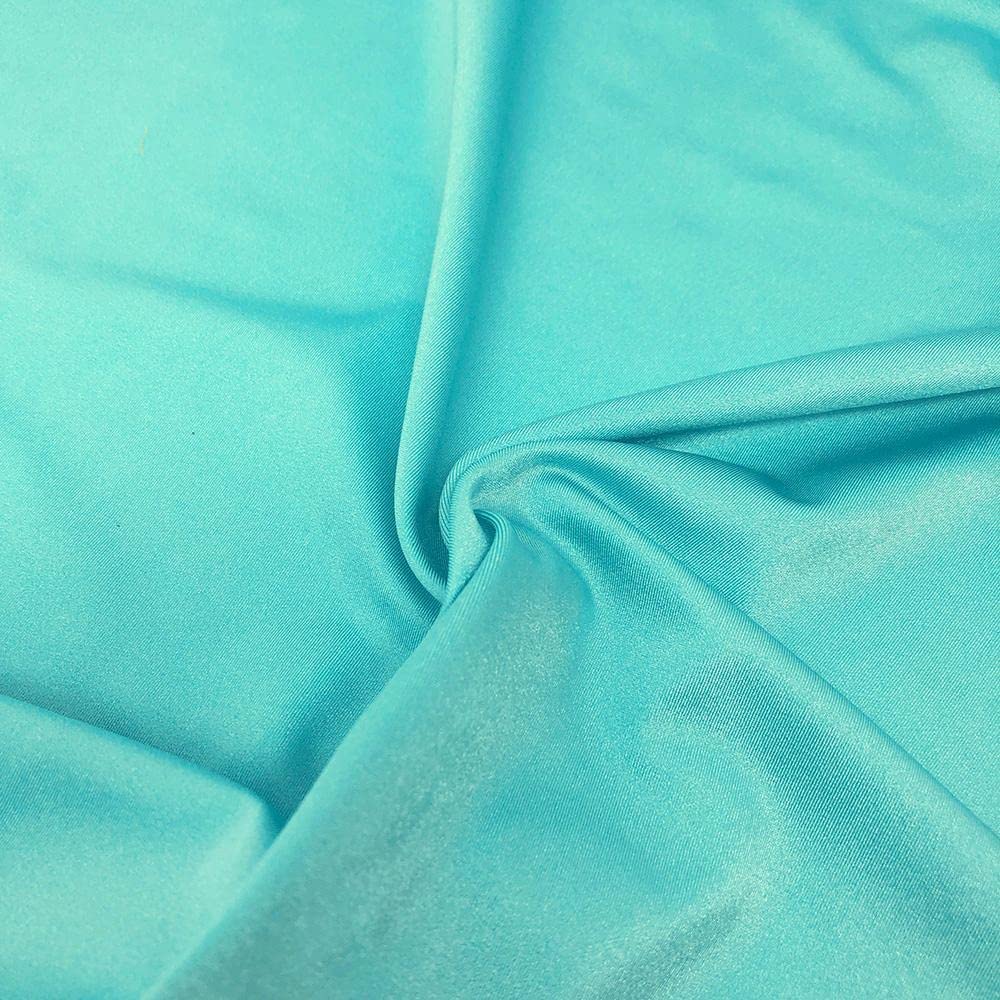
The glossy performer that turns a swimsuit into a stage-ready statement.
This Milliskin fabric is the one to grab when you want a visible sheen on your finished piece. Its 80% nylon and 20% spandex blend is cut by the yard at 58/60″ wide, and owners describe the material as extremely shiny with a silky feel. It is also a sturdy knit that holds up to beginner machine sewing, which makes it a forgiving choice if you are new to stretch fabrics.
Owners specifically call out its four-way athletic stretch and durable build with zero fraying at the cut edges. The material is opaque even when stretched, which is a genuine relief for swimwear where you do not want see-through panels. The aqua color earns consistent praise for matching expectations.
Expect a trade-off with this fabric. It is thicker than many expect, so you get more structure, but the drape (how the fabric hangs) feels stiffer. Also, because it is shiny and cut to order, some owners mention the cut can arrive at a slight angle — one flagged a piece coming up short of a full yard on one side, so measure carefully before you cut your pattern.
What stands out
- High sheen that reads beautifully on stage or at the beach
- Opaque even when stretched to its limit
- Silky, wrinkle-resistant, and easy for beginners to sew
Keep in mind
- Heavier weight than expected changes how it drapes
- Cut-to-order pieces can arrive at an angle, so check yardage
Pick this for: costumes, dancewear, and swimsuits where a glossy, stage-ready finish is the whole point.
Think twice if: you need a matte, lightweight knit for a soft-drape lining.
3. Barcelonetta Nylon Spandex Fabric

The budget-friendly workhorse that shines as a lining and a repair patch.
At 0.26 kg for a 60″L x 36″W cut, the Barcelonetta is the lightest option here, which makes it ideal for linings and repairs rather than heavy structured suits. Its 80% nylon and 20% spandex blend still delivers the stretch owners love, and the fabric retains its shape while resisting degradation from oils and sunscreen — a key trait for swimwear that touches lotion all day.
The most-praised aspect in owner feedback is the stretchiness, with the material itself coming in second. Customers note using it to line custom figure skating dresses, patch running compression shorts, and build bathing suits. One runner even cut pieces to repair worn spots in tights and found the 20% spandex conforms well to the original fabric.
The caveat is color consistency: the color category draws mixed feedback across reviews, with some owners finding shades brighter or different than expected against the skin. This is less a quality issue and more a fit-note — if you need a precise nude or skin-tone match, order a swatch first. The lighter weight also means it is better as a lining than as a standalone suit.
Best as a lining: the light weight and soft, super-stretchy hand-feel make it a favorite for lining dresses and suits.
Honest limit: color shades can run brighter than photos, so swatch-test before committing to a skin-tone project.
Grab it for: budget-friendly linings, clothing repairs, and stretch projects where you want softness and flexibility over heavy structure.
skip it if: you need a precise, predictable color match for a visible outer layer.
4. Ice Fabrics Nylon Spandex Fabric

The breathable 210 GSM knit that keeps you cool while you move.
Ice Fabrics takes a slightly different blend — 82% nylon and 18% spandex — and builds it as a 210 GSM tricot knit. That GSM number (grams per square meter) tells you this is a mid-weight fabric with a solid, substantial feel that still stays breathable. The maker designed it so air circulates freely, which matters when you are in activewear or yoga pants and want to avoid overheating.
Owners praise the fabric quality most, then the color, describing the charcoal as deep and vibrant with a little shine on one side. The fabric is soft against the skin, has a good stretch, and is good at not being see-through — three things you want in a swimsuit. It also resists fading, pilling, and stretching out of shape when you hand wash and line-dry it.
The durability feedback is mixed, which is note if you plan to sew something heavily used. And a few owners flagged staining issues, so treat spills quickly. The light, easy-to-work-with nature makes it a favorite for beginners tackling their first stretch project.
The strengths
- Breathable 210 GSM knit keeps you cool during activity
- Deep, vibrant color with a subtle shine on one side
- Soft, non-see-through, and easy for beginners to sew
The trade-offs
- Durability draws mixed feedback for heavy-use projects
- Some reviewers point out staining, so clean marks quickly
Choose it for: breathable activewear, yoga pants, and swimsuits where comfort against the skin matters most.
Reconsider if: you need maximum durability for a frequently worn, high-abuse garment.
Understanding the Specs
Nylon-to-Spandex Ratio
Nylon is the workhorse that gives the fabric strength, softness, and resistance to abrasion, while spandex supplies the stretch and the recovery that pulls the suit back into shape. Most swimwear fabrics hover around 80% nylon and 20% spandex, a balance that keeps the suit fitted without letting it bag out after a swim.
GSM and Fabric Weight
GSM (grams per square meter) tells you how heavy and dense the fabric is. A higher GSM like 210 means a more substantial, structured knit with better coverage, so your suit holds its shape and hides more. A lower weight drapes more softly and works better for linings, so it moves with you. Choose based on if you want a structured suit or a flexible, soft-fitting garment.
FAQ
What is the best nylon to spandex ratio for swimwear?
Is four-way stretch the same as two-way stretch?
How much fabric do I need to make a swimsuit?
Can I machine wash nylon spandex swimwear fabric?
Will this fabric be see-through when stretched?
How do I stop the fabric from fraying at the edges?
What is the difference between Milliskin and regular nylon spandex?
Why does my fabric stretch out of shape?
Final Thoughts: The Verdict
For most people, the fabric for swimwear winner is the FabricLA Nylon Spandex because it combines a substantial, professional-feeling weight with easy four-way stretch and consistent color. If you want a glossy, stage-ready finish for costumes or dancewear, grab the Shiny Milliskin. For a budget-friendly lining or repair fabric, the Barcelonetta is the one to reach for, while the Ice Fabrics knit wins on breathability and softness against the skin.
How We Picked
We do not accept paid placement. Every pick is matched to a real buyer and a real use-case; we do not hands-on test units.
Sources & Methodology
Specifications: manufacturer listings and product documentation. Review insights: verified customer reviews, as of August 2026. Pricing: not shown on this page (it changes often); check the current price via the retailer link.
As an Amazon Associate, WellFizz earns from qualifying purchases. This does not affect which products we feature.
Related Guides

Mo Maruf
I created WellFizz to bridge the gap between vague wellness advice and actionable solutions. My mission is simple: to decode the research and give you practical tools you can actually use.
Beyond the data, I am a passionate traveler. I believe that stepping away from the screen to explore new environments is essential for mental clarity and physical vitality.