Our readers keep the lights on and my smoothie glass nicely filled. As an Amazon Associate, I earn from qualifying purchases.
Specs are compiled from manufacturer listings and verified buyer reviews and can change over time — please confirm the key details on the product page before buying.
You have the projector picked out and the room is darkened. But the image you are about to throw onto the wall will look washed out, soft, and disappointing unless you get one thing right — the surface it hits. A bare white wall eats detail, scatters light unevenly, and makes colors look flat, no matter how expensive your projector is. The fix is a dedicated projector screen fabric — a purpose-built material that turns reflected light into a sharp, contrast-rich picture.
I’m Mohammad Maruf — the founder and writer behind WellFizz. This guide is built by comparing the manufacturers’ published specifications and the patterns across verified customer reviews, so you get each pick’s real strengths and trade-offs instead of marketing spin.
Building a fixed-frame DIY screen, mounting fabric flat against a wall, or rolling a portable solution into the backyard all come down to one decision: choosing the right material. This guide walks through the best fabric for projector screen options — from budget-friendly polyester rolls to premium industry-grade PVC and CineGrey materials — so you can match the cloth to your space and your projector’s needs.
Our Picks at a Glance


How To Choose The Best Fabric For Projector Screen
Picking the right material is simpler than it sounds if you focus on three things: the type of fabric, the color of the surface, and how stretchy the cloth is.
Fabric Material: PVC, Polyester, or Multi-Layer Composite
The base material determines durability, rigidity, and how flat the screen lies. PVC-coated textile (like the Yescom) is thick, heavy, and resists stretching — ideal for permanent wall-mounted setups where you want zero ripples. Polyester (the Yandood roll) is lightweight, slightly stretchy, and easier to staple around a wooden frame, though creases from folding may need time or heat to vanish. Multi-layer composite EVA polymer (Product 3) is thin and crisp at 0.25 mm thick but fragile — it can tear if you staple carelessly. Elite Screens uses a textured multi-layer PVC that balances flexibility with a professional finish.
Surface Color and Gain: White vs Grey
White matte fabric reflects the most light and works well in fully dark rooms — it gives you a bright, neutral image. Grey material (CineGrey from Elite Screens, or the grey PVC from Yescom) absorbs some ambient light and boosts perceived black levels, making dark scenes look deeper. The trade-off is that grey screens need a darker room to shine — they reflect less total light. Gain is a number (1.0 is neutral; 1.3 is brighter) that tells you how much light bounces back toward you. Higher gain gives a punchier image but narrows the balance for seating.
Black Backing and Light Control
A black back layer prevents light from passing through the screen and bouncing off the wall behind it. This matters most when you mount the fabric on a frame with an open back or on a wall that is not perfectly flat. Every product in this list except the bare PVC rolls has a black backing. It eliminates the ghostly halo effect around bright objects and keeps the blacks truly black, even in a room with some stray ambient light.
Quick Comparison
| Model | Best For | Material | View Size | Gain | Amazon |
|---|---|---|---|---|---|
| Yescom 177″ PVC★ Best Overall | Large permanent wall screens | PVC coated textile | 153 15/16″ x 86 5/8″ | — | Amazon |
| Yandood 105×59″ PolyesterBest Value | Budget DIY fixed frames | Polyester | 59×105 inch | — | Amazon |
| Yandood 69×118″ EVA | Large frame with high contrast | EVA polymer | 69×118 inch | 1.0 | Amazon |
| Elite Screens CineGrey 135″ | Low-contrast projectors, controlled light | Multi-layer textured PVC | 70″ H x 124″ W | 1.0 | Amazon |
| Elite Screens CineWhite 135″ | 8K/4K, bright rooms, short-throw | CineWhiteUHD-B | 70″ H x 124″ W | 1.3 | Amazon |
In-Depth Reviews
1. Yescom 177″ 16:9 DIY Projection Screen Material Matte White PVC
Our pick — over 4★ from 450+ verified ratings; the strongest balance of quality and price.
The heavyweight PVC roll for a permanent wall screen that refuses to ripple.
If you want a single fabric that can span a 177-inch diagonal — a viewing area of 153 15/16 by 86 5/8 inches — and lay dead flat against a wall with zero ripples, this is it. Buyers report the high-strength PVC-coated textile is thick, has a black backing that blocks all light penetration, and arrives without the dents or wrinkles that plague thinner materials. It is a full nine pounds of material, so you are not wrestling with flimsy cloth.
The matte white surface diffuses projected light evenly across a 160-degree viewing angle, which means everyone in the room gets a clear, bright picture — not just the person in the center seat. Because the fabric is non-stretch, owners say the best method is to staple it directly to the wall with a felt squeegee, rather than trying to pull it over a wood frame. A painted black felt border around the edges finishes the look.
The catch? That same weight and rigidity makes it less portable than a polyester roll. You are buying this for a permanent home theater, not a weekend backyard screen. And the 9-pound roll ships in a tube; minor creases from shipping are common, but the usable portion of the fabric is unaffected.
Why owners love it
- Thick, non-stretch PVC lays perfectly flat on a wall with no ripples
- 160-degree viewing angle keeps the picture bright for everyone in the room
- Black backing eliminates light bleed-through completely
- Cuttable to any size you need
The honest trade-offs
- Heavy 9-pound roll is hard to work with alone
- Minor shipping creases can appear; most of the fabric is usable
- Not ideal for frame builds because it does not stretch
Reach for this if: you are building a large, permanent wall screen and want a no-wrinkle, pro-grade picture at a DIY price.
Look elsewhere if: you need a portable solution or plan to wrap a wooden frame and want stretch to pull out creases.
2. Projector Screen DIY Elastic Polyester Material 59×105 inch for Max 130 inch 16:9
The affordable polyester roll that beats painting your wall and leaves room in the budget.
This silver-gray polyester fabric measures 59 by 105 inches — enough for a 130-inch 16:9 fixed-frame screen — and costs a fraction of what a pre-built screen runs. One owner nailed it directly to the wall and says the colors are “really nice” and it beats projecting onto a bare wall. The light silver-gray surface enhances color contrast and cuts ambient light reflection compared to a stark white surface, so blacks look deeper without washing out.
The black backing blocks more than 90 percent of projected light from penetrating through the fabric. That means you do not get that distracting glow behind the screen on a frame with an open back. Because it is elastic polyester, it stretches smooth around a wooden frame. Owners mention that the folded packaging causes creases at first, but those disappear after the fabric is stretched tight — and you can even machine wash and low-temp iron it before install. The diffuse reflective surface offers a viewing angle greater than 160 degrees.
The trade-off is that the fabric is slightly stretchy and a few owners found it tricky to get the tension perfectly even, which can create light and dark patches if you rush. A buyer who paired it with blackout cloth behind the screen got crisp, detailed images with blacks that looked genuinely black. Without that cloth, some noted the frame could be faintly visible through the material.
Why it works
- Silver-gray finish boosts contrast and cuts ambient light more than white screens
- Black backing stops light bleed, keeping blacks deep
- Stretchy polyester pulls tight around a wood frame for a smooth surface
- Washable and ironable to remove packaging creases
What to watch for
- Uneven tension during install can create lighter and darker areas on the image
- Material is slightly transparent on its own — blackout cloth behind it helps
- Cut edges may not be perfectly rectangular; some owners added black tape for a clean border
Grab it for: a budget-friendly DIY fixed-frame build where you want better contrast than a white wall delivers.
skip it if: you need a thick, non-stretch material for a wall-mount install without a frame.
3. Projector Screen Material Fabric 69×118 inch for Max 130 inch 16:9 DIY, Black Backing EVA Polymer
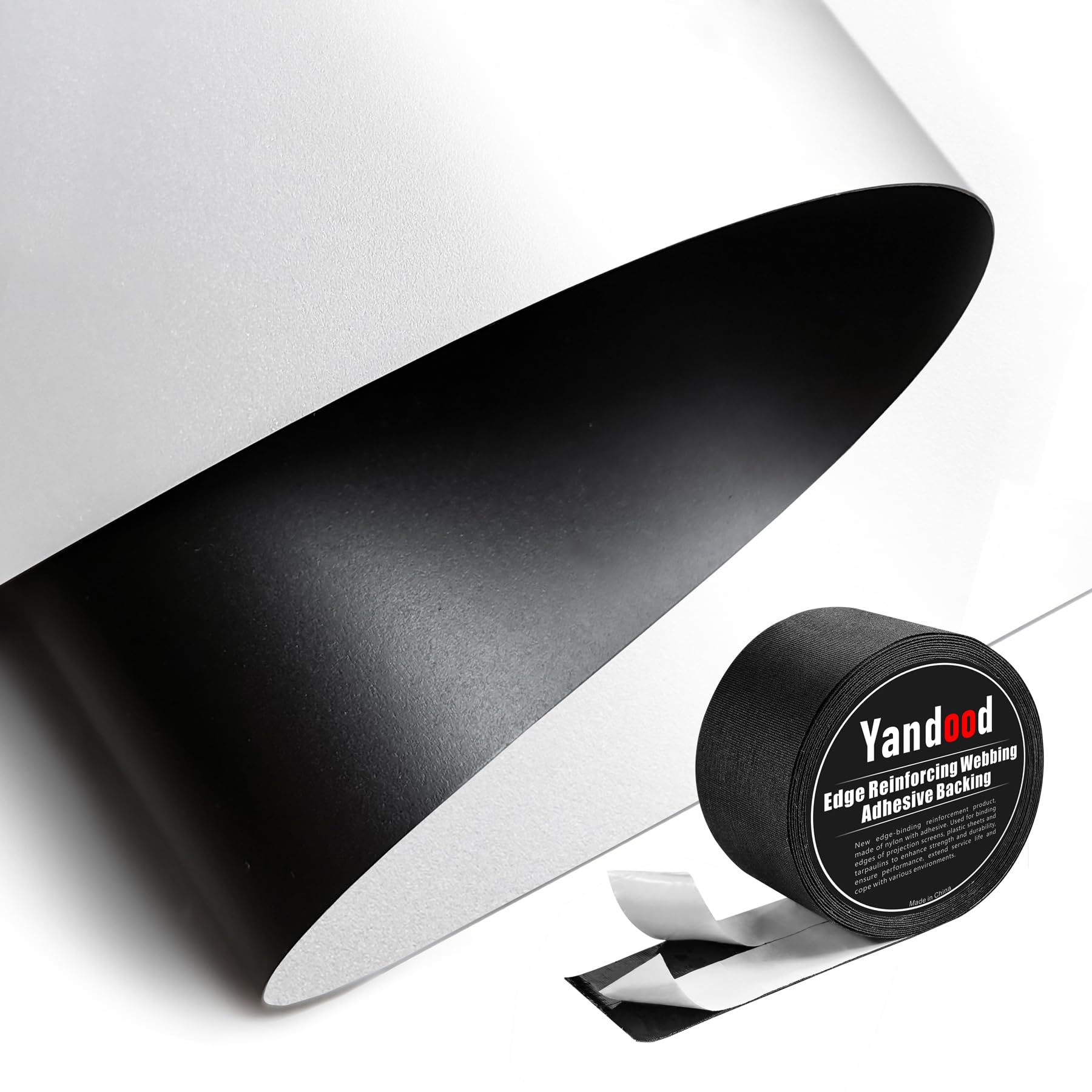
The thin, crisp multi-layer composite for frame builders who prize color saturation.
This is not your typical PVC or canvas screen. The Yandood EVA polymer material is a multi-layer composite just 0.25 millimeters thick — about three sheets of printer paper stacked — yet it claims a resolution of 125 line pairs per millimeter, meaning it resolves fine image detail that thinner fabric might blur. The matte surface is diffuse reflective, so light scatters evenly across a 160-degree viewing angle and the gain sits at a neutral 1.0, which reproduces color without artificially boosting brightness.
The black back layer prevents light penetration, and the material ships on a 74-inch reel — it is not folded, so you avoid the deep creases that polyester rolls sometimes carry. Owners say it makes colors more vibrant and improves contrast dramatically compared to a bare wall, particularly for dark movie scenes. The multi-layer construction is strong and durable for its thinness, but that thinness also means you need to handle the stapling carefully or the material can tear.
The honest downsides: packaging has been a frequent complaint. The tube ends arrived taped without caps in some cases, leading to damaged fabric. And one owner found that the material rejects too much light in a room that is not completely dark, washing out images and making dark scenes unwatchable. This screen is strictly for a dedicated, light-controlled theater room. If your room has windows or lamps on during a movie, the EVA polymer will look dim.
Best in a blacked-out room: The color saturation and contrast are genuinely impressive when the lights are off. Stick to the grey side of the material for the best results during film viewing.
Packaging is the weak link: Order knowing the roll may arrive with the tube ends just taped — some owners received damaged edges. Inspect it immediately and contact support if you need a replacement.
Ideal for: a dedicated dark home theater room where you want vibrant, high-contrast colors and are willing to work with a thin, delicate material.
Not for: anyone with ambient light in the room or anyone who wants a thick, forgiving fabric that can take rough handling during install.
4. Elite Screens Designer Cut 135-inch CineGrey DIY Projector Screen Material
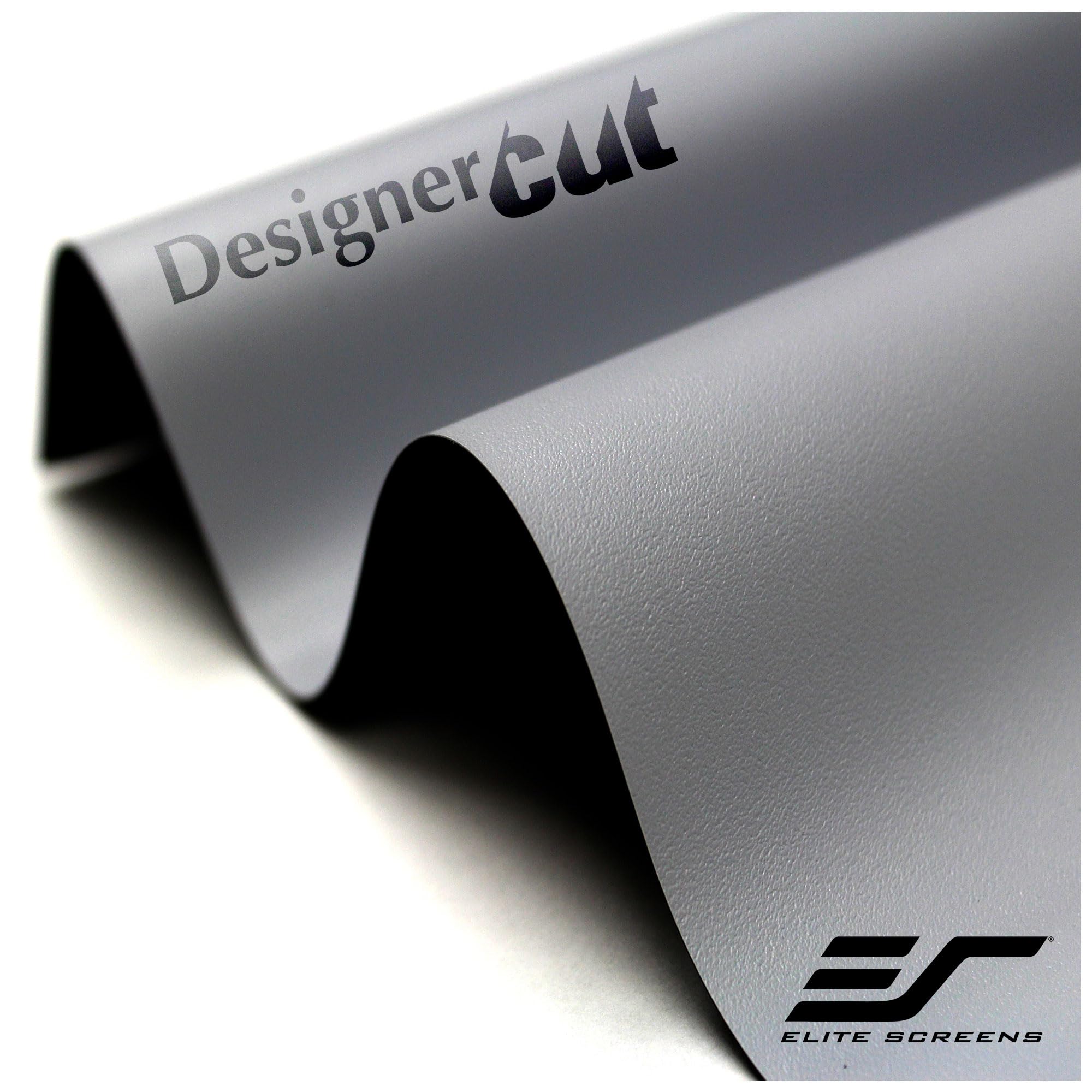
The industry-grade grey fabric that transforms a low-contrast projector into a HDR powerhouse.
Elite Screens is a known name in the projection world — an ISO9001 manufacturer since 2004 — and this CineGrey material is the same fabric they use in their electric and fixed-frame screens. At 135 inches diagonal (124 by 70 inches viewing area), with a 1.0 gain and a 160-degree viewing angle, the multi-layer textured PVC surface is designed specifically for DLP and LCD projectors that struggle with black levels. The grey material boosts perceived contrast significantly, and customers note it brought their Epson UB5050 to life with “amazing contrast and a great HDR image.”
The fabric ships rolled — never folded — so it arrives wrinkle-free. It has a black backing that prevents light penetration, and the surface is cleanable with mild soap and water. Owners building their own frames say the material has good stiffness and stability, and any minor wrinkles that appear during stretching can be steamed right out for a perfectly flat surface. It is 4K and Active 3D ready, so you are not locking yourself into an old resolution standard.
The real-world caveat: a few reviewers point out a non-uniform image with a visible hot spot and subtle ripples on uniform bright scenes, despite careful stretching. And like any grey screen, daytime viewing is poor unless you have at least 90 percent blackout curtains. This is a premium material for a controlled-light space where you are chasing deeper blacks, not a multipurpose screen for a bright living room.
Contrast champion: Owners who paired CineGrey with a low-contrast DLP projector saw a night-and-day difference in black depth and HDR punch. The 1.0 gain ensures color accuracy without over-brightening.
Not for imperfect rooms: If your room gets any stray light during movie time, the grey surface will look dim. This fabric demands near-total light control to deliver its best performance.
Buy it if: you have a DLP or LCD projector with mediocre black levels and want the deepest, richest image your gear can produce in a fully dark room.
pass on it if: you watch movies with lamps on or have windows you cannot fully black out.
5. Elite Screens Designer Cut 135-inch CineWhiteUHD-B 8K/4K DIY Projector Screen Material

The white high-gain fabric that keeps a punchy image when the room is not completely dark.
This is the brightest material in the lineup. The CineWhiteUHD-B fabric has a gain of 1.3, which means it reflects 30 percent more light back toward the audience than a neutral 1.0-gain screen. That extra brightness punch makes a real difference when you have a lamp on or some ambient light leaking in — the image stays vivid instead of washing out. The fabric is rated for 8K and 4K Ultra HD resolution, as well as Active 3D, and it supports standard, short-throw, and UHD projectors.
The 135-inch diagonal panel (70 by 124 inches viewing area) ships rolled to stay wrinkle-free, with a fully black-backed surface that stops light penetration entirely. Owners praise the build quality — one described a perfect DIY installation using a thin vinyl strip to hold the fabric flat against the wall, achieving a great picture even with lamps on in the room. The fabric is stretchier than many other screen materials, which helps get it drum-tight on a frame, but that same stretchiness took some owners by surprise and required a plan adjustment during install.
The trade-off: the higher gain and white surface mean blacks will not be as deep as the Elite Screens CineGrey in a fully dark room. One owner who moved to a larger room after a year reported seeing no difference between this screen and a plain white wall, which is a reminder that this material shines when it is out-brightening ambient light, not when chased by a high-lumen projector in a black cave. The company support was unresponsive in that case, which is worth noting.
Best for mixed-light spaces: If your family room has a window or you like a lamp on during shows, the 1.3 gain keeps the picture lively and colorful in ways a 1.0-grey screen cannot match.
Stretchier than expected: Factor in extra time for the frame build — the elasticity means you will need to tension it carefully to avoid waves, but a 100-percent wrinkle-free result is achievable with patience.
Choose this one if: you have a bright projector, a room with some ambient light, or a short-throw setup and want a bright, punchy image that does not demand total darkness.
Pass on it if: black level depth in a fully dark room is your absolute priority — the CineGrey will deliver better contrast there.
Understanding the Specs
Gain: How Much Light Bounces Back
Gain is a number that tells you how much light the screen reflects compared to a perfect white reference. A gain of 1.0 means it reflects light neutrally — no boost, no loss. A gain of 1.3 (like the Elite Screens CineWhite) reflects 30 percent more light, making the image brighter. Higher gain is great for rooms with some ambient light, but it narrows the viewing angle — the picture dims faster as you move off-center. Low-gain screens (0.8 to 1.0) spread light evenly across a wide seating area but need a brighter projector or a darker room to look their best.
Material Type: PVC, Polyester, and EVA Polymer
PVC-coated textile is thick, heavy, and non-stretch — ideal for wall-mount installations where you staple it flat and want zero ripples. Polyester is lightweight, stretchy, and easier to wrap around a wooden frame, but it can arrive with folding creases that need tension or heat to erase. EVA polymer is a multi-layer composite that is thin and crisp (0.25 mm in the Yandood EVA version) and resolves fine detail well, but it is fragile and requires careful handling during install. Each material trades off rigidity, portability, and ease of DIY installation.
FAQ
Can I use any white fabric as a projector screen?
Is grey or white screen fabric better for a dark room?
How do I remove wrinkles from a DIY projector screen fabric?
What is the difference between front projection and rear projection fabric?
Can I cut projector screen fabric to a custom size?
How does black backing improve picture quality?
What size fabric do I need for a 130-inch screen?
Is a 1.3 gain screen too reflective for a wide seating area?
Final Thoughts: The Verdict
For most people, the best fabric for projector screen winner is the Yescom 177-inch PVC screen because it combines the thickest, most wrinkle-resistant material at a massive size with a 160-degree viewing angle and a black backing — all at a price that undercuts ready-made screens by a wide margin. If you want a budget-friendly build for a 130-inch frame, grab the Yandood polyester roll. And for the deepest blacks and richest contrast in a fully dark theater room, the Elite Screens CineGrey is the one to reach for — its multi-layer grey fabric is the same material used in their premium electric screens, and owners confirm it transforms even an entry-level DLP projector into a surprisingly capable cinema machine.
How We Picked
We do not accept paid placement. Every pick is matched to a real buyer and a real use-case; we do not hands-on test units.
Sources & Methodology
Specifications: manufacturer listings and product documentation. Review insights: verified customer reviews, as of July 2026. Pricing: not shown on this page (it changes often); check the current price via the retailer link.
As an Amazon Associate, WellFizz earns from qualifying purchases. This does not affect which products we feature.
Related Guides

Mo Maruf
I created WellFizz to bridge the gap between vague wellness advice and actionable solutions. My mission is simple: to decode the research and give you practical tools you can actually use.
Beyond the data, I am a passionate traveler. I believe that stepping away from the screen to explore new environments is essential for mental clarity and physical vitality.