Our readers keep the lights on and my smoothie glass nicely filled. As an Amazon Associate, I earn from qualifying purchases.
Specs are compiled from manufacturer listings and verified buyer reviews and can change over time — please confirm the key details on the product page before buying.
Choosing the right material for your outdoor cushions is the difference between re-covering them every summer and doing the job once. The real question is simple: which fabric shrugs off sun, rain, and constant use without looking tired after a single season? This guide cuts through the jargon to give you a clear answer you can use today.
I’m Mohammad Maruf — the founder and writer behind WellFizz. This guide is built by comparing the manufacturers’ published specifications and the patterns across verified customer reviews, so you get each pick’s real strengths and trade-offs instead of marketing spin.
You can find the best fabric for outdoor cushions by focusing on waterproofing, UV resistance, and how easy each material is to sew and clean.
Our Picks at a Glance
How To Choose The Best Fabric For Outdoor Cushions
Outdoor cushion fabric has one main job: to stay put when the weather doesn’t. You are balancing three things — how well it blocks rain, how long it survives sun, and whether you can actually work with it at a sewing machine or staple gun.
Waterproofing is a Layer, Not a Label
A fabric is only as waterproof as its backing. Look for a construction where a coating like polyvinyl chloride (PVC) sits on the reverse side of the cloth. That barrier is what keeps a sudden shower from soaking straight through to the cushion foam underneath, so check the fabric construction details, not just the headline claim.
Sun Protection Shows Up as a Number
UV resistance is often expressed as a shade factor — the percentage of sunlight the weave blocks. A higher number means less sun reaches the fibers, which slows fading and keeps colors rich for more seasons. If a fabric avoids that number, it likely isn’t engineered for harsh direct sun.
Match the Material to How You’ll Use It
Marine vinyl is the tough, wipe-clean choice for cushions that live outside full-time, while coated canvas feels more like traditional fabric and sews more easily. If you’re redoing boat seats or a patio that gets relentless sun, a marine-grade vinyl with UV resistance is the safer bet. For a gentler look on a covered porch, a waterproof canvas gives you that classic textile feel without sacrificing rain protection.
Quick Comparison
| Model | Best For | Waterproofing | Width | Material | Amazon |
|---|---|---|---|---|---|
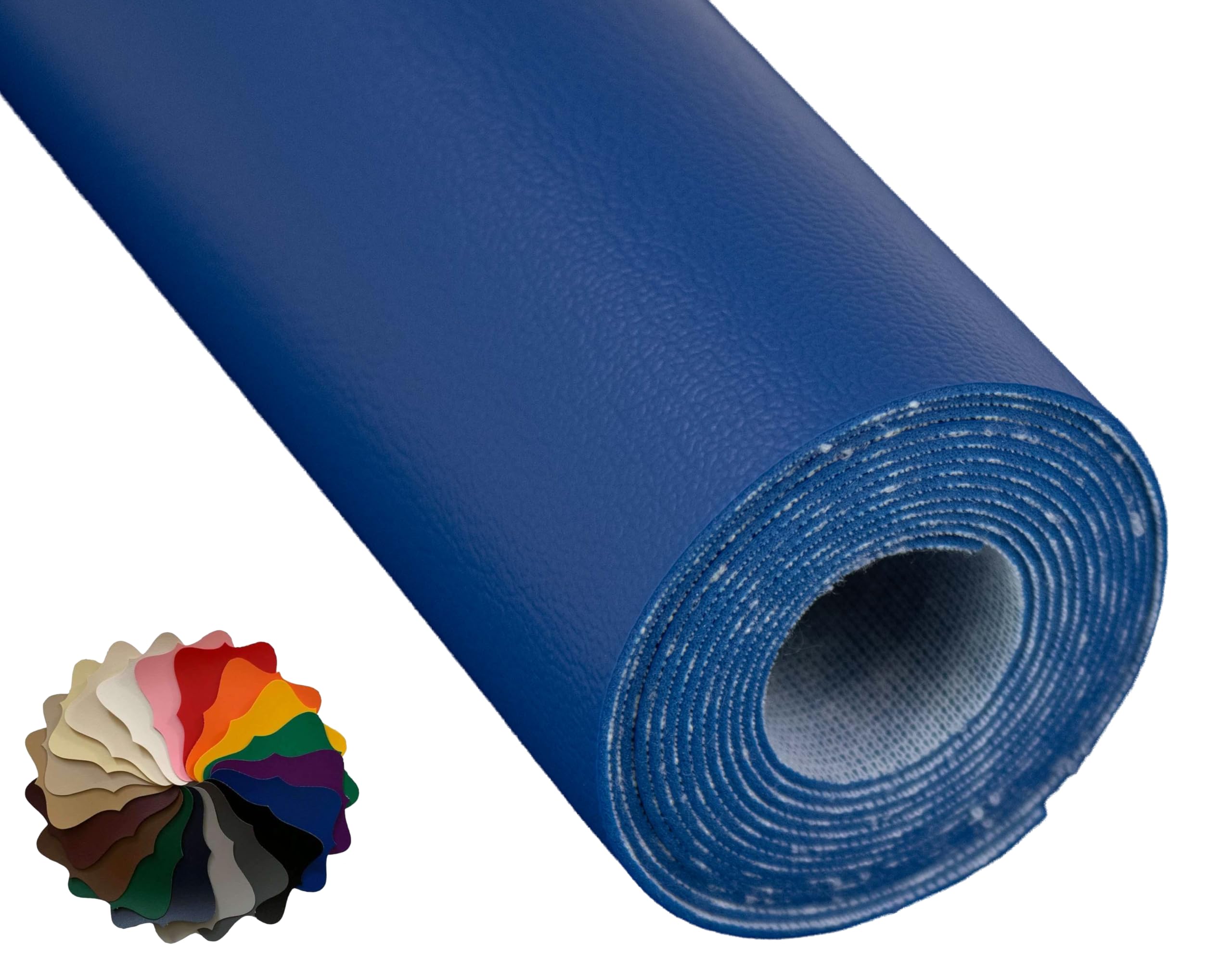
| Marine Vinyl Fabric (Blue)★ Best Overall | Boat seats & heavy use | Waterproof / UV-resistant | 54 inches | PVC face, polyester knit backing | Amazon |
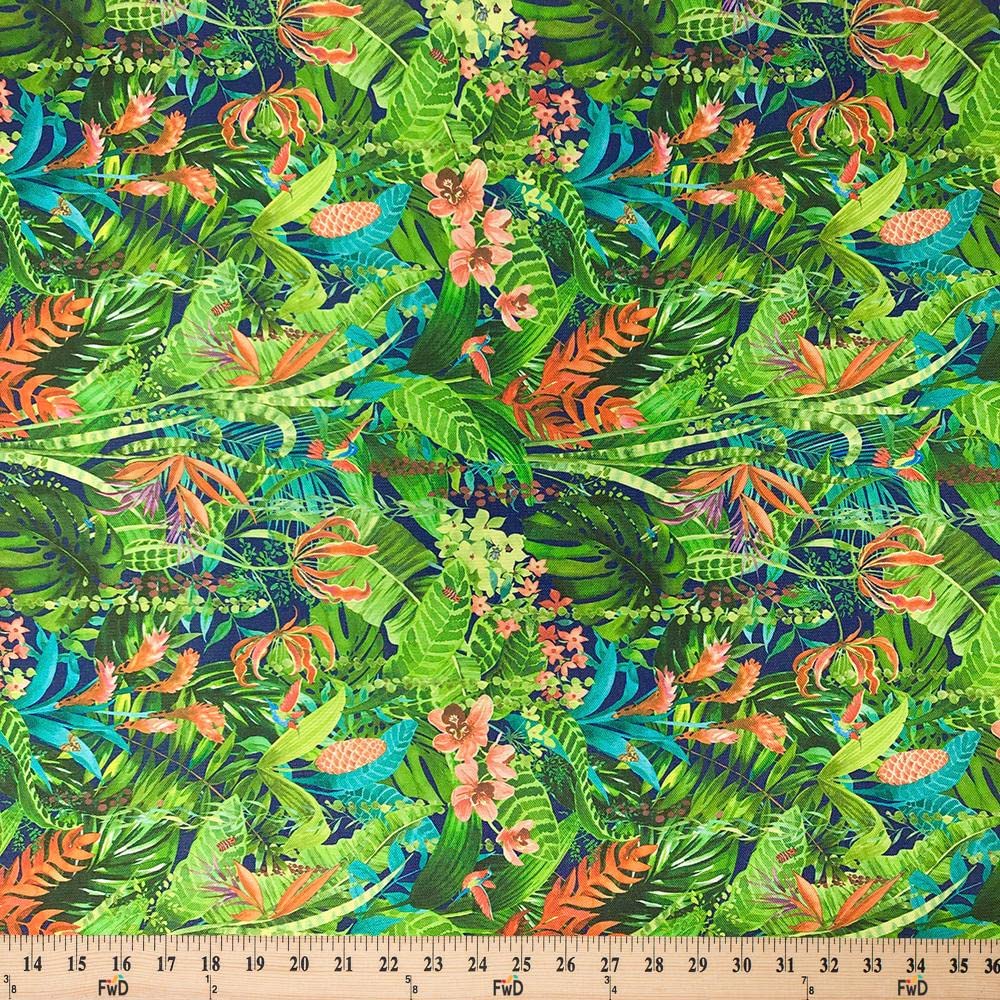
| Ottertex Printed Canvas (Jungle)Top Performer | Printed look, DIY projects | Waterproof / PVC backing | 60 inches | Polyester canvas | Amazon |
| LUVFABRICS Canvas (Hunter Green) | Cushions & tote bags | 100% waterproof, 90%+ shade | 60 inches | Waterproof canvas | Amazon |
| GoldWheel 600 Denier Canvas (Blue) | Awnings & shade covers | Waterproof / PVC backing | 60 inches | 100% polyester | Amazon |
| Bry-Tech Marine1 Vinyl (Gray) | RV headliners & boat seats | UV resistant | 54 inches | PVC with 1/4″ foam backing | Amazon |
In‑Depth Reviews
1. Marine Vinyl Fabric (Blue)
Our pick — over 4.5★ from 800+ verified ratings; the strongest balance of quality and price.
The wipe-clean vinyl that shrugs off sun and splashes like a pro-grade boat cover.
This is the one people reach for when they want real marine-grade durability without a contractor’s skill level. The fabric is built as a 100% PVC face over a 100% polyester knit backing — that combo is why it handles sun and splashes without cracking or peeling, and why it’s such a favorite for pontoon and boat seats. Owners love that an entire 7-seat pontoon re-cover is a realistic weekend job with this material.
What wins people over here is the sheer quality — it’s the single most-mentioned trait, and it shows in how the vinyl cuts cleanly with scissors and staples smoothly like leather, but without leather’s fussiness. It’s flexible yet strong, and it cleans well with just a wipe, which is exactly what you want on dining chair seats that see daily crumbs and spills. The family crowd rates it 4.7 stars across more than 800 ratings, and the color is reported to match the listing photos exactly.
One honest note on sizing: buyers report that the “36” x 54″” listing description is inaccurate while the details correctly say 54″ x 54″, so double-check the spec sheet before you cut. Also mind the width — at 54 inches it’s a touch narrower than the 60-inch canvases below, which matters if you’re trying to cover a wide cushion in one continuous piece. Keep it in mind for cushions and seats rather than huge canopy jobs.
Waterproof outdoor durability
- Genuine marine-grade durability that resists weather without cracking
- Flexible vinyl that cuts cleanly and sews or staples without fight
- Wipe-clean surface ideal for dining and boat seats
Stiff texture initially
- Listing title says 36″ x 54″ but specs confirm 54″ x 54″
- 54-inch width is narrower than 60-inch canvas options
outdoor seating: you want a tough, wipe-clean vinyl for boat seats or dining chairs that live outside or near water.
indoor drapes: you need one wide continuous sheet for a large awning or full-length bench cover.
2. Ottertex Printed Canvas Fabric (Jungle)
A thick, printed canvas that looks like a designer find but sews like a workhorse.
If you want a pattern instead of a solid color, this is your best route. Ottertex builds this as a 100% polyester canvas with a 100% polyvinyl chloride (PVC) backing, weighing in at 380 GSM — that’s grams per square meter, a density measure that tells you this is a substantial, heavy-feeling cloth. At 60 to 61 inches wide, it also gives you more coverage per yard than the 54-inch vinyl above.
The defining praise here is fabric quality, and the real-world uses back it up: buyers have used it to cover a truck headliner and to reupholster golf cart seats, and the consistent verdict is that it’s thick, waterproof, and durable. The polyester face over a PVC backing means water beads up and rolls off, while the fabric stays supple enough to sew without issues. It weighs just 1.2 pounds per yard, so you’re not wrestling a heavy roll.
There’s one honest caveat, and it’s the color: reviews split on the Jungle print’s vibrancy, with some saying it stays bright while others report it fades in strong sun over time. That makes it a better pick for a covered patio than for a seat that bakes in direct sunlight all day. The care instructions are simple — brush, wipe, and spot clean with a mild solution.
Vibrant jungle print
- Thick 380 GSM canvas with a waterproof PVC backing
- Printed pattern available, unlike most marine canvases
- Sews cleanly for bags, seats, and headliners
Prone to fraying
- Some owners say the Jungle print fades in harsh sun
- Heavier feel than a standard quilting cotton, so use a strong needle
craft projects: anyone who wants a printed, waterproof canvas for cushions, bags, or golf cart seats without paying custom-print prices.
heavy upholstery: your cushions sit in relentless, direct summer sun — the color may fade faster than a solid marine vinyl.
3. LUVFABRICS Canvas Fabric (Hunter Green)

The lightweight waterproof canvas that blocks 90% of sun while staying easy to sew.
This is the value pick that doesn’t feel cheap. LUVFABRICS markets it as 100% waterproof with a 90% plus shade factor — meaning the weave itself blocks the vast majority of sunlight, which is your fade protection built into the cloth rather than relying on a coating alone. At 60 inches wide and just 15.84 ounces per piece, it’s notably lighter than the 1.2-pound Ottertex canvas above, so it’s less tiring to handle on long sewing sessions.
Buyers consistently describe it as waterproof, lightweight, and easy to sew with a standard 100/110 needle, and they’ve put it to work on chair pads, cushions, toss pillows, and tote bags. The real-world proof is in the details: owners mention using it to repair a chaise lounge and to protect cushions in storage, with water beading up and rolling off overnight. The rubber backing also staples down cleanly, which makes it a forgiving material for first-time upholsterers.
The trade-off is straightforward: this is a solid-color fabric with no prints or color variety, so you’re limited to shades like Hunter Green or light Gray. A few owners also note the delivery can be slow, and that if you need to reorder later, matching the exact dye lot can be a gamble. For a single project with one roll, though, the price-to-performance ratio is hard to argue with.
Rich deep green tone: the 90%-plus shade factor gives fade protection that most budget canvases skip entirely, which is rare at this price tier.
Shows dust easily: solid colors only, so if you want a pattern or a vivid print, you’ll need to look at the Ottertex canvas instead.
4. GoldWheel 600 Denier Canvas (Blue)
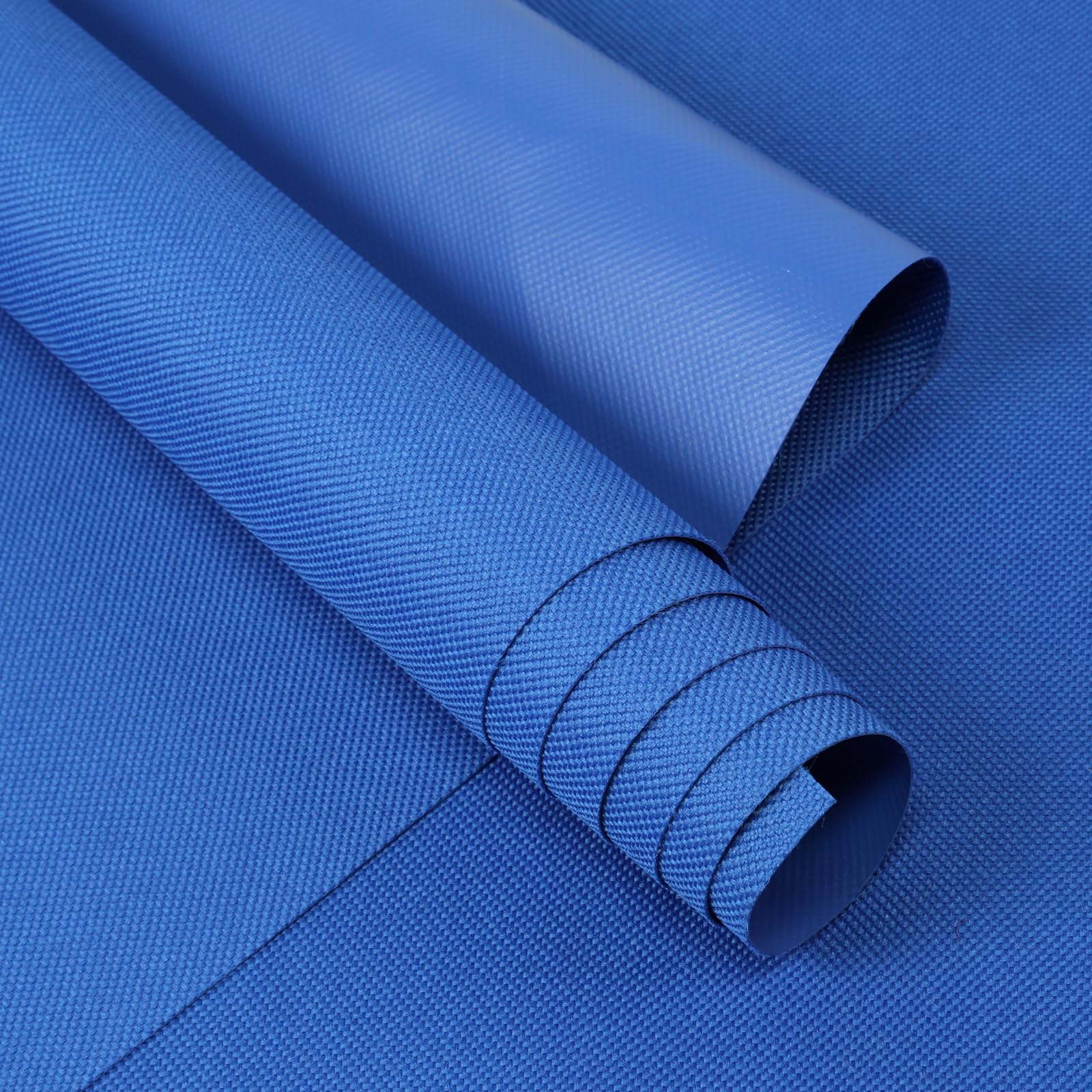
A rugged 600 denier canvas with a rip-stop backing built for awnings and shade duty.
This one is for the person whose “cushion project” has a way of becoming a canopy, awning, or boat cover project. GoldWheel’s canvas is a 100% polyester cloth at a 600 x 600 denier density — that’s the yarn weight, and it’s the same hefty spec as the Ottertex above, giving it a strong, tightly woven feel. The PVC waterproof coating on the back adds rip-stop strength, so it resists tearing and wear under rugged outdoor conditions.
The maker leans into its shade credentials: it blocks 86% of solar radiation, with a tighter-weave version pushing shade factor to 90% to 95%. That makes it a legit choice for patio roofs, tents, canopies, and even RV windshield sun shades where keeping heat out matters as much as staying dry. Owners have used it for everything from homemade magnet “curtains” for sleeping in a stock trailer at rodeos to redoing a chair for an outdoor area, and the common thread is that it blocks light completely and keeps warmth in.
Honesty check: the experience is a bit more mixed here than on the top picks. A few customers note the material feels like paper, and some report durability issues with ripping after a couple of months of heavy use. Also note the piece measured here is 60″ x 36″ — half the length of the 61-inch Ottertex piece — so compare the cut size before you order if you need a long continuous run. Expect creases from shipping; they relax when you lay the fabric flat in a ventilated spot.
Tough 600D weave: one roll that legitimately covers cushions, awnings, tents, and boat covers — the most project-flexible fabric in this lineup.
Limited color range: if you want a soft, draping cushion covering, this is a stiff utility canvas, not a cozy textile.
5. Bry-Tech Marine1 Vinyl (Gray Medium)
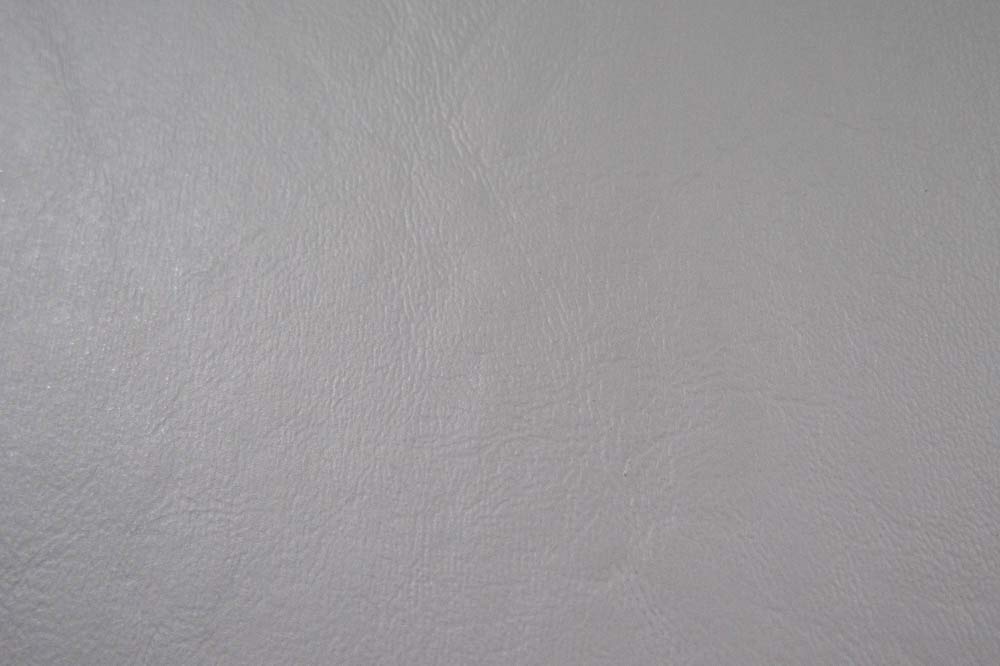
Commercial-grade vinyl with a built-in foam cushion for a smooth, padded finish.
This is the splurge that earns its keep when looks and feel matter as much as durability. Bry-Tech’s marine vinyl comes with a 1/4-inch foam backing laminated on, which gives cushions a smoother, padded look and feel without needing a separate foam layer. It’s a commercial-grade vinyl at 33 oz. per linear yard — a density that tells you this is serious, heavy-duty material built to last longer outdoors than standard vinyl.
The rave-worthy detail is material quality, and the real-world use cases reflect it: owners have used it to match OEM foam-backed white vinyl in a 2006 Fourwinds RV headliner, and one had custom day bed cushions made for a patio room with this as a reversible backing. The consistent verdict is that it’s pliable rather than stiff, that adhesives bond to it strongly, and that it holds up in weather without scuffing. It ships rolled on a tube, which is a genuine advantage over folded fabrics that arrive with crease lines.
The premium price buys you that foam layer, and there are two honest quirks. Some reviewers point out the foam backing measuring 3/16″ thick rather than the advertised 1/4″ — not a deal-breaker for most, but worth knowing. And installation carries a specific warning: use an adhesive like 3M #74 rather than #90, because the stronger adhesive can eat into polystyrene foam. It’s hand-wash-only care, so keep harsh cleaners away.
Marine-grade resistance
- Foam backing gives a plush, smooth finish with no extra padding needed
- Pliable commercial-grade vinyl that resists scuffs and weather
- Ships rolled, so no crease lines to iron out
Strong chemical smell
- Foam may measure 3/16″ thick instead of the advertised 1/4″
- Requires specific adhesive to avoid foam damage during install
boat cushions: the 1/4-inch foam backing — no other fabric here gives you that built-in padding, making it the choice for professional-feeling seats.
bedding: it’s the priciest pick in this lineup, so it’s for the project you plan to keep for years, not a quick seasonal re-cover.
Understanding the Specs
Denier and GSM
Denier measures the weight of the yarn — 600 denier means a thick, dense thread that resists tearing, which is why heavy outdoor canvases quote it so proudly. GSM (grams per square meter) does a similar job for the whole cloth: the 380 GSM Ottertex canvas tells you it’s a substantial, heavy-feeling material rather than a flimsy sheet. Higher numbers in both mean more ruggedness and usually more stiffness to sew through.
Shade Factor and UV Resistance
The shade factor is the percentage of sunlight a fabric’s weave blocks. The LUVFABRICS canvas at 90% plus and the GoldWheel at 86% are both blocking the vast majority of UV rays, which is what keeps colors from bleaching out and fibers from degrading. A fabric that doesn’t quote this number is a gamble for a seat that bakes in direct sun all afternoon — look for triple-digit shade factors or an explicit marine-grade UV label.
FAQ
What is the difference between marine vinyl and waterproof canvas for cushions?
Will a 54 inch wide fabric cover my standard patio cushion?
How do I keep outdoor cushion fabric from fading in the sun?
Can I machine wash my outdoor cushion fabric?
Is 600 denier fabric thick enough for outdoor cushions?
What needle do I need to sew waterproof canvas?
Why are there creases in my fabric when it arrives?
Can I staple these fabrics instead of sewing them?
How should I measure the fabric I need for a cushion re-cover?
What does a shade factor of 90% actually mean for my cushions?
Final Thoughts: The Verdict
For the majority of shoppers, the winner is the Marine Vinyl Fabric because it pairs genuine marine-grade durability with easy sewing and a wipe-clean surface — the crowd favorite at 4.7 stars. If you want a printed canvas with a thick, rugged feel, grab the Ottertex Printed Canvas. And for a premium foam-backed feel that’s built for long-term projects, the Bry-Tech Marine1 Vinyl is the one to reach for.
How We Picked
We do not accept paid placement. Every pick is matched to a real buyer and a real use-case; we do not hands-on test units.
Sources & Methodology
Specifications: manufacturer listings and product documentation. Review insights: verified customer reviews, as of August 2026. Pricing: not shown on this page (it changes often); check the current price via the retailer link.
As an Amazon Associate, WellFizz earns from qualifying purchases. This does not affect which products we feature.
Related Guides

Mo Maruf
I created WellFizz to bridge the gap between vague wellness advice and actionable solutions. My mission is simple: to decode the research and give you practical tools you can actually use.
Beyond the data, I am a passionate traveler. I believe that stepping away from the screen to explore new environments is essential for mental clarity and physical vitality.