Our readers keep the lights on and my smoothie glass nicely filled. As an Amazon Associate, I earn from qualifying purchases.
Specs are compiled from manufacturer listings and verified buyer reviews and can change over time — please confirm the key details on the product page before buying.
Compression socks only do their job if the fabric does its job first. The right blend delivers graduated pressure that boosts circulation without digging in, wicks sweat to keep feet dry, and holds its stretch through dozens of washes. The wrong fabric either binds like a tourniquet or loses its elastic recovery within a week. This guide breaks down the best fabric choices for compression socks so you can pick a pair that supports you through long shifts, flights, and runs.
I’m Mohammad Maruf — the founder and writer behind WellFizz. This guide is built by comparing the manufacturers’ published specifications and the patterns across verified customer reviews, so you get each pick’s real strengths and trade-offs instead of marketing spin.
From breathable bamboo viscose to temperature-regulating merino wool, discover which material suits your daily grind and find the best fabric for compression socks for your routine.
Our Picks at a Glance


How To Choose The Best Fabric For Compression Socks
The material determines more than just skin feel. It controls the pressure the sock can apply, how quickly it dries, and whether your legs stay cool or overheat. Start by thinking about where you stand, sit, or run — then match the fabric to that reality.
Match the fiber to the job
Natural fibers like bamboo viscose and merino wool bring softness and breathability, which is why they dominate the top of this list. Synthetics like nylon and spandex provide the elastic recovery that keeps the squeeze consistent wear after wear. The best socks blend the two, giving you natural comfort on the skin and engineered stretch underneath.
Understand the pressure rating
Every compression sock carries a mmHg rating, which measures how much pressure it applies to your leg. Light compression (8-15 mmHg) is suited for everyday comfort and long flights, while firmer options (15-20 mmHg) are popular with nurses and runners. Higher numbers like 20-30 mmHg deliver serious support for swelling, but they are harder to pull on and can feel restrictive if you are not used to them.
Quick Comparison
| Model | Best For | Material | Compression | Pairs | Amazon |
|---|---|---|---|---|---|
| Compression Crew Running Socks★ Best Overall | Daily runners & athletes | Nylon+Polyester+Spandex | Unspecified | 3 | Amazon |
| bropite Plus SizeWide Calf Winner | Wide calves & swelling relief | 80% Nylon, 20% Spandex | 20-30 mmHg | 4 | Amazon |
| Doctor’s Select BambooLight & Lively | All-day comfort & flights | Bamboo Viscose | 8-15 mmHg | 3 | Amazon |
| +MD Bamboo Viscose | Firm support with soft feel | Bamboo Viscose Nylon Spandex | 15-20 mmHg | 3 | Amazon |
| Merino Wool Compression | Cold climates & travel | 30% Merino, 50% Bamboo Viscose | 15-20 mmHg | 1 | Amazon |
| XZD Compression Socks | Nurses & long work days | Breathable Fabric | 15-20 mmHg | 3 | Amazon |
| BRISIRA Coolmax Bamboo | Ankle support & hot feet | Coolmax & Bamboo Viscose | Unspecified | 3 | Amazon |
| LEVSOX Cotton | Sensitive skin & firm squeeze | Cotton (70%) | 20-30 mmHg | 1 | Amazon |
| Wellow Bamboo | Premium all-day wear | Viscose from Bamboo | Unspecified | 1 | Amazon |
In-Depth Reviews
1. Compression Crew Running Socks
Our pick — over 4.5★ from 900+ verified ratings; the strongest balance of quality and price.
The runner’s favorite that balances a firm blister-proof fit with a price that beats the big names.
For runners who log real miles, this crew-height sock stays put through a run thanks to its blend of nylon, polyester, and spandex. Buyers report it works great for daily cross-country running — no slipping, no blisters, and the compression feels just right without cutting off circulation.
Quality is the thing that wins people over, with fit and comfort close behind. The cushioning is minimal but noticeable enough to make a difference on the pavement, and the pairs have held up well in the washer and dryer.
The catch: the cushioning is thinner than some photos suggest. If you want a plush padded sole for heavy hiking, skip this — it is a lean, performance-oriented compression layer that shines for running, golf, and gym work, especially in heat and humidity where its moisture-wicking properties earn their keep.
What runners rave about
- No slipping or blisters even on daily runs
- Reinforced build holds up for over a year of use
- Great moisture wicking for hot weather
- Fits a wide size range from 6-16
Where it falls short
- Cushioning is thinner than advertised in photos
- Blend is synthetic — less natural-feel than bamboo rivals
- Runs a little tight for some, needing a break after hours
Grab these for: runners and gym-goers who want a dependable, affordable compression layer that just works.
Think twice if: your legs swell a lot and you need a higher, more medical-grade pressure rating.
2. bropite Plus Size Compression Socks
A 20-30 mmHg squeeze designed for bigger calves that cuts swelling without leaving angry red lines.
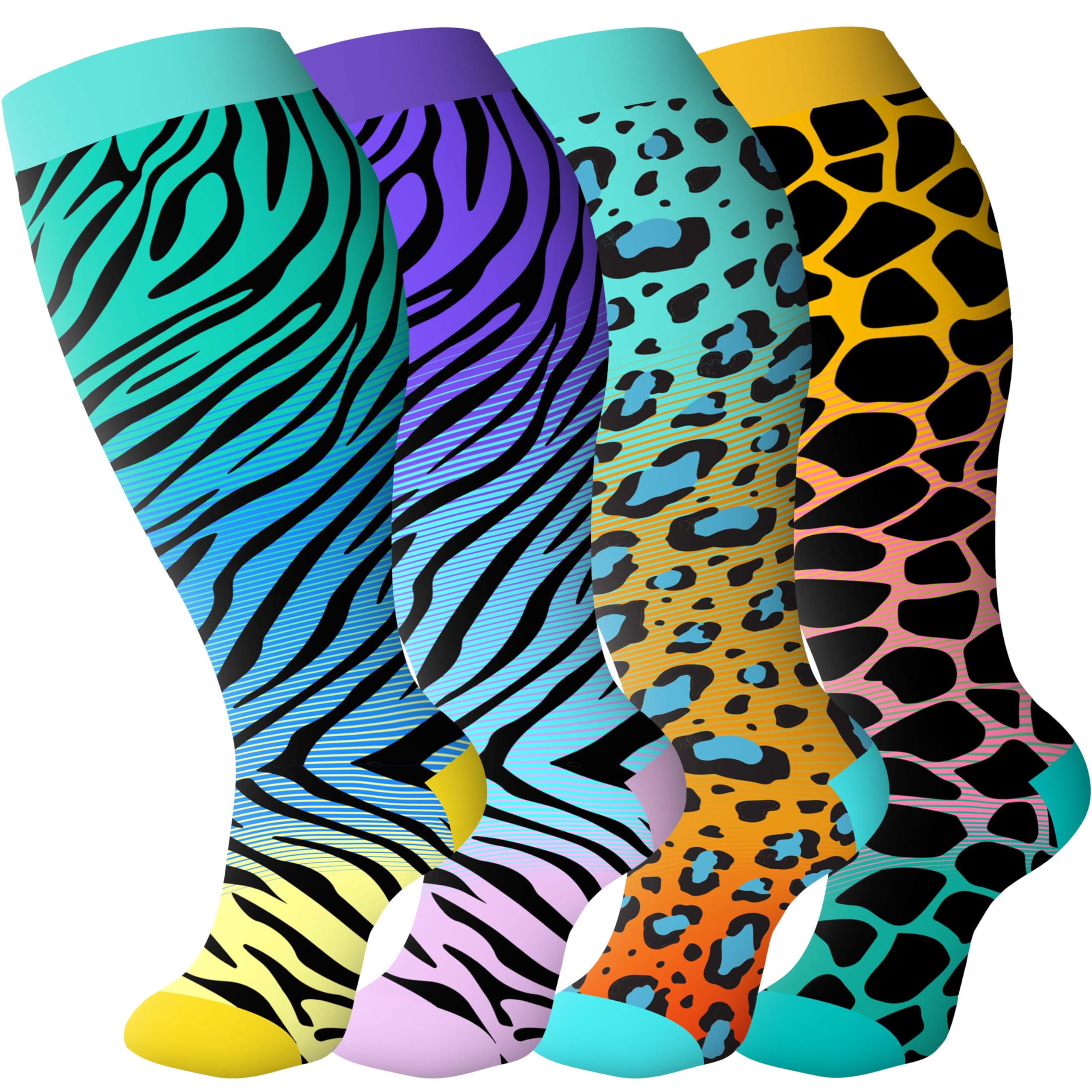
The defining feature here is the wider calf design, which is exactly what the fit complaints on so many other socks are about. With a firm 20-30 mmHg pressure rating, these knee-high socks deliver serious support, and the high spandex content (20%) is what gives them the stretch to accommodate larger legs comfortably. Owners mention they are “very soft and comfortable,” and the right thickness means they don’t feel bulky under leggings or scrubs.
Fit is the most-praised aspect by a clear margin, with comfort close behind. The socks reduce swelling in the calves and feet, are easy to get on and off, and don’t bind or cut in — a common failure point on standard compression socks. One owner with a 4X frame specifically recommended them, and another noted they are great for flights without feeling too warm.
The trade-off shows up in sizing consistency. Some buyers found that the socks run large and need a run through the dryer to shrink, while others found the printed designs fit tighter than the plain pairs and left imprints on the skin. If you are between sizes, expect some trial and error, and stick with the solid colors if you want the most forgiving fit.
Why wide-calf buyers stay loyal
- Wide calf design that doesn’t bind or cut in
- Firm 20-30 mmHg pressure reduces leg and foot swelling
- 4 pairs per pack — a 33% value gap over the 3-pair Doctor’s Select set
- Soft enough for all-day wear under leggings or uniform
Watch out for
- Sizing runs large — a dryer cycle may be needed to shrink them
- Printed designs fit tighter than plain pairs
- One owner reported a hole in the toe after the first wash
Reach for these if: you have wider calves and need real 20-30 mmHg pressure to manage swelling during shifts or travel.
Look elsewhere if: your legs are on the slimmer side — the extra fabric will bunch at the ankle.
3. Doctor’s Select Bamboo Viscose
The featherlight 8-15 mmHg pick that disappears on your leg but keeps swelling away all day.
This is the gentlest entry on the list, and that is its superpower. At just 8-15 mmHg, these bamboo viscose socks offer light, everyday compression that is easy to sleep in and comfortable for people who find firmer socks overwhelming. The bamboo fabric is the star — customers note it is soft, stretchy, and stays put even after walking 7+ miles or sitting through a 9-hour flight.
What wins people over is the comfort, with compression and fit close behind. One owner in southern Florida found them too warm and returned them for a toeless pair, but everyone else highlights how they prevent leg swelling when sitting all day with your legs down. They also wash well without shrinking, which is a common complaint with natural-fiber blends.
Compared to the +MD socks below, this pair runs at 8-15 mmHg versus 15-20 mmHg — meaning the +MD applies significantly more pressure (a gap of roughly 88%). If your main goal is mild support and all-day wearability rather than firm medical-grade squeeze, the lighter rating here is a feature, not a flaw. Just note that very warm climates might make the bamboo feel a bit heavy.
The gentle squeeze: Ideal for desk workers, pregnant women, and anyone new to compression who wants support without feeling like their legs are in a vise.
Fair warning: Elastic lines can form on the skin with extended wear — take breaks if you notice them.
4. +MD Bamboo Viscose Compression Socks
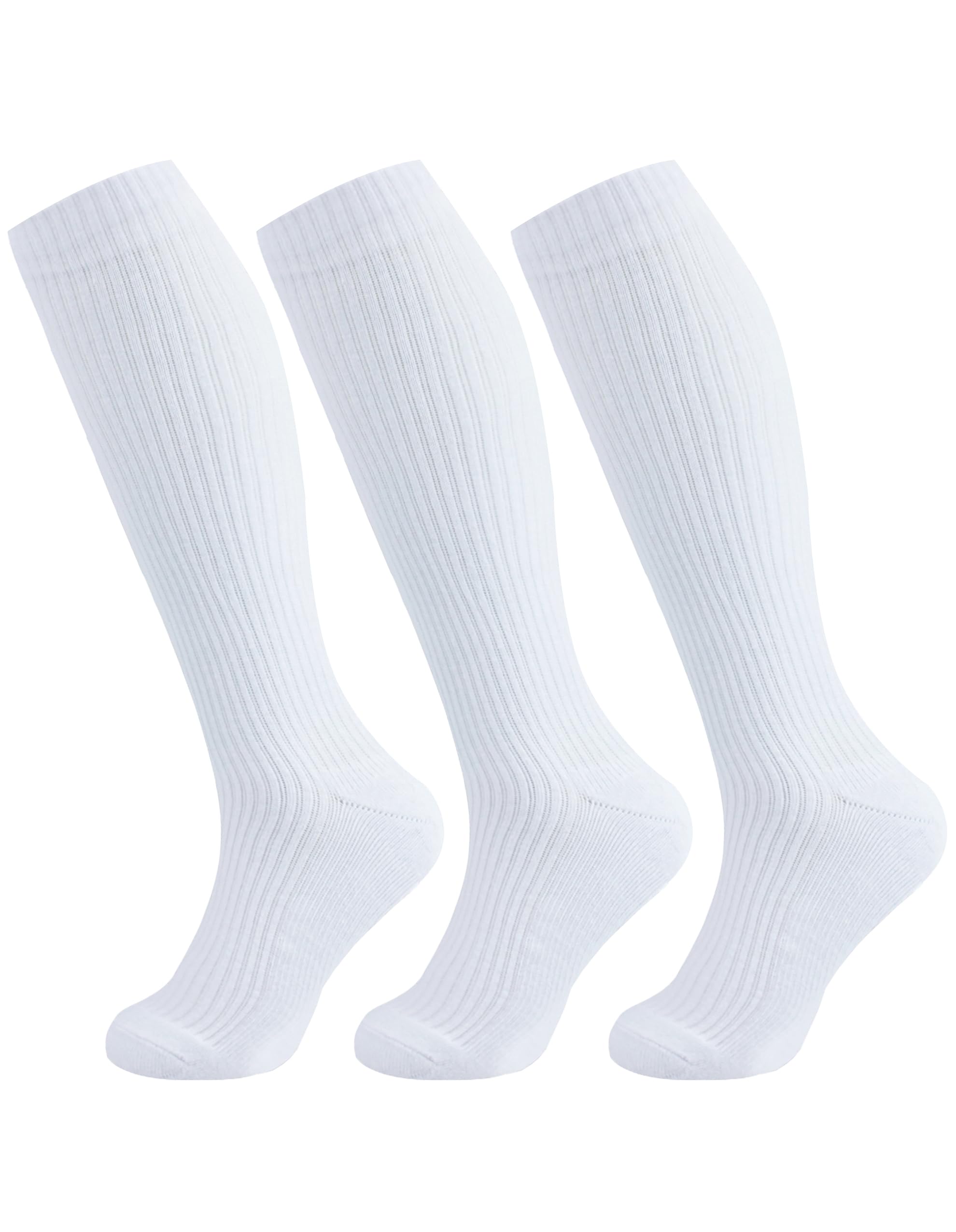
Feels like a normal sock, squeezes like a medical device — the best of both worlds at 15-20 mmHg.
The material blend of bamboo viscose, nylon, and spandex is what makes this pair special. It delivers the softness of bamboo with the elastic recovery of synthetics, so you get meaningful 15-20 mmHg compression that feels supportive without being restrictive. Reviewers point out these are the softest compression socks they have ever worn, with a wide top band that doesn’t dig into the leg.
Compression is the most-praised aspect, with comfort close behind. The socks stay up on their own through 14-hour shifts, prevent fluid buildup in the lower legs, and the padded sole adds a layer of comfort that thin compression socks lack. One owner with neuropathy specifically noted the socks helped control swelling without worsening their condition.
The honest downside is durability — a number of shoppers say holes developing after just a couple of wears. The fit also runs long in the foot for larger sizes, with some toe flopping for people in size 10-12 shoes. And at 15-20 mmHg, it is significantly firmer than the 8-15 mmHg Doctor’s Select pair above, so if you are sensitive to pressure, that lighter option is the safer bet.
What earns its keep
- Bamboo softness with real 15-20 mmHg graduated support
- Wide top band that doesn’t dig in
- Stays up through long shifts without slipping
- Padded sole for all-day foot comfort
The honest catch
- Durability is the recurring gripe — holes can appear after a few wears
- Foot section runs long for bigger shoe sizes
- Firmer pressure is not for everyone
Pick these for: nurses, travelers, and anyone who wants bamboo softness with a genuinely firm squeeze.
Skip them if: you are hard on your socks — the fabric may not survive heavy use.
5. Merino Wool Compression Socks
Merino magic that keeps your legs warm on Alaskan excursions yet cool on warmer days.
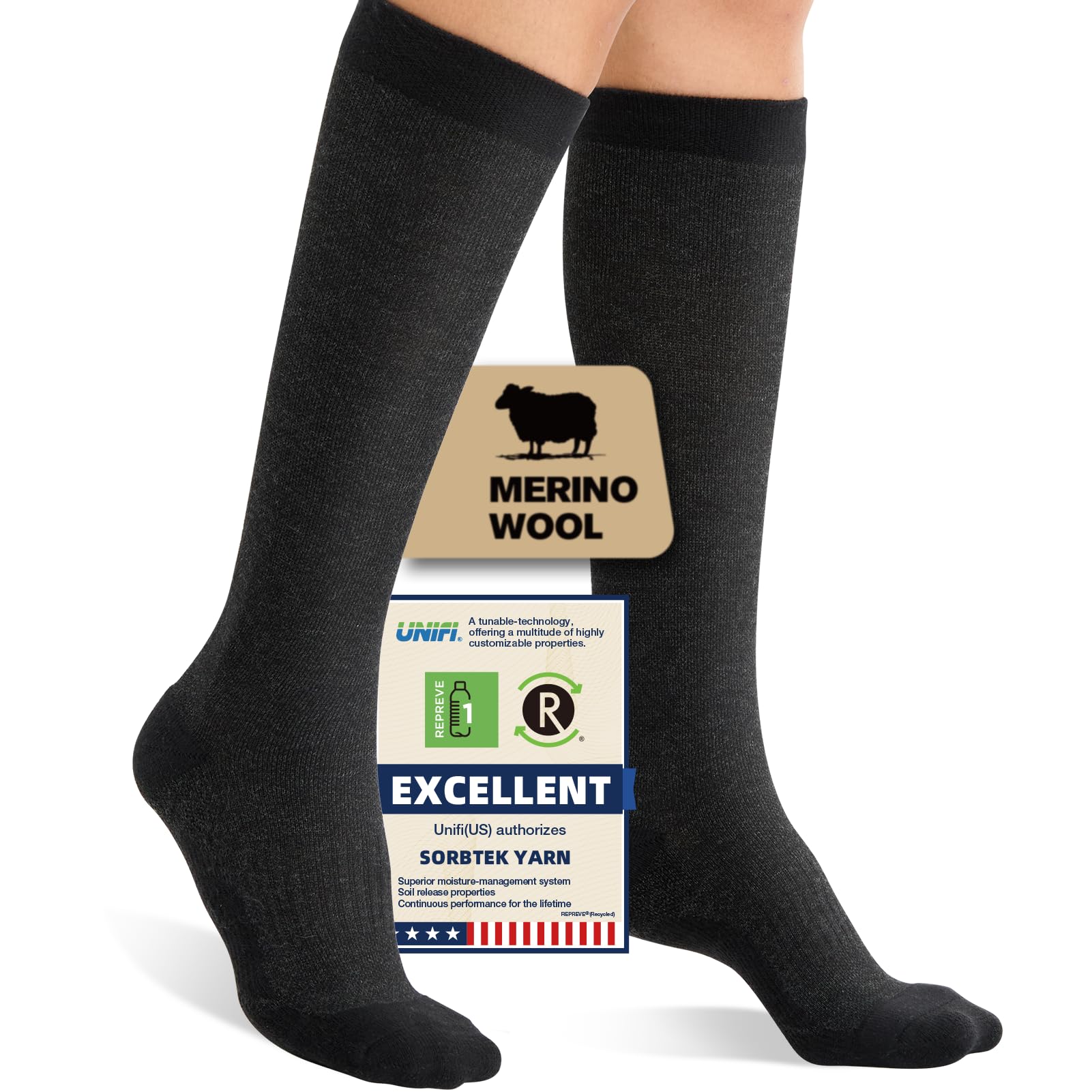
The fabric blend here is the most sophisticated on this list: 30% merino wool, 50% viscose from bamboo, 15% Repreve Sorbtek, and 5% Lycra. That combination delivers temperature regulation that synthetic socks simply cannot match. Buyers report the merino keeps their feet and legs warm on cold excursions, yet feels “much cooler than the polyester products” on warmer days — a rare dual personality.
Comfort stands out here, with compression close behind. The 4-zone compression (a design that applies different pressure levels to four parts of your leg) provides great support for travel and running — one owner flew 11 hours and felt a big difference in how their legs felt afterward. The merino wool is soft against the skin, does not itch, and the bands are comfortable even for larger frames.
The trade-off is thickness. These socks are warm and substantial, so they will not fit into snug dress shoes — one buyer specifically warned to make sure your footwear is wide enough. They are also a bit hard to pull on initially, which is the price of that firm 15-20 mmHg compression. If you run hot, this is still a great choice; if you live in a genuinely hot climate, the bamboo-blend options above will feel lighter.
Where it shines: Cold-weather runners, travelers facing long flights, and anyone who wants natural temperature regulation with firm compression.
One real limitation: Too thick for snug shoes — plan your footwear around them.
6. XZD Compression Socks
Thin enough to feel smooth, strong enough to keep a 70-year-old’s legs going through a full workday.
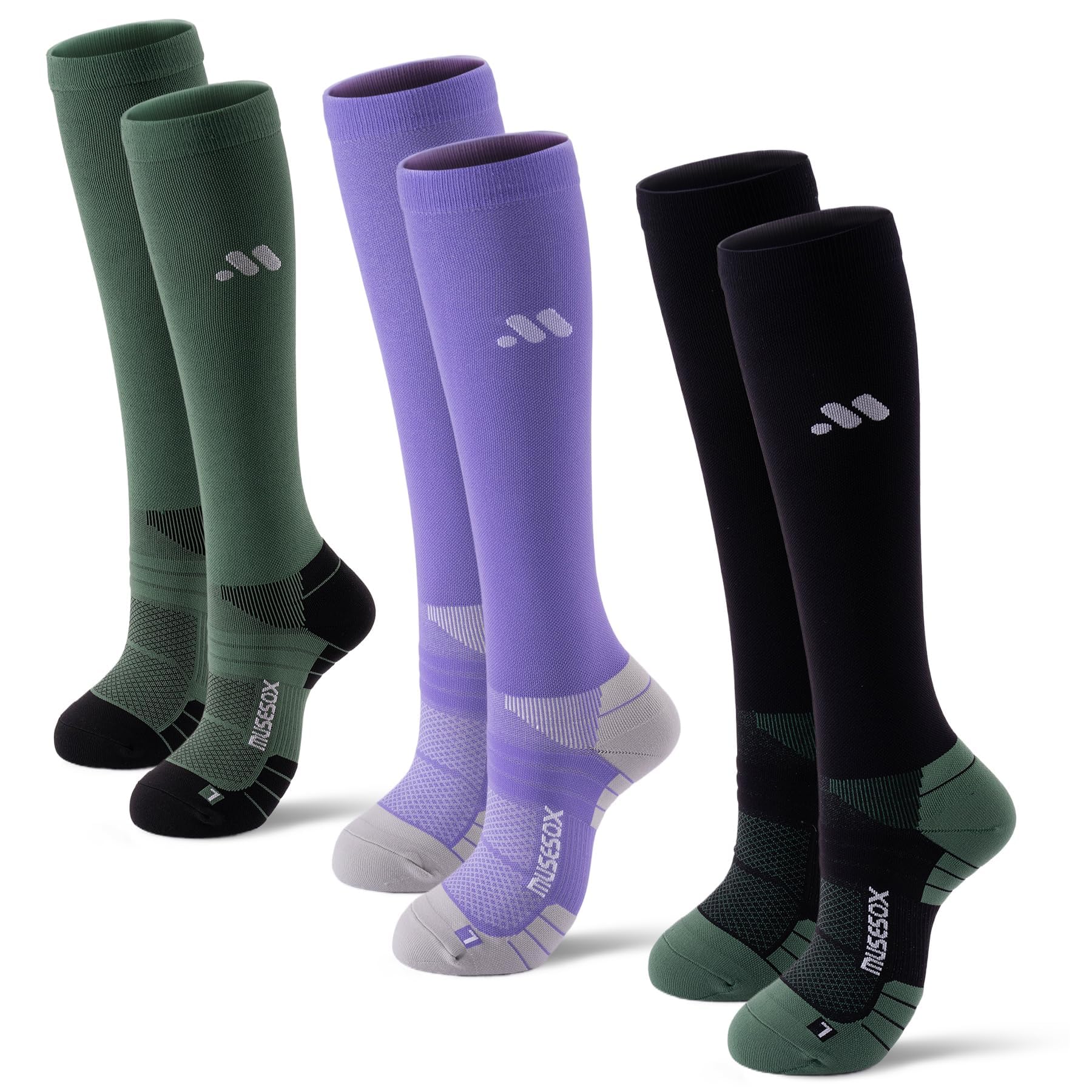
This unisex pair earns its place with a “tailored snug fit” and 15-20 mmHg graduated compression (pressure that is strongest at the ankle and eases upward) that owners mention is effective for nocturnal calf cramps and long shifts. The breathable fabric is thin and smooth, meaning no leg indentations even after 6-10 hour workdays, and the L/R foot labels take the guesswork out of putting them on the right feet.
The most-praised qualities are comfort and durability in softness. Customers note immediate relief for swollen legs, no heavy feeling after travel, and temperature-neutral wear that works in any season. One owner in their 70s called them the best compression socks they have ever used, praising the smooth construction and how easy they are to pull on.
The honest caveat is consistency. One buyer found that a second 3-pack in the same size fit tighter around the calves than the first batch, which points to some variability in manufacturing. The color and pattern selection is also limited — a minor gripe, but one owner docked a star for it. If you get a good batch, these are exceptional for the money.
The daily-driver strengths
- smooth, thin fabric that avoids leg indentations
- Effective 15-20 mmHg support for cramps and swelling
- L/R foot labels for easy, correct wear
- Temperature-neutral through changing seasons
Sizing quirks
- Fit can vary between batches of the same size
- Limited color and pattern choices
Best suited for: nurses, retail workers, and older adults who need all-day comfort without the squeeze of a medical stocking.
Be aware: if consistency matters more than anything, buy one pack before committing to multiple.
7. BRISIRA Coolmax Bamboo Ankle Socks

An ankle-cut compression sock with the Coolmax-Bamboo blend that keeps sweaty feet dry and odor-free.
This is the one pick on the list for people who want compression without the knee-high commitment. The ankle length makes it ideal for shorts, low-cut shoes, and warmer weather, while the Coolmax and bamboo viscose fabric blend delivers the moisture-wicking and natural odor control that hot, sweaty feet demand. It is also a sustainable choice — the “sustainable low cut” positioning is a genuine feature of the bamboo content.
Quality is the top praised aspect, with fit and comfort close behind. The cushioned footbed and compressive arch band provide “cushy and tight at the same time” support, and one buyer with plantar fasciitis reported significant relief during 14-16 hour shifts. The smooth toe eliminates the rubbing that causes blisters, and the L/R markings ensure a proper fit on each foot.
Compared to the crew-length Compression Crew Running Socks at the top of this list, these are lower cut and lighter in overall coverage. The recurring negatives here are durability — some reviewers point out fraying over time — and the fact that they run slightly large for narrow feet. They also need to be air-dried flat to keep their cushion, which is more care than your average gym sock requires.
The heat-beater: Perfect for runners, hikers, and Pilates enthusiasts who want ankle coverage with real arch support.
Not for yoga: The grip is not strong enough for stabilization — one reviewer noted they slid around too much on the mat.
8. LEVSOX Cotton Compression Socks

The rare cotton-blend compression sock that is kind to sensitive skin yet firm enough for a 9-hour flight.
For anyone with skin that reacts badly to synthetic fibers, this is the sock to know about. The main material is cotton, and shoppers say they are not itchy and cause no allergic reactions — one owner’s rash cleared up after switching to these. The fabric also features thicker cushioned soles for extra comfort in the foot and heel, which is a real differentiator at this price tier.
Compression is the most-praised aspect here, with comfort close behind. The 20-30 mmHg rating delivers serious support, and the smooth toe area prevents the pinching that plagues other firm socks. Buyers report no trouble getting them on and off thanks to the included instructions, and the compression did a great job for their legs on long airline flights.
The trade-off is the cotton content itself. Cotton absorbs moisture rather than wicking it away, so these run warmer than the bamboo or synthetic options on this list. The fit also runs long in the leg — one owner had to roll them down three inches to stop them from pulling past the knee. If you have narrow calves and long feet, these are an excellent match; if you run hot, the BRISIRA or merino options will breathe better.
Why cotton wins loyal fans
- Kind to sensitive, allergy-prone skin
- Firm 20-30 mmHg support for flights and shifts
- smooth toe with cushioned, thicker soles
- Non-binding top band that doesn’t cut circulation
Consider before buying
- Runs long in the leg — may need rolling down
- Cotton absorbs sweat, so feet can run warmer
- Tight enough that a sock-aid device helps for some
Choose these for: sensitive skin, long-haul flights, and people who prefer the natural feel of cotton over synthetics.
Pass on them if: you overheat easily or have very wide calves, since the fit runs long and snug.
9. Wellow Bamboo Compression Socks
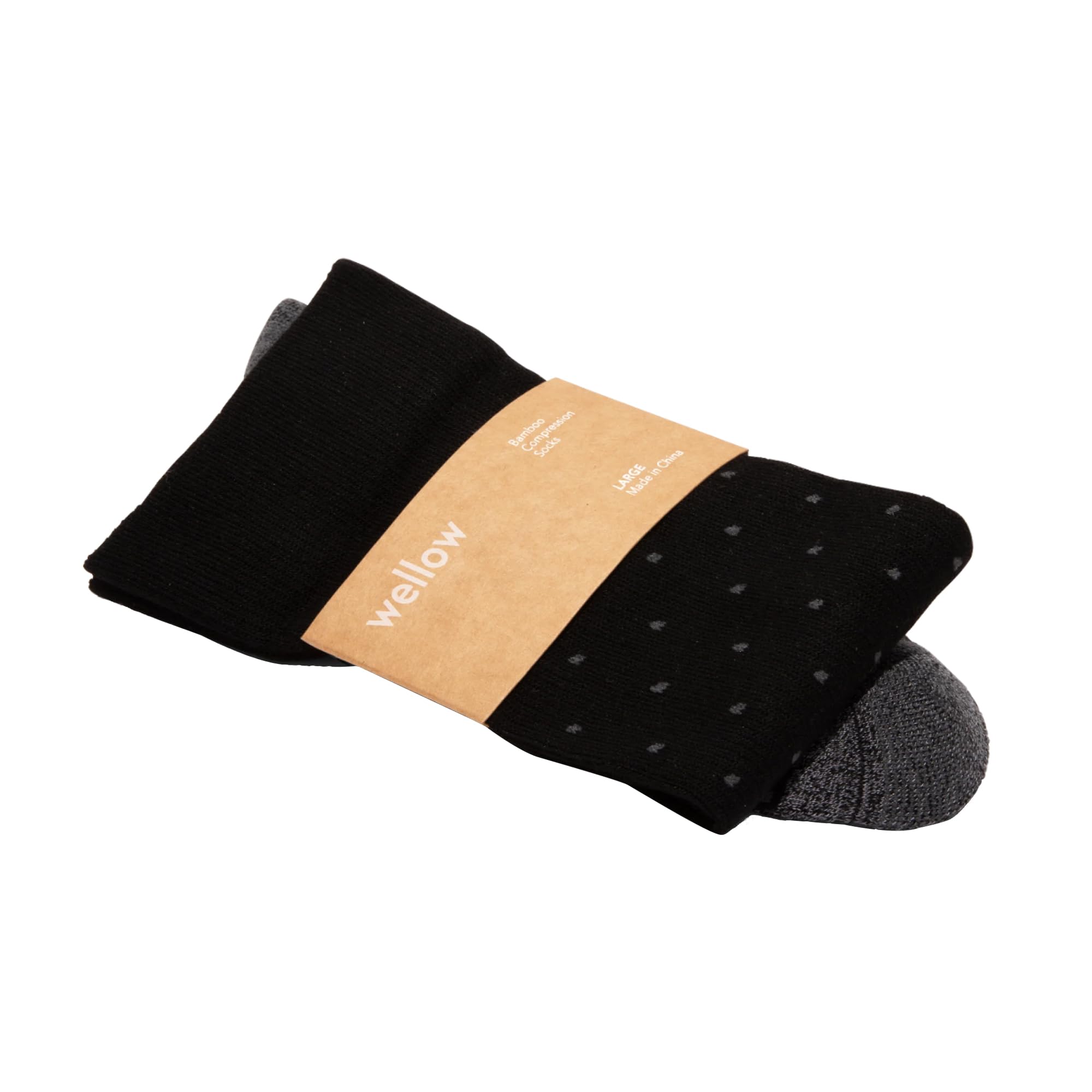
The nurse-approved bamboo blend that converts compression sock skeptics into daily wearers.
This is the premium pick for people who have tried compression socks and hated them. The bamboo viscose fabric is the headline — it is soft, breathable, and does not cause stinky feet, which is a complaint that recurs with synthetic blends. Owners mention the compression-to-comfort balance is the best they have found, with no itch and no toe squeeze, and the reinforced, non-slip sole adds durability where socks wear out first.
One buyer summed up the conversion experience: after years of avoiding compression socks, they now wear these for work and outside of work because they help with foot pain and calf tenderness after long nursing shifts. The socks do not end up too tight or become stiff after months of wear, and they shrink less than rivals when washed properly.
The catch is sizing. These run long in the leg and foot, so a buyer at 5’7″ with size 9.5 feet found the XL too long, while a petite 4’11” owner loved that they stop mid-calf. The knee cuff can also run tight for someone with a 15-inch calf. If you are between sizes, size down, and always hang-dry to retain the stretch. It is the most expensive pair on this list, but the build quality justifies the premium for daily wear.
The premium verdict: Worth the higher price for nurses, desk workers, and anyone who has been burned by cheaper socks that lose their stretch.
The sizing snag: Long in the leg and foot — size down unless you have taller legs.
Understanding the Specs
mmHg Pressure Rating
This is the number that tells you how hard the sock squeezes your leg. Light compression around 8-15 mmHg is gentle enough for daily wear, flights, and sleep. Mid-range 15-20 mmHg is the balance for nurses and runners who need real support. The firmest options at 20-30 mmHg deliver maximum swelling control but are harder to pull on and can feel restrictive if you are not used to them.
Fabric Blends
No single fiber does everything. Nylon and spandex provide the elastic recovery that keeps the squeeze consistent wash after wash. Natural fibers like bamboo viscose, merino wool, and cotton add softness, breathability, and temperature control. The best socks combine both — roughly 70-80% synthetic for structure with 20-30% natural fiber for comfort.
FAQ
What is the difference between 8-15 mmHg and 20-30 mmHg compression?
Is bamboo viscose or merino wool better for hot weather?
Why do compression socks have L and R foot labels?
How long does a compression sock keep its squeeze?
Will compression socks help with swelling on a long flight?
Can I wear compression socks to sleep?
What does “graduated compression” mean?
How do I choose the right size for wide calves?
Is 100% cotton a good fabric for compression socks?
Final Thoughts: The Verdict
For most people, the fabric for compression socks winner is the Compression Crew Running Socks because the nylon-polyester-spandex blend delivers a dependable, blister-proof fit that has won over the largest crowd. If you want bamboo softness with a firmer 15-20 mmHg squeeze, the +MD Bamboo Viscose socks are the target. And for wide calves needing serious 20-30 mmHg support, the bropite Plus Size 4-pack is the one to reach for.
How We Picked
We do not accept paid placement. Every pick is matched to a real buyer and a real use-case; we do not hands-on test units.
Sources & Methodology
Specifications: manufacturer listings and product documentation. Review insights: verified customer reviews, as of July 2026. Pricing: not shown on this page (it changes often); check the current price via the retailer link.
As an Amazon Associate, WellFizz earns from qualifying purchases. This does not affect which products we feature.
Related Guides

Mo Maruf
I created WellFizz to bridge the gap between vague wellness advice and actionable solutions. My mission is simple: to decode the research and give you practical tools you can actually use.
Beyond the data, I am a passionate traveler. I believe that stepping away from the screen to explore new environments is essential for mental clarity and physical vitality.