Our readers keep the lights on and my smoothie glass nicely filled. As an Amazon Associate, I earn from qualifying purchases.
Specs are compiled from manufacturer listings and verified buyer reviews and can change over time — please confirm the key details on the product page before buying.
The real question when you shop for extreme cold winter boots isn’t “which looks good” — it’s whether your toes will still have feeling after two hours standing in snow. Every boot here is rated to -40°F or colder, built for serious cold, not just chilly commutes. Expect rubber-shelled workhorses, insulated hunting boots, and tall snow boots that shrug off deep drifts.
I’m Mohammad Maruf — the founder and writer behind WellFizz. This guide is built by comparing the manufacturers’ published specifications and the patterns across verified customer reviews, so you get each pick’s real strengths and trade-offs instead of marketing spin.
This guide ranks the top Extreme Cold Winter Boots by warmth rating, insulation type, and real-world grip.
Our Picks at a Glance


How To Choose The Best Extreme Cold Winter Boots
Choosing a boot for extreme cold demands more than picking a regular winter shoe. You’re not just looking for warmth — you need a boot that stays waterproof, gives you traction on ice, and doesn’t turn into a frozen brick. These factors separate a boot that works from one that leaves you with cold feet.
Start with the temperature rating
The single most important number is the comfort range. A boot rated to -40°F or colder is built for arctic conditions, with multiple layers of insulation and a sealed shell. If you only face single-digit cold, a boot rated to 0°F might be more comfortable and less bulky.
Insulation type and thickness
Insulation comes in different forms — neoprene, Thinsulate, fleece, and foam layers all trap heat differently. Thicker isn’t always better: 5 mm neoprene is flexible and molds to your foot, while 2000G Thinsulate offers extreme warmth in a lighter package. Look for removable liners if you want to dry them out fast.
Waterproofing matters as much as warmth
A boot that keeps you warm but lets in slush will ruin your day fast. Fully-sealed rubber shells and waterproof membranes keep snow and water out, so your feet stay dry even standing in ankle-deep puddles. Check that the boot’s shaft is tall enough to keep snow from getting in over the top.
Traction on ice and packed snow
Warmth is useless if you’re slipping on ice. Look for outsoles with deep lugs and designs made for winter grip, like the Polar Rubber or Permafrost outsoles found on many extreme-cold boots. A boot that grips ice well keeps you safe on driveways, trails, and frozen ponds.
Quick Comparison
| Model | Best For | Cold Rating | Insulation | Upper Material | Amazon |
|---|---|---|---|---|---|
| Muck Arctic Sport★ Best Overall | All-purpose outdoor work | -40°F | 5 mm neoprene + fleece | Rubber shell | Amazon |
| NoSho Gusset XTHunting Specialist | Hunting in deep cold | -50°F | 7 layers + EVA midsole | Rubber & Neoprene | Amazon |
| Muck Arctic Sport TallTall Workhorse | Farm & pasture work | -40°F | 5 mm neoprene + fleece | Rubber shell | Amazon |
| KEEN Revel IV High Polar | Active winter hikes | -40°F | 400G insulation | Leather & mesh | Amazon |
| LaCrosse Cold Snap 9″ | Hunting & ice fishing | — | 2000G Thinsulate Ultra | Leather & nylon | Amazon |
| Arctic Storm Hi | Women’s barn & field work | -50°F | 7 layers + EVA midsole | Rubber & neoprene | Amazon |
| Baffin Control Max | Snow blowing & ice fishing | Arctic Rated | Removable liner | Full grain leather | Amazon |
| Baffin Selkirk | Snowmobiling & deep snow | -94°F | Removable liner | Leather & nylon | Amazon |
In‑Depth Reviews
1. MUCK Men’s Arctic Sport Boot Outdoors Equipment
Our pick — over 4.5★ from 900+ verified ratings; the strongest balance of quality and price.
The rubber-shelled all-rounder that keeps feet warm to -40°F through snow, slush, and barn chores
The Muck Arctic Sport keeps returning in cold-weather conversations for its no-nonsense build. It’s rated to -40°F (-40°C), which means it’s designed for standing ankle-deep in snow and slush without your feet going numb. The 5 mm neoprene upper is waterproof, absorbs shock, and retains heat, while the warm fleece lining and thermal foam under the footbed handle the comfort side. For everyday winter work — shoveling, plowing, mucking stalls — this is the benchmark.
What wins people over is the warmth: it’s the most-praised feature by a wide margin, and it’s backed by real stories of staying comfortable in -8°F snow. The fit runs true to size with room for heavy socks, and the contoured midsole keeps feet supported during long days. The fully-sealed rubber shell extends high above the ankle, so deeper snow doesn’t sneak in over the top. It’s also a boot that lasts — several buyers report getting 8 years of use before the rubber eventually cracked.
The trade-off is that the fit can be a bit roomy, and some owners find the boot runs warm for milder days — it’s genuinely built for frigid weather, not spring slush. The appearance is more function than fashion, which is a fair exchange for a boot that keeps you dry in a horse corral. If you need one boot for -40°F mornings and rainy chores, this is it.
What owners celebrate
- Rated to -40°F with 5 mm neoprene for heat retention
- Waterproof sealed rubber shell extends above the ankle
- True to size with room for thick socks
What to know
- Can run warm in milder temperatures
- Fit is roomy, so sizing down may help some
Reach for this if: you need a do-everything winter boot for outdoor work and leisure in frigid conditions.
Consider something else if: you want a sleek, lightweight boot for casual city walks rather than rugged work.
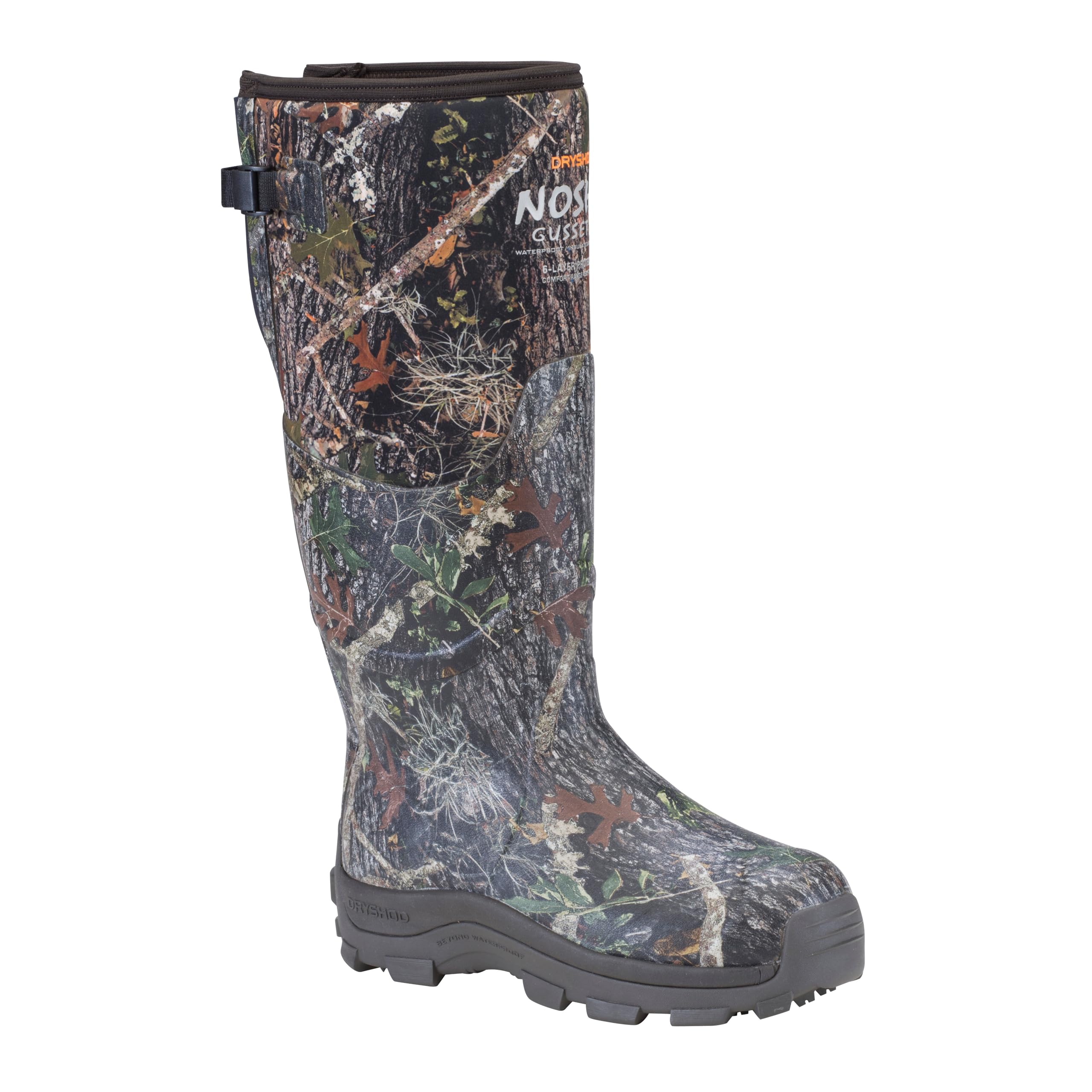
2. Men’s NoSho Gusset XT Extreme Cold-Conditions Hunting Boot
A cold-tree-stand specialist with a comfort range down to -50°F and adjustable calf room
If you sit still in a tree stand or on the ice for hours, you need a boot that insulates even when you’re not moving. The NoSho Gusset XT is built exactly for that, with a comfort range of -50° to 65°F. It stacks 7 layers of protection: a 5.5 mm bootie, 2.5 mm DENSOPRENE XD foam, 2 mm airmesh, 2 mm fleece lining, plus an EVA cold-blocking midsole. That’s the kind of layering that keeps feet warm when you’re not generating body heat.
The defining feature is the adjustable gusset — an expandable panel with a locking strap that customizes the fit for larger calves. It’s 2″ taller than the regular model, which keeps brush, debris, and snow out. The HYDROKOTE water-repellent treatment means water rolls off the nylon outer and dries in seconds, so the textile doesn’t ice up in wet conditions. The DS1 Premium Outsole uses natural rubber with inner lugs for any-angle grip and outer lugs for lateral support, plus the lug design releases mud as you walk.
The one honest caveat is the fit: the opening you slide your foot through runs a bit small, and several owners recommend ordering up a size to make room for thick socks. Owners mention these are the “warmest boots I’ve ever had,” which is high praise from hunters who spend still mornings in freezing temperatures. They also feel surprisingly light, closer to walking in tennis shoes than heavy rubber boots.
Built for stillness
- -50°F comfort range with 7 protection layers
- Adjustable gusset fits larger calves and layered clothing
- Water-repellent nylon outer dries in seconds
Fit notes
- Foot opening is snug — order up a size
- Heavier than some hiking-style winter boots
Grab this for: hunting, ice fishing, or any activity where you’re sitting still in extreme cold.
Pass if: you need a lightweight boot for long-distance winter hiking.
3. MUCK Men’s Arctic Sport Tall
The taller sibling of the classic Arctic Sport, built with the same -40°F warmth and a higher shaft for deeper drifts
If you regularly wade through deep snow, the extra height of the Arctic Sport Tall makes a real difference. It shares the same core as the standard Arctic Sport — rated to -40°F (-40°C) with 5 mm neoprene, fleece lining, and thermal foam — but the tall boot shaft offers extra protection in the drifts. That height keeps snow from dumping in over the top when you’re walking through deeper powder, and the grippy sole keeps you planted on icy patches.
Quality is the most-praised aspect here, which shows in the detail: tight seams, no glue, and construction that survives years of farm abuse. One owner reports keeping feet warm from 40°F down to -20°F, and another used this boot on a 10-day Chadar Trek at -10° to -30°C with no wear or tear. The fit runs true to size, with ample room for thick socks, and the comfort holds up for all-day wear even with inserts.
The honest downsides are minor but real. The tread can slip a bit more on wet surfaces than a regular work boot until you adjust your stride, and the tall shaft isn’t ideal for driving. The durability is proven — one owner put 4 years of extreme sawmill abuse on a pair and they stayed waterproof. It’s a boot that earns its keep on farms, pastures, and any mucky terrain.
Why it stands out
- Tall shaft adds protection in deep snow drifts
- High-quality construction with tight seams and no glue
- Proven durability through years of farm work
Watch out for
- Tread slips more on wet surfaces than standard work boots
- Tall shaft makes driving less comfortable
Choose this if: you work on a farm or pasture and wade through deep snow and muck daily.
skip it if: you need a boot for driving or prefer a shorter, more agile profile.
4. KEEN Revel IV High Polar
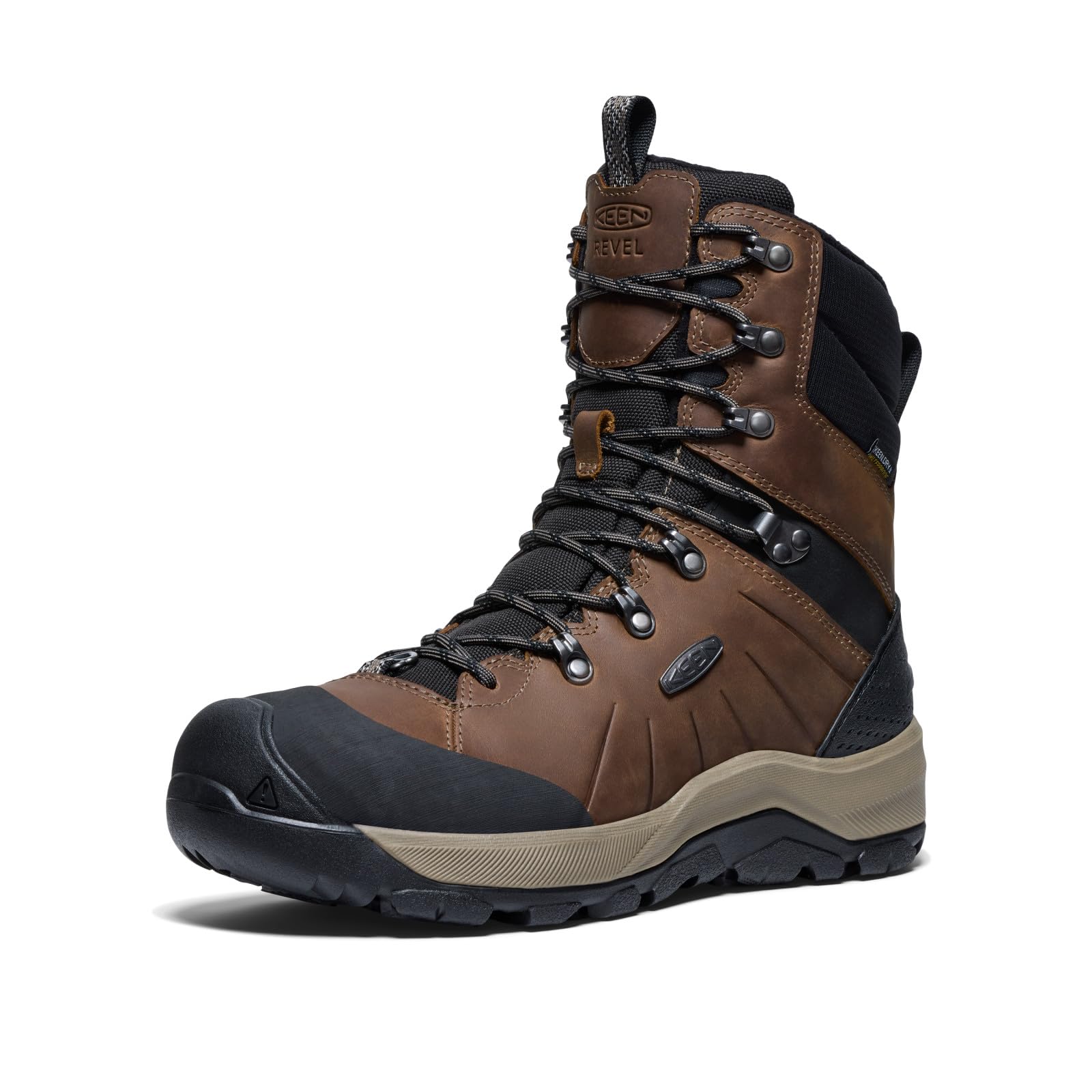
A lace-up winter hiker that moves with you, rated to -40°F for active days in deep powder
Most extreme-cold boots are big, bulky rubber shells, but the KEEN Revel IV High Polar takes a different path. It’s a proper lace-up winter hiker with a higher profile for deeper powder, built on KEEN’s traditional wider footwear form. The waterproof leather and performance mesh upper keeps snow out, while the insulation is rated to -40°F — but it’s designed for people who are actually moving. It’s the pick for active winter days, not sedentary tree-stand sits.
Comfort is what owners consistently highlight, with several noting it’s comfortable right from the start, especially for wide feet. The waterproofing holds up — it’s been tested on 2-week backpacking and hunting trips with no degradation. The traction on slippery creeks and packed snow earns strong praise, and the Eco Anti-Odor technology helps break down sweat odor. One owner tested them at -2°F in heavy snow with wool socks and orthotics, and their feet stayed dry and warm.
The honest caveat is that this is an active boot. The insulation is rated for movement — if you sit still in a tree stand for hours, your toes will eventually chill. It’s also noticeably heavier than a standard hiking boot, and the calf area can feel snug until you get used to it. But for winter hikes, snowshoeing, and everyday cold-weather wear where you’re on the move, it’s a standout.
Made for motion
- Lace-up hiker design with -40°F insulation rating
- Wide fit, comfortable from the start
- Strong traction on snow, ice, and slippery creeks
Not for stillness
- Toes will chill if you sit inactive for hours
- Heavier than standard hiking boots
Best for: active winter hikers and anyone who stays moving in cold weather.
Not for: ice fishing or tree stands where you sit still in extreme cold.
5. LaCrosse Men’s Cold Snap 9″ Hunting Boots
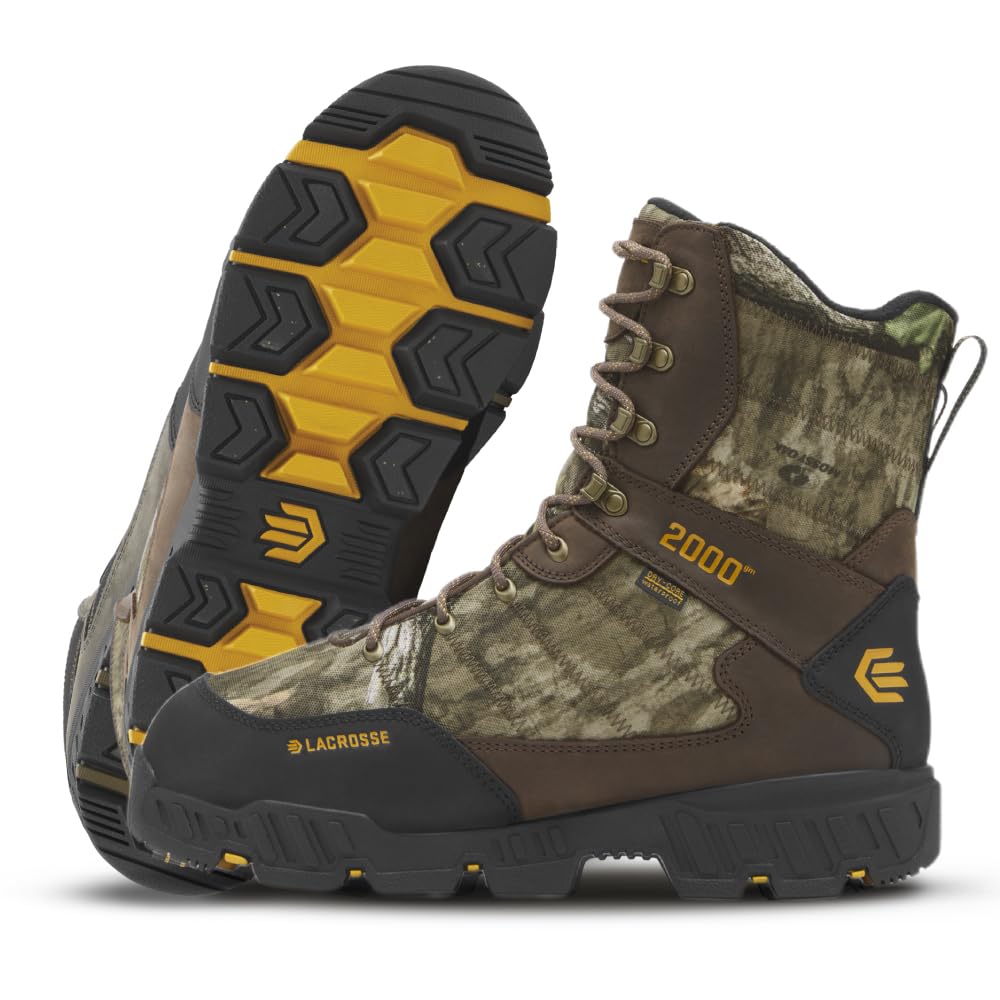
Moon-boot warmth packed into a hiking-boot profile, with a grippy Permafrost outsole for icy ground
Warmth is the headline here, and the numbers back it up: 2000G Thinsulate Ultra insulation is among the warmest you’ll find in a lace-up boot. Owners describe it as “moon boot warmth, hiking boot comfort” — a rare combination that makes it a favorite for hunting, ice fishing, and shoveling snow. The 9-inch height clears deep snow while the leather and nylon upper keeps things durable. The Permafrost outsole is specifically designed for grip on snow and ice, and the supportive EVA footbed keeps you comfortable on long days.
What stands out in the reviews is how this boot handles sitting still in the cold. Several customers note feet staying warm while sitting all day in the teens and 20s°F, and one noted it kept feet warm during 8-12 hours of outdoor work in 0°F. The fit is true to size with plenty of room, and the Dry-Core lining manages moisture so you don’t get that clammy feeling. Despite the heavy insulation, owners find it surprisingly lightweight.
The trade-off is that below 0°F you may want warmer socks or insoles, and the boot is a bit stiff when new until it breaks in. It’s also on the heavier side compared to non-insulated boots, though owners say the weight is on par with similar cold-weather boots. If you want one boot that covers hunting, ice fishing, and daily snow shoveling while staying affordable, this is a strong contender.
The warmth story
- 2000G Thinsulate Ultra for extreme insulation
- Permafrost outsole grips ice and packed snow
- Comfortable for all-day wear in single-digit temps
Fair warnings
- Stiff when new — needs a break-in period
- Below 0°F, add warmer socks or insoles
Pick this if: you hunt, ice fish, or shovel snow and want extreme warmth in a familiar hiking boot shape.
Look elsewhere if: you need a taller boot for deep-snow wading or prefer a rubber-shell design.
6. Arctic Storm Hi Extreme Cold Conditions Women’s Winter Boot
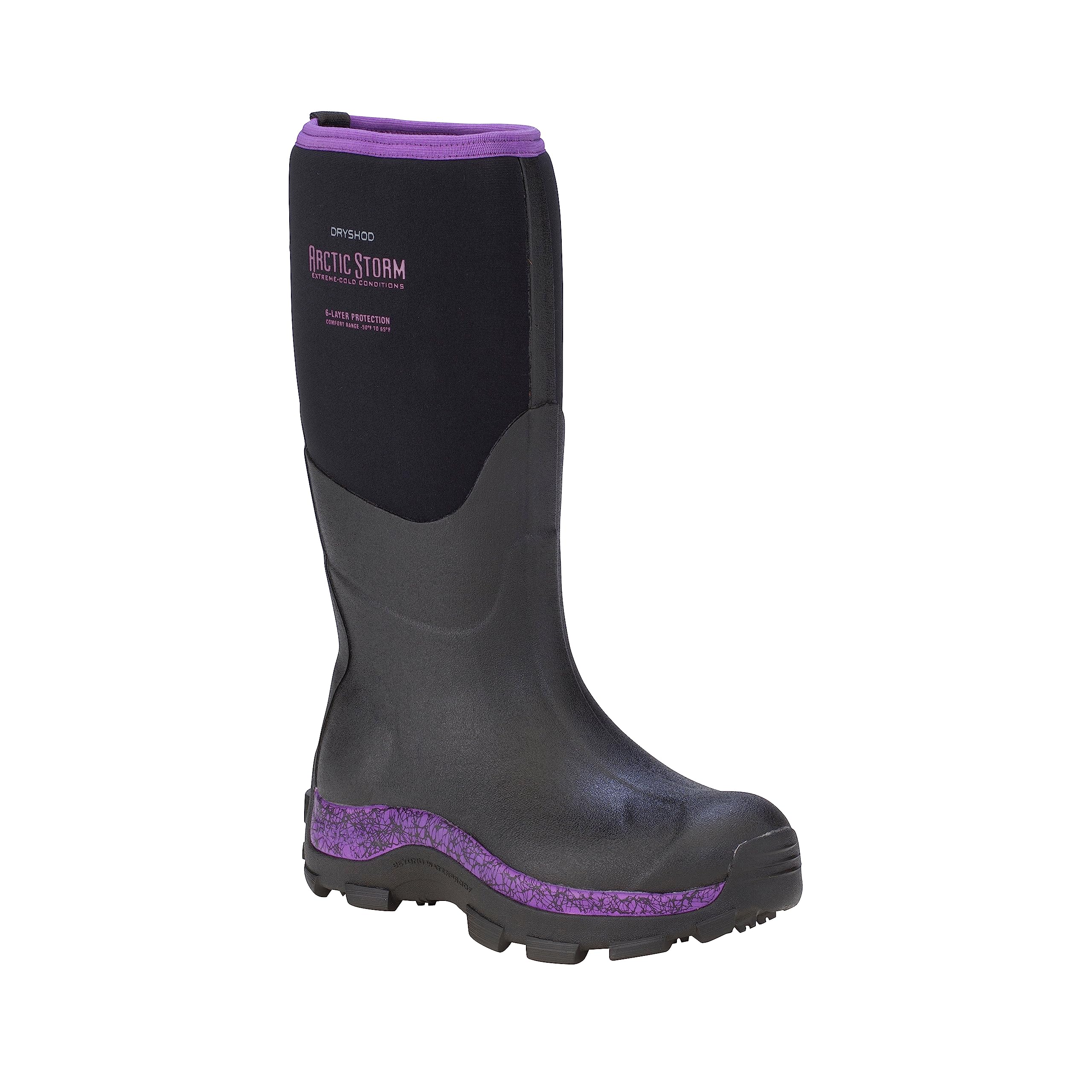
A women’s cold-weather boot with a -50°F comfort range, designed for barn chores and long winter days
Women who work outdoors in extreme cold often struggle to find boots with real warmth, and the Arctic Storm Hi is built to close that gap. It’s rated to -50°F with 7 layers of protection: a 5.5 mm bootie, 2.5 mm DENSOPRENE XD foam, 2 mm airmesh, and 2 mm fleece lining, plus an EVA cold-blocking midsole. The knee-high shaft with a roll-down calf pipe lets you customize the fit, and the 4-way stretch airmesh lining makes it easy to pull on and off. It’s ideal for Wisconsin barn chores and Maine winters where sub-zero temps are routine.
The warmth is the most-praised feature, with owners reporting no cold toes even in sub-zero temperatures with regular socks. The DS1 Premium Outsole uses natural rubber with lugs designed for any-angle grip, and the HYDROKOTE water-repellent treatment keeps the nylon outer from icing up. One owner wears these every day for six months of outdoor work in mud, ice, snow, and rain, and they’ve held up. The fit runs true to size with room for thick socks, though some note the ankle area runs a bit snug.
The main trade-offs are weight and price. They’re also a bit stiff from the start, though that eases after a couple of wears. If you need a women’s boot that handles extreme cold and heavy outdoor work, this is the one.
Built for cold
- -50°F comfort range with 7 protection layers
- Roll-down calf pipe for a customizable fit
- Grippy natural rubber outsole for all terrains
Keep in mind
- Ankle area runs a bit snug for some
- Heavier than typical winter boots
Choose this for: women who work outdoors in sub-zero temps and need reliable, lasting warmth.
Think again if: you want a lightweight boot for casual winter walks rather than heavy-duty work.
7. Baffin Men’s Control Max Snow Boot
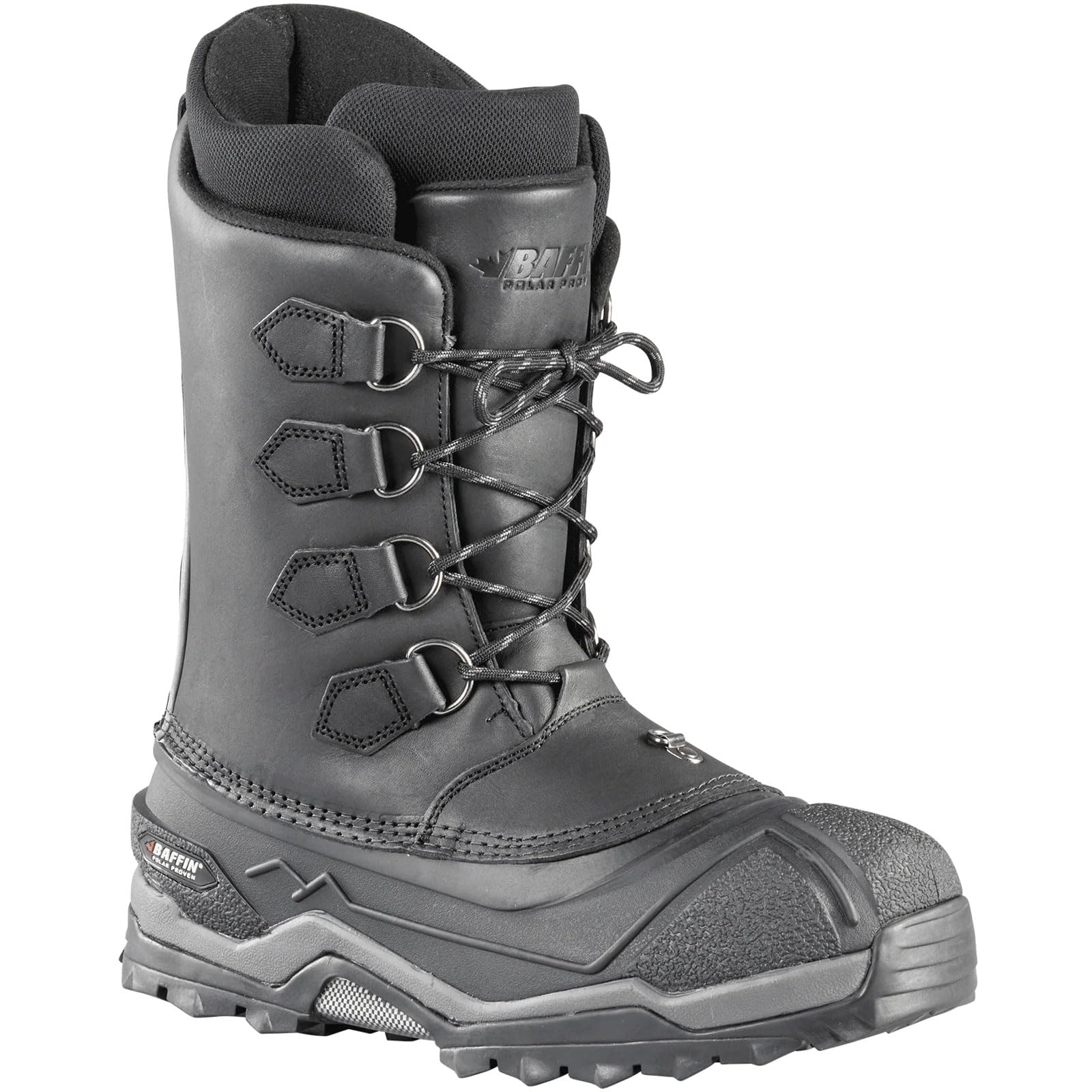
A serious-work snow boot with a full grain leather upper and a removable liner rated for arctic conditions
When the thermometer drops well below zero and you still have to get things done outside, the Baffin Control Max is the boot that shows up. It’s Arctic Rated, meaning it’s designed for the most extreme cold, and it uses a removable liner so you can dry it out between wears or swap in a fresh one. The full grain insulated leather upper with a nylon locking snow collar keeps snow out, and the Polar Rubber outsole stays flexible in cold and grips ice well. It feels like walking on pillows, as several owners put it, with a cushioned but supportive feel.
Warmth is the top-praised feature, with one owner reporting feet never got cold during hours of exposure at -16°F. The quality is a close second — these are serious business boots built for snow-blowing, ice fishing, and Minnesota winters. Owners note they’re far more supportive than the Sorel Caribou, and they last several winters. The fit runs tight, so most owners recommend ordering half a size up from your normal shoes.
The honest downside is bulk. These are big, astronaut-style boots that can feel clunky for suburban use, and the thick calf insulation makes it hard to pull pant cuffs over them. They also don’t come in half sizes, so you may need to size up to a full number. But if you need a boot that takes on serious cold with zero foot complaints, this is a top-tier choice.
Extreme-cold credentials
- Arctic Rated for the most extreme temperatures
- Removable liner dries fast between wears
- Polar Rubber outsole stays flexible and grips ice
Size and bulk
- Runs tight — order half a size up
- Bulky, astronaut-style fit not ideal for casual wear
Reach for this if: you face arctic conditions and need a boot for snow-blowing, ice fishing, or heavy outdoor work.
Skip if: you want a slim, low-profile boot for everyday winter commuting.
8. Baffin Men’s Selkirk Snow Boot

A snowmobile-tested titan rated to -94°F, with a built-in gaiter and Icepaw outsole for extreme grip
If you need a boot that can survive a 60 MPH snowmobile ride in -18°F with -50°F wind chills, the Baffin Selkirk is the one. It’s rated to -94°F, which is among the most extreme ratings on this list, and it’s proven in real-world use. One owner took it on a 7-day snowmobile trip in temperatures from -18°F to 9°F with wind chills of -50°F and kept his feet warm the entire time. The removable liner is easy to dry, and it’s surprisingly light for a boot this warm — much lighter than rubber boots of similar size.
The Icepaw outsole is a standout feature, providing strong grip on ice and hard pack. The 13-inch height with a nylon upper and built-in snow gaiter keeps deep snow out, and the reflective panels add visibility. The fit is designed for wide feet, and the thick insulation compresses after a few minutes to mold perfectly to your foot. Reviewers point out being comfortable for 10+ hour days without sweating, and the special rubber sole stays flexible even in extreme cold.
The main caveat is sizing, which runs large — most owners recommend ordering down. The boot shaft can be too small for guys with large calves, and the liner can bunch up when putting the boot on, requiring a couple of tries. But once it’s on, it’s an exceptional boot. It’s also on the pricier side, but for extreme conditions, owners say it’s worth every penny.
Arctic proof
- Rated to -94°F with a removable liner
- Icepaw outsole grips ice and hard pack
- Built-in gaiter keeps deep snow out
Sizing quirks
- Runs large — order down a size
- Shaft can be small for large calves
Get this for: snowmobiling, ice fishing, or any extreme-cold activity where feet must stay warm for hours.
Consider other options if: you have large calves or prefer a simpler pull-on design without a liner to adjust.
Understanding the Specs
Temperature Rating
The cold rating, like -40°F or -50°F, tells you the coldest temperature at which the boot should keep your feet warm. These ratings assume you’re wearing appropriate socks and are somewhat active. For sitting still in a tree stand, you’ll want a more conservative rating than for active hiking.
Insulation Layers
Boots use different insulation systems — neoprene, Thinsulate, fleece, and foam layers all trap heat. The “layers” count, like 7 or 8 layers, stacks materials for warmth. Higher grams of Thinsulate (like 2000G) means more insulation, but also more bulk.
Waterproofing
A sealed rubber shell or a waterproof membrane keeps snow and slush out. Fully-sealed rubber boots are the most reliable in deep snow, while leather and nylon uppers with a waterproof treatment are lighter but may need re-treatment over time.
Outsole Grip
Winter outsoles use special rubber compounds and lug patterns for grip on ice and packed snow. Polar Rubber and Permafrost outsoles are designed to stay flexible in extreme cold, and deep lugs help shed mud and snow as you walk.
Removable Liners
A removable inner bootie lets you take out the lining to dry it fast between wears. This is a huge advantage for daily use in wet conditions, and it also lets you swap in a different liner if one gets worn down.
Boot Height
Shaft height matters for deep snow. A 9-inch boot clears moderate snow, while tall boots reaching the knee or higher keep snow from dumping in over the top. Taller shafts add weight but also add protection in drifts.
FAQ
How do I read a boot’s temperature rating like -40°F?
What is the difference between neoprene and Thinsulate insulation?
Should I size up for extreme cold winter boots?
How long do extreme cold winter boots last?
Can I wear extreme cold boots for everyday winter commutes?
What makes a boot rated for -50°F different from one rated for 0°F?
Are rubber boots or leather boots better for extreme cold?
How do I keep my feet warm when sitting still in extreme cold?
What is a removable boot liner and why does it matter?
Final Thoughts: The Verdict
For most people, the extreme cold winter boots winner is the Muck Arctic Sport because it delivers proven -40°F warmth with a fully-sealed rubber shell that handles snow, slush, and heavy work. If you want extreme insulation for hunting and ice fishing, grab the LaCrosse Cold Snap with its 2000G Thinsulate. And for active winter days, the KEEN Revel IV High Polar is the one to reach for.
How We Picked
We do not accept paid placement. Every pick is matched to a real buyer and a real use-case; we do not hands-on test units.
Sources & Methodology
Specifications: manufacturer listings and product documentation. Review insights: verified customer reviews, as of August 2026. Pricing: not shown on this page (it changes often); check the current price via the retailer link.
As an Amazon Associate, WellFizz earns from qualifying purchases. This does not affect which products we feature.
Related Guides

Mo Maruf
I created WellFizz to bridge the gap between vague wellness advice and actionable solutions. My mission is simple: to decode the research and give you practical tools you can actually use.
Beyond the data, I am a passionate traveler. I believe that stepping away from the screen to explore new environments is essential for mental clarity and physical vitality.