Our readers keep the lights on and my smoothie glass nicely filled. As an Amazon Associate, I earn from qualifying purchases.
Specs are compiled from manufacturer listings and verified buyer reviews and can change over time — please confirm the key details on the product page before buying.
Your photos are the one thing a crashed laptop or a full phone can’t replace. A dedicated external hard drive gives every RAW file and family video a safe, always-ready home, so a corrupted memory card never costs you a shoot. The real question is if you need a rugged, lightning-fast SSD for life on the move or a high-capacity HDD for mass archiving at home.
I’m Mohammad Maruf — the founder and writer behind WellFizz. This guide is built by comparing the manufacturers’ published specifications and the patterns across verified customer reviews, so you get each pick’s real strengths and trade-offs instead of marketing spin.
The best external hard drive for photos balances speed for fast backups with durable capacity that keeps your growing image library safe.
Our Picks at a Glance


How To Choose The Best External Hard Drive For Photos
Before you click buy, match the drive to how you actually shoot. A wedding photographer backing up 100GB cards in a hotel room has different needs than someone archiving ten years of family snapshots at a desk. The three specs below separate a frustrating drive from a flawless one.
Capacity: Terabytes vs. Your Library
High-resolution RAW files eat space fast — a single modern camera file can be tens of megabytes. A 1TB drive holds a solid starter library, while 2TB suits most active shooters, and 5TB gives serious archivists room for years of footage without juggling multiple devices. Buy roughly double what you think you need today, because video clips and burst shots grow quicker than you expect.
Speed: HDD vs. SSD
A mechanical hard drive (HDD) uses spinning platters and tops out around 130 megabytes per second — fine for overnight backups but slow for editing straight off the drive. A solid-state drive (SSD) has no moving parts and can hit 800 to 1050 megabytes per second, so you can pull up a 50MB photo and edit it instantly without copying files to your computer first.
Durability: Where Will It Live?
If the drive stays on a desk, a lightweight plastic or aluminum enclosure is plenty. If it rides in a camera bag or clips to a backpack, look for drop protection in meters and water or dust resistance ratings like IP65. A rubberized shell that survives a knock protects a shoot’s worth of unrepeatable images.
Quick Comparison
| Model | Best For | Capacity | Transfer Speed | Drive Type | Amazon |
|---|---|---|---|---|---|
| WD 2TB Elements★ Best Overall | Everyday backups & console storage | 2 TB | 5 Gbps | Mechanical HDD | Amazon |
| WD 5TB ElementsArchive King | Massive photo archives | 5 TB | 5 Gbps | Mechanical HDD | Amazon |
| WD 2TB My Passport | Backups with password security | 2 TB | USB 3.1 | Mechanical HDD | Amazon |
| Seagate Portable 2TB | Cross-platform plug-and-play | 2 TB | 130 MB/s | Mechanical HDD | Amazon |
| SanDisk 1TB Portable SSD | Fast editing on the move | 1 TB | 800 MB/s | Solid State | Amazon |
| SanDisk 1TB Extreme SSD | Rugged outdoor photo backup | 1 TB | 1050 MB/s | Solid State | Amazon |
| Toshiba Canvio Basics 1TB | Budget travel photo storage | 1 TB | 5 Gbps | Mechanical HDD | Amazon |
In-Depth Reviews
1. WD 2TB Elements Portable External Hard Drive
Our pick — over 4.5★ from 165,000+ verified ratings; the strongest balance of quality and price.
The 2TB workhorse that handles a decade of family photos without breaking a sweat.
This is the drive most people should start with, because it nails the single spec that matters for photo backups: room to grow. At 2TB, you can store tens of thousands of high-resolution JPEGs or a few years of RAW shots, and the 5Gbps SuperSpeed USB 3.2 Gen 1 connection (a fast data-transfer standard) moves a full card’s worth of files in minutes rather than hours.
The plug-and-play design is the big time-saver here — no software to install, just connect and drag folders over immediately. It works straight away on a 2022 MacBook Pro with the M1 Pro chip, as buyers report: “Drive itself great, small, lightweight.” The compact plastic enclosure means it slips into a camera bag pocket without adding bulk.
Across a huge pool of owners, what wins people over is the value — a dependable 2TB of storage at a price that feels hard to argue with. The one thing to know is that it is a mechanical hard drive, so it is not built for editing photos directly off it; treat it as your archive and backup destination, not your working drive. The crowd favorite holds a stellar 4.7-star reputation across 165,000+ owners.
Why it wins: The best balance of capacity, price, and pure reliability for a photo archive.
The trade-off: As an HDD, it is slower than an SSD for direct editing — pick the SSD below if that matters.
Reach for this if: You want a simple, affordable 2TB backup that just works for your whole photo library.
Look elsewhere if: You plan to edit 4K video or RAW bursts straight from the drive.
2. Western Digital 5TB Elements Portable Hard Drive
Five terabytes of breathing room for the photographer who never deletes a single frame.
If your photo library has outgrown every drive you’ve owned, this is the one that ends the cycle of juggling multiple devices.
Inside its 2.5-inch portable housing is a mechanical hard drive, and the plug-and-play setup mirrors its smaller sibling: connect the SuperSpeed USB 3.2 Gen 1 (5Gbps) cable, and your Windows or Mac computer sees it instantly. Owners use it as a favorite backup destination for music production libraries and long-term photo archives, with feedback describing it as reliable and quiet.
What stands out in the review pattern is how well it holds up as a permanent archive — people describe it as sturdy, easy to set up, and dependable for bulk storage. The honest caveat is that at this capacity it is a spinning drive, so transfers of many thousands of files take time; set your backups to run overnight and it’s a non-issue.
Best for: The power archivist who wants one massive, dependable vault for everything.
Keep in mind: Expect a longer wait on first full backup — a 130 MB/s-class HDD is patient work.
Choose this when: Your photo collection is measured in years, not months, and you hate managing multiple drives.
Think twice if: You need to edit photos directly off the drive — that needs SSD speed.
3. WD 2TB My Passport Portable External Hard Drive

The photo vault that locks your private images behind password protection.
Not every photo belongs in the open — this drive adds a security layer the standard Elements model lacks. The included software gives you password protection plus hardware encryption, so a lost drive doesn’t mean a stranger scrolling through your personal albums, and the device management tool defends against ransomware.
It’s built for the same job as the pick above but with a touch more polish: a slim aluminum enclosure that feels more premium in the hand, 2TB of storage, and USB 3.1/USB 3.0 compatibility (so it works with older ports too). Owners describe it as small, fast with reasonable read and write speeds, and easy to use — one setup runs two of these as a backup-and-mirror pair, calling them “a fraction of the price of the Samsung T7 and twice the capacity.”
The thing everyone raves about is the speed and capacity for the money, with one owner noting it can hold 1200+ home videos. The catch is Mac compatibility — it’s formatted for Windows from the start, so an Apple user needs to reformat or check the Mac version before relying on it.
What you gain
- Hardware encryption keeps private photos locked
- Aluminum shell feels sturdy and travels well
- Ransomware defense built into the software
Watch out
- Windows-formatted, so Mac users must reformat
- No protective case included in the box
Grab it for: A secure, stylish 2TB backup when privacy matters as much as storage.
skip it if: You’re on a Mac and don’t want to deal with reformatting on day one.
4. Seagate Portable 2TB External Hard Drive
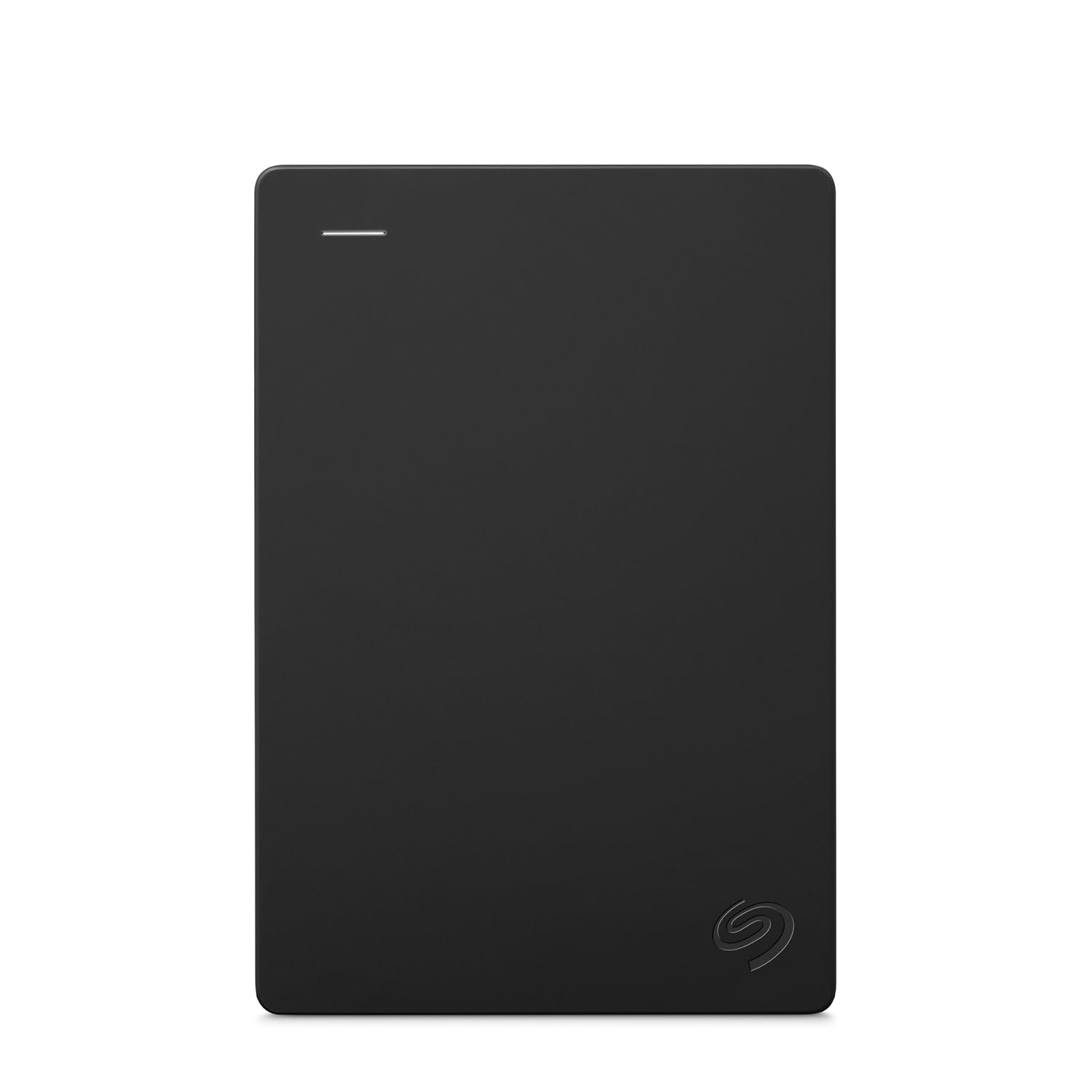
The drag-and-drop backup that works on Windows, Mac, PlayStation, and Xbox alike.
This is the one to reach for when your photos live across different machines, because Seagate designed it for maximum compatibility. The 2TB drive works with Windows and Mac computers, plus the PlayStation and Xbox consoles, and setup is a pure drag-and-drop — connect the included 18-inch USB 3.0 cable and the computer recognizes it automatically, no software required.
Transfer speeds run up to 130 megabytes per second, which suits photo backups perfectly, and the 1-Year Rescue Service is a meaningful add — if the drive ever fails, Seagate attempts to recover your data for you. Music producers and photographers both praise it in reviews: one MacBook Pro user stores plugins and samples without delay, and another offloads an entire iPhone photo and video library with no trouble.
The recurring theme in owner feedback is easy setup and solid build quality at a fair price, with the compact size called out again and again for travel. Owners mention that Mac users may need a quick one-minute reformat in Disk Utility, which is a minor step for cross-platform freedom.
Why it stands out: The rare 2TB drive that moves easily between a PC, a Mac, and a console.
The honest note: The 18-inch cable is short — you’ll want it near the port, not across the room.
Perfect for: Mixed households and anyone backing up photos from both a PC and a Mac.
Not ideal if: You need SSD-level speed for direct photo editing.
5. SanDisk 1TB Portable SSD

The pocket-sized SSD that edits photos straight off the drive without a hiccup.
This is the drive for photographers tired of copying files before they can work. As a solid-state drive (SSD, a drive with no spinning platters), it hits up to 800MB/s read speeds over USB-C, which means a 50MB RAW file opens in a blink — you can edit directly off the drive and skip the waiting game entirely.
It’s also genuinely tough for its size: up to two-meter drop protection means a fumble on a trail doesn’t end your shoot, and the rubber hook lets you clip it to a backpack or belt loop. Owners praise it as compact enough to be “smaller than a deck of cards,” with one using it to save phone pictures without needing a computer at all thanks to USB-C plug-and-play.
From a brand professional photographers trust for assignments, this SSD earns consistent praise for speed and durability. The trade-off is capacity — you get 1TB rather than the 2TB of the HDDs above, and you pay more per terabyte for that speed, so it’s a working drive for active shoots rather than a long-term archive.
The upside
- 800MB/s speed for instant photo editing
- Two-meter drop protection for outdoor shoots
- Smaller than a deck of cards
The givens
- 1TB holds less than the 2TB HDD options
- Short cable may need an adapter for some laptops
Reach for this if: Speed matters more than raw capacity and you edit on the go.
Look elsewhere if: You need one massive archive for years of untouched RAW files.
6. SanDisk 1TB Extreme Portable SSD

The field drive that shrugs off rain, dust, and a three-meter drop with your shots intact.
This is the premium choice when your photos are captured in the elements — on a shoreline, a dusty trail, or a crowded festival. The rugged rubberized shell carries IP65 water and dust resistance plus up to 3-meter drop protection, so a splash or a fumble is an inconvenience, not a data disaster.
Under that armor is serious speed: NVMe solid-state performance reaches up to 1050MB/s read and 1000MB/s write, so dumping a full camera SD card takes seconds and editing 4K video straight off the drive is smooth. The included password protection with 256-bit AES hardware encryption keeps private work locked, and the carabiner loop secures it to your pack.
Reviewers describe it as smaller than expected — it fits in a shirt pocket — and perfect for backing up camera SD cards in the field. It runs slightly warm during long transfers and needs a USB 3.1 or 3.2 Gen 2 port for full speed, but for photographers and videographers, the durability and pace are worth the premium tier.
Why it leads: The fastest, toughest drive here, built for real-world shoots.
The trade-off: At 1TB and premium pricing, it’s a working drive, not your entire archive.
Choose this when: Your photo backups happen outdoors and you want the fastest transfers possible.
Think twice if: You mostly shoot at a desk and don’t need the rugged protection premium.
7. Toshiba Canvio Basics 1TB Portable Hard Drive

The tidy 1TB travel drive that backs up photos without eating your budget.
For a first external drive or a light travel companion, this is the entry-level pick that keeps things simple. The matte, smudge-resistant polycarbonate shell holds 1TB of storage, and it’s plug-and-play — no software to install, just connect the USB 3.0 cable (which also works with USB 2.0) and start dragging photo folders over.
Customers note it as a “great little drive” used specifically for photos with no issues, praising its small size for travel and ease of use. It’s pre-formatted NTFS for Windows, so Mac users will need to reformat, and there’s no external AC power cord needed — it runs straight from your laptop’s USB port.
What wins people over is the simple value equation: a compact, sturdy drive that doesn’t get hot, fits in a pocket, and backs up files very well at a budget-friendly price. The reliability feedback is a bit mixed in the long run, which is the expected trade-off at this tier, so treat it as a solid starter or travel drive rather than your only permanent archive.
Best for: The budget-conscious traveler who needs a simple photo stash on the go.
Fair warning: Some units have reported early failures — keep a second copy of irreplaceable shots.
Pick it up for: An affordable, pocket-friendly way to back up a few thousand photos while traveling.
Pass if: You want one drive to hold your entire lifetime archive securely.
Understanding the Specs
Transfer Speed (MB/s and Gbps)
Speed decides how long a backup session actually takes. A mechanical HDD moves data around 130 megabytes per second, fine for overnight archiving but slow for editing. An SSD can hit 800 to 1050 megabytes per second, so a full memory card dumps in seconds and you can work directly off the drive. The Gbps figures you see (like 5Gbps for USB 3.2 Gen 1) are the connection’s ceiling, while MB/s is the real-world throughput your files experience.
Capacity (Terabytes)
This is how much of your life fits on the drive. A 1TB drive stores roughly tens of thousands of high-resolution JPEGs or a solid year of casual shooting. Stepping up to 2TB doubles that — enough for a few years of RAW files and home video — while 5TB suits serious archivists who never delete a frame. If your camera shoots 50MB RAW files, capacity disappears faster than you’d think, so buy more than your current need.
FAQ
How many photos can a 1TB external hard drive hold?
What is the difference between an HDD and an SSD for photo storage?
Will an external hard drive work with both my Windows PC and my Mac?
Is it safe to edit photos directly from an external drive?
How long does a portable external hard drive last?
Do I need a rugged drive with drop and water protection?
Is external storage good for backing up my phone photos?
What happens if my external hard drive fails?
Is a 2TB external hard drive enough for a serious photographer?
What cable and connection do I need for fast transfers?
Final Thoughts: The Verdict
For most people, the external hard drive for photos winner is the WD 2TB Elements because it balances generous 2TB capacity, plug-and-play ease, and a crowd-pleasing 4.7-star reputation — the cheapest path to a safe photo archive. If you demand speed to edit straight off the drive, grab the SanDisk 1TB Extreme SSD for 1050MB/s transfers in a rugged shell. And for the archivist with years of shots, the WD 5TB Elements is the one to reach for. Whichever you choose, keep a second copy of your irreplaceable images — a single drive is never a complete backup plan.
How We Picked
We do not accept paid placement. Every pick is matched to a real buyer and a real use-case; we do not hands-on test units.
Sources & Methodology
Specifications: manufacturer listings and product documentation. Review insights: verified customer reviews, as of July 2026. Pricing: not shown on this page (it changes often); check the current price via the retailer link.
As an Amazon Associate, WellFizz earns from qualifying purchases. This does not affect which products we feature.
Related Guides

Mo Maruf
I created WellFizz to bridge the gap between vague wellness advice and actionable solutions. My mission is simple: to decode the research and give you practical tools you can actually use.
Beyond the data, I am a passionate traveler. I believe that stepping away from the screen to explore new environments is essential for mental clarity and physical vitality.