Our readers keep the lights on and my smoothie glass nicely filled. As an Amazon Associate, I earn from qualifying purchases.
Specs are compiled from manufacturer listings and verified buyer reviews and can change over time — please confirm the key details on the product page before buying.
You want your car to sound like it means business — a deep, throaty rumble that turns heads without rattling your teeth on the highway. But slapping on any exhaust part won’t get you there. The wrong piece can leave you with an annoying drone, a raspy “fart can” tone, or worse, a pipe that rusts out in a single winter. This guide focuses on the real components that reshape your exhaust note from the inside out: mufflers, resonators, and performance tips built to deliver a deeper, richer sound without the daily driving headache. You will find the exact kind of part, spec for spec, that makes a real difference between a noise and a note.
I’m Mohammad Maruf — the founder and writer behind WellFizz. This guide is built by comparing the manufacturers’ published specifications and the patterns across verified customer reviews, so you get each pick’s real strengths and trade-offs instead of marketing spin.
Whether you drive a daily commuter, a weekend muscle car, or a turbo-diesel truck, the right hardware transforms how your ride sounds. Here is my no-hype breakdown of the exhaust tip for deep sound that actually deliver on their promises of a bigger, bolder voice for your car.
Our Picks at a Glance
How To Choose The Best Exhaust Tip For Deep Sound
Not every exhaust accessory changes your car’s voice. Many tips are purely cosmetic — they change the look of the tailpipe but leave the sound untouched. To actually get a deeper, rumblier tone, you need a component that alters the exhaust flow internally. Here is what separates a sound-modifying part from a shiny ornament.
Understand the Part: Tip vs. Resonator vs. Muffler
An exhaust tip is the very end piece visible under the bumper. A purely cosmetic tip changes sound very little. To truly deepen the note, you need a muffler or resonator with a straight-through internal design. These parts use perforated tubes and sound-absorbing material to cancel higher-frequency rasp while letting the low, deep frequencies through. The labels in this guide cover all three types, but each is chosen because its internal construction is built to alter sound, not just appearance.
Match the Inlet Size
Your existing exhaust pipe has a specific outer diameter (OD). A muffler or tip must match that measurement to fit properly. The most common sizes are 2 inches, 2.5 inches, and 3 inches. Measure your tailpipe’s outside diameter with a caliper or a piece of string before you buy. A mismatched size means a leaky joint, a poor weld, or a part that simply slides off.
Straight-Through Design Is the Key
Traditional chambered mufflers create backpressure by forcing exhaust through a maze of baffles. This often results in a louder but raspier tone. Straight-through mufflers, on the other hand, use a perforated core surrounded by sound-dampening material (like fiberglass or steel wool). This design reduces high-frequency noise while allowing the low, deep frequencies to pass cleanly. It is the fundamental principle behind the deepest tones on this list.
Quick Comparison
| Model | Best For | Inlet Size | Outlet Size | Length | Amazon |
|---|---|---|---|---|---|
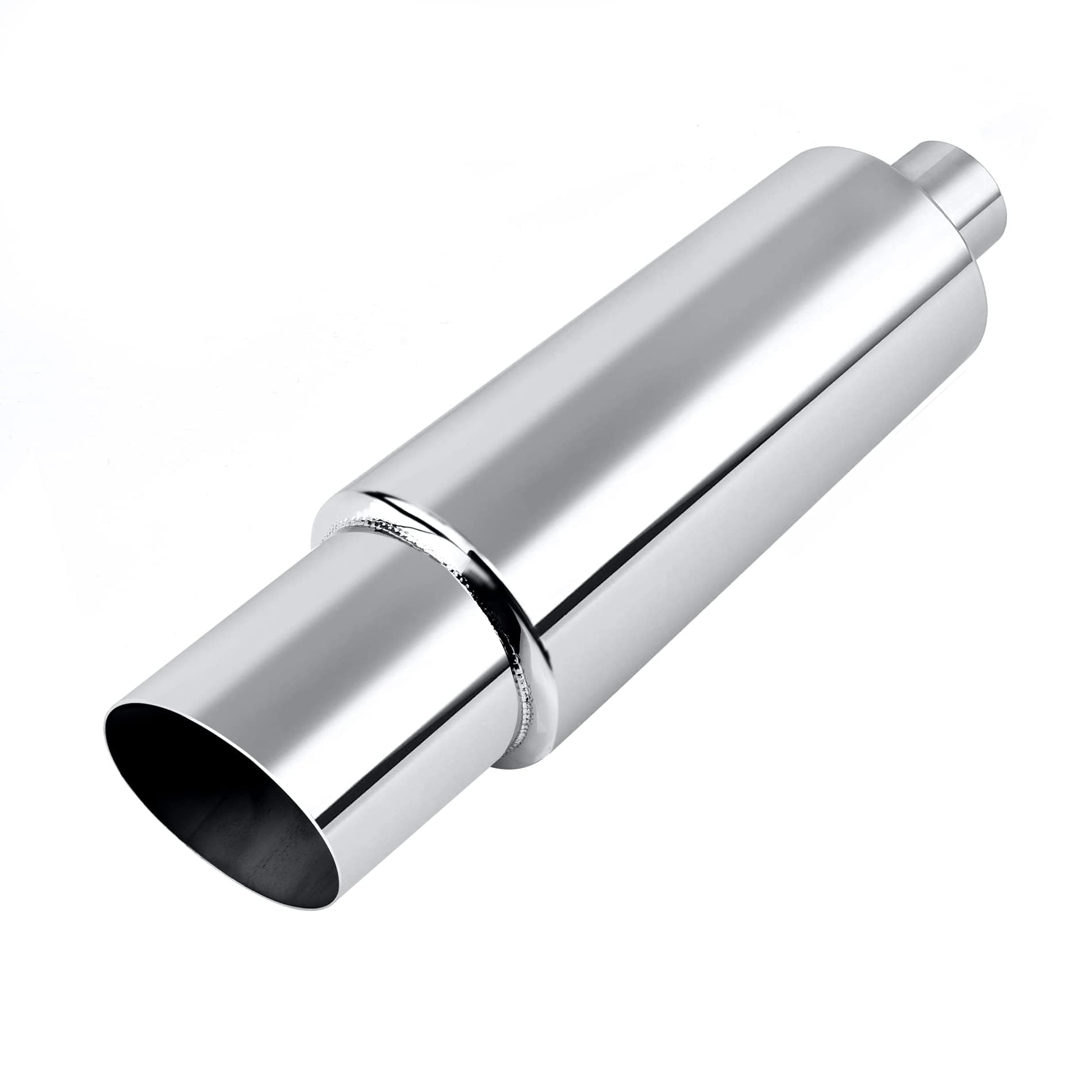
| EVIL ENERGY 2″ Muffler★ Best Overall | 4-Cylinder Daily Drivers | 2 inches | 3 inches | 14.6 inches | Amazon |
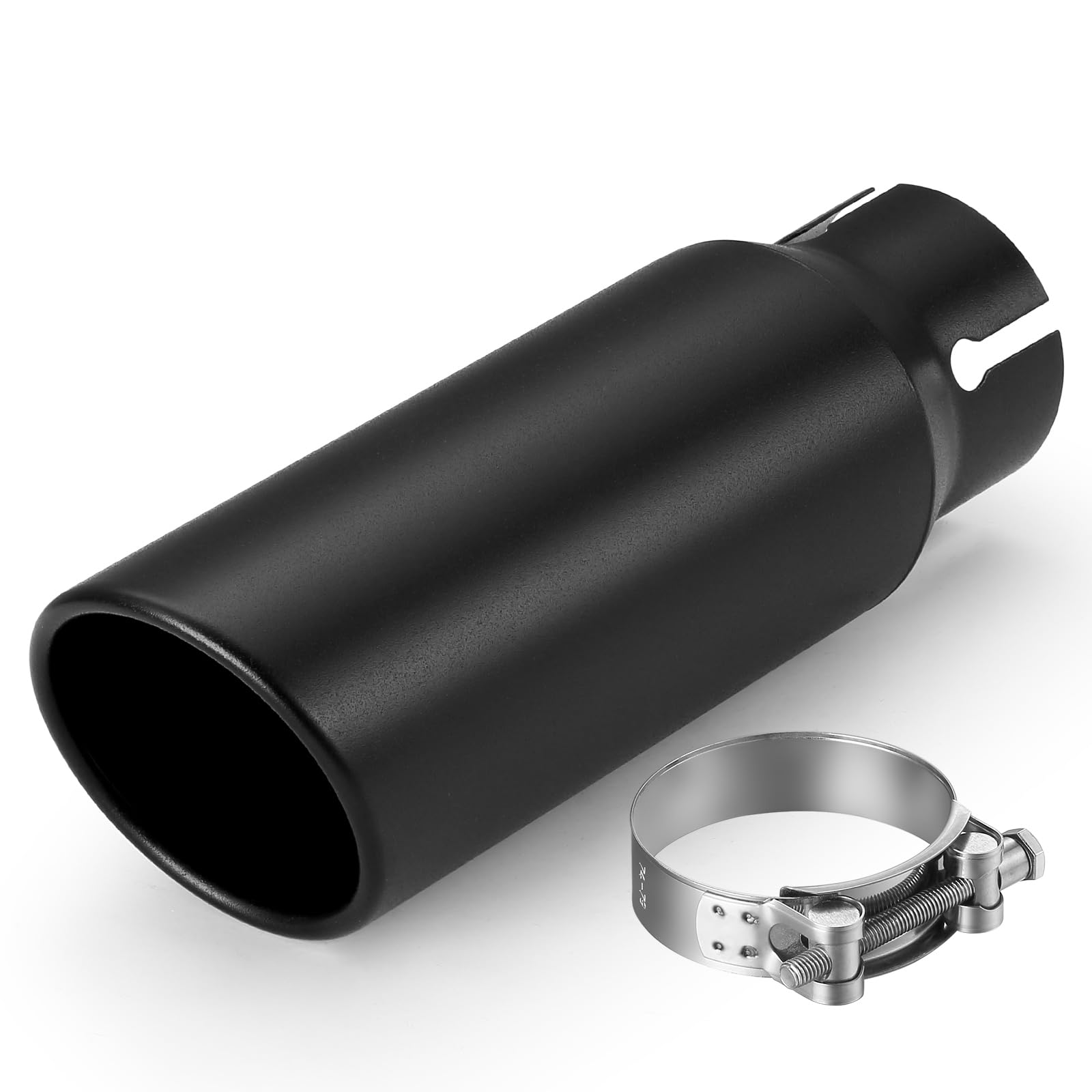
| WABUILTOWN 3″ TipBest Value | Quick Clamp-On Upgrade | 3 inches | 4 inches | 12 inches | Amazon |
| LCGP 3″ Resonator | Drone Reduction | 3 inches | 3 inches | 12 inches | Amazon |
| TECTRUC 3″ Muffler | Trucks & Big Engines | 3 inches | 3 inches | 20 inches | Amazon |
| Richeer 2.5″ Dual Tips | Classic Muscle & Dual Exhaust | 2.5 inches | 4 inches | 18 inches | Amazon |
| TECTRUC 2.5″ Twin Pack | Taming Open Headers / Diesels | 2.5 inches | 2.5 inches | 20 inches | Amazon |
In‑Depth Reviews
1. EVIL ENERGY 2″ Exhaust Muffler
Our pick — over 4.5★ from 5,500+ verified ratings; the strongest balance of quality and price.
The crowd-favorite muffler that gives 4-cylinder cars a voice without blowing your eardrums.
This is the pick that owners of sedans and daily drivers rave about most. The straight-through design uses a dual-layer stainless steel wall to absorb sound vibrations and smooth out the exhaust note. The result is a deep, throaty tone that is louder under acceleration but stays civilized at a cruise — exactly what someone commuting in a compact car wants. With a 2-inch inlet and a 3-inch outlet, the step-up in diameter is a 33% increase over the inlet, which is a big part of how it reshapes the sound.
What wins people over here is the sound character itself — buyers call it a “throaty growl” and a “deep rumble,” both at idle and as the revs climb. The construction feels solid for the price, and while installation requires welding or a heavy-duty clamp (professional install is recommended), owners consistently describe it as a straightforward job for any muffler shop. The only practical note: at 14.6 inches long, it is a compact unit that fits easily under most cars without hanging too low.
What Owners Rave About
- Deep, throaty sound that is louder on acceleration but quiet at low RPMs — no obnoxious drone.
- Stainless steel dual-layer construction feels sturdy and resists corrosion well.
- Universal fit works on a wide range of 4-cylinder and small V6 cars.
What to Consider
- Professional installation is highly recommended; no instructions are included in the box.
- At 1.2 kg (about 2.6 lbs), it is a bit heavier than a purely cosmetic tip.
Reach for this if: you drive a 4-cylinder daily and want a noticeable, deeper tone without making the cabin unbearable.
Look elsewhere if: your exhaust pipe is larger than 2 inches in diameter — this unit won’t fit without adapters.
2. WABUILTOWN Exhaust Tip 3″ Inlet 4″ Outlet
A clamp-on tip that deepens the note while upgrading the looks in five minutes.
This is for the person who wants a quick cosmetic and sound upgrade without cutting or welding anything. It slides over any 3-inch outer diameter tailpipe and tightens with a single clamp — no drilling required. The 3-inch inlet opens into a 4-inch outlet, and that sudden step-up in diameter is what helps filter out harsh frequencies and push the tone deeper. The black powder coat finish resists peeling and scratches, so it stays looking sharp after months of road grime and weather.
The trade-off is honesty. While the listing promises better power response, buyers flatly report that the change is a cosmetic win — “looks fantastic and fills space perfectly” — but the sound difference is subtle. It rounds off some of the rasp but won’t transform a stock exhaust into a roar. For a no-weld install under, that is a fair deal. The rolled edge prevents cuts during installation, and the built-in drainage hole stops rainwater from pooling inside and rusting the pipe out from within.
Honest Verdict: This tip delivers a modest, cleaner tone and a massive visual upgrade. If you want a deeper sound that you can actually hear, pair it with a resonator or muffler upgrade on the same exhaust line. The overall fit and finish are excellent for the price point.
Best for: truck and SUV owners who want a quick aesthetic and mild sound improvement without a trip to the shop.
Better options exist if: you need a dramatic sound transformation — look at the full mufflers further down this list.
3. LCGP 3″ Inlet Universal Resonator

The resonator that kills the drone but keeps the deep, clean burble alive.
If you have removed a catalytic converter or muffler and ended up with an unbearable cabin drone at highway speeds, this is the part you need. The LCGP is a 3-inch straight-through resonator that sits in the middle of the exhaust line, designed specifically to cancel out the resonant frequencies that cause that headache-inducing hum. Buyers report it cuts drone by about 50% while only dropping the overall volume by 15-20%. That is a trade-off most people happily make to be able to hear their music or hold a conversation on a road trip.
Unlike a full muffler, this resonator keeps the exhaust flow wide open. It does not muffle the sound as much as it polishes it. Buyers describe the result as deeper and cleaner, with popping burbles on deceleration and no more “fart can” raspiness. The build quality matches the performance — real stainless steel with clean TIG welds that weld into place easily. At 12 inches long, it is compact enough to fit into most mid-pipe sections without dropping ground clearance.
What Wins Owners Over
- Excellent drone reduction — cancels the annoying resonant hum without killing the exhaust note.
- High-quality stainless steel with nice TIG welds that hold up over time.
- Real value compared to name-brand resonators that cost three times as much.
The Honest Caveat
- Welding is required — not a bolt-on part for beginners.
- On some setups, you may still get drone on the highway, especially with 3-inch exhaust systems.
Grab this if: your current exhaust is too loud in the cabin and you want a cleaner, deeper note without spending on a full cat-back system.
Think twice if: you do not have access to a welder — this requires professional installation.
4. TECTRUC 3″ Universal Exhaust Muffler

A massive straight-through muffler that gives V8 trucks a bold, Flowmaster-style rumble.
This is the muffler for big cubes. At 20 inches overall length with a 3-inch inlet and a 3-inch outlet, it is built to handle the volume of a full-size V8 without choking the engine. The straight-through internal core with a 100% welded 409 stainless steel body resists the extreme heat of a truck exhaust while delivering a deep, low rumble at idle. Owners of 5.0 Coyote F-150s and 5.7L Chevrolet 350s report it gives a “comparable growl to Flowmaster,” but with a quieter idle that does not annoy the neighbors when you start it at 6 a.m.
The build quality is the highlight here. The 409 stainless steel is not as shiny as 304, but it handles high temperatures and road salt better — an important detail if you live where winters involve salt trucks. The main trade-off for daily drivers: while it is quiet at idle and normal acceleration, it wakes up significantly under hard throttle. If you want a muffler that stays mellow all the time, this is not it. But if you want the dual personality of quiet cruiser and roaring beast, it delivers.
Owner’s Verdict: “Super affordable and gave the truck a much better, deeper sound.” The finish and welds are solid. At 4.32 kg (9.5 lbs), it is a heavy-duty piece that feels substantial in hand — not a thin stamped metal can.
Best suited for: full-size trucks and SUVs with V8 engines that want an aggressive, deep tone on command without droning at cruising speed.
Not ideal for: cars with 4-cylinder engines or anyone who wants a subtle, barely-there exhaust note.
5. Richeer 2.5″ Inlet 4″ Outlet 18″ Dual Exhaust Tips

Polished stainless beauties that deepen the exhaust note while giving your rear end a show-car look.
This is a set of two tips, each with a 2.5-inch inlet and a huge 4-inch outlet, running 18 inches long. That jump from 2.5 to 4 inches is significant: it is a 60% increase in diameter at the exit, which is what creates the deeper, more resonant sound character as the exhaust gases expand and cool. Buyers who paired these with a Flowmaster 40 muffler on a Dodge Ram 2500 report an “awesome deep sound” that transformed the truck’s voice. On a Lexus SC400, owners describe the tips as “pretty damn solid” with excellent welds and a perfect fit.
The finish is the standout feature here. They come mirror-polished, which means they look stunning on a clean car but will show fingerprints and road grime quickly. Being weld-on only, you will need a shop or some welding skill to attach them permanently. A few owners noted a tracking issue during shipping, but the packaging consistently arrives intact with no damage to the polish. Overall, this is a premium visual and auditory upgrade for anyone who wants their exhaust tips to look as good as the system sounds.
What Shines
- The 2.5-to-4 inch step-up produces a noticeably deeper, more resonant tone.
- Mirror-polished stainless steel finish provides a high-end, long-lasting appearance.
- 18-inch overall length fills larger bumper cutouts perfectly for a balanced look.
Keep in Mind
- Weld-on installation only — not a quick clamp-on job.
- Non-rolled edge is preferred by some to prevent moisture buildup, but rolled edges on these could trap water over time.
Ideal for: classic muscle cars and dual-exhaust trucks where visual presentation matters as much as the sound.
Skip if: you prefer a blacked-out stealth look or cannot weld these on yourself.
6. TECTRUC 2.5″ Inlet/Outlet Mufflers (2-Pack)

A twin muffler set that turns open headers into a tame, deep-toned exhaust overnight.
This is the ultimate budget-friendly solution for anyone running open headers or a straight-pipe setup who wants to reclaim some sanity. At 20 inches long with a 2.5-inch inlet and outlet, each muffler is designed to absorb the harsh, high-frequency noise of an open exhaust while leaving a deep, throaty rumble. Owners of 5.9L Cummins diesel trucks say it “significantly quieted” the cab while still sounding aggressive from outside — the perfect compromise for towing long distances without ear fatigue.
The key spec here is the straight-through design which maintains exhaust flow velocity. Unlike a chambered muffler that builds backpressure, a straight-through design lets the turbo spool freely while the internal packing deadens the sharp edges. A buyer with a ’22 Ford diesel on a 5-inch exhaust reported that it eliminated the drone that kicked in around 1600 RPM, letting them hear the turbo whistle more clearly. For the price of a single can from a big brand, you get two mufflers that cover both banks of a V8 or a dual-exit setup.
Bottom Line: Excellent build quality considering the price point. The welded stainless steel structure holds up at high temperatures, and the 6.6 lb total weight per muffler suggests real material density, not thin metal. A hidden gem for diesel and muscle car enthusiasts on a tight budget.
Best for: owners of diesel trucks or cars with open headers who need to quiet the interior without sacrificing the external deep rumble.
Worth noting: at 2.5 inches in and out, they are not suited for larger 3-inch systems unless you use a reducer.
Understanding the Specs
Inlet vs. Outlet Size
These two numbers tell you the diameter of the connection points. The inlet must match your vehicle’s existing tailpipe outer diameter (OD) for a leak-free fit. The outlet size influences the sound: a wider outlet than the inlet (like 2 inches in and 3 inches out) allows exhaust gases to expand and cool, which deepens the note and reduces raspiness. A matched inlet and outlet (both 3 inches, for example) provides maximum flow and power but may sound louder and less refined.
Overall Length
This is the total length of the muffler or tip from one end to the other. A longer body (18-20 inches) provides more internal volume for sound absorption, which typically results in a deeper, less drone-prone tone. A shorter body (12-14 inches) is more compact for tight spaces but may not tame resonant frequencies as effectively. The length also affects the visual extension beyond the rear bumper — longer tips fill out larger cutouts but can hang too low on lowered cars.
Straight-Through Design
This internal construction is the single most important spec for sound quality. A simple perforated tube runs straight through the muffler, surrounded by sound-absorbing material (steel wool or fiberglass). Exhaust flows freely with minimal backpressure, which helps maintain horsepower. The packing material cancels high-frequency sound waves while letting low frequencies pass, creating the deep, mellow rumble that owners want. By contrast, chambered mufflers use walls and baffles that create backpressure and often sound more metallic or “tinny.”
Stainless Steel Grade
The material impacts longevity, especially in rust-prone climates. 409 stainless steel is a ferritic grade commonly used in OEM exhaust systems; it handles high heat well and resists corrosion better than aluminized steel but may show surface discoloration over time. 304 stainless steel is austenitic, highly corrosion-resistant, and holds a mirror polish, but is more expensive and can crack under extreme thermal cycling. Most budget-to-mid-range mufflers on this list use 409 or a generic “stainless steel,” which is adequate for most drivers.
FAQ
Will a bolt-on exhaust tip really make my car sound deeper?
What is the difference between a resonator and a muffler?
How do I know what exhaust size to buy?
Will a deeper exhaust hurt my fuel economy?
Can I install a weld-on muffler myself?
Why does my exhaust drone at highway speeds?
Will a deeper exhaust pass emissions testing?
How long do these stainless steel mufflers typically last?
Is there a difference between mufflers for gas and diesel engines?
What does “straight-through design” mean in plain terms?
Final Thoughts: The Verdict
For most buyers, the exhaust tip for deep sound winner is the EVIL ENERGY 2″ Exhaust Muffler because it delivers a proven, deep tone that transforms the everyday driving experience of any 4-cylinder or small V6 while staying affordable. If you want drone-free cruising with a clean burble, the LCGP 3″ Resonator is the single best piece you can add to an existing loud exhaust. And for truck owners who want a loud-on-demand rumble that stays civilized at idle, the TECTRUC 3″ Muffler delivers a Flowmaster-style growl at a fraction of the price.
How We Picked
We do not accept paid placement. Every pick is matched to a real buyer and a real use-case; we do not hands-on test units.
Sources & Methodology
Specifications: manufacturer listings and product documentation. Review insights: verified customer reviews, as of July 2026. Pricing: not shown on this page (it changes often); check the current price via the retailer link.
As an Amazon Associate, WellFizz earns from qualifying purchases. This does not affect which products we feature.
Related Guides

Mo Maruf
I created WellFizz to bridge the gap between vague wellness advice and actionable solutions. My mission is simple: to decode the research and give you practical tools you can actually use.
Beyond the data, I am a passionate traveler. I believe that stepping away from the screen to explore new environments is essential for mental clarity and physical vitality.