Our readers keep the lights on and my smoothie glass nicely filled. As an Amazon Associate, I earn from qualifying purchases.
Specs are compiled from manufacturer listings and verified buyer reviews and can change over time — please confirm the key details on the product page before buying.
Your tracker should be the easy part of your fitness routine, not another battery anxiety device. The real work is finding one that fits your life — a watch that lasts weeks, a band you can swim in, or a ring you forget you are wearing. That means sorting through battery specs, GPS claims, and sensor lists to find your match.
I’m Mohammad Maruf — the founder and writer behind WellFizz. This guide is built by comparing the manufacturers’ published specifications and the patterns across verified customer reviews, so you get each pick’s real strengths and trade-offs instead of marketing spin.
You will find the best exercise tracker for your specific workout style here, if you need GPS accuracy for marathon training or a simple way to log your daily steps without a subscription fee.
Our Picks at a Glance

How To Choose The Best Exercise Tracker
The perfect tracker for you depends on one thing: what you do most. A runner needs built-in GPS and recovery insights, while a swimmer needs a high water-resistance rating (like 5 ATM, which means it is safe down to 50 meters). A gym-goer might just want reliable heart rate data and a battery that lasts through the week. Here is what to look for in the options below.
Battery Life
This is the spec that determines whether you actually wear the thing. A tracker that needs charging every day becomes a chore. Look for at least 6 to 11 days for a watch, or up to 30 days for a hybrid model. The best pick for consistent tracking is one you never have to take off.
GPS vs. Connected GPS
Built-in GPS means the tracker records your route and pace without needing your phone nearby, which is essential for outdoor runners and cyclists. Connected GPS uses your phone’s antenna to do the same job, saving battery but requiring you to carry your phone. If you run phone-free, choose a model with its own GPS chip.
Display Type and Readability
An AMOLED display offers rich colors and deep blacks, making it easy to glance at in low light. For direct sunlight, a high-nit brightness rating (like 1500 nits means very high brightness for sunny days) or a transflective display (a screen type that reflects outdoor light so it gets brighter in the sun) keeps your stats readable. If you prefer a classic analog look that hides the tech, a hybrid smartwatch with physical hands delivers that.
Health Monitoring Depth
Beyond steps and calories, modern trackers offer heart rate, blood oxygen (SpO2, or the percentage of oxygen in your blood), sleep stage analysis, stress tracking, and even ECG readings (a medical-grade heart rhythm test). Decide how much data you actually want to act on. More sensors usually mean a higher price but also more actionable insights like recovery time and HRV status (heart rate variability, a measure of how your nervous system recovers).
Quick Comparison
| Model | Best For | Battery Life | Key Sensor | GPS Type | Amazon |
|---|---|---|---|---|---|
| Garmin Forerunner 165★ Best Overall | Serious runners | 11 days | Wrist-based heart rate | Built-in | Amazon |
| Hingso Smart Watch for WomenBest Value | Budget-friendly daily use | 14 days | Optical HR / SpO2 | Connected | Amazon |
| Xiaomi Mi Smart Band 10Longest Runner | Battery life champions | 21 days | Heart rate / SpO2 | Connected | Amazon |
| BIEMHA Smart Ring | Discreet health tracking | 5 days | 4.0 HR sensor | No GPS | Amazon |
| Fitbit Inspire 3 | Simple health & sleep tracking | 10 days | 24/7 HR / SpO2 | Connected | Amazon |
| prxxhri Smart Ring | Comfortable all-day wear | 3-5 days | Sleep / HR tracker | No GPS | Amazon |
| Fitbit Versa 4 | Full-featured smart fitness | 6 days | 24/7 HR / SpO2 | Built-in | Amazon |
| Garmin vívoactive 5 | Balanced health & GPS | 11 days | Body Battery / HRV | Built-in | Amazon |
| Withings ScanWatch 2 | Classic style with medical-grade health | 30 days | ECG / SpO2 | Connected | Amazon |
In‑Depth Reviews
1. Garmin Forerunner 165
Our pick — over 4.5★ from 4,000+ verified ratings; the strongest balance of quality and price.
The runner’s gold standard that doubles as a surprisingly capable everyday health watch.
The Forerunner 165 delivers accurate pace and distance indoors or out thanks to its built-in GPS (a satellite receiver that works without your phone). It also has a bright AMOLED touchscreen (a vivid, high-contrast display type) that stays readable in direct sunlight, plus traditional button controls for gloved or sweaty fingers. Reviewers consistently praise the spot-on heart rate accuracy, though a few note the silicone band can irritate skin — an easy fix with an aftermarket nylon strap.
The battery lasts up to 11 days in smartwatch mode, but buyers report that with notifications off and no always-on display, you get a solid 13-day battery. That is 13 days compared to the 11 days of the Garmin vívoactive 5. You also get personalized daily suggested workouts that adapt to your performance, plus a morning report summing your sleep and HRV status (heart rate variability, a sign of recovery readiness). However, there is no training load or training status feature for serious athletes, and the recovery time estimates can feel extreme.
The Runner’s Toolkit
- Built-in GPS tracks pace and distance without your phone
- Personalized daily suggested workouts adapt to you
- Bright AMOLED display with button controls
A Few Corners Cut
- No training load or training status feature
- Silicone band can irritate sensitive skin for some
Best for: Runners and fitness-minded users who want GPS accuracy, deep training metrics, and a battery that lasts a week or more without taking it off.
Think twice if: You need a full smartwatch experience with music storage or contactless payments — this is a pure training tool first.
2. Hingso Smart Watch for Women
A feature-packed smartwatch that costs less than most basic fitness bands.
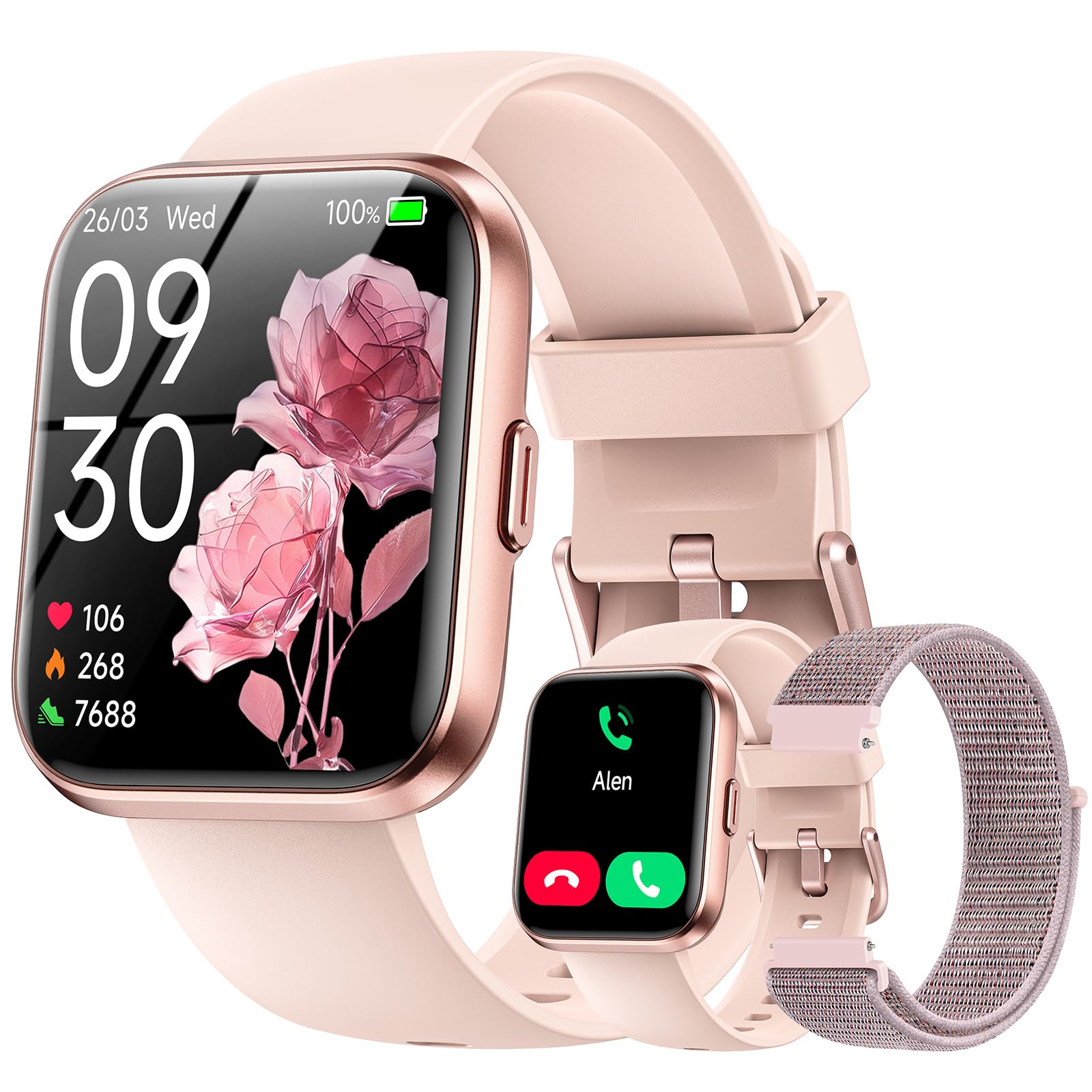
This watch gives you a 1.85-inch HD touchscreen and Amazon Alexa built in, letting you make Bluetooth calls and set reminders from your wrist. It covers 120+ sport modes, from running to yoga, recording steps, calories, and distance through the phone app. The 3ATM water resistance (safe for splashes and shallow swimming) means you can wear it in the pool.
The battery lasts about 6 days without music or alarms, according to reviewers, and fast charging tops it up quickly. The high-performance optical sensor tracks heart rate, blood oxygen (SpO2), stress, and sleep. But the band feels a bit plasticky, and the buckle tongue can be a weak point over time. Step counting is generally accurate, though it sometimes fails to stop logging after an activity ends. The Very Fit app works, but custom watch faces cannot display heart rate or steps without scrolling.
Packed With Features
- Alexa voice assistant on your wrist
- 120+ sport modes and 3ATM water resistance
- Fast-charging 350mAh battery lasts about 6 days (without music or alarms)
Build Trade-offs
- Band and buckle feel less premium than pricier models
- Activity auto-logging can glitch at the end
Who it fits: Budget-conscious shoppers who want a big screen, Alexa, and long battery life without spending over a hundred dollars.
Not for you if: You need precise GPS tracking for outdoor runs — this watch relies on connected GPS from your phone.
3. Xiaomi Mi Smart Band 10 (2025) Ceramic Edition
A premium-feeling fitness band that leaves your charger in the drawer for three weeks.
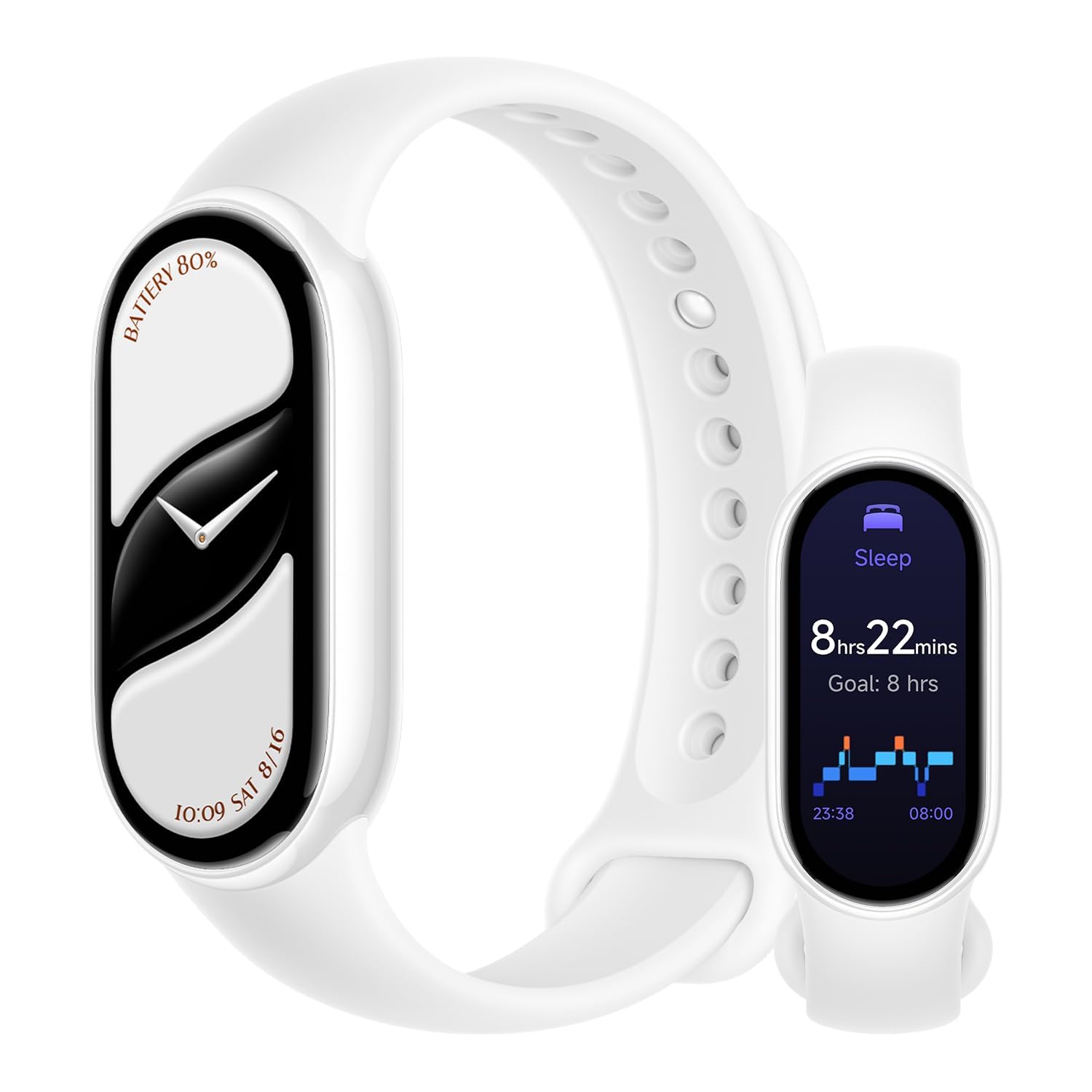
You charge this band once and forget about it for 21 days — a full 1.9x gap over the Garmin Forerunner 165. An hour of fast charging brings it back to full. The 1.72-inch AMOLED display pushes 1500 nits of brightness (very high brightness for sunny-day visibility), and owners mention that makes every message readable even in direct sunlight. The new high-precision electronic compass tracks swimming direction for pool sessions.
The Ceramic Edition adds a premium feel that standard plastic bands lack. It is heavier, but owners describe that as a quality heft. The HyperOS interface is smooth. However, the ceramic body adds noticeable weight. The app ecosystem is Xiaomi’s own, so it does not integrate with Apple Health or Google Fit as smoothly. A few users note fitness tracking is accurate, but you will not get the advanced recovery metrics or training plans that Garmin provides.
Battery Benchmark: Three weeks is the real deal — most customers note charging every 18-21 days with normal use, making this the undisputed champion for those who hate carrying a charger.
The Trade-off: The ceramic body adds weight and the app ecosystem is Xiaomi-locked, so skip it if deep third-party integration is essential.
4. BIEMHA Smart Ring
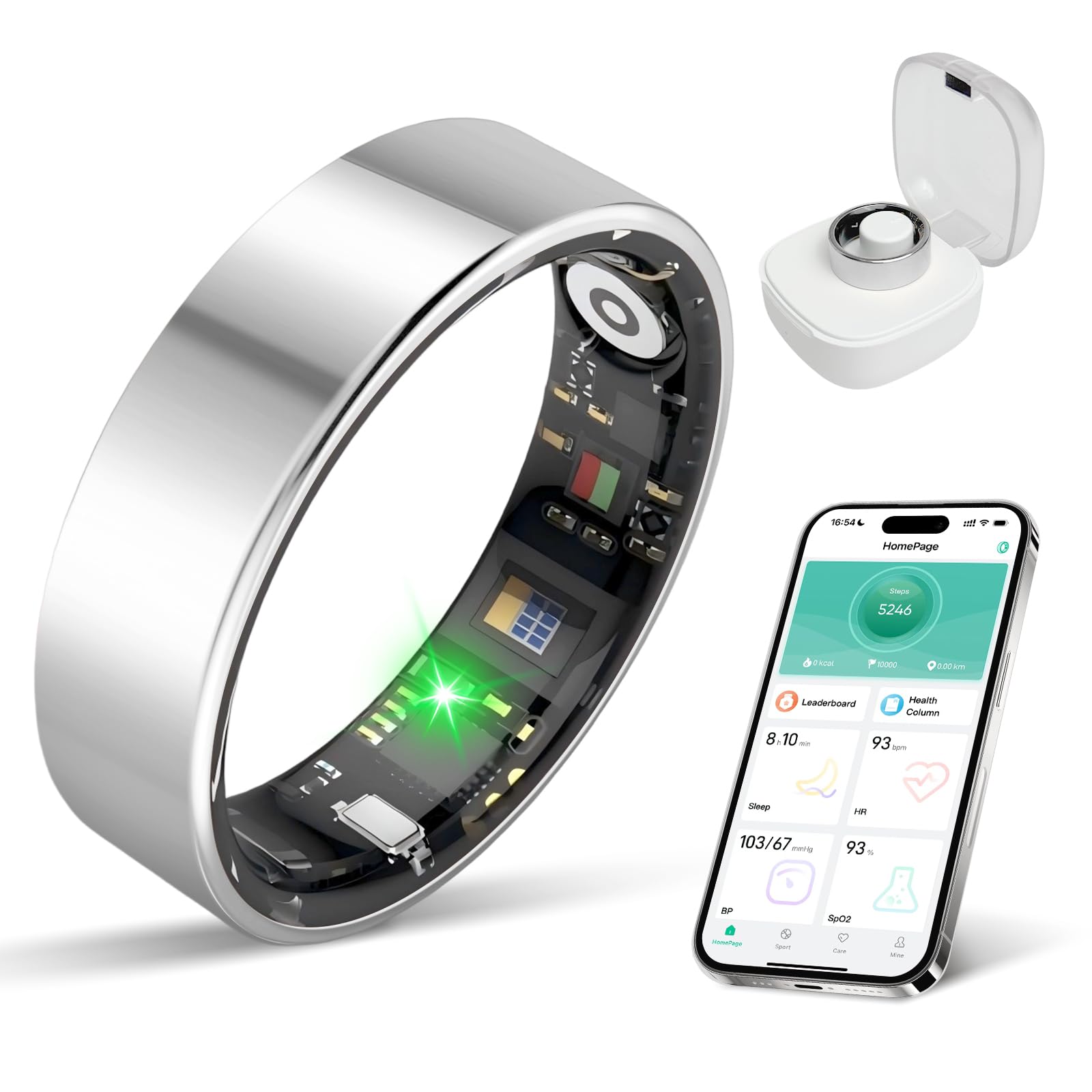
A sleek, screenless ring that tracks your health without looking like a gadget.
If you dislike wearing a watch but still want accurate sleep and activity tracking, this ring uses a 4.0 HR sensor (a small heart rate sensor) to measure your pulse every 30 minutes. It tracks sleep stages, daily steps, calories, and exercise. There is no display — just a sleek silver ring that blends in like a normal piece of jewelry. Owners consistently say they forget they are wearing it.
The battery delivers 2-3 days of continuous monitoring, and the included smart charging case extends total usage past 5 days. It is IP68 waterproof (safe for submersion beyond 1 meter), so showering and swimming are fine. There is no app subscription. The catch: it has no GPS, so you cannot track outdoor routes without your phone. The screenless design means you must check the app for stats. A few buyers recommend carefully measuring your finger against the size chart before ordering.
Discreet Health Monitor: Perfect for sleep tracking or anyone who works in an environment where watches are impractical — the ring collects data silently all day and all night.
Missing Feature: No on-device feedback means you have to pull out your phone to see any metric, and there is no GPS for route mapping.
5. Fitbit Inspire 3
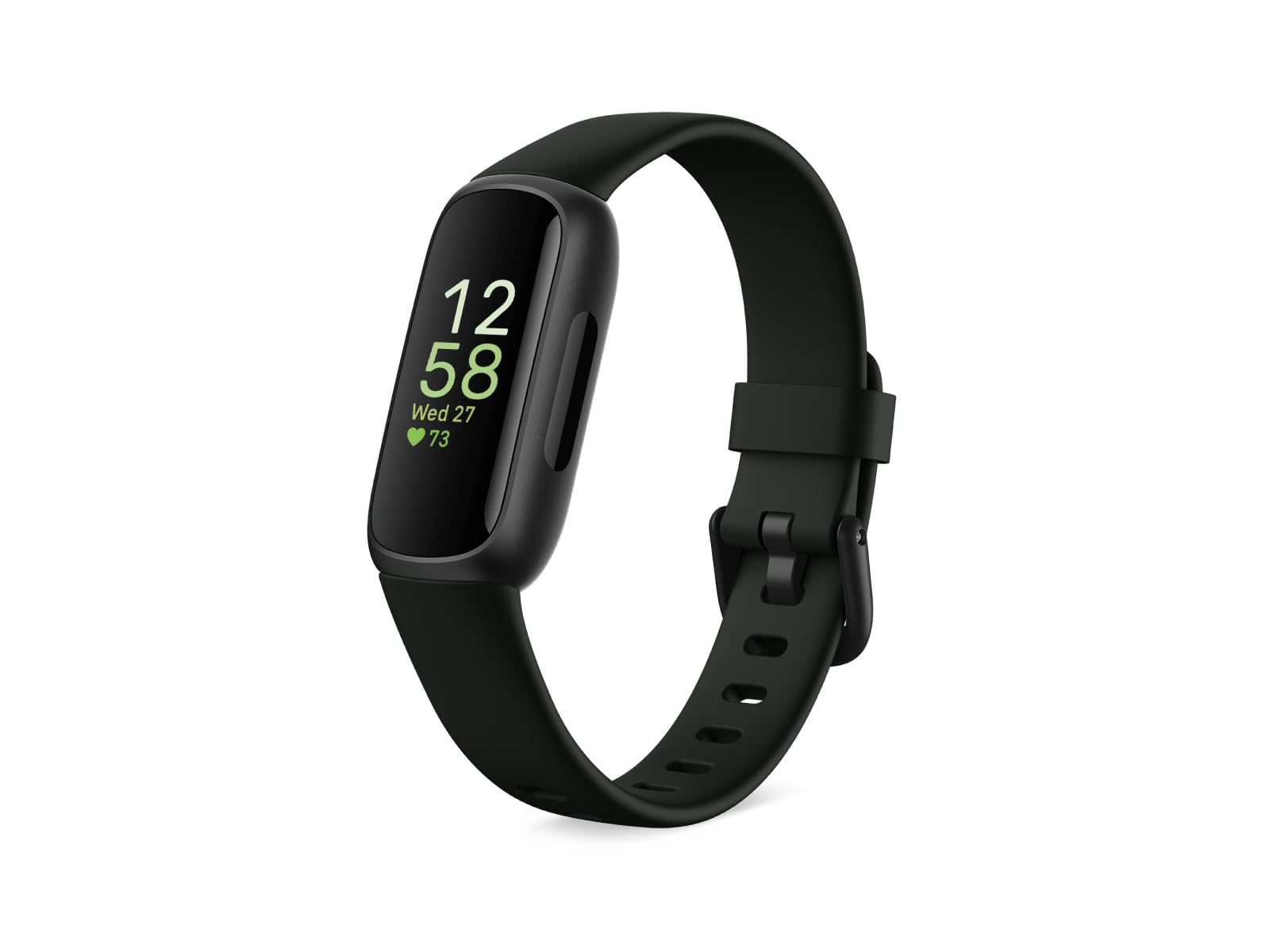
The simplest, most approachable tracker for anyone starting their fitness journey.
The Inspire 3 focuses on step tracking, heart rate, sleep, and stress without smartwatch complexity. It delivers a Daily Readiness Score, Active Zone Minutes (time spent in heart rate zones that improve fitness), and automatic exercise tracking across 40+ exercise modes. It comes with a 3-month Google Health Premium membership for personalized coaching. The battery lasts a solid 10 days, and reviewers point out charging only 2-3 times per month with the always-on display turned off. It is lightweight and comfortable for small wrists.
The sleep tracking provides a detailed Sleep Score each morning. The Stress Management Score and guided breathing sessions are useful for winding down. However, the proprietary charging cable is a long-term concern if you lose it, and the small strap hinge pins can fracture after several months. A few units have sync issues with phones, and while step tracking is accurate, sleep tracking can be buggy sometimes.
Entry Point: If you just want to know your steps, heart rate, and sleep quality without any extra features you will never use, this is the pick.
Heads Up: The band attachment pins are a known weak point, and the proprietary charger is not replaceable with a standard USB cable.
6. prxxhri Smart Ring
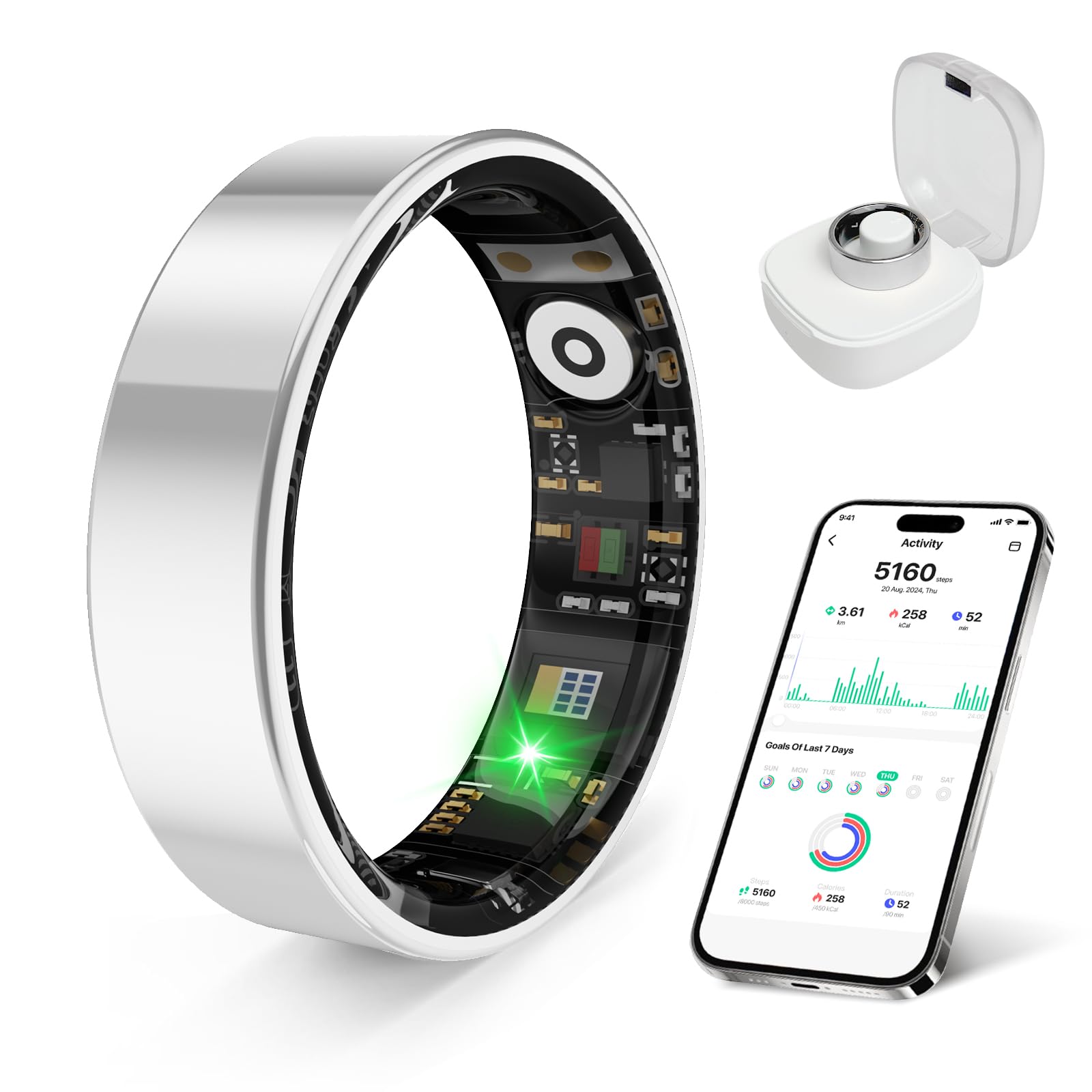
An ultra-light ring that prioritizes comfort and sleep data over screen time.
This ring is for people who hate wearing anything on their wrist. It weighs almost nothing and tracks sleep quality, daily activity, and heart rate without any screen. The charging case extends total usage past 20 days. The sleep tracking is the most-praised feature — owners say it provides precise data about your sleep cycle to help you tune rest. The step and calorie tracking is accurate for daily activities, and it is IP68 waterproof, so you do not need to baby it. The app connects smoothly with iOS and Android, and there is no monthly subscription.
The ring has no display, so you cannot check stats at a glance. It also has no GPS, so it cannot map your outdoor runs. The 3-5 day battery means you will use the charging case every few days, and you need to flip the ring over to keep the sensors oriented against your finger pad.
Sleep-First Wearable: If your main goal is understanding your sleep quality and you dislike watches, this ring is the most comfortable way to get nightly data.
Activity Limits: No GPS and no on-device stats mean it is great for daily wellness but not ideal for serious training or outdoor route mapping.
7. Fitbit Versa 4

A full-featured smartwatch that balances daily wearability with serious workout tracking.
The Versa 4 has built-in GPS, workout intensity mapping, and a Daily Readiness Score that tells you when to push and when to rest. It also handles on-wrist Bluetooth calls, text notifications, Amazon Alexa, Google Wallet for contactless payments, and Google Maps navigation. The battery lasts a solid 6 days, which owners say beats the Apple Watch by a wide margin — you charge it a couple of times a week. The fit is comfortable, with both small and large bands in the box for wrists from 5.1 to 8.6 inches. Sleep and swim tracking are excellent, and the health dashboard gives you SpO2, heart rate variability, and menstrual health tracking.
However, the GPS performance is the biggest frustration. For runners, the first mile of a run is inaccurate about half the time, and some owners found pace data was consistently off. While step tracking is praised, reliability is mixed — some units sync perfectly for years, others stop working completely.
Smartwatch-First: Ideal for those who want a stylish daily smartwatch with Google integration, contactless payments, and good general health tracking.
Not for GPS Purists: The unreliable GPS during runs makes it a poor choice for serious outdoor runners who need accurate pace and distance data.
8. Garmin vívoactive 5

A health-first smartwatch that knows when you need rest as well as it knows your pace.
The vívoactive 5 uses Body Battery energy monitoring (a feature that calculates your body’s energy level from sleep, stress, and workouts) to give you a personalized charge level — essentially, your body’s battery percentage. It also delivers a sleep score, HRV status, and automatic nap detection. It is a seriously inclusive watch with a wheelchair mode that tracks pushes instead of steps, plus over 30 built-in indoor and GPS sports apps. You can preload music from Spotify, Amazon Music, or Deezer for phone-free listening. Owners praise the GPS accuracy and the comfort for small wrists — the band does not roll even on petite wrists.
The battery lasts 11 days in smartwatch mode, or 5 days with the always-on display activated. However, some shoppers say the battery drains significantly faster with heavy use, especially if you take calls or stream music from the watch. The proprietary charging cable is easy to lose.
Health Optimizer: If you care about understanding your energy levels, sleep quality, and recovery as much as your step count, the Body Battery feature makes this uniquely valuable.
Battery Caveat: The 11-day claim holds for light use with the display off; heavy GPS use and music streaming can cut it to a couple of days.
9. Withings ScanWatch 2
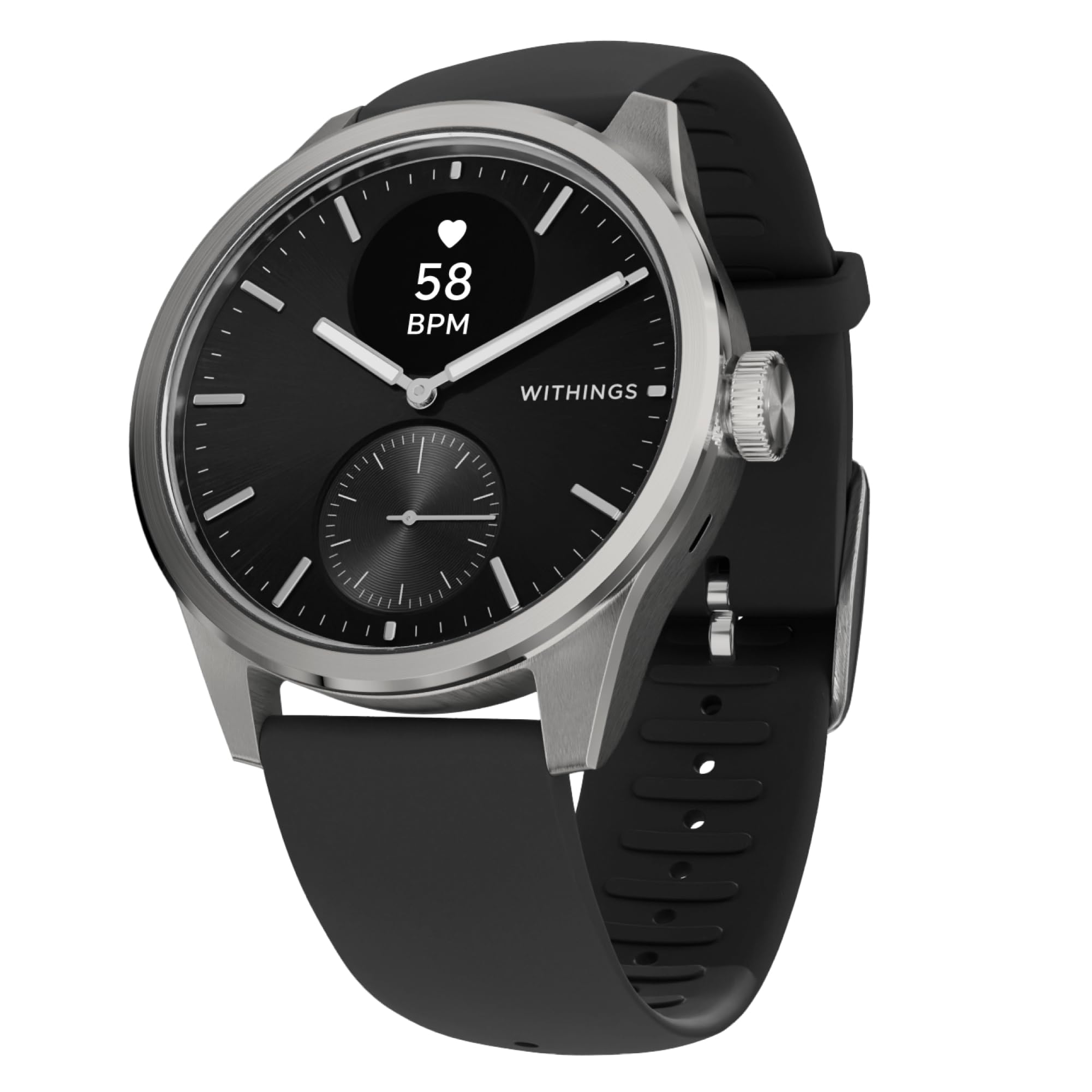
A traditional analog watch that hides serious medical-grade health tracking inside.
The ScanWatch 2 looks like a classic stainless steel watch with physical analog hands and sapphire glass, but it hides a suite of health sensors. It delivers a 30-second medical-grade ECG (electrocardiogram — a heart rhythm test cleared by regulators) that can detect atrial fibrillation (an irregular heart rhythm). It also tracks heart rate continuously with high and low notifications, and its 30-day battery life means you charge it once a month. It tracks sleep stages, breathing, and offers over 40 sports with VO₂ max (a measure of how efficiently your body uses oxygen during exercise) and heart rate zones. The Withings App gives you a Vitality Score and a month of Withings+ for personalized insights.
Owners who switched from Samsung Galaxy Watches and Apple Watches praise the analog look, the build quality, and the fact that no one knows it is a smartwatch. However, step tracking during treadmill workouts can be sporadic. The GPS is connected, meaning you need your phone nearby for route mapping. A few owners note the exercise data is not as rich as Garmin or Fitbit, and they use a separate chest strap for serious workouts. The price is the highest on this list.
The Undercover Watch: Perfect for professionals who want deep health data (especially ECG and sleep) but refuse to wear a screen on their wrist — it looks like a dress watch.
Fitness Compromise: If you primarily need accurate step and exercise tracking during runs or gym sessions, a dedicated fitness watch will serve you better.
Understanding the Specs
Battery Life
This is the single most practical spec for daily use. Most smartwatches last 6 to 11 days, while fitness bands can push past 21 days. A longer battery means fewer interruptions to your tracking and one less cable to carry on trips. Hybrid watches like the Withings ScanWatch 2 can last 30 days by keeping the display simple.
GPS and Connectivity
Built-in GPS lets you run or cycle without your phone and still get accurate pace, distance, and route maps. Connected GPS uses your phone’s signal, which saves battery but means you must carry your phone. Look for built-in GPS if you exercise phone-free outdoors.
FAQ
Can I swim with an exercise tracker?
Do I need built-in GPS for running?
How accurate is the heart rate monitoring on wrist-based trackers?
What is the difference between a fitness band and a smartwatch?
Will a smart ring work as well as a watch for sleep tracking?
Can I reply to texts or take calls from my exercise tracker?
Do I need a subscription to use all the features?
How do I ensure my tracker fits correctly?
Final Thoughts: The Verdict
The exercise tracker that stands above the rest is the Garmin Forerunner 165 because it delivers a strong balance of accurate GPS, deep training metrics, and a battery that lasts over a week without compromise. If you want the absolute longest battery life and a premium ceramic body, grab the Xiaomi Mi Smart Band 10. And for a discreet, comfortable option that tracks sleep and health without looking like a device, the BIEMHA Smart Ring is the one to reach for.
How We Picked
We do not accept paid placement. Every pick is matched to a real buyer and a real use-case; we do not hands-on test units.
Sources & Methodology
Specifications: manufacturer listings and product documentation. Review insights: verified customer reviews, as of July 2026. Pricing: not shown on this page (it changes often); check the current price via the retailer link.
As an Amazon Associate, WellFizz earns from qualifying purchases. This does not affect which products we feature.
Related Guides

Mo Maruf
I created WellFizz to bridge the gap between vague wellness advice and actionable solutions. My mission is simple: to decode the research and give you practical tools you can actually use.
Beyond the data, I am a passionate traveler. I believe that stepping away from the screen to explore new environments is essential for mental clarity and physical vitality.