Our readers keep the lights on and my smoothie glass nicely filled. As an Amazon Associate, I earn from qualifying purchases.
Specs are compiled from manufacturer listings and verified buyer reviews and can change over time — please confirm the key details on the product page before buying.
Recovering from a knee injury or surgery means every step counts — and the wrong machine can set you back weeks. The best exercise machine for knee rehabilitation delivers controlled, low-impact motion that rebuilds strength without punishing your joints. This guide cuts through the clutter to find the nine machines that actually help you move better.
I’m Mohammad Maruf — the founder and writer behind WellFizz. This guide is built by comparing the manufacturers’ published specifications and the patterns across verified customer reviews, so you get each pick’s real strengths and trade-offs instead of marketing spin.
if you need a compact under-desk pedaler for gentle daily motion or a full recumbent bike for serious rehab at home, these machines are the top-rated performers for safe, effective recovery. You will find the best exercise machine for knee rehabilitation for your specific stage and budget, from simple seated pedalers to clinical-grade steppers.
Our Picks at a Glance
How To Choose The Best Exercise Machine For Knee Rehabilitation
Picking the right machine for knee rehab means matching the equipment to your specific recovery stage. A machine that challenges a post-op knee too soon can cause harm, while one that is too easy won’t help you rebuild strength. Here is what to focus on.
Resistance Type and Levels
Magnetic resistance is the smoothest option for knees because it creates friction without jerky starts or stops. It is also whisper-quiet. Friction-based systems, while cheaper, can feel grabby and inconsistent. More resistance levels, like 12 or 16, let you progress in tiny increments as your knee gets stronger, which is ideal for rehab.
Range of Motion and Joint Angle
For knee recovery, the pedal or stride path matters a lot. A short crank arm (like the common 3-inch design on under-desk bikes) limits how far you can bend your knee. A longer stride or a recumbent position that lowers the hip angle reduces stress on the joint. Machines that let you adjust the seat distance or pedal position give you the freedom to find your pain-free range.
Build Quality and Stability
A wobbly machine is dangerous for anyone with weak knees. Look for a sturdy steel frame and a high maximum weight recommendation — anything over 250 pounds is a good sign of solid construction. Suction cups on the feet or an included anti-slip mat keep the machine planted on smooth floors, so you never have to brace yourself mid-pedal.
Quick Comparison
| Model | Best For | Resistance Levels | Weight Capacity | Unit Weight | Amazon |
|---|---|---|---|---|---|
| YOSUDA Under Desk Bike★ Best Overall | Quiet, multi-use rehab | 16 Magnetic | 220 lbs | 17.9 lbs | Amazon |
| Toolsempire Pedal ExerciserBudget Champion | Budget-friendly basic rehab | 2 Friction | 265 lbs | 14 lbs | Amazon |
| Yagud Under Desk EllipticalMotorized Motion | Motorized seated leg motion | 12 Speed | — | — | Amazon |
| ZIDAFIT Adjustable Pedaler | Stroke & knee recovery | Adjustable | 265 lbs | 13.2 lbs | Amazon |
| GUGTTR Under Desk Elliptical | Fully assembled, ready to go | 12 Speed | 500 lbs | 12.6 lbs | Amazon |
| MDODM Sway Exerciser | Full-body lateral motion | None (Non-motorized) | 264 lbs | 15.4 lbs | Amazon |
| NIdreamCE Motorized Pedaler | Assisted motion for limited mobility | 12 Speed (Motorized) | — | 14.5 lbs | Amazon |
| LFEYYD Recumbent Bike | Full recumbent rehab with arm motion | 16 Magnetic | 450 lbs | 87 lbs | Amazon |
| Teeter FreeStep LT7 | Clinical PT stride at home | 20 Magnetic | 350 lbs | 150 lbs | Amazon |
In‑Depth Reviews
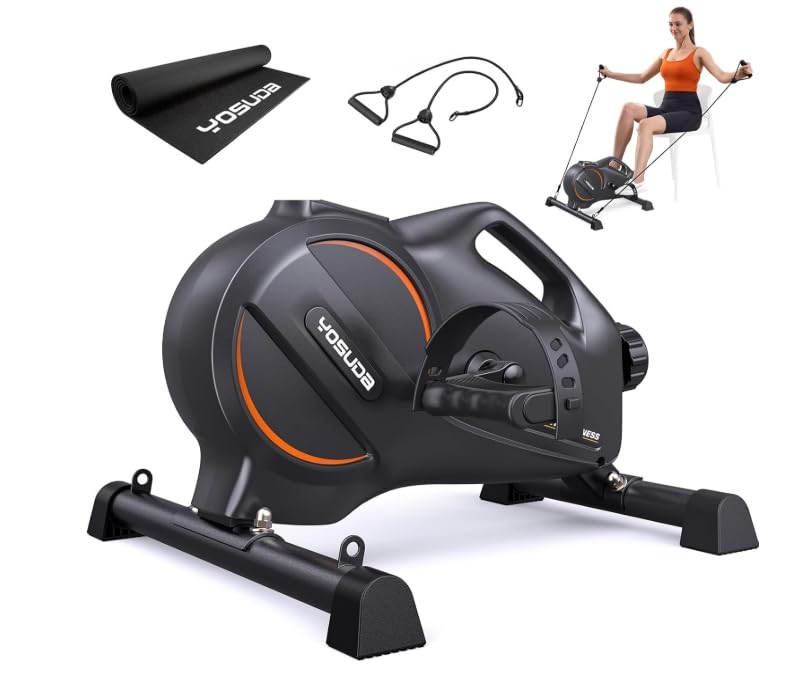
1. YOSUDA Under Desk Bike with 16-Level Magnetic Resistance & Bluetooth App
Our pick — 4.5★ from 3,500+ verified ratings; the strongest balance of quality and price.
The quiet pedaler that blends rehab, desk work, and full-body training into one compact frame.
The YOSUDA is the crowd favorite for knee rehab because it nails the fundamentals: 16 levels of smooth magnetic resistance let you start with a feather-light pedal and progress only when your knee is ready. At 17.9 pounds, it is portable enough to slide from your desk to the couch without strain, yet its alloy steel frame and non-slip base keep it planted during use. The 220-pound max weight recommendation is lower than the budget picks below, but with over 3,500 ratings and a strong 4.5-star score, owners overwhelmingly praise its build quality and quiet operation — both are the top-discussed aspects by far.
You get both an upper and lower body workout since the unit doubles as an arm pedaler with included resistance bands. The Bluetooth app syncs your time, distance, and calories, helping you track tiny wins each day. A few owners note the 3-inch crank limits range of motion compared to a standard bike, so tall users or those needing a deep knee bend might feel constrained. But for gentle, circulation-boosting movement while you watch TV or work, this machine is the most versatile pick in the group.
What wins people over
- 16 magnetic resistance levels offer ultra-gentle starting points for early rehab.
- Bluetooth app and LCD keep your progress visible and motivating.
- 3-in-1 design works legs, arms, and core from a seated position.
One honest limitation
- Short crank arm limits knee extension for taller users.
- Pedal strap attachment could be spaced further out to avoid snagging.
Best suited for: Anyone building back strength after a knee injury, especially if you need a quiet, adjustable machine that moves between your office and living room.
Consider alternatives if: You are over 220 pounds or need full, deep knee flexion that a longer crank provides.
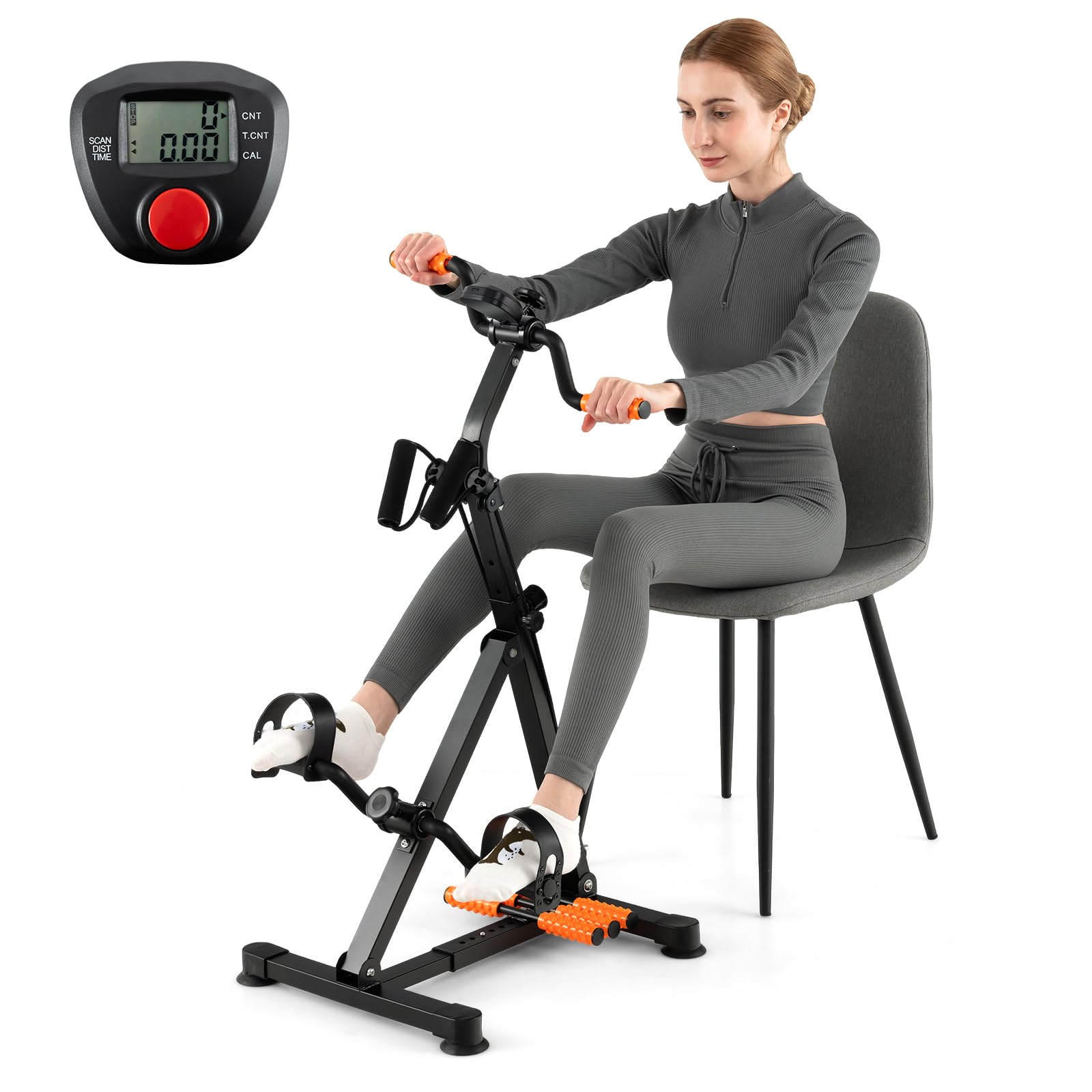
2. Toolsempire Pedal Exerciser Bike for Seniors
A simple, stable pedaler that carries more weight than pricier picks, but with only two resistance levels.
This entry-level machine shines for its sheer stability and capacity. At 14 pounds and with 4 adjustable height settings (34.5 to 39.5 inches), it adapts easily to different chairs and sofas. Buyers report that the “sturdy suction cups stay put on floor,” making it a safe low-impact activity for home mobility rehab while watching TV.
The trade-off is the friction-based resistance with only 2 levels. You get a light and a medium option, no micro-adjustments for slow progression. A few owners found assembly instructions poor and the unit wobbly if not tightened perfectly — though most praise its easy setup and effectiveness for elderly users. For a no-frills knee recovery tool that focuses on gentle, repetitive motion at a low entry point, this fits.
Simple, solid, affordable: Ideal for someone who needs a stable, high-capacity pedaler without bells and whistles, but misses the smoothness of magnetic resistance.
Grab this if: You or an older family member needs a sturdy, stable machine for basic leg and arm motion during TV time.
Look elsewhere if: You want progressive resistance levels to challenge your knee as it heals.
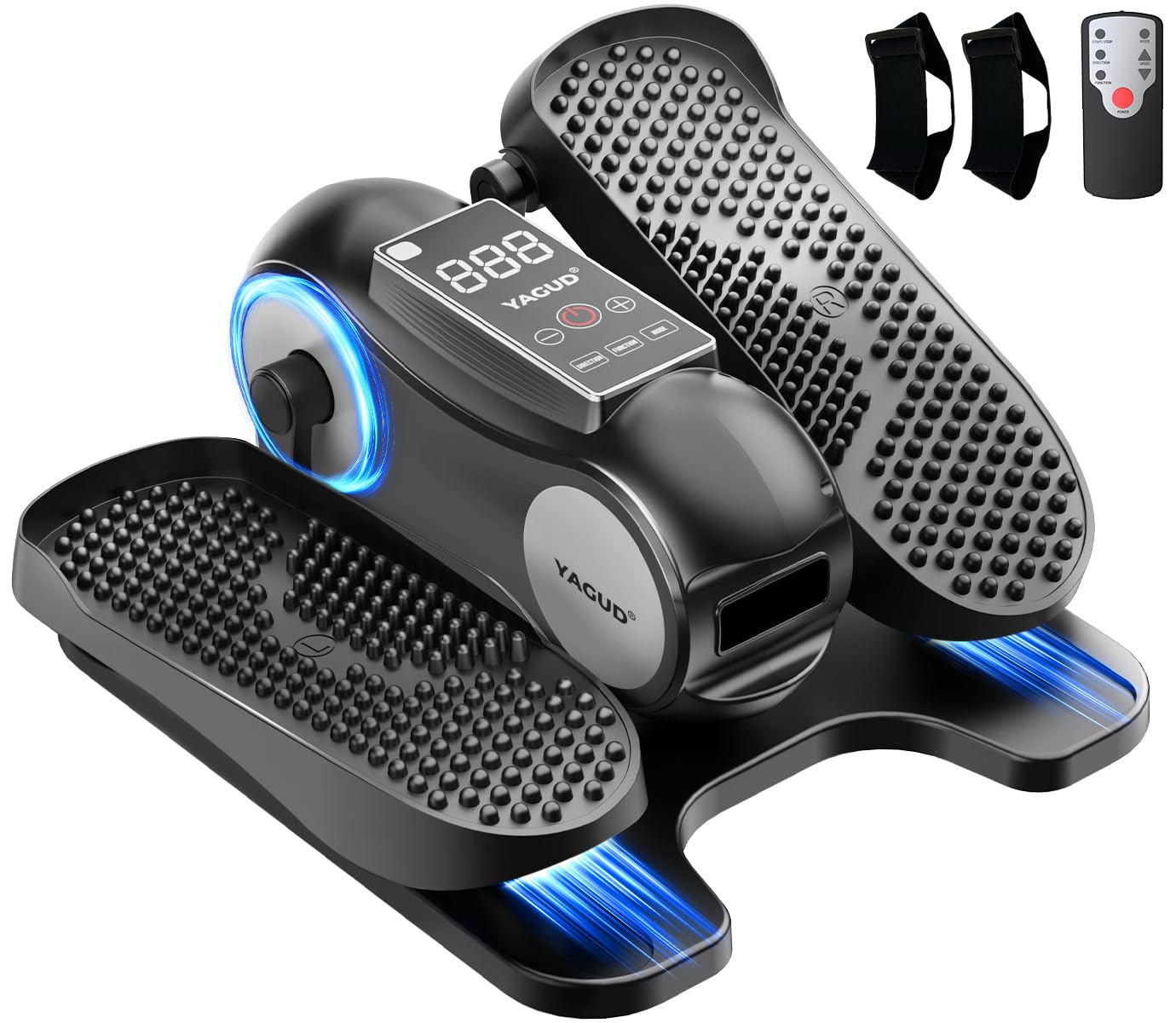
3. Yagud Under Desk Elliptical Machine
A motorized elliptical that does the legwork for you, offering passive motion for stiff mornings.
Unlike pedalers that require you to push from the start, the Yagud uses a motor with 12 manual speeds and 12 auto modes (P1–P12) that change timing and direction automatically. This is a major advantage for early-stage knee rehab when you cannot yet generate enough force to turn the pedals yourself. You can sit back, press the remote, and let the machine move your legs through a smooth, low-impact arc that improves circulation and range of motion. Owners note it relieved hip pain from prolonged sitting after weeks of use.
The unit is compact and quiet enough for an office, and forward/backward pedaling targets different muscle groups. Assembly is straightforward, though a few found the directions missing. The non-motorized feel of a manual bike is absent, which some prefer for active strengthening. For a seated, zero-stress way to get your knees moving, this machine is tough to top at its price tier.
easy movement: The motor assists your legs through the full motion, making it perfect for post-surgery or stiff joints, but it is an elliptical motion, not a bike, so the path is fixed.
Perfect for: The first days of recovery when you need passive assistance to get your knee bending again.
4. ZIDAFIT Adjustable Pedal Exerciser

Designed explicitly for stroke recovery and knee rehab, with an adjustable frame that matches your chair height.
The ZIDAFIT distinguishes itself with a full adjustable frame — the height ranges from 20.5 inches deep to 35.8 inches tall — so you can dial in the exact angle for your knee. It supports up to 265 pounds (120 kg) on a rustproof metal frame with four suction cups for floor stability. The resistance is magnetic, which means the quiet, smooth feel that is crucial for rehab without startling or straining your joint. Owners highlight its “compact, versatile mini bike for legs and arms” that tracks time, distance, and calories on its LCD monitor.
Assembly is reportedly straightforward, though a few noted the instructions picture was reversed. A pair of special gloves is included for arm pedaling. At 13.2 pounds, it is one of the lighter full-frame units, making it easy to store. For a dedicated rehab machine with adjustable geometry, this delivers strong value.
Geometry first: The adjustable frame lets you find your pain-free knee angle, and the magnetic resistance keeps the ride silent.
Choose this if: You need a portable, adjustable pedaler for both post-stroke and knee rehab that feels solid and quiet.
5. GUGTTR Under Desk Elliptical Machine
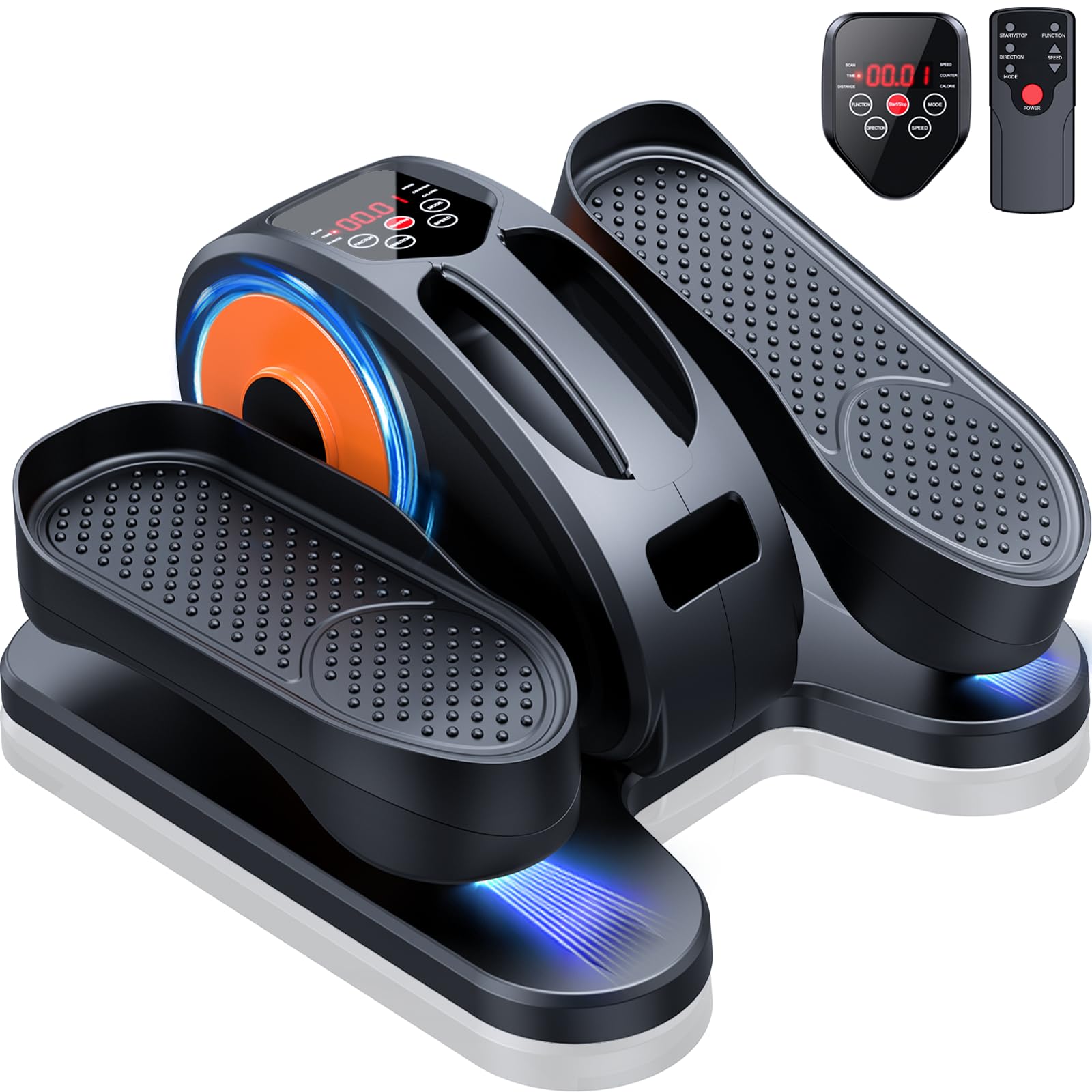
Arrives ready to use right from the start with a motor that handles heavy users up to 500 pounds.
No assembly, no tools, no waiting — the GUGTTR is ready to plug in and pedal the moment you open the box. This is a massive convenience for anyone with limited mobility. The motor offers 12 speeds in manual mode plus 3 auto programs (P1–P3) that vary speed automatically, and the pedals move forward or backward to engage different muscles. With a maximum weight recommendation of 500 pounds, it is by far the highest-capacity motorized unit here, and its compact 15 x 14 x 7.5-inch footprint slides under almost any desk.
It operates below 15dB, which owners confirm is genuinely silent, allowing you to use it during calls or TV without distraction. The remote control lets you change modes without bending. The trade-off is the stride: at 18 inches, it is a fixed elliptical path, not a bike crank, so the range of motion is shorter. For circulation and gentle muscle activation, it works exceptionally well — owners mention a post-accident knee “provided muscle retention” without joint strain.
Ready to roll: Fully assembled, silently motorized, and accommodating to heavier users, but the elliptical stride is fixed and shorter than a bike pedal.
Ideal for: Anyone who cannot or should not bend down to assemble equipment — just plug in and start moving your knees.
6. MDODM Sway Pedal Exerciser for Seniors
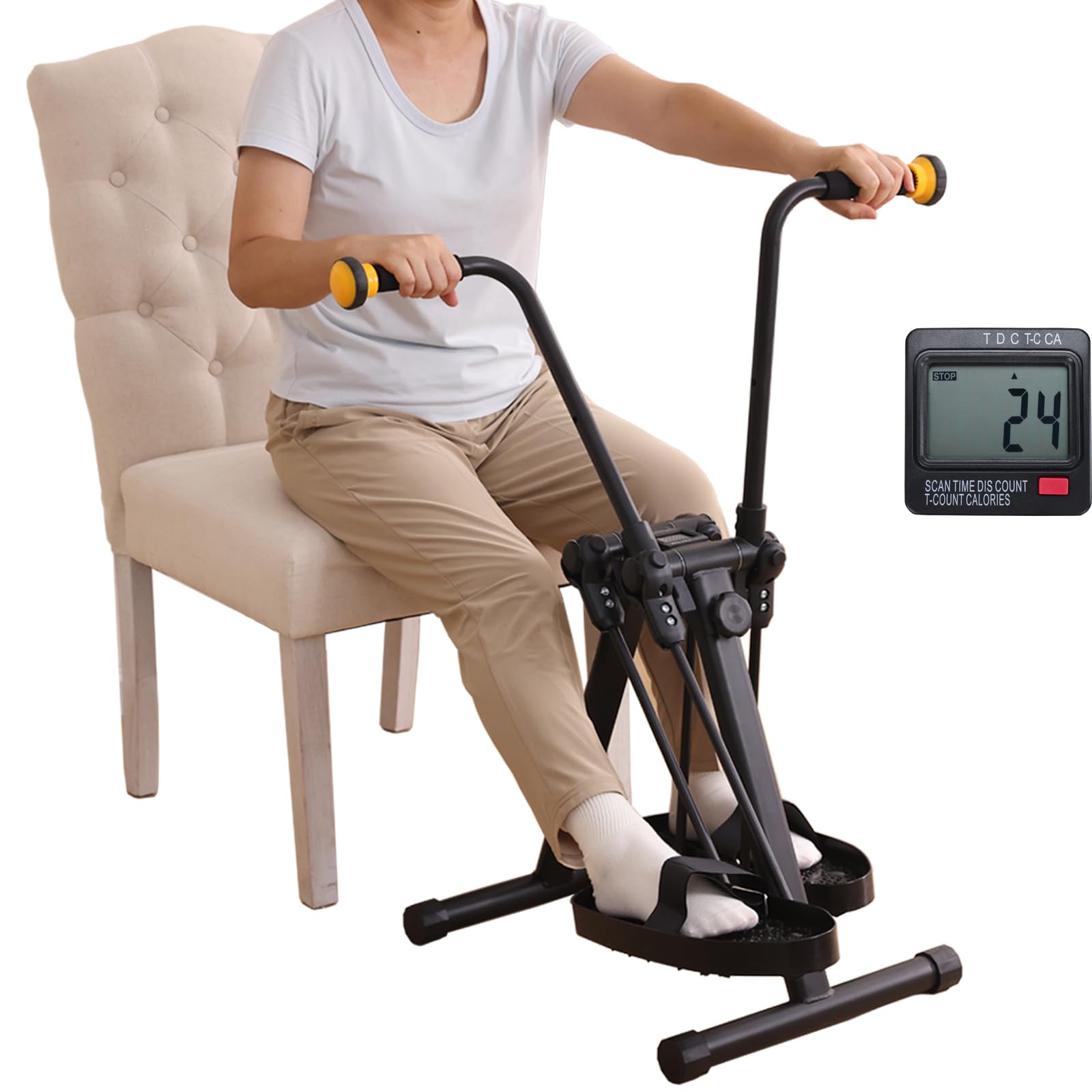
A non-motorized sway machine that works your arms, legs, and core through a gentle lateral wobble.
The MDODM is different — it does not use a circular pedal motion. Instead, it creates a lateral swaying movement that targets the hips, knees, and upper body in a synchronized cross-body pattern. This is especially beneficial for improving joint flexibility and coordination after surgery, as customers note using it after total hip replacement with great results. The LCD tracks time, distance, swing count, and calories, and the unit is pedal-powered (non-electric), so there is no plug needed.
At 15.4 pounds with a 264-pound capacity, it is portable and sturdy. The assembly is easy, though a few found sturdiness mixed. The sway motion is not for everyone — it requires some balance and coordination — but for breaking up scar tissue and restoring natural walking motion, the lateral movement is a smart complement to the standard circular pedaler.
Different motion, same goal: The sway targets hip and knee mobility with a side-to-side glide that circular pedalers miss.
Try this if: Your rehab needs lateral stability work or you want a non-circular movement for variety.
7. NIdreamCE Motorized Pedal Exerciser with Leg Support
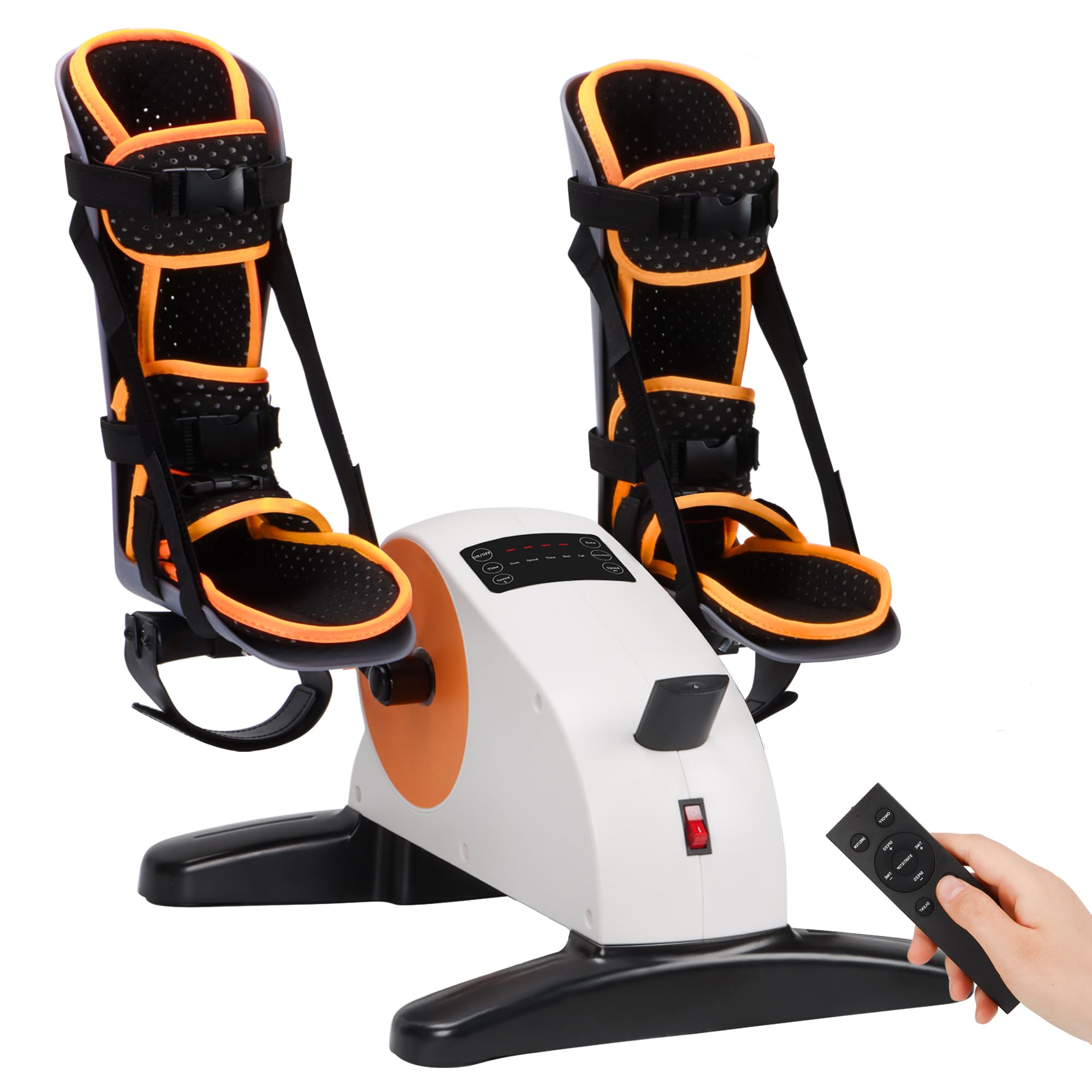
Motorized assistance with adjustable leg guards, designed for those who cannot pedal on their own.
This motorized pedaler stands apart because of its built-in leg support and cradles. The adjustable leg guards secure your ankle and lower leg, ensuring your foot stays on the pedal even if you lack muscle control. The motor offers 12 speeds with both forward and reverse directions, plus manual and assisted modes. Owners specifically recommend it for stroke patients and spinal cord injuries, calling the leg support “awesome” and noting it helps with circulation and muscles for paralyzed users.
The remote control lets you adjust everything without bending, and the LCD tracks time, speed, distance, and calories. The Velcro straps drew the only consistent criticism — some found them too weak and replaced them with better hook-and-loop straps. At this price, you are paying for the motor and the leg support system, which is a specialized need. If you or a loved one requires passive, guided motion with ankle stabilization, this is the best tool in the list.
Clinical support at home: The leg guards and motorized assistance make this the go-to for severe mobility limitations.
Best for: Post-stroke recovery, spinal cord injury, or any condition where the user cannot actively push the pedals themselves.
8. LFEYYD Recumbent Exercise Bike with Arm Exerciser
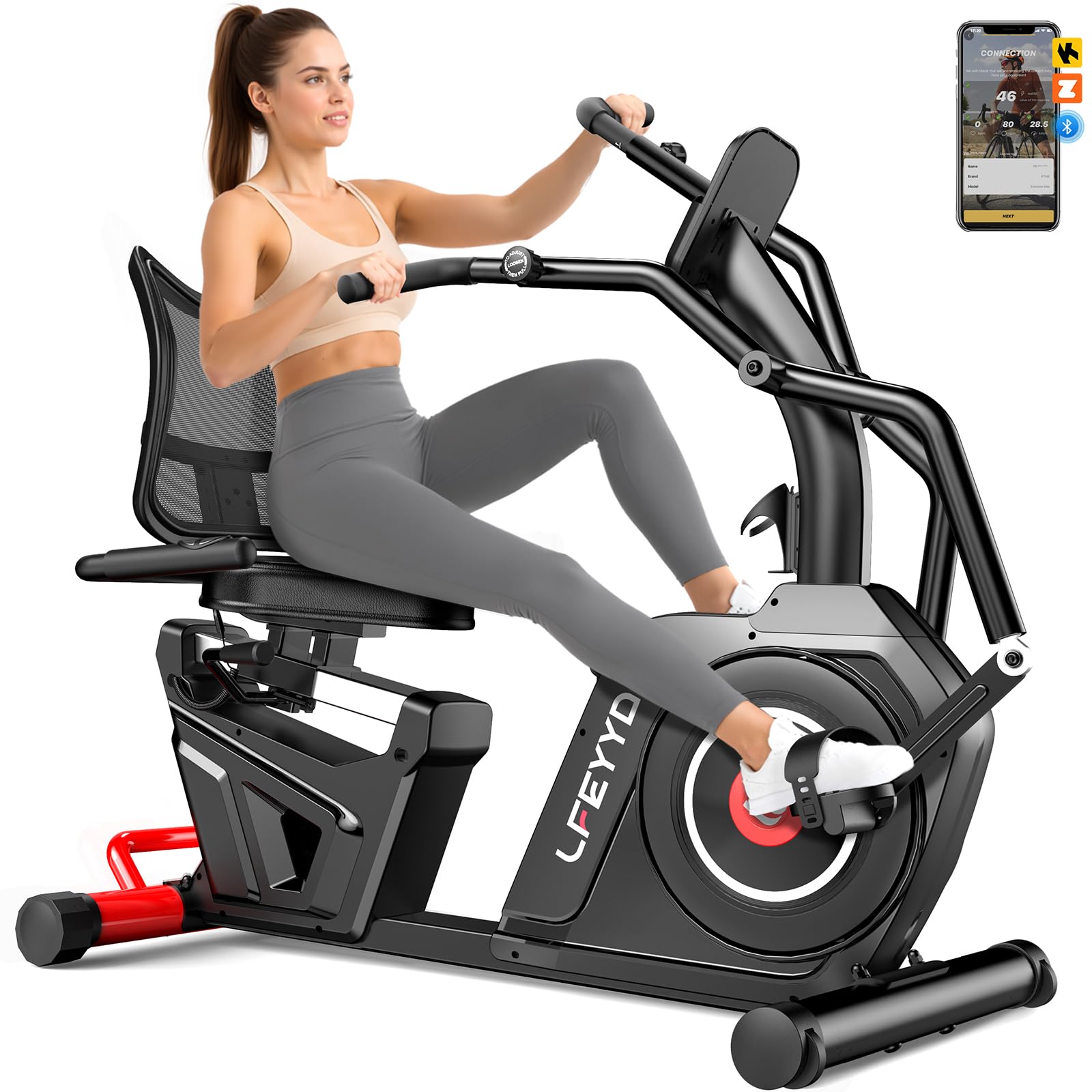
A full-sized recumbent bike with arm movement and a 450-pound capacity, built for serious home rehab.
When your knee is ready for a dedicated workout station, this recumbent bike removes all the guesswork. The large padded seat with a supportive backrest adjusts via a press-lever for multiple heights (4.8 to 6.4 feet), and the handlebars move with your arms for coordinated upper and lower body motion. The 16-level magnetic resistance is smooth and silent, and the LCD with grip-based heart rate sensors gives you real-time feedback. At 87 pounds, it is a permanent fixture — not portable, but extremely stable.
Owners consistently praise its “sturdy, well-built, intelligently designed” frame and smooth ride. The step-through design makes mounting easy for those with limited flexibility. A few taller users (6’3″ with size 13 shoes) found the seat too low to the ground, causing their heels to hit the floor. The arm handlebars are also non-adjustable, limiting the upper body range for some. For a full recumbent experience that supports knees through the entire cardio session, this machine is a mid-price standout.
Why it works for rehab
- Recumbent position takes pressure off the lower back and knees.
- 16 smooth magnetic resistance levels let you increase load gradually.
- High 450-lb max weight recommendation accommodates a wide range of users.
What to check
- Tall users or those with long legs may find the seat sits too low.
- Arm handlebars are fixed in position and not adjustable.
Go for this if: You want a stable, comfortable recumbent bike for daily 30+ minute sessions with arm engagement.
Skip if: You are over 6’2″ or need a truly portable machine.
9. Teeter FreeStep Recumbent Cross Trainer Stepper LT7

The only home stepper with a physical-therapy-patented stride, delivering zero-impact, full-body cardio.
The Teeter FreeStep is the most advanced machine here. Instead of a circular pedal, it uses a patented natural stepping motion licensed from commercial physiotherapy steppers. Your joints move in a more aligned, less stressed path than a typical recumbent bike or cross trainer — owners confirm it is “easier on knees & back” than standard machines. The 20-level magnetic resistance with friction-free UltraGlide Bearings offers precise control from 0 to 105 lbs of resistance, and the console has 21 pre-programmed workouts and a 9-inch color LCD.
It supports up to 350 pounds and users from 4’11” to 6’6″. Assembly takes about 1.5 hours but is well-guided via a video app. The unit weighs 150 pounds, so you set it up once. The seat is extra-large and comfortable, but some found it difficult to lower onto it. For anyone with serious knee issues — arthritis, post-replacement, or chronic pain — this machine replicates the exact therapy found in a PT office. The investment is significant, but for those who need it, buyers call it “as good as commercial equipment.”
The clinical advantage
- Patented PT stride aligns joints for less stress on hips, knees, and ankles.
- 20 resistance levels with friction-free bearings for silent, smooth motion.
- Free app with trainer-led workouts keeps motivation high.
Honest trade-offs
- Large footprint — 59 x 32.7 x 54.8 inches — requires dedicated floor space.
- Seat access is tight; some users need assistance lowering into it.
Invest in this if: You want the closest thing to professional physical therapy at home, with zero impact and progressive resistance.
Pass if: You need a portable machine or have limited floor space and budget.
Understanding the Specs
Resistance Type & Levels
Magnetic resistance is the gold standard for knee rehab. It uses magnets to create drag without physical contact, so the pedal motion stays fluid and silent — no jerky starts. Friction resistance presses pads against a wheel, which is cheaper but can feel grabby or inconsistent. More resistance levels (12, 16, or 20) let you increase load in tiny, safe increments, which is critical for post-op recovery.
Range of Motion & Stride
The distance your knee bends each cycle is defined by the crank arm length (on bikes) or stride length (on ellipticals). A 3-inch crank offers limited flexion, while an 11-inch stride provides a fuller, more natural motion. Recumbent bikes also lower your hip angle, which reduces stress on the knee joint compared to upright bikes. Always choose a machine that lets you adjust the seat or pedal position to find your pain-free zone.
FAQ
Can I use an under-desk bike right after knee surgery?
How many resistance levels do I need for knee rehab?
Is a recumbent bike better than an under-desk pedaler for my knees?
Will a pedal exerciser fit my desk or chair height?
How much weight can these rehab machines support?
Can I use it for arm exercise too?
How loud are these machines during use?
What is the difference between a 3-inch crank and a standard bike crank?
How long does it take to see results from using a knee rehab machine?
Can I travel with these machines?
Final Thoughts: The Verdict
If you want one dependable pick, the exercise machine for knee rehabilitation winner is the YOSUDA Under Desk Bike because it balances 16 smooth magnetic resistance levels, Bluetooth tracking, and a quiet, sturdy frame into a portable design that works for both legs and arms. If you need a motorized machine that arrives fully assembled and handles a 500-pound capacity, grab the GUGTTR Under Desk Elliptical. And for clinical-grade PT stride that eliminates joint stress entirely, the Teeter FreeStep LT7 is the one to reach for.
How We Picked
We do not accept paid placement. Every pick is matched to a real buyer and a real use-case; we do not hands-on test units.
Sources & Methodology
Specifications: manufacturer listings and product documentation. Review insights: verified customer reviews, as of July 2026. Pricing: not shown on this page (it changes often); check the current price via the retailer link.
As an Amazon Associate, WellFizz earns from qualifying purchases. This does not affect which products we feature.
Related Guides

Mo Maruf
I created WellFizz to bridge the gap between vague wellness advice and actionable solutions. My mission is simple: to decode the research and give you practical tools you can actually use.
Beyond the data, I am a passionate traveler. I believe that stepping away from the screen to explore new environments is essential for mental clarity and physical vitality.