Our readers keep the lights on and my smoothie glass nicely filled. As an Amazon Associate, I earn from qualifying purchases.
Specs are compiled from manufacturer listings and verified buyer reviews and can change over time — please confirm the key details on the product page before buying.
The right exercise equipment changes everything when Parkinson’s affects movement. The challenge is finding gear that supports gentle, consistent motion — not punishing workouts. This guide zeroes in on eight machines and aids built specifically for Parkinson’s therapy, from full-body steppers to tremor-calming tools, giving you real picks based on real owner experience.
I’m Mohammad Maruf — the founder and writer behind WellFizz. This guide is built by comparing the manufacturers’ published specifications and the patterns across verified customer reviews, so you get each pick’s real strengths and trade-offs instead of marketing spin.
Whether you are shopping for home rehab, daily mobility support, or targeted hand therapy, these are the best exercise equipment for parkinson’s that actual buyers rely on for safer, steadier movement every day.
Our Picks at a Glance


How To Choose The Best Exercise Equipment For Parkinson’s
Selecting the right gear for Parkinson’s means focusing on safety, ease of entry, and the type of movement it encourages. You want equipment that works with the body, not against it — and that fits the stage of the condition.
Zero-Impact vs. Low-Impact Motion
Zero-impact machines like recumbent steppers let you move without any jarring force on the joints. A natural stepping motion that keeps the hips, knees, and ankles aligned is a priority for anyone with stiffness or balance concerns. Low-impact pedal exercisers are also effective, but require a stable seated position.
Cueing Systems for Gait
Many people with Parkinson’s experience freezing of gait — a sudden inability to lift the foot. Devices that project a visual laser line or play a metronome beat can retrain the brain’s motor pathways. Look for portable add-ons that attach to a cane, walker, or rollator.
Motorized vs. Manual Assistance
Motorized pedal exercisers can initiate movement for those with significant muscle weakness or fatigue. The machine moves the limbs, which helps build circulation and range of motion before the user has the strength to pedal manually. A manual unit offers more control for someone who is already mobile.
Quick Comparison
| Model | Best For | Weight | Dimensions | Max User Weight | Amazon |
|---|---|---|---|---|---|
| Teeter FreeStep Recumbent Cross Trainer★ Best Overall | Full-body zero-impact therapy | 110.2 lbs | 54 x 38 x 52.5 in | 350 lbs | Amazon |
| ZIDAFIT Adjustable Pedal ExerciserTop Performer | Stroke and parkinson’s seated rehab | 13.2 lbs | 20.5 x 17 x 35.8 in | 265 lbs | Amazon |
| Nobol PhysioPedal MotorizedBest Value | Motorized assisted movement | 19 lbs | 20.8 x 18.9 x 17.7 in | 250 lbs | Amazon |
| ZIDAFIT Pedal Exerciser with Resistance Band | Value full-body workout | 15.4 lbs | 22 x 15.7 x 37.8 in | 309 lbs | Amazon |
| VILIM Ball | Hand steadiness and tremor relief | 4.23 oz | 6.22 x 4.8 x 3.11 in | — | Amazon |
| NexStride Cueing Aid | Freezing of gait prevention | 1.65 lbs | 4.2 x 2.75 x 2 in | — | Amazon |
| Goplus Pedal Exerciser | Budget home therapy | 15.5 lbs | 15.5 x 21.5 x 40.5 in | — | Amazon |
| Arm Bike Table Top | Portable upper body rehab | 6.17 lbs | 15 x 12.6 x 7.5 in | — | Amazon |
In‑Depth Reviews
1. Teeter FreeStep Recumbent Cross Trainer Stepper
Our pick — over 4.5★ from 950+ verified ratings; the strongest balance of quality and price.
The full-body stepper that aligns your joints the way a physical therapy office does.
This is the rare machine that truly rethinks movement. Instead of the cycling motion you get on a recumbent bike, the Teeter FreeStep uses a patented natural stride licensed from commercial physiotherapy steppers. Your hips, knees, and ankles stay aligned, so the workout targets muscles without stressing the joints. It is ideal for anyone with arthritis, Parkinson’s, or MS.
The thing owners rave about is how whisper-quiet it runs — the magnetic resistance with 13 levels is friction-free, so you can pedal at any hour. Assembly is a solid 1-hour job, and the steel frame carries a 350-pound capacity. The seat sits 30 inches high, meaning you need to step over the frame to mount it; some buyers on the shorter side (around 5-foot-4) note the seat doesn’t slide forward far enough for their ideal leg extension. But the trade-off is a machine that a post-cardiac rehab user, at 4-foot-10, credits with losing 55 pounds in a year.
Compared to the compact Goplus pedal exerciser (15.5 pounds), this is a floor anchor at 110.2 pounds and measures 54 x 38 x 52.5 inches You give up portability for serious full-body engagement. The free Teeter Move app with trainer-led classes is a bonus that keeps the machine from collecting dust.
What Wins Owners Over
- Zero-impact, joint-friendly stride that feels like PT equipment
- Whisper-quiet magnetic resistance with 13 levels for long-term durability
- Full upper and lower body engagement with 4 grip positions and 3 recline settings
Who Should Think Twice
- High seat height (30″ off ground) requires stepping over the frame; may be challenging for those with limited mobility
- At 110.2 pounds and 54″ deep, it needs dedicated floor space and is not portable
Your Best Bet If: you want a single, sturdy machine that delivers the same natural stepper motion found in a physical therapist’s office, with zero joint impact and a whisper-quiet ride.
Look Elsewhere If: you need something lightweight and portable for travel, or if getting onto a 30-inch-high seat is a safety concern.
2. ZIDAFIT Adjustable Pedal Exerciser Bike for Seniors
The lightweight pedal exerciser that slides under a desk for quiet, seated rehab.
This ZIDAFIT model earns its spot by being incredibly easy to set up and pack away. Owners highlight the precise instructions and the compact footprint — at 13.2 pounds and 20.5 x 17 x 35.8 inches, it is light enough to move from the living room to the office. The adjustable tension and height make it suitable for both arm and leg therapy, and the magnetic resistance keeps it whisper-quiet during use.
The crowd favorite feature is the assembly process. As owners put it: “light and compact, great for rehabilitating.” The LCD monitor tracks time, distance, calories, and counts with a single button, which is straightforward for seniors. A few owners mention that the assembly instructions can be reversed relative to the product photos, requiring a double-check. But once built, the machine is stable and supports up to 265 pounds with four suction cups gripping the floor.
This is a strong pick for stroke recovery and Parkinson’s therapy because it allows slow, controlled movements from a seated position. The included special gloves add grip for hand exercises. It is a direct competitor to the ZIDAFIT standard model (product 4) — both share the same brand and rehab focus, but this one saves weight and features a digital monitor over a resistance band.
Steady Mover: Fits a daily routine without dominating the room. The tension range is wide enough to progress from passive motion to resistance, making it a useful tool for building strength after a stroke or managing stiffness from Parkinson’s.
Reach For This If: portability and ease of assembly are priorities, and you want a machine that tucks away under a desk when not in use.
skip it if: you need a broad, stable base for a heavier user — the suction cups work best on smooth, clean floors.
3. Nobol PhysioPedal Motorized Under Desk Exercise Bike
The motorized pedal machine that does the work for you when fatigue hits.
This is the only pick with a true motorized assist mode. It offers 6 speeds for motorized pedaling and 8 resistance levels for manual mode, plus a reverse rotation for both. That means someone with severe weakness or fatigue can start with the motor moving their legs and gradually build up to self-powered pedaling. The remote control lets you adjust speed or direction without bending down — a thoughtful touch for anyone with balance issues.
Buyers report real improvements in leg circulation and walking distance. The build is solid at roughly 19 pounds with an alloy steel and ABS (a tough plastic) construction, and it runs quietly enough for TV use. The quick-switch pedals convert to handles for upper body exercise. On the downside, a few units have sliding issues on smooth floors, even with the rubber base, and the LED display and remote are the only ways to change settings — there are no controls on the unit itself.
Compared to the Goplus pedal exerciser (15.5 pounds), the PhysioPedal is slightly heavier at 19 pounds but adds the critical motorized function that many Parkinson’s and stroke recovery users need. It also includes a wireless remote, which the Goplus lacks.
Rehab Driver: The motorized assist is the standout feature here. It bridges the gap between passive physical therapy and active exercise, which is why it earns consistently positive feedback for effectiveness from owners of mobility-impaired seniors.
Best For: anyone who struggles to initiate movement due to fatigue, muscle weakness, or early-stage Parkinson’s. The motor takes the first step so you can follow.
Consider Carefully If: your floors are prone to sliding — a simple exercise mat underneath solves the stability issue.
4. ZIDAFIT Pedal Exerciser Bike with Resistance Band
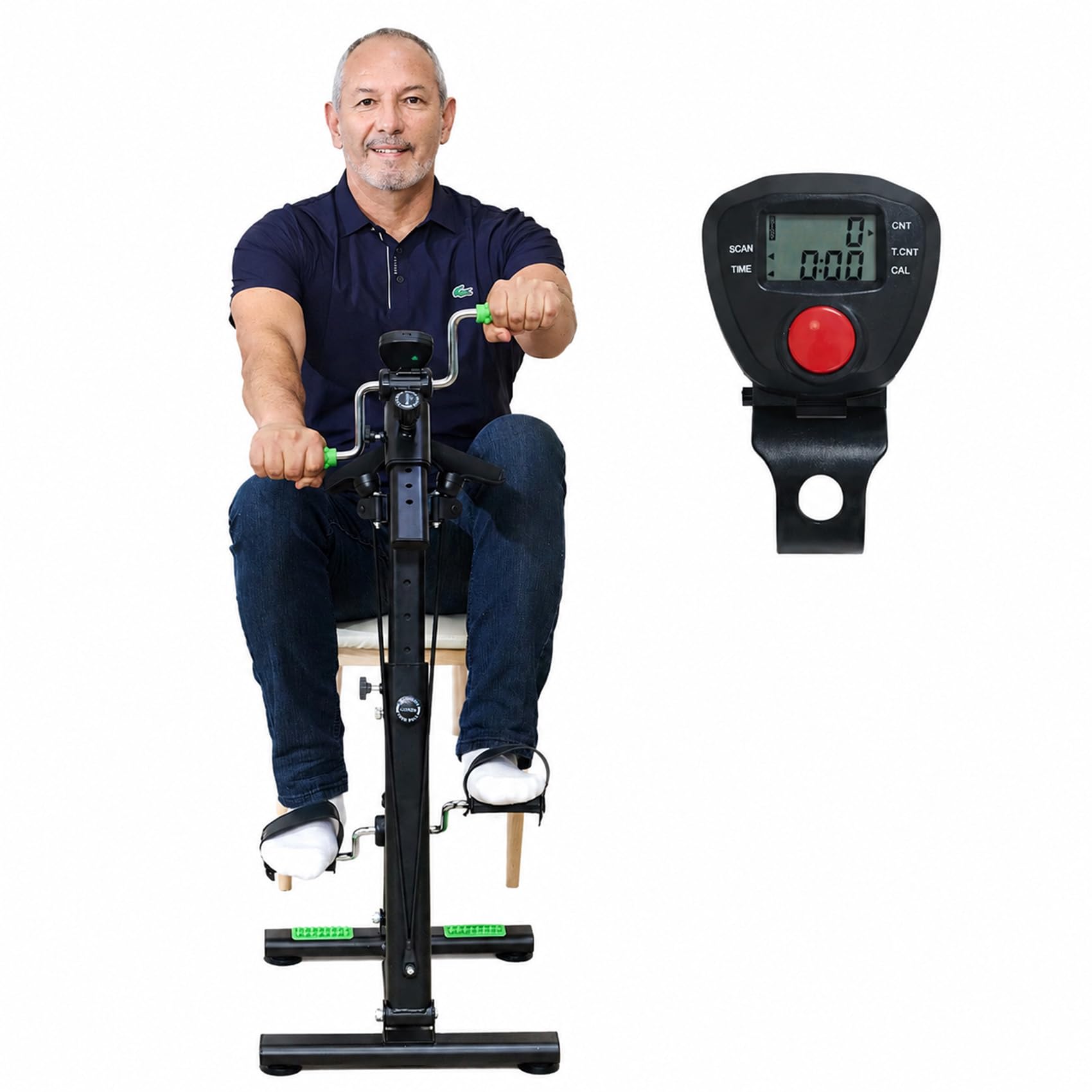
A budget-friendly pedal bike that adds resistance bands for a wider range of motion.
This ZIDAFIT model covers the basics well: adjustable tension, a 5-level height adjustment on the handle and center pillar, and a stepless base length from 15.7 to 21.5 inches. The included resistance bands let you stretch the shoulders and arms separately from the pedaling motion, which adds variety to a seated workout. The large LCD display is easy to read for seniors.
Assembly gets consistently positive marks — owners find it straightforward and fast. The machine is light enough (15.4 pounds) to move between rooms. Where it gets mixed feedback is sturdiness; some owners find it too flimsy for rigorous use, and the hand pedal is positioned too far for comfortable simultaneous arm and leg use. It suits a gentle daily routine better than a heavy sweat session.
At a similar weight to the Goplus pedal exerciser (15.5 pounds), this ZIDAFIT comes with resistance bands and a massage function that the Goplus lacks. But the Goplus has a more stable triangular base and suction cups, which some users prefer. Choose this one if you value extra flexibility from the bands over rock-solid stability.
Versatile Starter: The resistance bands improve this beyond a simple pedal machine for seniors. It turns into a light arm-and-shoulder workout tool, which is valuable for maintaining upper body flexibility during stroke or Parkinson’s recovery.
Reach For This If: you want resistance bands included and prefer a machine with adjustable height for multi-user households.
Think Twice If: you need a rock-solid frame for intense daily use — its lightweight construction has limits.
5. VILIM Ball – AI-Powered Vibration for Hand Steadiness

A palm-sized vibration ball designed to steady your hand before fine-motor tasks.
This European-designed device uses a 10-minute adaptive vibration routine that changes speed and intensity automatically during each session. The idea is simple: you hold it in your palm before activities like writing, eating, or using tools, and the motion-responsive patterns work to reduce tremors. The ball is compact (4.23 ounces), rechargeable via magnetic cable, and has a single-button control.
The honest picture is more nuanced. Some owners mention noticeable tremor reduction within a week and a half, describing improvements in daily function. Others saw no effect after three weeks of three-times-daily use, and one owner noted tremors return when the device is not used. The battery lasts about 2 days (roughly 12 cycles), and the glossy finish can feel large for very small hands. The VILIM Ball is not a cure — it is a tool that works well for some and not at all for others, and at this price point, that variability matters.
Unlike the full-body machines in this guide, this is a dedicated hand therapy device. It targets essential tremor (uncontrollable shaking) and Parkinson’s-related hand shaking specifically, something no pedal exerciser or stepper can do.
What It Does Best
- Adaptive vibration patterns adjust to your tremor strength in real time
- Built for daily routines — 10-minute session before meals, writing, or crafts
- Portable and rechargeable for use at home, work, or while traveling
The Real Trade-offs
- Effectiveness varies significantly between users; it works well for some, not for others
- Battery life is around 2 days (12 cycles) under regular use
Try This If: you want a non-pharmaceutical tool specifically for hand tremor before fine-motor tasks like eating or writing.
Pass If: you need guaranteed results or want a device that works without daily commitment — 10-minute sessions are required.
6. NexStride Portable Audio and Visual Mobility Aid
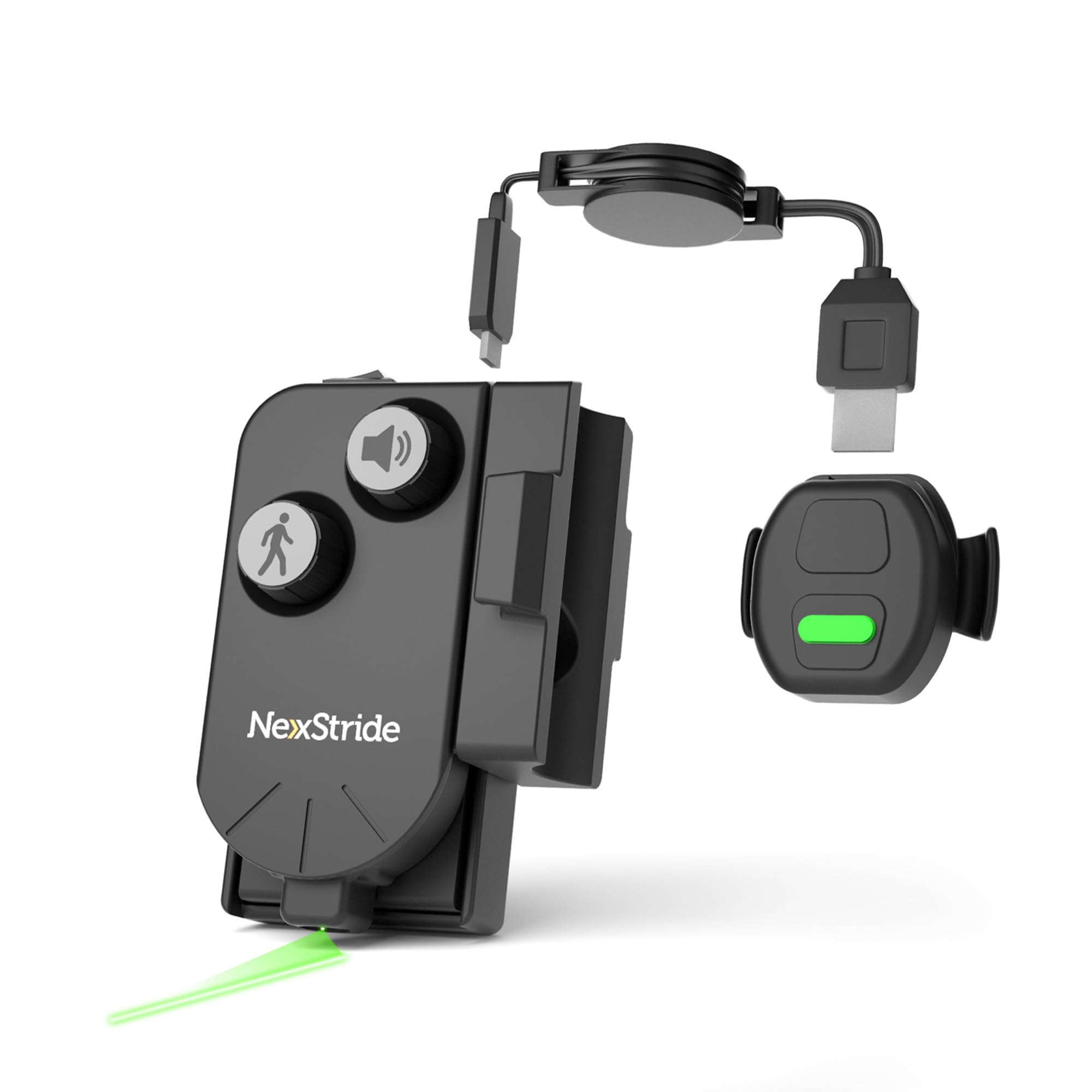
The clip-on device that projects a green laser line to break freezing of gait.
NexStride is a portable accessory that attaches to a cane, walker, rollator, or walking poles. It provides two cueing methods: a green laser line projected on the ground in front of the feet, and an adjustable metronome beat. The visual cue triggers the brain to step over the line, while the audio cue helps maintain a consistent walking speed. It is specifically designed for Parkinson’s, stroke, and multiple sclerosis.
Customers note remarkable results — one describes it as a “life saver” that eliminated falls for a grandfather, and another says a friend with freezing episodes regained mobility and confidence after two weeks. The laser can be adjusted forward, backward, or to the side, and the metronome speed and volume are customizable. The rechargeable battery lasts 6-8 hours of continuous use, and no phone app or Bluetooth setup is required. A few owners find the price high for what is essentially a cueing device, and one notes that the visual indicators require head-eye coordination, which can contradict the intended purpose for some users.
This is a completely different category from the pedal exercisers above. It does not build muscle; it retrains walking patterns. It is widely recommended by physical therapists and neurologists for its targeted approach to freezing of gait.
Gait Changer: For anyone struggling with freezing episodes or shuffling steps, the combination of laser and metronome provides a dual pathway to restart movement. The device is small enough to clip on and take anywhere.
Ideal For: anyone whose walking is affected by freezing of gait, shuffling, or inconsistent step length.
Important Note: It requires some head-eye coordination to use the laser effectively; test it in a familiar environment first.
7. Goplus Pedal Exerciser for Seniors
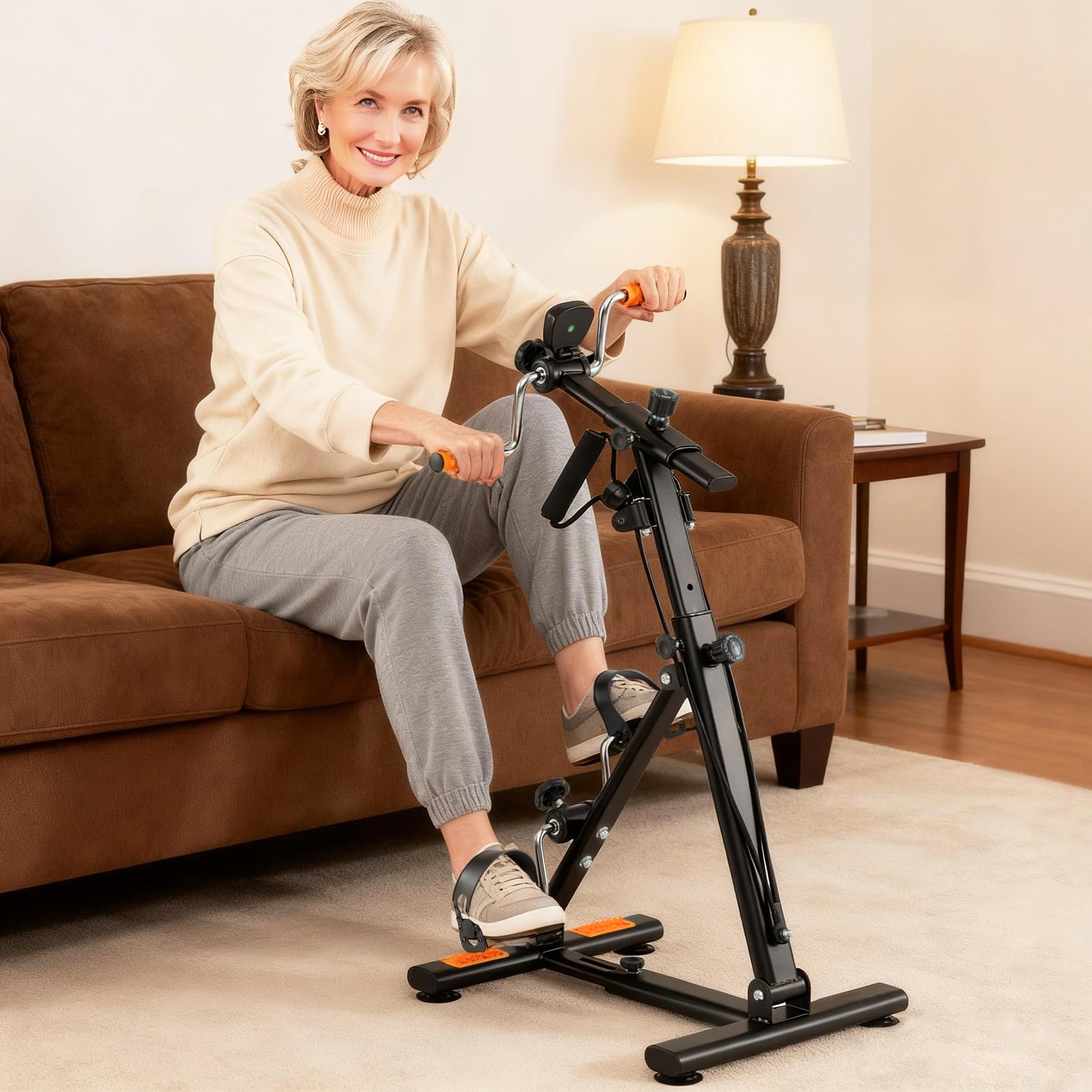
The entry-level pedal bike that delivers the basics while staying affordable.
This Goplus model is straightforward: a metal frame with thickened tubes, a triangular base for stability, four suction cups to grip smooth floors, and a simple LCD display that shows time, distance, calories, and counts. At 15.5 pounds and 15.5 x 21.5 x 40.5 inches, it is compact enough to store under a bed or in a closet. The 5-position retractable handlebar and 5-level adjustable height let you use it for both arms and legs.
The honest take from owners: “it was a good price, easy to put together, doesn’t make much noise, it is pretty stable, but wish it pedaled a little smoother.” That sentence sums it up. The machine works for gentle daily movement — great for knees and light therapy — but the pedal action has a slight roughness that some users notice. The movable handlebar is difficult to operate simultaneously with the pedals, so most users work upper and lower body separately.
At a fraction of the weight and cost of the Teeter FreeStep, the Goplus is a sensible starting point. It will not deliver the fluid motion or joint alignment of the 110-pound Teeter, but it is also not a 54-inch-deep piece of gym equipment. It suits the buyer who wants to test seated therapy without a major commitment.
Why It Makes Sense
- Very affordable entry into seated pedal therapy
- Dual use for arms and legs with adjustable handlebar and height
- Quiet operation and stable triangular base
Where It Cuts Corners
- Pedal action is not perfectly smooth — a slight roughness is widely noted
- Moving handlebar and pedals simultaneously is difficult; best used for one at a time
Perfect For: a budget-conscious first try at seated pedal therapy for the elderly or for gentle knee rehab.
Not For: anyone who needs a smooth, fluid pedaling motion or simultaneous full-body work — the pedal feel is the main trade-off.
8. Arm Bike for Physical Therapy Table Top
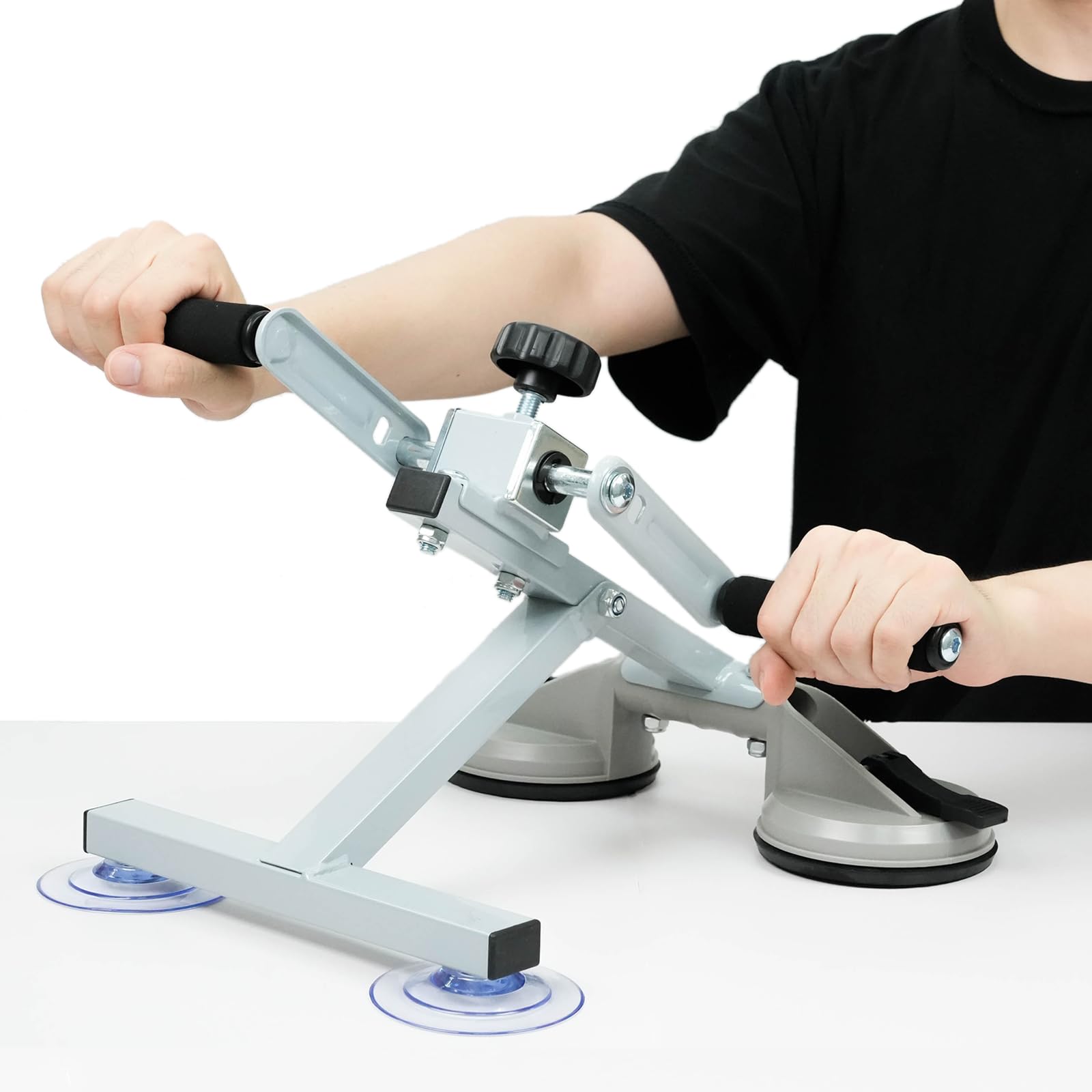
The tiny arm bike that suctions to a table for focused upper body therapy.
This device is built specifically for upper limb rehabilitation — it is not a pedal exerciser for legs. The industrial-grade suction cups hold it firmly to a smooth table or counter, and the adjustable resistance lets you start with light movement and build intensity. It is designed for Parkinson’s, stroke, and anyone with limited upper body mobility. The assembly is meant to take about 10 minutes, though reviewers point out mixed experiences — some find it quick, while others struggle with poorly translated instructions and a useless 41-second video.
When it works, owners call it effective for building arm and shoulder muscles at home. The metal construction feels sturdy, and the suction cup design is generally praised for staying put during use. The biggest recurring complaint is the hand grip, which slips repeatedly for some users. The device also needs a silicone sheet under the suction cups on wood tables for a secure hold, which is not included.
At just 6.17 pounds and 15 x 12.6 x 7.5 inches, this is by far the most portable pick in the guide. It serves a narrow but critical niche: pure upper-body exercise for those who cannot stand or use a full machine. It pairs well with a pedal exerciser like the Goplus for a full-body setup.
Shoulder Saver: A dedicated arm and shoulder machine that fits in a drawer and targets exactly the muscles that stiffen up during long periods of inactivity. The suction cup stability is a genuine strength — no sliding even during active pedaling.
Choose This For: isolating arm and shoulder rehab, especially after a stroke, when leg machines are not the priority.
Know This: set aside about 10 minutes for assembly and have a smooth, non-porous surface ready for the suction cups to work properly.
Understanding the Specs
Zero-Impact vs. Low-Impact Motion
Zero-impact equipment like the Teeter FreeStep eliminates all jarring force — your joints never hit a hard stop. This is critical for those with stiff or painful joints from Parkinson’s, arthritis, or MS. Low-impact pedal exercisers (like the Goplus or ZIDAFIT models) still have impact through the seat, but the motion is gentle and controlled. For severe joint sensitivity, prioritize machines advertised specifically as “zero-impact.”
Motorized vs. Manual Pedaling
Motorized units (like the Nobol PhysioPedal) physically move your legs or arms for you at a set speed. This is a standout for people who lack the strength or coordination to initiate movement on their own. Manual pedaling requires the user to push the pedals, which builds strength but may be impossible for someone in the early stages of fatigue or post-surgery recovery. Look for a motorized option if the user struggles to turn the pedals even at the lightest resistance.
Cueing Systems for Gait Freezing
Freezing of gait is a sudden inability to lift the foot, common in Parkinson’s. Devices like the NexStride project a green laser line or play a metronome beat. The brain responds to these external cues by initiating a step. A visual cue (the laser) triggers the goal-oriented part of your brain, while an audio cue (the metronome) triggers rhythmic movement. Both approaches are clinically recognized for improving walking patterns.
Adaptive Vibration Therapy
The VILIM Ball uses vibration that changes speed and intensity during a session — this is called adaptive or motion-responsive vibration. Instead of a single constant buzz, the device reads the tremor and adjusts. This is distinct from simple massage vibrators, which offer no feedback. For hand tremors, the positioning of the device in the palm and the duration of each session (typically 10 minutes) are as important as the vibration itself.
FAQ
Is a recumbent stepper or a pedal exerciser better for Parkinson’s?
Will the NexStride work with any cane or walker?
How long does the VILIM Ball battery last?
Can I use the Nobol PhysioPedal without the motor?
What weight capacity does the Teeter FreeStep support?
Which pedal exerciser is quietest for using while watching TV?
Can I do arm exercises with the same machine that I use for legs?
Does the Arm Bike for Physical Therapy work on a wooden table?
Final Thoughts: The Verdict
For most buyers, the best exercise equipment for Parkinson’s winner is the Teeter FreeStep Recumbent Cross Trainer because it delivers a zero-impact, full-body stride that mirrors physical therapy equipment — backed by a 4.6-star rating from nearly a thousand owners who praise its build quality and joint-friendly motion. If you want a portable, motorized option that assists movement when fatigue sets in, grab the Nobol PhysioPedal. And for targeted hand steadiness or gait freezing (a sudden inability to start walking), the VILIM Ball and NexStride are the specialized tools to reach for.
How We Picked
We do not accept paid placement. Every pick is matched to a real buyer and a real use-case; we do not hands-on test units.
Sources & Methodology
Specifications: manufacturer listings and product documentation. Review insights: verified customer reviews, as of July 2026. Pricing: not shown on this page (it changes often); check the current price via the retailer link.
As an Amazon Associate, WellFizz earns from qualifying purchases. This does not affect which products we feature.
Related Guides

Mo Maruf
I created WellFizz to bridge the gap between vague wellness advice and actionable solutions. My mission is simple: to decode the research and give you practical tools you can actually use.
Beyond the data, I am a passionate traveler. I believe that stepping away from the screen to explore new environments is essential for mental clarity and physical vitality.