Our readers keep the lights on and my smoothie glass nicely filled. As an Amazon Associate, I earn from qualifying purchases.
Specs are compiled from manufacturer listings and verified buyer reviews and can change over time — please confirm the key details on the product page before buying.
The right evergreen shrubs turn a house front from “plain” to “polished” — and they do it every single day of the year. The challenge is picking ones that actually thrive in your yard’s sun, soil, and cold, instead of ones that look great in a photo and struggle in your flower bed. This guide breaks down eight proven, popular options by what they really deliver: mature height, cold hardiness zones, and how much fuss they need once they’re in the ground.
I’m Mohammad Maruf — the founder and writer behind WellFizz. This guide is built by comparing the manufacturers’ published specifications and the patterns across verified customer reviews, so you get each pick’s real strengths and trade-offs instead of marketing spin.
The honest takeaway for picking the best evergreen shrubs for front of house is matching the plant’s mature size and zone to your exact spot before you ever dig a hole.
Our Picks at a Glance


How To Choose The Best Evergreen Shrubs For Front Of House
Front-yard evergreens are the backbone of your landscape — they stay green when everything else goes dormant. The right choice frames your house, hides the foundation, and gives you privacy without demanding constant attention. The wrong choice means fighting a plant that outgrows its spot or shivers through winter.
Start with your hardiness zone
Your USDA hardiness zone is the single most important number. It tells you the coldest winter temperatures your area typically sees. A shrub rated for zones 5-8 will likely struggle in a zone 3 garden, no matter how healthy it arrives. Check your zone first, then match it to the plant’s listed range.
Measure the mature size, not the pot size
A 1-gallon plant can grow into a 10-foot giant. Before planting, know the shrub’s mature height and width — then give it enough room. Planting a large-growing shrub too close to your house means it will crowd windows, gutters, and walkways as it matures.
Think about the light and the look you want
Some evergreens demand full sun; others tolerate part shade. Match the plant to the actual sunlight your front bed receives. And decide your goal — a tall privacy screen, a neat low hedge, or a colorful accent — because each goal points to a different shrub.
Quick Comparison
| Model | Best For | Mature Height | USDA Zones | Number of Plants | Amazon |
|---|---|---|---|---|---|
| Castle Spire Holly★ Best Overall | Tall privacy & winter berries | 8-10 ft | 5-8 | 1 | Amazon |
| Wintergreen BoxwoodBest Value | Neat low hedge | 60 in | 4-9 | 1 | Amazon |
| Obsession NandinaColor Pop | Year-round colorful foliage | 48 in | 6-10 | 2 | Amazon |
| Japanese Yew (10-pack) | Affordable hedge or screen | — | — | 10 | Amazon |
| Autumn Starburst Azalea | Long-blooming color | 3 ft | — | 1 | Amazon |
| Autumn Bonfire Azalea | Red blooms spring-fall | 3 ft | 6a-10b | 1 | Amazon |
| Green Mountain Boxwood | Formal clipped hedges | — | — | 10 | Amazon |
| Dwarf Alberta Spruce | Classic conical accent | 6-8 ft | 3-8 | 1 | Amazon |
In‑Depth Reviews
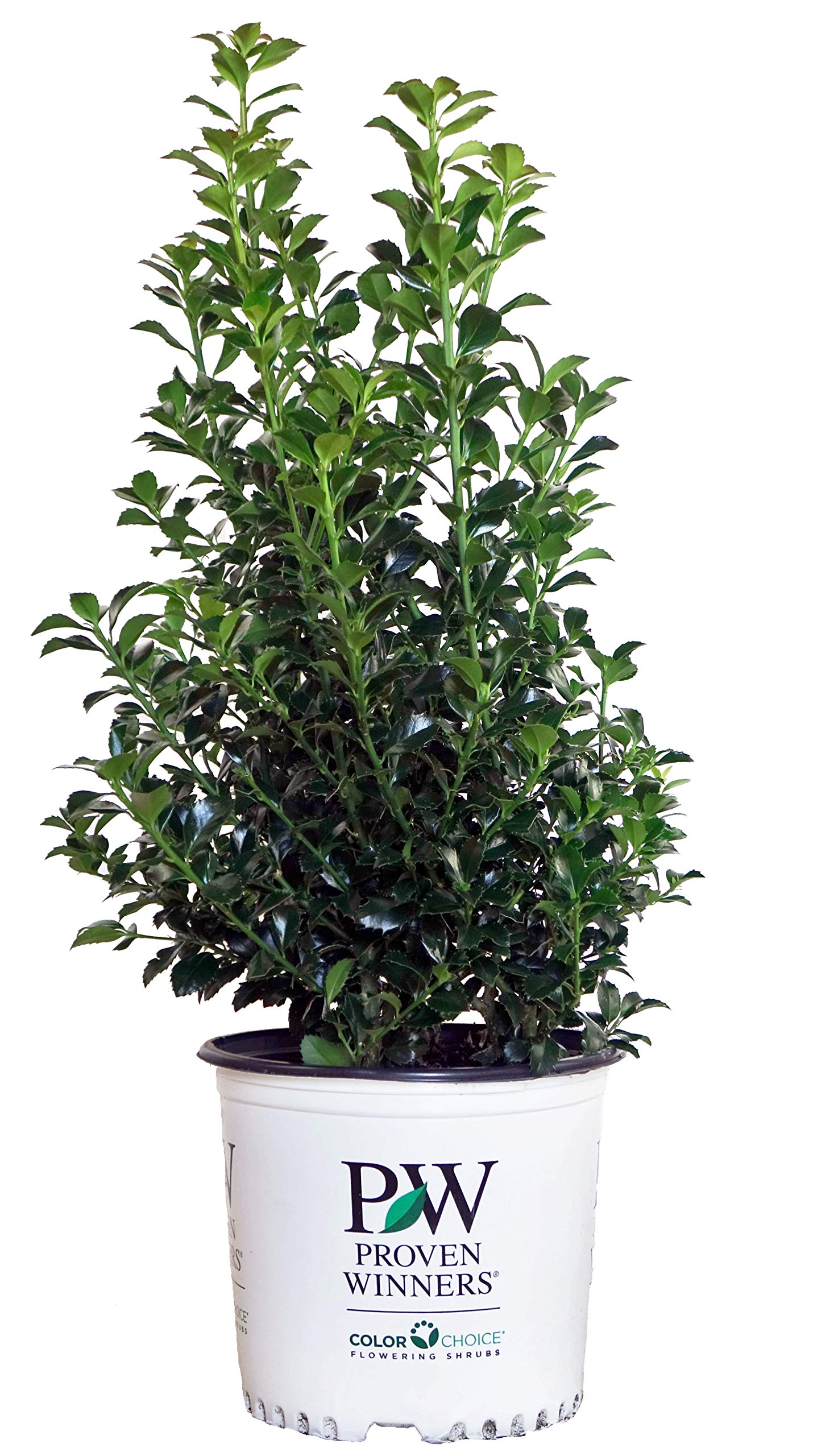
1. Proven Winners Castle Spire Holly
Our pick — over 4.5★ from 500+ verified ratings; the strongest balance of quality and price.
The tall, berry-laden holly that anchors a front bed with instant, polished structure.
If you want a living privacy screen that also delivers festive color, this is the one. The Castle Spire holly matures to 8-10 ft tall and 3-4 ft wide, making it a true statement plant for a corner or along a property line. It arrives fully rooted in a #2 Size Container, so you can plant it the same day it shows up if the weather cooperates.
If you want holiday-ready color without extra work, this shrub arrives lush, dark green, and often already dotted with bright red berries. It thrives in full sun and suits USDA zones 5-8 (the hardiness map that tells you which plants survive your winter cold). Buyers report: “I am shocked by how healthy and wonderful this plant looks, even has red berries all over.” That berry display is a big part of the appeal, especially when you are decorating for the holidays.
One honest note: this is a female holly, and to get those berries consistently, it needs a male pollinator nearby. A few owners mentioned pairing it with a Blue Prince for that reason. Plan for a small bit of extra planting if berries are your goal, and you will have a front yard fixture that keeps giving year after year.
Why it wins the front bed
- Shows up healthy with vibrant green leaves and often red berries already on it
- Grows tall and narrow enough to frame a house without swallowing it
- Hardy in zones 5-8 with full-sun preference for best shape
What to plan around
- Needs a male pollinator nearby to produce its signature red berries
- Mature size means it needs real space — not a tiny foundation spot
Reach for this if: you want a tall, low-fuss evergreen with winter interest that anchors a larger bed.
Look elsewhere if: your front bed is narrow and you have no room for a second pollinator plant.
2. Boxwood Wintergreen, 1 Gallon
The classic tidy hedge plant that brings formal structure to any entryway.
Boxwoods are the go-to for that crisp, manicured look along a walkway or foundation. The Wintergreen variety grows to a mature size of 36″ wide and 60″ tall — notably taller than the Green Mountain boxwood, giving you more vertical presence for a low-maintenance hedge. It thrives in USDA zones 4-9, one of the broadest cold-tolerance ranges here, and it handles full sun to part shade.
What wins people over is how quickly it settles in. Owners mention seeing “lots of new growth in just a few days,” along with excellent packaging that keeps the plant happy in transit. The plant’s health is the most-discussed positive, with owners calling it beautiful and bigger than expected straight from the start.
The size is the one thing to go in with open eyes. Some buyers find the 1-gallon plant on the smaller side and wish the pot were larger. If you want instant height, this needs a few seasons to fill in — but for the price, it is a solid way to start a hedge without a big upfront cost.
What owners love
- Broad hardiness from zones 4-9 handles cold winters well
- Grows to a useful 60″ tall for a real hedge presence
- Accepts both full sun and part shade for flexible placement
Worth knowing
- Arrives as a young 1-gallon plant, so patience is required for full size
- A few buyers expected a larger container than what arrived
Pick this if: you want a cold-hardy, classic hedge on a budget and do not mind waiting for it to mature.
Think twice if: you need instant screening height for the front of your house right now.
3. Southern Living Obsession Nandina
A low-maintenance shrub that trades flowers for fiery red foliage all year.
Not every front-yard evergreen needs to bloom to be beautiful — this nandina proves it with bright red foliage that holds its color through all seasons. Maturing to 48 inches tall, it is a compact, rounded option that works as a low hedge, a foundation plant, or a colorful accent in a mixed bed. It performs best in USDA zones 6-10 and prefers sun to part shade.
You will not have to nurse this one back to health — it arrives moist and happy, just like it was in a nursery, according to buyers. The vibrant color is the next most-praised trait, with several owners noting the red deepens and shows off within just a few weeks of planting. It is also a low-maintenance choice — water twice a week until established, then once a week is all it asks.
Two honest caveats come up. It is slow growing, so do not expect it to fill a large space quickly. And while the color is a star, some buyers find the plant smaller than the photos suggest. It also drops leaves in winter, which is normal for this variety, so be ready for that seasonal change.
The payoff
- Season-long bright red foliage without needing flowers
- Compact 48-inch height fits most foundation beds
- True low-maintenance watering once established
The trade-offs
- Slow grower, so it will not fill a large bed quickly
- Loses leaves in winter despite being evergreen
Reach for this if: you want dependable, colorful foliage without the fuss of flowers.
skip it if: you are in a colder zone than 6 or want a fast-growing screen.
4. Podocarpus Japanese Yew (10 Plants)

Ten starter plants that let you build a whole hedge line for less than a single big shrub.
This is the volume play for a long stretch of front yard. You get 10 live Japanese Yew plants from Florida Foliage, each a young start ready to become a hedge, a topiary, or a row of standalone specimens. The species is versatile, growing in both full sun and partial shade, and it tolerates a range of soil types as long as drainage is good.
What stands out in the feedback is the growth — customers note the plants “continue to put on new growth,” describing them as very healthy and well-packaged. One review notes the single 4-inch pots actually contained nearly forty healthy specimens, meaning you can divide them out and stretch your planting even further. It is a low-maintenance, slow to moderate grower that does not demand much once settled.
The honest caveat is survival rate. Shipping live plants is never a guarantee, and a few reviewers point out losing several of their ten starts. The plants arrive small — these are true starters, not landscape-ready shrubs — so they need a growing season or two to make a real visual impact.
Why it makes sense
- Ten plants give you a full hedge for the price of one big shrub
- Versatile enough for full sun or part shade and various soils
- Owners consistently report healthy plants with active new growth
Keep in mind
- Plants are small starters that need a season or two to fill in
- Some owners have had a portion of the ten not survive transit
Best for: budget-minded gardeners who want to establish a long hedge line without spending big per plant.
Not for: anyone needing instant, full-size screening this season.
5. Encore Azalea Autumn Starburst (3 Gallon)
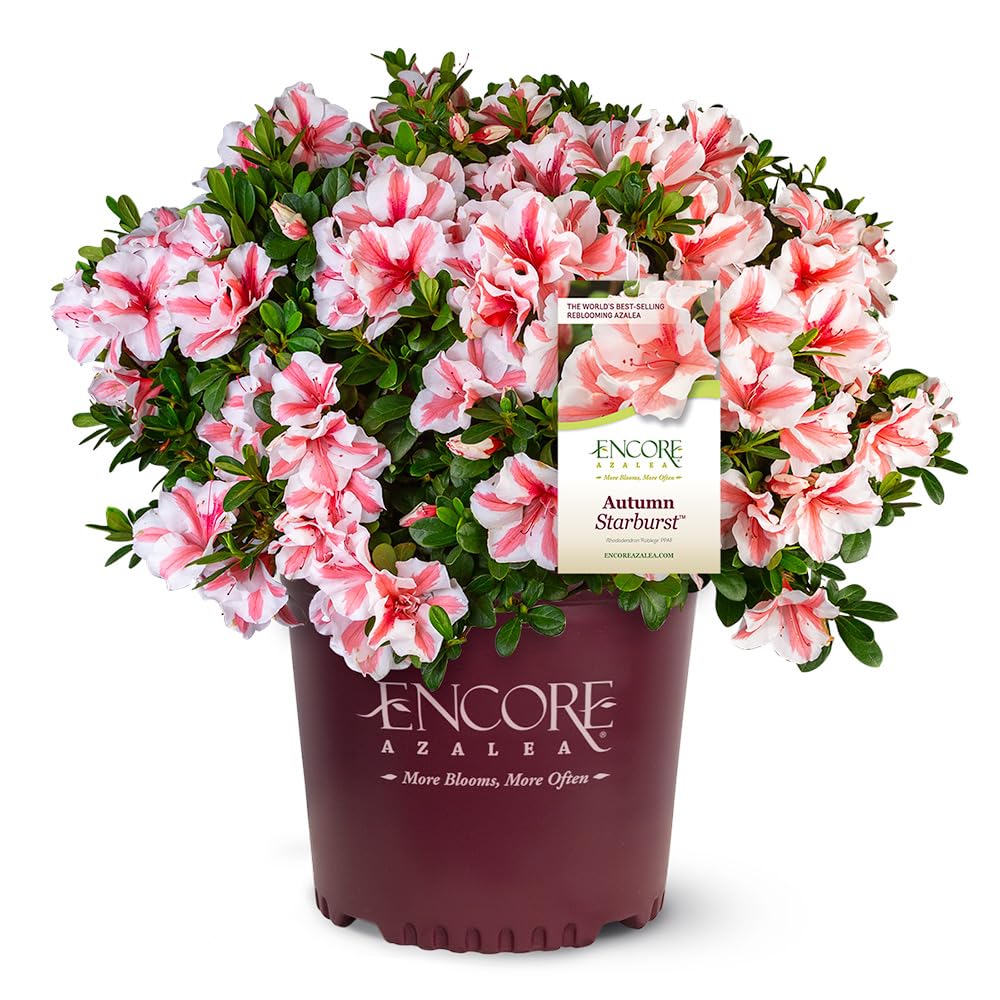
A compact azalea that layers coral flowers with white edges from spring through fall.
Most evergreens give you green; this one gives you a long season of color. The Autumn Starburst azalea produces striking coral-pink blooms with crisp white margins, flowering from spring through fall rather than in one short burst. It stays compact at 3 feet tall and 3.5 feet wide, which makes it a natural for borders, foundation plantings, or large containers on a porch.
Its glossy, deep green leaves keep the plant attractive even between bloom cycles. It is also a low-maintenance, heat-tolerant choice, doing best with 4-6 hours of sunlight daily. Owners praise its beauty and note it arrives healthy, with several mentioning the two-tone blooms as a standout addition to the yard and one delighted to see “the little blooms after days.”
Shipping is the wildcard here. The box can arrive dented or torn, and a few plants have shown broken stems from the journey. The plant itself tends to recover and thrive, but it is worth inspecting carefully on arrival and reporting any serious damage quickly.
What shines
- Repeats blooms from spring to fall, not just a one-time show
- Compact 3-foot size fits borders and containers neatly
- Glossy evergreen foliage carries the look between flowers
What to watch
- Shipping can be rough — boxes may arrive dented with broken stems
- Needs consistent moisture, especially in its first season
Choose this if: you want a flowering evergreen that keeps the front of your house colorful for months.
Pass on it if: you need a tall privacy plant rather than a compact color accent.
6. Encore Azalea Autumn Bonfire (3 Gallon)
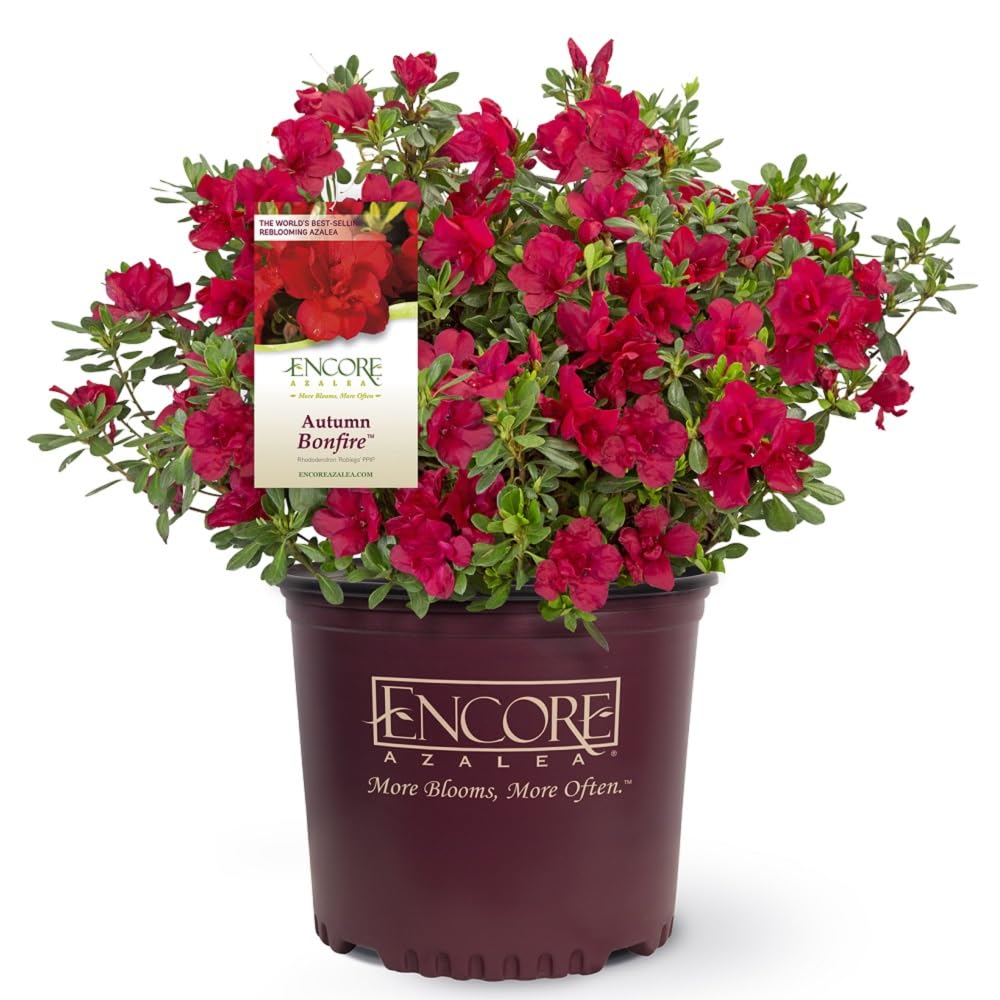
The fast-growing red azalea that keeps blooming even in 90-degree summer heat.
If you want bold color and quick results, this dwarf azalea is hard to pass up. The Autumn Bonfire is a fast grower that matures to 3 feet high by 3 feet wide, and it produces deep red single and semi-double blooms through spring, summer, and fall. It holds its bright green foliage year-round, and those leaves shift to a deep purple green-bronze in winter for extra seasonal interest.
Hardy in USDA zones 6a-10b, it thrives with 4-6 hours of sun daily in full sun to partial shade. Owners consistently describe the plants as healthy, vibrant, and worth the price — with one noting it was blooming even in 90-degree weather. It is also a butterfly and hummingbird magnet, which adds life to your front yard.
The clear downside in the feedback is durability in transit. Many shoppers say receiving plants with broken branches, a result of rough shipping rather than a problem with the plant itself. It also grows larger than the similarly named Autumn Fire, so give it the full 3-by-3-foot space it needs.
The strengths
- Fast-growing dwarf that holds red blooms across three seasons
- Attracts butterflies and hummingbirds to your front yard
- Foliage turns purple-bronze in winter for year-round interest
The honest catches
- Broken branches in transit are a recurring complaint
- Not guaranteed to arrive in bloom, so patience is needed
Reach for this if: you want a fast-growing, heat-tolerant azalea with serious red flower power.
Steer clear if: you cannot handle a plant that may need some TLC after shipping.
7. Green Mountain Boxwood (10 Plants)
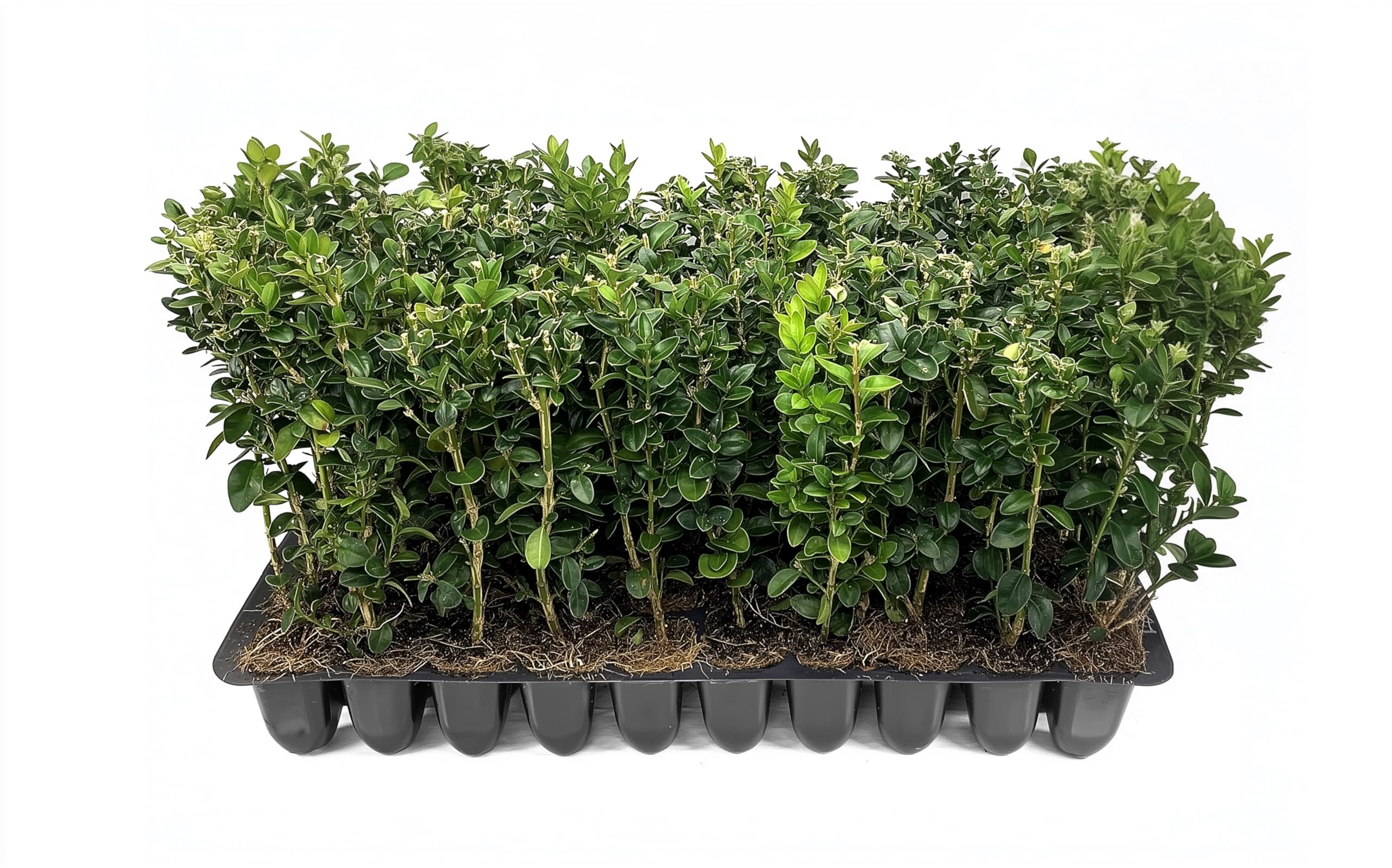
Ten upright boxwoods to shape into a formal hedge or a tidy row of green columns.
This is the plant for a formal front yard. The Green Mountain boxwood grows naturally upright, giving it a sculpted look that suits walkways, formal entrances, and patio borders. It is an excellent fit for clipped hedges, knot gardens, and foundation designs, and it needs minimal shaping to keep its clean form. It adapts to sun or partial shade and performs well in both clay and sandy soil.
You get 10 plants in one order, enough to establish a real hedge line. Repeat buyers are the proof, with several owners coming back for a second bunch after their first year’s plants “grew to 4 times their original size.” The plants arrive well-rooted, and the seller has replaced any that died in transit.
The size is the honest trade-off, and it is the most-discussed point by far. These are young starts — some arrive around an inch tall — so they need patience and a couple of seasons before they become a visual presence in the landscape. They are alive and green, but do not expect instant structure.
The upside
- Ten upright boxwoods establish a whole hedge at once
- Repeat buyers report strong growth in their second year
- Natural upright shape needs minimal pruning
The reality
- Barely an inch tall on arrival for some orders
- Several seasons of patience before they look like a hedge
Best for: the long-game gardener who wants a formal hedge without paying for mature plants.
Not for: anyone who wants visual impact in the first planting season.
8. Dwarf Alberta Spruce (Picea glauca ‘Conica’)

The tidy conical spruce that brings a touch of classic evergreen formality to a porch or bed.
Some front yards need a single, perfectly shaped accent rather than a hedge. The Dwarf Alberta Spruce delivers exactly that — a naturally conical evergreen that matures to 6-8 feet tall with a 3-4 foot spread. It is widely used in landscaping for its low maintenance, slow growth habit, and rugged dependability, and it thrives in zones 3-8, making it the most cold-tolerant pick on this list.
It grows in full sun or partial shade and arrives fully rooted, ready to plant immediately. Owners consistently call it beautiful, full, and healthy, with several noting it is “much larger and nicer than I was expecting” straight from the start. The dense green foliage gives it that classic, manicured look that works in a planter, flanking a door, or as a foundation anchor.
The catch is that “dwarf” still means a 6-8 foot final height, and its growth experiences are genuinely mixed. Some owners mention thriving trees with new growth; others have had theirs die suddenly. It is a slow grower, so it will take years to reach mature size, but that also means it stays neat and contained for a long time.
What makes it special
- Natural conical shape needs almost no pruning
- Thrives in cold zones 3-8, the hardiest here
- Owners often find it larger and fuller than expected
The honest note
- Slow growth means mature size takes many years
- A minority of owners have seen theirs die suddenly
Choose this if: you want a classic, cold-hardy conical accent that asks for little and always looks neat.
Think twice if: you prefer flowering shrubs over pure green structure.
Understanding the Specs
Mature Height and Width
This is the size a shrub reaches at full growth, often years down the road. It is the single most important number for front-yard placement — a plant that matures to 8-10 feet will crowd a window meant for a 3-foot accent. Measure your planting spot and always choose a shrub whose mature size fits without constant pruning.
USDA Hardiness Zone
Your zone tells you the average coldest winter temperature in your area. Shrubs are rated for the zones they can survive in, so matching the plant’s zone range to yours is essential. A plant rated for zones 6-10 will likely not survive a zone 3 winter, no matter how healthy it arrives.
FAQ
How far from the house should I plant front-yard evergreens?
What does a USDA hardiness zone mean for my front yard?
Which of these shrubs stays green all winter?
Will castle spire holly produce berries without a male plant?
What is the difference between Wintergreen and Green Mountain boxwood?
How much sun does an Encore azalea really need?
Are these shrubs safe to plant near a foundation or walkway?
How long do these live plants take to arrive and settle in?
Final Thoughts: The Verdict
For most buyers, the evergreen shrubs for front of house winner is the Castle Spire Holly because it combines real privacy height with the bonus of winter berries that owners rave about. If you want a tidy, cold-hardy hedge on a budget, the Wintergreen Boxwood is the classic pick. And for months of color instead of plain green, the Autumn Starburst Azalea is the one to reach for.
How We Picked
We do not accept paid placement. Every pick is matched to a real buyer and a real use-case; we do not hands-on test units.
Sources & Methodology
Specifications: manufacturer listings and product documentation. Review insights: verified customer reviews, as of August 2026. Pricing: not shown on this page (it changes often); check the current price via the retailer link.
As an Amazon Associate, WellFizz earns from qualifying purchases. This does not affect which products we feature.
Related Guides

Mo Maruf
I created WellFizz to bridge the gap between vague wellness advice and actionable solutions. My mission is simple: to decode the research and give you practical tools you can actually use.
Beyond the data, I am a passionate traveler. I believe that stepping away from the screen to explore new environments is essential for mental clarity and physical vitality.