Our readers keep the lights on and my smoothie glass nicely filled. As an Amazon Associate, I earn from qualifying purchases.
Specs are compiled from manufacturer listings and verified buyer reviews and can change over time — please confirm the key details on the product page before buying.
If you’re tired of dice rolls ruining careful planning, Euro games are the answer. This category prizes skill, resource management, and engine-building over luck and elimination. The best picks reward sharp decisions and offer deep replay value.
I’m Mohammad Maruf — the founder and writer behind WellFizz. This guide is built by comparing the manufacturers’ published specifications and the patterns across verified customer reviews, so you get each pick’s real strengths and trade-offs instead of marketing spin.
From quick 30-minute puzzlers to epic 85-minute strategy sessions, the best euro style board games deliver elegant mechanics, premium components, and endless replayability for game night.
Our Picks at a Glance

How To Choose The Best Euro Style Board Games
Euro games, often called “German-style” games, focus on strategy, resource management, and player interaction through the game’s mechanics rather than direct conflict. Before you pick one, you need to match the game’s weight and length to your group’s taste, and understand a few core mechanics that define the genre.
Match the Playtime to Your Group
Playtime is the biggest factor in whether a game hits your table or collects dust. A fast 30-minute filler works for casual weeknights, while an 85-minute epic needs a dedicated evening. Check the player count too — some games shine with two players, while others feel loose or stretched beyond their ideal range.
Know Your Mechanics: Worker Placement vs Dice Placement
Worker placement means you take turns claiming actions on a shared board with your limited set of pieces, blocking others as you go. Dice placement adds a twist — your dice have values, and the number you roll determines where you can send that worker. Understanding which you prefer helps you avoid a game that feels too random or too restrictive.
Look for Replay Value and Component Quality
A good Euro game feels different each play via varied setups, multiple victory paths, or encounter cards. Also consider the physical pieces — wooden tokens and thick cards make a game a joy to handle, while flimsy components can sour an otherwise great design.
Quick Comparison
| Model | Best For | Players | Playtime | Age | Amazon |
|---|---|---|---|---|---|
| Harmonies★ Best Overall | Relaxing family strategy | 1-4 | 30 min | 10+ | Amazon |
| White CastleDeep Dive Pick | Tight solo & expert play | 1-4 | 85 min | 12+ | Amazon |
| Race for the GalaxyReplay King | Deep 2-player replay | 2-4 | 30 min | 12+ | Amazon |
| Above and Below | Story-driven village building | 2-4 | 90 min | 10+ | Amazon |
| Civ: A New Dawn | Civilization video game fans | 2-4 | 120 min | 14+ | Amazon |
| Concordia | Elegant economic strategy | 2-5 | 90 min | 12+ | Amazon |
| Champions of Midgard | Viking theme & dice combat | 2-4 | 90 min | 10+ | Amazon |
| Five Tribes | Brain-burning tactical play | 2-4 | 40-80 min | 13+ | Amazon |
In-Depth Reviews
1. Asmodee Harmonies Board Game
Our pick — over 4.5★ from 800+ verified ratings; the strongest balance of quality and price.
The crowd favorite that turns a quiet evening into a stunning 3D landscape puzzle.
Harmonies is the standout pick because it nails that rare balance: rules so simple you teach them in minutes, yet a tactical puzzle that keeps you planning three moves ahead. You build a dreamlike 3D world by pairing landscapes with animal tokens. The goal is to earn victory points by matching patterns — and the satisfying click of placing those 120 wooden tokens makes the whole thing feel premium.
This is the fastest game in our lineup at just 30 minutes, which makes it a perfect weeknight choice. It also plays solo, so you can enjoy a thoughtful session alone or with up to 4 players. The artwork is gorgeous, and the pieces are built to last. Owners call the gameplay relaxing, calm, and endlessly engaging, with depth that reveals itself over dozens of plays.
The only real trade-off is the low player interaction. Since everyone is building their own landscape, some describe it as “multiplayer solitaire” — you rarely block or hinder each other. If your group thrives on cutthroat competition, this may feel too peaceful. Buyers report it is a favorite of a 200+ game collection and that it was “played 10+ times first week.” Think of this as the gateway that pulls new players into the hobby and keeps veterans happy.
What wins people over
- Incredibly easy to learn with real strategic depth underneath
- Stunning 3D visual payoff and tactile wooden pieces
- Quick 30-minute sessions and a full solo mode
The honest caveat
- Player interaction is minimal — more of a shared puzzle than a fight
- Dedicated players may want an expansion after 3 weeks of daily play
Reach for this if: you want a beautiful, low-stress strategy game that beginners and veterans can enjoy side by side.
Think twice if: your group wants direct conflict and blocking — this is a peaceful puzzle by design.
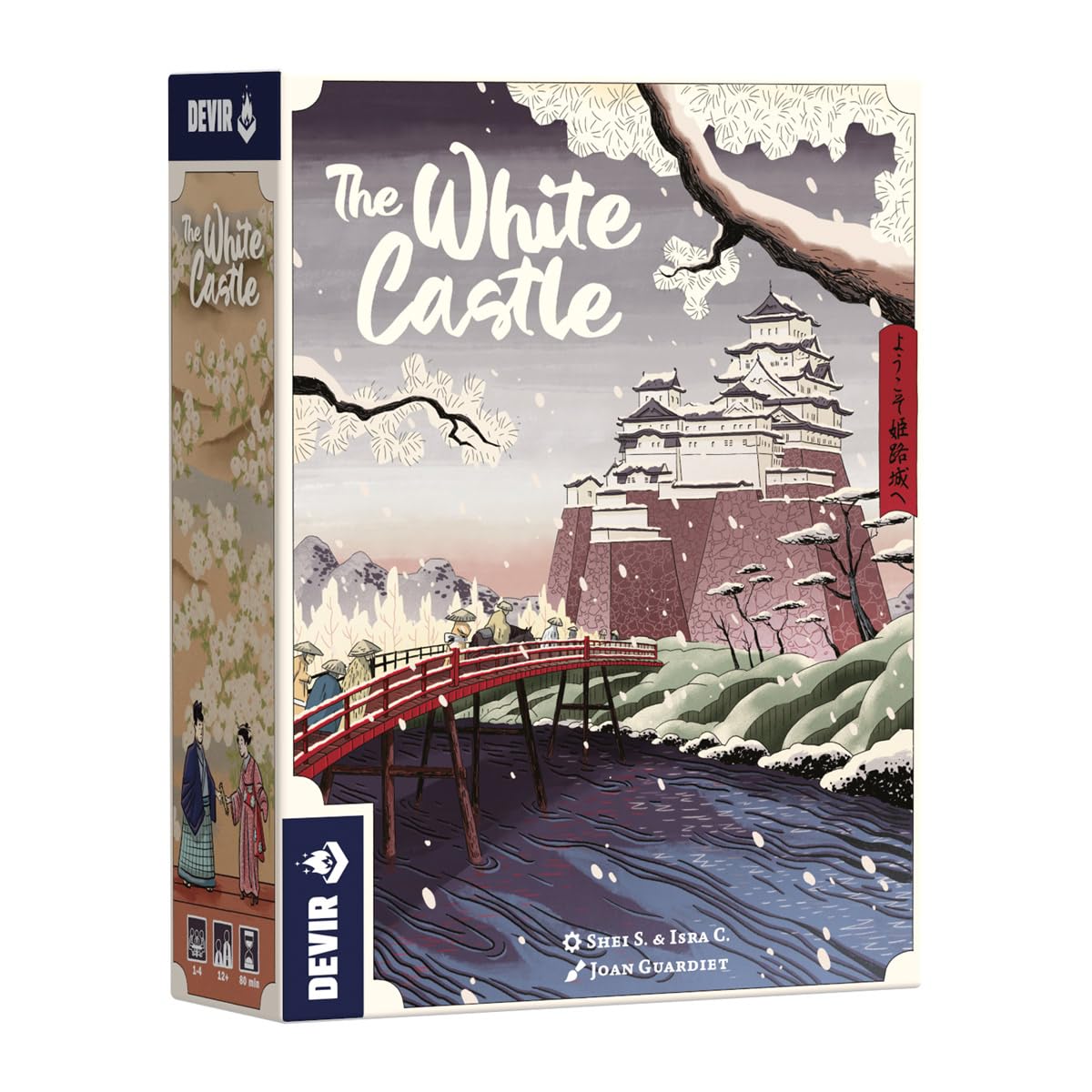
2. Devir The White Castle Board Game
A chess-like duel of dice placement where every single turn decides your fate.
If you want deep strategy without a table-hogging box, The White Castle delivers. You lead your clan in feudal Japan, managing resources and positioning workers to gain influence at court. The standout is the dice placement mechanic: each turn you roll dice, and their values decide where you can send your clan members, so you must adapt your grand plan to the luck of the roll.
At 85 minutes, this is a longer commitment than Harmonies, but the depth is worth it. The rulebook claims an easy-to-learn 20-minute learning time, and once you grasp it, the elegance shines. The production quality is excellent — the art is beautiful, and every component feels intentional. Owners note that only 9 turns per player means every action carries weight, and the game improves with each play as you understand the scoring paths.
The flip side is that this is a “crunchy” game — the learning curve is real, and some found the initial teach challenging. It also supports 1-4 players, with an excellent solo mode that reviewers praise. If you love worker placement and want a game where every die placement is critical, this is a must-play.
Why it stands out
- Deep, elegant dice placement with multiple paths to victory
- Beautiful production quality and a praised solo mode
- Every action matters with only 9 turns per player
Know before you buy
- Steep learning curve initially, despite the simple core loop
- Packaging is fiddly — storing components risks damaging cards
Best for: eurogame enthusiasts who want a brain-burning, high-replay challenge in a compact box.
Look elsewhere if: you prefer lighter games or dislike adapting your strategy to dice outcomes.
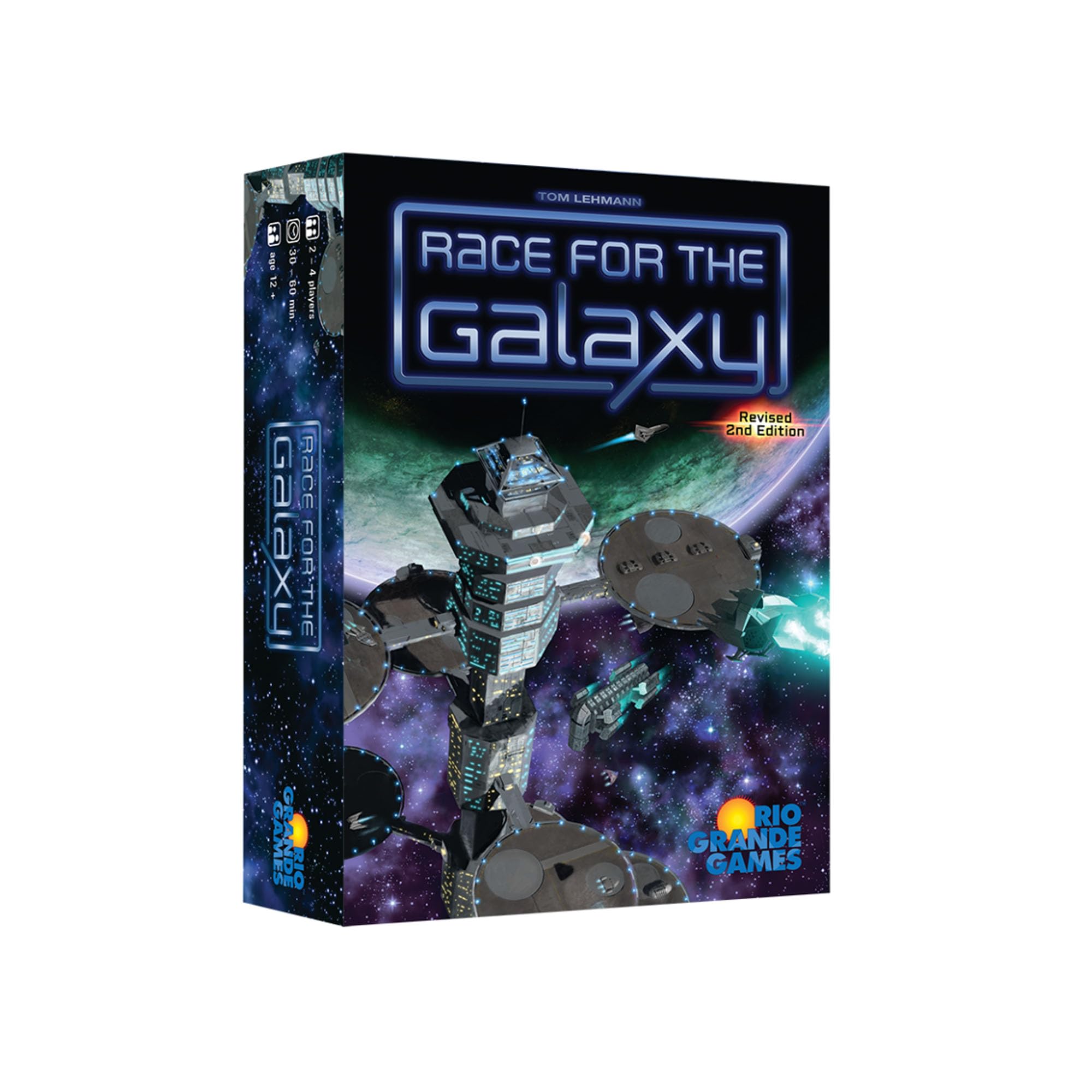
3. Rio Grande Games Race for the Galaxy
A sci-fi classic with near-zero luck that rewards mastery over hundreds of plays.
Race for the Galaxy is widely considered the gold standard of card-driven Euro games. It’s a card adaptation of the beloved Puerto Rico, where you build a space empire by developing technologies and settling worlds. The genius is in the simultaneous action selection — each player secretly picks a phase, and if you guess what others will do, you can chain powerful bonus actions. This is a pure strategy game where the best player wins.
Supporting 2-4 players with an average 30-minute playtime, it is remarkably replayable thanks to over 100 cards offering multiple strategies — military conquest or economic production. The quality of the cards is consistently praised, and the game scales brilliantly down to two players, making it a top pick for couples. “Very hard to teach (45min-1hr baseline)” is a common refrain, so expect a significant learning investment.
That steep learning curve is the main barrier — the iconography is dense, and new players will likely face several frustrating games before the flow clicks. But once it does, owners mention it has the most replayability in their collection, with 20-30 minute games that rarely have runaway winners. If you and your group are willing to learn, this is an incredibly rewarding purchase.
What makes it legendary
- Near-zero luck means the most skilled player wins
- Immense replay value with 100+ cards and multiple strategies
- Excellent 2-player mode — a rare find in the genre
The learning curve
- Very hard to teach, with a 45-minute to 1-hour baseline
- Dense iconography makes the rulebook unclear at times
Grab this if: you want a deep, tactical game that rewards repeated play and mastery.
skip it if: your group prefers a casual, easy-to-teach experience or dislikes learning complex icon systems.
4. Red Raven Games Above and Below

A village builder that reads you a choose-your-own-adventure story under the table.
Above and Below is the most narrative Euro game on this list. You build a village on the surface while simultaneously sending explorers into the caverns below. The standout feature is the 200+ entry encounter book — when you explore, you read a story passage and your dice rolls determine the outcome, weaving a unique tale each time you play. It’s a perfect blend of strategy and storytelling that makes the game memorable.
It supports 2-4 players and plays in about 90 minutes, though many find it hits its balance at 2-3 players. The core is worker placement: you have 5 actions (Explore, Harvest, Build, Train, Labor) across 7 rounds. The artwork is beautiful, creating a fantasy village atmosphere that owners absolutely love. Replay value is high because the encounter book offers variety, and hidden victory points reduce cutthroat behavior—so you can focus on your own strategy.
The main criticism is pacing — with only 7 rounds, the game often ends just as your village engine is getting powerful. Some players wish it lasted a little longer. The learning curve is also steeper than expected initially. But for families and fans of Stardew Valley-style cozy strategy, this is an enchanting pick that offers a different experience every session.
Why it shines
- Unique 200+ entry story book adds narrative charm
- Beautiful fantasy art and high-quality components
- Plays great at 2-3 players with multiple victory paths
The trade-off
- Only 7 rounds — the game can end before your engine peaks
- Rules have a learning curve that feels steep at first
Perfect for: players who love a good story and a relaxing strategy experience.
Not for: those who want a tightly competitive, action-packed game every session.
5. Asmodee Sid Meier’s Civilization: A New Dawn

The streamlined board game that perfectly captures the feeling of advancing your civilization.
Civilization: A New Dawn distills the epic PC game into a board game that runs 120 minutes. It offers a streamlined, fast-paced gameplay loop where you build cities, research technologies, and pursue multiple paths to victory — just like the video game. The focus is on your civilization advancing technologically, and owners say it absolutely nails that satisfying sense of progression.
The game supports 2-4 players and engages both newcomers and experienced strategists. The modular map and unique civilization bonuses ensure different strategic challenges each game. While the box lists a 1-2 hour playtime, customers note sessions stretching to 2-3 hours, especially at higher player counts. The rulebook is complex, and game setup takes over 15 minutes.
The biggest mixed point is the combat — there are no military units; instead, combat is resolved through dice-based tile attacks, which can feel abstract to war-game fans. Storage is also a pain point, with no dedicated tray for many small tokens, leading owners to recommend ziplock bags. But if you want a fast-flowing civ experience without the 8-hour commitment, this is a fantastic choice that families and hobbyists both enjoy.
What impresses
- Captures the feel of the video game in a streamlined format
- Multiple victory routes via wonders, science, and techs
- Random maps and civ bonuses give high replay value
What to expect
- Complex rulebook and a steep learning curve
- No real military units — combat is dice-based tile attacks
- No token storage; you will want your own bags
Made for: Civilization video game fans who want the same feeling in a board game.
More cautious if: you are a beginner or strongly prefer direct military conflict in strategy games.
6. Rio Grande Games Concordia

The thematically simple yet mechanically perfect economic engine that is a must-play.
Concordia is the pick for players who appreciate elegance and deep strategy without a complicated rulebook. Set in the Roman Empire, you play a trading house expanding across the map, developing cities and buying cards to build your economic engine. The beauty is that scoring only happens at the end of the game — every card you buy, every city you found contributes to your final tally, keeping tension high until the very last turn.
Supporting 2-5 players at 90 minutes, it combines the best elements of Catan, Ticket to Ride, and 7 Wonders, but somehow remains easy to learn — most pick it up in about 20 minutes. The rulebook is simple, and the pieces are high quality. Owners consistently describe it as exceptionally balanced and finely tuned, where “no one felt out of the running” even in 4-player games. It is the rare game that is competitive yet friendly.
The only mild complaints are cosmetic — some find the box art awkward and the initial action variety limited until you understand the card system. But after a few plays, the depth unfolds, and the scoring strategy becomes the heart of the game. This is widely considered a must-play for anyone serious about Euro games.
Its greatest strengths
- Incredibly easy to teach with simple, elegant rules
- Perfectly balanced — everyone stays competitive until the end
- High replay value with multiple setup options and a diverse card system
Minor notes
- Box design is often called ugly and awkward
- Initial action variety feels limited before you master the cards
Confident verdict: the go-to mid-weight Euro for groups that want deep strategy without a punishing teach.
pass on it if: you dislike games where all the scoring is hidden and only revealed at the end.
7. Grey Fox Games Champions of Midgard
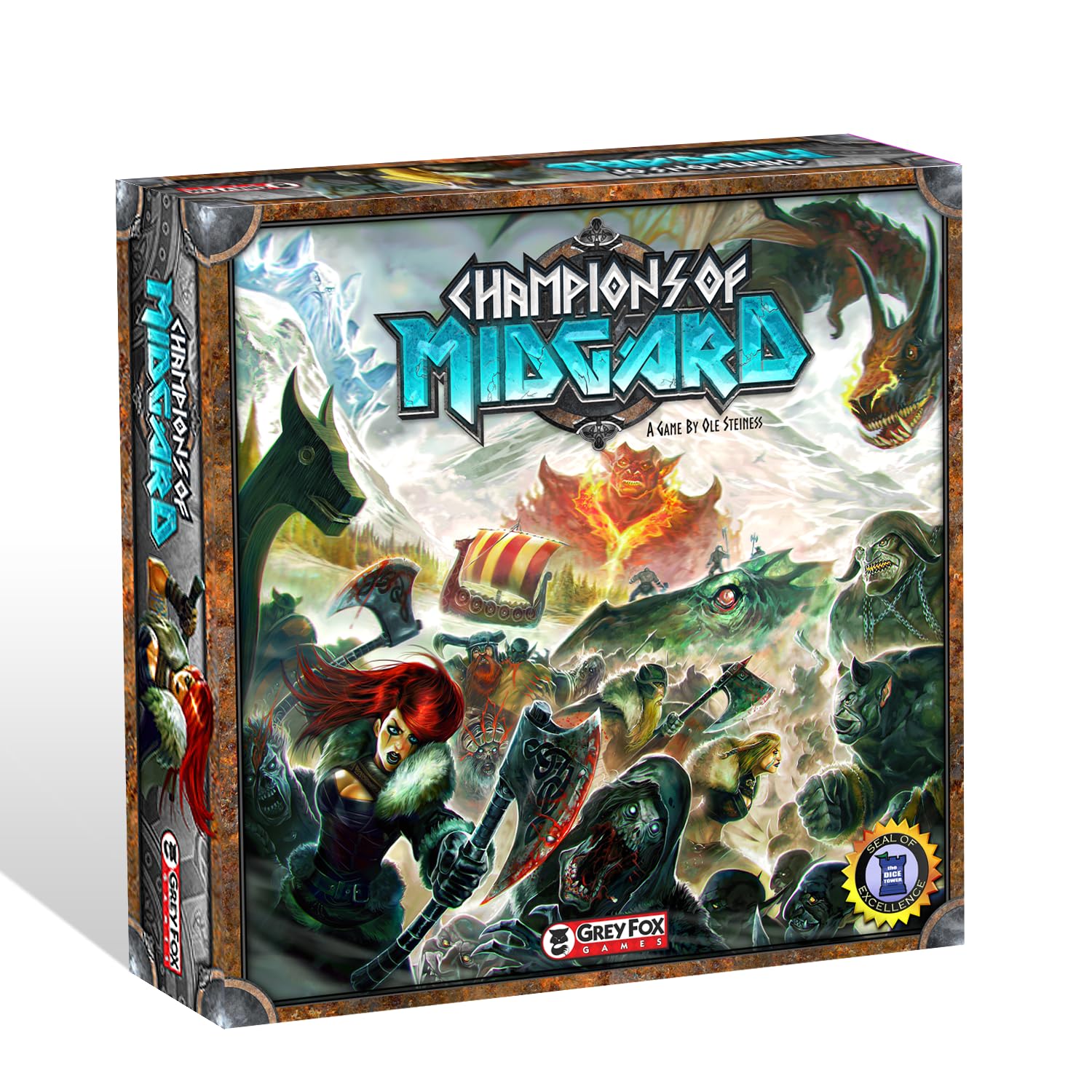
The perfect bridge for gamers who love dice battles but are ready for real strategy.
Champions of Midgard is the ultimate blend of Viking theme and Euro mechanics. You compete to become Jarl by defending your village against trolls, draugr, and mythic beasts. The core is classic worker placement — you recruit warriors, gather resources, and sail across the sea — but the monster fights use custom warrior dice, adding a push-your-luck excitement that pure Euro games often lack. It is ideal for fans of Lords of Waterdeep and God of War.
Supporting 2-4 players over 90 minutes, it’s frequently described as the best introduction to worker placement mechanics. The rulebook is easy to learn (most grasp it in under an hour), the artwork is phenomenal, and the components are high quality. The game is well-balanced — even a last-place player can win through objective bonuses, keeping everyone engaged. Multiple expansions add even more variety.
The main caveat is the dice luck. While the strategy is deep, your carefully planned battles can still be won or lost on a roll, which purists might dislike. The 2-player experience is also considered weaker than playing with 3-4 players. But for a group that enjoys a bit of chaos with their strategy, this is an addictive, thematic standout that has become a family favorite for many.
What owners love
- Excellent gateway into worker placement and Euro mechanics
- Beautiful artwork and high-quality components
- Addictive mix of strategy and dice-driven combat
Fair warnings
- Dice luck can override strategy in key battles
- 2-player mode feels loose; best played with 3-4
Reach for this if: you want a thematic, accessible Euro game that new gamers can learn quickly.
Choose another if: you demand zero luck or primarily play with just two players.
8. Days of Wonder Five Tribes

A brain-burning tactical duel where every move reshapes the board like mancala.
Five Tribes is a brilliant deviation from standard worker placement — instead of placing workers, you pick them up. The board has 30 tiles, each holding meeples from five different tribes (Assassins, Elders, Builders, Merchants, and Viziers). On your turn, you pick up all meeples from one tile and drop them one by one across the board, mancala-style. Where the last meeple lands determines your action, creating a chess-like puzzle of trade-offs.
Supporting 2-4 players with a 40-80 minute playtime, it offers multiple paths to victory through gold, resources, properties, Djinns, and items. The mechanics are easy to learn, but the strategy is deceptively deep. The artwork is beautiful, and the turn-order bidding adds a bluffing layer. The random setup ensures high replay value, and the player aids are exceptionally helpful.
The biggest risk here is “analysis paralysis” — the sheer number of tactical options can slow players down significantly, so it’s better with a group that enjoys thinking (or friendly heckling). Some groups stretch a game to 4 hours if everyone over-analyzes. It is also considered a “mid-weight” game — a perfect step up from gateway titles, but not a casual party game. If you want a deep, engaging challenge that rewards smart play, this is it.
Its clever design
- Innovative mancala-based pick-up-and-deliver mechanic
- Multiple victory paths with low luck
- Excellent 2-player mode with double turns
Be prepared for
- Analysis paralysis can slow the game drastically
- Not a gateway game — better as a step up in complexity
Best for: strategic thinkers who enjoy a heavy tactical puzzle with minimal luck.
Less ideal for: casual groups wanting a quick, light, or fast-paced game night.
Understanding the Specs
Player Count
The player count tells you how many people can play in a single game. Some games, like Race for the Galaxy, are specifically praised for an excellent 2-player mode, while others like Champions of Midgard feel noticeably weaker with only two. Check the player count against your usual group size before buying.
Playtime
Playtime is the estimated length of a single game, usually for the full player count. A 30-minute game like Harmonies is a perfect weeknight filler, while an 85-minute game like The White Castle demands a dedicated evening. Remember that first games often run longer while everyone learns the rules.
FAQ
What exactly is a Euro style board game?
Are Euro games good for two players?
Is there a difference between worker placement and dice placement?
Which Euro game is easiest to learn for beginners?
How long does a typical game of Race for the Galaxy last?
Is a solo mode common in Euro games?
What does “multiplayer solitaire” mean in reviews?
Are expansions available for these Euro games?
Which game is better for game night with casual friends?
What is the best way to learn a complex Euro game?
Final Thoughts: The Verdict
If you want one dependable pick, the euro style board games winner is the Harmonies because it delivers a strong balance of easy rules, deep strategy, and premium components in a quick 30-minute session. If you want a heavier, brain-burning challenge, grab the White Castle for its brilliant dice placement. And for a memorable, story-driven experience, the Above and Below is the one to reach for. The top pick’s 4.9-star rating across 800+ reviews confirms its broad appeal.
How We Picked
We do not accept paid placement. Every pick is matched to a real buyer and a real use-case; we do not hands-on test units.
Sources & Methodology
Specifications: manufacturer listings and product documentation. Review insights: verified customer reviews, as of August 2026. Pricing: not shown on this page (it changes often); check the current price via the retailer link.
As an Amazon Associate, WellFizz earns from qualifying purchases. This does not affect which products we feature.
Related Guides

Mo Maruf
I created WellFizz to bridge the gap between vague wellness advice and actionable solutions. My mission is simple: to decode the research and give you practical tools you can actually use.
Beyond the data, I am a passionate traveler. I believe that stepping away from the screen to explore new environments is essential for mental clarity and physical vitality.