Our readers keep the lights on and my smoothie glass nicely filled. As an Amazon Associate, I earn from qualifying purchases.
Specs are compiled from manufacturer listings and verified buyer reviews and can change over time — please confirm the key details on the product page before buying.
You want real espresso — thick, balanced, with that velvety crema — but you also want to use your own ground coffee, not overpriced plastic capsules. The challenge is finding a machine that extracts properly from loose grounds without demanding a second mortgage or a barista certification. This guide cuts through the noise to show you the machines that actually deliver on that promise, from budget-friendly starters to premium all-in-one workstations.
I’m Mohammad Maruf — the founder and writer behind WellFizz. This guide is built by comparing the manufacturers’ published specifications and the patterns across verified customer reviews, so you get each pick’s real strengths and trade-offs instead of marketing spin.
Whether you are pulling your first shot or upgrading from a pod system, these are the best options for a espresso machine for ground coffee that balances real extraction power with everyday practicality.
Our Picks at a Glance
How To Choose The Best Espresso Machine For Ground Coffee
Not every espresso machine handles pre-ground coffee well. Pod machines bypass the grind entirely, while some super-automatics only work with whole beans. You need a machine with a portafilter — a handled basket that you fill with your own grounds — and enough pressure to extract properly from loose coffee rather than a sealed capsule. The right choice depends on a few key specs and your willingness to be hands-on.
Pump Pressure — The 15-Bar Floor
A machine needs at least 15 bars of pump pressure to force hot water through finely ground, tamped coffee and produce genuine crema. Machines claiming 15 or 20 bars are the standard; anything less usually delivers a weak, watery result that tastes more like strong coffee than espresso. The 20-bar pumps you see on many mid-range models give extra headroom for consistent extraction, especially with lighter roasts.
Portafilter Size — 51mm vs 58mm
The portafilter diameter determines how much coffee you can dose and how evenly water flows through the puck. A 58mm portafilter is the commercial standard — it holds more grounds (typically 18–20g) and gives you access to aftermarket accessories like bottomless portafilters and precision baskets. The 51mm size is common on budget machines; it works fine for entry-level espresso but limits your upgrade path and typically holds around 14g, making double shots slightly less sturdy.
Temperature Control — PID vs. Thermoblock
Consistent water temperature is what separates good espresso from great espresso. A PID controller (Proportional-Integral-Derivative) maintains the brewing water within a tight range, usually 194°F–204°F, so every shot extracts the same way. Simpler machines use a Thermoblock, which heats on demand and is faster to start but can fluctuate by several degrees during a long pull. If you value repeatability, look for a machine with a PID.
Semi-Auto vs. Super-Auto for Ground Coffee
A semi-automatic machine requires you to fill the portafilter with ground coffee, tamp it, and attach it. That extra effort gives you total control over dose and tamp pressure. A super-automatic machine grinds whole beans and brews at the push of a button, but many also include a bypass doser — a small chute where you can add pre-ground coffee for a single decaf shot or a different blend. If you primarily use ground coffee, a semi-auto is simpler and more direct. If you occasionally want to use grounds in a mostly-bean machine, check for the bypass feature.
Quick Comparison
| Model | Best For | Pump Pressure | Portafilter Size | Temp Control | Amazon |
|---|---|---|---|---|---|
| CASABREWS Ultra★ Best Overall | Best Overall | 20 Bar | 58mm | 4-Setting Adjustable | Amazon |
| Magician2 Mini 5-in-1Multi-System Flex | Multi-Pod & Ground | 20 Bar | 51mm | 176–205°F Touchscreen | Amazon |
| Gevi ECMC0-SS0A1PID Powerhouse | PID Precision Under | 20 Bar | 58mm | PID + NTC | Amazon |
| HIBREW H10B | Compact Starter | 20 Bar | 51mm | PID (194–204°F) | Amazon |
| De’Longhi Classic Signature | Brand Trust & Simplicity | 15 Bar | — | Thermoblock | Amazon |
| Gevi ECMI0-SS0A1 | Built-in Grinder | 20 Bar | 58mm | Stable Temp Control | Amazon |
| Electactic CM8031 | Anti-Clog Grinder | 15 Bar | 58mm | Basic Adjustable | Amazon |
| Chefman Crema Supreme | 30 Grind Settings | 15 Bar | 58mm | Adjustable Temp & Volume | Amazon |
| Tuni E2 Gen3 | Dual Boiler Value | 20 Bar | 58mm | PID + NTC | Amazon |
| Philips 5500 Series | Super-Auto with Bypass | 15 Bar | — | QuickStart Thermoblock | Amazon |
| Ninja Luxe Café Pro | 4-in-1 Versatility | — | 58mm | Barista Assist Tech | Amazon |
In‑Depth Reviews
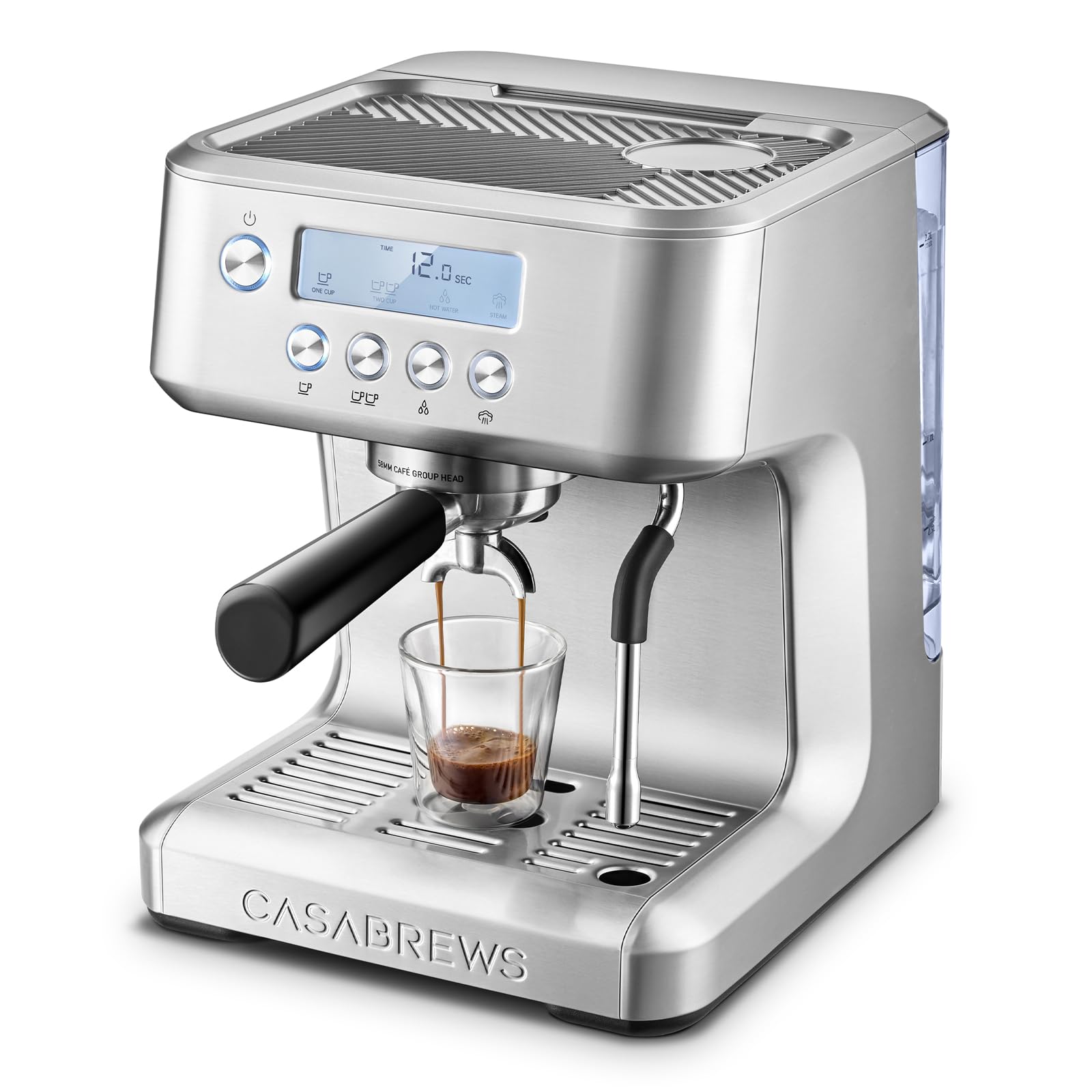
1. CASABREWS Ultra Espresso Machine
Our pick — 4.5★ from 800+ verified ratings; the strongest balance of quality and price.
the balance where pro-level hardware meets a price that still feels like a deal.
The CASABREWS Ultra delivers the kind of shot that makes you question why you ever tolerated pods. Its 20-bar Italian pump and 1350W boiler (a powerful heating element) push water through your grounds with enough force to create thick, golden crema — the foamy layer on top that signals a proper extraction. The 58mm portafilter matches what commercial cafes use, meaning you can dose 18–20 grams of ground coffee and get a balanced double shot without choking the machine.
The LCD display and four adjustable brew temperatures let you fine-tune between warmer and cooler pulls depending on your roast. The 73 oz removable water tank is big enough for several days of back-to-back drinks without refilling. At 13.6 pounds, this machine is substantially heavier than the Magician2 Mini (which is 8 pounds) — that mass comes from real metal components and a larger boiler, which translates to better heat stability during consecutive shots. The steam wand produces microfoam fine enough for latte art, and cleanup takes about two to three minutes per session. The recurring trade-off is that the included pressurized baskets produce decent crema, but owners find a bottomless portafilter (sold separately) open up much better results with freshly ground beans.
What Wins People Over
- Professional 58mm portafilter — compatible with standard aftermarket accessories.
- Adjustable brew temperature with four settings to match different roasts.
- Powerful steam wand that textures milk quickly for lattes and cappuccinos.
- Large 73 oz water tank reduces refill frequency.
The Honest Trade-Off
- Pressurized baskets limit crema quality; a bottomless portafilter is a worthwhile upgrade.
- Heavier build (13.6 lbs) makes it less portable than compact alternatives.
The crowd favorite: This machine suits anyone who wants real espresso from ground coffee without spending Breville money — it pulls café-quality shots after a short learning curve.
Think twice if: You want a completely hands-off experience; this is a semi-automatic that requires you to fill and tamp the portafilter yourself.
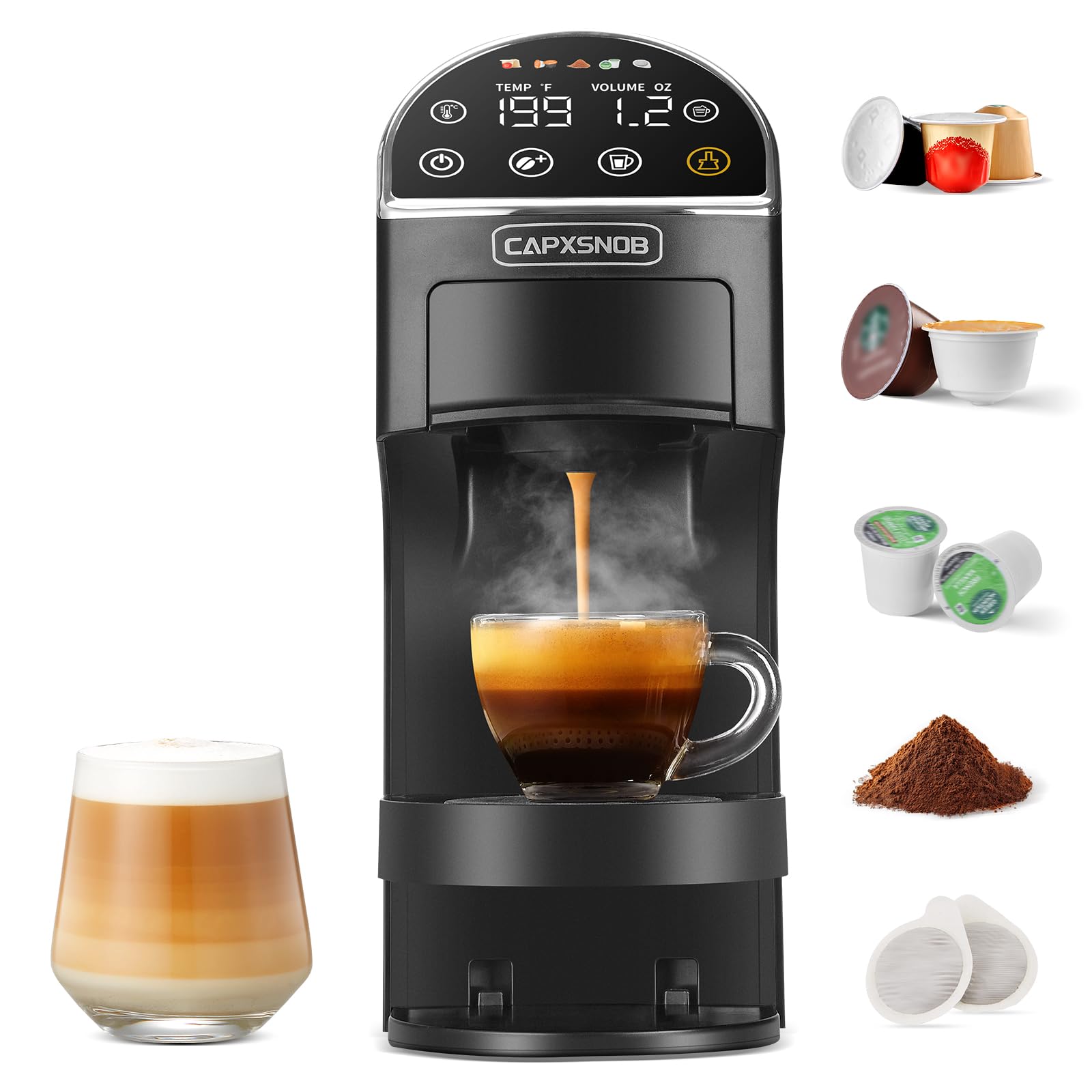
2. Magician2 Mini 5-in-1 Coffee Maker
The only machine on this list that happily takes ground coffee, K-Cups, Nespresso, and Dolce Gusto pods.
The Magician2 Mini is built for the household where one person wants espresso from their own grounds and another wants the convenience of pods. It includes five interchangeable adapters, and the machine automatically detects which capsule type you inserted, adjusting temperature and water volume for optimal extraction. The slim profile (just 4.4 inches wide and 11 inches tall) fits under low cabinets where a typical 12-inch-deep machine would not. The LED touchscreen lets you set brewing temperature from 176°F to 205°F and cup volume from 0.8 to 12 ounces, with a memory function that saves your preferred settings.
The 20-bar pump and built-in pre-infusion (a low-pressure wetting stage before full extraction) help reduce bitterness and improve flavor balance. The 42 oz water tank is smaller than most stand-alone espresso machines — expect to refill after about three to four cups. The biggest real-world quirks are the after-drips that continue for several seconds post-brew and the audible pump noise, which owners describe as louder than typical home machines. For ground coffee specifically, the ground filter and 51mm ESE basket work well, but the machine shines brightest when you switch between pod formats daily.
Who it fits: The household with mixed coffee habits — one member using ground coffee, another using pods — who wants one appliance on the counter instead of two.
The catch: The 2-year limited warranty with an extended 2-year replacement offer is solid, but the small reservoir and slow drip after brewing are consistent owner notes.
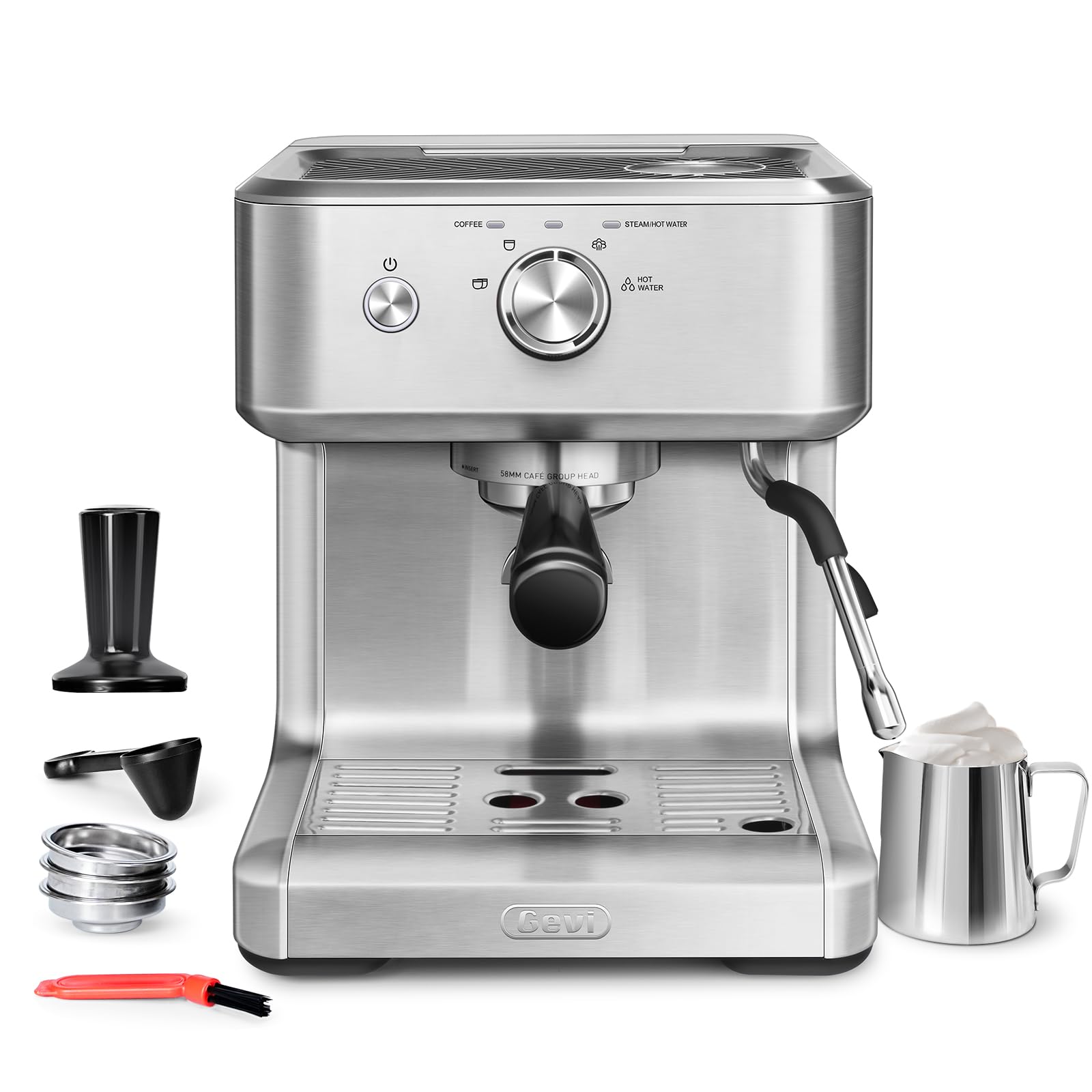
3. Gevi 58mm Commercial Espresso Machine
PID temperature precision at a price point where most machines still use guesswork.
The Gevi ECMC0-SS0A1 brings dual temperature control via PID and NTC sensors (electronic controllers that keep water within a tight temperature window) to the sub- category, maintaining brew water between 194°F and 204°F. That consistency is the difference between a shot that tastes balanced and one that swings sour or bitter from shot to shot. The 58mm portafilter, single and dual wall filter baskets in both one-cup and two-cup sizes, tamper, and milk frothing pitcher are all included — you do not need to buy anything extra to start brewing immediately.
The 2.2-liter (74 oz) water tank is generous, and the single-dial operation adjusts both shot volume (four settings from espresso to Americano) and temperature (four settings across the 194°F–204°F range). At 13.7 pounds it is nearly identical in weight to the CASABREWS Ultra, with a similar footprint (12.2 x 10.3 x 13 inches). The thing owners praise most is the overall functionality — 90 separate mentions highlight how well the machine performs for its price. The steam wand produces adequate microfoam, though the real draw here is the temperature stability and the stainless steel body that resists scratches and fingerprints.
Why It Stands Out
- PID + NTC temperature control for repeatable, stable extraction.
- Complete kit includes four filter baskets, tamper, and milk pitcher from the start.
- Single-dial operation simplifies adjusting volume and temperature for beginners.
One Limitation
- The included steam wand works well but lacks the fine control of pricier dual-boiler machines.
Best for: The budget-conscious buyer who refuses to compromise on shot repeatability — the PID control here beats every other machine in its price bracket for consistency.
Consider another if: You need to pull shots and steam milk simultaneously; this is a single-boiler design that requires a brief wait between brewing and steaming.
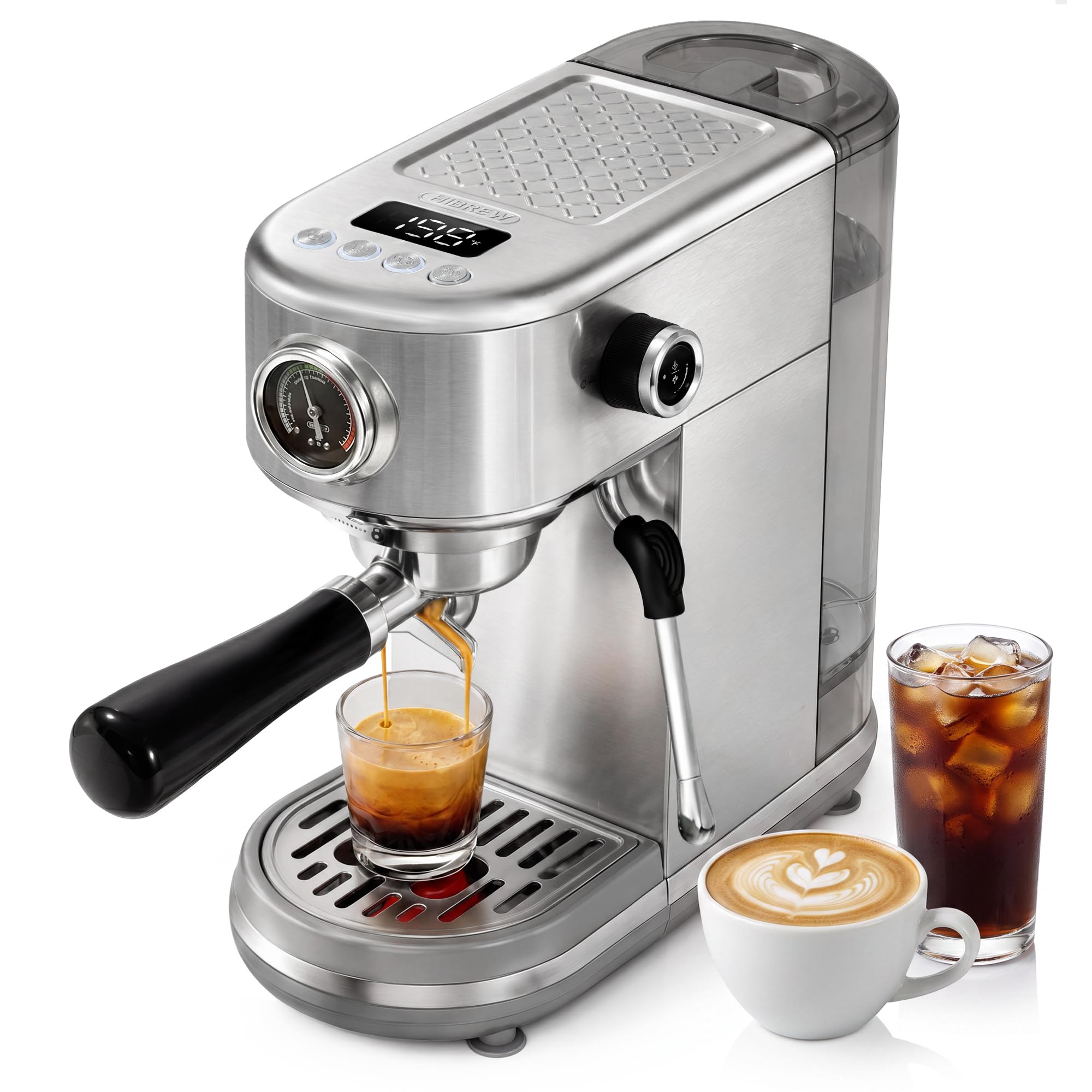
4. HIBREW H10B Programmable Espresso Machine
A featherweight machine that monitors extraction pressure in real time — rare at this size and price.
The HIBREW H10B packs a 20-bar pump, a visible pressure gauge, and PID temperature control (adjustable from 194°F to 204°F) into a body that weighs just 9.6 pounds and measures only 5 inches wide. That slim footprint makes it the best option for tight countertops, dorm rooms, or office pantries where every inch counts. The pressure gauge is not decorative — it lets you see whether your tamp and grind are producing the right 9-bar extraction range, so you can dial in your technique without guesswork. The LED display shows the preset temperature on standby and switches to a real-time extraction timer once you start brewing.
The 51mm portafilter is smaller than the 58mm standard, but the included pressurized baskets (baskets that build pressure artificially) work well with pre-ground coffee and produce consistent crema. The stainless steel steam wand reaches 257°F–302°F and whips milk into velvety microfoam quickly — buyers report it heats to steaming temperature in under 30 seconds. The suction feet hold the machine firmly in place during tamping and frothing, which is a thoughtful detail given its light weight. The main space concession is the 44 oz water tank, which is smaller than the 73 oz tank on the CASABREWS Ultra, but still enough for several drinks before refilling.
Great For
- Real-time pressure gauge helps beginners learn proper tamp and grind technique.
- Compact 5-inch width fits cramped spaces where full-size machines won’t.
- Fast heat-up — reaches brew temperature in under 25 seconds and steam in under 30 seconds.
Keep in Mind
- 51mm portafilter limits dose to roughly 14g and reduces aftermarket accessory options.
- Low clearance under the portafilter can cause splashing with taller mugs.
Who it is for: The space-starved home barista who still wants smart features like PID control and a pressure gauge — this is the most feature-dense machine below 10 pounds.
Who should skip it: Anyone who already owns 58mm accessories or wants to use a bottomless portafilter; the 51mm size limits compatibility.
5. De’Longhi Classic Signature Espresso Machine
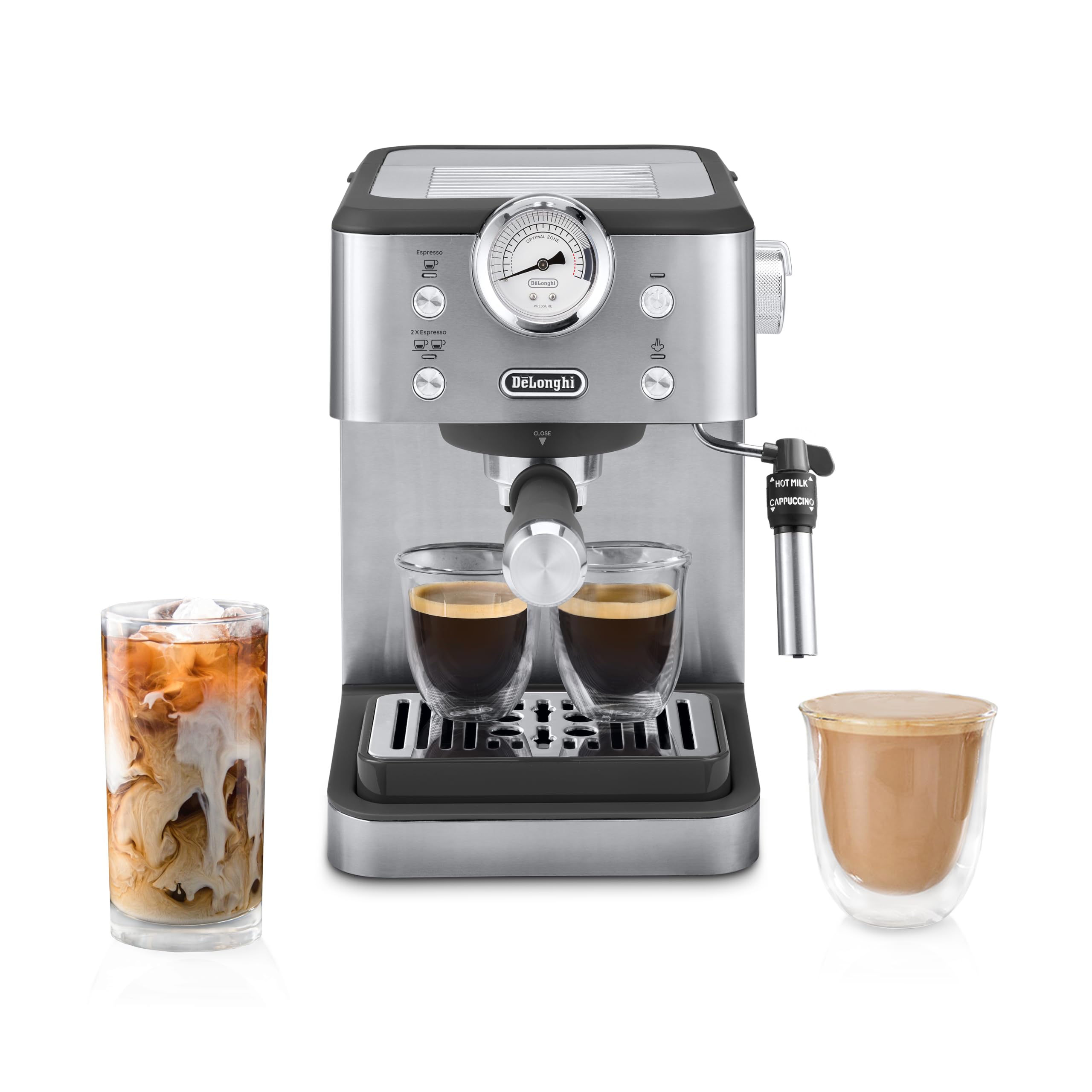
The world’s best-selling espresso machine maker’s latest compact — and it shows in the sheer number of happy owners.
The De’Longhi Classic Signature is the entry point into the brand that sells more espresso machines than anyone else globally, and the volume of positive feedback reflects why. The 15-bar Italian professional pump delivers the pressure needed for proper extraction, while the Thermoblock heating system (an on-demand heater that reaches brewing temperature in seconds) means you are not waiting around for the machine to warm up. Preset single and double shot buttons take the guesswork out of dosing, and the adjustable two-setting steam wand lets you switch between silky steamed milk for lattes and thicker microfoam for cappuccinos.
The compact stainless steel design (11.14 x 8.89 x 12 inches, 9 pounds) occupies minimal counter space, and the reusable filter means you never need to buy paper pods. Coffee quality is the aspect owners praise most, with 109 separate mentions highlighting the rich crema and balanced flavor. The honest trade-off is temperature consistency — some owners note the water temperature runs between 164°F and 178°F, which is below the 195–205°F balance, leading to slightly under-extracted shots if you do not preheat the machine and the portafilter. The plastic tamper is also a weak point; replacing it with a metal one improves shot quality noticeably.
The Big Strengths
- Preset single and double shot buttons make daily operation easy.
- Compact 9-pound build fits easily under standard cabinets.
- Proven brand with massive owner community and available support resources.
The Known Quirk
- Brew temperature can fall short of the ideal range without preheating; the included tamper is lightweight and worth upgrading.
Reach for this if: You want a trusted brand with a simple, repeatable process for daily espresso and frothing, and you are willing to preheat the portafilter for best results.
Look elsewhere if: You demand precise PID temperature control and want to adjust every variable; this is a simpler machine by design.
6. Gevi 20 Bar Espresso Machine With Built-In Grinder
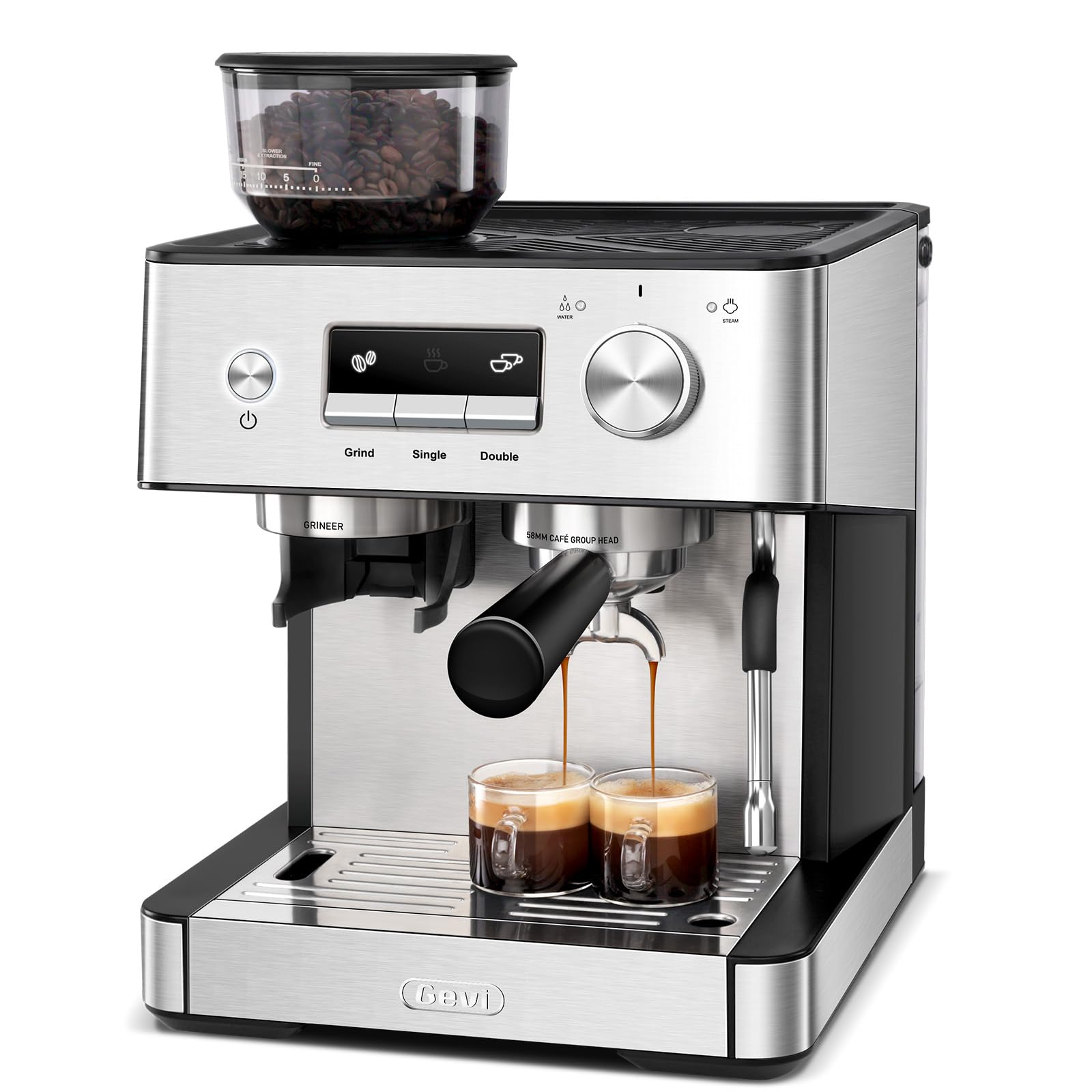
One machine that grinds your beans, doses them, and pulls the shot — no separate grinder purchase needed.
The Gevi ECMI0-SS0A1 eliminates the second appliance by integrating a precision conical burr grinder directly into the espresso machine. You fill the bean hopper, select your grind setting, and the machine dispenses the grounds straight into the 58mm portafilter. The 20-bar pump handles extraction, and the stainless steel steam wand froths milk for lattes and cappuccinos. The 2.3-liter removable water tank is generous, and the semi-automatic operation gives you control over shot volume while the grinder and frother handle the labor-intensive parts.
At 9.3 pounds, this Gevi is actually lighter than the HIBREW H10B despite having a grinder built in, though its footprint is larger (11.49 x 13.03 x 16.1 inches) to accommodate the bean hopper and grinder mechanism. The thing owners praise most is the overall functionality — 22 mentions highlight how well the integrated system works for the price. Owners compare it favorably to Breville machines costing significantly more, with the caveat that the espresso does not come out piping hot for everyone and the steam wand requires practice to produce consistent microfoam. The size is a mixed point — some find it compact for an all-in-one, while others note it takes up more counter space than a separate machine and grinder combination.
This pick is for: The buyer who wants a single-appliance solution and is willing to accept a moderate learning curve with the grinder settings and steam wand technique.
One shortcoming: The espresso temperature can run a bit cool for some tastes, and the 30-gear adjustable grinder needs dialing in to match your specific bean and roast level.
7. Electactic 15 Bar Espresso Machine (2026 Upgrade)
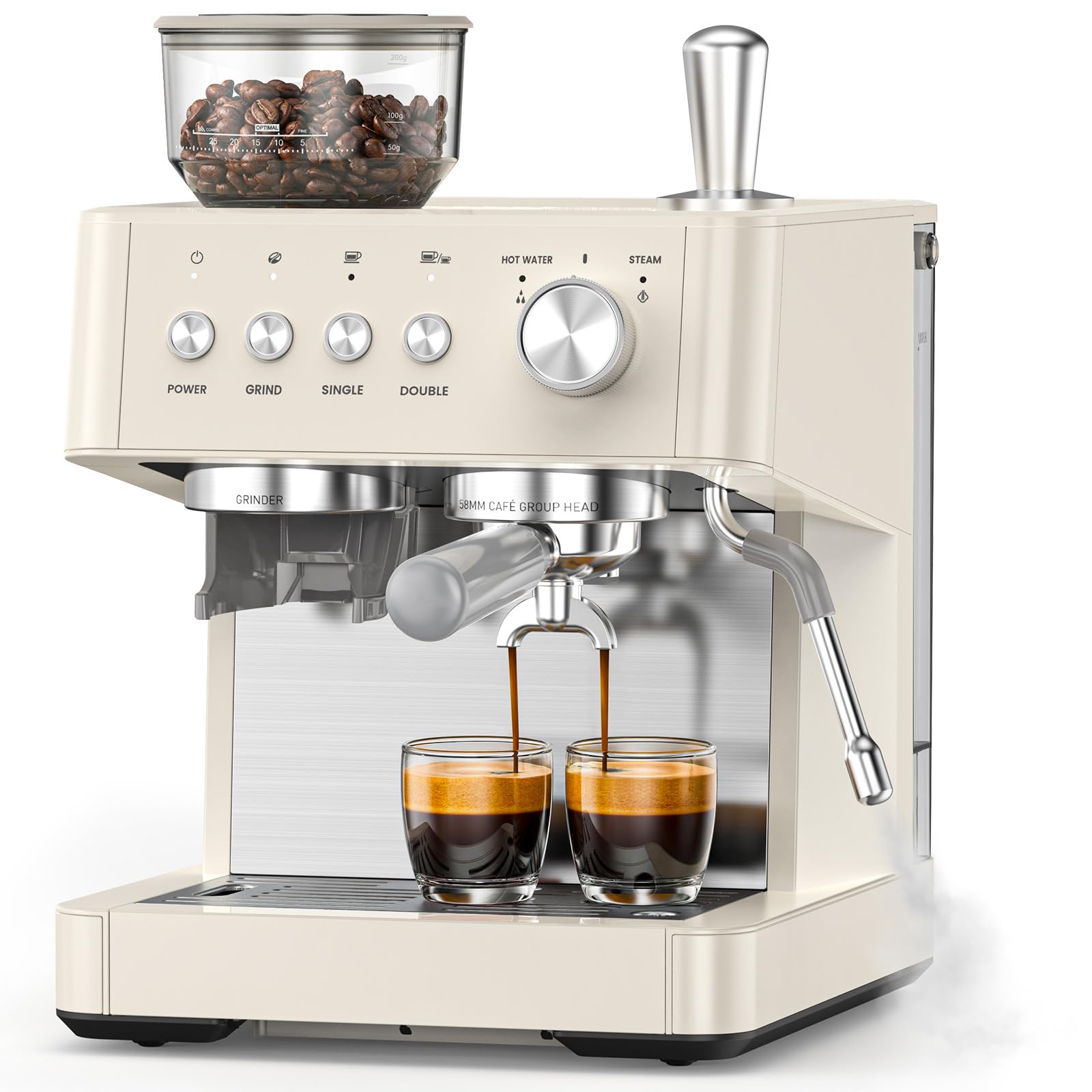
The grinder path here is 20% wider with a reinforced auger — built specifically to handle oily dark roasts that jam other machines.
The Electactic CM8031 addresses the single biggest frustration with integrated-grinder espresso machines: clogs. Its 20% wider polished chute and reinforced helical auger are designed to eject grounds instantly, even from sticky, oily beans. The 15-bar pump extracts flavor and aroma, and the powerful steam wand produces silky microfoam for lattes and cappuccinos. The 2.3-liter removable water tank and detachable drip tray make cleaning straightforward, and the ETL certification (a safety standard mark) adds confidence.
At 18 pounds, this is one of the heaviest machines in this guide — the extra weight comes from the stainless steel construction and the more sturdy grinder mechanism. The 58mm portafilter and included single and dual wall filter baskets give you flexibility between pressurized and non-pressurized brewing. Owners describe the coffee as rich, smooth, and comparable to much more expensive machines, with the caveat that the workflow is a three-step process (grind, select shot, manually add hot water for Americanos) rather than a single-button affair. The steam wand requires immediate wiping after each use to prevent milk residue from baking on.
What Makes It Different
- Wider grinder chute and reinforced auger resist clogging from oily beans.
- Heavy stainless steel build (18 lbs) provides stability during grinding and tamping.
- Complete accessory kit includes 58mm portafilter, tamper, and stainless steel milk jug.
Workflow Note
- Brewing an Americano requires a separate hot water step rather than one continuous pour.
Best for: Dark-roast lovers who have been frustrated by grinder jams in other all-in-one machines — the anti-clog design directly addresses that pain point.
Consider another if: You want a single-button Americano experience; this machine separates the hot water step.
8. Chefman Crema Supreme 15 Bar Espresso Machine

Thirty grind settings and a 3-liter tank make this the most accommodating all-in-one for households that drink a lot of coffee.
The Chefman Crema Supreme gives you 30 adjustable grind settings on its conical burr grinder (a grinding mechanism that crushes beans between two abrasive cones for uniform particle size), which is more granular than most machines in this class. The 15-bar pump, combined with a visible pressure gauge and adjustable shot temperature and volume, gives you the tools to dial in your preferred extraction profile. The 3-liter removable water tank is the largest in this guide — big enough to serve a brunch table or multiple back-to-back drinks without refilling.
The 58mm portafilter includes both single and double shot baskets, and the integrated steam wand handles milk frothing. At 21.8 pounds, this is the heaviest machine on the list, reflecting its substantial build and larger internal components. The machine stores all accessories — milk pitcher, tamper, cleaning tools — inside the detachable drip tray, which keeps the counter organized. Performance is the aspect owners praise most (77 mentions), with consistent coffee quality and good crema cited as the standout traits. The mixed feedback centers on grinder reliability — some units develop issues over time — and the fact that the machine can overheat during extended frothing sessions.
Who it fits: The coffee enthusiast who wants maximum grind adjustability and a huge water capacity for entertaining or large households.
The honest note: The grinder reliability gets mixed feedback, and the machine runs warm during prolonged use — treat it kindly with descaling and cooldown breaks between multiple milk drinks.
9. Tuni E2 Gen3 Dual Boiler Espresso Machine
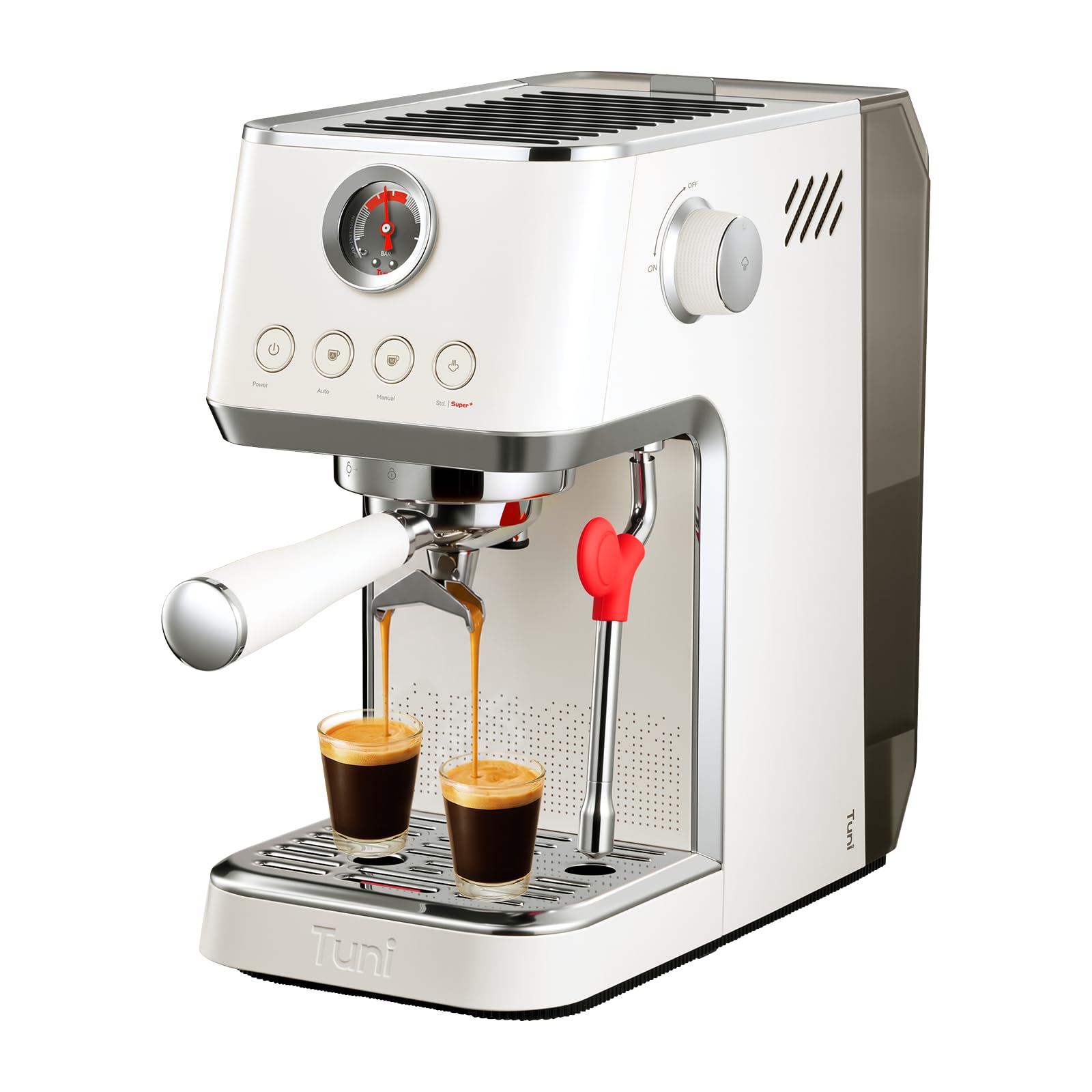
Dual boilers at a single-boiler price — you can brew and steam at the same time without a single second of waiting.
The Tuni E2 Gen3 uses separate boilers for brewing and steaming, which means you can pull a shot and froth milk simultaneously without the temperature drop that plagues single-boiler machines. The 58mm commercial-grade brew head distributes water evenly across the puck, and the visible pressure gauge lets you monitor extraction in real time. PID and NTC dual temperature control keep the brew water precise, while the upgraded Super Steam mode delivers continuous, dry steam for fast microfoam.
The machine supports both hot and cold brewing — add ice water to the tank for cold brew concentrate in a short time. The included kit is generous: four filter baskets (two single-wall, two dual-wall), a 58mm portafilter, a stainless steel tamper, a 400ml milk pitcher, a dosing ring, and a cleaning kit. At 13 pounds and 7.4 inches wide, it is more compact than its dual-boiler internals suggest. Nearly every owner rates the espresso quality as professional, with the caveat that narrow water tank opening makes filling slightly awkward and the warm-up time is longer than single-boiler designs — the trade-off for having two separate heating systems.
Why It Impresses
- Dual boilers allow simultaneous brewing and steaming — no waiting between steps.
- PID + NTC temperature control ensures repeatable extraction.
- Includes hot and cold brewing functions for year-round versatility.
One Trade-Off
- Warm-up takes longer than single-boiler machines due to heating two separate boilers.
Perfect for: The home barista who frequently makes milk-based drinks and values workflow speed — simultaneous brew and steam is a genuine time-saver.
Not ideal if: Counter space is extremely tight; while slim, the machine is deeper (12.9 inches) than some compact alternatives.
10. PHILIPS 5500 Series Fully Automatic Espresso Machine
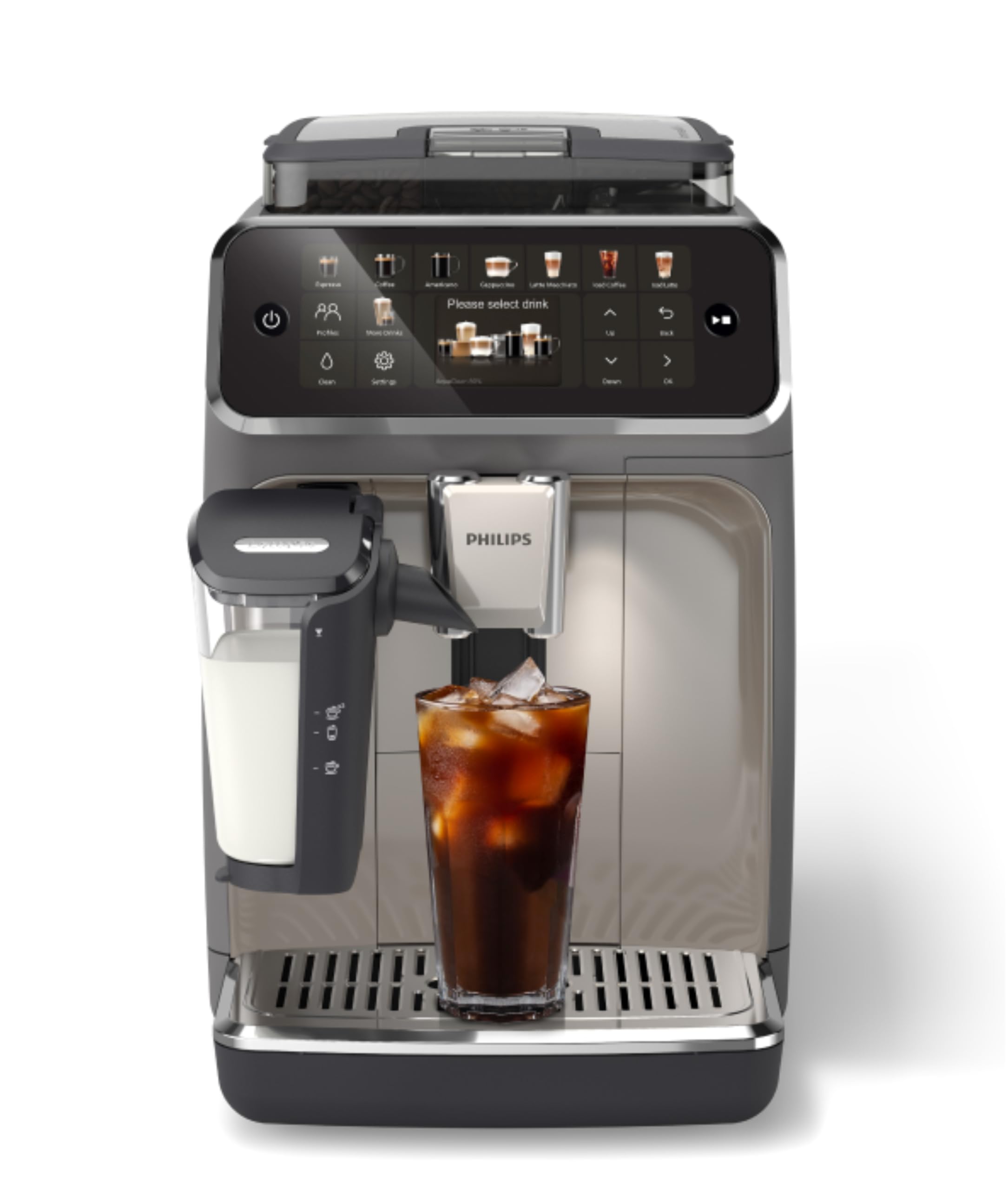
A super-automatic that grinds whole beans by default but includes a bypass for your own ground coffee — the best of both worlds.
The Philips 5500 Series is designed for convenience-first drinkers who want 20 hot and iced presets at the touch of a screen, but it still accommodates ground coffee through its bypass doser. The integrated ceramic grinder handles whole beans silently (SilentBrew technology earned Quiet Mark certification, and the machine is 40% quieter than earlier Philips models), while the bypass chute lets you add pre-ground coffee for a single shot or a different blend. The LatteGo milk system froths automatically and cleans in 10 seconds with no internal tubes — just three dishwasher-safe parts.
The 1.8-liter water tank is smaller than most semi-automatic machines, but the QuickStart feature means the machine is ready to brew in 3 seconds, which offsets the refill frequency. The color touchscreen lets you save up to four user profiles with customized strength, volume, and milk preferences. Owner feedback on performance is strong (46 positive mentions), with most noting the coffee quality and ease of use. The mixed feedback centers on reliability — a small percentage of units develop issues — and coffee temperature, which some find lukewarm compared to semi-auto machines. The AquaClean filter lasts up to 5000 cups before needing replacement, which significantly reduces descaling frequency.
This machine is for: The household that mostly uses whole beans but wants the occasional decaf or guest drink from ground coffee — the bypass doser makes that smooth.
A reality check: The puck size is small, so some owners find the espresso less concentrated than what a 58mm portafilter produces; the bypass works best for a quick single cup rather than dialing in a perfect shot.
11. Ninja Luxe Café Pro Series ES701

Four appliances in one: espresso, drip coffee, cold brew, and hot water — with a built-in scale that weighs your dose.
The Ninja Luxe Café Pro rethinks the home coffee setup by combining an espresso machine, a drip coffee maker, a cold brew system, and an independent hot water dispenser into a single unit. The integrated conical burr grinder has 25 grind settings, and the Barista Assist Technology recommends grind size based on your previous brew, adjusts temperature and pressure mid-shot, and guides you through weight-based dosing via a built-in scale. The integrated tamper lets you press the grounds with a lever instead of using a separate tool, keeping the process mess-free.
The Dual Froth System Pro uses both steaming and whisking to create microfoam from dairy or plant-based milk, with five preset froth functions including cold foam. The XL milk jug froths enough for two drinks at once. At 27.1 pounds and a 13.39 x 12.48 x 14.84-inch footprint, this is the largest machine on the list — it needs dedicated counter space. The 68 oz water tank supports multiple drink styles without frequent refills. Performance is the top praise (116 mentions), with owners consistently saying the espresso and coffee quality rivals high-end coffee shops.
What It Does Differently
- Built-in scale and Barista Assist Tech guide grind size, dosing, and brew parameters.
- Integrated tamper eliminates the need for a separate tamper and reduces mess.
- Five froth presets including cold foam for dairy and non-dairy milk.
Things to Know
- Large footprint and heavy weight (27.1 lbs) require dedicated counter space.
- Occasional under-dosing from the grinder means you may need to run a second grind cycle.
Best for: The household that wants espresso, drip coffee, and cold brew from one machine — it replaces three separate appliances and guides you through every step.
Consider another if: Counter space is limited or you only drink espresso; the Ninja’s versatility comes with a significant size and weight penalty.
Understanding the Specs
Pump Pressure (15 Bar vs. 20 Bar)
The pump pressure is measured in bars — one bar is roughly equal to atmospheric pressure at sea level. 15 bars is the minimum for producing genuine espresso crema from ground coffee. Most machines in this guide use a 20-bar pump, which offers a safety margin that helps maintain consistent pressure throughout the shot, especially if your grind is slightly too fine or your tamp is uneven. Higher pressure alone does not make better espresso, but a 20-bar pump with a good over-pressure valve delivers more reliable results across different beans and grind sizes.
Portafilter Diameter (51mm vs. 58mm)
The portafilter is the handled basket you fill with ground coffee. The diameter determines how much coffee you can dose and how evenly water flows through the puck. A 58mm portafilter holds roughly 18–20 grams of coffee — the standard for a proper double shot — and gives you access to the widest range of aftermarket accessories (bottomless portafilters, precision baskets, distribution tools). A 51mm portafilter typically holds around 14 grams. It still makes good espresso, but it limits your ability to upgrade and dose larger shots.
PID vs. Thermoblock Temperature Control
Water temperature during extraction directly affects flavor — too cool and the coffee tastes sour, too hot and it turns bitter. A PID controller (Proportional-Integral-Derivative) uses a feedback loop to maintain the water within a tight range, usually within 1°F of your set temperature. This gives you repeatability shot after shot. A Thermoblock heats water on demand as it passes through, which means faster startup but more temperature fluctuation during a long pull. For ground coffee, PID control is the preferable feature if you value consistency.
Pressurized vs. Non-Pressurized Baskets
Pressurized baskets have a single small hole at the bottom that builds pressure artificially, creating crema even with pre-ground coffee or a less-than-perfect tamp. They are forgiving and beginner-friendly. Non-pressurized baskets (often called single-wall baskets) have multiple small holes and rely entirely on the fineness of your grind and the firmness of your tamp to build pressure. They produce better texture and flavor but require a proper espresso grinder. Many machines in this guide include both types, so you can start with the pressurized basket and switch to non-pressurized as your technique improves.
