Our readers keep the lights on and my smoothie glass nicely filled. As an Amazon Associate, I earn from qualifying purchases.
Specs are compiled from manufacturer listings and verified buyer reviews and can change over time — please confirm the key details on the product page before buying.
Sitting down for a workday shouldn’t leave you counting the minutes until you can stand up and stretch your aching lower back and hips. The right chair actively supports those trouble spots, making eight hours at a desk manageable. Focus on adjustments that target your specific pain points.
I’m Mohammad Maruf — the founder and writer behind WellFizz. This guide is built by comparing the manufacturers’ published specifications and the patterns across verified customer reviews, so you get each pick’s real strengths and trade-offs instead of marketing spin.
This guide separates chairs that look ergonomic from those that genuinely relieve lower back and hip pressure. These are the best ergonomic office chair for lower back and hip pain picks on the market right now.
Our Picks at a Glance


How To Choose The Best Ergonomic Office Chair For Lower Back And Hip Pain
Not all ergonomic chairs are built the same; your coworker’s favorite may leave you sore. Lower back and hip pain stems from tailbone pressure, a spine-to-chair gap, or a seat edge digging into your thighs.
Adjustable Lumbar Support That Goes Inward
A support pad that only moves up and down (2D) is common, but the one that also pushes forward or backward (3D or 4D) fills the curve of your lower back more precisely. For hip pain, that forward push can tilt your pelvis into a healthier position, taking pressure off the hip joints.
Seat Cushion Depth and Firmness
Your hips bear the brunt of your weight. A foam seat that is too soft lets your hips sink and rotate inward, while a mesh seat with good tension distributes weight more evenly. A waterfall front edge (curved down) also prevents the seat from pinching under your thighs, which can refer pressure into the hips.
Seat Depth Adjustment
This is often overlooked. If the seat pan is too long, it presses behind your knees; too short, and your thighs are unsupported. A chair that slides forward or backward lets you set the right distance so your hips stay properly positioned against the backrest.
Recline and Tilt Mechanism
Synchronous tilt keeps your feet on the floor and spine in a healthy curve, reducing lower back disc pressure. A simple rocker that only tips back can slide your hips forward.
Quick Comparison
| Model | Best For | Lumbar Support | Seat Material | Weight Capacity | Amazon |
|---|---|---|---|---|---|
| CASASIO Ergonomic Chair★ Best Overall | All-day foam comfort | 2D adjustable | Virgin foam | 300 lbs | Amazon |
| Staples DexleyBest Value Mesh | Budget mesh value | Adjustable | Mesh | — | Amazon |
| ELABEST Mesh ChairBionic Back | Bionic spine support | Adjustable (synchro-tilt) | Mesh | — | Amazon |
| GABRYLLY Ergonomic Chair | Reclining with footrest | 2-way adjustable | Mesh | 300 lbs | Amazon |
| Branch Ergonomic Chair | 8-point adjustability | Adjustable | Mesh back, foam seat | — | Amazon |
| WorkPro Quantum 9000 | Long-term durability | Ratchet-adjustable | Mesh | 275 lb | Amazon |
| FLEXISPOT ErgoX-PRO | 5D lumbar precision | 5D extendable | Cloudtech foam or mesh | 551 lbs | Amazon |
| HON Wave Big and Tall | Heavy-duty build | Height + width adjustable | Stretch mesh | 450 lb | Amazon |
| Ergohuman Eurotech GEN2 | Lifetime warranty | Adjustable + flexible | Mesh | 275 lbs | Amazon |
| Steelcase Leap | Industry gold standard | Lower back firmness dial | Foam upholstery | — | Amazon |
| Hbada X7 Smart | Auto-adjusting tech | 3D auto-tracking | Ventilated mesh + dual fans | 150 kg | Amazon |
In‑Depth Reviews
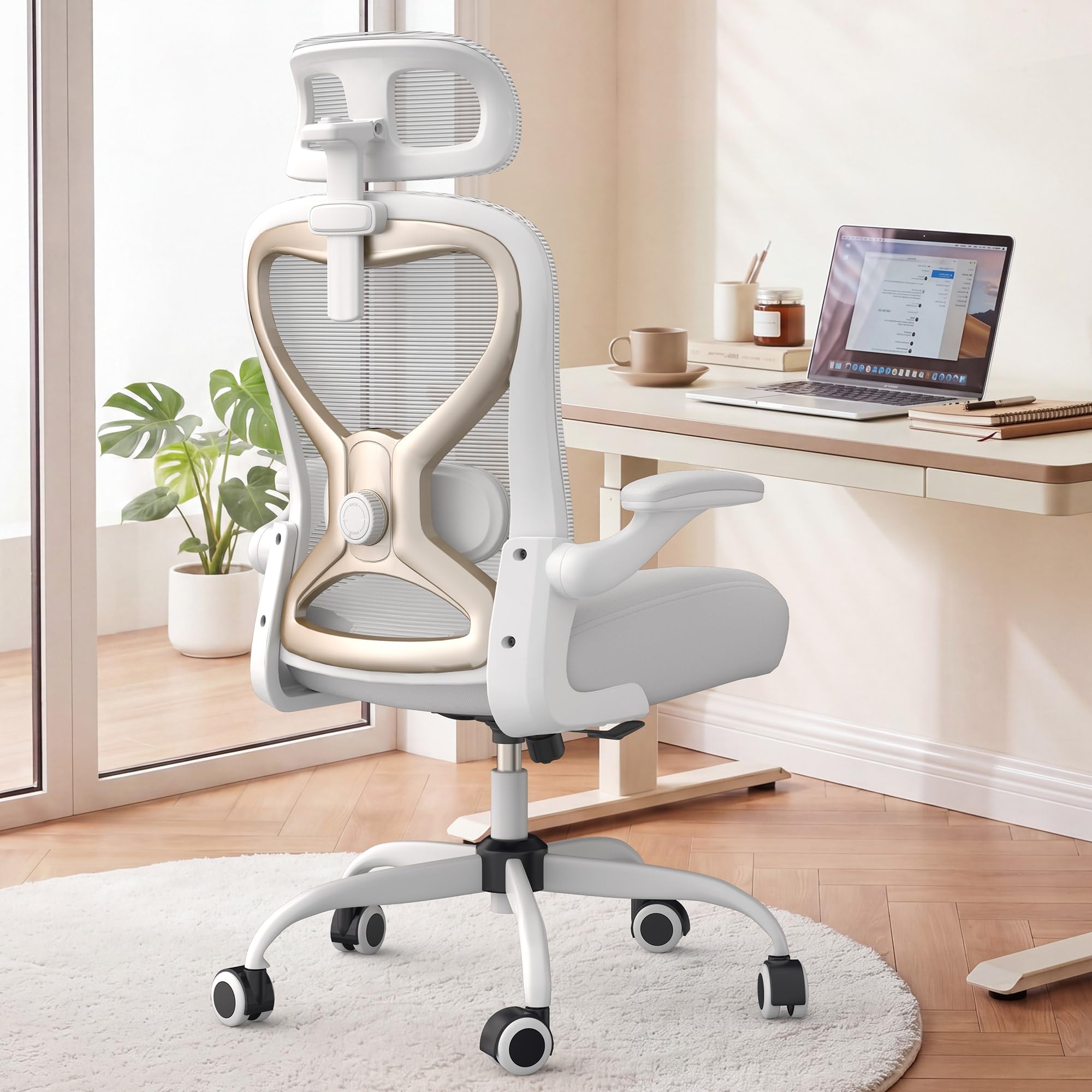
1. CASASIO Ergonomic Office Chair for Back & Neck Pain Relief
Our pick — over 4.5★ from 250+ verified ratings; the strongest balance of quality and price.
The virgin foam seat that keeps hips happy for eight straight hours.
The standout feature here is the virgin foam seat, a thick cushion that evenly distributes your weight so you don’t get that familiar hip soreness after a full shift. Buyers report that the foam is resilient enough to prevent the “bottoming out” feeling that plagues cheaper chairs, and the data backs it up: comfort is the single most-discussed aspect, with over 130 owners praising it. The contoured mesh back works in tandem with a 2D adjustable lumbar cushion that slides up and down but also pushes into your lower back’s curve, a key move for reducing hip strain by tilting your pelvis correctly.
Flip-up armrests let you tuck the chair under a shallow desk, a practical bonus for small home offices. The reinforced metal base supports up to 300 lbs, and the gentle rocking motion (with adjustable tension) helps improve blood flow during long sits. At roughly 4.7 stars across 300+ owners, this chair earns its top spot by pairing genuine lower-back relief with a seat that treats your hips kindly — a rare combo at this price.
One trade-off to note: the 2D lumbar support is height and depth adjustable, but it lacks the 3D or 4D precision of pricier options. For most users with moderate lower back and hip pain, it is more than sufficient.
What wins people over
- Virgin foam seat prevents hip soreness even after 8+ hours of sitting
- Contoured mesh back aligns with your spine for steady support
- Dual-direction adjustable lumbar cushion targets the lower back curve precisely
- Flip-up armrests save space and add workspace flexibility
What to weigh before buying
- Lumbar support is 2D (up/down + in/out), not 3D or 4D for more granular positioning
- White/gold color option may not suit all office aesthetics
The pick for foam lovers: This is the chair to reach for if you need plush hip cushioning and reliable lower back support for 8+ hour days, without the sticker shock of premium brands.
Who might want more: If you require highly granular lumbar positioning with depth, height, and angle controls, a chair with 4D or 5D support will suit you better.
2. Staples Dexley Ergonomic Task Chair
The mesh chair that cools your back while supporting your spine.
The Dexley is an immediate upgrade if you are coming off a wooden kitchen chair, as many owners mention. Its adjustable lumbar support and contoured high-back frame are designed to reduce fatigue, and the full mesh construction — both back and seat — keeps air moving so you don’t get sweaty after a few hours. The seat itself is mesh, which is excellent for cooling but offers a firmer feel than foam; owners find it comfortable for 10+ hour use once they dial in the settings.
Adjustability here is strong for the price: seat height, tilt tension, tilt lock, recline, headrest height and angle, and 3D armrests (height, width, depth). The 5-star base with smooth-gliding casters rolls easily on carpet. The thing everyone raves about is the immediate comfort improvement — the data shows comfort is the top positive aspect, with 67 owners praising it. A small but recurring note from buyers is that the stability is mixed; a few report the seat can feel loose after extended use, so it is worth checking the bolts periodically.
Breathable and adjustable: The mesh back keeps you cool, and the lumbar support does help your back through a full workday. Excellent value for anyone moving from a basic chair to proper ergonomic support.
Best for budget-conscious mesh fans: This is the pick if you want breathable support and a wide range of adjustments without spending a premium. skip it if you prefer a cushioned foam seat over a firm mesh one.
3. ELABEST Ergonomic Mesh Office Chair
A bionic-curve backrest that follows your spine’s natural shape.
The ELABEST uses a bionic-curve backrest, meaning the mesh back is shaped to mimic the natural curve of your spine rather than being a flat panel. This is paired with an adjustable lumbar support and a synchro-tilt mechanism — tested by the manufacturer to provide effective lower back relief even after 8+ hours of continuous use. The synchro-tilt feature is key: it lets the seat and back move together as you recline, keeping your feet planted and your hips in proper alignment, which directly reduces hip pain.
The “Golden Triangle” back structure adds targeted support for your shoulders, which helps if you spend all day typing. 3D adjustable armrests (height, width, angle) reduce neck and upper body strain by keeping your arms supported. The full-mesh seat actively prevents heat buildup and promotes blood flow to your legs — a critical advantage over foam seats that can trap heat and sag. It also meets BIFMA 5.1 commercial-grade standards for durability. Owners note the armrests may be too wide for smaller frames, but customer service offers rotating inward armrests as a fix.
Built for the long haul: The synchro-tilt and bionic back work together to keep your lower back and hips in a healthy position all day. A genuinely thoughtful design that outperforms its price tier.
Ideal for all-day sitters: Reach for this one if you want a commercial-grade chair with a spine-mimicking backrest and synchro-tilt. Look elsewhere if you need a headrest, as this model does not include one.
4. GABRYLLY Ergonomic Office Chair with Footrest
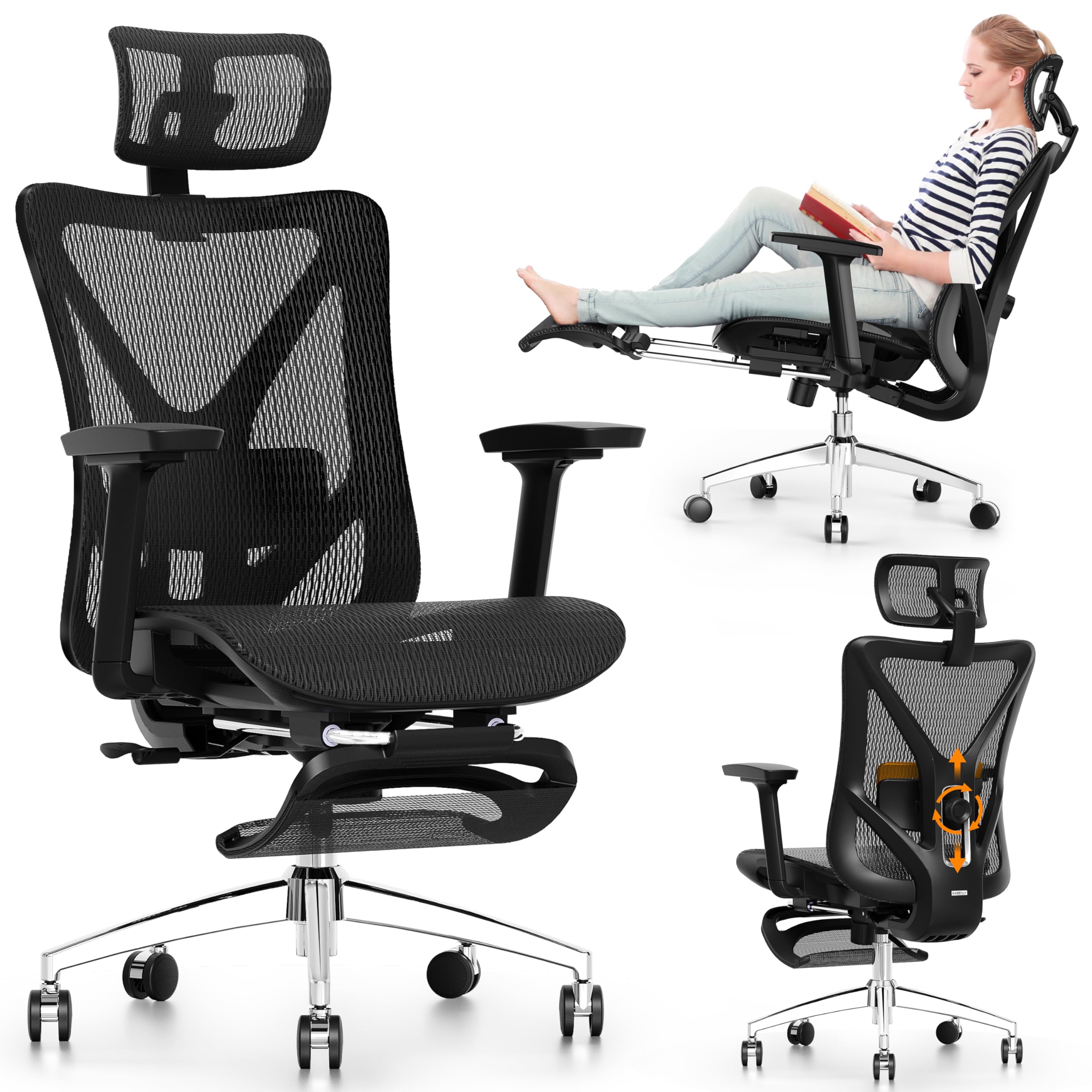
A 135-degree recline and footrest that turn your desk into a rest station.
If you like to lean back and stretch your legs during breaks, this chair delivers. The GABRYLLY features a 2-way adjustable lumbar support (3-inch vertical, 1.6-inch horizontal) that conforms to your lower back, and it is professionally tested by SGS and BIFMA to support up to 300 lbs. The 135-degree recline offers 3 lockable positions (90°/110°/135°), so you can lock the chair at your preferred angle for naps or relaxed reading.
The retractable steel footrest extends up to 18.1 inches, giving your legs stable support. 3D adjustable armrests (up/down, front/back, in/out) reduce shoulder strain. The large mesh headrest offers 3 adjustment points for personalized neck support. The chair is designed for users between 5’3″ and 6′ tall, and the steel base with 27.5-inch diameter legs ensures stability even when reclining. Comfort is the most-praised aspect here, with 149 owners calling it out. A few owners note the armrests do not lock, so they can shift when you lean on them.
Work and nap ready: The combination of adjustable lumbar support, a deep recline, and a sturdy footrest makes this a versatile chair for long days when you need both focus and relaxation.
Best for break-takers: This chair suits you if you want to recline and put your feet up during downtime. pass on it if loose armrests would drive you crazy during focused work.
5. Branch Ergonomic Chair
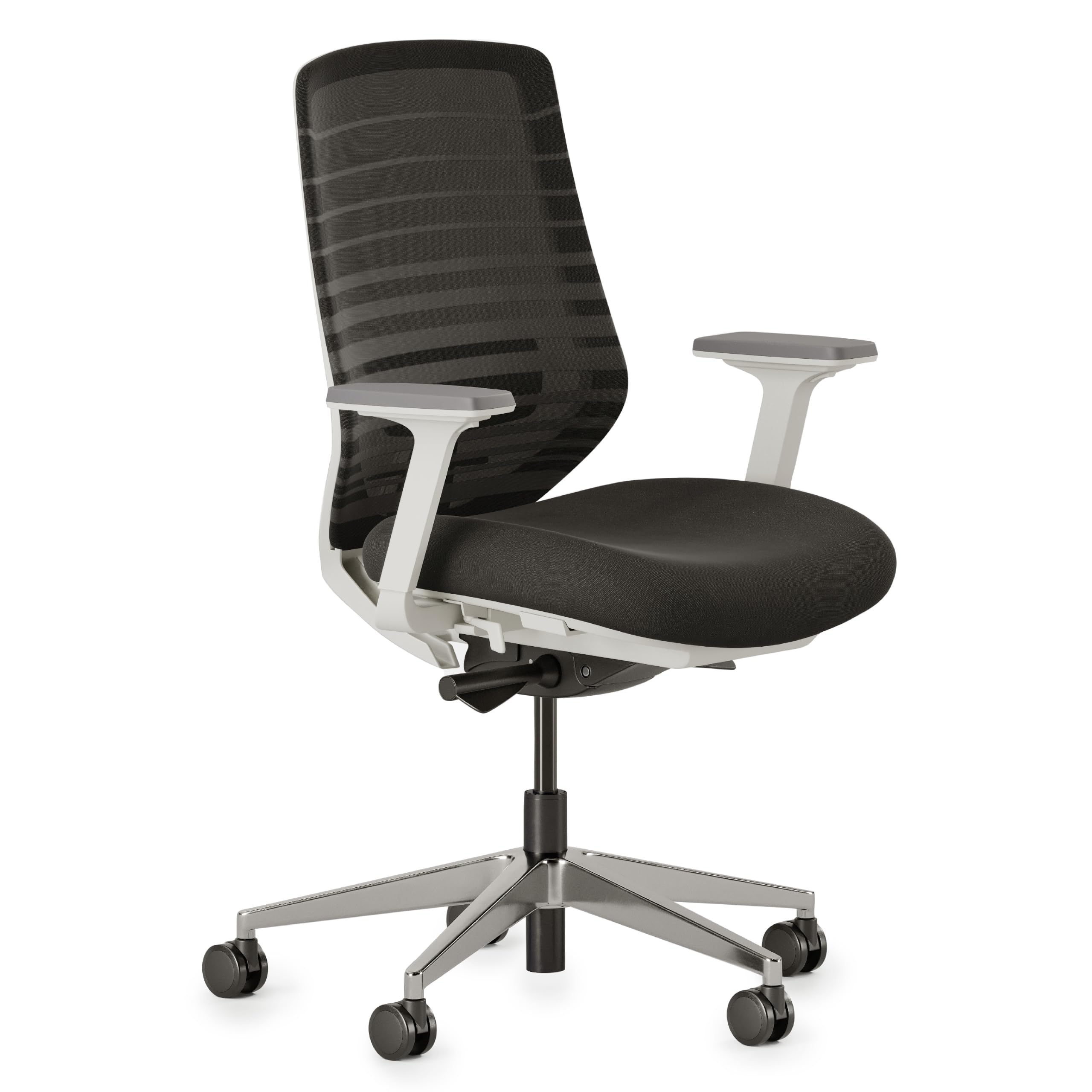
Eight ways to dial in your fit, from thighs to shoulders.
With 8 adjustment points, the Branch chair lets you customize everything: recline, tilt tension, lumbar position, armrest placement, seat height, seat depth, and more. The goal is full-body alignment, and the data shows comfort is the top praise, with 84 owners calling it comfortable. The seat combines a breathable mesh back with a foam cushion, offering a middle ground between all-mesh firmness and plush foam.
The anodized aluminum frame feels premium, and customers note the chair is solidly constructed for 8-hour days. A common point of feedback is that the lumbar support is mild — it adjusts up and down but does not push deep into your back, so it may not satisfy someone who needs aggressive lumbar pressure. The armrests also slide forward and backward easily without locking, which some owners find annoying. For petite users (around 5’0″), the chair fits well at its lowest setting, and the adjustable seat depth lets you sit cross-legged.
Lots of tweaks, mild lumbar: The eight adjustment points make it easy to find a comfortable position, but the lumbar support is not aggressive enough for some buyers. A good pick for those who want a refined, adjustable chair without hard lumbar pressure.
Ideal for customizers: This is the pick if you want many points of adjustment and a quality aluminum frame. Think twice if you require deep, pronounced lumbar support for your lower back pain.
6. WorkPro Quantum 9000 Series
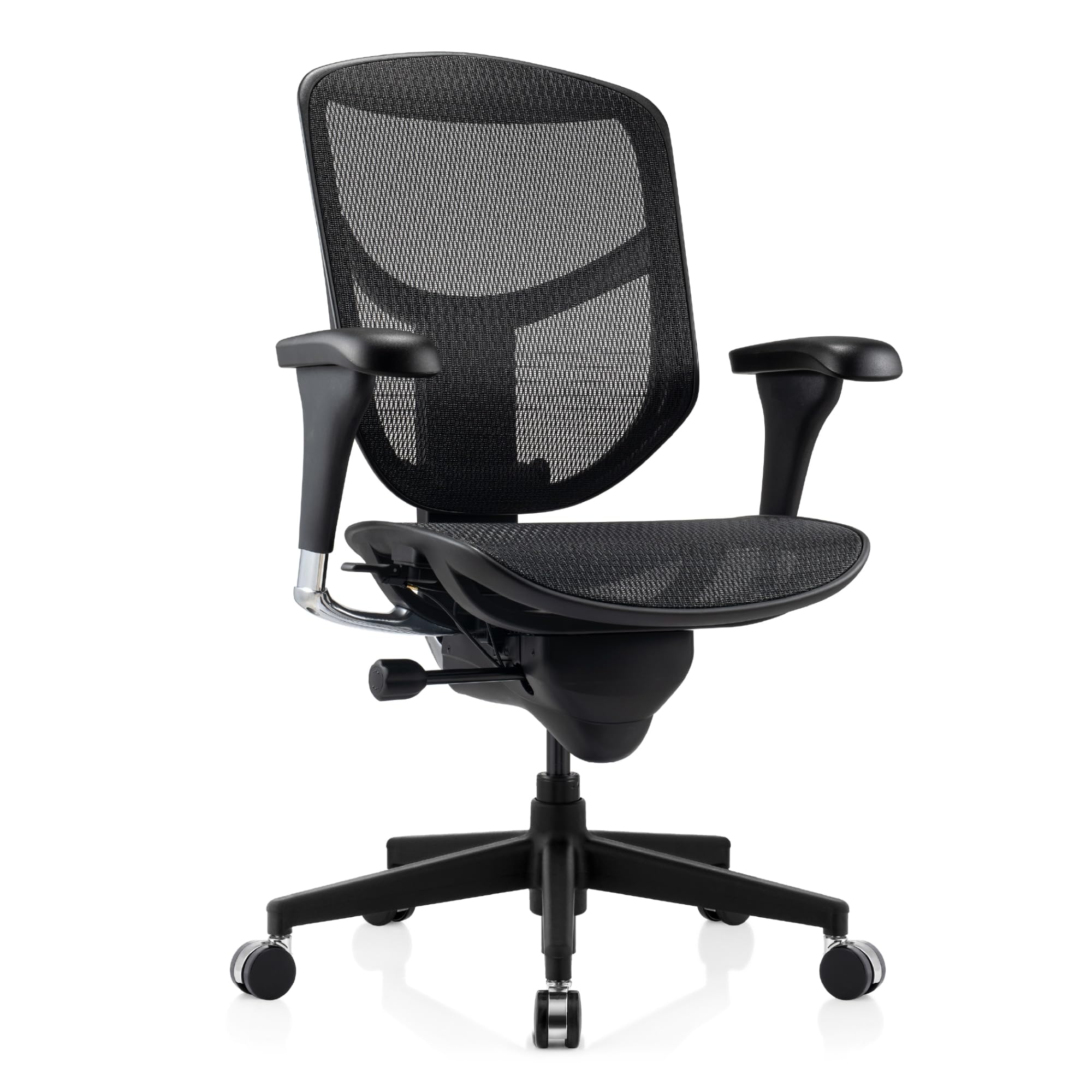
The 6-year owner review says it all: still comfortable, still supportive.
The WorkPro Quantum 9000 has been on the market long enough to build a reputation for durability. It features an adjustable seat depth — a rare find at this tier — so you can slide the seat forward or backward to match your leg length. The back height adjusts with a ratchet mechanism, and the lumbar support helps prevent back pain. The mesh fabric construction promotes airflow, and the waterfall front edge reduces pressure behind the knees.
Recommended for 8-10 hours of professional use per day, it supports up to 275 lb. The most-praised aspect is comfort, with 134 owners calling it comfortable, and quality follows close behind with 103 mentions. Owners say it compares well to chairs costing three times as much, like the Herman Miller Aeron. A few note that the armrest cushions wear out after 4-5 years, and the front knee pad can feel stiff for the first few weeks. One owner reports their husband’s back felt better immediately after switching to this chair.
Built to last years: The Quantum 9000 offers seat depth adjustment and a ratchet back height that you rarely find at this level, backed by reviews from owners who have used it daily for half a decade.
Best for the long haul: Reach for this if you want a chair that will still feel right years from now. it’s not for you if you need a high-back headrest, as this is a mid-back model.
7. FLEXISPOT ErgoX-PRO
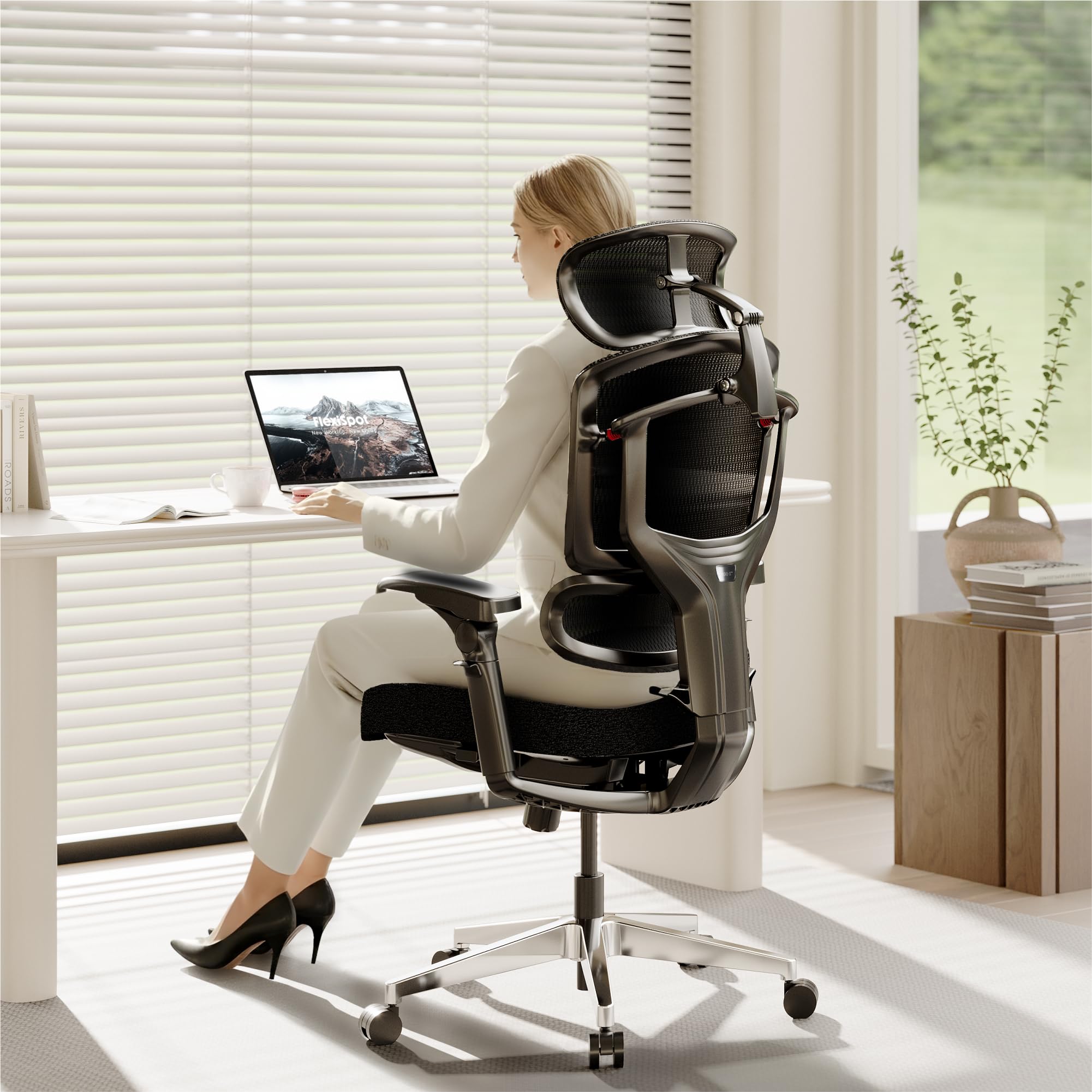
A 5D lumbar support that extends and adapts to every sitting position.
The FLEXISPOT ErgoX-PRO takes adjustability to another level. Its 5D lumbar support is fully extendable — it moves up, down, forward, backward, and tilts — so you can dial in the exact pressure point for your lower back. The 7D linkage armrests move with your body in nearly every direction, providing continuous support while typing, reclining, or gaming. The 4D headrest doubles as either a headrest for tall users or a back cushion for compact setups.
You can choose between the Cloudtech cushion (plush foam for long office hours) or the AeroWeave 5.0 mesh seat (cooling airflow for gaming). The 12-level fine-tuned backrest with spring cushioning ensures natural movement, paired with a 3-position tilt base (90°/115°/135°). The chair supports up to 551 lbs with a reinforced nylon and fiberglass frame and a Class 4 lift. Build quality is the second most-praised aspect, with 111 owners noting it. A few owners find the assembly process complicated, and one notes the height is not adjustable if you are exactly 5’8″.
Maximum customization: The 5D lumbar support is the standout here, offering adjustments that most chairs simply do not have. If you need precise lower back targeting and total arm support, this chair delivers.
Ideal for the adjustability-obsessed: This chair is perfect if you want to customize every single contact point. The catch is the higher assembly complexity — budget some time to set it up.
8. HON Wave Big and Tall Ergonomic Office Chair
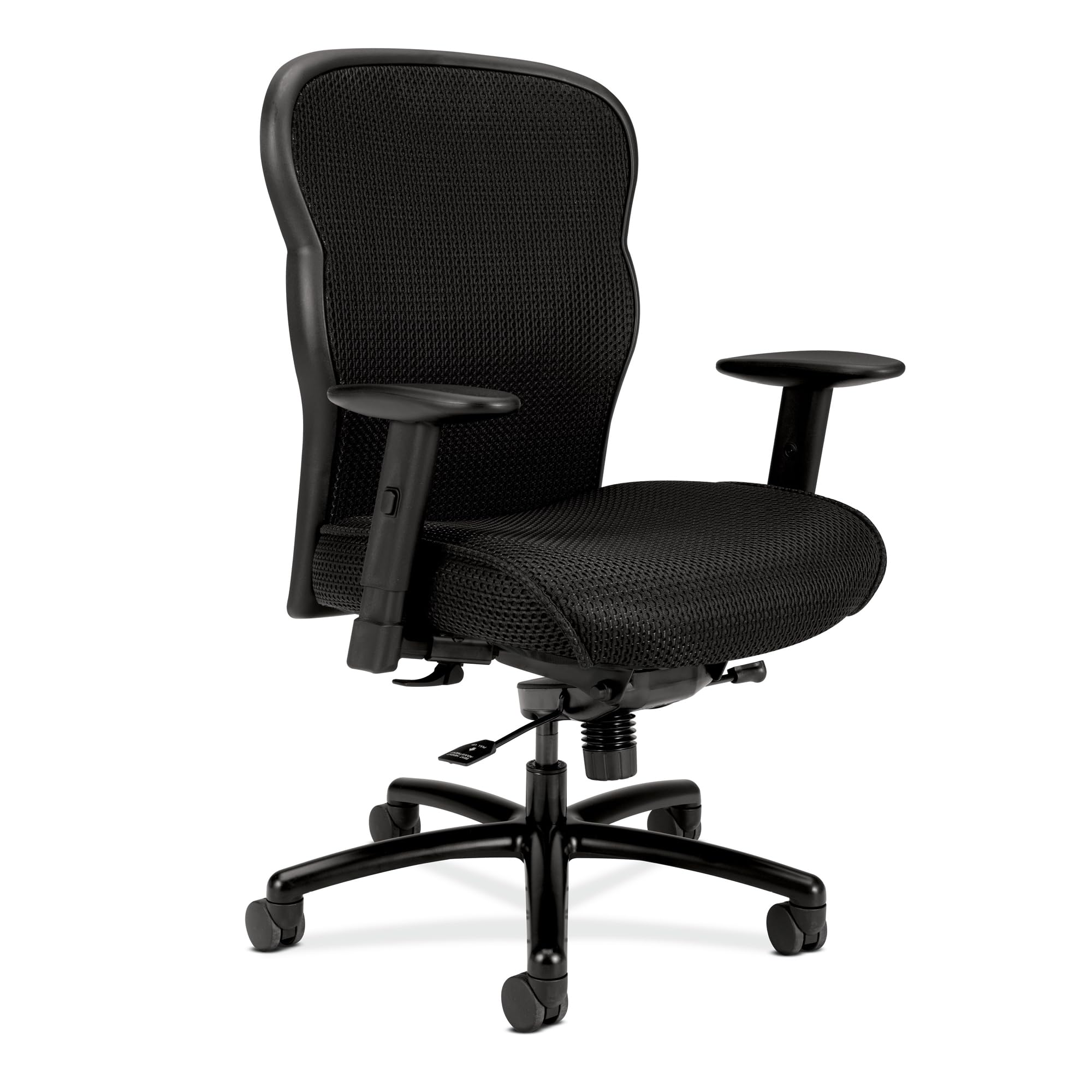
The steel-reinforced tank that comfortably holds up to 450 lbs.
The HON Wave is built for larger users without cutting corners on ergonomics. It features a stretch mesh seat and back that promote airflow and flexibility, plus adjustable lumbar support with height- and width-adjustable arms. The steel-reinforced construction gives it a rock-solid feel — sturdiness is the second most-praised aspect, with 153 owners mentioning it, just behind comfort at 184 mentions.
The tilt recline with tension adjustment lets you find a comfortable rocking motion. It is designed for heavy daily use and is backed by the HON Full Warranty. Reviewers point out it holds up well for users over 400 lbs, improving posture and comfort. The main trade-offs are that the armrests can feel low at maximum seat height, and there is no headrest. The lumbar support also receives mixed feedback — while some owners find it great, others find it negligible, so you may want added lower-back support if that is your primary pain point.
Unshakeable support: The HON Wave is the pick if your priority is a chair that simply will not wobble or break, with a weight capacity that beats nearly everything else on this list.
Best for bigger frames: This is the chair to reach for if you need a 450 lb capacity and steel-frame durability. Look elsewhere if you require a headrest or aggressive lumbar support.
9. Ergohuman Eurotech ME7ERG GEN2

A decade of daily use and the mesh still holds strong.
The Ergohuman GEN2 has a cult following for a reason: shoppers say using it for 10 years or more without the mesh sagging or the frame loosening. Its flexible lumbar support is adjustable, and the chair offers a wide range of customization: armrests, headrest, seat height and depth, plus recline and tilt-lock functions. The overall dimensions (44.69-51.18 inches high, 20.67-inch wide seat) provide ample space for users up to 275 lbs.
Comfort is the top praise, with 110 owners calling it out, and quality follows close behind with 107 mentions. The chair is noted as being excellent for lower back pain, with one owner (who has a ruptured L4-L5 disc) saying it is the most comfortable chair they have tried, including the Herman Miller Aeron. The Limited Lifetime Warranty backs this long-term investment. The downside is that the headrest does not tilt back, and the lumbar support may need an additional pillow for those who want more aggressive pressure. The plastic casters are also considered cheap for the price.
A decade of reliability: Few chairs earn 10-year reviews like this one. The combination of high adjustability, durable mesh, and a lifetime warranty makes it a true long-term buy.
Best for long-term owners: This is the pick if you want a chair that will still be comfortable a decade from now. look elsewhere if you need a headrest that tilts back with your head.
10. Steelcase Leap Office Chair

The chair that pioneered spine-mimicking technology and still leads the pack.
The Steelcase Leap is a legend in the ergonomic chair world, and for good reason. Its Natural Glide System allows the seat to glide back and forth as you recline, keeping you closer to your work surface and maintaining proper posture. The 3D LiveBack technology mimics the natural shape of your spine, contouring to your needs in any position. The lower back firmness dial lets you dial in exactly how much lumbar pressure you want — a direct weapon against lower back pain.
The chair includes seven points of adjustability, and it arrives fully assembled (no tools needed). Quality is the most-praised aspect, with 129 owners calling it out, followed closely by comfort at 110 mentions. Buyers report it eliminates back and leg pain during 8-hour days. The fabric is a 100% polyester upholstery over foam, with a waterfall edge cushion that reduces thigh pressure. The main drawback is the price — it is a significant investment. Some owners find the initial comfort lacking until the foam breaks in over a few months. The seat padding is also noted as being on the thinner side for some users.
The gold standard: The Leap’s combination of LiveBack technology and a lower back firmness dial gives you unprecedented control over your lumbar support. It is expensive, but the build quality and adjustability justify the cost for many.
Ideal for back-pain sufferers: This is the pick if you want the most refined, adjustable lumbar support on the market and are willing to invest in your long-term health. Think twice if you prefer a mesh back over upholstery.
11. Hbada X7 Smart Ergonomic Chair
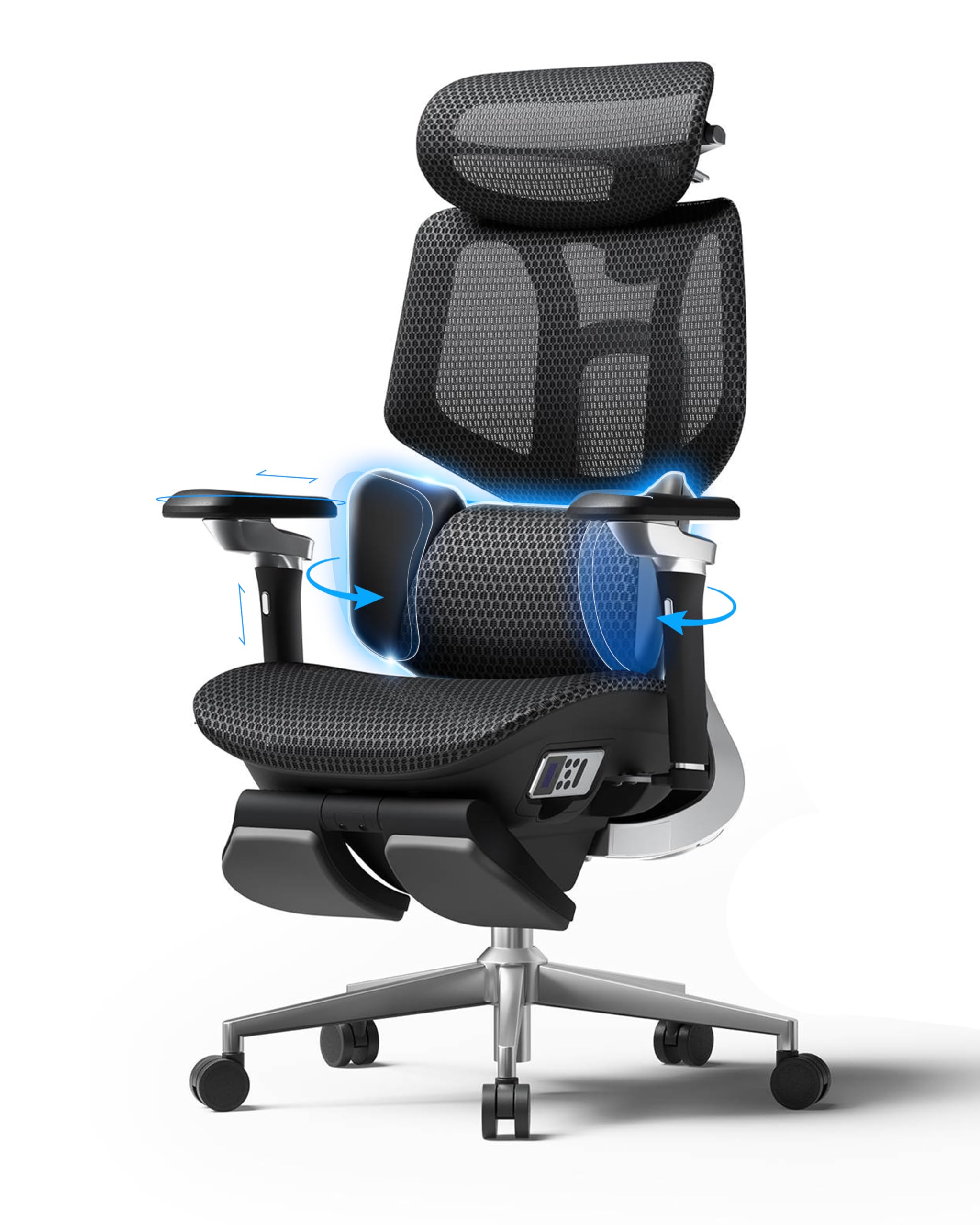
A chair that senses your posture and adjusts its lumbar support automatically.
The Hbada X7 is the most technologically advanced chair here. Its gravity-sensing base automatically adjusts the lumbar support intensity as you move, so it constantly tracks your lower back. A 6D adjustable waist pillow aligns with your spine, and 8D massage rollers with 3-level heating (40-50℃) can relieve muscle fatigue during long sits. The 4D headrest offers 70° rotation, 55mm sliding, and 45mm height adjustment.
You stay cool in summer and warm in winter thanks to a dual-fan cooling system with 3-speed airflow (Silent, Balanced, Turbo) that the brand claims gives 65% enhanced breathability. The 720° omnidirectional armrests (360° rotation + 110mm extension + 50mm lift) move with the 140° recline, so you can switch between work and nap modes without adjusting. The aircraft-grade aluminum frame and nylon base support up to 150 kg (330 lbs). Reviewers with herniated discs (L5-L2) say the self-adjusting lumbar support tracks their movement automatically. The trade-off: the chair is too small for users over 6’3″, and some owners mention loose seat leather.
Automatic relief: The auto-tracking lumbar support and massage/heat features make this chair ideal for people who want technology to do the adjustment work for them. A fascinating step into ergonomic innovation.
Best for tech enthusiasts: This pick suits you if you want a chair that adjusts itself and offers heating, cooling, and massage. It is not ideal if you are tall (over 6’3″) or prefer a simpler, manual setup.
Understanding the Specs
Lumbar Support Types
Not all lumbar supports are the same. 2D support moves up and down and in and out. 3D adds forward and backward tilt. 4D and 5D add even more angles. For lower back pain, a support that pushes forward into your spine’s curve is more helpful than one that only moves up and down. For hip pain, that forward tilt can tilt your pelvis to take pressure off your hip joints.
Seat Material and Hip Comfort
Your hips bear your full weight. A foam seat (like virgin foam) distributes weight evenly but can trap heat. A mesh seat breathes better and firms up under tension, which can feel supportive but may not suit those who need a plush surface. Look for a waterfall front edge — a seat that curves down at the front — to reduce pressure behind your knees, which can radiate into your hips.
Recline Mechanism
A synchronous tilt mechanism lets the seat and back move together as you recline. This keeps your feet on the floor and maintains a healthy spine curve. A simple rocking motion can let your hips slide forward, increasing pressure on your lower back. Chairs with lockable recline positions (like 90°/110°/135°) let you choose between focused work and relaxed breaks.
Weight Capacity and Durability
If you are a larger user, check the chair’s maximum weight rating. A chair with a 300 lb or higher rating will have a reinforced frame, thicker cylinder, and wider base. Look for BIFMA certification — it means the chair has passed standardized durability and stability tests for commercial use. A heavier capacity also often means a more stable chair, which matters when you recline.
FAQ
Will an ergonomic office chair actually help my lower back pain?
What is the difference between foam and mesh seats for hip pain?
How important is seat depth adjustment for hip pain?
What does 2D, 3D, 4D, or 5D lumbar support mean?
Can a chair with a recline function help my lower back?
Is a headrest necessary for lower back pain?
Should I buy a chair that arrives assembled?
What is BIFMA certification and why does it matter?
How much should I spend on an ergonomic chair for back pain relief?
Can I use a lumbar pillow with any of these chairs?
Final Thoughts: The Verdict
Across the board, the ergonomic office chair for lower back and hip pain winner is the CASASIO Ergonomic Chair because its virgin foam seat and 2D adjustable lumbar support give all-day relief for both problem areas without a premium budget. If you want automated lumbar tracking that adjusts itself, choose the Hbada X7 Smart Chair. And for the industry gold standard in lower back customization with a firmness dial, pick the Steelcase Leap.
How We Picked
We do not accept paid placement. Every pick is matched to a real buyer and a real use-case; we do not hands-on test units.
Sources & Methodology
Specifications: manufacturer listings and product documentation. Review insights: verified customer reviews, as of July 2026. Pricing: not shown on this page (it changes often); check the current price via the retailer link.
As an Amazon Associate, WellFizz earns from qualifying purchases. This does not affect which products we feature.
Related Guides

Mo Maruf
I created WellFizz to bridge the gap between vague wellness advice and actionable solutions. My mission is simple: to decode the research and give you practical tools you can actually use.
Beyond the data, I am a passionate traveler. I believe that stepping away from the screen to explore new environments is essential for mental clarity and physical vitality.