Our readers keep the lights on and my smoothie glass nicely filled. As an Amazon Associate, I earn from qualifying purchases.
Specs are compiled from manufacturer listings and verified buyer reviews and can change over time — please confirm the key details on the product page before buying.
Every ounce counts in backpacking, and a poor gear choice can ruin a trip. The challenge is balancing weight, comfort, and durability without emptying your wallet on a single piece of kit. We cut through the hype to highlight the gear that truly performs on the trail.
I’m Mohammad Maruf — the founder and writer behind WellFizz. This guide is built by comparing the manufacturers’ published specifications and the patterns across verified customer reviews, so you get each pick’s real strengths and trade-offs instead of marketing spin.
if you need a new pack, a lighter sleep system, or a reliable shelter, these are the options that earn their place on the trail. We built this roundup to help you choose the equipment for backpacking that actually delivers on its promises and fits your specific hiking style.
Our Picks at a Glance


How To Choose The Best Equipment For Backpacking
Building a backpacking kit means balancing weight, comfort, and budget. The best gear depends on your terrain, season, and how much weight you’re willing to carry.
Prioritize Your Sleep System First
A bad night’s sleep can derail a multi-day trip. Your sleep system — the combination of a sleeping pad and a bag or quilt — is the foundation. The pad’s R-value (a measure of its ability to resist heat loss to the ground) dictates the temperature range you can handle. A quilt offers significant weight savings over a mummy bag for warmer conditions but requires a good pad and pad straps to prevent drafts.
Get the Right Pack Fit
A poorly fitted backpack causes shoulder pain regardless of weight. Look for an adjustable suspension system like the one found on the Osprey Rook or Exos. The pack’s volume in liters (L) determines how much you can carry: 40-50L is standard for weekend trips, while 60-70L is better for extended journeys or carrying a bear canister.
Choose Your Shelter Style
A tent offers the most space and weather protection, but it is the heaviest option for the weight-conscious. A bivy sack is the lightest and most minimalist shelter, trading space for packability. A tarp is another ultralight option that requires knowledge of knots and site selection. Your shelter choice depends on expected weather and desired living space.
Quick Comparison
| Model | Best For | Weight | Temp / R-Value | Volume / Capacity | Amazon |
|---|---|---|---|---|---|
| Osprey Rook 65L★ Best Overall | Budget-friendly hauler | 3.7 lb | — | 65 L | Amazon |
| ZOOOBELIVES 32-50F BagLightest Sleep System | Ultra-light summer bag | 1.7 lb | 32-50 °F | 11″ x 6.7″ pack | Amazon |
| Naturehike Mongar 1P TentBudget Ultralight Shelter | Budget ultralight shelter | 3.42 lb | — | 1 person | Amazon |
| Big Agnes Skyline UL Stool | Ultralight camp seat | 1 lb 1 oz | — | 3.5″ x 12″ pack | Amazon |
| Sea to Summit Ether Light XR | Plush side-sleeper pad | 15.68 oz | R-Value 4.1 | 66.1″ x 21.7″ | Amazon |
| Big Agnes Skyline UL Chair | Tough, packable camp chair | 1 lb | — | 3.5″ x 17″ pack | Amazon |
| NEMO Tensor All-Season Pad | All-season insulation | 1.1 lb | R-Value 5.4 | 72″ x 20″ | Amazon |
| Outdoor Research Helium Bivy | Minimalist solo shelter | 15.8 oz | — | 81.89″ x 25.98″ | Amazon |
| Osprey Exos 48 | Lightweight fastpacker | 2.85 lb | — | 48 L | Amazon |
| Featherstone Moondance 25 Quilt | Versatile down quilt | 1.4 lb | 26 °F T-Limit | 75.59″ x 53.94″ | Amazon |
| MSR Elixir 2 | Durable two-person tent | ~4.4 lb (est) | — | 2 person | Amazon |
In‑Depth Reviews
1. Osprey Rook 65L Men’s Backpacking Backpack
Our pick — over 4.5★ from 500+ verified ratings; the strongest balance of quality and price.
A classic pack that carries heavy loads without breaking your budget.
The AirSpeed Suspension system adjusts for torso length and keeps the pack off your back for ventilation. This means you can carry up to 35 pounds comfortably on long miles; as owners put it, “the longest day was 26 miles under 30 lbs” and it “worked perfectly.” The quality of the materials and zippers earns the most praise across reviews, with 40 people singling out the build quality.
The 65-liter volume is generous, and the integrated rain cover stows away in its own pocket so you are never caught off guard by a sudden storm. The big trade-off is the weight — at 3.7 pounds, it is not the lightest option for those counting every ounce. It also lacks a large front mesh pocket for drying wet gear and there is no rear-access to the main compartment, which some find inconvenient for digging out items at the bottom.
Durable framed pack
- Adjustable AirSpeed suspension keeps your back cool and carries loads well
- Built-in rain cover is a lifesaver for unpredictable weather
- Durable zippers and sturdy fabric feel premium for the price point
Heavy for its size
- No large mesh shove-it pocket on the front for stashing a jacket
- Missing a rear main compartment zipper for easy gear access
- At 3.7 lb, it is heavier than ultralight alternatives for gram-counters
best for: Hikers who want a reliable, comfortable pack for carrying moderate-to-heavy loads on 1-5 day trips without spending a fortune.
think twice if: You are trying to trim every ounce from your base weight or you need easy access to gear without unloading the entire pack.
2. ZOOOBELIVES Ultralight 32-50F Down Sleeping Bag
A featherlight summer bag that packs smaller than a Nalgene bottle.
This bag is built for warm weather. With a 32-50°F comfort rating and a 1.7-pound weight, it is one of the lightest ways to stay comfortable when the mercury is above 50°F. The buyers report that “this bag/quilt works very nicely for cool (60s plus) to warm nights” and that it is “very compressible.” Its rectangular shape gives you room to shift around, and it can be completely unzipped to double as a quilt for two people.
The thing that wins people over is the weight — it is the second most-discussed feature in the reviews. The 650-fill down compresses to a tiny 11″ x 6.7″ sack. The main caveat is warmth: the consensus is clear that this is a warm-weather bag only, not for nights below 50°F or 55°F. The 20D nylon shell is light but feels thin, and the simple tube stitching limits the down’s loft to keep bulk down.
reach for this if: You are a summer-only backpacker or a van traveler who needs a lightweight, packable layer that can also act as a blanket.
look elsewhere if: You plan to camp in temperatures below 50°F or need a bag that can handle cold, damp conditions.
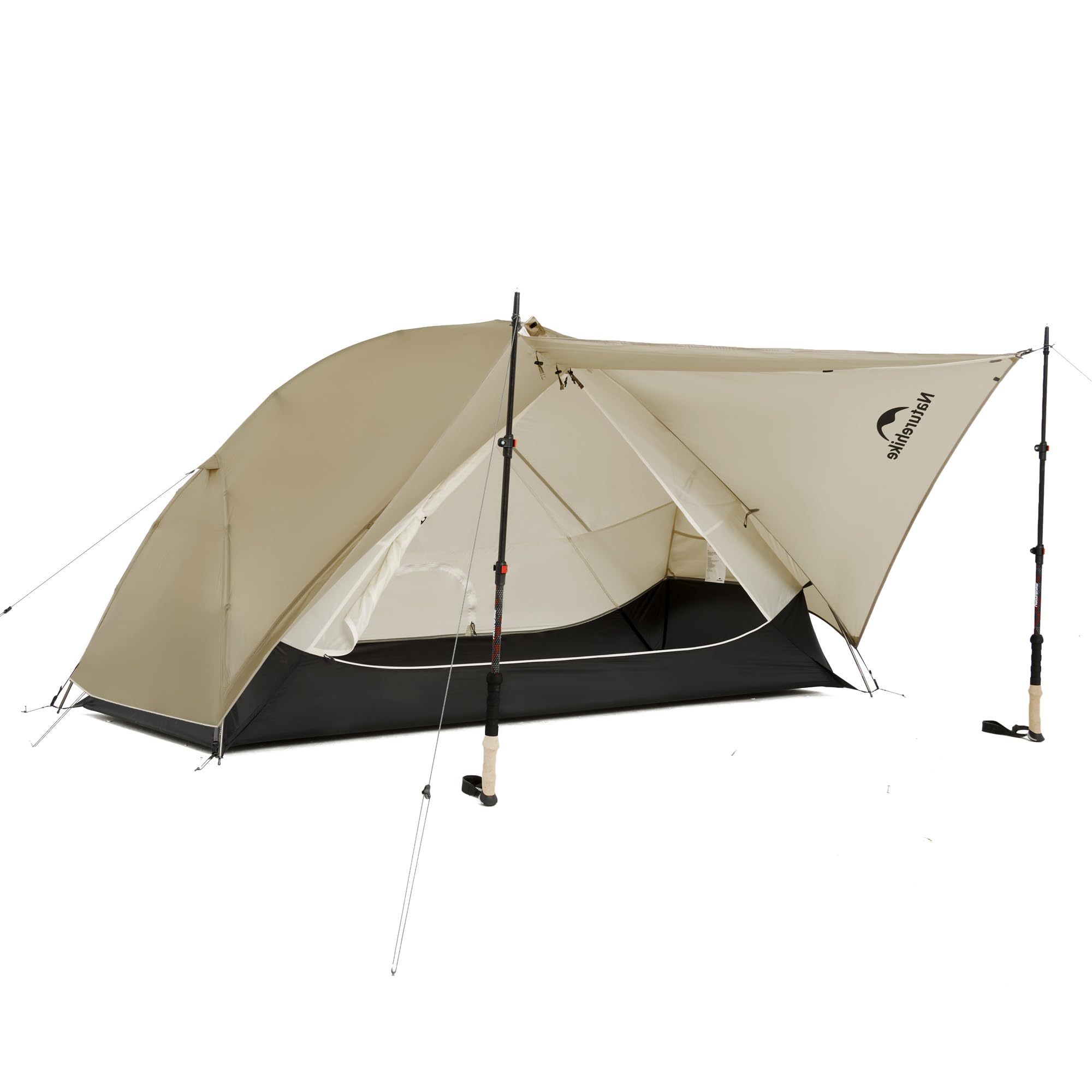
3. Naturehike Mongar Upgraded 1 Person Backpacking Tent
A lightweight dome tent with an expandable awning that adds covered living space.
This tent punches well above its price class. The body is made from 15D nylon with a silicone waterproof coating (PU1500mm+ on the fly, PU3000mm+ on the floor) and uses eco-friendly 8.5mm aluminum alloy poles. One very handy feature is the expandable awning, which you can prop up with a trekking pole to create a covered spot for cooking or storing gear outside the tent.
Reviewers consistently praise the easy setup — the color-coded poles and simple clip system let you put it up in about 3 minutes. The tent has withstood 20-30 mph gusts and thunderstorms with no condensation issues. The storage options are thoughtful: you get multiple mesh pockets, a clothesline, and a light clip inside. At 3.42 pounds, it is light enough for backpacking but a touch heavier than a true ultralight shelter.
perfect for: The solo hiker who wants a spacious, well-ventilated tent with a unique awning feature at a very fair price.
keep in mind: The basic stakes and snug stuff sack are the only downsides owners mention — easily upgraded if they bother you.
4. Big Agnes Skyline UL Stool

A luxury item on the trail that weighs less than a full water bottle.
This stool is the champion of ultralight seating. It weighs just over 1 pound (trail weight 1 lb 1 oz) and packs down to the size of a water bottle — 3.5″ x 12″. The patented hub-less frame is made from heavy-duty aircraft aluminum, which means there are no plastic hubs to wobble or break. The deep, wide seat is a noticeable improvement over smaller three-legged stools that get uncomfortable quickly.
The portability is what owners appreciate most — it is the top aspect in the reviews. One owner aptly called it “my one luxury item” for backwoods hiking. The chair is comfortable for a stocky build (one 250-lb owner gave it a thumbs up) and doubles as a footrest when used with a camp chair. The honest catch, noted by a few, is the actual weight — some measured it 1 lb 4 oz versus the advertised 1 lb 1 oz, a minor discrepancy that matters to strict ultralighters.
ideal for: Hikers who want to sit comfortably off the ground at camp without carrying much of a weight penalty.
note: The seat is low to the ground — great for short breaks, but not for lounging at a table height.
5. Sea to Summit Ether Light XR Insulated Sleeping Pad

Plush 3.9-inch thick cushioning for side sleepers who hate hitting the ground.
The comfort on this pad is exceptional. With a 3.9-inch thickness and Air Sprung Cell construction, it provides stable, cushioned support that adapts to any sleeping position. The ASTM-tested R-Value of 4.1 makes it a reliable three-season pad for cool weather. Owners who are side sleepers report it is a “standout” — one called it “extremely comfortable” and another noted that “dog’s nails didn’t scratch or pop material.”
The pad is remarkably light at just 15.68 ounces, and it comes with an integrated Airstream Pumpsack for fast inflation. The XPRESS valve allows for easy pressure adjustment and quick deflation. The main piece of feedback from the trail is that the pad stiffens up under your full weight when fully inflated; one owner advises under-inflating for better comfort.
choose this if: You are a side or restless sleeper who needs thick, forgiving cushion for a good night’s rest on multi-day trips.
consider the catch: A few owners mention the pad can be hard to fully inflate with the sack, and some have experienced slow leaks after many uses.
6. Big Agnes Skyline UL Chair
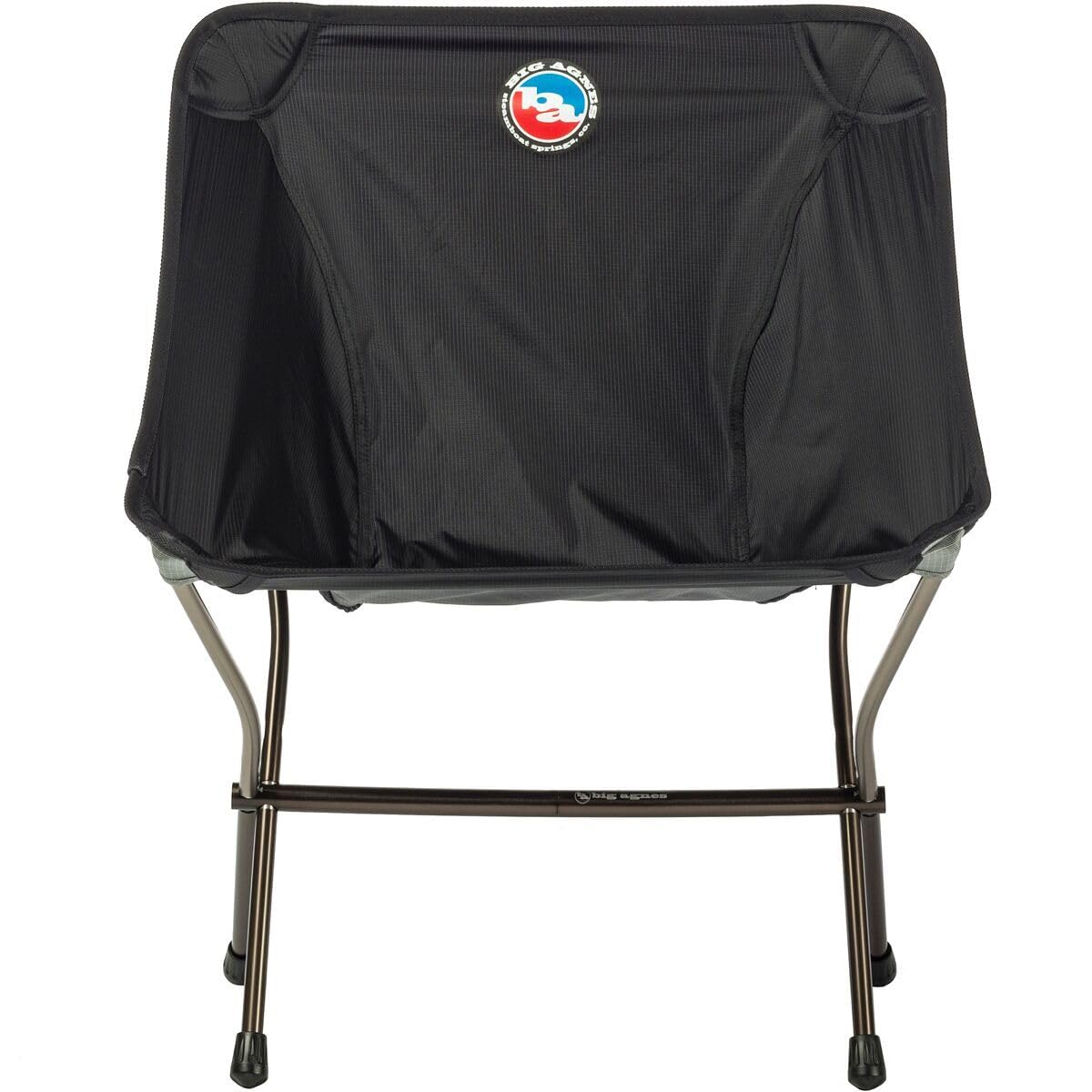
A full backrest and no plastic hubs make this the ultralight camp chair to beat.
This chair uses the same patented hub-less aircraft aluminum frame as the stool but adds a real backrest. The pre-bent poles create a deep, wide seat that is more comfortable than any other ultralight chair available. The build quality is what owners mention most — the all-metal construction feels solid under you, with no wobble from plastic joints. Many call it the perfect companion for camping and bike touring.
It weighs just over 1 lb trail weight and packs down to 3.5″ x 17″, which is small enough to hook to the outside of a pack without noticing. The main challenge during setup is stretching the fabric over the poles for the first time — it requires a firm pull. The size and comfort are the most praised aspects, though some feel the price is a bit steep for a one-piece chair.
great for: Backpackers who want a comfortable, stable chair with a full backrest for relaxing around camp without sacrificing pack space.
something to note: The fabric is a tight fit over the poles on first assembly, requiring effort to stretch it into place.
7. NEMO Equipment Tensor All-Season Sleeping Pad
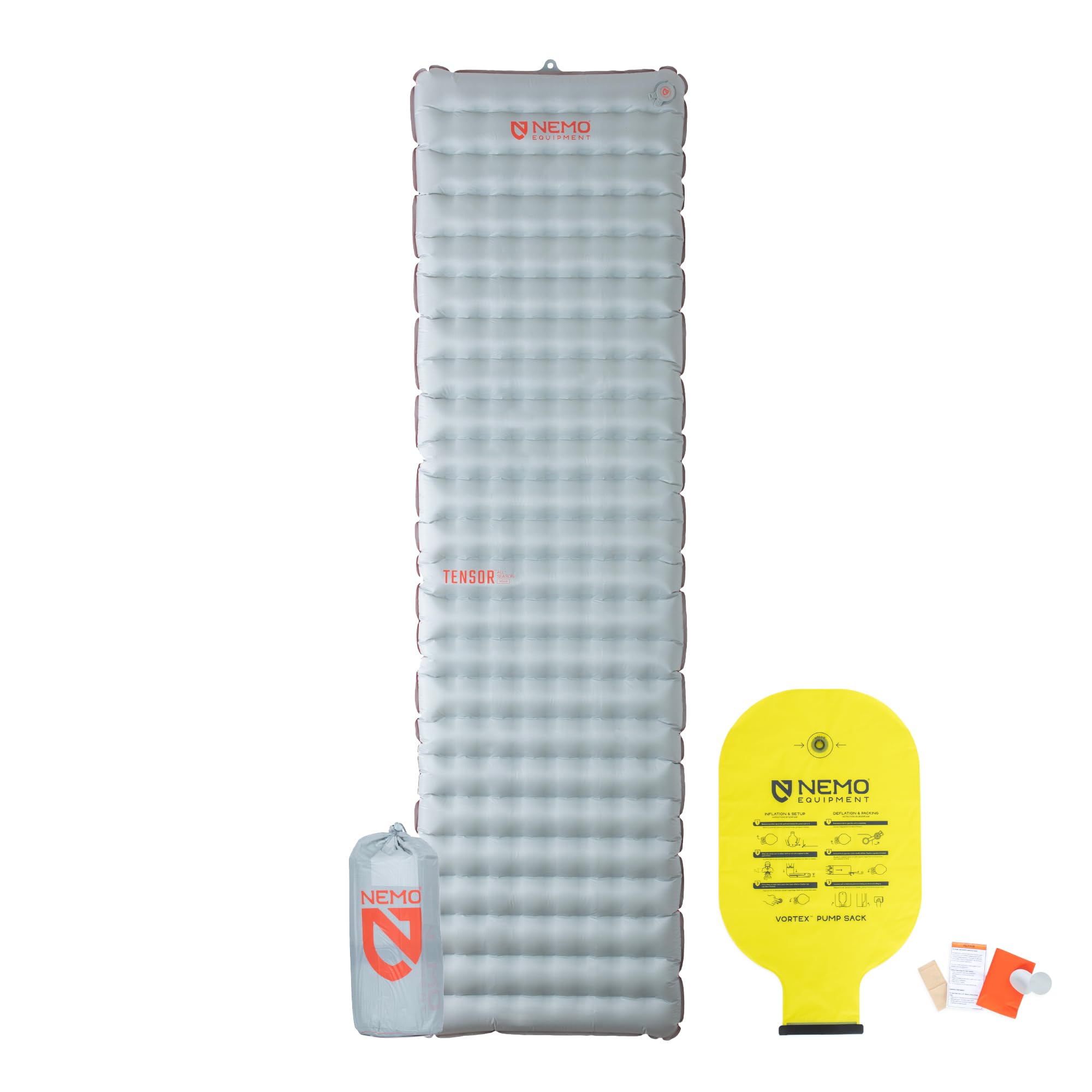
An R-Value of 5.4 in a package so quiet it won’t wake your tent mate.
This pad is the gold standard for insulation in a lightweight package. It uses two layers of floating Thermal Mirror metallized film to provide an R-Value of 5.4 — enough for true four-season use. People report it kept them warm on nights as low as 18°F in a hammock with no cold spots. At 3.5 inches thick, the Spaceframe baffle construction eliminates the springy feeling of other pads, providing stable and cushioned support.
The quiet materials are a standout — you can shift positions without the loud crinkle sound that plagues many insulated pads. The bluesign-approved premium nylon fabrics are lightweight but resistant to punctures and tears. The inflation sack is effective, taking just 2-3 sackfuls of air. The only recurring feedback is that the 20-inch width is narrow for some larger users, and the thin materials raise questions about long-term durability despite being strong.
best for: Three-season and winter backpackers who need a warm, quiet, and lightweight pad that doesn’t compromise on insulation.
think twice if: You are a bigger person — the standard 20-inch width may feel tight, and you might want the wide version for better coverage.
8. Outdoor Research Helium Bivy 2024
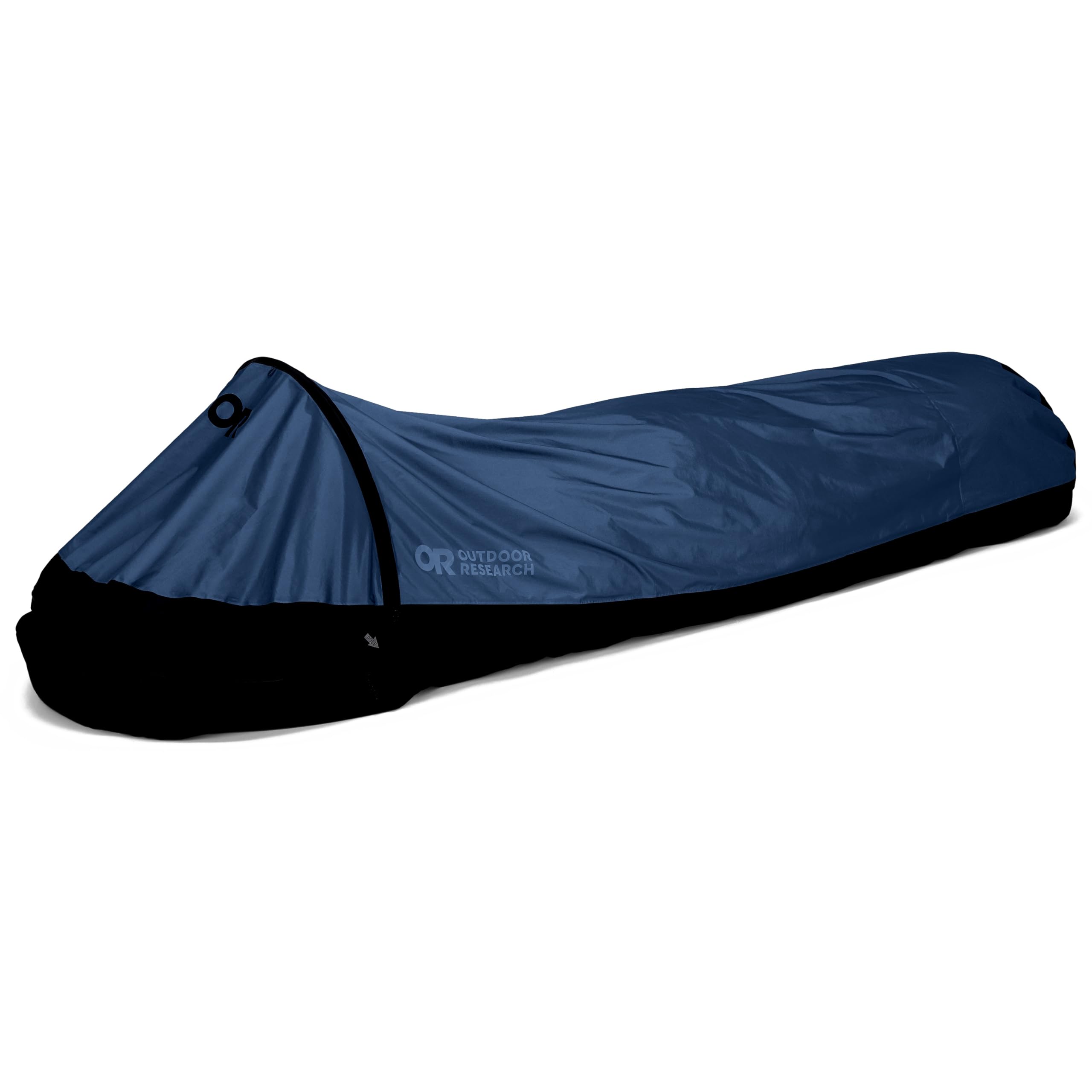
A waterproof, windproof shell that turns any sleep system into a full shelter.
The Helium Bivy is the ultimate fallback for extreme weather. It uses a Pertex Shield Diamond Fuse 2.5L nylon ripstop upper that is fully waterproof and windproof, paired with a rugged 40D nylon floor with TPU lamination that resists ground moisture and abrasion. At just 15.8 ounces, it is the lightest way to get complete weather protection for your sleeping bag. The polyester mesh upper provides excellent airflow to reduce condensation.
Owners love how quickly it sets up — just a single pole and four stake loops — and how it can handle conditions from alpine to desert. The build quality and materials are praised as top-notch for the weight. The biggest piece of constructive feedback is that the zipper/door design needs improvement; in windy conditions, the fabric can flap around. It is a true one-person shelter with very little living space, so you need to be comfortable with the “cocoon” style of camping.
perfect for: Ultralight solo hikers and climbers who want a bombproof shelter that adds negligible weight to their pack and protects against serious weather.
keep in mind: The zipper door can flap in the wind — you may want to add a small velcro tab or use a guy line to keep it secure.
9. Osprey Exos 48 Ultralight Backpacking Backpack
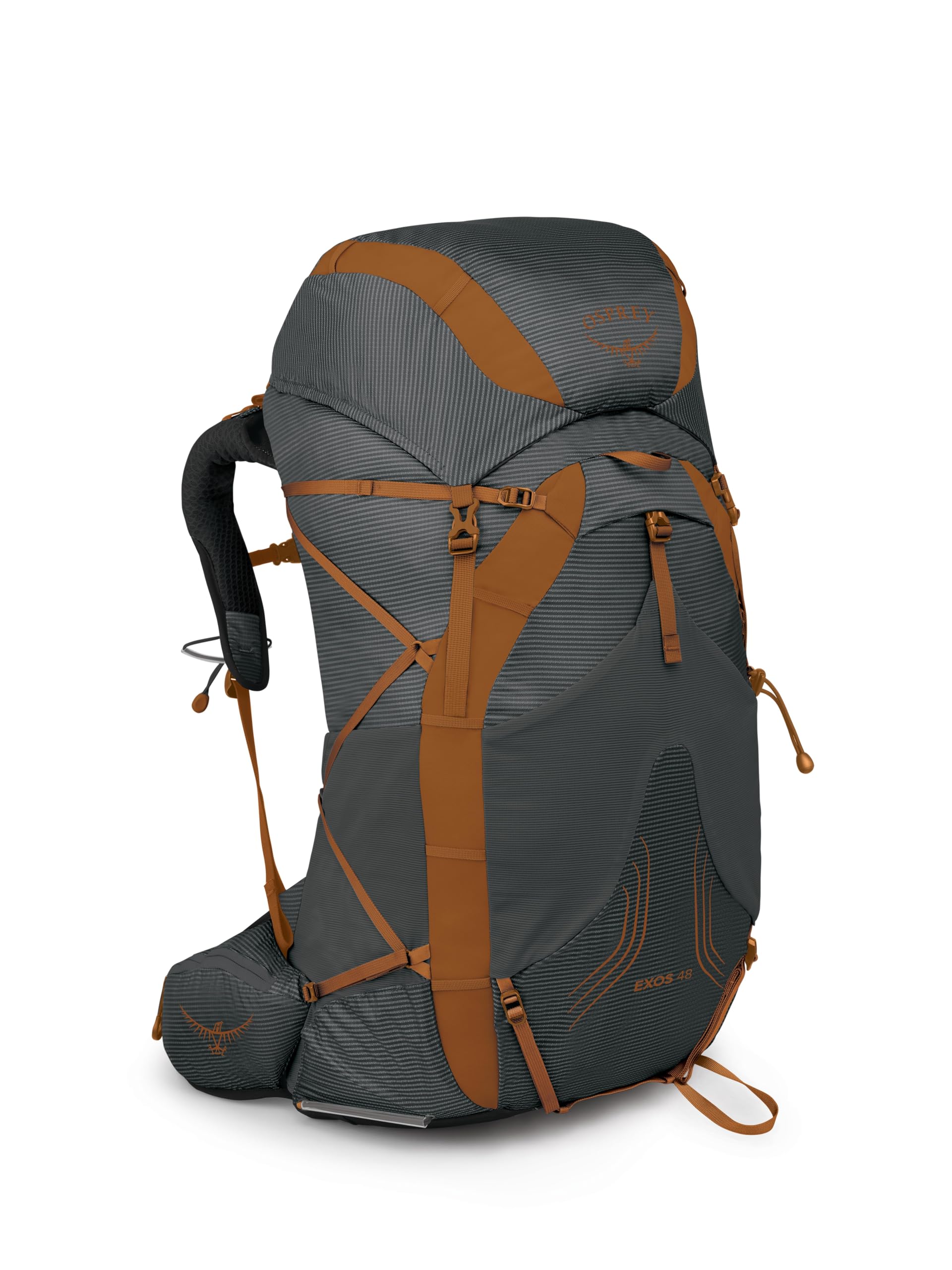
A 48-liter framed pack that weighs less than three pounds without sacrificing support.
The Exos 48 is Osprey’s answer to the ultralight backpacking crowd who still want a real frame. It features the Adjustable AirSpeed Suspension system, providing 4 inches of torso adjustability for a perfect fit. With a weight of only 2.85 pounds (the Rook 65L is 3.7 pounds), but with a smaller 48-liter volume designed for 1-2 night trips. It is comfortable under a 30-pound load.
The hipbelt pockets are a convenient spot for snacks and a phone, and the internal hydration sleeve keeps water accessible. Owners praise the comfort and weight, noting it is a “great compromise” between a light pack and an internal frame. The trade-off is a stripped-down feature set: the side compression straps can block water bottle access when the pack is full, and the front pocket lacks stretch material, making it harder to cram in a wet jacket.
ideal for: Fastpackers and weekend warriors who want a solid, comfortable frame without the weight penalty of a full-featured 65-liter pack.
consider: The 48L volume is tight for a bear canister and multi-day gear — check your kit’s volume before buying.
10. Featherstone Moondance 25 850 Fill Down Top Quilt

An 850-fill down quilt that matches sleeping bag warmth at half the packed volume.
This quilt is a serious piece of gear for the weight-conscious backpacker. It is filled with RDS-certified DOWNTEK 850-fill power duck down, giving it an excellent warmth-to-weight ratio. The ISO-tested temperature rating of 26°F T-Limit means it is a true three-season piece. It compresses very small and weighs just 1.4 pounds.
The thing owners praise most is the warmth — it is the top aspect by a wide margin in the reviews. One owner reported it was “comfortable at 22°F in thermals” and another used it on an 11-day trip in temps ranging from the 40°F to 70°F. The 10D nylon fabric is thin but surprisingly durable. The main design issue that multiple owners flag is the center cinch cord on the foot box, which can fall across your face and slap you when you move in your sleep — a cheap and easy fix to move it to the side.
best for: Hikers converting from sleeping bags to quilts for the weight savings, especially those who value high-fill-power down at a reasonable price.
the catch: The foot box cinch cord placement is a known annoyance — plan to reroute it to a corner for a better night’s sleep.
11. MSR Elixir 2 Tent
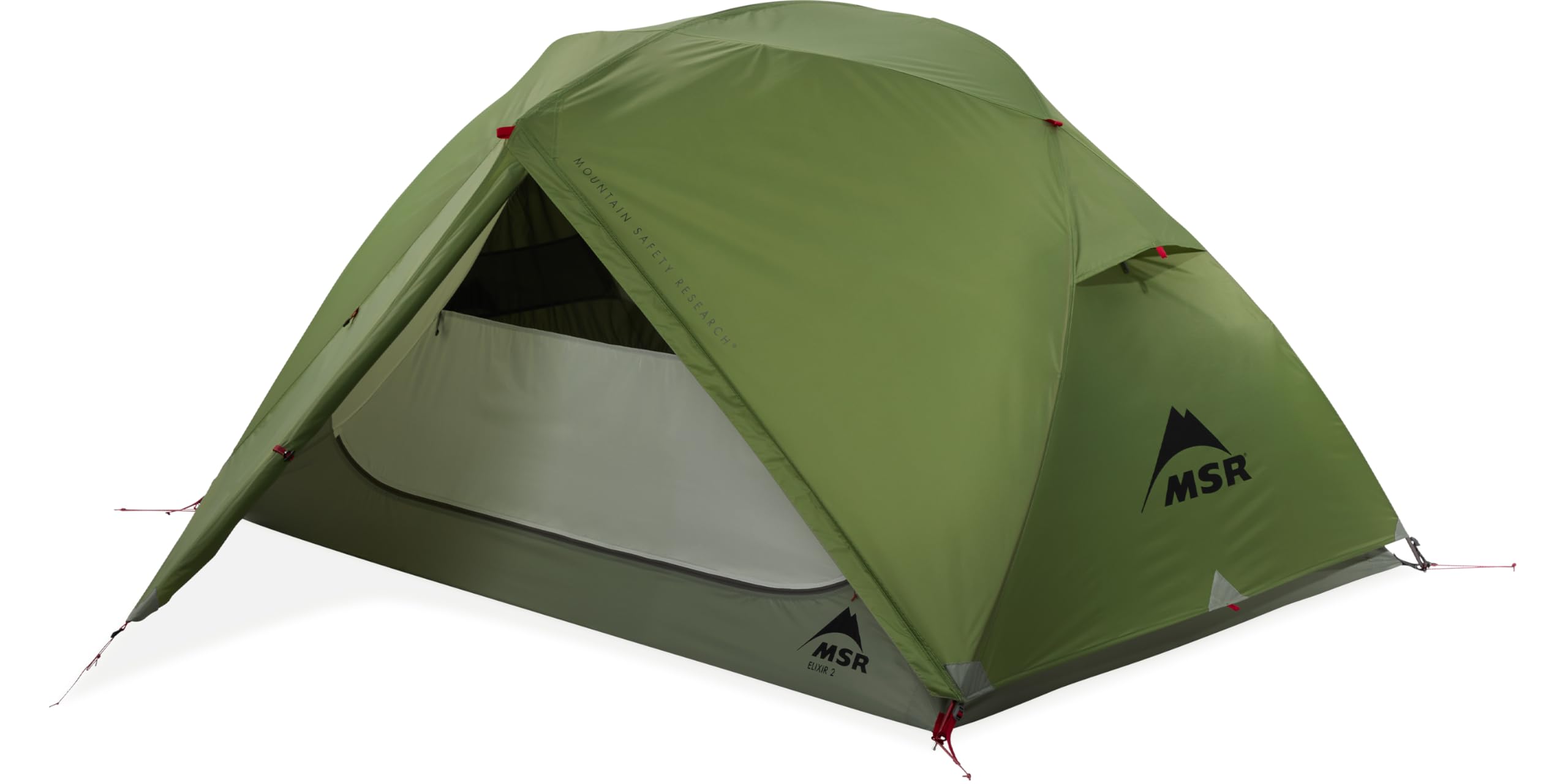
A legendary tent line that has been a backcountry standard for nearly two decades.
The Elixir 2 is known for its durability and weather resistance. The tent body uses a mix of 75% polyester and 25% nylon, with a true rectangular floorplan and nearly vertical walls that easily fit wide, rectangular sleeping pads. The updated design includes all-metal corner hardware and straight pull zippers that are more durable and easier to find in the dark. It boasts 30 square feet of floor area and generous vestibules for stashing 50L packs.
The longevity of MSR tents is almost legendary — one owner reports their first Elixir lasted 15 years, and their second is still going strong after 8 years. This model includes a dedicated footprint and is compatible with the MSR Gear Shed for extra storage. The main criticism is the setup: a few owners find it more difficult to set up alone than the previous version, noting the poles can pop out and are hard to separate. It is also not the lightest option in this list, making it better suited for trips where durability is the priority over ultra-low weight.
best for: Hikers and campers who want a tough, long-lasting shelter that will survive years of use and real weather.
consider this: The setup is a bit fiddly alone at first, and it is heavier than ultralight alternatives — better for car camping or shorter backpacking trips.
Understanding the Specs
R-Value (Sleeping Pads)
This number measures the pad’s resistance to heat loss. A higher R-Value means better insulation from the cold ground. A pad with an R-Value of 4.1 is great for three-season use, while a pad with an R-Value of 5.4 can handle below-freezing temperatures. The value is measured in a lab (ASTM test) so you can compare different brands.
Fill Power (Sleeping Bags & Quilts)
This is a measure of the loftiness and quality of the down insulation. A 650-fill down bag is a good entry-level option, offering decent warmth for the weight. An 850-fill down quilt will be lighter and more compressible for the same warmth. “Down” refers to the soft underfeathers of ducks or geese, which trap heat effectively.
Torso Length & Suspension (Backpacks)
This is the distance from the top of your hip bone to the bump at the base of your neck. An adjustable suspension system lets you dial in the fit so the pack rests on your hips, not your shoulders. A pack that is too long for your torso will cause shoulder pain, while one that is too short will ride up.
Waterproof Rating (Tents)
Measured in millimeters (mm), this indicates how much water pressure the fabric can handle before leaking. A floor rated at PU3000mm+ (like the Naturehike Mongar) is very waterproof and suitable for wet ground. The fly at PU1500mm+ is enough to shed rain but might struggle in a sustained downpour.
FAQ
How do I choose the right sleeping bag temperature rating?
Will a 48-liter pack be big enough for a week-long trip?
Do I really need an insulated sleeping pad?
What is the difference between a bivy sack and a tent?
What does ‘RDS Certified’ mean on a down sleeping bag?
How do I care for a down sleeping bag or quilt?
What is the ‘AirSpeed’ suspension on Osprey packs?
Can I use a bivy sack with any sleeping bag?
Final Thoughts: The Verdict
Across the board, the equipment for backpacking winner is the Osprey Rook 65L because it is a proven, comfortable pack that handles heavy loads well and has an integrated rain cover — a fantastic starting point for any backpacker. If you want to save serious weight on your sleep system, grab the Featherstone Moondance 25 Quilt for its excellent warmth-to-weight ratio. And for a shelter that will last a decade, the MSR Elixir 2 is the one to reach for if durability is your top priority.
How We Picked
We do not accept paid placement. Every pick is matched to a real buyer and a real use-case; we do not hands-on test units.
Sources & Methodology
Specifications: manufacturer listings and product documentation. Review insights: verified customer reviews, as of July 2026. Pricing: not shown on this page (it changes often); check the current price via the retailer link.
As an Amazon Associate, WellFizz earns from qualifying purchases. This does not affect which products we feature.
Related Guides

Mo Maruf
I created WellFizz to bridge the gap between vague wellness advice and actionable solutions. My mission is simple: to decode the research and give you practical tools you can actually use.
Beyond the data, I am a passionate traveler. I believe that stepping away from the screen to explore new environments is essential for mental clarity and physical vitality.