Our readers keep the lights on and my smoothie glass nicely filled. As an Amazon Associate, I earn from qualifying purchases.
Specs are compiled from manufacturer listings and verified buyer reviews and can change over time — please confirm the key details on the product page before buying.
A plywood floor coated with epoxy looks factory-made: a high-gloss, rock-hard surface that resists spills, scratches, and foot traffic. But the wrong epoxy peels off wood, forcing you to sand the whole floor back down. This guide breaks down seven epoxy kits whose published specs show they actually bond to plywood, based on manufacturer data and what thousands of buyers report learning from their pours.
I’m Mohammad Maruf — the founder and writer behind WellFizz. This guide is built by comparing the manufacturers’ published specifications and the patterns across verified customer reviews, so you get each pick’s real strengths and trade-offs instead of marketing spin.
The best epoxy for plywood floor projects all start with perfect mixing and a clean surface. A proven kit makes the difference between a weekend success and a frustrating redo.
Our Picks at a Glance
How To Choose The Best Epoxy For Plywood Floor
Plywood soaks up more liquid than concrete does, so the epoxy you pick needs to seal the wood grain without absorbing unevenly. The biggest mistake beginners make is using a garage-floor epoxy made for concrete and then seeing it peel off the wood. Focus on three specs: solids content (the percentage of epoxy that stays after curing), viscosity (how runny it is), and cure time (how long until the floor is hard).
Solids Content: 100% Is the Floor Standard
A 100% solids epoxy contains no water or solvents that evaporate — it hardens by a chemical reaction alone. This means zero shrinkage and a harder final film. Lower-solids formulas shrink as the water leaves, which can pull the coating away from the plywood edges. For a floor that handles weight and movement, stick with 100% solids kits labeled for wood.
Viscosity and Self-Leveling
Self-leveling epoxy spreads itself into a smooth, even layer — a big advantage on a large floor. Look for a mixed viscosity around 3800 CPS (centipoise, the unit that measures thickness) or lower. Thinner formulas soak into the wood grain better and release trapped air bubbles faster, giving you that smooth finish without endless rolling.
Pot Life vs. Full Cure
Pot life is the time you have to spread the mixed epoxy before it turns into a gel you cannot move — usually 30 to 60 minutes. Full cure is when the floor can take furniture and foot traffic, which can be anywhere from 24 hours to 7 days. Fast-cure epoxies are convenient but give you less working time, so match the speed to the size of your area.
Quick Comparison
| Model | Best For | Volume | Full Cure Time | Solids / Mix Ratio | Amazon |
|---|---|---|---|---|---|
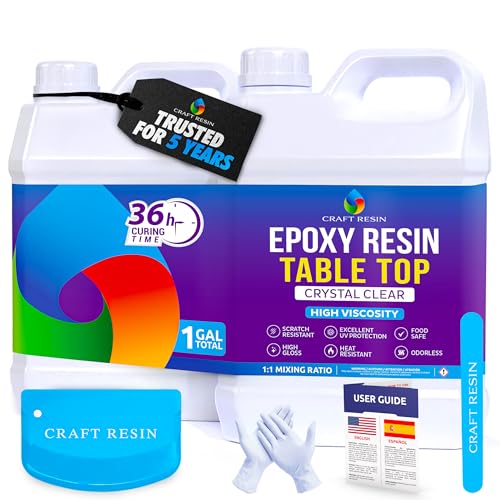
| CRAFT RESIN Table Top★ Best Overall | High-gloss small floors & furniture | 1 gallon | 36 hours | 1:1 ratio | Amazon |
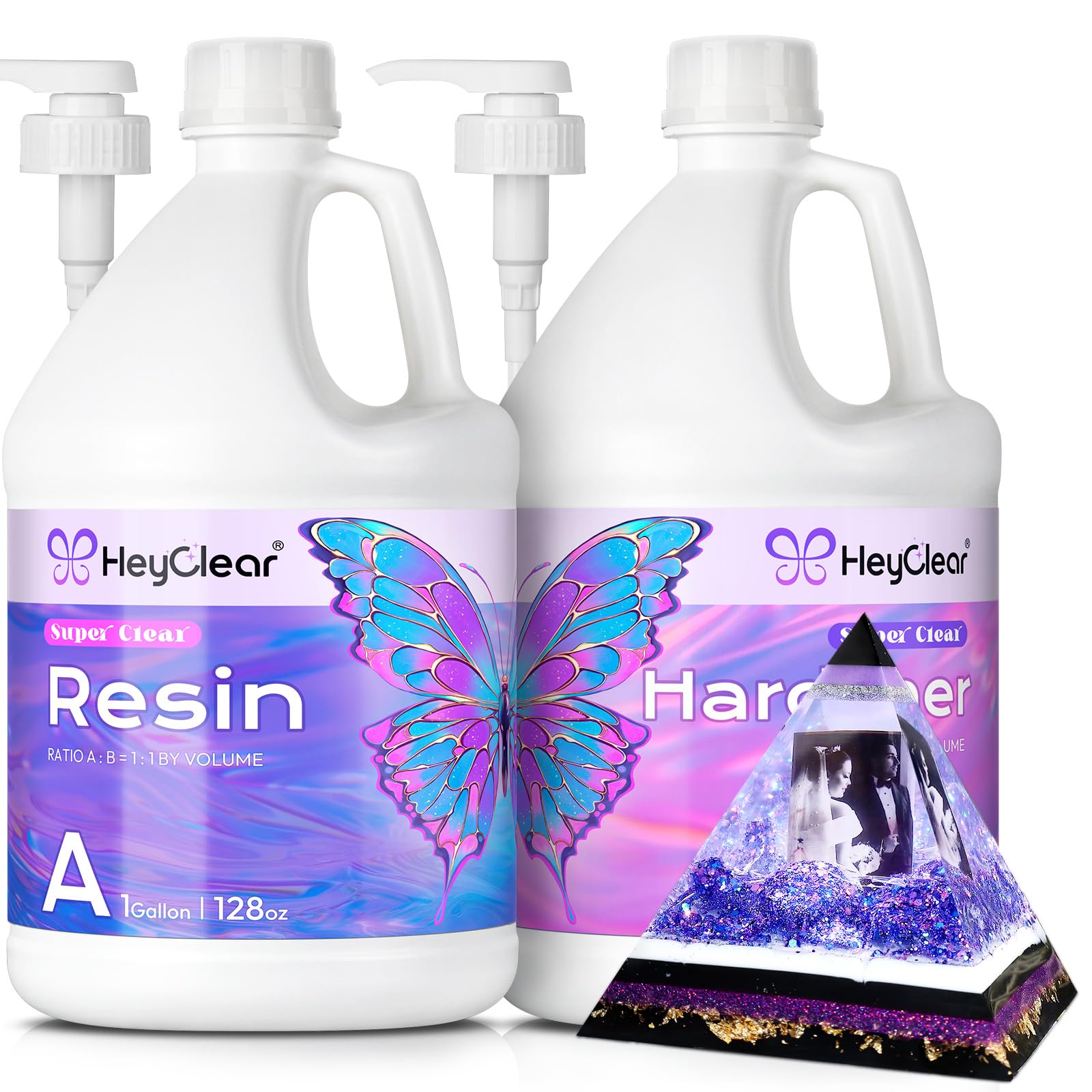
| HeyClear 2 GalTop Value | Value & large clear pours | 2 gallons | Varies | 1:1 ratio | Amazon |
| Magic Resin Floor Epoxy | Garages & high-traffic areas | 1.5 gallons | 7 days | N/A | Amazon |
| Rust-Oleum Epoxy Floor Coating | Quick weekend garage floors | 120 fl oz | N/A | Water-based | Amazon |
| BP Resins Single Shot | Industrial-grade workshop floors | 3 gallons | 24 hours | 100% solids | Amazon |
| System Three General Purpose | Marine-grade wood & repair | 1.5 gallons | 48 hours | 2:1 ratio | Amazon |
| Colored Epoxies Dark Brown | Plywood flooring with color | 3 gallons | 7 hours | 100% solids | Amazon |
In‑Depth Reviews
1. CRAFT RESIN Table Top Epoxy Resin Kit 1 Gallon
Our pick — over 4.5★ from 900+ verified ratings; the strongest balance of quality and price.
The beginner-proof pour that delivers a crisp, glass-hard finish every time.
What wins here is the forgiving 1:1 ratio (equal parts resin and hardener by volume), low odor, and self-leveling formula that makes bubbles rare even on a first try. The mixed viscosity is a low 3800 CPS (centipoise — a measure of how runny the liquid is), so it soaks into plywood grain evenly and releases trapped air without endless torching. One reviewer says the finish is “crisp, durable, and gave my project a beautiful professional look,” and over 900 ratings back that up with consistently strong scores. It cures fully in 36 hours, meaning you wait two days before walking on it. The recommended pour depth is 1/8 inch (about 3mm), so this works best as a coating layer, not a thick flood coat. Some owners mention the hardener is thick enough to make pump use tricky, but the kit includes a mixing stick, spreader, and gloves. It resists UV light and heat up to 203°F, so it will not yellow in a sunny room.
At 1 gallon total, you get half the volume of the HeyClear pick below, but the trade-off is a higher polish and a proven track record for first-timers. Over 40 owners single out its ease of use, and ratings praise the effectiveness.
crisp finishing
- crisp, high-gloss finish with UV resistance
- Self-leveling with minimal bubbles — low 3800 CPS viscosity
- Complete kit with tools included for a first-time pour
Needs careful mixing
- Only 1 gallon total — small area coverage
- Full 36-hour cure before foot traffic
- Hardener is thick; a pump can be difficult to use
Top clarity you are new to epoxy and want a low-odor, bubble-free, crisp finish on a plywood floor that will not yellow over time.
High prep you need to cover a large area fast — the 1-gallon size and 48-hour cure mean this is best for smaller rooms or a single flood coat.
2. HeyClear 2 Gallon Epoxy Resin Kit with Pumps
A two-gallon workhorse that is clear, user-friendly, and keeps repeat buyers coming back.
Volume is the headline here — 2 gallons (256 fluid ounces) at a price that undercuts many single-gallon kits. The formula uses a 1:1 volume mix and comes with pumps on both bottles, so you skip the measuring guesswork for a full-floor pour. Customers note the consistency is thin like baby oil, which makes spreading easy and keeps bubbles minimal. The odor is light enough to work indoors without a respirator. Nearly 500 ratings give it strong marks, and the most-discussed strength is overall quality, with curing performance and bubble-free results close behind. One regular user notes, “I have bought this resin time and time again over the past few years, no bubbles and everything comes out looking great.” The 2-gallon kit offers 2 gallons of volume compared to the Craft Resin’s 1 gallon, making it a smarter buy for coating a full plywood floor rather than a tabletop.
Some owners mention the curing time can vary — a few report it taking longer than expected to harden fully, so do not rush the schedule if the room is cool. The kit is listed as water-resistant, not waterproof, meaning standing water over time could be an issue. For a dry interior plywood floor, that distinction matters less.
Convenient pump system
- 2 gallons at a mid-range price — strong value per ounce
- crisp with very few bubbles; low odor
- Pumps included for easy 1:1 measuring
May contain bubbles
- Cure time can be inconsistent depending on temperature
- Water-resistant, not fully waterproof
- Medium viscosity may still need a spreader for even coverage
Easy dispensing the budget-conscious DIYer who needs a large volume of clear, low-odor epoxy and wants the convenience of pump bottles for accurate mixing.
Bubble risk your floor is in a wet environment — the water-resistance rating means a 100% solids formula would be more reliable for moisture-heavy basements.
3. Magic Resin Clear Floor Epoxy Resin 1.5 Gallon

The pour-and-wait formula built for garages and workshops where durability rules over speed.
This 1.5-gallon floor-specific epoxy from a North American brand covers roughly 225 to 300 square feet per kit, depending on whether you flood coat, roll, or squeegee. The manufacturer targets concrete, metal, and wood, making it one of the few kits on this list explicitly rated for wood. The big spec is the full cure time: 7 days. That means this floor is a weekend project that needs the next weekend free before you can move furniture back. The payoff is a scratch-resistant, stain-resistant surface that handles heavy traffic. Owners who prepped properly — using a squeegee, not a roller, to avoid bubbles — report a smooth finish that leveled nicely. One user says, “1.5-gallon kit covered the entire garage floor, durable, scratch-resistant, high-gloss finish.” However, coverage feedback is mixed: some found it covered far less than advertised when applied thick, and a few received resin that had partially crystallized, requiring a hot water bath to restore. Bubbles are the most common negative, which is why experienced users all say to skip the roller and use a squeegee.
The Low VOC (Volatile Organic Compounds — chemicals that evaporate and create strong fumes) and low-odor profile mean you can work in a garage without gassing yourself out, a real plus for indoor plywood floors.
Thick self-leveling: A rock-hard, high-gloss finish that can take a beating, but the week-long cure demands planning. Best for a garage or shop that can stay empty for the full cycle.
Deep pour your plywood floor is in a garage or workshop and you can let it cure for a full week without needing the space.
Long wait you need the room usable in 48 hours — there are faster-curing options that still bond well to wood.
4. Rust-Oleum 251966 Epoxy Floor Coating Kit – Tan Gloss

The name-brand weekend warrior that goes on fast and cleans up with soap and water.
Rust-Oleum is a household name in garage coatings, and this 120-fluid-ounce kit covers up to 250 square feet with a water-based formula. The key difference from the picks above is that this is water-based, not 100% solids, so it shrinks as the water evaporates. On plywood, that shrinkage can expose the wood grain if you apply it too thin, making a second coat almost mandatory for a fully sealed finish. The upside is easy cleanup, low odor, and a fast return to service — owners say it “transformed my garage floor” and cures to good durability. The ratings are positive but the sample is small — under 80 ratings — so the feedback is less definitive. The biggest recurring note is drying time variance: some find it quick-drying, while others warn that letting it sit too long before spreading turns the mix into a stiff “pudding” that is hard to work. The coverage estimate (250 sq. ft.) also gets mixed feedback, with one owner reporting it did not stretch as far as labeled. The color is tan gloss, so it fits a natural wood or concrete look rather than the crisp finish the other kits aim for.
Because this is indoor-use only and water-based, it is a lighter-duty option than 100% solids epoxies designed for heavy traffic. It is compatible with wood according to the spec sheet, making it a valid choice for a low-traffic plywood floor that needs a cosmetic upgrade more than industrial armor.
Fast-drying coating: Ideal for a first-time DIYer who wants a quick cosmetic upgrade with easy cleanup. Not the right choice for a workshop floor that will see heavy tools or wet spills.
Quick finish a quick floor refresh in a low-traffic plywood room where you want a uniform tan gloss and can handle two coats.
Tan only a high-abuse garage or a space that sees moisture — the water-based formula is less durable than 100% solids epoxy.
5. BP Resins Single Shot 100% Solids Epoxy Resin Kit (3 Gallon)
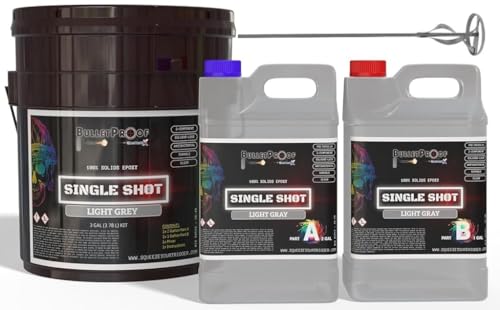
A solvent-free, 100% solids heavy-hitter that turns plywood into a commercial-grade floor.
This is the kit you reach for when a plywood floor needs to handle pallet jacks, tool chests, and spill-prone workstations. At 100% solids (no water, no solvents), it cures without shrinking, creating a dense surface that resists moisture, impacts, and chemical drips. The 3-gallon kit covers up to 300 square feet depending on porosity and thickness, and it comes pre-tinted Light Gray so you skip mixing in pigments. The full cure is a fast 24 hours — quicker than the 48-hour Craft Resin or 7-day Magic Resin — and it is self-leveling, which helps on uneven plywood. Over 200 ratings are positive on quality, but the pot life (the working window before it gels) is notably short. Multiple owners advise mixing in small batches and working fast, with one noting their 3-gallon batch started curing before they finished spreading across a 400-square-foot section of a 600-square-foot garage. The strong smell during cure is another catch — despite being low-VOC (Volatile Organic Compounds — chemicals that evaporate and create fumes), some users found it intense enough to require ventilation. On durability, reviews are split: some call it “tough as nails,” while others note cracking if the floor flexes or was not prepped correctly.
Compared to the System Three below, this one cures in 24 hours and is 100% solids, while the System Three has a longer working time and a decade-long track record on wood. Choose this if speed and solvent-free chemistry are your priorities.
High solids formula
- 100% solids — zero shrinkage on plywood
- Fast 24-hour full cure for quick turnaround
- Self-leveling, Low VOC, and pre-colored
Viscous application
- Short pot life — mix in small batches only
- Strong smell during cure despite low-VOC rating
- Coverage varies; some users needed more than expected
Strong bond you need a fast-curing, industrial-grade floor that can handle heavy use and you are experienced enough to work quickly in small batches.
Thick mix you are a beginner or working on a very large area — the short pot life can turn a pour into a panic.
6. System Three General Purpose Epoxy Resin with #1 Fast Hardener (1.5 Gallon)

The marine-grade standard that boat builders trust — and it bonds to plywood like nothing else.
System Three is a long-established name in epoxy, and this general purpose kit is built specifically for wood construction and repair. Unlike table-top epoxies that prioritize optical clarity, this formula uses a 2:1 resin-to-hardener ratio and is designed to wet out fiberglass and plywood equally well. The #1 Fast Hardener gives a long working time — gel time well over an hour in moderate temperatures — which is a big advantage on a large floor pour where you need every minute to spread and back-roll. It cures to a light amber color, not water-clear, so it adds a warm tone to the wood. With over 200 ratings and a near-perfect score, the consensus is that this is a top-tier performer on wood. A regular user says, “I have used System Three on and off for a decade. Very easy to mix and always kicks and hardens as expected. Seems tolerant to slight variations in mix ratio. Basically simple to use.” That tolerance is rare in epoxy, where precise measuring is usually critical. Some owners note the tack-free time can be slower than advertised — up to 16 hours in one case — but the bond strength is exceptional, and the epoxy sands well for a smooth final finish.
The downsides are the amber tint (it changes wood color) and the need for a topcoat if the floor sees direct sunlight, as the manufacturer recommends paint or UV protection for exterior use. For an interior plywood floor, the amber warmth is often exactly what people want.
Wood-friendly formula: class-leading bond strength and a forgiving mix ratio make this the safest pick for a DIY plywood floor pour. Just accept the amber hue and the long tack-free window.
Wood bond a plywood floor in a workshop, cabin, or basement where bond strength and a forgiving working time matter more than optical clarity.
Fast set you need a water-clear, crystal finish — the light amber tint will warm up the wood, not stay invisible.
7. Colored Epoxies 10024 Dark Brown Epoxy Resin Coating (3 Gallon Kit)

Pre-pigmented brown epoxy that cures in hours and skips the coloring step entirely.
This is a 100% solids, zero-VOC (no volatile organic compounds — no strong chemical fumes), odorless epoxy that comes pre-mixed in dark brown, so you avoid blending in colorants or worrying about streaks. Coverage sits between 125 and 170 square feet per gallon, and a 3-gallon kit covers a typical one-car garage floor with room to spare. The standout spec: full cure time is just 7 hours — dramatically faster than every other epoxy on this list. You can pour in the morning and walk on it that evening. Over 500 ratings paint a picture of a product that delivers on quality and application, with one DIYer noting, “DIY mom of 6, first-time epoxy user — the result was incredible.” Customer support is mentioned repeatedly, with owners sharing stories of the team calling back within minutes on a Sunday to help troubleshoot a failed pour. The recurring negative is drying time — some owners found it took much longer than 7 hours to fully harden, and a few reported sticky spots that never cured, suggesting temperature and humidity control during application is critical.
For a plywood floor that needs color and quick turnaround, this is a strong contender. The 100% solids formula means no shrinkage on the wood grain, and the dark brown tone hides dirt and scuffs better than a clear coat would.
Pre-colored brown
- 100% solids, zero VOC and odorless — safe for indoor use
- Pre-colored dark brown — no pigment mixing needed
- Fast 7-hour cure time for same-day usability
Single shade only
- Cure time sensitive to temperature; sticky spots reported in cooler rooms
- Only available in dark brown — no clear option
- Thick consistency; needs a squeegee, not a roller
Ready color you want a pre-colored, fast-curing, odorless floor that is ready to use the same day and you are willing to control the room temperature carefully.
No tint you want a clear or light-colored finish — the dark brown is the only shade available, and it changes the look of the room significantly.
Understanding the Specs
Solids Content: 100% vs. Water-Based
This is the most important number for a plywood floor. A 100% solids epoxy cures by chemical reaction only — it shrinks near zero, so it stays bonded to the wood grain as it hardens. A water-based epoxy (like the Rust-Oleum) shrinks as the water evaporates, which can pull the coating away from the plywood surface over time. For a floor that takes foot traffic and occasional spills, 100% solids is the safer, longer-lasting choice. Check the label for “100% solids” or “solvent-free.”
Viscosity and Self-Leveling
Viscosity is measured in centipoise (CPS) — the lower the number, the thinner and more runny the liquid. A viscosity around 3800 CPS (like the Craft Resin) is low enough to self-level evenly across a plywood floor, filling tiny grain gaps and releasing bubbles naturally. Higher-viscosity epoxies (thicker, like honey) need more physical spreading with a squeegee and trap more air. For a first-time pour, a self-leveling formula with low CPS takes most of the labor out of the finish.
Pot Life vs. Full Cure Time
Pot life is the window after mixing before the epoxy becomes too thick to spread — usually 20 to 60 minutes. Full cure is when the coating reaches its maximum hardness and can take furniture or foot traffic. These two numbers are a trade-off: a fast pot life (short working time) means a faster full cure, and a long pot life gives you more time to work but a longer wait before the floor is usable. For a large floor, a pot life of 45 minutes or more is recommended so you are not racing against the clock.
Mix Ratio Simplicity
Most epoxy kits use either a 1:1 (equal parts resin and hardener by volume) or a 2:1 (two parts resin, one part hardener) ratio. The 1:1 ratio is easier to measure and less prone to errors — pour one cup of each and you are done. The 2:1 ratio is common in marine and structural epoxies and offers different mechanical properties, but it demands more careful measuring. If you are new to epoxy, a 1:1 kit reduces the risk of a bad batch that never cures.
FAQ
Can I use any epoxy on plywood or does it need a special type?
How do I prepare plywood before applying epoxy?
Will epoxy fill gaps between plywood sheets?
How many coats of epoxy should I apply on a plywood floor?
Can I apply epoxy over painted or stained plywood?
How long does epoxy on plywood last before it needs recoating?
What temperature should the room be when I pour epoxy?
Will epoxy on plywood crack if the floor flexes?
Is epoxy flooring slippery when wet?
Final Thoughts: The Verdict
Across the board, the epoxy for plywood floor winner is the CRAFT RESIN Table Top Epoxy Kit. It combines a beginner-friendly 1:1 mix ratio with a low-odor, self-leveling formula that consistently delivers a crisp, bubble-free finish. If you need a larger volume for a full room at a lower cost, grab the HeyClear 2 Gallon Kit — it offers 2 gallons of epoxy compared to the Craft Resin’s 1 gallon and still produces a clear, hard surface. For a heavy-duty workshop floor requiring 100% solids chemistry and a fast 24-hour cure, the BP Resins Single Shot is the industrial-grade pick that can take abuse.
How We Picked
We do not accept paid placement. Every pick is matched to a real buyer and a real use-case; we do not hands-on test units.
Sources & Methodology
Specifications: manufacturer listings and product documentation. Review insights: verified customer reviews, as of July 2026. Pricing: not shown on this page (it changes often); check the current price via the retailer link.
As an Amazon Associate, WellFizz earns from qualifying purchases. This does not affect which products we feature.
Related Guides

Mo Maruf
I created WellFizz to bridge the gap between vague wellness advice and actionable solutions. My mission is simple: to decode the research and give you practical tools you can actually use.
Beyond the data, I am a passionate traveler. I believe that stepping away from the screen to explore new environments is essential for mental clarity and physical vitality.