Our readers keep the lights on and my smoothie glass nicely filled. As an Amazon Associate, I earn from qualifying purchases.
Specs are compiled from manufacturer listings and verified buyer reviews and can change over time — please confirm the key details on the product page before buying.
Repairing a cracked plastic bumper, kayak hull, or PVC pipe can feel impossible when every glue you try peels right off. The fix is choosing an epoxy built to grip the slick, flexible surfaces ordinary super glue can’t handle. This guide cuts through the marketing to the 8 epoxies that genuinely bond to plastic, with the cure times and flexibility facts that matter.
I’m Mohammad Maruf — the founder and writer behind WellFizz. This guide is built by comparing the manufacturers’ published specifications and the patterns across verified customer reviews, so you get each pick’s real strengths and trade-offs instead of marketing spin.
It’s important to note that this list uses flexible, human-like matching for plastic-specific formulas, so you might see a few picks that also bond metal or wood. Here are the best epoxy for plastic options that actually hold, ranked by adhesion, cure time, and real-world feedback.
Our Picks at a Glance

How To Choose The Best Epoxy For Plastic
Plastic is a tricky surface because it’s non-porous and often contains release agents that repel adhesives. The best epoxy for the job depends on the plastic type, the stress the bond will face, and how fast you need it to set.
Match the Cure Time to Your Patience
A 5-minute epoxy sets fast, which is perfect for small parts where you can hold things together briefly. But for large areas like a cracked bumper, a longer pot life (working time) of 45 minutes or more lets you mix bigger batches and position everything carefully. Most epoxies reach handling strength in a few hours but take a full 24 hours to reach maximum durability.
Flexibility Beats Rigidity for Plastics
Plastics expand and contract with temperature changes, so a brittle, rock-hard bond will crack over time. A “toughened” or “flexible” formula absorbs vibration and stress without failing, making it the right call for auto parts and boat hulls. For a kitchen fixture that never moves, a rigid high-strength bond is fine.
Quick Comparison
| Model | Best For | Full Cure | Flexibility | Waterproof | Amazon |
|---|---|---|---|---|---|
| West System G/flex★ Best Overall | Tough, flexible structural bonds | 24 hours | High (150,000 PSI) | Yes (underwater) | Amazon |
| GDDP 5 Minute GluePremium Kit | Household quick fixes | 24 hours | Rigid | No claim | Amazon |
| Starbond XL Pro KitFlexible Pick | Furniture & crafts | 24 hours | Flexible | No claim | Amazon |
| Endhokn Putty Stick | Sculpting & filling holes | 24 hours | Moldable clay | Yes | Amazon |
| Loctite Instant Mix | Quick syringe repairs | 1 hour | Rigid | Resistant | Amazon |
| J-B Weld Plastic Bonder | Auto bumper & body repairs | 30 hours | Rigid (3,770 PSI) | Yes | Amazon |
| Cerca de Metal Glue | Metal-to-plastic repairs | 24 hours | Some toughness | Yes | Amazon |
| Brampton Marine | Underwater & boat fixes | 1 hour | Brittle when cured | Yes | Amazon |
In‑Depth Reviews
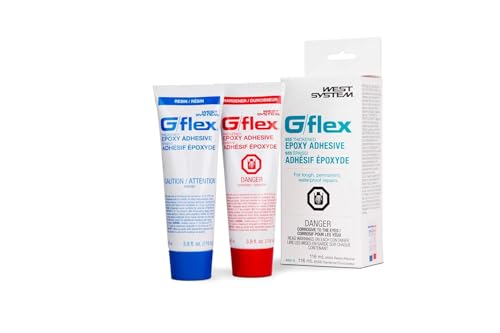
1. West System G/flex Epoxy Adhesive
Our pick — over 4.5★ from 600+ verified ratings; the strongest balance of quality and price.
The boat-repair legend that flexes without cracking under stress.
This is the epoxy for the jobs that absolutely must not fail, like a leaking rotomolded hot tub or a polyethylene kayak hull. Unlike rigid formulas, it’s engineered with a modulus of elasticity of 150,000 PSI, meaning it bends slightly with the material instead of shattering — a critical trait for plastic that flexes. It gives you a generous 46 minutes of pot life (working time) at 72°F before it starts setting, so you can mix a substantial batch and lay it on thick.
Buyers report it fixed a polyethylene RV black tank that leaked 30 gallons after a repair, holding strong once the surface was properly flame-treated. The instructions are exact: sand with 60-80 grit, clean with solvent, flame-treat the plastic, then apply. It reaches an initial cure in 3 to 4 hours, a workable cure in 7-10 hours, and a full cure in 24 hours — a process that rewards patience but delivers a bond you can trust for years.
The one genuine surprise is color: it’s listed as white but many find it cures to a translucent gold-yellow. That’s cosmetic only, and for interior repairs nobody will see it anyway. The performance is what wins people over — its effectiveness and quality are the two most-praised qualities by a wide margin, and durability is a close third.
The Pros
- Absorbs vibration and shock without cracking
- Bonds to impossible surfaces like polyethylene
- Waterproof, works even underwater with technique
The Trade-offs
- Cures translucent gold, not the white it shows
- Takes a full 24 hours to reach maximum strength
Choose it for: structural plastic repairs where flexing and water exposure would destroy a weaker bond.
skip it if: you need a quick cosmetic fix and can’t wait a full day for the cure.
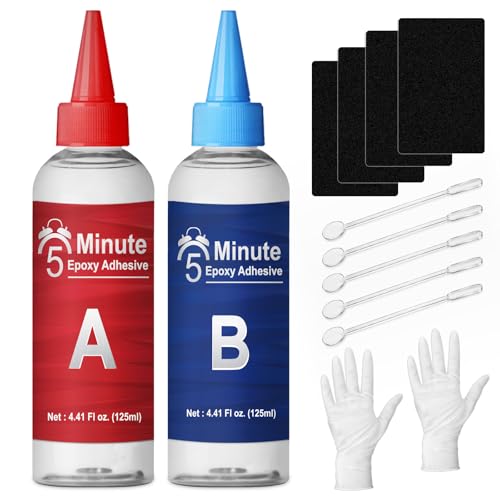
2. GDDP 5 Minute Epoxy Glue
A big-bottle kit that beats single-use syringes on value.
When you’re tired of tiny 0.47 oz syringes that run out after one project, this kit brings 8.45 fl oz of clear epoxy plus mixing trays, wooden sticks, and gloves. The generous working time of about 5 minutes lets you position parts comfortably before it sets, with functional curing in one hour and a full 24-hour cure. It’s one of the rare plastic-safe formulations that also handles high heat — resisting temperatures up to about 300 degrees Fahrenheit (about 149 degrees Celsius) without breaking down.
The two-bottle system with differently colored caps is a simple safeguard against cross-mixing, and owners say it’s simply easier and cleaner than the plunger-type syringes they used before. The ease of use is the top praised aspect here, with effectiveness close behind. It’s a versatile kit that works across metal, glass, 3D printed parts, fiberglass, and most plastics, making it a decent all-rounder for the household drawer.
Where it differs from the West System above is flexibility: this cures rigid rather than flexing, so it suits static repairs over moving, vibrating parts. For a crafts project or a glued fixture, it’s excellent. For a car bumper that twists on the highway, you’d want something tougher.
Value verdict: The 8.45 fl oz bottle plus included tools makes this the smartest cost-per-application deal in the lineup for multi-project households.
Best fit: crafters, model builders, and anyone repairing household items who wants a big supply of clear, heat-tolerant glue.
3. Starbond XL 5 Minute Epoxy Pro Kit
A flexible, fast-setting formula that shrugs off vibration.
Announced as a flexible toughened epoxy with an impressive 2,600 lb shear strength, this 8 oz kit is built for repairs that face constant jostling. It achieves handling strength in about 5 minutes — so you can almost watch it harden — with a full cure in 24 hours. That quick set is a double-edged sword: it’s great for speed, but you need to work fast because there’s no extended positioning window.
Where it shines is its resilience. The flexible formula absorbs vibration and stress without the brittle cracking of standard rigid epoxies, making it a strong option for furniture repairs, cast aluminum fixtures, and general household projects. Owners note it’s firm but has slight flex with no cracking, and it works even over cured UV resin — a niche bonus for 3D printing hobbyists. It handles a range of materials including ABS and PVC plastics, though one builder found it fell short of a competitor on crown molding butt joints where maximum rigidity matters.
Unlike the GDDP kit above which focuses on sheer volume, this one emphasizes quality tools — it comes with screw-cap bottles, reusable mixing trays, and a spoon and spatula for clean, controlled application. The effectiveness and quality are the most-cited strengths, with ease of use close behind. For the maker who values flexibility and a complete kit over raw volume, this is a strong premium pick.
The Strengths
- Absorbs vibration without brittle cracking
- Full kit with reusable trays and tools
- Works over cured UV resin
The Limits
- 5-minute set means little repositioning time
- Not ideal for maximum-rigidity crown molding joints
The honest take: a great all-rounder for vibration-prone repairs; reach for a rigid formula if your joint must be absolutely unbending.
4. Loctite Epoxy Instant Mix 5 Minute

The syringe that mixes itself and cures in just one hour.
If you’re repairing a speaker, a vinyl item, or a household piece and want it done quickly, this is the fastest path to handling strength of any pick here. The double syringe design dispenses resin and hardener in a perfect 1:1 ratio through a self-mixing nozzle — no measuring, no mess, no wasted material. It sets in just 5 minutes and reaches handling strength in 1 hour, a full 24x faster than the Endhokn putty below.
The real strength is convenience. The self-mixing tip means you literally squeeze and apply, making it ideal for speaker driver reconing where precision matters and waste is unacceptable. It’s versatile across metal, wood, ceramic, stone, glass, tile, and most plastics. The mix quality is a top praised aspect, tied with its effectiveness. The bond is rigid and strong, resists water and most solvents, and can be sanded, drilled, and painted after curing.
The catch is the nozzle: it’s single-use. Once epoxy cures inside the mixing tip, you throw it out, and you only get two tips in a pack. Buyers advise ordering extra mixing nozzles up front because each application consumes one. The value for money gets mixed feedback too — some find the syringes small for the price. For quick, precise repairs where speed matters, though, nothing here beats its 1-hour full cure.
The verdict: the ultimate grab-and-go repair for small plastic parts — just remember to stock spare nozzles.
5. J-B Weld Plastic Bonder Black
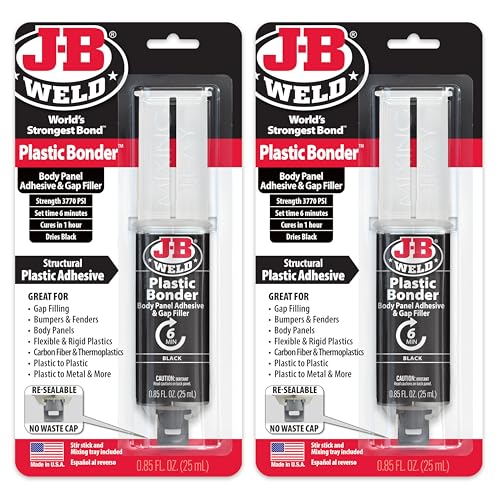
The DIY favorite for bumpers and 3D prints that bonds hard.
This is the crowd favorite for plastic repairs — a two-part urethane adhesive built specifically for the job, with a tensile strength of 3770 PSI. That’s strong enough to feel like hard original plastic once cured, which is exactly what owners mention. It sets in 15 minutes and fully cures in 30 hours, giving you a reliable bond on thermoset and carbon fiber composites, thermoplastics, PVC, fiberglass, and coated metals. The 2-pack of 25ml syringes makes it great for small to medium jobs.
What makes it special is the 1:1 syringe with a re-sealable cap that prevents drying out and leaking between uses. It mixes cleanly in the included tray, applies easily, and sands down smoothly to match the surrounding surface. The effectiveness is the most-praised aspect by a wide margin, with quality and ease of use following. For fixing cracked wiper covers, replacing bumper brackets, or bonding 3D-printed parts, it’s a genuinely versatile workhorse.
The limitations are worth knowing. The consistency can be sticky and messy — gloves and painter’s tape are advised. It’s also not compatible with polypropylene or polyethylene, which are the waxy plastics used in many containers; on those it breaks under flex. And the syringe can occasionally dispense unequal parts, so a tap on the counter helps settle the resin. It gets hot as it cures, and some owners raise concerns about long-term sun durability. For rigid, load-bearing plastic repairs, though, it’s an exceptional value.
The Upside
- 3,770 PSI tensile strength — hard as original plastic
- Re-sealable syringe for multiple uses
- Excellent on 3D prints and auto body panels
The Downside
- Won’t bond to PP or PE plastics
- Gets hot and is sticky to apply
Reach for this if: you need a rigid, high-strength bond on a bumper or rigid scooter part.
Look elsewhere if: your repair is a flexible plastic that bends during use.
6. Brampton Marine Epoxy
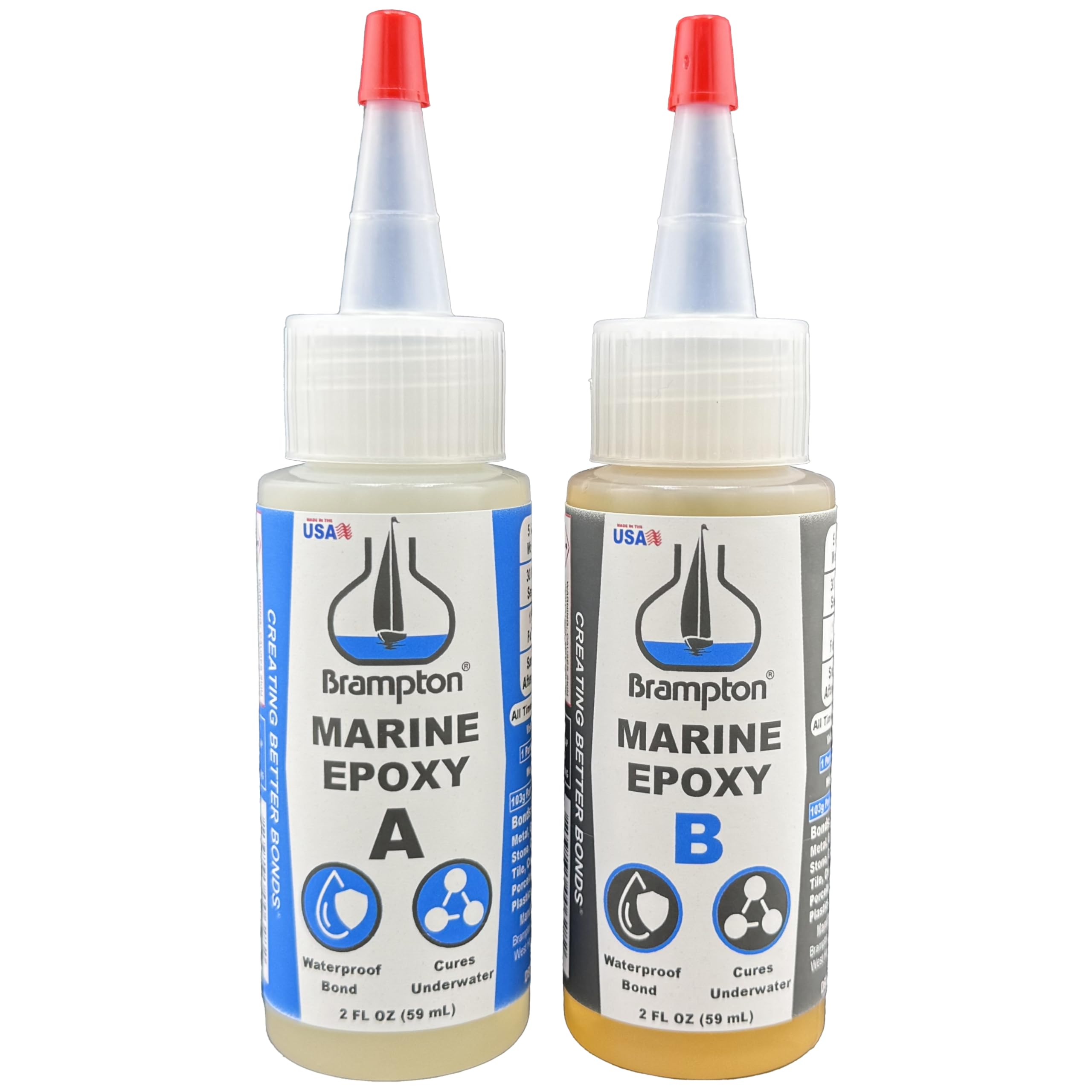
A marine-grade formula that sets hard even under water.
For wet environments, this is the specialist. Engineered to cure underwater, it’s designed for boat hulls, water tanks, fuel tanks, showers, and drains — the spots where water makes other glues fail. It has a 5-minute work life and cures fully in 1 hour at 72°F, so you can patch a leaking tank and test it the same day. It delivers reliable adhesion to fiberglass, wood, most plastics, ceramics, and metal.
Owners use it on fishing kayaks, RC boats, and cracked boat hatch lids, praising how fast it dries and how strong the hold is. It resists petroleum, solvents, impact, and weathering, living up to its marine branding. The application is a simple 1:1 mix by volume, available in syringes and bottle kits.
The honest trade-offs are real. The white hardener liquid is notably thick, which makes mixing a small chore. And once cured, it’s brittle — it won’t flex with a plastic hull the way the West System G/flex will. There are also reports that the product can seem old, and its shelf life is a recurring complaint, so check the consistency before you rely on it for a big job. It’s a fast, strong, waterproof option, just not a flexible one.
The read: the fastest waterproof fix for a rigid repair, but treat it as a rigid patch, not a flexible weld.
7. Cerca de Metal Glue

An upgraded metal-repair formula that also grips plastics.
Despite the name, this heavy-duty adhesive is explicitly formulated for plastic repair alongside metals — a “welding glue” that adds metal powder to the epoxy for extra hardness and adhesion. It’s a smart choice when your repair crosses materials, like a metal bracket glued to a plastic housing. It resists high and low temperatures, water, and oil, and cures hard enough to sand, paint, or drill.
The formula is faster than previous versions, with 10-minute initial solidification and usable strength in 12 hours, reaching a full cure in 24 hours. The 1:1 ratio is dispensed with a simple pusher, and it’s ready to use once mixed. Customers note a strong bond on metal brackets, easy smooth application, and enough positioning time to get parts aligned before it sets. The strong bond is the most-praised aspect, with application close behind — and the waterproof performance gets consistent nods.
Where it compared to others in this list is toughness: it has “a certain toughness” rather than the high flexibility of the West System or Starbond options. It’s ideal for rigid repairs like a broken fuel tank, pipe, or fence where sheer strength matters more than flex. The value for money scores well with owners who note the 1.6 oz tube handles multiple projects—making it a budget-friendly pick for mixed-material jobs.
What Wins People Over
- Metal powder adds hardness and adhesion
- Waterproof and cold/heat resistant
- Plenty of working time before it sets
Worth Knowing
- Limited flexibility for bending parts
- Small 1.6 oz tube for larger repairs
Best for: rigid metal-to-plastic repairs where strength and waterproofing matter.
Think twice if: your repair needs to flex with a moving part.
8. Endhokn Epoxy Putty Stick

A sculptable putty that shapes like clay, cures rock-hard, and stays workable for an hour.
This isn’t your typical liquid epoxy — it’s a two-part paste putty that you mold with your hands, making it ideal for filling gaps, sculpting repairs, or rebuilding broken edges. With 300g total (150g Part A and 150g Part B), it’s a generous supply that includes gloves, a scraper, and an instruction manual. It has a 30-minute molding time and cures fully after 24 hours, forming a surface with strong adhesion.
The standout feature is its workability. It acts like polymer clay but air-dries to harden with no heating needed. It’s a favorite for repairing resin figures, pottery, and concrete garden statues — a versatility that reflects its “effectiveness” being the top praised aspect, with adhesiveness and hardness close behind.
The material is tacky, and owners suggest using petroleum jelly to smooth application. The finished surface can feel slightly greasy, but it cures perfectly and is paintable. It’s heat resistant from -50 °C to 130 °C, so it handles both freezing garages and hot water pipes. Unlike the liquid epoxies in this list, this one excels at reconstruction — rebuilding a broken leg, filling a large hole, or sculpting a missing piece. It’s the slowest full cure at 24 hours, and it’s a paste rather than a thin-penetrating liquid, so it’s best for gap filling over surface coating.
The Strengths
- Stays workable for over an hour
- Moldable like clay, no heating needed
- Drill, polish, and paint after curing
The Trade-offs
- Surface feels slightly greasy before painting
- Full 24-hour cure is the slowest here
Grab this for: sculpting, filling holes, and rebuilding broken shapes on sculpture or fixtures.
Choose a liquid instead if: you need a thin, penetrating bond for a hairline crack.
Understanding the Specs
Cure Time vs. Handling Strength
Every epoxy has two clocks: the “set” time when it starts to harden, and the “full cure” time when it reaches maximum strength. A 5-minute epoxy sets fast but still takes up to 24 hours to reach full durability. For repairs under stress, always wait the full cure time before putting the part back in service.
Flexibility (The PSI Number)
The modulus of elasticity, measured in PSI, tells you how stiff the cured bond will be. A lower PSI like 150,000 means it flexes and absorbs stress — good for boats and bumpers. A higher strength number like 3,770 PSI tensile means it’s harder and more rigid — good for fixtures and load-bearing joints that don’t move.
FAQ
Why does epoxy peel off my plastic?
Will epoxy work on polypropylene or polyethylene plastic?
How long should I wait before using the repaired part?
Is 5-minute epoxy as strong as a 24-hour epoxy?
Can I paint over epoxy after it cures?
What’s the difference between epoxy putty and liquid epoxy?
Can epoxy really be used underwater?
How do I get the 1:1 mixing ratio right?
Final Thoughts: The Verdict
If you want one dependable pick, the epoxy for plastic winner is the West System G/flex because its 150,000 PSI flexibility handles the stress of expansion and vibration that destroys rigid bonds on plastic. If you want a fast, precise syringe fix for small parts, grab the Loctite Instant Mix with its 1-hour cure. And for sculpting, filling holes, or rebuilding broken shapes, the Endhokn Putty Stick is the one to reach for.
How We Picked
We do not accept paid placement. Every pick is matched to a real buyer and a real use-case; we do not hands-on test units.
Sources & Methodology
Specifications: manufacturer listings and product documentation. Review insights: verified customer reviews, as of July 2026. Pricing: not shown on this page (it changes often); check the current price via the retailer link.
As an Amazon Associate, WellFizz earns from qualifying purchases. This does not affect which products we feature.
Related Guides

Mo Maruf
I created WellFizz to bridge the gap between vague wellness advice and actionable solutions. My mission is simple: to decode the research and give you practical tools you can actually use.
Beyond the data, I am a passionate traveler. I believe that stepping away from the screen to explore new environments is essential for mental clarity and physical vitality.