Our readers keep the lights on and my smoothie glass nicely filled. As an Amazon Associate, I earn from qualifying purchases.
Specs are compiled from manufacturer listings and verified buyer reviews and can change over time — please confirm the key details on the product page before buying.
Choosing an eco-friendly diaper means balancing what is best for your baby’s skin with what is best for the planet — and the options go far beyond just picking the first plant-based bag on the shelf. You are navigating materials like organic cotton and bamboo viscose, certifications like OEKO-TEX and EWG Verified, and the big question of whether reusable cloth makes more sense than advanced plant-based disposables. This guide cuts through the noise to show you exactly which diapers hold up overnight, which fit sensitive skin without irritation, and which truly walk the walk on sustainability.
I’m Mohammad Maruf — the founder and writer behind WellFizz. This guide is built by comparing the manufacturers’ published specifications and the patterns across verified customer reviews, so you get each pick’s real strengths and trade-offs instead of marketing spin.
Whether you are stocking up for a newborn or making the switch to reusable cloth, you will find the best environmentally friendly diapers for your routine, budget, and values right here.
Our Picks at a Glance


How To Choose The Best Environmentally Friendly Diapers
Eco-friendly diapers range from compostable disposables to washable cotton prefolds. Understanding these differences helps you pick a diaper that fits your lifestyle, not just your values.
Material Matters: Plant-Based vs. Organic Cotton vs. Bamboo
A diaper’s green credentials start with what it is made of. Plant-based disposables use materials like sugarcane or cornstarch in the backsheet instead of plastic. Organic cotton options — both disposable and reusable — skip pesticides and synthetic fertilizers. Bamboo viscose feels incredibly soft but requires a chemical process to turn the bamboo into fabric, so look for certifications like OEKO-TEX to ensure the process is safe. The material directly affects softness, breathability, and how your baby’s skin reacts.
Absorbency and Leak Protection: It Isn’t Just About the Planet
An eco-friendly diaper that leaks nightly is not helpful. Pay close attention to the core technology: some plant-based diapers use a “Quilted Bubble Liner” or charcoal-infused layers to lock moisture away. Cloth diapers rely on natural cotton fibers and often need several washes to reach full absorbency. If you need overnight protection, look for diapers specifically advertised for 12-hour use or those with a wetness indicator so you know exactly when a change is needed.
Certifications That Actually Mean Something
Not all “green” claims are equal. OEKO-TEX STANDARD 100 means every component has been tested for harmful substances. EWG Verified goes a step further by verifying the product is free from chemicals of concern. Totally Chlorine Free (TCF) bleaching is crucial for bamboo and cotton diapers — it prevents dioxins from entering the water supply. These logos indicate the brand paid for third-party testing, not just a leaf on the package.
Quick Comparison
| Model | Best For | Material | Count / Pack | Weight | Amazon |
|---|---|---|---|---|---|
| The Honest Company Plant-Based★ Best Overall | Best Overall | Plant-based backsheet | 62 | 4.3 lbs | Amazon |
| The Honest Company Sensitive SkinHypoallergenic | Hypoallergenic | Plant-based backsheet | 62 | 4.5 lbs | Amazon |
| OsoCozy Organic FlatVersatile Cloth | Versatile Cloth | 100% Organic Birdseye Cotton | 12 | 2 lbs | Amazon |
| Fasoar Cotton Prefold | Budget Cloth | 100% Unbleached Cotton | 6 | — | Amazon |
| HealthyBaby Training Pants | Potty Training | Plant-derived / organic cotton | 32 | 3.5 lbs | Amazon |
| Esembly Cloth Diaper Inner | Two-Piece System | 100% Organic Cotton | 3-Pack | — | Amazon |
| DYPER Charcoal Enhanced | Odor Control | Plant-based / Charcoal | 36 | 4.7 lbs | Amazon |
| ECO BOOM Bamboo | Bamboo Softness | Viscose from Bamboo | 68 | 6.08 lbs | Amazon |
In‑Depth Reviews
1. The Honest Company Clean Conscious Diapers | Plant-Based, Sustainable
Our pick — over 4.5★ from 200+ verified ratings; the strongest balance of quality and price.
The crowd-favorite eco-diaper that earned a decade of loyalty for its rash-free, leak-proof performance.
You get a diaper that keeps your baby dry and rash-free, thanks to a plant-based backsheet and a Quilted Bubble Liner (a textured layer that pulls wetness away from skin fast). The stretchy sides and Quick Absorb Channel handle wiggles and heavy wetting, and buyers report zero leaks even during overnight wear. At 4.3 pounds for a 62-count Club Box, the package is noticeably lighter than the sensitive-skin sibling (4.5 pounds) but delivers the same core protection. The OEKO-TEX STANDARD 100 certification (an independent test for harmful substances) means every layer has been checked, so you get real confidence.
What wins people over is the quality — praised more than any other aspect by owners — followed closely by the lack of skin irritation. Owners mention using these and the matching pull-ups for nine years across multiple children, calling them “the only diapers my kiddos don’t get rashes in.” The designs are a constant delight, and the smaller travel pack footprint is a bonus when packing a diaper bag.
Why It Leads the List
- Consistent 12+ hour leak protection, even overnight.
- Hypoallergenic and fragrance-free — ideal for the most sensitive bottoms.
- OEKO-TEX certified materials from responsibly sourced North American fluff pulp.
The One Trade-Off
- Leakage results are mixed among owners — most have none, a few do, so sizing fit matters.
Best for: Any parent who wants a proven, plant-based disposable that protects sensitive skin, prevents leaks, and comes with a sustainability certification they can trust.
Think twice if: You prefer ultra-budget diapers — Honest sits at a premium price point that reflects the certified materials and cute prints.
2. The Honest Company Clean Conscious Diapers for Sensitive Skin
The extra-gentle version that offers the longest front coverage, purpose-built for babies with medical needs.
This variant takes everything from the standard plant-based diaper and adds a specific design win: customers note the front panel extends higher than any other diaper they have tried. That makes it the top pick for babies with ureterostomies or those who need extra containment in the front. The same Quilted Bubble Liner and Quick Absorb Channel are here, but the inner lining is explicitly hypoallergenic and fragrance-free, targeting the most reactive skin. While it comes in the same 62-count Club Box, the package is slightly heavier at 4.5 pounds, likely due to the additional absorbent layers in the front.
One owner found these a perfect baby shower gift because they are “gentle, chemical-free, practical and thoughtful” — an upgrade from conventional brands. The smooth inner texture prevents rashes even for babies who react to everything, and the thickness stays trim enough not to bulk up under clothes. The prints are the same limited-edition designs that fans love, so you do not sacrifice style for sensitivity.
Front-and-Center Protection: The longer front coverage is a literal standout — owners of babies with ostomies say it is the only diaper that works without bunching or leaking at the top.
Fit Note: Sizing can vary by body shape, not just weight; you may need to adjust snugness compared to the standard Honest diaper if your baby has a slim waist or chunky thighs.
Reach for this if: Your baby has extremely sensitive skin, a medical need for extra front coverage, or you simply want the most gentle plant-based disposable on the market.
Look elsewhere if: You need a more affordable eco-diaper for a baby without skin sensitivities — the standard Honest Clean Conscious diaper works just as well and costs less.
3. OsoCozy Organic Flat Cloth Diapers
The cloth-diaper classic that is so versatile it doubles as burp cloths, changing pads, and even cleaning rags.
If you are ready to ditch disposables entirely, this 100% GOTS-certified organic birdseye cotton flat is the gold standard. Each diaper measures 27 by 30.5 inches and weighs just 2 pounds for the full dozen, making them incredibly lightweight. The single-layer flat design dries far faster than quilted prefolds, and the cotton is soft yet tough enough to handle dozens of hot washes without fraying. A dozen flats can take you through a day and a half of diapering, and they pay for themselves within a couple of weeks compared to buying disposables.
Absorbency is the second most-praised aspect — owners note these can soak up 6 to 7 ounces of liquid after the initial break-in period. The catch is that beeswax-like natural oils in new organic cotton require six or more hot washes before the fibers reach maximum absorbency, so you need to prep them ahead. Some find the rectangular shape less ideal for traditional folding than square flats, but the added length makes them excellent as changing pad covers or receiving blankets.
Workhorse Versatility: Beyond diapering, these make superb burp cloths, bibs, washcloths, and even optical or record-cleaning cloths because the birdseye weave is lint-free.
Prep Required: Plan to wash and dry these at least six times before first use — the absorbency jumps dramatically after those initial cycles.
Best for: Families committed to cloth diapering who want organic, chemical-free, fast-drying flats that pull triple duty around the nursery.
Skip if: You want a fitted diaper or a prefold with sewn-in absorbent panels — this is a true flat, meaning you fold it yourself around your baby.
4. Esembly Cloth Diaper Inner

The trim-fitting organic cotton inner that pairs with a waterproof outer to make blowouts a thing of the past.
Esembly uses a two-piece system: this absorbent organic cotton Inner goes against the baby’s skin, and a separate waterproof Outer (sold separately) snaps over it. The butterfly-layered core puts extra absorbency in the middle where you need it while keeping the legs and waist trim. At 9 pounds for a 6-week-old, the Size 1 fits beautifully with no leaks reported, though it does take a few washes to build full absorbency — a common trait for organic cotton. The adjustable waist snaps and stretchy leg openings accommodate growth within the 7 to 17 pound range.
Quality is the top-rated aspect by far, with owners calling these “really high quality” and noting the stitching holds up well. The easy cleaning is a close second — no soaking or special prep, just toss in the wash every two to three days. Because you reuse the Outer multiple times, you need only 6 to 8 Outers for a full stash of 24 to 30 Inners. A few reviewers point out absorbency issues with heavy wetters or overnight use, so heavy sleepers may need an extra booster insert.
Blowout-Proof Dream Team: The double gusset on the Outer (not shown here) plus the fitted Inner practically eliminate blowouts — a lifesaver for the early months.
Investment in a System: You must buy the Outer separately, so the upfront cost is higher than all-in-one diapers. But you need far fewer Outers than Inners.
Ideal for: Parents who want the leak protection of a fitted cloth diaper with the convenience of a reusable waterproof cover. Works great for babies with sensitive skin who react to disposables.
Not for: Budget-limited startup — you need to buy both the Inner and Outer together, which raises the initial spend before you see the long-term savings.
5. DYPER Charcoal Enhanced Day & Overnight Diapers
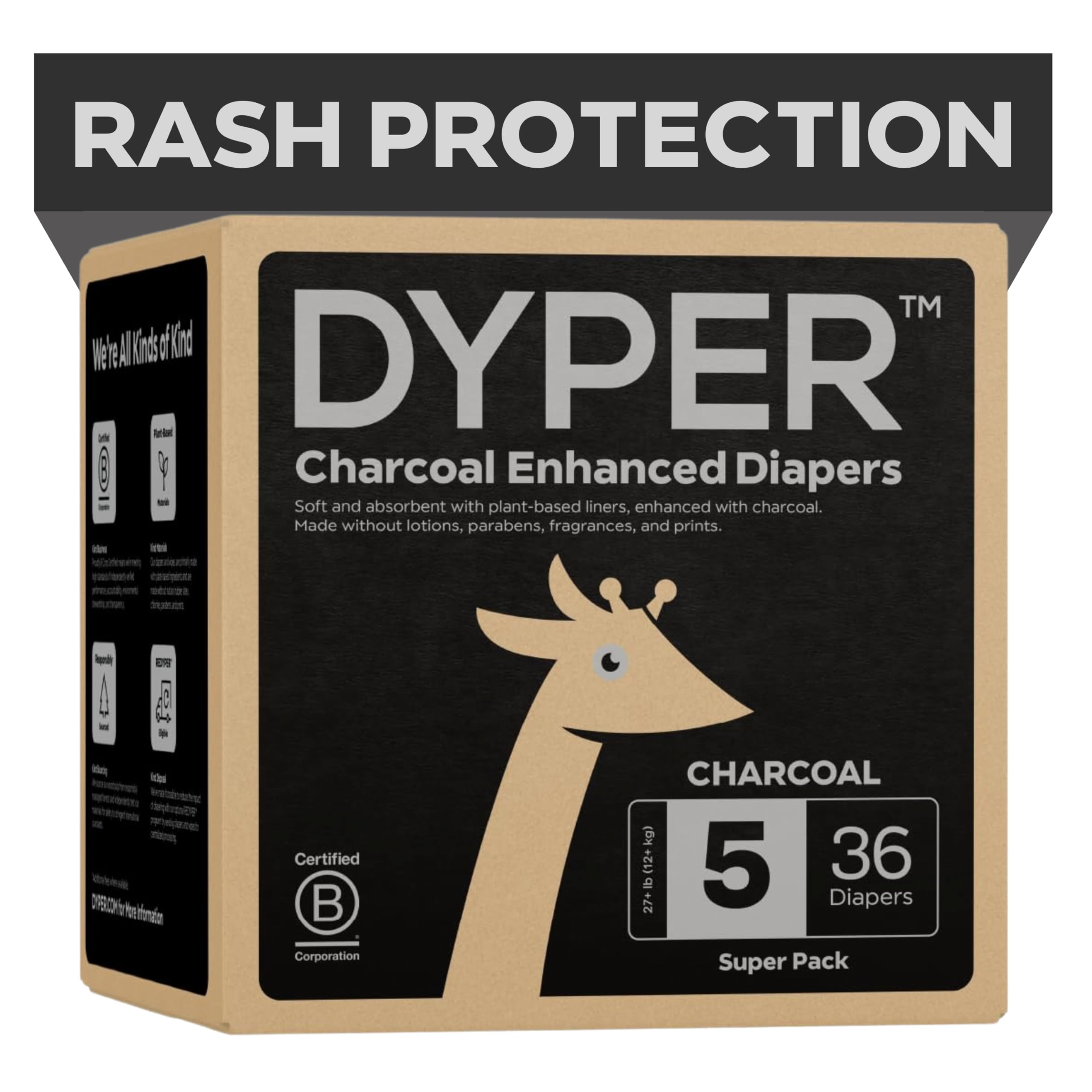
The sleek charcoal-infused diaper that fights odor on contact and feels like yoga pants on your baby.
DYPER takes a different approach to eco-friendly diapering: infuse the absorbent core with charcoal, a natural material known for trapping odors. The result is a diaper that stays remarkably fresh even after a long night. The 3D embossed white inner liner is ultra-soft to the touch and gives an underwear-like fit that active toddlers appreciate. At 4.7 pounds for 36 diapers, each individual diaper feels substantial, and owners praise the wide hip area and large thigh flaps that prevent blowouts. The unprinted, unscented design appeals to parents who want a minimalist look.
Quality is what owners talk about most, followed by softness — the cloth-like texture feels noticeably different from crinkly conventional brands. The absorbency handles overnight wear well, and many say it outperforms Honest, Huggies, and Pampers in holding capacity. A few owners note their specific baby peed through these easily, which highlights that fit still varies by body shape. The charcoal also means the inside is black or dark gray, which can make it harder to see if the diaper is wet at a glance.
Odor-Busting Tech: The charcoal infusion genuinely cuts down on the ammonia smell that builds up overnight — noticeable difference when you open the diaper in the morning.
Fit Matters: These run slightly big, so you may need to size down. The lack of a wetness indicator means you rely on feel or schedule to know when to change.
Grab these if: You battle diaper odor, want a non-toxic, unprinted diaper with serious overnight absorbency, and appreciate a modern minimalist aesthetic.
Hold off if: You need a wetness indicator for quick checks, or your baby has a very specific body shape that requires a snugger fit — test a small pack first.
6. HealthyBaby Non-Toxic Training Pants
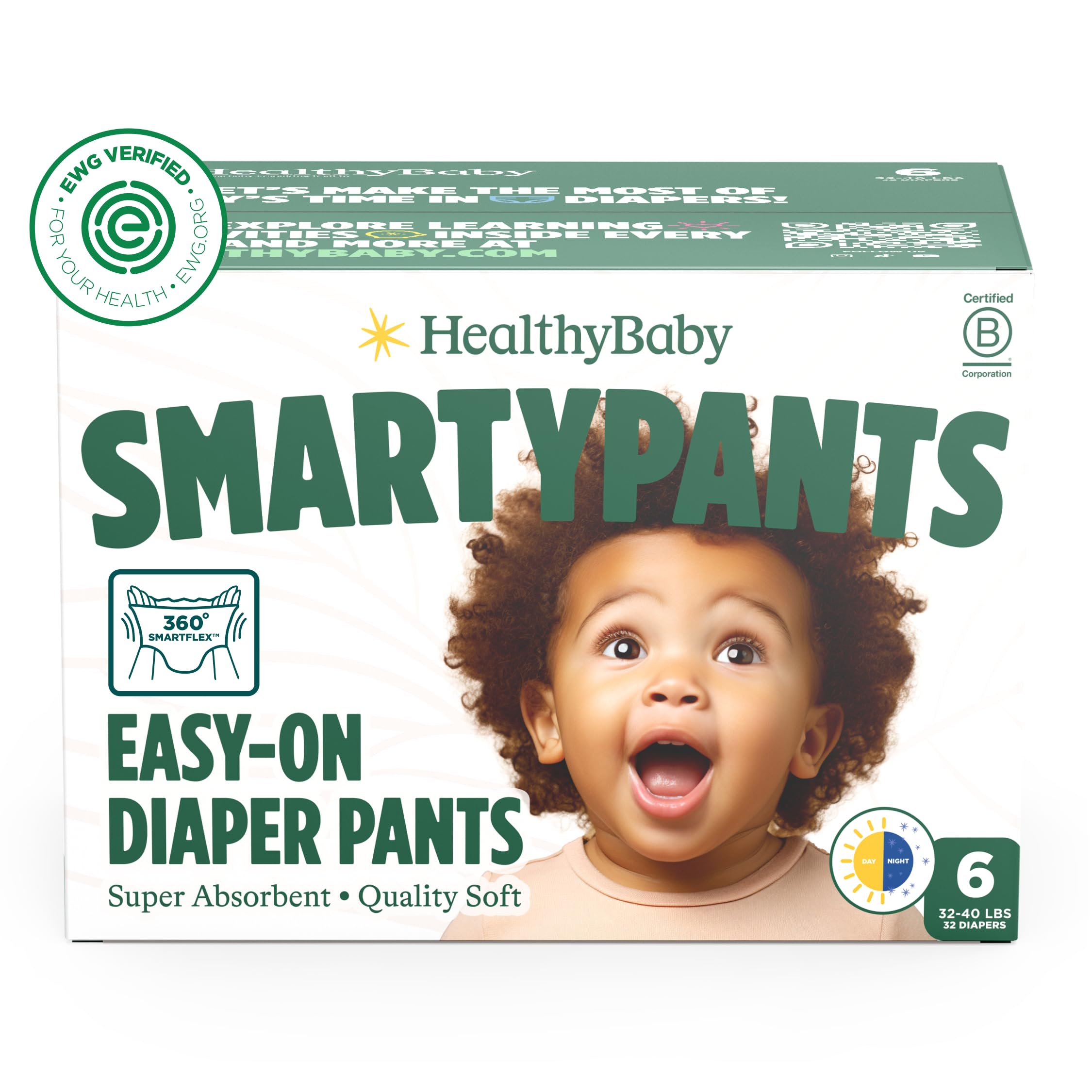
The EWG Verified pull-up that makes potty training easier with tear-away sides and 12-hour leak protection.
When your toddler is ready to start using the potty, these training pants bridge the gap between full diapers and underwear. They pull on and off easily for practice, but the tear-away sides let you handle messes quickly without wrestling a kicking child. The quilted 360-degree SmartFlex waistband stretches for active movement while keeping leaks contained, and the FlashDry layers — made from plant-derived materials including organic cotton — keep skin dry even after overnight wear. At 3.5 pounds for 32 pants, each one is light enough for a toddler to wear comfortably under clothes.
The soft, breathable material earns high marks for being non-toxic and zero-irritation for sensitive skin. However, the fit is the most-discussed challenge: the waistband runs small, and several shoppers say it being way too tight around the waist for average-weight toddlers. Sizing up is often the fix, but then the leg holes can gape. If your child is on the taller, slimmer side, expect a trickier fit. The absorbency itself is excellent — no leaks overnight for most — so the main hurdle is finding the right size for your specific toddler.
Smart Design Details: The sticky tab on the top makes soiled pants roll up into a tidy bundle for disposal — a small touch parents appreciate hugely.
Size-Up Strategy: Nearly every review mentions the waist runs tight. Order a size up from your child’s diaper size for a comfortable fit.
Best for: Toddlers in active potty training who need a non-toxic, plant-based pull-up that offers real overnight protection and easy cleanup.
Think twice if: Your toddler has a very slim waist or a large belly — the narrow fit may cause red marks or gapping. Buy one small pack to test before stocking up.
7. ECO BOOM Diapers, Viscose from Bamboo

The bamboo-based disposable that combines a velvety feel with German-engineered absorbency for serious leak protection.
ECO BOOM uses a 100% viscose-from-bamboo top sheet and back sheet instead of plastic-derived materials, giving the diaper a soft, fabric-like feel against your baby’s skin. The absorbent core is sourced from Germany and uses Totally Chlorine Free (TCF) pulp — a meaningful environmental step that prevents dioxin pollution. Natural aloe oil is added to the surface layer to nourish and protect skin, and the triple elastic eartips prevent the dreaded red marks around the waist. At 6.08 pounds for 68 diapers (Size 3), this is the heaviest pack in the roundup, reflecting the dense, high-absorbency core.
Quality and softness are the top praise points, with owners noting these resolved diaper rash issues that other brands caused. The side leak pockets are particularly good at containing poop explosions and preventing back blowouts. A wetness indicator (a blue line) appears when the diaper is wet, which is helpful for new parents. Some owners find the diaper slightly less soft than premium bamboo competitors, and the price is higher than many mainstream brands. The fit tends to favor long, skinny babies — excellent for preemies or slender newborns but may not work as well for chunky thighs.
Baby-Tested, Rash-Free: Multiple buyers report switching to these specifically because their babies broke out in rashes from Huggies, Pampers, or Honest — the bamboo and aloe combo seems to soothe instead.
Preemie-Friendly Fit: This is one of the few eco-brands that makes a true preemie size that bridges the gap between newborn and size 1 for tiny or long, skinny babies.
Ideal for: Parents looking for a disposable diaper with bamboo softness, German absorbency tech, and a serious commitment to chlorine-free processing.
Skip if: You are on a strict budget — these are premium-priced — or your baby has very wide thighs that might outrun the elastic eartips.
8. Fasoar Cotton Prefold Cloth Diapers

The unbleached cotton workhorse that pulls diaper, burp-cloth, and wound-care duty equally well.
These prefolds are 100% unbleached premium cotton with a 6-ply construction — the middle panel has extra layers for maximum absorbency while the outer panels stay thinner for a better fit. At 19.5 by 14 inches, they are sized to work as traditional folded diapers with fasteners or as pad inserts inside any standard cloth diaper cover. A 6-count pack is the smallest and most affordable entry point into cloth diapering, and they double perfectly as heavy-duty burp cloths. One owner bought them specifically because they were the “closest match to NICU burp cloths” for managing heavy spit-up.
Quality is the most-cited strength — 25 owners single it out — and the burp-cloth compatibility is a close second. The cotton is tightly woven and lint-free, washing clean even with stains. A few owners find the softness only average, especially before multiple washes, and some say the fabric feels a bit scratchy as a burp cloth against a newborn’s face. They do shrink noticeably after the first hot wash and dry, so size up your folding strategy accordingly. The Honest pack has 62 diapers, while this Fasoar pack has 6 diapers, so it is a starter pack for testing cloth without a big commitment.
Multi-Use Magic: These are the Swiss Army knife of nursery textiles — diapers, burp cloths, changing pad covers, and, per one owner, “cut in half and hemmed for wound care pads for 3rd degree burns.”
Not Pre-Softened: New cotton prefolds come with natural starches. Wash them two to three times before first use to soften the fibers and boost absorbency.
Grab these if: You want to try cloth diapering on a budget, need a multi-purpose nursery cloth, or use prefolds as inserts inside pocket diapers.
Not for: Parents who want a ready-to-use fitted diaper — prefolds require folding and a cover or fastener. Also skip if softness is your top priority for burp cloths.
Understanding the Specs
Plant-Based vs. Organic vs. Bamboo: What Is the Real Difference?
A plant-based backsheet uses materials like corn or sugarcane instead of petroleum-based plastic. Organic cotton is grown without synthetic pesticides or fertilizers, which is better for the farmworkers and the soil. Bamboo viscose feels incredibly soft but requires a chemical process to dissolve bamboo into fiber — look for OEKO-TEX certification to ensure no harmful residues remain. Knowing which material touches your baby’s skin helps you decide between breathability, softness, and environmental impact.
Why Certifications Matter More Than a Green Label
A diaper can claim “eco-friendly” without third-party proof. OEKO-TEX STANDARD 100 means every thread, snap, and adhesive has been lab-tested for harmful substances. EWG Verified screens out 3,900-plus chemicals of concern, including formaldehyde and phthalates. Totally Chlorine Free (TCF) refers to the bleaching process for the pulp core — standard chlorine bleaching creates dioxins that persist in the environment. These logos mean the diaper passed real scrutiny, not just a marketing meeting.
FAQ
What does OEKO-TEX STANDARD 100 mean for a diaper?
How do cloth diapers compare to eco-friendly disposables for the environment?
Can I use eco-friendly diapers overnight without leaks?
What does “Totally Chlorine Free” mean on a diaper package?
Are bamboo diapers really more eco-friendly than regular ones?
How many cloth diapers do I need to start?
What is a wetness indicator and do I need it?
How do I make cloth diapers more absorbent?
Are eco-friendly diapers safe for premature babies?
What is the difference between a prefold and a flat cloth diaper?
Final Thoughts: The Verdict
If you want one dependable pick, the environmentally friendly diapers winner is the The Honest Company Clean Conscious Plant-Based Diapers because it combines OEKO-TEX certification, consistent overnight leak protection, and a decade of parent trust into one proven package. If you want the very best for extra-sensitive skin, grab the Honest Company Sensitive Skin version with its longer front coverage. And for parents ready to go reusable, the OsoCozy Organic Flat Cloth Diapers are a versatile, GOTS-certified workhorse that pays for itself in weeks while pulling burp-cloth and changing-pad duty for the whole first year.
How We Picked
We do not accept paid placement. Every pick is matched to a real buyer and a real use-case; we do not hands-on test units.
Sources & Methodology
Specifications: manufacturer listings and product documentation. Review insights: verified customer reviews, as of July 2026. Pricing: not shown on this page (it changes often); check the current price via the retailer link.
As an Amazon Associate, WellFizz earns from qualifying purchases. This does not affect which products we feature.
Related Guides

Mo Maruf
I created WellFizz to bridge the gap between vague wellness advice and actionable solutions. My mission is simple: to decode the research and give you practical tools you can actually use.
Beyond the data, I am a passionate traveler. I believe that stepping away from the screen to explore new environments is essential for mental clarity and physical vitality.