Our readers keep the lights on and my smoothie glass nicely filled. As an Amazon Associate, I earn from qualifying purchases.
Specs are compiled from manufacturer listings and verified buyer reviews and can change over time — please confirm the key details on the product page before buying.
The biggest trap in entry-level drones is thinking you have to settle for wobbly, low-res footage from a toy. The reality is sharper: a genuine 4K camera, a stabilizing gimbal, and GPS that brings the drone home automatically are all available for under three hundred dollars. This guide cuts through the noise to find the entry level drone with camera that actually delivers smooth video and reliable flight — not just a box of promises.
I’m Mohammad Maruf — the founder and writer behind WellFizz. This guide is built by comparing the manufacturers’ published specifications and the patterns across verified customer reviews, so you get each pick’s real strengths and trade-offs instead of marketing spin.
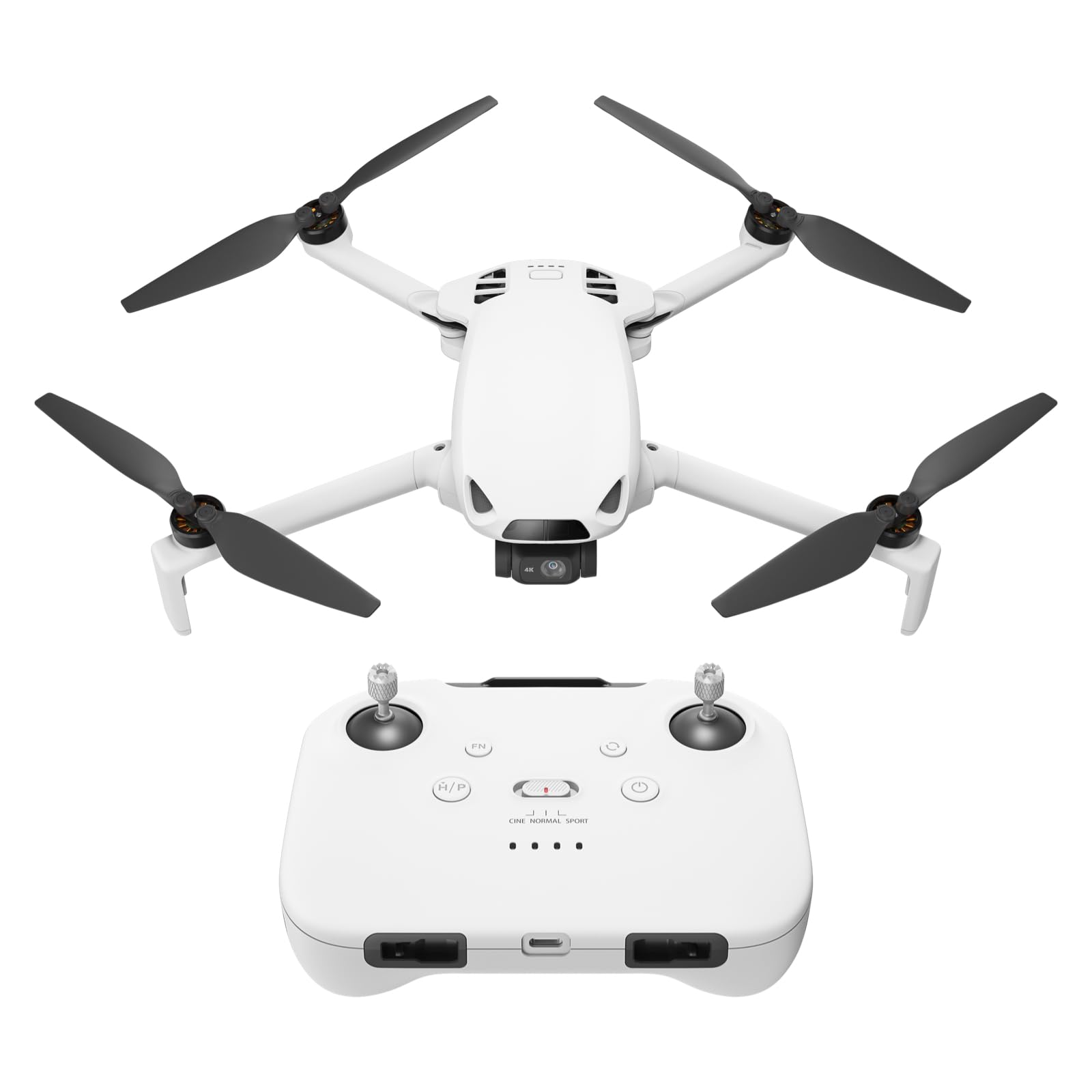
If you are buying your first drone for travel, family videos, or just exploring the neighborhood from above, you want an entry level drone with camera that is easy to fly, takes clear video, and does not break the bank. The best pick for most beginners is the Potensic ATOM SE because it combines electronic image stabilization (EIS) for smooth footage with a weight under 249 grams that keeps you free from FAA registration.
Our Picks at a Glance


How To Choose The Best Entry Level Drone With Camera
The specifications on these boxes can be overwhelming. Here are the three things that actually decide whether your first flight ends with a cinematic clip or a walk into a field to retrieve a lost drone.
Camera & Gimbal Quality
A “4K camera” sticker means little if the footage looks like a shaky phone video from a moving car. The gimbal — a small mechanical arm that holds the camera steady — is what separates smooth, watchable video from nauseating wobble. Look for a real 3-axis gimbal, which adjusts for tilt, roll, and yaw. It is the single most important feature for getting usable footage.
Weight and FAA Registration
Drones under 249 grams (about the weight of a smartphone) are exempt from FAA registration and Remote ID requirements for recreational use. This makes them the easiest choice for beginners who just want to fly without filling out forms. Heavier drones need registration, but some owners find the extra weight gives better wind resistance. Check local laws carefully before your first flight.
GPS and Safety Features
GPS is not a gimmick — it is your safety net. A drone with GPS knows exactly where it took off and can fly itself back home when the battery is low, the signal drops, or you simply press a button. Without it, a lost connection means a lost drone. For a beginner, GPS with an automatic return-to-home function is the most critical safety feature you can buy.
Quick Comparison
| Model | Best For | Camera | Flight Time | Weight | Amazon |
|---|---|---|---|---|---|
| DJI Mini 4K★ Best Overall | Serious beginners, quality video | 4K/30fps, 3-Axis Gimbal | 31 min (1 battery) | 246 g | Amazon |
| Potensic ATOM SEBest Value | Best value with GPS features | 4K/30fps, EIS | 62 min (2 batteries) | less than 249 g | Amazon |
| Skyrover S1Compact Pick | Compact, obstacle avoidance | 4K/60fps, 8K photo, 3-Axis Gimbal | 40 min (1 battery) | 249 g | Amazon |
| Potensic ATOM LT | Long flight time, budget-friendly | 2.5K/30fps, EIS | 80 min (2 batteries) | 249 g | Amazon |
| Oddire HK11 | Budget-friendly GPS features | 4K photo, 1080P video | 48 min (2 batteries) | 249 g | Amazon |
| Ameta S20 Pro | Budget pick, long flight time | 4K, 13MP photo | 50 min (2 batteries) | 181 g | Amazon |
| Veeniix V11Air | Professional-style gimbal | 6K photo/4K video, 3-Axis Gimbal | 70 min (2 batteries) | 600 g | Amazon |
| REDRIE HK33 | GPS and anti-shake on a budget | 4K photo, 1080P video | 45 min (2 batteries) | 249 g | Amazon |
| Gleesfun G11PRO | Long range, 3-axis gimbal | 6K photo/4K video, 3-Axis Gimbal | 70 min (2 batteries) | 357 g | Amazon |
| Ruko F13 | Premium photo quality | 4K video, 8K photo, 3-Axis Gimbal | 96 min (3 batteries) | 248 g | Amazon |
| Skyrover X1 | Top-tier features and range | 4K/60fps HDR, 8K photo, 3-Axis Gimbal | 96 min (3 batteries) | 249 g | Amazon |
In‑Depth Reviews
1. DJI Mini 4K
Our pick — 4.5★ from 3,500+ verified ratings; the strongest balance of quality and price.
The gold standard for beginners who want real cinema-grade footage without registration paperwork.
The difference between this drone and the rest of the entry-level pack is the 3-axis gimbal — a mechanical stabilizer that keeps the camera level during turns, wind gusts, and acceleration. You get 4K video at 30 frames per second with zero of the wobble that makes cheaper drones unwatchable. The crowd favorite here is the quality: owners specifically call out the camera and video stability as the reason they bought it, and the 31-minute flight time per battery is among the best for a single-pack option.
It weighs just 246 grams, so you can fly it recreationally without FAA registration. The GPS return-to-home function brings it back to you if the battery runs low or you lose sight of it. What wins everyone over is the ease of use — beginners report being able to fly confidently on the first day thanks to one-tap takeoff and stable hovering. The trade-off is that performance receives mixed feedback from some owners; a rare few report a gimbal issue from the start, which is worth checking on delivery.
What makes it the leader
- Rock-solid 3-axis gimbal for smooth 4K footage
- Under 249g means no FAA registration needed
- GPS return-to-home and stable hover for beginners
The honest catch
- Single battery means 31 minutes of flight — buy the multi-pack for longer sessions
- Occasional quality-control reports on the gimbal
Grab it if: you want the smoothest, most reliable 4K video in an entry-level drone and are willing to pay for DJI’s well-known ecosystem.
The other side: if you need a longer flight time from the start, you will want to spring for the two-battery or three-battery kit.
2. Potensic ATOM SE
A near-perfect balance of price, flight time, and camera quality that rivals the best-known brand.
This is the drone that thousands of owners have turned to as their first serious flyer. It packs a Sony sensor in its 4K camera, uses electronic image stabilization (EIS) to keep footage smooth, and weighs under 249 grams so you can take it anywhere without registration. The SurgeFly control system includes a dedicated Beginner Mode that limits altitude and distance while you learn, then open up three flight modes — Video, Normal, and Sport — as your confidence grows. In Sport mode, it reaches a top speed of 16 meters per second in 2.8 seconds.
With two 2500mAh batteries you get a total of 62 minutes of flight time, which is comfortably enough for a full afternoon of filming. The PixSync 2.0 transmission system pushes a stable HD feed up to 4 kilometers away. Things owners praise most are the quality and the value for the money — this is a widely popular model for a reason. The reliability does get mixed notes; a small number of buyers report the drone not operating properly from the start, though Potensic’s customer support is frequently highlighted as responsive and helpful in resolving issues.
Why it stands out: The combination of a first-rate brand reputation, a high-quality sensor, and a two-battery kit that stretches your flying time to just over an hour makes this the best bang-for-your-buck in the list.
A word on durability: Owners mention it survives crashes well, and many say they are comfortable recommending it as a learning tool before stepping up to a more expensive model.
Reach for this if: you want the closest experience to a premium drone without the premium price tag, and you value flight time and a known brand.
Look elsewhere if: you want a physical 3-axis gimbal — the ATOM SE uses electronic stabilization, which is good but not quite as smooth.
3. Skyrover S1 Mini
A mini drone that packs forward obstacle avoidance and 4K/60fps video into a travel-friendly package.
Most drones in this price range skip obstacle avoidance entirely. The Skyrover S1 includes forward-facing obstacle sensors, which means it can detect and stop before hitting a tree or a wall — a genuine safety net for beginners still learning spatial awareness. The camera shoots 4K at 60 frames per second, giving you smoother motion than the standard 30fps models, and the 1/2-inch CMOS sensor captures 8K photos (48 megapixels) after a firmware update.
The 3-axis mechanical gimbal (a motorized mount that keeps the camera level) steadies the shot even in a light breeze, so your video does not look shaky. The drone weighs under 249 grams and folds down to 6.3 inches long, small enough to slip into a jacket pocket. The 40-minute battery life means you can fly longer on a single charge than most entry-level drones. Buyers consistently praise the video quality and ease of use, though some report the gimbal becoming unstable after several flights. The digital-only manual also frustrates beginners who prefer video tutorials. If you want a registration-free drone that fits in a pocket and shoots smooth video, this is your pick. skip it if you need a printed manual or want a drone with a proven long-term gimbal track record.
Standout features
- Forward obstacle avoidance is rare at this level
- Smooth 4K/60fps video with a real 3-axis gimbal
- Folds small enough for a jacket pocket
Before you buy
- Stability gets mixed feedback; some owners mention gimbal issues over time
- Manual is digital-only and lacks detail for complete beginners
Who it is for: the traveler or hiker who wants an ultra-portable drone with obstacle protection and high-frame-rate video.
Who should skip: anyone who wants a comprehensive printed manual or prefers a drone with a stronger track record on long-term gimbal reliability.
4. Ruko F13
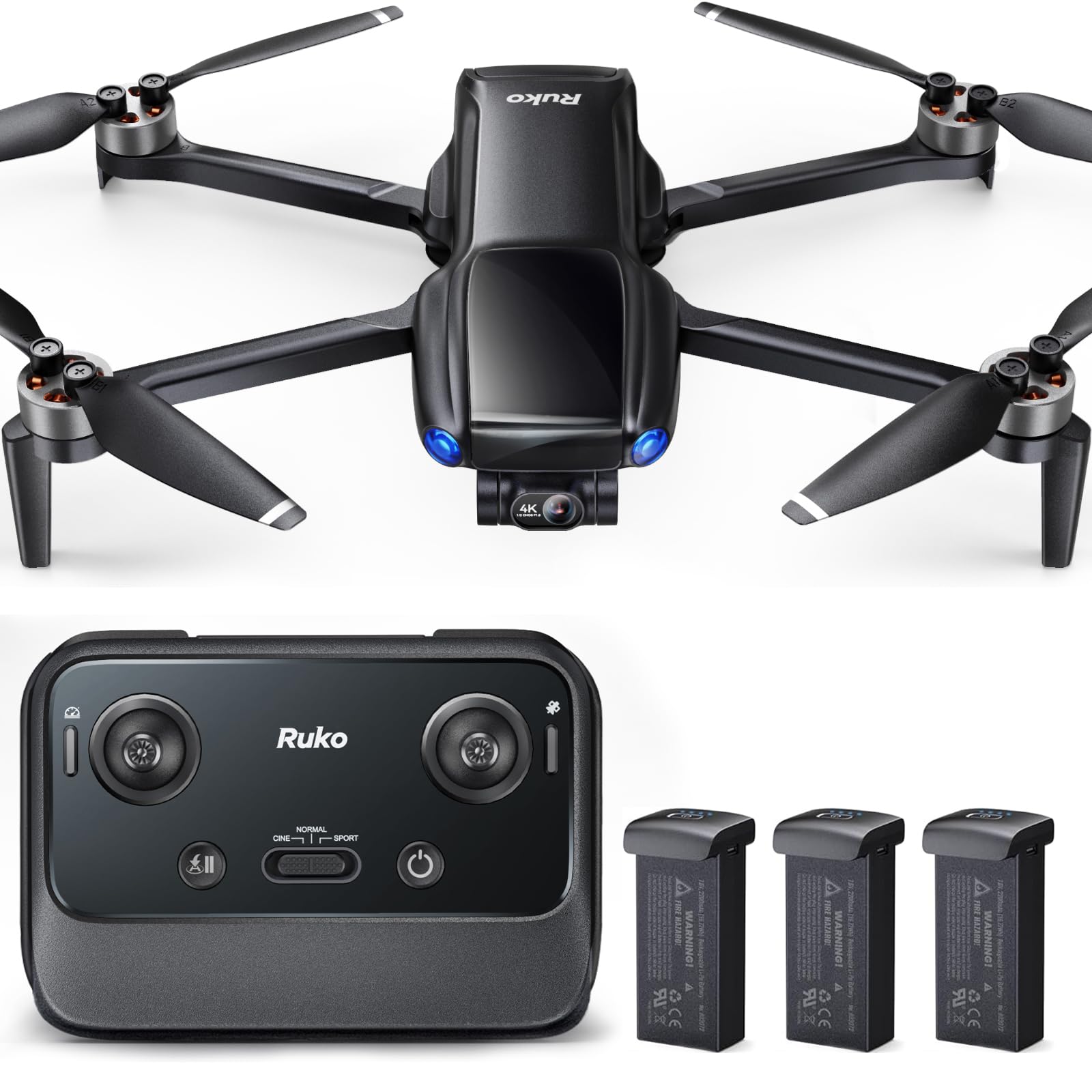
A three-battery bundle that keeps you flying for 96 minutes with pro-level photo resolution.
This is the drone for someone who already knows they want to spend more time in the air than on the ground. The three included batteries deliver a combined 96 minutes of flight time, which is more than any single-battery model in this list. The camera uses a 1/2-inch 48-megapixel sensor to capture 8K photos and smooth 4K video at 30 frames per second, supported by a 3-axis brushless gimbal and electronic image stabilization that keep the frame steady in wind.
At 248 grams, the Ruko F13 slips under the FAA registration threshold, so you can fly without paperwork. The R2 digital transmission system (a dedicated radio link, not Wi-Fi) gives you a reliable live feed up to 20,000 feet away without the dropouts common on Wi-Fi drones. Owners consistently praise the build quality and ease of use, though battery life and overall reliability get mixed feedback — some report batteries that stop charging or drones that malfunction after a few flights. The customer service team at Ruko is frequently praised for handling replacements quickly. This drone is for you if you want a registration-free model with a long-range digital feed. pass on it if you need consistent battery performance or a drone with fewer reliability complaints.
What you get: An 8K-capable camera, a carrying case, three batteries, and a 20,000-foot digital transmission range — all in a 248-gram body that requires no FAA registration.
The trade-off: The higher price is justified by the triple-battery bundle and premium sensor, but you are accepting a slightly higher chance of needing customer support.
Choose this if: you want the most flight time possible in a registration-free drone and are drawn to the higher-resolution 8K photo capability.
Think twice if: you prefer a simpler single-battery model or are nervous about the mixed feedback on battery reliability.
5. Skyrover X1

The most advanced entry-level drone on the list, with 360-degree obstacle sensing and a 9.32-mile transmission range.
This is the closest you can get to a prosumer drone without leaving the beginner price bracket. The Skyrover X1 shoots 4K video at 60 frames per second with HDR, captures 48-megapixel photos, and uses a 1/1.32-inch CMOS sensor with an f/1.7 aperture for better low-light performance. The three-battery combo delivers 96 minutes of total flight time (32 minutes per battery), and the SkyBridge transmission system streams a clear 1080p/60fps live view up to 9.32 miles away.
The biggest differentiator is the 360-degree obstacle avoidance system — sensors all around the drone help it avoid collisions from every direction, not just forward. It also includes vertical shooting for social media, AI Night Mode for dusk shots, and 4K slow motion at 100 frames per second. Owners rate the performance and value for money as the strongest aspects, with many calling it a legitimate alternative to the DJI Mini 4 Pro at a lower price. The main caveat is that the controller’s phone holder is snug, and some users with larger phones find it presses the side buttons.
Why it leads the premium tier
- Full 360° obstacle avoidance is rare in any entry-level drone
- 4K/60fps HDR video with a large f/1.7 sensor
- 96 minutes of total flight time across 3 batteries
Things to know
- Phone holder is tight with larger phones
- Accessories are harder to find than for the top brand
Ideal for: the serious beginner who wants the most feature-rich drone possible — obstacle avoidance, long range, and high-quality HDR video — without jumping to a premium brand’s price.
Not for: anyone who already owns a DJI drone or needs easy access to replacement parts locally.
6. Potensic ATOM LT

The longest flight time in its class, with 80 minutes of total airtime from two batteries.
If you want to spend more time flying and less time charging, the ATOM LT is your pick. Each of the two 3000mAh intelligent batteries delivers 40 minutes of flight time, adding up to a total of 80 minutes. The camera uses a Sony sensor to shoot 2.5K video at 30 frames per second and 2560×1440 photos, with ShakeVanish 2.0 electronic stabilization to keep the footage watchable. It is not true 4K, but the image quality is solid for the price.
The drone weighs under 249 grams, folds up to fit in a pocket, and includes GPS, GLONASS, Galileo, and BeiDou support for highly accurate satellite positioning. The PixSync 2.0 transmission system keeps a stable connection up to 4 kilometers. Owners praise the ease of use and value for money, and many say it is an excellent training tool before investing in a more expensive DJI. The camera quality, while good, is not 4K — several owners note this as a point to be aware of. The GPS satellite connection can also be slow to lock before takeoff.
Who it fits: beginners who prioritize flight time over maximum video resolution and want a reliable, budget-friendly drone to learn on.
The compromise: The lower camera resolution (2.5K vs 4K) is the main difference from the pricier ATOM SE, so if crisp video is your priority, spend a little more.
Best for: learners who want to get comfortable with long flying sessions and GPS-assisted flight without a big investment.
Skip if: you need 4K video output — the camera tops out at 2.5K.
7. Veeniix V11Air
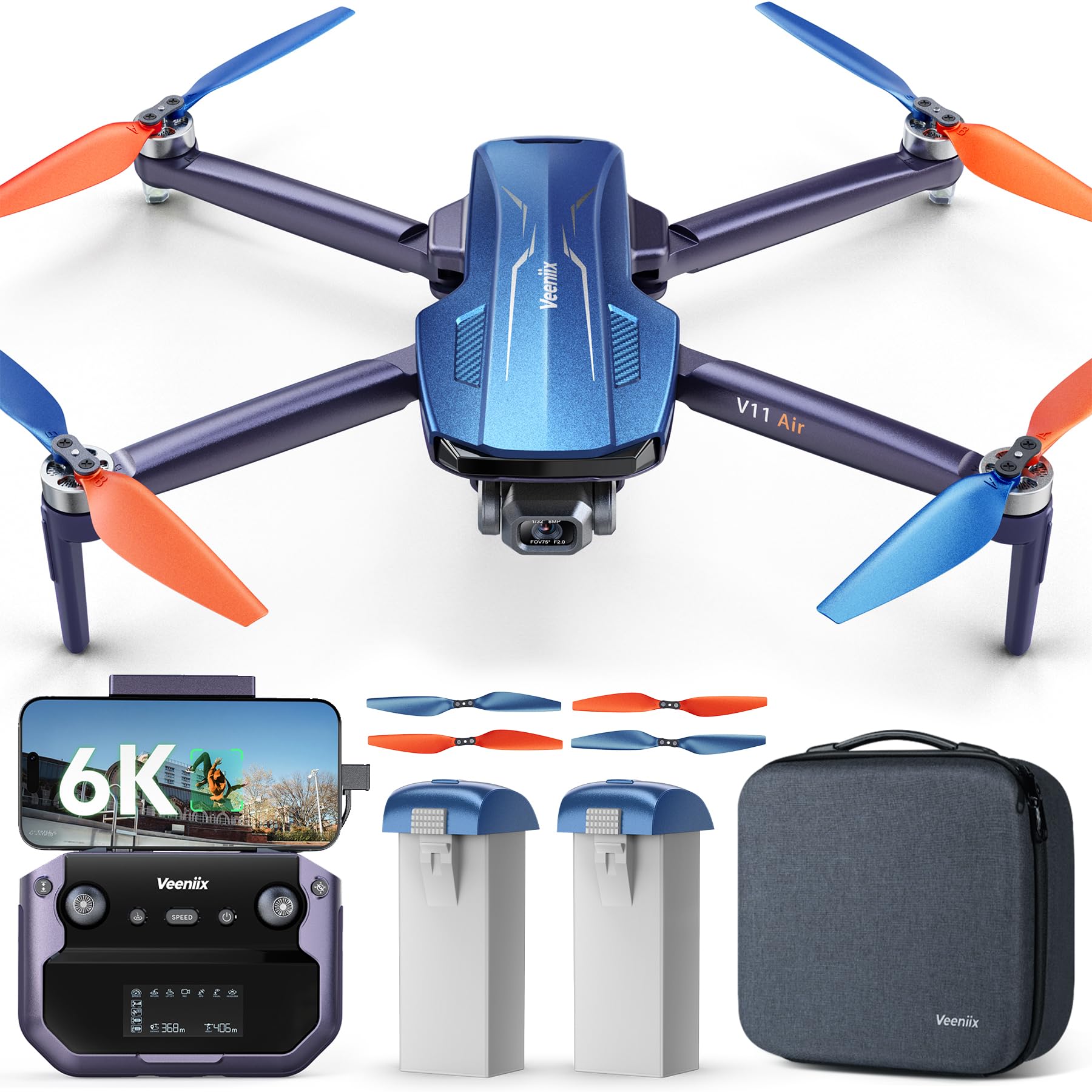
A drone with a genuine 3-axis brushless gimbal and 6K photo resolution at a mid-range price.
If camera quality matters more to you than skipping FAA registration, the Veeniix V11Air delivers. It weighs 600 grams — well over the 249-gram threshold — so you will need to register it with the FAA. In exchange, you get a 3-axis brushless gimbal (a motorized mount that cancels out vibration) for smooth footage, a 6K camera that records 4K video at 30 frames per second, and a 5x lossless zoom that lets you get closer to subjects without losing image quality. The two 3200mAh batteries give a combined 70 minutes of flight time, which is longer than the Potensic ATOM SE’s 40 minutes. This drone is for you if you prioritize video quality and zoom over portability. it’s not for you if you want a registration-free drone under 249 grams for low-maintenance travel.
The upgraded digital transmission system sends a clean feed up to 10,000 feet away, and the smart flight modes include follow me, orbit, and waypoint planning. The quality and camera quality are the top praises from owners, who also note the gimbal’s stability in windy conditions. The main mixed feedback is around battery life — not the total duration, but the charging process. Some customers note issues with the batteries charging correctly.
What you gain
- Professional-grade 3-axis brushless gimbal for smooth video
- 6K photos and 4K video with 5x lossless zoom
- 10,000-foot transmission range
What you give up
- 600g weight requires FAA registration
- Some mixed feedback on battery charging reliability
Reach for this if: you do not mind FAA registration and want the smoothest possible gimbal stabilization and zoom capability at a mid-range price.
Otherwise: if staying under 249g for travel convenience is a priority, look at the lighter Skyrover or DJI models.
8. Gleesfun G11PRO

A well-equipped flyer with a 3-axis gimbal and a 10,000-foot transmission range that impresses beginners.
For the price, the G11PRO packs an unusually advanced camera stabilization system. The 3-axis brushless gimbal uses three motors to control pitch, roll, and yaw independently, keeping the frame stable even in high winds. The camera captures 6K photos and 4K video at 30 frames per second, and the GQ2.0 digital transmission system pushes a smooth live feed up to 10,000 feet away. The two 3200mAh batteries deliver a total of 70 minutes of flight time.
It is FAA Remote ID compliant, which means the drone broadcasts its location and ID — useful for staying legal as regulations tighten. The kit comes with over 40 pieces including a carrying case, spare blades, and multiple cables for different phone types. Owners consistently mention the video quality and stability, and many note the customer service is exceptional. The drone weighs 357 grams, so it does require FAA registration, which is the main trade-off for a drone at this weight.
The big selling point: A full 3-axis brushless gimbal with 6K photo capability plus a 10,000-foot transmission range — features that usually cost more.
What to watch: The 357-gram weight means you need to register it.
Who this suits: beginners who want a gimbal-equipped drone with long range and are willing to handle FAA registration for better stability.
Choose differently if: you need a registration-free drone under 249g for low-maintenance travel.
9. Oddire HK11

A feature-packed budget drone that includes GPS follow, waypoint flight, and a 48-minute total flight time.
The Oddire HK11 is proof that you do not need to spend a lot to get useful GPS features. It includes GPS Follow (the drone tracks you automatically), Waypoint Planning (you draw a route on the app and it flies it), and Orbit Fly (it circles a point of interest). The camera shoots 4K photos and 1080P video, and the two 1800mAh 7.7V batteries provide a combined 48 minutes of flight time — notably more powerful than the 7.4V and 3.7V batteries in some competitors.
It weighs 249 grams, so no FAA registration is required, and the brushless motors give it Level 5 wind resistance. The 5G WiFi transmission range reaches up to 1640 feet. Owners say the drone is easy to use and stable, and the 4K camera delivers crisp images for the price. A consistent note from owners is that the app requires calibration (compass and ACC) every time you power on, and the correct app is “XDRONE GO,” not the one listed in the manual. The return-to-home feature works well, but some owners recommend landing before the battery drops to half to avoid drift.
Why it earns its place
- GPS Follow, Waypoint, and Orbit modes at a low price
- 48 minutes of flight from two 7.7V batteries
- Under 249g and registration-free
What to expect
- Requires compass calibration before every flight
- App setup can be confusing — download XDRONE GO, not the manual’s suggestion
Perfect for: budget-conscious beginners who want GPS tracking features and do not mind a brief calibration process before each flight.
Not ideal if: you want a plug-and-fly experience with minimal setup — the calibration might feel tedious.
10. Ameta S20 Pro
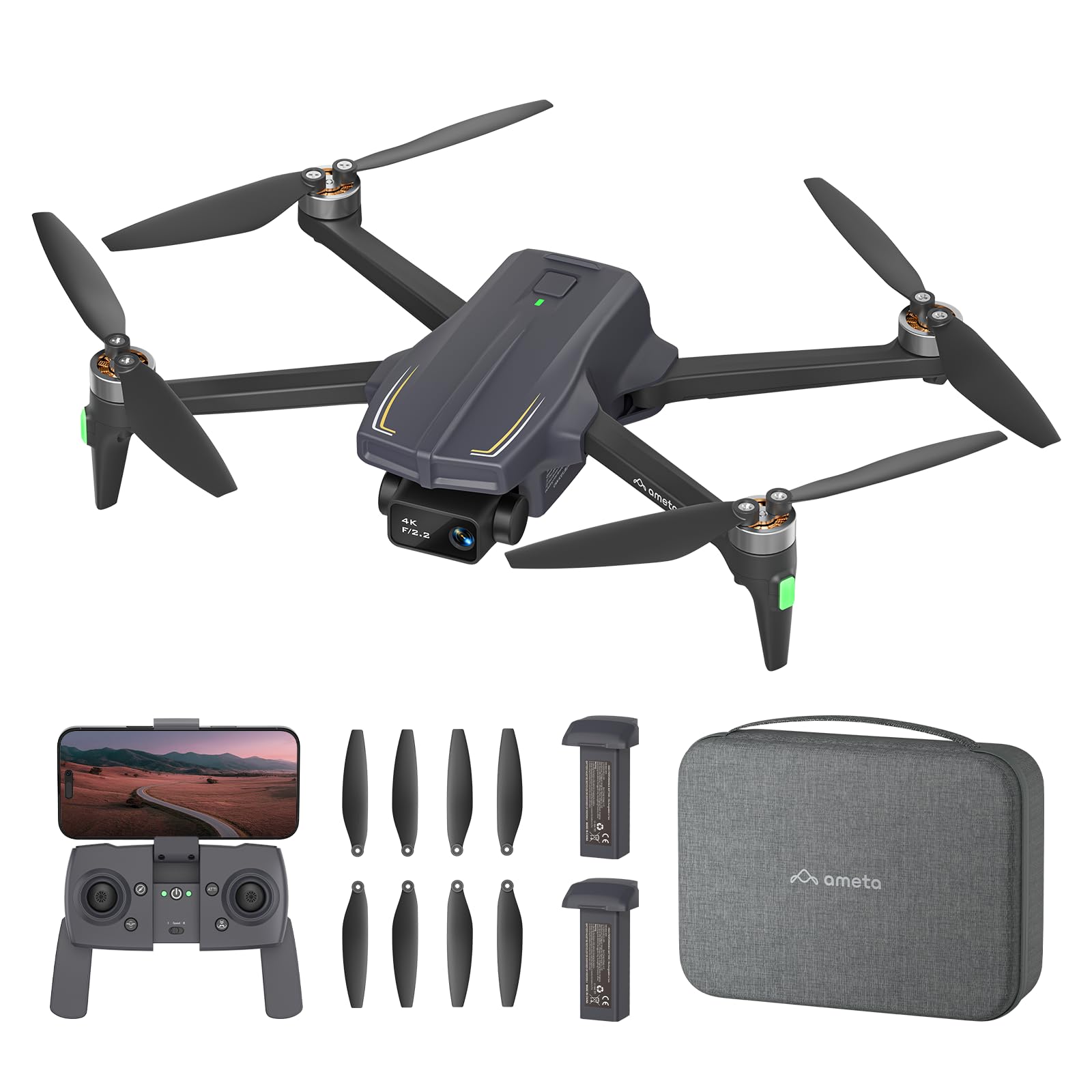
A featherweight 181-gram drone with a surprising 50-minute total flight time from two batteries.
The Ameta S20 Pro is the lightest drone in this roundup at just 181 grams, making it the easiest to carry and the most exempt from registration concerns. Despite the low weight, it flies for 50 minutes total thanks to two 3000mAh batteries (25 minutes each). The camera uses a Sony IMX258 sensor to capture 13-megapixel photos and 4K video, which is a slightly higher effective still resolution than some competitors.
It includes GPS with smart return-to-home, AI Follow Me, and Waypoint Flight modes. The 5G WiFi transmission gives you a stable first-person view up to 984 feet away. What owners praise most is the ease of use and suitability for beginners — the drone is described as easy to set up and fly right from the start. The trade-off noted by a small number of owners is that it struggles in wind, and one reviewer described it as feeling more like a toy than a serious piece of equipment. As owners put it: “The battery life is good, and the foldable design makes it easy to carry around.”
Its biggest strength: At 181g it is lighter than any other drone here, which means maximum portability and no registration hurdles.
Its biggest weakness: The light weight makes it less stable in breezy conditions, so it is best flown on calm days.
A great pick for: travelers and absolute beginners who want a lightweight, registration-free drone with a good battery life and a solid camera sensor.
Look elsewhere if: you often fly in windy areas or want a more sturdy, heavier build that handles gusts better.
11. REDRIE HK33
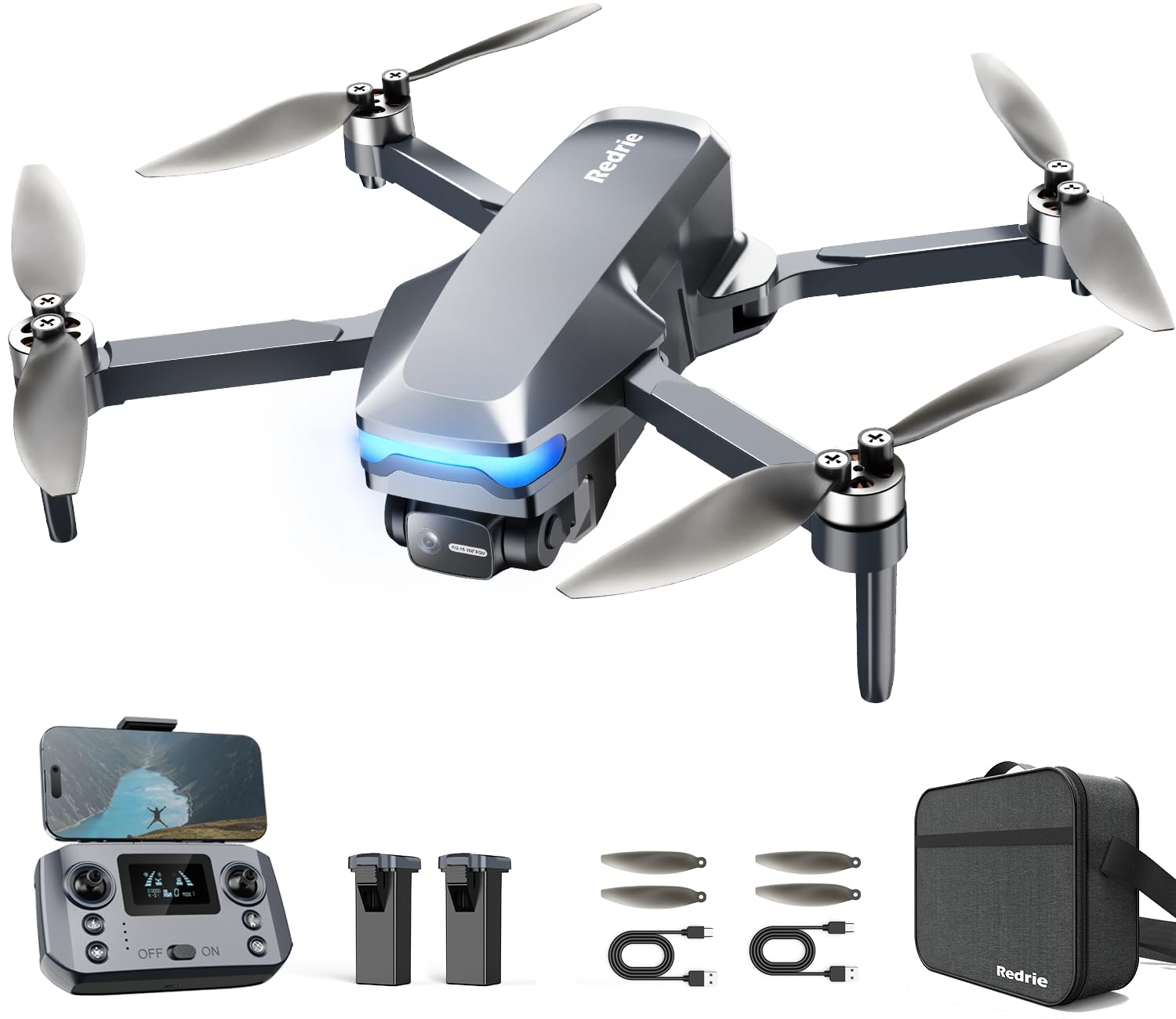
A GPS-guided drone with physical vibration reduction and a 45-minute total flight time at a low price.
The REDRIE HK33 is a solid entry-level choice that includes the essential GPS safety features at a budget-friendly price. It offers GPS Auto Return, GPS Follow, Route Planning, and Fly Around modes. The camera features an F2.15 110-degree wide-angle lens with physical vibration reduction and a 90-degree remote-controlled tilt, shooting 4K photos and 1080P video. The two 1800mAh batteries give you 45 minutes of total flight time.
It weighs 249 grams and includes a carrying case, so it is easy to take on trips without FAA registration. The 5G WiFi transmission extends to 1640 feet with a stable feed up to 985 feet. Owners find it a capable beginner drone with intuitive controls and easy setup. The battery life gets mixed feedback — while the total 45 minutes is good, some reviewers point out the individual battery life is closer to 20-25 minutes rather than the advertised duration. A few owners also note that it does not handle wind as well as heavier models.
Why it works
- GPS with auto return and follow modes for safe flights
- Physical vibration reduction for steadier footage
- Under 249g with a carrying case included
Keep in mind
- Battery life is closer to 20-25 minutes per battery in practice
- Wind resistance is limited — best on calm days
Reach for this if: you want a budget-friendly GPS drone with auto-return safety and are prepared for shorter per-battery flight times.
look elsewhere if: you need a drone that handles moderate wind well — the light weight makes it vulnerable to gusts.
Understanding the Specs
3-Axis Gimbal vs EIS Stabilization
When you see “3-axis gimbal,” it means the camera sits on a tiny mechanical arm that physically counteracts every wobble, tilt, and yaw from the drone’s movement. This is the gold standard for smooth video because it works regardless of lighting. Electronic Image Stabilization (EIS) uses software to crop and shift each frame, which works well in good light but can introduce a slight jelly effect in darker scenes or fast movement. If smooth video is your top priority, choose a drone with a 3-axis gimbal.
Under 249g and FAA Registration
Drones weighing less than 249 grams — about the weight of a small apple — are exempt from FAA registration and Remote ID requirements for recreational use. This makes them the easiest choice for beginners who want to fly without paperwork. The trade-off is that lighter drones are more affected by wind. Heavier drones (250g or more) tend to fly more steadily in breezy conditions but require registration and, in some cases, a Remote ID module. Always check the latest FAA rules before your first flight.
GPS Return-to-Home (RTH)
GPS RTH is a safety feature where the drone records its takeoff point and can fly itself back automatically if the battery gets low, the signal is lost, or you press a button. This is the single most important safety feature for a beginner. Without it, a lost connection means the drone keeps flying whichever direction it was heading — and you may never see it again. Every drone in this list with a “GPS” badge includes some form of return-to-home.
Brushless Motors
Brushless motors use magnets instead of physical brushes to spin, which makes them more powerful, quieter, and longer-lasting than the brushed motors found in toy drones. They also allow for better wind resistance — many drones here advertise Level 5 wind resistance, which means they can handle winds up to about 20-25 miles per hour. For any drone that will fly outdoors, brushless motors are a must-have.
FAQ
Do I need a license to fly a drone under 249 grams?
What is the difference between EIS and a 3-axis gimbal?
How long does a typical beginner drone battery last?
Can I fly an entry-level drone in the rain or snow?
What does GPS return-to-home actually do?
How far can an entry-level drone fly from the controller?
Is a 4K camera on a beginner drone actually 4K quality?
Can I use a beginner drone for real estate or commercial photography?
Final Thoughts: The Verdict
Across the board, the best entry level drone with camera is the DJI Mini 4K because it combines a proven brand, a real 3-axis gimbal, and 4K video in a registration-free 246-gram body that beginners find effortlessto use. If you want the longest possible flight time for the money, the Potensic ATOM LT with 80 minutes of airtime is a no-brainer. And for the buyer who wants the most advanced feature set — forward obstacle avoidance, 4K/60fps video, and a compact build — the Skyrover S1 delivers genuinely premium capabilities at a still-reasonable price.
How We Picked
We do not accept paid placement. Every pick is matched to a real buyer and a real use-case; we do not hands-on test units.
Sources & Methodology
Specifications: manufacturer listings and product documentation. Review insights: verified customer reviews, as of July 2026. Pricing: not shown on this page (it changes often); check the current price via the retailer link.
As an Amazon Associate, WellFizz earns from qualifying purchases. This does not affect which products we feature.
Related Guides

Mo Maruf
I created WellFizz to bridge the gap between vague wellness advice and actionable solutions. My mission is simple: to decode the research and give you practical tools you can actually use.
Beyond the data, I am a passionate traveler. I believe that stepping away from the screen to explore new environments is essential for mental clarity and physical vitality.