Our readers keep the lights on and my smoothie glass nicely filled. As an Amazon Associate, I earn from qualifying purchases.
Specs are compiled from manufacturer listings and verified buyer reviews and can change over time — please confirm the key details on the product page before buying.
A turbo engine runs hotter, under more pressure, and spins its bearings faster than any naturally aspirated motor. The oil that keeps it alive needs to resist shearing, handle extreme heat, and flow instantly at cold start — pick the wrong one and you risk coking, sludge, and a very expensive rebuild. This guide cuts through the marketing to the real data on the best engine oil for turbo engines available today.
I’m Mohammad Maruf — the founder and writer behind WellFizz. This guide is built by comparing the manufacturers’ published specifications and the patterns across verified customer reviews, so you get each pick’s real strengths and trade-offs instead of marketing spin.
Your turbocharger’s bearings spin at extreme speeds, and the wrong oil can let them overheat, gum up, or fail. This breakdown of the best engine oil for turbo engines helps you match the exact viscosity (thickness) and additive package (chemical mix that fights wear and deposits) to how you actually drive — whether that’s a daily commute, heavy towing, or track days.
Our Picks at a Glance


How To Choose The Best Engine Oil For Turbo Engines
A turbocharger spins at tens of thousands of RPM and subjects its oil to intense heat — the wrong oil can shear down in viscosity, form carbon deposits on the bearing, or fail to lubricate instantly at startup. Here is what you need to look for to keep your turbo safe.
Viscosity Grade — Match Your Engine’s Requirement
Turbo engines often specify a low-viscosity oil like 0W-20 for faster cold starts and better fuel economy, or a thicker option like 5W-40 for sustained high-heat protection. Stick to your owner’s manual — modern turbos with variable valve timing and direct injection are engineered around a specific viscosity. Thicker is not automatically better; it can starve narrow oil passages on a cold start.
Shear Stability and HTHS Viscosity
High-Temperature High-Shear (HTHS) viscosity measures how well an oil film holds up between the turbo bearing and shaft under extreme pressure. A higher HTHS rating (the actual number matters but consult your manual) means the oil resists thinning out when you push the engine hard. Full synthetics with ester or Group IV base stocks tend to hold shear far better than lower-grade oils.
Certifications — API SP and OEM Approvals
API SP is the latest gasoline-engine standard and directly addresses low-speed pre-ignition (LSPI), a known risk in modern turbocharged direct-injection engines. GM’s dexos1 Gen3, Ford’s WSS-M2C947, and VW’s 508/509 are manufacturer-level specs that add specific protections for timing chain wear, deposit control, and extended drain intervals. Looking for these stamps on the bottle gives you a real assurance floor.
Quick Comparison
| Model | Best For | Viscosity | Capacity | Flash Point | Amazon |
|---|---|---|---|---|---|
| Motul 8100 ECO-lite 0W-20★ Best Overall | Daily drivers & fuel economy | 0W-20 | 5 L | — | Amazon |
| Motul 300V Competition 5W-40Top Performer | Track days & tuned engines | 5W-40 | 2 L | 234 °C | Amazon |
| Mobil 1 Turbo Diesel Truck 5W-40Premium Pick | Diesel turbos & heavy duty | 5W-40 | 3.8 L | 234 °C | Amazon |
| MANNOL 7722 Premium Longlife 508/509 0W-20 | VW turbo gasoline | 0W-20 | 1 L | 216 °C | Amazon |
| Mobil Full Synthetic High Mileage 5W-30 | High-mileage turbos (75k+ miles) | 5W-30 | 6 qt | — | Amazon |
| Idemitsu IFG3 0W-20 SP/GF-7A | Asian OEM turbos (Honda, Subaru, Toyota) | 0W-20 | 5 qt | — | Amazon |
| Liqui Moly Molygen New Generation 0W-20 | Quiet operation & leak detection | 0W-20 | 5 L | — | Amazon |
| Motul 8100 X-Power 10W-60 | High-compression & racing Euro engines | 10W-60 | 5 L | 250 °C | Amazon |
In‑Depth Reviews
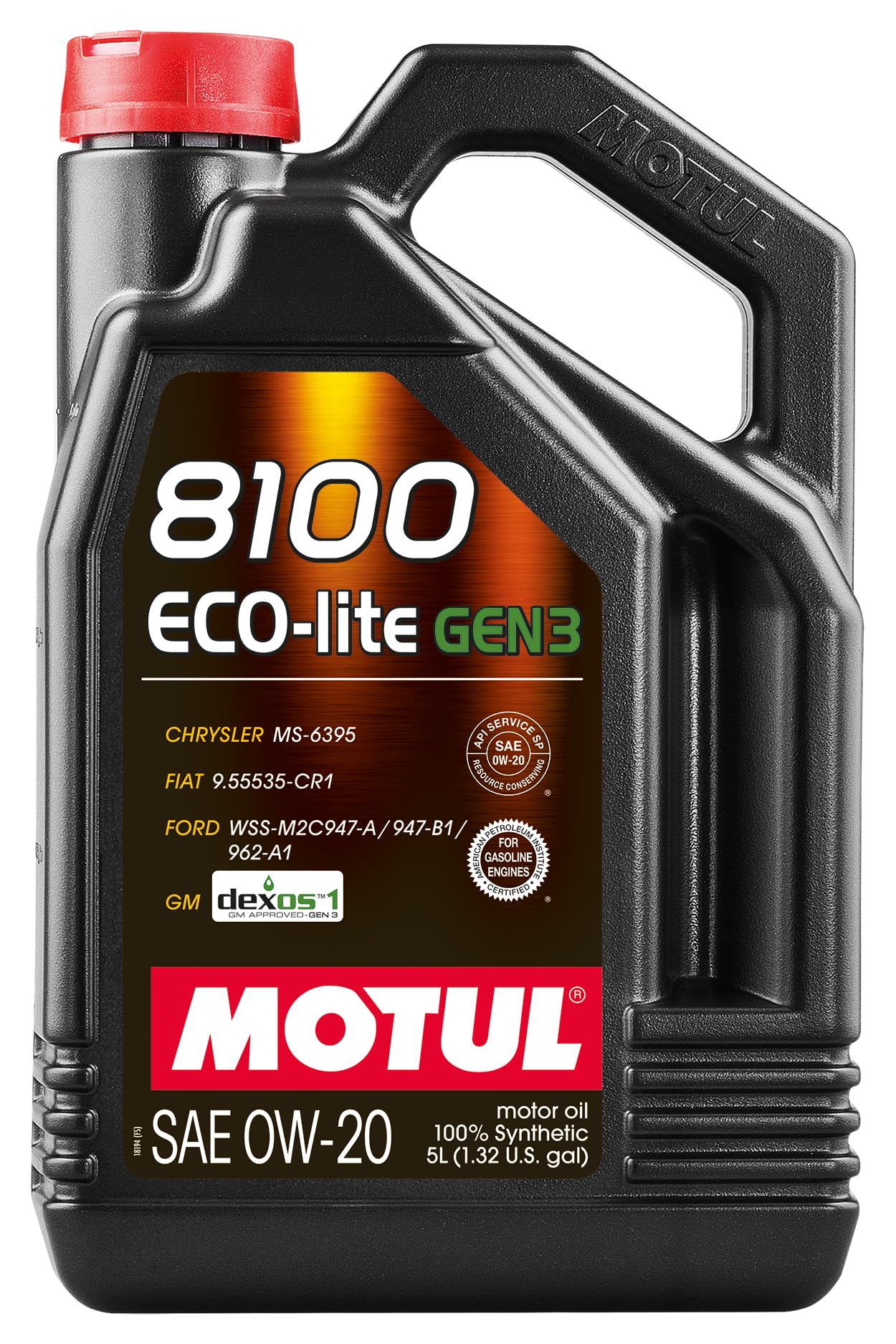
1. Motul 8100 ECO-lite 0W-20 Full Synthetic Motor Oil
Our pick — over 4.5★ from 700+ verified ratings; the strongest balance of quality and price.
The 5-liter jug that proves premium synthetic protection and real fuel savings can come in one bottle.
This is the crowd favorite for a reason — a 4.9-star rating across hundreds of owners who rave about the oil quality above all else. The 0W-20 viscosity is engineered specifically for modern turbocharged and direct-injection engines, with Motul’s Advanced Low-Friction Formula that reduces internal friction at startup and under load. Buyers report a genuine 3 MPG city-driving improvement in Subaru Crosstreks and Honda CR-Vs, and many note the oil comes out noticeably cleaner than Mobil 1 at a 6,000-mile change.
The API SP and GM dexos1 Gen3 certifications mean it actively protects against low-speed pre-ignition (LSPI) and timing chain wear — two classic turbo-engine failure points. It also meets Ford WSS-M2C947-A/947-B1/962-A1 and Chrysler MS-6395, making it a one-stop choice for a multi-car household. Owners describe it as “dark amber vs. black” at drain time, a sign of superior detergent action that keeps sludge at bay.
But for the confidence of genuine ester-based lubrication (a synthetic base that clings to metal even at extreme heat) across all temperatures, the consensus among owners is clear: this is the top pick for daily-driven turbos.
What Wins Owners Over
- Oil quality is the most-praised aspect (50 mentions) — owners consistently call it the best they have used
- Real-world fuel economy gains (3 MPG reported across multiple platforms)
- API SP and dexos1 Gen3 for full LSPI and timing chain protection
The Consideration
- Price has increased according to loyal buyers
- 0W-20 may feel too thin for older high-mileage turbos that call for thicker grades
Reach for it if: you drive a modern turbo daily and want the best balance of fuel economy, engine cleanliness, and proven OEM compatibility.
Think twice if: your turbo engine specifically requires 5W-40 or 10W-60 — this 0W-20 is not a substitute.
2. Motul 300V Competition 5W-40 Full Synthetic Motor Oil
The race-bred ester oil for tuned turbos that demand shear-stable film strength at redline.
This is Motul’s flagship competition oil, and it is built for a very specific buyer: the person who has a built engine, a turbo pushing 20+ psi, or a car that sees track time regularly. The 5W-40 viscosity combined with Ester Core technology gives it phenomenal shear stability — owners mention stable oil pressure even under extreme heat, and a noticeably smoother, quieter engine compared to standard synthetics. One owner calls it “the best oil I’ve ever used” in a 450hp WRX.
The flash point comes in at 234 °C — matching the Mobil 1 Turbo Diesel Truck above — which means it resists burn-off and coking on the turbo’s hot side. The biofuel compatibility and 25% lower carbon footprint are side benefits, but the real story is the HTHS film strength that keeps the turbo bearing happy at sustained high RPM. It is priced per liter higher than anything else here, and the 2-liter can means you often need multiple tins per change.
This oil is overkill for a stock commuter turbo — you will pay for race-grade protection you do not need. But for a tuned daily or a weekend track car that sees high RPM regularly, the consensus from performance enthusiasts is that it provides class-leading protection and confidence. Just follow the advice from owners who change it at least annually if the car is a weekend cruiser.
Where It Excels
- Exceptional shear stability under high heat — owners note no thinning or pressure drop
- Noticeable reduction in engine noise and smoother cold starts
What To Keep In Mind
- Premium price — 2-liter cans add up per oil change
- Overqualified for stock turbo engines that just need a solid API SP synthetic
The verdict: Unbeatable for tuned/track turbos that need ester-level film strength; a waste of money for a daily driver that never sees redline.
skip it if: your car is a stock road-going turbo that does not need competition-level protection.
3. Mobil 1 Turbo Diesel Truck Full Synthetic Motor Oil 5W-40
The 234 °C flash point workhorse that diesel truck owners trust for 3,000-mile weeks.
This oil is the go-to for heavy-duty diesel turbos — think 6.7L Powerstroke, Cummins, and Duramax engines. The 5W-40 viscosity (thickness when cold and hot) provides strong high-temperature protection, and the flash point of 234 °C (the temperature at which the oil vapor catches fire) is a real safety margin against coking (carbon buildup) on the turbo bearings. Customers note that their diesel vans fire right up in very cold weather, with one owner driving 3,000 miles a week and reporting zero issues. The oil quality is the most-praised aspect (40 mentions), and the price makes it among the most affordable premium synthetics in this category.
It is designed for modern low-emission diesel engines with DPF and EGR systems, so it works well with the latest turbo-diesel hardware. Owners consistently call it a great alternative to Rotella T6, praising its ability to keep engines running smoothly and quietly even under heavy load. The 3.8-liter jug is enough for many diesel applications, though some heavy-duty trucks need two.
Compared to the Manel 508/509 oil above, this Mobil 1 offers a substantially higher flash point (234 °C vs 216 °C) — a clear advantage for turbos that run at sustained high exhaust gas temperatures. It is not ideal for gasoline turbos looking for fuel-economy-focused 0W-20, but for a diesel turbo, this is the proven standard.
Strengths
- Flash point of 234 °C — resists turbo coking under high heat
- Excellent cold-start performance in diesel engines (buyers confirm no hesitation at low temps)
Limitations
- Designed for diesel, not a choice for most gasoline turbo engines
- 3.8 liters may require a second jug for larger truck engines
Reach for it if: you own a diesel turbo truck or van and need a proven, affordable 5W-40 that handles extreme heat and cold starts.
Think twice if: your turbo engine is gasoline-powered and calls for a 0W-20 — this viscosity is too heavy.
4. Liqui Moly Molygen New Generation SAE 0W-20

The green-glowing German synthetic that delivers instant lubrication and makes leak detection easy.
Liqui Moly’s Molygen line is known for its distinctive green color and a UV-reactive additive that glows under a blacklight — a clever trick for finding oil leaks that owners genuinely appreciate. The 0W-20 formulation is ideal for turbochargers and catalytic converters, providing instant lubrication after a cold start and maintaining optimum oil pressure under all operating conditions. Reviewers point out remarkably little burn-off between changes, and the engine runs noticeably cleaner and quieter. The quality is the most frequently praised aspect (58 mentions), followed by performance and noise reduction.
It is fully miscible (mixable) with all commercially available motor oils, so it plays well if you are switching brands. One owner running it in a 2018 Mazda 3 2.5L noted smoother cold starts, a quieter engine, and fewer deposits over time. The value question is where opinions split — some consider it worth the extra cost for the performance and confidence, while others find it pricey compared to mainstream alternatives. The compatibility range covers Acura, Buick, Cadillac, Chevrolet, GMC, Opel, and several others.
There is no single standout spec that crushes the competition here — it does not have the highest flash point or the most advanced racing pedigree. What it does offer is a consistent, high-quality ownership experience that keeps owners coming back across multiple vehicles.
What Stands Out
- Quality is the most-praised aspect (58 mentions) — owners consistently trust it
- UV-reactive green color makes oil leak detection simple
The Trade-off
- Value is mixed — some find it expensive for what it delivers
- Not the best choice for extreme track-duty or heavy-load diesel turbos
Reach for it if: you want a premium daily-driver synthetic with proven noise reduction and a clever leak-finding feature.
Think twice if: you are on a tight budget or need a high-HTHS oil for a heavily tuned turbo engine.
5. MANNOL 7722 Premium Longlife 508/509 0W-20 Engine Oil
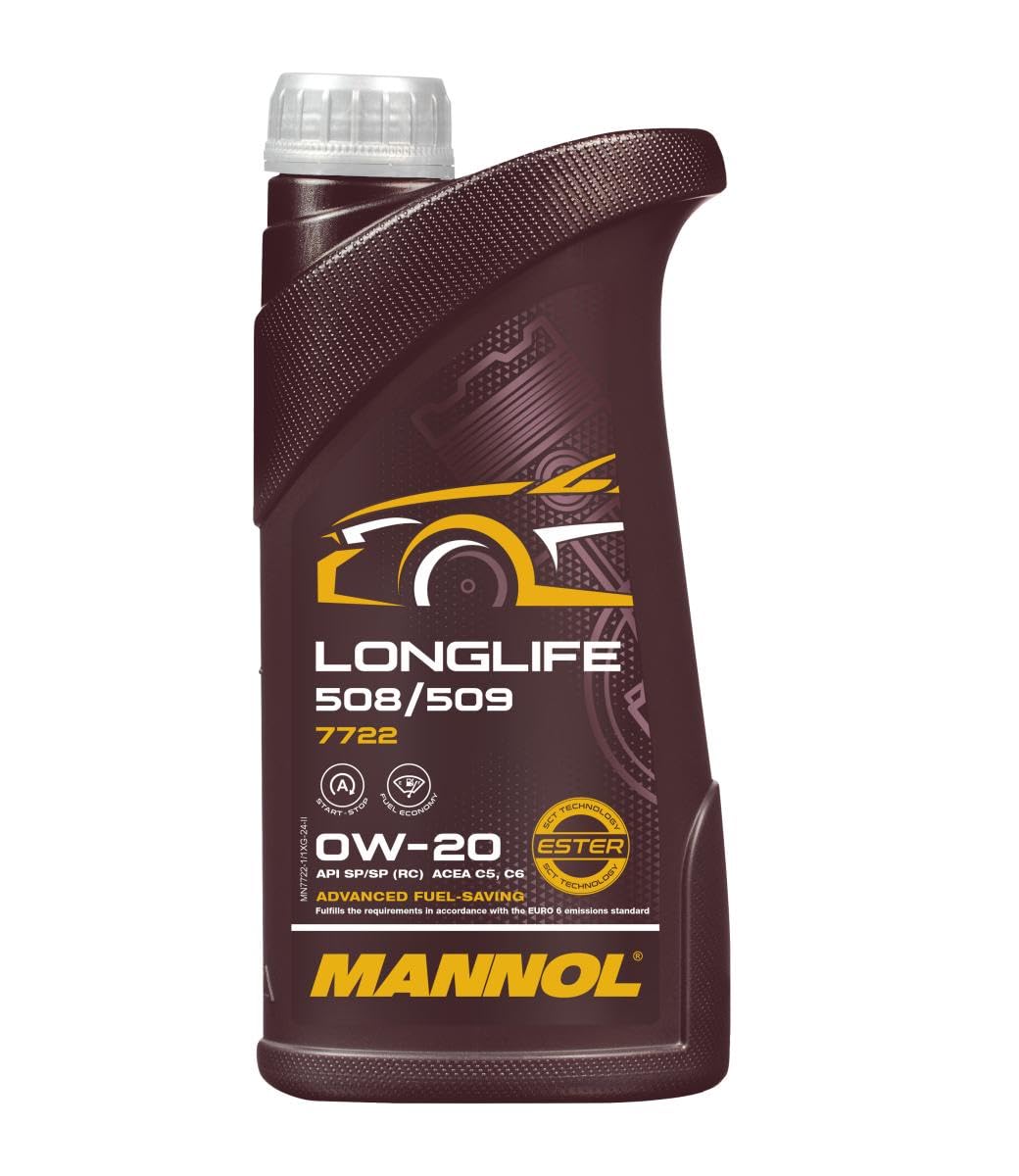
The budget-friendly VW-spec synthetic that keeps turbos clean and meets Longlife 30,000 km intervals.
This oil is purpose-built for the latest Volkswagen turbocharged gasoline engines requiring the VW 508/509 specification. The fully synthetic base and advanced additive package provide excellent anti-wear and anti-friction properties specifically for turbine units (turbochargers). The Mid SAPS technology means it is fully compatible with DPF, TWC, EGR, and SCR emissions systems, so it does not harm your exhaust aftertreatment. One buyer running it in a Hyundai Creta diesel noted the oil was “very clean” after 5,000 km — a strong sign of good detergent action.
With a flash point of 216 °C, it is not the highest in this list, but it is adequate for the Longlife applications (extended oil-change intervals) it targets. The 1-liter bottle is convenient for topping off or for smaller engines, though you will need multiple bottles for a full change (and the 5-liter equivalent found in the Motul ECO-lite is a better value if your car takes a full sump). It is designed to resist shear forces (mechanical breakdown from moving parts) and thermal oxidation (chemical breakdown from heat), keeping turbocharger bearings lubricated over extended drain intervals.
For VW, Audi, Seat, and Skoda owners with EA888 or EA211 turbo engines, this oil checks the exact factory spec box at a very approachable price point. The key trade-off is the 1-liter size — plan your bottle count accordingly.
Strengths
- Exact VW 508/509 spec — perfect for modern VW turbo gas engines
- Mid SAPS technology protects DPF and catalytic converters
Limitations
- Only 1 liter per bottle — a full oil change may require 4-5 units
- Flash point (216 °C) is lower than some heavy-duty competitors
Reach for it if: you have a modern VW-group turbo gasoline engine and want the exact factory spec at a fair price.
Think twice if: your engine requires a different viscosity or does not spec VW 508/509.
6. Idemitsu IFG3 0W-20 SP/GF-7A Full Synthetic Motor Oil
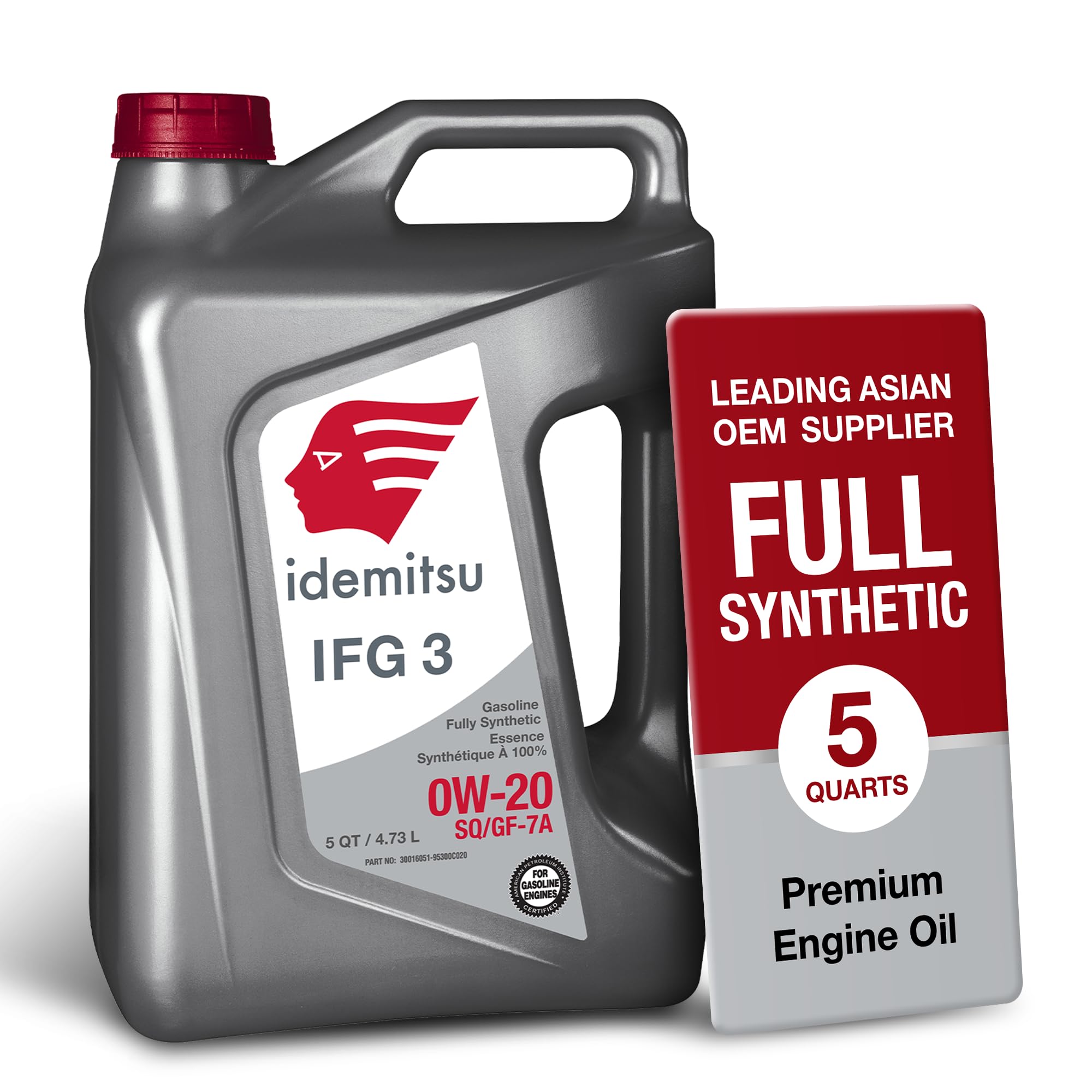
The OEM-quality synthetic that Honda and Subaru owners trust for factory-level performance at a fair price.
Idemitsu is a major OEM supplier to Japanese automakers, and this IFG3 oil is essentially the same fluid that Honda rebadges and sells at a higher price. It is specifically engineered for Asian OEM, TGDI (turbocharged gasoline direct injection), and PFI engines. The SP/GF-7A certification includes protection against LSPI in turbocharged engines, enhanced fuel efficiency through friction reduction, and advanced cleanliness to prevent deposit buildup. One owner running a 2021 Subaru sent a sample to Blackstone for analysis after 25,000 miles and confirmed the engine was perfectly healthy.
The quality is the most-praised aspect by a wide margin (58 mentions), with owners calling it the best value for their Subaru, Honda, or Toyota. Multiple Subaru owners specifically note that their engines run smoother and cooler compared to other brands. It is ISO and IATF certified, which adds a layer of manufacturing quality assurance. The 5-quart can is a convenient size for most Japanese cars.
Compared to the Motul ECO-lite which holds a higher overall star rating, this Idemitsu oil matches it on quality mentions (58 each) but comes at a lower price point. The trade-off is that it is less widely compatible with American or European engine specs — it is really tune for the Asian OEM market.
Strengths
- OEM-quality — this is the same oil used by Honda under their own brand
- Blackstone analysis confirms engine health — real data from a 21 Subaru owner at 25k miles
Limitations
- Primarily designed for Asian OEM engines — fewer Ford/GM/Chrysler approvals
- Not ester-based, so less suitable for extreme high-RPM track use
Reach for it if: you drive a turbocharged Subaru, Honda, Toyota, or other Japanese vehicle and want the factory-spec oil at a better price than the dealer.
Think twice if: your engine requires a European OEM spec like VW 508/509 or Ford WSS-M2C947.
7. Mobil Full Synthetic High Mileage Motor Oil 5W-30, 6-Pack

The 5W-30 formula designed for turbos with 75,000-plus miles, featuring extra seal conditioner to prevent leaks.
This oil fills a very specific and important niche: turbo engines that have accumulated miles and may be starting to show their age. The High Mileage formulation includes an extra seal conditioner that helps rehydrate dried-out gaskets and prevent oil leaks — a common concern on older turbos where the seals have hardened. The 5W-30 viscosity provides a bit more high-temperature film strength than a 0W-20, making it a smart choice for turbos that have looser tolerances after high mileage. One owner with a 177k-mile vehicle reports it helps their engine perform well considering its age, and another notes it keeps their GM motor running strong.
The value proposition is strong here — this is a full synthetic (not a blend) in a 6-quart pack, which covers nearly every car’s sump in one purchase. The API SP resource-conserving certification means it still provides turbo-specific LSPI protection and sludge prevention. The value for money is the most-praised aspect (34 mentions), with owners calling it a great price for a quality synthetic.
Note that this is not a specialized ester oil, and the 5W-30 viscosity may not suit all turbos — always check your manual. But for a high-mileage turbo that has already seen 75,000+ miles, the seal-conditioning and deposit-control focus makes this a very smart choice.
What Works
- Extra seal conditioner helps prevent oil leaks on aging turbo engines
- Excellent value — a full 6-quart pack at a price that beats many competitors
What To Consider
- 5W-30 is not recommended for all modern turbos — some require 0W-20
- Not ester-based, so less shear stable for tuned high-RPM engines
Reach for it if: your turbo engine has over 75,000 miles and you want to minimize leaks while maintaining full synthetic protection.
Think twice if: your turbo is a modern low-mileage engine that specifically requires 0W-20.
8. Motul 8100 X-Power 10W-60 Full Synthetic Motor Oil
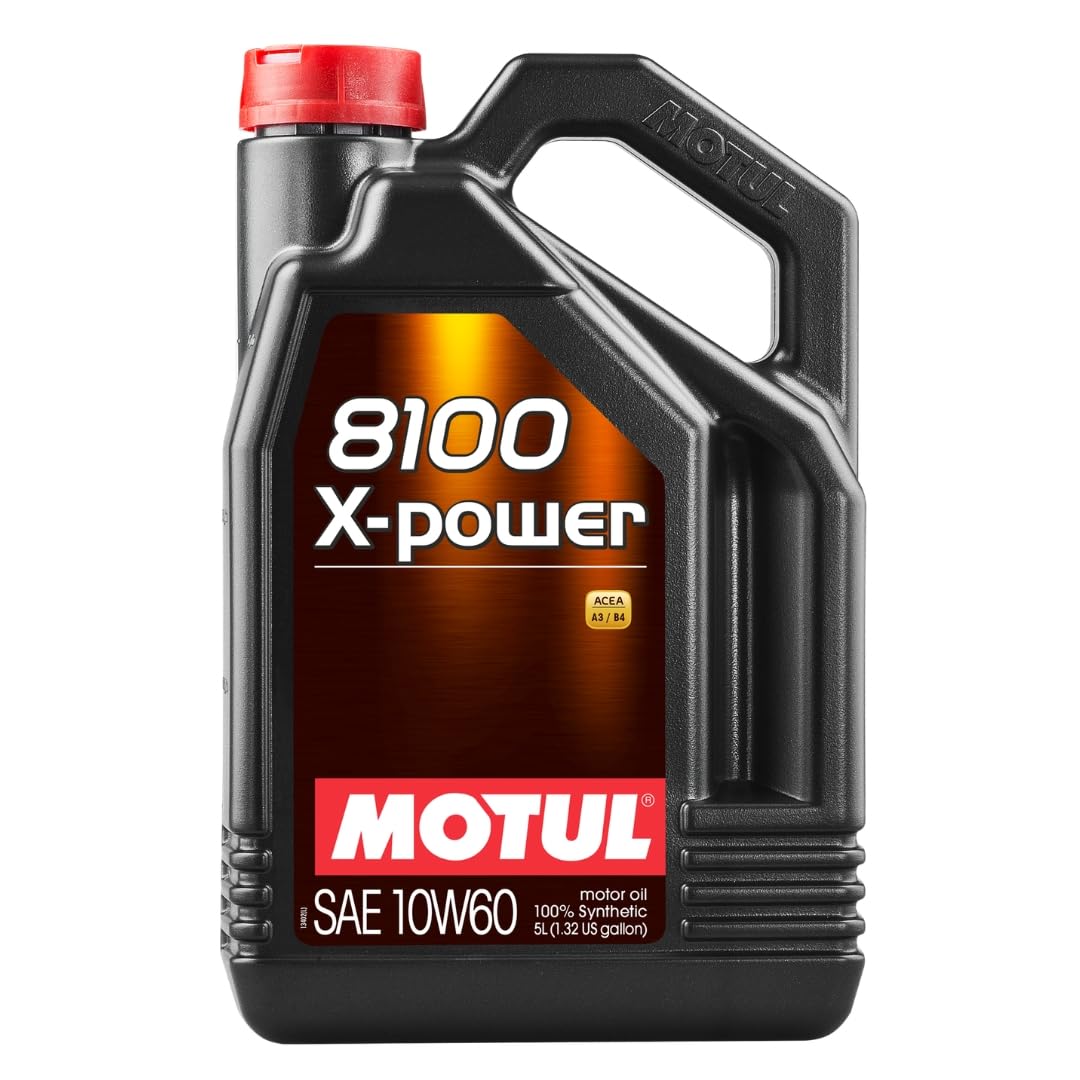
The 10W-60 heavyweight for high-compression Euro turbos that need extreme film strength and a 250 °C flash point.
This is the thickest oil on this list, and it serves a very specific group of high-performance engines — typically high-compression European turbo engines (BMW M-series, Mercedes AMG, certain Porsches) that explicitly call for 10W-60. The ester-based formula provides exceptional film strength and thermal stability, and the flash point of 250 °C is the highest of all nine picks, meaning it resists burn-off and turbo coking better than anything else here. One owner with an e92 M3 calls it the oil that “saved” their engine, and another notes it is smoother and quieter than Mobil 1 in the same application.
The 10W-60 viscosity is a deliberate choice for engines with tight bearing clearances that need a thick hydrodynamic film at extreme temperatures. The API SP certification means it still provides LSPI protection for direct-injection turbos, and the ester composition helps it resist viscosity breakdown even under sustained load at track temperatures. It is compatible with E85, LPG, and CNG fuels, so it works for flex-fuel performance builds.
This oil is not for everyone — it is expensive, thick, and only appropriate for engines that specifically require 10W-60. If your engine does not call for it, you can cause more harm than good by pouring in a viscosity that is too thick for your oil pump to circulate at cold start. But for the right application, it is the definitive choice for extreme film strength and thermal resistance.
Where It Dominates
- Highest flash point in this lineup (250 °C) — class-leading resistance to turbo coking
- Ester-based formula with top-tier HTHS film strength for high-compression engines
Who It Isnt For
- Only for engines that specifically require 10W-60 — too thick for most modern turbos
- Premium price per ounce — a full change can be expensive
Reach for it if: your high-compression Euro turbo (M3, AMG, etc.) calls for 10W-60 and you want the best ester-based protection available.
Think twice if: your engine recommends 0W-20 or 5W-40 — using 10W-60 in the wrong engine can starve bearings at cold start.
Understanding the Specs
Viscosity Grade (0W-20, 5W-40, 10W-60)
The first number (0W, 5W, 10W) tells you how the oil flows in cold weather — lower is better for cold starts. The second number (20, 40, 60) tells you its thickness at operating temperature. Turbo engines generate more heat, so the second number matters for maintaining that protective oil film between the turbo bearing and shaft. A 5W-40 is thicker at high temps than a 0W-20, but may cause drag at cold start. Always follow your owner’s manual — your engine was designed around a specific viscosity.
Flash Point
This is the temperature at which oil vapors can ignite. A higher flash point (like 234 °C on the Mobil 1 Turbo Diesel or 250 °C on the Motul 10W-60) means the oil resists burning off on the hot turbo bearing. Low flash point oils can “coke” — leave hard carbon deposits on the turbo shaft that eventually lead to bearing failure. For any turbo engine, a flash point over 220 °C is a good benchmark.
FAQ
Can I use regular oil in a turbo engine?
What does API SP mean for a turbo engine?
Is 5W-40 better for a turbo than 0W-20?
What is LSPI and why does it matter for turbo engines?
How often should I change oil in a turbo engine?
Can I mix different brands of engine oil in my turbo?
What does dexos1 Gen3 certification mean?
Why do some turbo oils have an ester base?
Can I use diesel engine oil in a gasoline turbo engine?
What is “shear stability” and why is it critical for turbos?
Final Thoughts: The Verdict
For most drivers, the best engine oil for turbo engines winner is the Motul 8100 ECO-lite 0W-20 because it combines API SP (the latest gasoline-engine protection standard) and dexos1 Gen3 (GM’s newest oil certification) with real fuel economy gains and proven engine cleanliness — and it holds a 4.9-star rating that its owners back up on every oil change. If your turbo is a tuned or track-driven build, grab the Motul 300V Competition 5W-40 for its race-proven ester film strength (a tough oil layer that stays on metal under extreme pressure). And for a high-mileage turbo with over 75,000 miles, the Mobil Full Synthetic High Mileage 5W-30 provides the extra seal-conditioning (additives that swell and soften old seals) that helps keep an older engine tight and leak-free.
How We Picked
We do not accept paid placement. Every pick is matched to a real buyer and a real use-case; we do not hands-on test units.
Sources & Methodology
Specifications: manufacturer listings and product documentation. Review insights: verified customer reviews, as of July 2026. Pricing: not shown on this page (it changes often); check the current price via the retailer link.
As an Amazon Associate, WellFizz earns from qualifying purchases. This does not affect which products we feature.
Related Guides

Mo Maruf
I created WellFizz to bridge the gap between vague wellness advice and actionable solutions. My mission is simple: to decode the research and give you practical tools you can actually use.
Beyond the data, I am a passionate traveler. I believe that stepping away from the screen to explore new environments is essential for mental clarity and physical vitality.