Our readers keep the lights on and my smoothie glass nicely filled. As an Amazon Associate, I earn from qualifying purchases.
Specs are compiled from manufacturer listings and verified buyer reviews and can change over time — please confirm the key details on the product page before buying.
Your engine’s lifespan depends on the oil you pour in, so picking the right one matters more than just keeping the level up. The key choice is between a basic blend and a full synthetic that resists extreme heat and keeps sludge away over time. Here are nine top options, with each spec translated into what it means for your daily commute, so you can match the oil to your car’s age, mileage, and driving style.
I’m Mohammad Maruf — the founder and writer behind WellFizz. This guide is built by comparing the manufacturers’ published specifications and the patterns across verified customer reviews, so you get each pick’s real strengths and trade-offs instead of marketing spin.
We’ve dug through the specs and owner experiences to find the best engine oil for cars that balances wear protection, engine cleanliness, and long-term value for your specific driving needs.
Our Picks at a Glance


How To Choose The Best Engine Oil For Cars
The secret to picking oil isn’t the brand name — it’s the numbers and letters on the front of the jug. The “5W-30” tells you how the oil flows in cold weather and at full operating temperature, and the “API SP” certification tells you it meets the latest industry standards for your engine.
Match the Viscosity to Your Owner’s Manual
The first number (the “5W”) is a winter rating, telling you how thin the oil stays when you start the car on a cold morning. The second number (the “30”) is the thickness at a hot running temperature. Your owner’s manual dictates this — using the wrong grade, like a 0W-20 where a 5W-30 is required, can alter fuel economy and engine wear. Stick religiously to what the manufacturer specifies.
Decide Between Full Synthetic and Blends
Full synthetics like those from Mobil 1, Castrol, or Liqui Moly are engineered at a molecular level to resist breaking down under extreme heat and to flow better when cold. High-mileage oils, like the Pennzoil or Valvoline options here, add seal conditioners that help prevent leaks in engines with over 75,000 miles. If you drive a newer car, a full synthetic is the safest bet; if you’re pushing 150,000 miles, a high-mileage formula is often the smarter choice.
Quick Comparison
| Model | Best For | Viscosity Grade | Volume | Engine Type | Amazon |
|---|---|---|---|---|---|
| Liqui Moly Special Tec LL★ Best Overall | European & luxury engines | 5W-30 | 5 Liters | Car | Amazon |
| Mobil 1 0W-20Top Performer | Modern trucks & SUVs | 0W-20 | 160 fluid ounces | Car, Truck | Amazon |
| Mobil 1 5W-30Proven Pick | GM & Ford engines | 5W-30 | 160 fluid ounces | Car, Truck | Amazon |
| Pennzoil High Mileage | Engines past 75K miles | 5W-30 | 192 fluid ounces | Car, Truck, UTV | Amazon |
| Castrol EDGE EP | Extended drain intervals | 0W-20 | 160 fluid ounces | Car, Light Diesel, Hybrid | Amazon |
| Valvoline MaxLife 150K | Engines past 150K miles | 5W-30 | 5 quarts | Car, Truck | Amazon |
| K&N Premium Synthetic | All-weather performance | 5W-30 | 4.73 liters | Car | Amazon |
| Motorcraft 5W-30 | Ford & Lincoln vehicles | 5W-30 | 5 quarts | Car, SUV, Truck, Van | Amazon |
| Royal Purple 5W-30 | High-performance engines | 5W-30 | 5 quarts | Car | Amazon |
In‑Depth Reviews
1. Liqui Moly Special Tec LL SAE 5W-30
Our pick — over 4.5★ from 950+ verified ratings; the strongest balance of quality and price.
The German-engineered choice that turns a noisy idle into a distant memory.
If you drive a European sedan or performance wagon, owners say this oil keeps engines “run smooth and quiet years later — even while tuned, extra boost etc.” Quality is the standout feature, with dozens of BMW and Audi owners reporting their cars feel tighter than on the dealer’s own brand, according to buyer reviews.
This is a Long Life (LL) formula, meaning it’s blended to meet the extended service intervals that modern German engines demand. The viscosity stays stable enough to protect a tuned 750i just as well as it does a stock daily driver, and buyers report it’s often cheaper than the BMW OEM oil it replaces. The 5-liter jug is the right size for most European engines that need a full fill without hunting for a second quart.
The main consideration is fit: this oil is a “Vehicle Specific Fit,” so it’s ideal for cars that call for a 5W-30 LL spec. If you drive a Honda or Toyota that specifies a different grade, you’ll want the universal-fit options further down this list.
German-engineered protection: The quiet operation and smooth idle are the things everyone raves about, with quality far outpacing any other talking point. Owners of both new and older BMWs (a 2017 X5 and a 2001 X5 are both specifically mentioned) report fewer misfires and better valve adjustment lubrication after switching.
for VW/Audi: you drive a European car or anything that specifies a 5W-30 Long Life oil and you want a proven, top-tier option.
on tight budgets: your Japanese or American car requires a 0W-20 spec — this bottle is locked to its viscosity class.
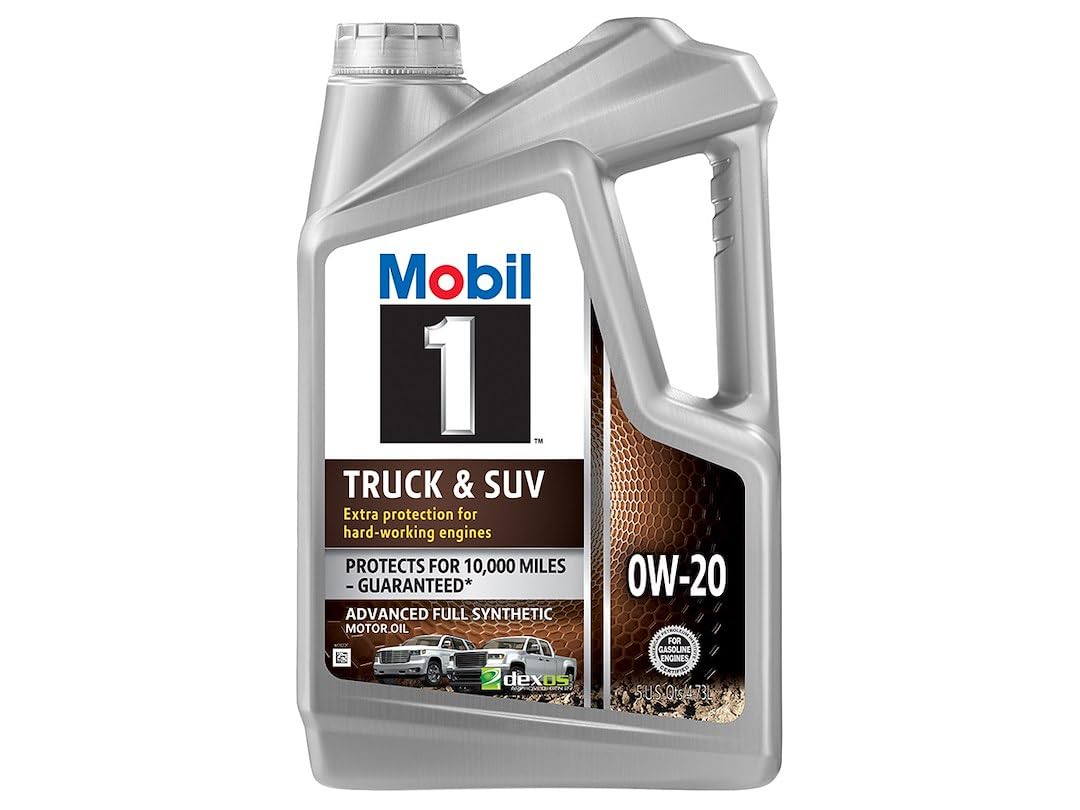
2. Mobil 1 Truck & SUV Full Synthetic 0W-20
Built for heavy haulers that need to shrug off both Arizona heat and freezing cold starts.
If your truck earns its keep by towing, this full synthetic is formulated specifically for that abuse. Owners mention it handles “excellent high-temp stability” that copes with brutal heat, and the low-temperature protection to -40 degrees F means it flows on the coldest mornings when a thicker oil would struggle. It’s engineered to protect critical parts for up to 10,000 miles between changes.
This 0W-20 grade is the thinner oil that modern trucks and SUVs are designed around, helping with fuel economy and cold-start protection. The Triple Action Formula targets engine protection, cleanliness, and performance — and owners note “clean cold starts and strong wear protection” as the consistent results. At 160 fluid ounces, this 5-quart jug gives you the exact fill for most full-size pickups without needing a second bottle.
The honest caveat is that 0W-20 is a specific spec. If your vehicle’s manual calls for 5W-30, the Mobil 1 option below is your match.
cold-start flow: The value is the second-most-discussed point here; you’re getting a premium full synthetic at a price that owners consistently call a great deal for the level of protection.
for modern trucks: any modern GM truck or SUV using 0W-20 that faces heat, towing, or extreme cold.
in high heat: your engine is spec’d for a thicker 5W-30 — check your manual before pouring.
3. Mobil 1 Truck & SUV Full Synthetic 5W-30
The 30-year-mechanic favorite that has kept GM and Ford engines clean for 165,000 miles.
This is the thicker sibling to the 0W-20 above, and it’s a legend in its own right. A career mechanic with three decades of experience credits this exact oil for keeping a GM 5.3 running flawlessly for 20 years and 165,000 miles with “no CELs” (check engine lights) and a valvetrain that looks new. It maintains viscosity even under the heavy load and heat of turbos.
Like its 0W-20 counterpart, this 5W-30 delivers heat protection up to 500 degrees F and low-temp flow to -40 degrees F. Customers note the engine runs “quieter and smoother immediately” after an oil change, and the formula is aimed at preventing deposit formation that can clog modern engines. The easy-pour spout on the 5-quart jug gets a special nod from do-it-yourselfers.
The MIXED feedback here is oil consumption; a few owners see some usage between changes, which is a characteristic of many 5W-30 synthetics in high-mileage engines rather than a defect.
all-season versatility: Quality is overwhelmingly the story — the phrase “best money can buy” repeats in the reviews. The protection of cylinder walls is specifically highlighted by owners who have torn down old engines.
for daily drivers: GM and Ford V8s and turbocharged engines that call for 5W-30 and see real work.
for track use: your engine is burning oil already; a high-mileage blend will better address that specific problem.
4. Pennzoil High Mileage 5W-30 (6 Pack)
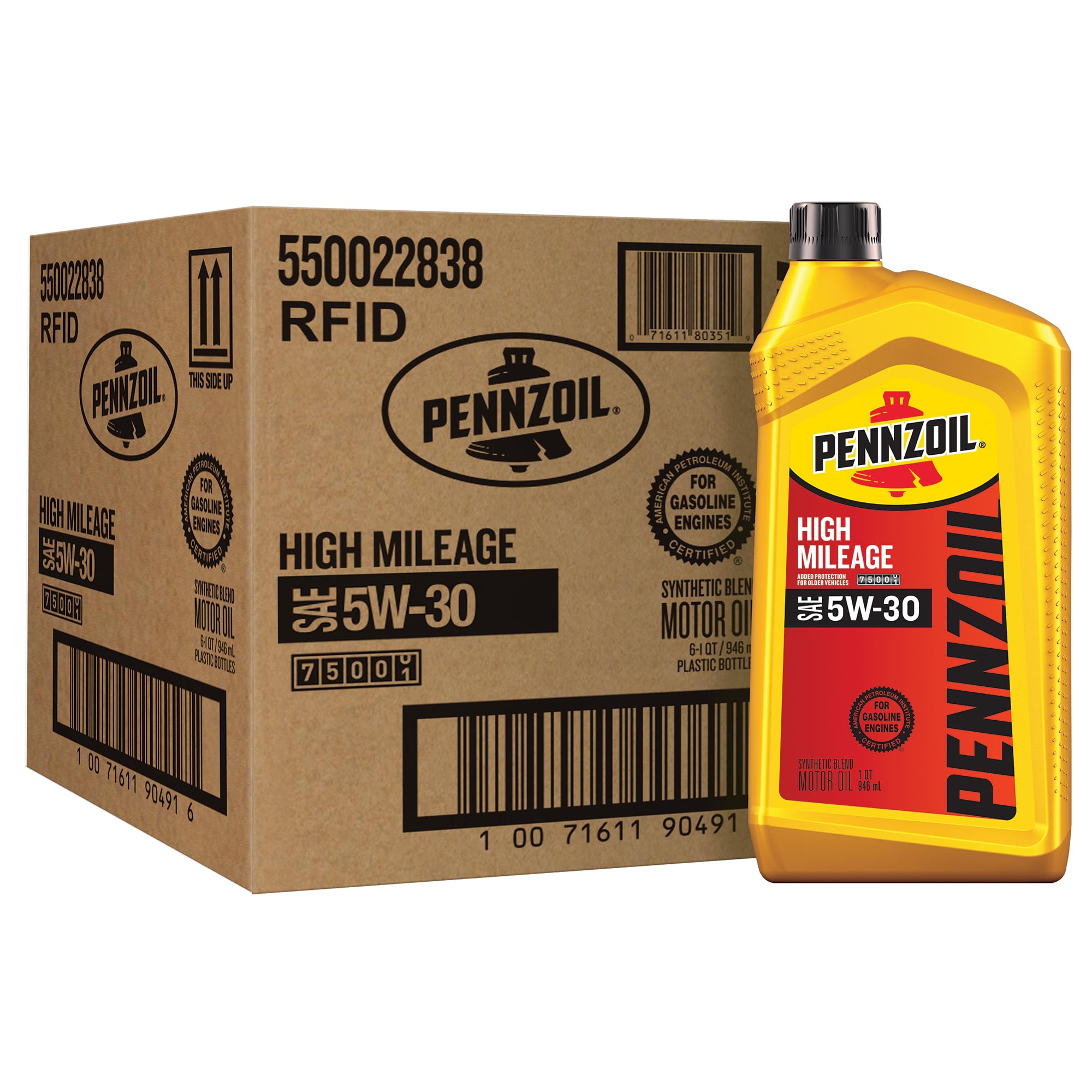
The budget-friendly six-pack that helps a 75,000-mile engine stop sipping oil.
If your car has crossed the 75,000-mile mark, this synthetic blend is designed for you. Its whole purpose is to “help stop leaks and reduce oil consumption in worn engines,” which is exactly what owners of older cars — like a 2006 Chevy HHR — report experiencing. The formula includes seal conditioners that soften aged seals to stop drips.
The value here is the strongest selling point; this case of six 1-quart bottles delivers 192 fluid ounces, which is a 20% larger volume than the 5-quart jugs on this list. That extra quart means you can handle a full oil change plus a top-up, or service a small car twice. Buyers call it “leakage free” and “quiet,” with one noting the lubricant “made car driver smooth.”
This is a synthetic blend rather than a full synthetic, so if you run your engine hard or tow frequently, a full synthetic like the Mobil 1 options above is the more protective choice.
seal conditioning: The combination of 192 fluid ounces total and a price point that undercuts premium jugs makes this the pick for high-mileage daily drivers on a budget.
for aging engines: older commuter cars over 75K miles that just need reliable, quiet lubrication without the premium price.
if low mileage: you’re driving a newer turbocharged engine that needs the higher protection of a full synthetic.
5. Castrol EDGE Extended Performance 0W-20

Formulated to run 25,000 miles between changes, for drivers who forget their intervals.
Castrol’s gold-bottle formula claims 3X stronger viscosity breakdown resistance and 50X better high-temperature performance versus leading full synthetics. The headline spec is the extended drain interval: up to 25,000 miles or one year, whichever comes first.
It carries a laundry list of approvals including GM dexos1 Gen 3 and MB-Approval 229.71, making it a safe bet for a wide range of modern vehicles. It also holds the API SQ/SP rating, the latest industry standard. Owners who’ve used Castrol for 35+ years call it reliable, and it’s the go-to for performance cars like the Volkswagen Golf GTI and Jaguar F-Type.
The trade-off is thickness: at 0W-20, this is only for engines that spec that grade. If your car needs 5W-30, this bottle won’t be the right one for you.
extended drain intervals: The 25,000-mile interval is the differentiator here; no other oil on this list comes close to that claim, making it the lowest-maintenance choice.
for long trips: owners of modern 0W-20 vehicles who want the security of an extended service interval and a top-tier spec list.
for short hops: anyone with an engine that requires the thicker 5W-30 grade.
6. Valvoline High Mileage 150K MaxLife 5W-30
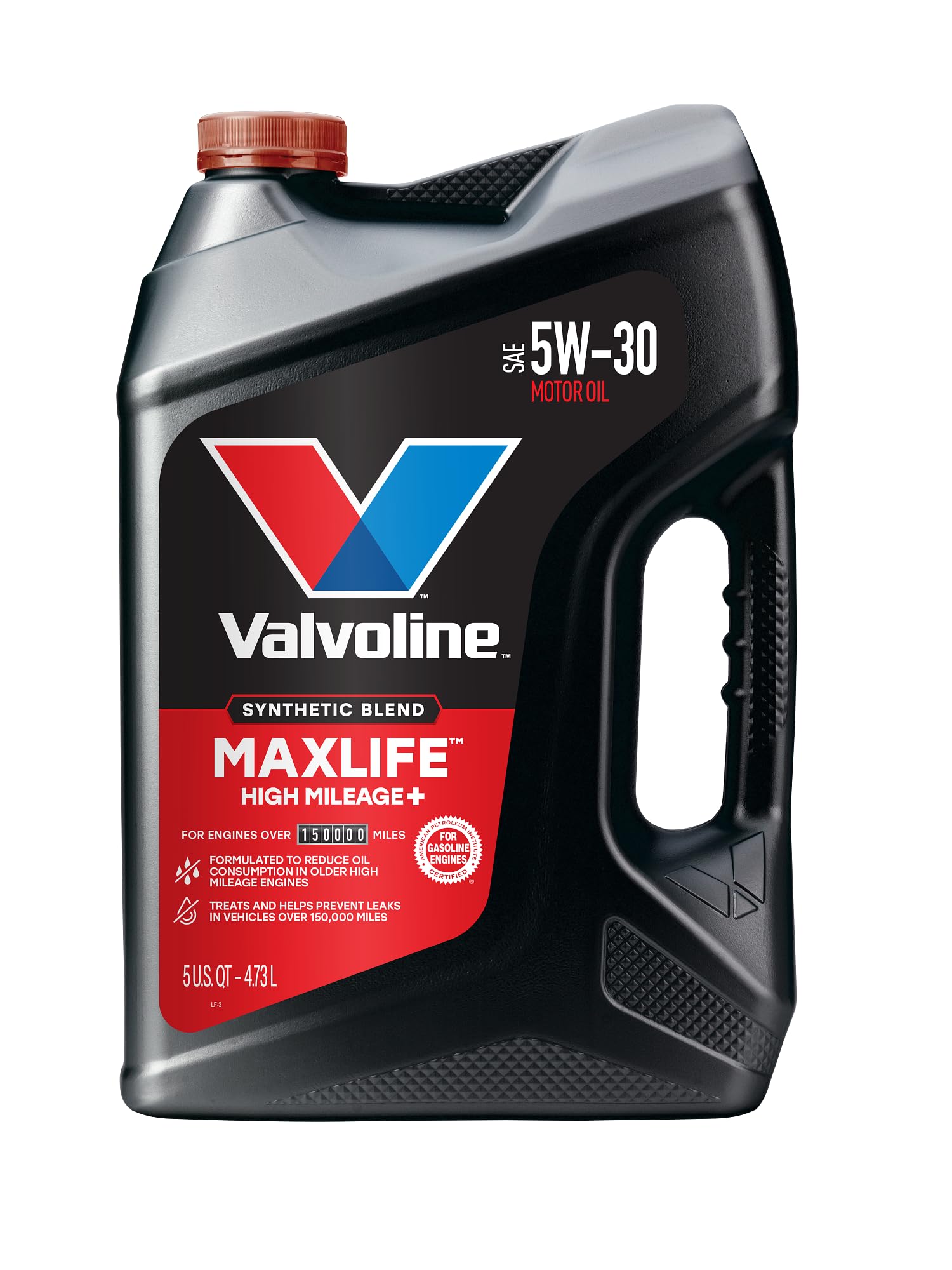
The last oil your 150,000-mile workhorse will ever need to stop the drips.
This Valvoline formula delivers 10% better wear protection than industry standards and 15% stronger sludge defense for high-mileage engines. It’s packed with seal conditioners to help prevent leaks and reduce oil consumption in engines that have seen better days. Owners confirm the effect, with one driver noting it “stopped leak” in their aging vehicle.
The Moly Additive Protection coats metal parts to reduce friction, which is why reviewers point out their high-mileage Jeeps “gain more power” and run smoother after switching. It meets the latest API SQ and SP standards, so it’s up-to-date with modern engine requirements even though it’s aimed at older cars.
The noise level gets MIXED feedback — some owners find it makes the engine quieter, while others notice no change. It’s not a magic silencer, but it’s an excellent fluid for the mechanical health of a high-mileage engine.
high-mileage formula: The leak-stopping and smooth operation are the main praise points, with one driver saying “if you have an old car with 150K miles or more… just buy this.”
for 150K+ engines: when your odometer passes 150,000 miles and you’re dealing with oil consumption or small leaks.
for new cars: if you drive a low-mileage newer car that needs the thinner 0W-20 grade.
7. K&N Premium Synthetic 5W-30

The filter-maker’s oil entry, designed to run smooth whether it’s -20°F or 100°F.
K&N is famous for air filters, and they bring that same engineering mindset to this full synthetic. The Synthamax Technology blends in unique additives to protect critical engine components from contaminants and sludge buildup, keeping the engine running “like new” per the brand’s claim.
The all-weather protection is the key spec here — it’s formulated to handle both cold and hot temperature conditions, so it’s a solid choice for drivers in climates with extreme seasonal swings. At 4.73 liters, this bottle is essentially 5 quarts, so you get a full fill for most cars. Buyers call it a “great price for full synthetic” and note it’s “one of the best out there.”
This is a straightforward full synthetic without the extended-interval claims of the Castrol above. If you stick to the standard 5,000-7,500 mile drain intervals, it’s an excellent, dependable choice.
filtration performance: Quality is the dominant praise point, with value as the clear second — a strong premium synthetic that doesn’t carry a premium-snob price tag.
for turbo engines: drivers who want a recognized brand’s full synthetic for a standard 5W-30 engine without special needs.
for extreme cold: you need the extended drain interval that the Castrol EDGE offers.
8. Motorcraft 5W-30 Engine Oil
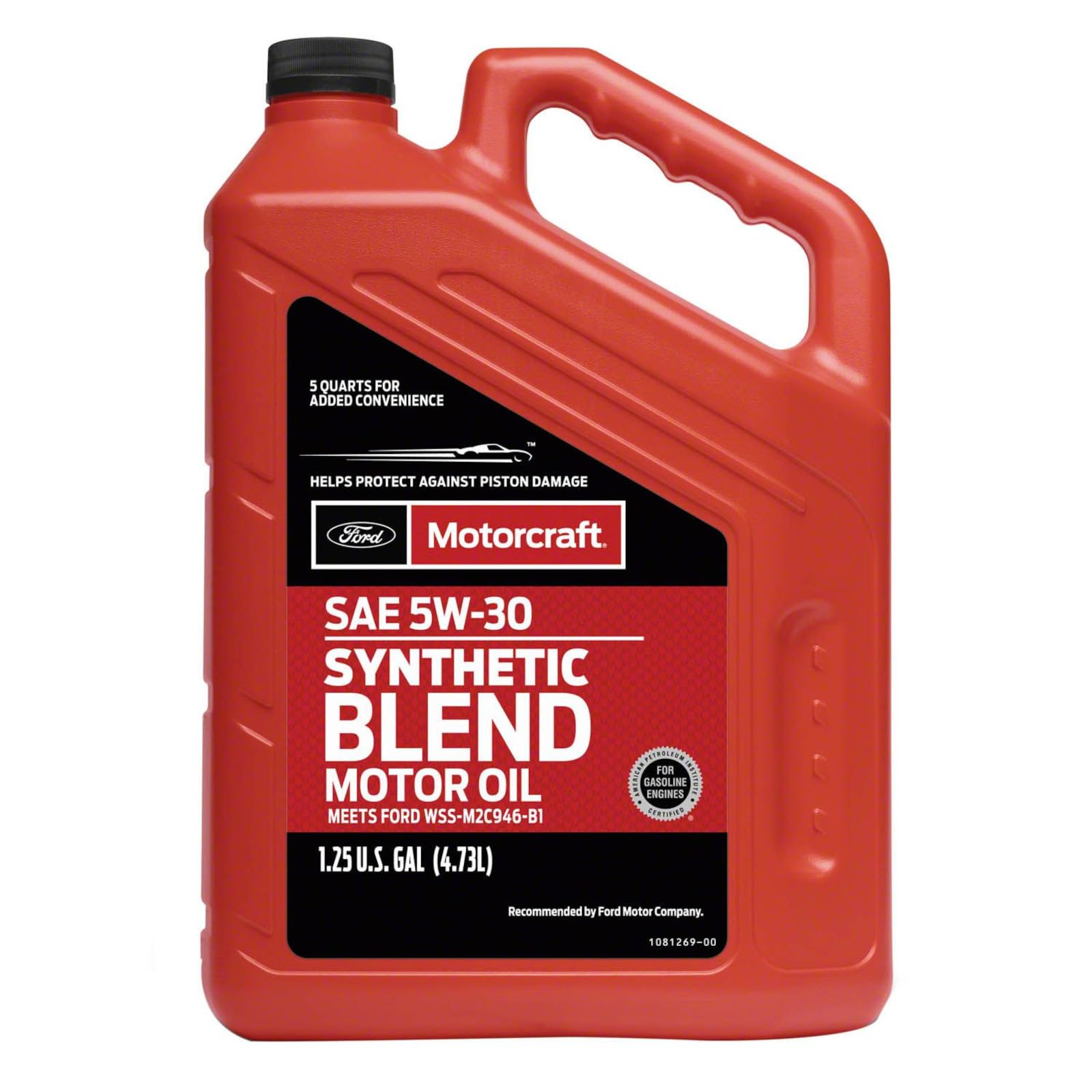
The exact factory fill for Fords, from the 2.7 EcoBoost to the big V8s.
If you drive a Ford, this is the oil the factory intended. Motorcraft is Ford’s official parts brand, and this 5W-30 is the right choice for the 2.7 EcoBoost and other modern Blue Oval engines. Buyers who are “really particular about the oil” use this in their Lincolns, and truck owners confirm the engine “runs smooth with no issues” and feels quieter.
Its 446 °F flash point resists burning off under extreme heat, protecting turbocharged engines. It works in cars, SUVs, trucks, and vans, but it shines most in Ford and Lincoln models.
The main limitation is that it’s not a “premium” synthetic with extended-drain claims. It’s a high-quality conventional or blend-style offering that suits standard driving and factory-specified intervals.
factory spec match: It’s the “right oil for the 2.7 ecoboost” per owner feedback, and the oil quality is the most-praised aspect — trust matters when it’s a factory spec.
for Ford vehicles: Ford and Lincoln owners who want the exact factory specification for confidence.
for high performance: you drive a non-Ford and want a multi-brand universal synthetic.
9. Royal Purple 5W-30 High Performance Synthetic

The vivid purple oil that treats your high-performance engine to noticeably sharper throttle response.
If you drive something with a performance bent, Royal Purple is the enthusiast’s favorite for good reason. Owners describe it as offering excellent wear, friction, and heat protection for high-performance engines, with noticeably “smoother acceleration and better throttle response” after the swap. It lasts up to 12,000 miles between changes, a top spec among enthusiasts.
The stand-out spec is longevity: it stretches to 12,000 miles versus the typical 5,000-7,500-mile interval. It’s also API-licensed and exceeds OEM specs, so it’s perfectly safe for a daily driver even though it’s built with high-performance cars in mind. The iconic purple color also makes it easy to spot a leak, and the improved compatibility with ethanol fuels is a plus for modern gas.
The honest trade-off is price — this sits at the premium end, and owners admit it’s “pricey but good oil.” It also has nearly 4,700 reviews, more than any other pick here, so the praise isn’t just hype.
film strength: Oil quality dominates the conversation by a wide margin, with value for money as the second-biggest talking point — a rare combo for a premium product. The longevity (12,000 miles) is a top spec.
for modified engines: driving enthusiasts with high-performance or heavily-used engines who want maximum protection and longer drain intervals.
for stock commuters: you’re on a strict budget — the premium price reflects premium positioning.
Understanding the Specs
Viscosity Grade (5W-30, 0W-20)
The “W” stands for winter. The number before it (5 or 0) tells you how thin the oil stays when the engine is cold — a 0W oil flows faster on a freezing morning than a 5W. The number after (20 or 30) is the thickness at full operating temperature. Thicker isn’t better; using what your manual specifies is what matters.
API Rating (SP, SQ, SN)
The American Petroleum Institute (API) certifies oils to meet performance standards. “SP” is the latest gasoline-engine standard, meaning it’s designed for modern engines with turbochargers and direct injection. An oil that meets API SP also covers older categories like SN and SN PLUS, so it’s backward compatible.
FAQ
How often should I change my full synthetic oil?
What does the 5W-30 number mean on the bottle?
Is a full synthetic oil better than a synthetic blend?
Should I switch to a high-mileage oil for my car with 90,000 miles?
Can I mix different brands of the same viscosity oil?
What is the difference between 0W-20 and 5W-30 oil?
How do I know if the oil meets my car manufacturer’s specifications?
Which oil gives the longest drain interval between changes?
Is Royal Purple worth the higher price compared to other synthetics?
Why is the Liqui Moly oil considered a “vehicle specific fit”?
Final Thoughts: The Verdict
For most drivers, the best engine oil for cars winner is the Liqui Moly Special Tec LL because it delivers a noticeably quieter, smoother engine with a quality that owners rave about across hundreds of reviews. If you drive a modern truck or SUV that specifies 0W-20, the Mobil 1 Truck & SUV gives you proven heat and cold protection for tough conditions. And for the high-mileage commuter with over 75,000 miles, the Pennzoil High Mileage six-pack offers the best volume-per-dollar value on this list.
How We Picked
We do not accept paid placement. Every pick is matched to a real buyer and a real use-case; we do not hands-on test units.
Sources & Methodology
Specifications: manufacturer listings and product documentation. Review insights: verified customer reviews, as of August 2026. Pricing: not shown on this page (it changes often); check the current price via the retailer link.
As an Amazon Associate, WellFizz earns from qualifying purchases. This does not affect which products we feature.
Related Guides

Mo Maruf
I created WellFizz to bridge the gap between vague wellness advice and actionable solutions. My mission is simple: to decode the research and give you practical tools you can actually use.
Beyond the data, I am a passionate traveler. I believe that stepping away from the screen to explore new environments is essential for mental clarity and physical vitality.