Our readers keep the lights on and my smoothie glass nicely filled. As an Amazon Associate, I earn from qualifying purchases.
Specs are compiled from manufacturer listings and verified buyer reviews and can change over time — please confirm the key details on the product page before buying.
Oil spots on your driveway usually mean one thing: a failing gasket. Finding the right engine gasket sealer is about matching the chemistry to the job, not just grabbing the cheapest tube. This guide breaks down the top performers so you can seal valve covers, oil pans, and even tricky fuel systems the first time.
I’m Mohammad Maruf — the founder and writer behind WellFizz. This guide is built by comparing the manufacturers’ published specifications and the patterns across verified customer reviews, so you get each pick’s real strengths and trade-offs instead of marketing spin.
We compared nine top-rated formulas to find the best engine gasket sealer for DIY repairs, from OEM-spec tubes to high-temp silicones.
Our Picks at a Glance


How To Choose The Best Engine Gasket Sealer
Your engine’s leak location decides which sealer you need. An oil pan flexes and gets hot, so it needs a flexible, oil-resistant RTV (a rubber-like silicone sealant that stays pliable). A rigid transmission flange, by contrast, needs an anaerobic sealer (a paste that hardens only in tight, air-free gaps) to lock it solid.
Match the chemistry to the surface
Silicone RTV (room-temperature vulcanizing) sealants are the versatile workhorses for valve covers and oil pans because they stay flexible. Anaerobic sealants like LOCTITE 518 cure only in the absence of air between tight metal flanges, making them ideal for rigid joints that need a hard, gap-free seal.
Check the temperature range
Engines create extreme heat and vibration. A sealer’s operating temperature range tells you if it will hold up. A formula rated to 482°F is fine for most engine parts, but high-performance or towing applications call for a 650°F-rated silicone to handle the extra thermal stress.
Consider disassembly later
Some sealants form a permanent bond, while others, like non-hardening dressings, allow you to pull the part apart again with hand tools. If you plan to service the component often, choose a non-hardening option to avoid scraping surfaces clean each time.
Quick Comparison
| Model | Best For | Type | Temp Range | Size | Amazon |
|---|---|---|---|---|---|
| Toyota Genuine FIPG★ Best Overall | OEM Toyota repairs | Silicone RTV | -76°F to 482°F | 3 oz | Amazon |
| 1DFAUL RTV SiliconeBest Value | Budget multi-surface sealing | Silicone RTV | -60°C to +300°C | 170g | Amazon |
| Permatex PermashieldFuel System Fix | Fuel & gas tank sealing | Urethane paste | High-temp flexible | 2 oz | Amazon |
| Bar’s Leaks Head Gasket | Temporary coolant leak repair | Liquid ceramic + fiber | Cooling system | 20 oz | Amazon |
| LOCTITE 518 | Rigid metal flanges | Anaerobic | Sensor-safe | 50 ml | Amazon |
| Hylomar Blue | Non-hardening, easy disassembly | Non-hardening dressing | Unlimited assembly time | 100g | Amazon |
| ACDelco GM RTV | GM & Chevy engines | Silicone RTV | Immediate fill possible | 75 g | Amazon |
| Permatex High-Temp Red | High-heat & towing | Silicone RTV | -65°F to 650°F | 11 oz | Amazon |
| Three Bond TB1211 | Motorcycle & BMW cases | Silicone rubber | Slow-curing tough | 3.5 oz | Amazon |
In‑Depth Reviews
1. Toyota Genuine Fluid 00295-00103 Formed-in-Place Oil Pan Gasket
Our pick — over 4.5★ from 900+ verified ratings; the strongest balance of quality and price.
The factory-spec Toyota tube that forms a vibration-proof elastic seal and outlasts aftermarket brands.
When a 200k-mile OEM gasket finally gives out, the fix that holds for another 200k is the exact factory fluid. This Toyota Genuine FIPG (Formed-In-Place Gasket, a liquid that cures into a gasket shape) sets into an elastic rubber body that shrugs off vibration and impact. It stays stable from -76°F up to 482°F, so it handles both arctic cold starts and a hot running engine without turning brittle or runny.
The crowd favorite here — 4.8 stars across 900+ owners — leans heavily on leak-free results. Buyers report: “No leaks after 3k miles; OEM lasted 200k.” It is the recommended sealer in Toyota factory service manuals for valve covers, oil pans, water pumps, and thermostat housings. It beats generic RTV because it is engineered to match the OEM chemistry exactly, and a five-minute tack-free time means you can assemble without waiting around.
Quality gets the most praise, followed closely by how well it simply functions, with leak-proof sealing the third most-discussed upside. The real-world knock is the price — a 57-to-30 split between quality praise and mixed value-for-money feedback means you are paying a premium for the Toyota name. It comes in a smaller 3 oz tube, so it is best for one big job or a few small ones, not a shop-sized supply.
OEM Precision
- Exact factory spec for Toyota engines
- Elastic seal resists vibration and impact
- Resistant to oil, coolant, and chemicals
- Dries tack-free in about five minutes
The Trade-offs
- Premium price for the brand name
- Small 3 oz tube for the cost
- Best used on Toyota or Asian engines
Choose this if: you drive a Toyota and want the exact sealer the factory uses.
Think twice if: you need a budget-friendly general-purpose tube for multiple vehicles.
2. 1DFAUL RTV Silicone Gasket Maker
A big 170g tube of oil-resistant silicone that seals gearboxes, pumps, and axles without draining your wallet.
If your to-do list spans engines, gearboxes, and pump superchargers, this black RTV covers all of them out of one generous 170g tube. It resists oil and anti-freeze, stays flexible through high heat, cold, pressure, and vibration, and it will not shrink or crack as it cures into what is effectively a custom-molded gasket.
Sealing performance is the most-praised aspect, and quality is the second most-discussed. The catch in the feedback is about cure time — appliers who rushed it learned quickly. Owners mention: “I tried it on a differential cover and didn’t let it cure long enough. Long story short it never cured and leaked. Learned my lesson, reapplied and no more leaks.” At 25°C, cure takes 10 to 30 minutes, and it is rated for an ultimate pressure of 10MPa, so give it time to fully set.
It is also non-corrosive, waterproof, and freeze-proof, which explains why a backup camera housing and bathroom pipe connections show up in the same review pages as engine oil pans. The leak-proof feedback runs mixed, but that is driven by impatient application, not product failure. For the price, you get a full tube that handles a surprising range of metal surfaces.
Multi-Surface Reach
- Large 170g tube for multiple jobs
- Resists oil, water, and freezing
- Fills gaps without shrinking or cracking
- Works on engines, gearboxes, and axles
Application Warning
- Requires full cure time to seal
- Leak-proof results vary if rushed
- Needs pressure applied during curing
Reach for this if: you want one affordable tube for multiple metal sealing projects.
Look elsewhere if: you refuse to wait for a proper cure and expect instant results.
3. Permatex 85420 Permashield Fuel Resistant Gasket Dressing
The orange urethane paste that stays flexible and seals fuel tanks and metal-to-metal joints where silicone fails.
Gasoline is the acid test for gasket sealers — most silicones break down on contact. This Permatex Permashield is resistant to gasoline and every other automotive fluid, and it keeps its flexibility at high temperatures and through rapid temperature swings. It is a urethane paste, not a silicone, and that chemistry is exactly why it is the go-to for fuel pump adapters, gas tank sending units, and plastic tank repairs.
Effectiveness is the most-mentioned strength by a wide margin, with sealing performance second. The fuel-specific feedback is remarkable: customers note it “Worked on my vintage car. No issues for 2 years.” Another owner sealed a hard-to-seal plastic tank and a motorcycle tank petcock valve with it. Because the formula is tacky and flexible rather than rock-hard, it allows for repeated disassembly and reassembly in metal-to-metal jobs — you can pull the part apart and put it back without stripping dried gasket.
It pours out very liquid, not caulk-thick, so it flows into surface imperfections and seals instantly. The sticky texture is the main recurring complaint — it is a bit messy if you are careless — and a few note that it is not a permanent fix for an actively flowing fuel leak. The straight comparison: at 2.88 ounces it is the lighter tube, while the heavy-duty Toyota FIPG above comes in at 3.84 ounces, a 33% more substantial amount for engine-block work.
Fuel-Proof Formula
- Resists gasoline and all automotive fluids
- Remains flexible at high temperatures
- Allows repeated disassembly and reassembly
- Seals surface imperfections on metal
Handling Notes
- Very liquid consistency can be messy
- Tacky feel takes getting used to
- Not a permanent fix for heavy flow leaks
Grab this if: you are sealing anything that touches gasoline, especially vintage cars or boat tanks.
skip it if: you need a thick gap-filler for a large open oil pan surface.
4. Bar’s Leaks 1100 Head Gasket Repair Sealant

A 20 oz pour-in coolant system fix that forms a ceramic-hard seal to stop block and head leaks.
This one is a completely different animal — you pour it into the cooling system, not a bead on a flange. The 20 oz bottle uses a Dual Action 2 Part Formula with liquid ceramic that penetrates large and small leaks to form a seal harder than the original head gasket, plus reinforced fibers that lock together to strengthen it into a permanent barrier. It stops block leaks, seals cracked cylinder heads, and repairs blown head gaskets.
The critical warning in the data is a hard one: it is NOT compatible with antifreeze and must only be added after ALL antifreeze has been flushed. Reviewers point out it runs “90% better” and stops overheating, and it has saved plenty of people from a mechanic bill. The feedback is real but honest: one 1999 Olds Intrigue with a small leak had it stop immediately and last 2 months, while another owner saw the leak return after a few days.
That split — immediate success versus a temporary fix — is the whole story. It is a stopgap that buys you time, with the review pages clearly noting it is “not for severe leaks” and requires a thorough two-day process of triple flushing and overnight draining. If a cylinder misfire from a small coolant leak is draining your wallet, this is the cheap bridge to your next paycheck.
Cooling System Lifeline
- Seals cracked heads and blocks
- Liquid ceramic forms a hard seal
- Stops overheating and misfires
- Much cheaper than a head gasket job
Know The Limits
- Must flush all antifreeze first
- Not compatible with antifreeze
- Temporary fix, not a permanent repair
- Requires a 2-day flush process
Use this if: you have a small coolant leak and need time while saving for a real mechanic repair.
Avoid it if: you expect a permanent head gasket cure — this is a bridge, not a rebuild.
5. LOCTITE 518 Automotive Anaerobic Gasket Maker
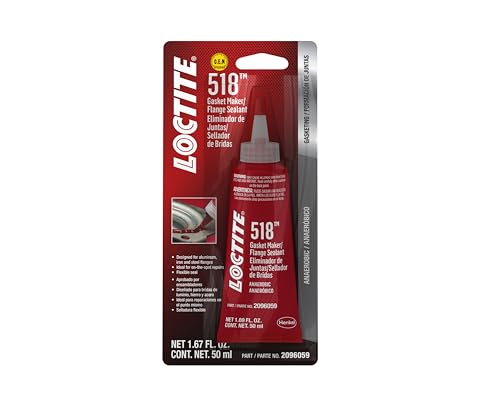
The sensor-safe red tube that cures only in tight metal flanges and outperforms RTV on rigid joints.
Here is the science the others cannot touch: anaerobic sealants cure only in the absence of air, which means they harden exactly where two metal flanges meet and stay liquid everywhere else. LOCTITE 518 is designed for aluminum, iron, and steel flanged mating surfaces, making it the pick for transmission case coverings and precision flat flanges where a thick RTV bead would squeeze out and fail.
The proof is in the reviews: shoppers say it is “better than RTV for many applications,” and one owner’s engine “hasn’t dripped a single drop of oil yet.” A New Holland transmission was reassembled with it following dealer instructions, and a 9.9 Yamaha outboard crankcase sealed without primer down to 40°F. The standout story is the guy who left the part off for a week due to logistics: because the sealer only cures in tight joints, it was still wet and usable a week later — RTV would have dried out and needed reapplication.
Sealing performance is the top-praised aspect, with quality a close second, and it is sensor-safe, low-odor, and non-corrosive. The feedback on application runs mixed — it flows like a thin putty and needs a steady bead, unlike the easy squeeze of silicone. The comparison is stark: RTV vulcanizes in open air, but this hardens only in the joint, so it is the right tool for rigid, machined flanges and the wrong one for flexible valve covers.
Precision Sealing
- Cures only between tight metal flanges
- Sensor-safe, low odor, non-corrosive
- Stays workable for up to a week in air
- Works on aluminum, iron, and steel
Not For Everything
- Thin putty needs a steady hand
- Not for flexible or uneven surfaces
- Small 50 ml tube for the price
Choose this if: you are sealing rigid transmission or valve flanges that need a hard, precise bond.
Pass on it if: you need a flexible sealant for a vibrating oil pan or valve cover.
6. Hylomar Blue Gasket Marker and Thread Sealant

The aerospace-grade blue dressing that never hardens, so you can pull parts apart again with hand tools.
Hylomar Blue is the secret handshake of engine builders. This non-hardening, dry-to-the-touch dressing is approved worldwide for sealing gas and diesel engines and automotive transmissions, and its defining trait is that it stays soft permanently. It gives you unlimited assembly time — you can torque, wait, re-torque, and adjust without the sealant setting into a crust.
An aerospace mechanic in the review pages recognizes it as the exact same formula used on Rolls-Royce engines, noting a 20-year shelf life and easy cleanup with 91% isopropyl alcohol. The ’91 Miata owner fixed a valve cover vacuum and oil leak where RTV had failed. The Volkswagen builder uses it on every air-cooled build: “It just seals! End of story!” It works with gaskets and O-rings as a dressing, not as a substitute for a damaged part.
It is vibration resistant and chemical resistant, and it survives gasoline contact, which is why the cooling system and fuel resistance both get praise. The blue color is truly ugly — owners admit it — but engine builders recognize it as a badge of quality. The honest caveat: it is a dressing, not a glue, so if your gasket is torn or the flange is warped, this will not bridge the gap.
Builder’s Trust
- Never hardens, unlimited assembly time
- Vibration and chemical resistant
- Easy disassembly with hand tools
- Long shelf life and easy cleanup
Know The Limits
- Not a glue or gasket substitute
- Messy if applied carelessly
- Blue color stains visible areas
Reach for this if: you want a sealant that complements gaskets and allows future disassembly.
Look elsewhere if: you need a gap-filling adhesive for a seriously warped or damaged flange.
7. ACDelco GM Original Equipment RTV Engine Sealant
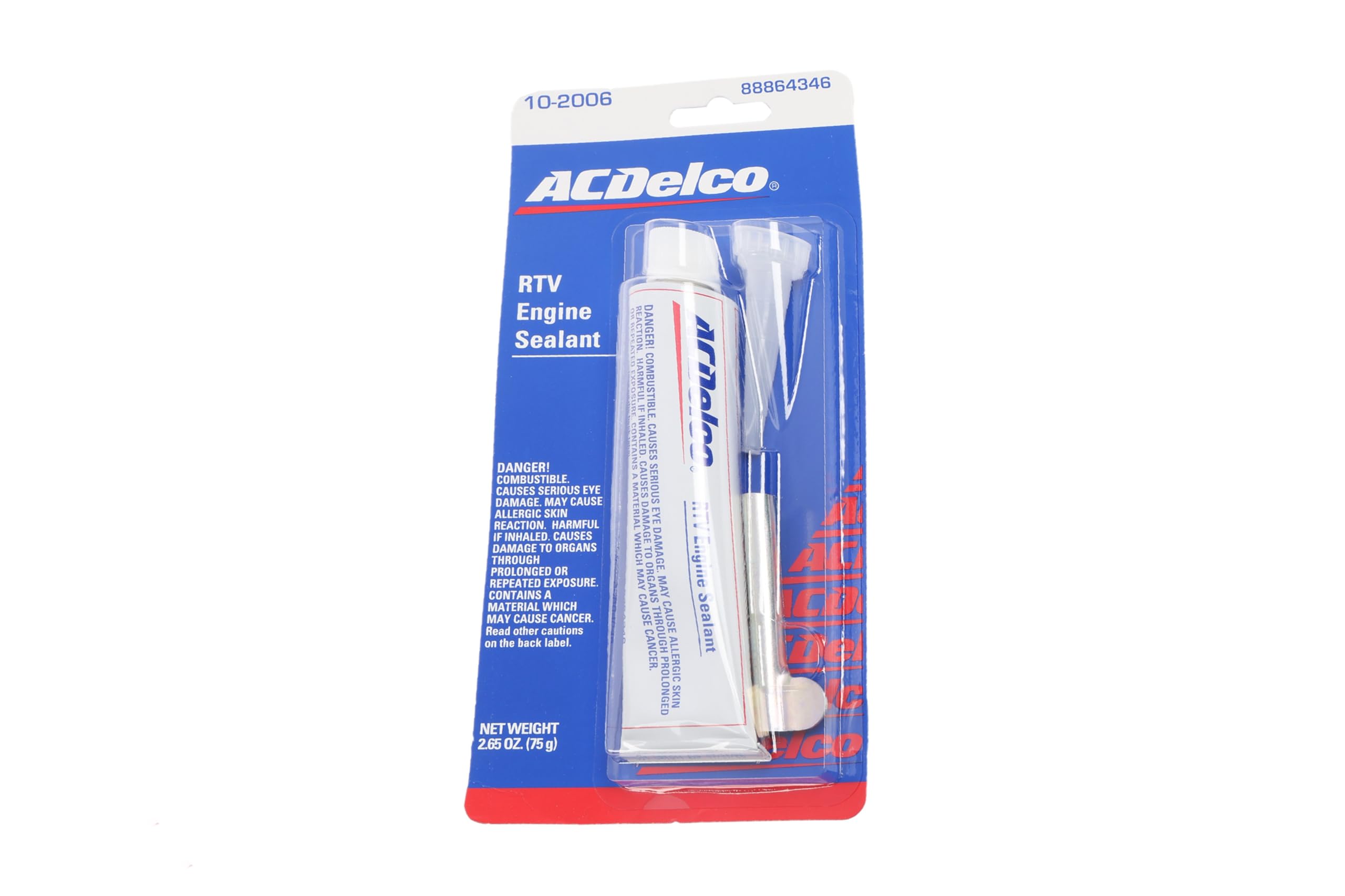
The Chevrolet and GMC factory RTV that lets you fill with oil the moment you torque the bolts.
GM owners, this is your factory tube. The ACDelco GM Original Equipment sealant is engineered for oil pans, ladder frames, front and rear covers, t-joints, manifold corners, intake end seals, and cam covers — basically the entire GM engine architecture. It is an OEM part, which means it matches the exact compound GM uses on the assembly line.
The killer feature is speed: assembly may be filled with oil or coolant immediately after applying and torquing, with no cure wait. That is a huge convenience when you want to finish a Saturday oil pan job and drive the car Sunday. A 1968 GTO owner followed Butler Pontiac’s recommendation and sealed a valley pan with a thin bead and no gasket — “no issues or leaks.” The Chevy Cruze owner calls it the best silicone for the car, and an L86 truck sealed clean.
Functionality is the most-praised aspect, with quality second. This is a lighter 2.4-ounce tube compared to the Toyota’s 3.84 ounces, so it is sized for a single job rather than a fleet. It is exact OEM spec for GM vehicles, which means it is the safest possible choice for warranty-conscious owners, but it is a premium pick priced above generic silicone.
Race-Ready Speed
- Fill with oil or coolant immediately
- Exact GM factory specification
- Seals oil pans, covers, and manifold corners
- Made in the United States
Considerations
- Smaller 75 g tube
- Premium price for OEM branding
- Best value on GM engines
Grab this if: you drive a Chevy or GMC and want the exact factory sealant with no cure wait.
pass on it if: you work on mixed-brand vehicles and prefer a larger, general-purpose tube.
8. Permatex 81409 High-Temp Red RTV Silicone Gasket

The 11 oz red tube rated to a scorching 650°F for towing, heavy-duty engines, and wood stove chimneys.
This is the heavy lifter for high-temperature duty. Permatex High-Temp Red is formulated specifically for towing and heavy-duty use, with a temperature range of -65°F to 650°F intermittent. It replaces almost any cut gasket by forming in place, and it resists cracking, shrinking, and migrating during thermal cycling — the exact failure mode that kills cheap silicone on a hard-worked engine.
At 11 ounces, this is the biggest tube on this list, nearly four times the size of the Toyota’s 3 oz tube. That makes it the value pick for someone with multiple engines or big surfaces to cover. It is suggested for valve covers, oil pans, timing covers, water pumps, and thermostat housings, along with transmission pans. Buyers report it works extremely well for years, and it is praised for being “easier to keep the bead intact” than thinner silicones.
Effectiveness is the most-mentioned strength, with quality second. The fun part of the review pages: owners use it beyond engines, sealing around a wood stove chimney flashing and adhering a dryer door gasket. It works as a formed-in-place gasket or as a coating over a pre-cut gasket to boost reliability. At a budget-friendly price for the volume, this is the best raw material per dollar on the list.
Extreme Conditions
- Rated -65°F to 650°F intermittent
- Large 11 oz tube for multiple jobs
- Resists cracking from thermal cycling
- Coats pre-cut gaskets for reliability
Minor Notes
- Must be stored properly to last
- Red color stains engine surfaces
- Thicker consistency takes practice
Reach for this if: you tow, race, or want the biggest tube for the best price.
Pass if: you need a precision OEM formula for a specific vehicle warranty.
9. Three Bond Engine Silicone Gasket 1211

The slow-curing Japanese silicone rubber that BMW and dirt bike owners swear by for case halves.
Three Bond is the quiet legend of motorcycle and import engine assembly. This 3.5 oz tube of tough, durable silicone rubber is the OEM spec for countless Japanese machines and a favorite of BMW e30 owners. It is the pick for metal-to-metal case halves on dirt bikes and rebuilt engines where you need a tough, lasting bond rather than a quick patch.
Quality is the most-praised aspect by a wide margin, with functionality second, and ease of setup third. A rebuilt BMW engine sealed with a thin coat on acetone-cleaned surfaces showed zero leaks for a full year. The e30 owner reports it “Stopped my valve cover leak and my leaky power steering.” Dirt bike owners say it outperforms the big-brand RTV tubes for case seal surfaces. It comes with a screw cap and two nozzle attachments for precise bead control.
The defining trait is slow drying — owners consistently tell you to let it cure for a good 3 days before starting the engine. That is a real patience tax compared to the ACDelco above, which allows immediate fill. But the reward is a tougher, more durable seal. Value-for-money feedback runs mixed: some call it expensive for the size, though the results justify it for engine builders who need it to be right the first time.
Builder’s Choice
- Tough, durable silicone rubber seal
- Excellent for metal-to-metal cases
- Easy cleanup with two nozzle attachments
- Stops valve cover and power steering leaks
The Patience Tax
- Take up to 3 days to dry fully
- Premium price for a 3.5 oz tube
- Overkill for quick repairs
Choose this if: you are rebuilding a motorcycle or BMW engine case and want a seal that lasts.
it’s not for you if: you need a same-day fix — this one demands days of patience.
Understanding the Specs
Temperature Range
This is the most critical number for an engine sealant. A formula rated to 482°F handles normal driving, but towing and heavy-duty use generate more heat. The Permatex High-Temp Red pushes to 650°F intermittent, which is why it is the pick for serious stress.
Cure Time vs. Assembly Time
These are two different clocks. Cure time is how long until the sealant hardens — the Three Bond needs 3 days, while ACDelco allows immediate fill. Assembly time is how long you can work with it. Hylomar offers unlimited assembly time because it never hardens at all.
RTV vs. Anaerobic
RTV silicone cures in open air and stays flexible, making it the standard for oil pans and valve covers. Anaerobic sealants like LOCTITE 518 cure only in the tight space between metal flanges, making them perfect for rigid transmission and engine block joints.
Fluid Compatibility
Most sealants handle engine oil, but gasoline is a chemical that breaks down ordinary silicone. The Permatex Permashield is specifically formulated to resist fuel and every other automotive fluid. Always match the sealant chemistry to the fluid it will touch.
FAQ
How long does engine gasket sealer need to cure?
Is RTV silicone better than an anaerobic gasket maker?
Can I use engine gasket sealer on a gas tank?
Will a head gasket sealer permanently fix my blown head gasket?
Can I use too much gasket sealer?
What is the difference between hardening and non-hardening sealant?
Can I use a gasket sealer instead of a physical gasket?
What temperature can engine gasket sealer withstand?
Is it worth paying more for an OEM-brand gasket sealer?
Does engine gasket sealer work on plastic or aluminum parts?
Final Thoughts: The Verdict
For most drivers, the engine gasket sealer winner is the Toyota Genuine FIPG because it delivers the factory-spec elastic seal that the crowd trusts most — a 4.8-star favorite among 900+ owners. If you want a budget-friendly tube that covers multiple metal surfaces, grab the 1DFAUL RTV Silicone. And for fuel systems where gasoline breaks down ordinary silicone, the Permatex Permashield is the one to reach for.
How We Picked
We do not accept paid placement. Every pick is matched to a real buyer and a real use-case; we do not hands-on test units.
Sources & Methodology
Specifications: manufacturer listings and product documentation. Review insights: verified customer reviews, as of July 2026. Pricing: not shown on this page (it changes often); check the current price via the retailer link.
As an Amazon Associate, WellFizz earns from qualifying purchases. This does not affect which products we feature.
Related Guides

Mo Maruf
I created WellFizz to bridge the gap between vague wellness advice and actionable solutions. My mission is simple: to decode the research and give you practical tools you can actually use.
Beyond the data, I am a passionate traveler. I believe that stepping away from the screen to explore new environments is essential for mental clarity and physical vitality.